• About
  • History Writings

Water and Me

Water and Me

Category Archives: filtration

Indians

29 Monday Jul 2013

Posted by Ronald Parks in Baltimore, filtration, HISTORY, Reservoir, water

≈ Leave a comment

Tags

Baltimore, engineering, FILTRATION, HISTORY, Indian graves, mills, water, water history

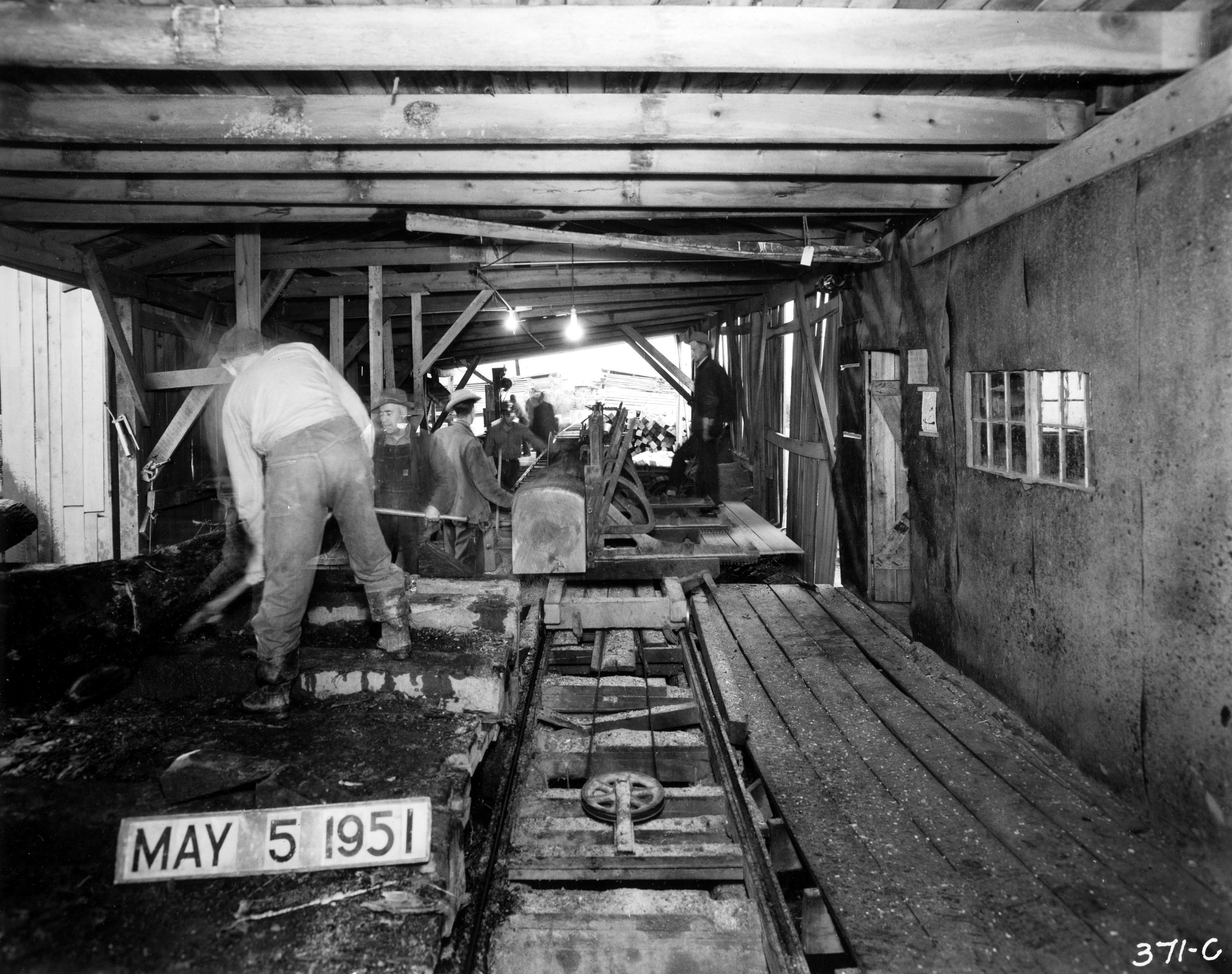
Liberty Lumber 

In the 1950s, the City of Baltimore operated a saw mill near the site of the future Liberty Reservoir.


Indian Grave

In 1952 while clearing the site for the new dam and reservoir they found this marker. The caption in the album reads:

“Taken February 8, 1952-showing old grave discovered near city saw mill while clearing land. Believed by some to be the grave of a Maryland Indian.”

A few questions about this – Is it? If so, what do the markings say? What happened to it? The one thing about coming across items like this is – now I have to try to find the old engineers/inspectors journals and see if they make mention of it or is it just a random photo some one took and placed in an album??

Copy-Rights

16 Tuesday Jul 2013

Posted by Ronald Parks in Baltimore, filtration, general, Health, HISTORY, water

≈ Leave a comment

Tags

Baltimore, engineering, FILTRATION, HISTORY, POLITICS, water

Just to go off track a little bit here, as far as Baltimore’s Water Supply history goes, I was just wondering if I could get some clarification on Copyrights? I really don’t understand these laws. It is of my own opinion that everything that has to do with history should be free to the public. I know there are certain cost involved with printing and reproduction and even research, BUT, who the hell owns the photographs and the words associated with them??

Case in point: I am revising my water history book by adding more photographs and trying to make it more ‘reader friendly’, getting rid of repetitious comments and adding an index. All the photographs that I have used come from glass plate negatives, lantern slides or the actual photographs that are stored here. While reading through my book I found some areas that could use a couple of pics to liven up the paragraphs but found I lacked those photos. Some research pointed me in the direction of the Enoch Pratt Free Library and The Tribune. The Tribune is now the keeper of the Baltimore Sun photo collection. Both of these are charging me anywhere from $10 to $40 for reprints, although the Tribune sold me the ‘originals’ for $15. Each want upwards of $150 for permission to use the photos in a book, depending on the print run. I asked the guy at the library what ever happened to the ‘Free’ in Enoch Pratt Free Library??

The library had received, in earlier years, copies of all the City of Baltimore’s Annual Reports, which included photographs. These photos were taken by either a City photographer or one hired by the contractor doing the construction. They are called ‘Progress Photographs.’ As far as the SunPapers goes, well they would send reporters who would come out to the plant with a photographer to cover newsworthy events. Like the tunnel explosion of 1938 where ten miners were killed (Although the Sun really fell on that one. Most pics and stories were done by the Washington Post, to whom I had to pay $3 for a mimeographed copy of the stories) They came onto the property, took pictures of the property, naming city workers and saying what happened.

Who really owns all this and why do they charge for reproducing the photos in a book? As far as print run, I can not tell them how many will be printed. I print my books thru Publish on Demand. As far as making money off of it – No!

So as not to cause any legal BS, I found this pic of an 1848 Fountain in Baltimore. Here is the link: http://www.mdhs.org/digitalimage/marsh-market-fountain-baltimore-street-0

Wooden Pipes

11 Thursday Jul 2013

Posted by Ronald Parks in Baltimore, filtration, HISTORY, Reservoir, water

≈ Leave a comment

Tags

Baltimore, engineering, FILTRATION, HISTORY, water

KONICA MINOLTA DIGITAL CAMERA

KONICA MINOLTA DIGITAL CAMERA

Mayor Calhoun, the City’s first mayor, insisted in 1803 that something be done with the water situation. The City Council appoints a commission, made up of twelve commissioners, to “Collect the springs at the head of Carroll’s Run and to conduct the water into the community by pipes.” The ‘main’ pipes being laid were of wood (hemlock logs) construction about eight feet long with a twelve inch outside diameter and having bores ranging from one and a half inches to four inches, inside diameter. One end of the log had been tapered to a spigot, and in the other end, a bell was hollowed out. The ‘service’ pipes being laid were of cedar log construction about six feet long, of six inch outside diameter and having bore of about one inch, inside diameter. The residents, whose property these pipe were to be laid, opposed to this plan and stopped the City from doing so.

In 1804 the City started purchasing cast iron pipe from England. By 1829 13 miles of pipe were laid in the city. Half of which were wooden. This pipe, which is on display at the Montebello Filtration plant was dug up at Pratt and Paca streets some years ago. The top photo shows the build up of lime which was added to the water after the 1880 construction of the gatehouse at Montebello.

1830 Water Report

27 Thursday Jun 2013

Posted by Ronald Parks in Baltimore, filtration, HISTORY, water

≈ Leave a comment

Tags

Baltimore, engineering, FILTRATION, HISTORY, water

1830 report

January 15, 1830 Report of the Water Committee to the City Council of Baltimore. This report was the result of the joint session of 1829, to enquire “…the best mode of furnishing every part of the City, in the most ample manner with a never failing supply of pure, clear and wholesome water…” Report starts with a history on the aqueducts of Carthage, Rome, London, etc., noting the inadequate supply given by the ‘Water Company’, “Charged with the important duty of pointing out to the City Council the best method of supplying the City with [water], the committee, aided by that skilful engineer and excellent citizen, Capt. Louis Brantz, who politely and patriotically tendered his services free of compensation, proceeded to the examination of the three streams, from one of which it was evident, the desired supply must be drawn.” The Gwynn’s Falls was recommended. The report concludes with a resolution proposed to both branches of the City Council. Note inserted into report suggests that this report was sold for $2 to a commissioner in 1947 and ended up in the water department in 1952. Purchased again for $4.00

Before Baltimore

26 Wednesday Jun 2013

Posted by Ronald Parks in Baltimore, filtration, HISTORY, water

≈ Leave a comment

Tags

Baltimore, FILTRATION, HISTORY, science, water

             Before Baltimore started on its quest for pure and wholesome drinking water, we need to look at a brief history of water treatment itself. This, I believe, was best documented in Joseph Ellms 1917 book Water Purification. He starts off  by describing the Ancient Systems of Water Supply as such:

            Among primitive peoples the question of water supply was never of pressing importance, except in arid and semi-arid regions…springs were sought for, wells were dug, and cisterns constructed in order that a supply of water might at all times be available. Wells of great antiquity may be found in Egypt (Joseph’s well was 297 feet deep in solid rock) and India. The Chinese were familiar with the driving of artesian wells. Domestic filters of unglazed earthenware or of sandstone were known to have been used by ancient Egyptians and by the Japanese…siphoning water from one vessel to another through porous material was well known to the ancients. As populations became more dense…the need for larger volumes of water…became urgent. The ancient water tanks of Aden, in Arabia, collected surface waters from the gorges of a volcanic crater…example of an impounding reservoir…may have been built by the Persians as early as 600 B.C. Probably no more elaborate system of public water supply was provided for any ancient city than that of Rome…water conveyed by aqueducts. These were built between 321 B.C. and 305 A.D. At the time of the fall of Rome…many were destroyed or fell to disease. The Moors in Spain during the ninth century constructed some important works, also rebuilding the older Roman works. London was first supplied in small quantities with spring water conducted through lead pipes and masonry conduits. In 1582 a pump was erected on London Bridge to take water from the River Thames and to deliver it through the lead pipes. The growth and development of water works plants in reality dates from the eighteenth century…not until the latter half of the nineteenth century was very rapid progress made.

Mr Ellms then notes four epochs concerning water purification within the United States: First was James P. Kirkwood’s report on the “Filtration of River Waters” in 1866. Second was the work of the Massachusetts’s State Board of Health in 1887. Third was experimentation on turbid waters starting with Louisville, Kentucky in 1896 and the fourth being from 1908 when the disinfection of the water, on an experimental basis, with hypochlorite of lime, started in Chicago. This method became widespread over the next five years. Meanwhile, experimentation in both Europe and the US continued; using chlorine, ozone and ultra-violet light.

New Start on Water History

05 Wednesday Jun 2013

Posted by Ronald Parks in Baltimore, filtration, general, HISTORY, Mt Royal, Reservoir, water

≈ Leave a comment

Tags

Baltimore, engineering, FILTRATION, HISTORY, water

MR02

Just a heads up, that starting very soon I will be posting a photo history of Baltimore’s Water Supply – bits at a time. This drawing is from a folder marked Mount Royal Reservoir 1860-1861.

Newer posts →

Blogroll

  • Flouride Action Network
  • lulu
  • My Book
  • WordPress.com
  • WordPress.org

Recent Posts

  • Bermuda 2023
  • ICELAND April 2023
  • George Chalmers of Fochabers
  • In Search of The Skipjack Ada Mae
  • Trap Pond Kayak

Blog at WordPress.com.

  • Subscribe Subscribed
    • Water and Me
    • Join 231 other subscribers
    • Already have a WordPress.com account? Log in now.
    • Water and Me
    • Subscribe Subscribed
    • Sign up
    • Log in
    • Report this content
    • View site in Reader
    • Manage subscriptions
    • Collapse this bar
 

Loading Comments...