• About
  • History Writings

Water and Me

Water and Me

Tag Archives: FILTRATION

Tunnel Inspection

06 Wednesday Apr 2016

Posted by Ronald Parks in Baltimore, water history

≈ 1 Comment

Tags

Baltimore, engineering, FILTRATION, Gunpowder Falls, HISTORY, Jones Falls, Lake Montebello, Montebello, Public Works, tunnel, water, water history

Between the years 1875 and 1881 a tunnel, 12′ in diameter 7 miles long was constructed between a dam on the Gunpowder River and a man-made lake at Montebello. This was all part of the new, permanent water supply for Baltimore. It would eventually replace the supply from the Jones Falls. As needed, this tunnel was inspected and found to be in very good condition over the years. The majority of the tunnel is through solid rock with only a few sections having a brick lining. As the City grew, a new dam was built upstream in 1914, with a connection to the 1881 conduit.

In 1933 the City was contemplating a new source of water. The decision was made to build  a parallel tunnel from Loch Raven (on the Gunpowder Falls). An inspection by the consultants was made of the old tunnel first. The below photographs show what they found – rock falls and leakage.

The old tunnel was taken out of service and the new tunnel was used. In the 50s and 60s it was decided to re-use the old tunnel, which carried raw water, to start sending processed water to Baltimore County. An inspection of the tunnel, which at this point being only 5-1/2 miles long (Bulkheads built on each end of the tunnel that were no longer needed) was done in 1968. These consultants, pictured below, found more of the same. Rock falls and leaks. Three of these men I eventually worked with in 1981.

Another inspection was done in 1984. Unfortunately I can not find any photographs. I do have the reports from this inspection and it is not good. More rock falls and leakage. I was asked last year to be a part of a new inspection group to enter this tunnel. I immediately said yes! BUT, over the course of a couple months preparing for this and all the safety people you can imagine being involved, it was decided to send in a remote operated vehicle. Not sure when they will do this, I just know the sub isn’t big enough for me to fit into!

Two quotes came to mind when i was asked “Why do you want to go in there? It is dangerous!”

Valeria to Conan the Barbarian – “Do you want to live forever?” And Lenny and Ziggy singing “Death by Misadventure!”

Storm Water Study

11 Friday Mar 2016

Posted by Ronald Parks in Baltimore, HISTORY, Sewage History

≈ Leave a comment

Tags

Baltimore, engineering, FILTRATION, HISTORY, Lake Montebello, Montebello, sewage, Sewage History, water history

When the sewer system was to be built, a separate and independent storm water collection system was also constructed. This seemed to work fine in the early parts of the 1900s, but as the City grew, problems arose and this is what happened next:

1948 Annual Report – It has been recognized that the technology of storm drainage design could be improved if a better experimental background were established to guide the designer. To accomplish this purpose, the City together with the Baltimore County Metropolitan District and the State Roads Commission of Maryland have agreed to jointly sponsor a Storm Water Research Program to be conducted at the Johns Hopkins University.

1959 Annual Report – A Parshall flume was installed in the vicinity of the outlet of a 48” drain at the east side of Hillen Road south of Argonne Drive in order to measure the amount of run-off from a shopping center (Northwood) type of drainage area. Both rainfall and run-off data for this area are collected by automatic recording devices.

1965 Annual Report –  The Storm Water Research Program is in its 17th year (and still no results mentioned)

I found the structure where this site was located on our property. I sent off an email to Johns Hopkins University to see what became of the report. You would think that a study conducted for 17 years would have a report. The Environmental Engineering section and others have no clue what happened to that study?? 077

This is the structure where the recording equipment was stored. The door is padlocked but I was able to stick my camera under it to see what is in there – nothing but an old recording device.P1060414

Here is the guy that was guarding itP1060418

This is the 48″ drain from the Northwood shopping center.

I was looking for historical information on this study but at the same time, the plant was receiving complaints that the Montebello Lake had a green tint to it. Besides the processes inside the plant, this is the only other source of water that empties into the lake. The lab is now analysing the water to see what caused the discoloration.

Not Baltimore…but

08 Tuesday Mar 2016

Posted by Ronald Parks in Baltimore, water history

≈ Leave a comment

Tags

Baltimore, engineering, FILTRATION, HISTORY, photography, Public Works, water, water history

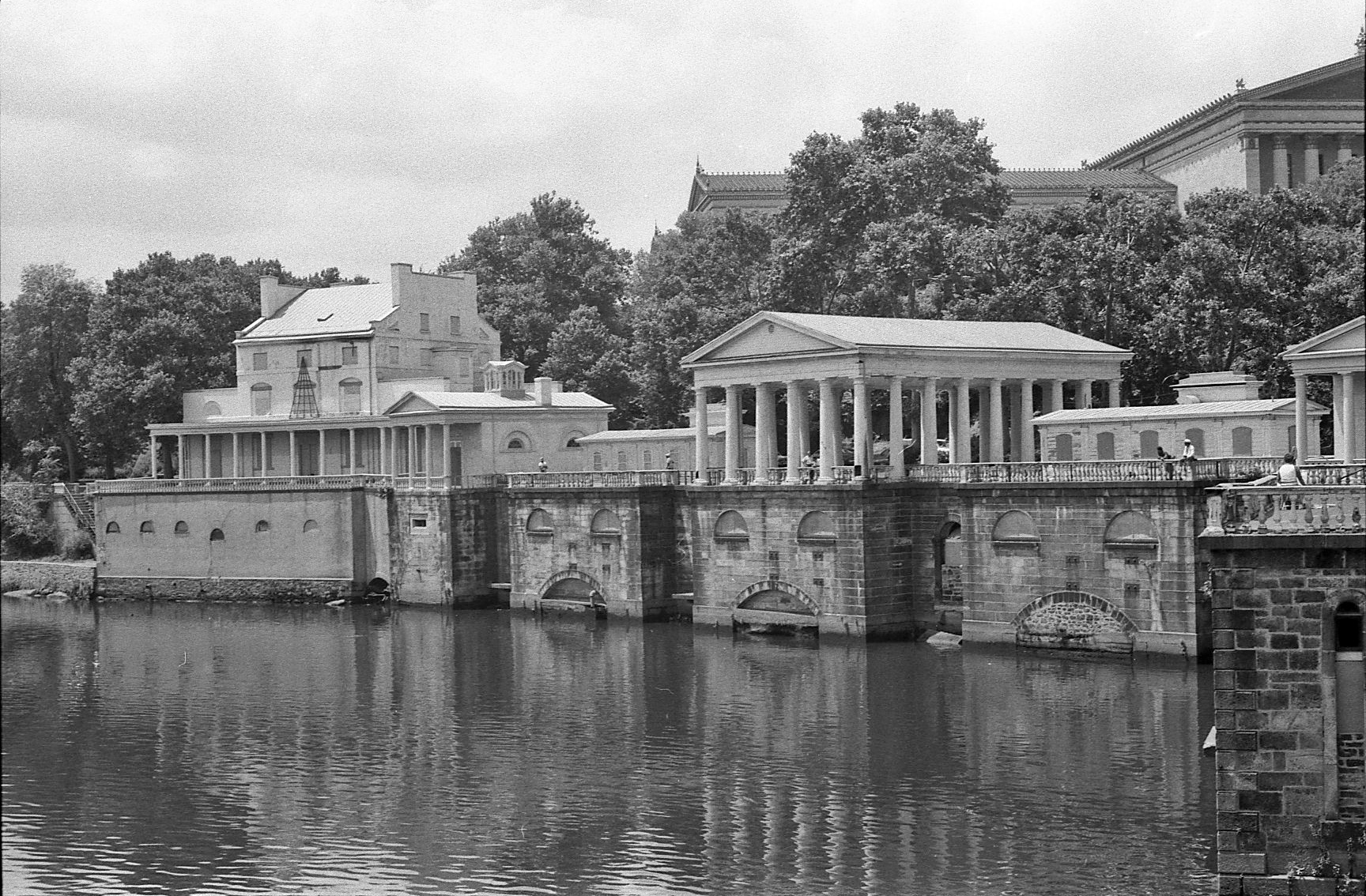
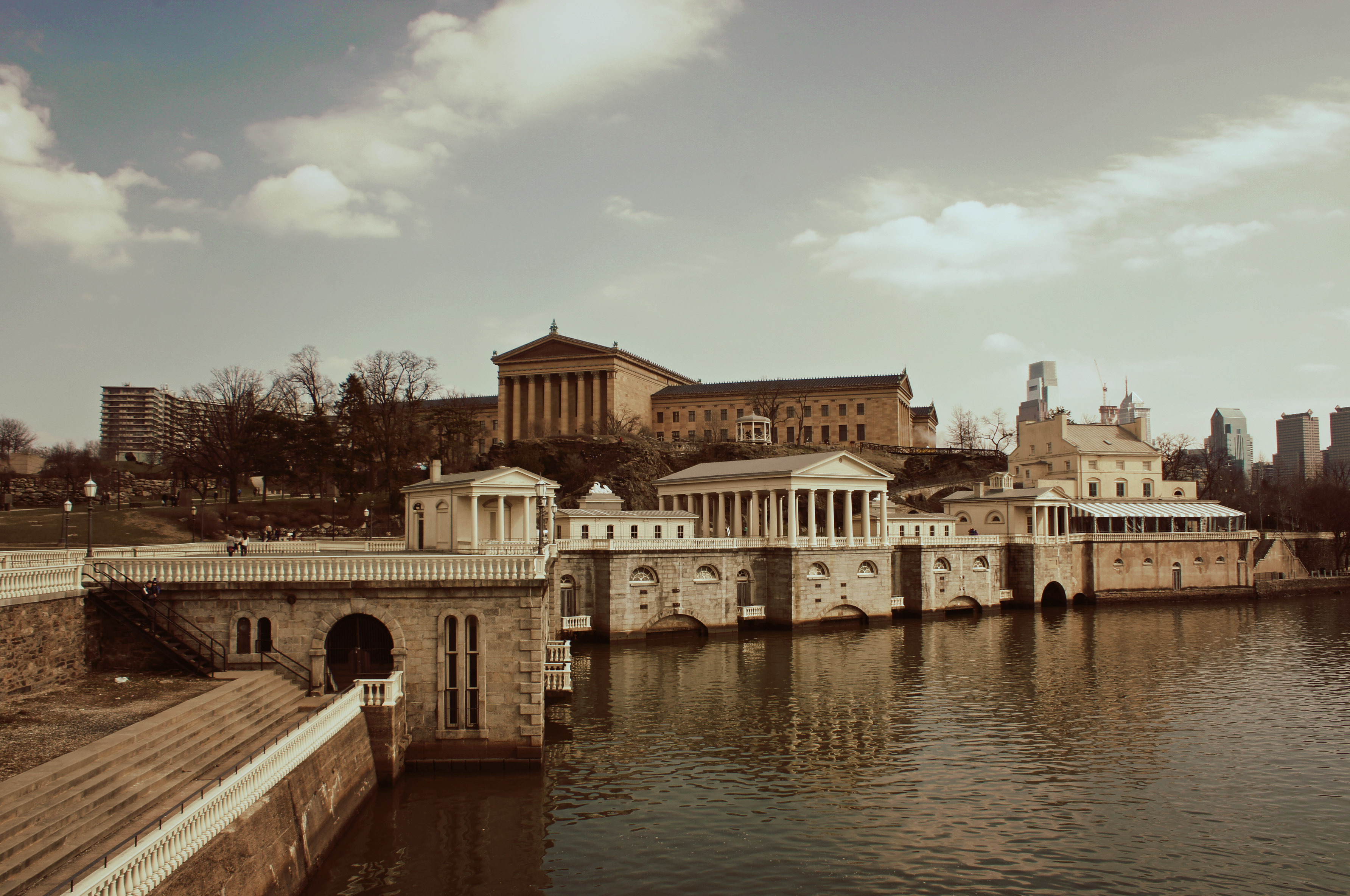
…but, it was a really great place to visit on Sunday, in Philadelphia. Although Philly was packed because of a flower show, it was still a good visit. We visited the art museum first and then walked down the hill to the Water Works (Fairmount). They just celebrated their 200th Anniversary.

Here is a brief history from the Interpretive Center:

Perched on the banks of the Schuylkill River, the Water Works was not only a source of the City’s water, its rambling Classic architecture and cutting-edge engineering made it an international 19th century tourist attraction. Water was pumped from the river into a reservoir (where the Art Museum now stands) and then distributed through the city via wooden water mains.

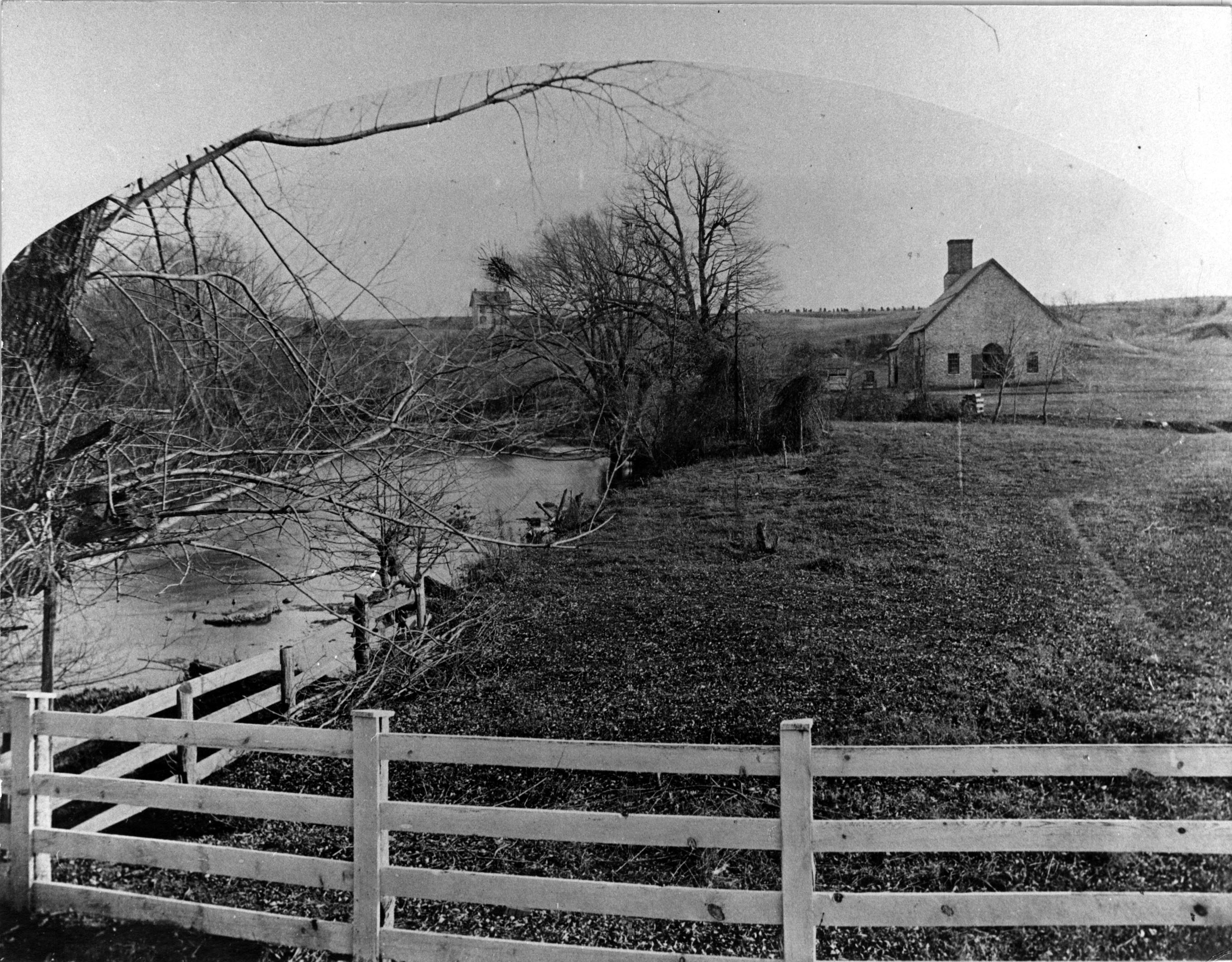
The one photo below (B&W) I found in Baltimore’s DPW Museum Archives and after some research, found out what it was. The other photo I took myself at the works.

img398 

Testing Plant

25 Thursday Feb 2016

Posted by Ronald Parks in HISTORY, Sewage History

≈ 2 Comments

Tags

Baltimore, engineering, FILTRATION, glass plate negatives, HISTORY, Jones Falls, sewage, water history

1906 – Before building a complete, City-wide sewerage system, a Testing Station was built to figure out the best means of treatment.

At Hampden and Walbrook, surveys were made and every house located, and in each place a plan for a comprehensive sewerage system was made. As a result of these studies Walbrook was selected as offering the most advantages.

Establishment of experimental testing station at Walbrook: In accordance with the Chief Engineer’s recommendation, the Commission on June 14th, 1906 authorized the erection of an experimental Testing Station. On October 2nd sufficient land was secured, without charge, from the Walbrook Land Corporation for the site of the Testing Station, for a period of seven years. On October 10th the contract for the erection of this testing station was awarded to the lowest responsible bidder, Malcolm W. Hill Company of Baltimore, Md., at their bid of six thousand, nine hundred and thirty dollars and forty-seven cents ($6,930.47). The contract for the Laboratory Building in connection with the Testing Station was awarded to the lowest responsible bidder, Wm. Kirkpatrick, of Baltimore, Md., on October 18th, at his bid of three thousand, seven hundred and fifty dollars ($3,750.00). The contract for the permanent sanitary sewers which will lead to the Testing Station was awarded to the lowest responsible bidder, M. A. Talbott & Company, of Baltimore, Md., on October 29th, at their bid of thirty-three thousand, two hundred and thirty dollars and ninety-eight cents ($33,230.98).

1907 – “Sir: In obedience to the requirements of Section I, Chapter 349, of the Acts of the General Assembly of Maryland for 1904, this Commission has the honor to make a report of its official transactions for the year 1907.” The first sanitary sewers to be constructed were those in Walbrook for the drainage of houses embraced within a prescribed area, and which were constructed as auxiliary to the experimental testing station, as part of the permanent system. Work on outfall sewer and interceptors was begun. There was criticism as to the size chosen for the sewers, but the Commission stuck to the plans of the advisory engineers: Rudolph Hering, Samuel Gray and Frederick Stearns.

These photos show constructing the Testing Station and Lab. Also the sprinkling filters.

81_6_56 81_6_159 img041

1908 sewage map walbrook

Here is the only reference I could find concerning the exact location of the Testing Plant.It comes from the Johns Hopkins Sheridan Library. I cut it down in size for viewing here. The location is never mentioned in any of the Annual Reports other than “Walbrook”. The testing plant is represented by the two circles at the bottom of the dark lines, just above Patterson Ave.

From Sewage Commissioner’s Report: The sewage testing part of the laboratory has been closed for a number of months, but the testing of all materials for construction work is being carried on, which has proved of great value in getting desired results. The plant is continuing to receive and purify the sewage carried to it from the system of sewers throughout Walbrook. On account of the disposal plant being operated by gravity, the cost of maintenance is reduced to a minimum.

My Water History Book

10 Wednesday Feb 2016

Posted by Ronald Parks in Baltimore, filtration, HISTORY, water history, Writing

≈ Leave a comment

Tags

Baltimore, engineering, FILTRATION, HISTORY, Lake Montebello, sewage, water, water history

https://www.createspace.com/4511014

I am doing another companion to this one – more technical. And I have already started on my Sewer History book.

Montebello 100

01 Monday Feb 2016

Posted by Ronald Parks in Baltimore, filtration, HISTORY, water

≈ Leave a comment

Tags

Baltimore, engineering, FILTRATION, HISTORY, Lake Montebello, Montebello, water, water history

10346511_10203067321618257_3677658577017900641_n
P1050889

So the Montebello 100th anniversary has come and gone. It was a pretty nice affair. I will start doing some more Water History on here, but it will probably be more Baltimore Sewage history. I have been doing some extensive research on the subject and will share some of it here. I will most likely put it in book form, to go with my water history book.

The first photo is inside the gate house, of which I talked earlier about. The second is a State Historical marker that was placed outside the gate house.

Debate: Gatehouse vs Valvehouse

08 Sunday Mar 2015

Posted by Ronald Parks in Baltimore, HISTORY

≈ Leave a comment

Tags

Baltimore, engineering, FILTRATION, glass plate negatives, Gunpowder Falls, HISTORY, Lake Clifton, Lake Montebello, Montebello, photography, valve house, water history

Since starting my research in a museum archives, I’ve found quite a few discrepancies in the labelling of photographs and negatives. Some archival boxes were marked as Loch Raven Construction – 1909 (Which didn’t start until late 1912. These photos were actually the building of Lake Ashburton). Then there are the glass plate negatives marked as Loch Raven 1875-1881. A few of these are of Lake Montebello and Clifton. This is ok only because I know they are from a group known as the “permanent supply”, they belong together. But my problem is that somewhere along the timeline known as “History” someone decided to call the gatehouses ‘valve houses’ Why?? I do not understand the intent of changing the engineer’s designation of a structure from gatehouse to valve house? The drawings I have along with engineer’s reports all call these structures Gatehouses. Who changed it? Would it be alright to call one of Baltimore’s Little Tavern Restaurants – Small Bar Restaurants? Hell no! Words mean the same but they aren’t. You go to a small bar to get drunk – you go to the Little Tavern for their bags of hamburgers!!

I recently found a photograph of one I already have, that was mislabeled. Below is the photo from a glass plate , the other is from a framed photo that hung in the engineer’s office (Bottom Photo from 1894). The framed one clearly calls the Clifton Gatehouse a gatehouse, not a valve house – Stop the insanity and call it what it is!!!

Plate482

From a mislabeled GPN saying this is Loch Raven


IMG_1254

Framed photograph clearly marked as Gate House at Lake Clifton


Eng 5-94

Engineer Kenley’s office, 1894 with framed photographs hanging on the wall.


MFH 3

01 Sunday Mar 2015

Posted by Ronald Parks in HISTORY

≈ Leave a comment

Tags

Baltimore, engineering, FILTRATION, Gunpowder Falls, HISTORY, Jones Falls, Lake Clifton, Lake Montebello, Montebello, photography, water, water history

In 1881 the Permanent Supply started delivering water to Baltimore City, to help supplement the failing Jones Falls. Over the next few years, the Jones Falls would become so bad that  larger reservoirs would be needed. Especially after the annexation of 1888. Plans started to take shape in 1904, after the Big Fire, to increase Loch Raven. And because of pollution, Baltimore started testing various forms of filtration.

These photos epitomize the sanitation conditions of our rivers and streams, and why water sources were failing:

066-21
Contamination  418


Testing forms of filtration at both Montebello and Loch Raven gatehouses:

Mont 8-12 050LochRaven 8-12 043


New pumping stations and reservoirs were built and/or their water redirected. Mt Royal no longer was receiving water from the Jones Falls, but from the Gunpowder Falls, via pumping stations.  Below is the Mount Royal Reservoir, followed by the High Service Reservoir at Pimlico and below that the Eastern Pumping Station, which pumped water from Clifton to Guilford.

br072

br013LS504

MFH 2

15 Sunday Feb 2015

Posted by Ronald Parks in Baltimore, HISTORY

≈ 1 Comment

Tags

Baltimore, engineering, FILTRATION, Gunpowder Falls, HISTORY, Lake Clifton, Lake Montebello, Montebello, photography, water, water history

The Gunpowder Temporary Supply was in use between 1873 and 1881, as the City required it. Work on the Permanent Supply started in 1875. This new supply would consist of a dam at Loch Raven, a 6-1/2 mile tunnel to Montebello, where a lake would be built with a gatehouse, to connect to another lake at Clifton. The properties at Montebello and Clifton belonged to Garrett and Hopkins.

Building the Loch Raven Dam

Part of Montebello Lake
Under the Montebello Gatehouse
Lake Clifton

Clifton Gatehouse a couple years ago
After removal of Loch Raven Gatehouse
Old dam during a storm

One of the stones from building the dam
Recent Montebello Gatehouse
Dignataries getting ready to place the last stone into the dam

On September 29, 1881, Lake Montebello reached its full height elevation of 163′. Lake Clifton would not be completed until late 1887. The water from Montebello flowed thru pipes, to the site of the lake and connected to pipes, to supply the City. Until the lake and gatehouse were completed at Clifton, a temporary shed was built over the pits that housed the gate valves. There was a house built on the property for the Gatekeeper. There was recent talk of leasing the Clifton Gatehouse for a Farmers Market, if the person would restore the building.

Montebello Filters History 1

12 Thursday Feb 2015

Posted by Ronald Parks in Baltimore, HISTORY

≈ Leave a comment

Tags

Baltimore, engineering, FILTRATION, Gunpowder Falls, HISTORY, Jones Falls, Lake Roland, Montebello, water, water history

Before the Montebello Filtration Plant came to be in 1915, Baltimore received its water from various sources. Mostly at the direction of the City Commissioners to form a water company, for fire protection. Wells were sunk and springs directed to fountains. But like every other growing city, Baltimore had its fair share of problems – drought, pollution, pestilence, etc.

In 1854 the Bureau of Water Supply became a Municipal Utility Corporation. 1861 saw Swann Lake (Lake Roland), Hampden Reservoir and the new Mt Royal Reservoir put into service. These received water from the Jones Falls. In 1864 the City started construction of Lake Chapman (Druid Lake). By 1866, Mayor Chapman realized the inadequacy of the Jones Falls, so authorization for the purchase of lands along the Gunpowder Falls began. 1869-70 saw one of the worst droughts in Baltimore history. In 1871 a reservoir at Pimlico was built, but this was still receiving water from the Jones Falls, which was failing. 1873 saw an urgent need for a supplementary water supply.  A temporary pump, pumping station and a 36-inch cast iron discharge water main were constructed for the delivery of the Gunpowder Falls water from Meredith’s Ford Bridge to Roland Run, a tributary of the Jones Falls, above Lake Roland.  The water flow would be forced at a rate of 10 million gallons a day into Roland Run, a distance of 3-1/2 miles. To the dismay of the property owners. This was known as the Temporary Supply.

Original photo

Original photo

A. Hoen litho from  original photo

A. Hoen litho from original photo 1875

← Older posts
Newer posts →

Blogroll

  • Flouride Action Network
  • lulu
  • My Book
  • WordPress.com
  • WordPress.org

Recent Posts

  • Bermuda 2023
  • ICELAND April 2023
  • George Chalmers of Fochabers
  • In Search of The Skipjack Ada Mae
  • Trap Pond Kayak

Blog at WordPress.com.

  • Subscribe Subscribed
    • Water and Me
    • Join 231 other subscribers
    • Already have a WordPress.com account? Log in now.
    • Water and Me
    • Subscribe Subscribed
    • Sign up
    • Log in
    • Report this content
    • View site in Reader
    • Manage subscriptions
    • Collapse this bar
 

Loading Comments...