• About
  • History Writings

Water and Me

Water and Me

Tag Archives: Gunpowder Falls

Lime

24 Tuesday May 2016

Posted by Ronald Parks in Baltimore, Sewage History, water history

≈ Leave a comment

Tags

Baltimore, engineering, FILTRATION, Gunpowder Falls, Health, HISTORY, Lake Montebello, Montebello, Public Works, sewage, Sewage History, water, water history

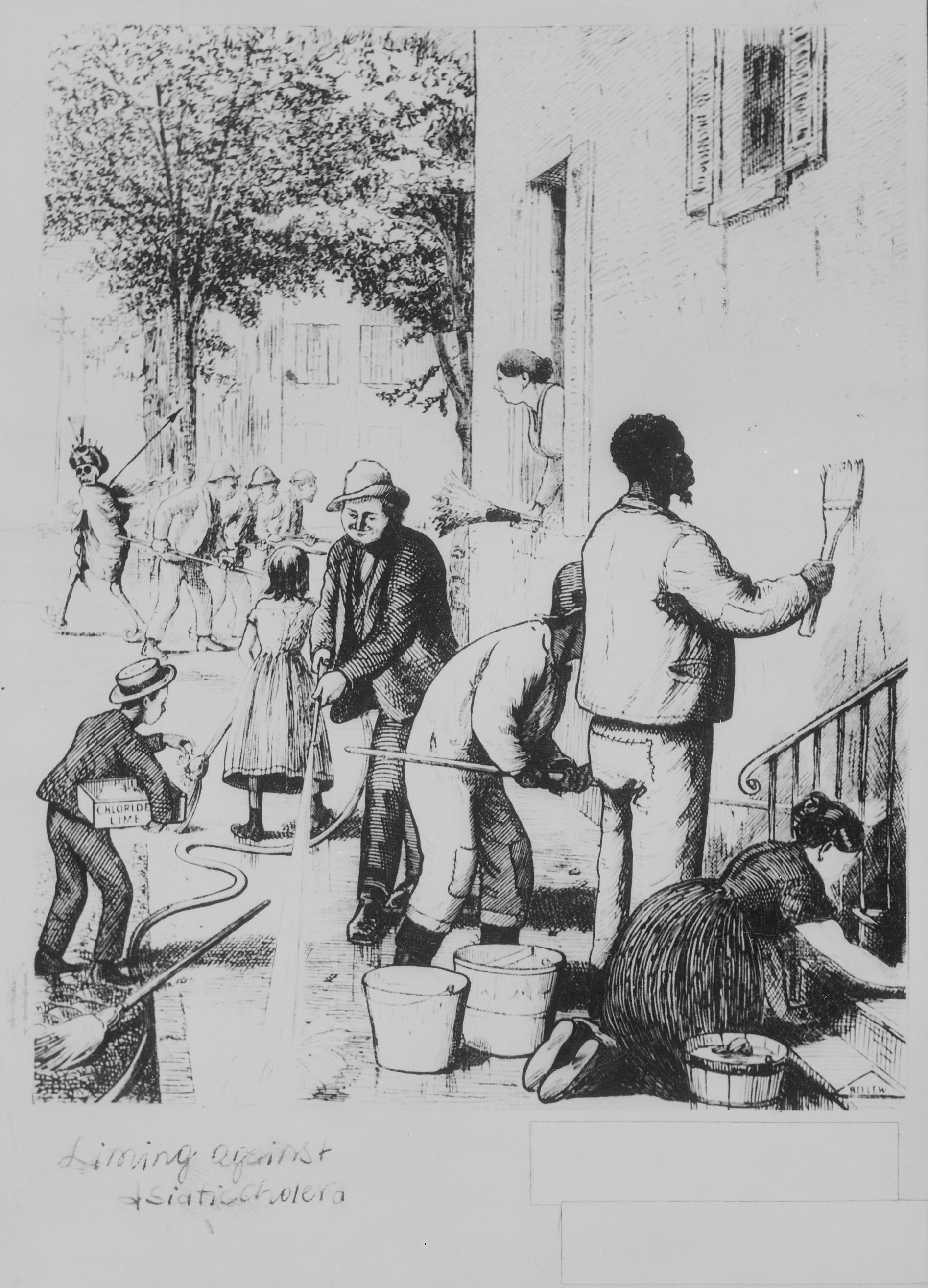
As can be seen from the list below, Lime has been used as a disinfectant for many years as far as the sewerage system and health goes.

1865 – Board of Health: The general health account shows an expenditure of $2,918.11. This account includes the appropriation for enclosing the Eastern Potter’s Field, erecting a dead house &c. and that for lime and incidentals.

1866 – Board of Health: 11,000 oysters were thrown away (This was in response to a cholera epidemic where 9 of 10 cases were found from eating oysters). We have used lime, Ridgewood’s and Sim’s disinfectant, and carbolic acid freely in the alleys and sewers.

1880 – General Superintendent of Streets: Your instructions in reference to the free use of lime in all alleys, gutters, vacant lots and places where stagnant pools of water were to be found, have been faithfully carried out.

1886 – Health Department: Disinfection – There was distributed in the streets, lanes, and alleys six hundred and thirty-seven cart-loads of lime. In addition, the Department manufactured and distributed twenty-two (22) tons of disinfectants; the principal portion of which was used in sewers and inlets.

1888 – Assistant Health Commissioner’s Report – During the year six thousand and thirty-one (6031) cart loads of refuse were removed from sewers, inlets and covered gutters. Six hundred and ten loads of lime and twelve tons of carbolate of lime were distributed for the purposes of purification and disinfection.

Liming against Asiatic Cholera.
Lime1

In 1910 Baltimore used chloride of lime (along with calcium hypochlorite and intermittent applications of alum sulfate) as a disinfectant in the water supply. And in 1922 it was specifically used for corrosion control.

Mont 8-12 050

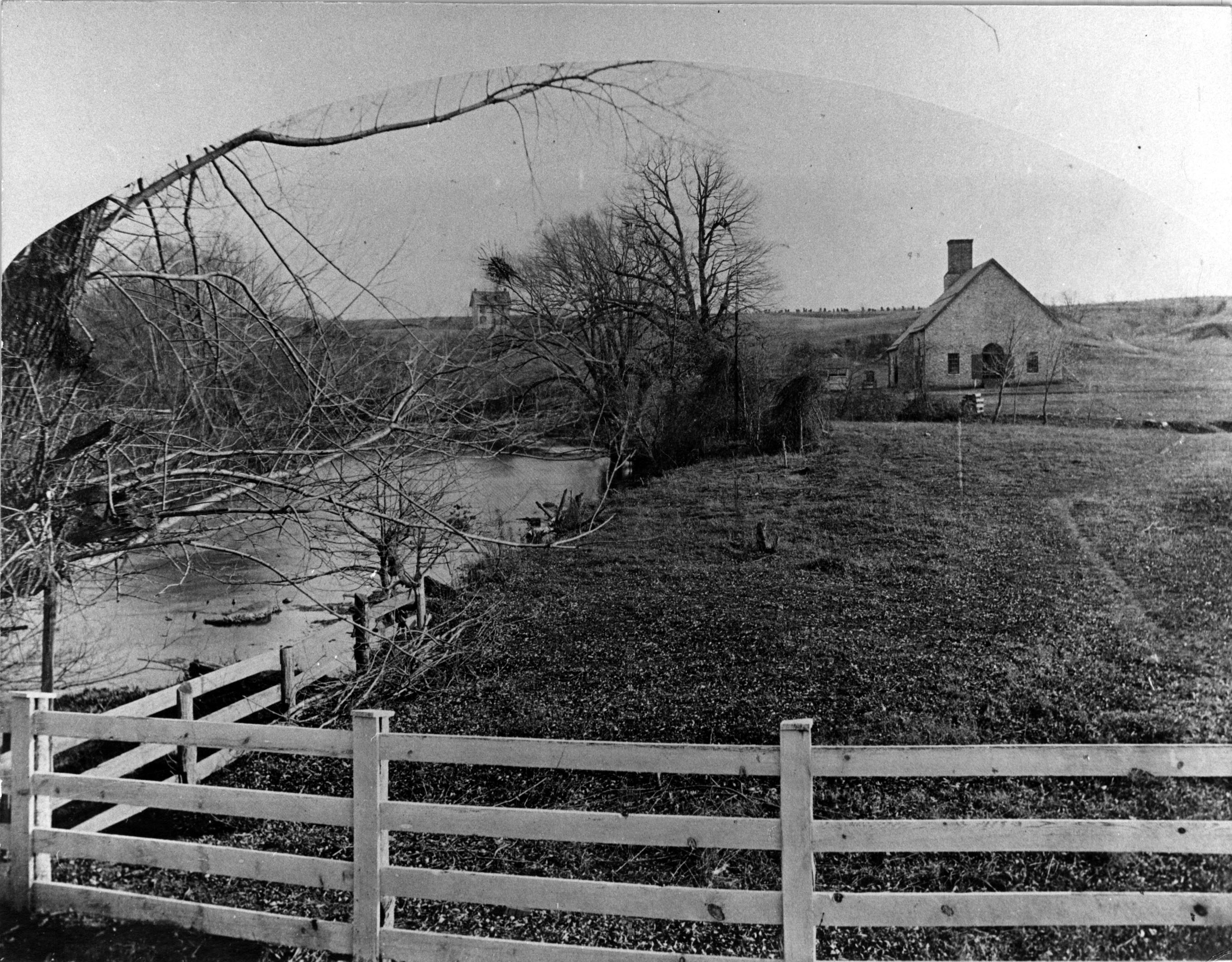
The above photo, from a previous post, was before the Montebello Filtration Plant was built. The water supply came from the Gunpowder River (7 miles away), directly to this gate house and emptied into the Montebello Lake.

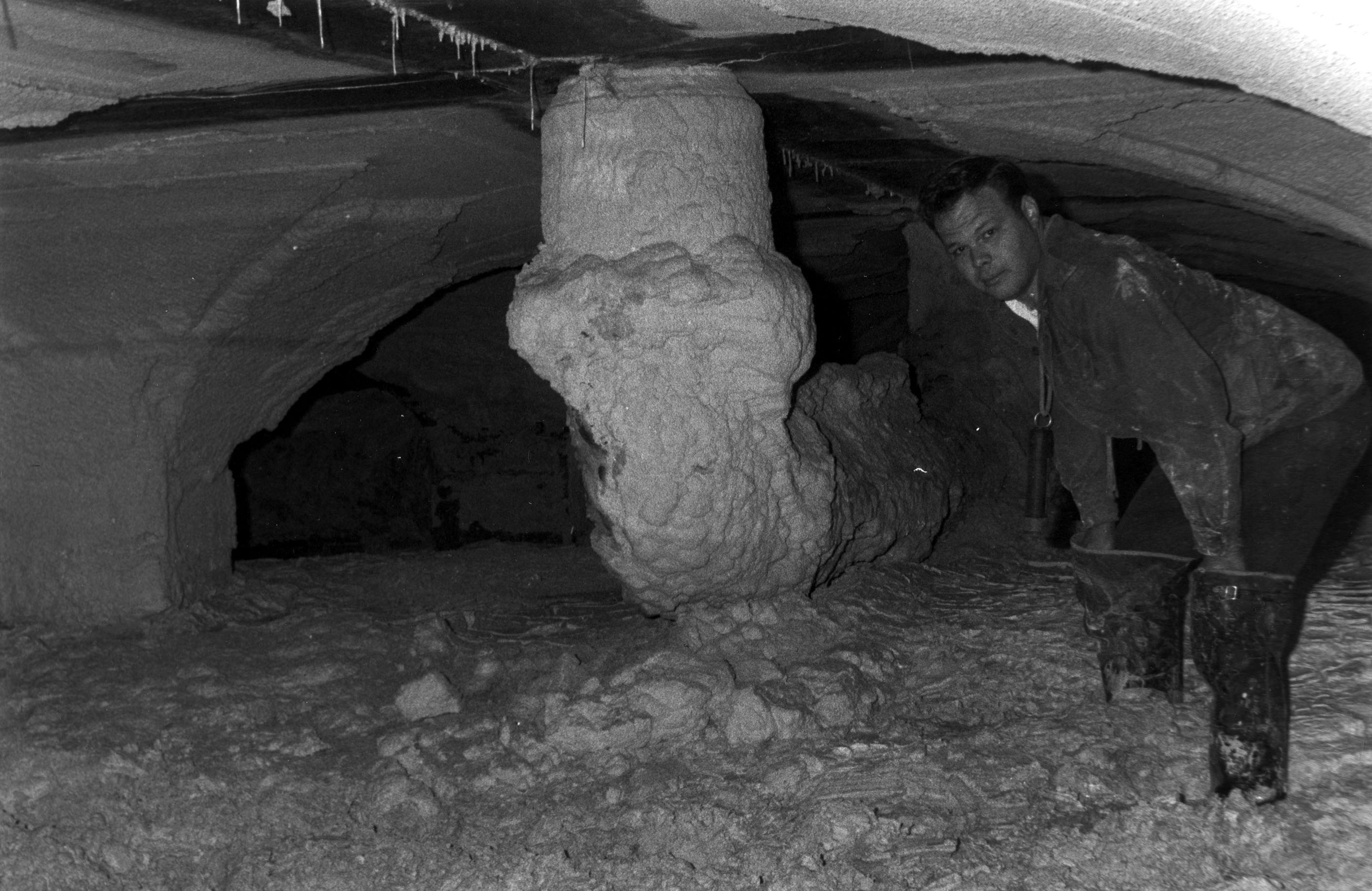
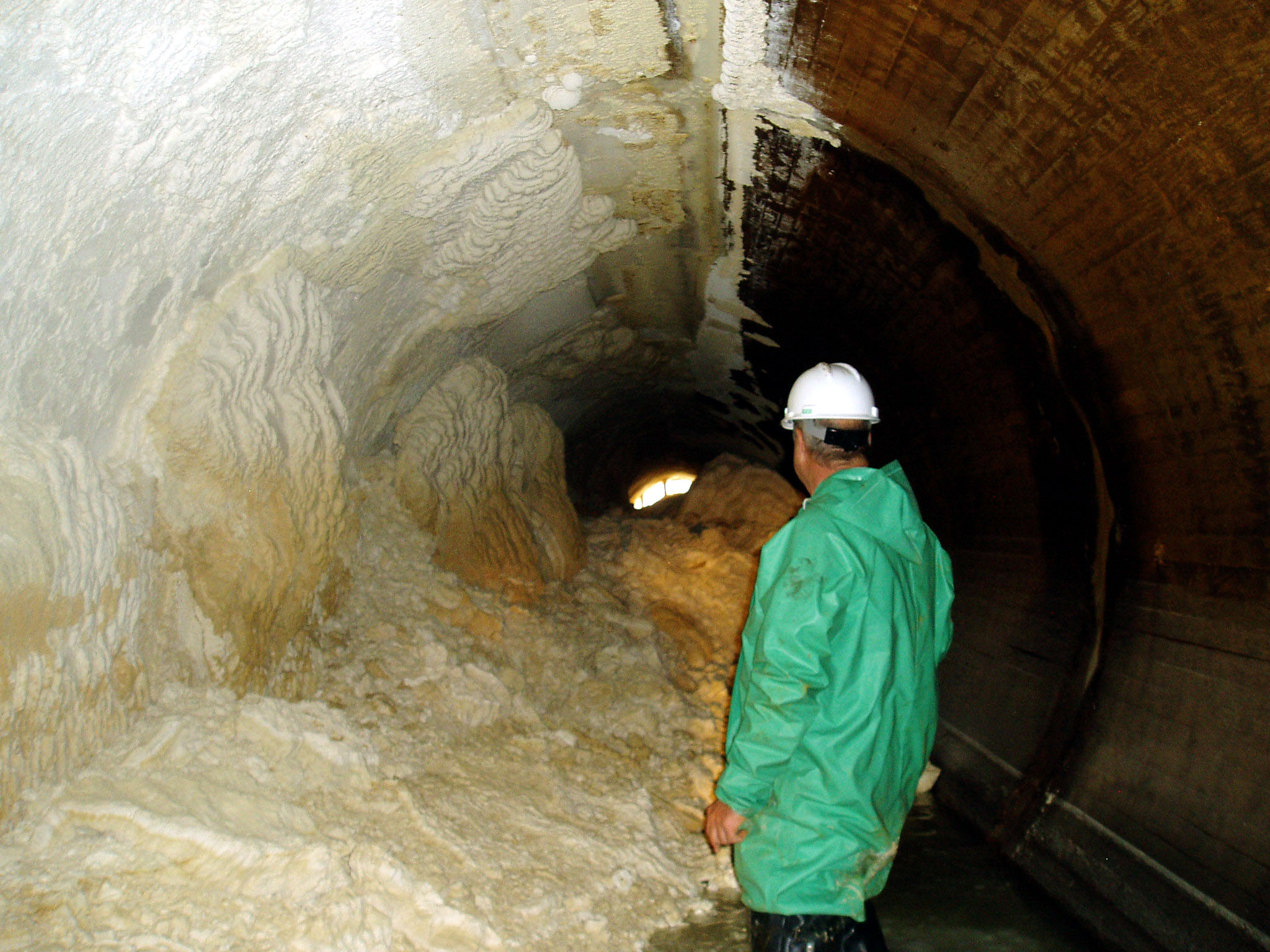
As can be seen, too much lime is not a good thing.
Lime2

This is after about 10 years of lime application, under the clear-well at Plant 1 Montebello.
OLYMPUS DIGITAL CAMERA

And this is after about 20 years. No clear-well at Plant 2, this pipe goes directly to the reservoir. There is about a 6″ pipe overhead that drops lime directly into this conduit.

Tunnel Inspection

06 Wednesday Apr 2016

Posted by Ronald Parks in Baltimore, water history

≈ 1 Comment

Tags

Baltimore, engineering, FILTRATION, Gunpowder Falls, HISTORY, Jones Falls, Lake Montebello, Montebello, Public Works, tunnel, water, water history

Between the years 1875 and 1881 a tunnel, 12′ in diameter 7 miles long was constructed between a dam on the Gunpowder River and a man-made lake at Montebello. This was all part of the new, permanent water supply for Baltimore. It would eventually replace the supply from the Jones Falls. As needed, this tunnel was inspected and found to be in very good condition over the years. The majority of the tunnel is through solid rock with only a few sections having a brick lining. As the City grew, a new dam was built upstream in 1914, with a connection to the 1881 conduit.

In 1933 the City was contemplating a new source of water. The decision was made to build  a parallel tunnel from Loch Raven (on the Gunpowder Falls). An inspection by the consultants was made of the old tunnel first. The below photographs show what they found – rock falls and leakage.

The old tunnel was taken out of service and the new tunnel was used. In the 50s and 60s it was decided to re-use the old tunnel, which carried raw water, to start sending processed water to Baltimore County. An inspection of the tunnel, which at this point being only 5-1/2 miles long (Bulkheads built on each end of the tunnel that were no longer needed) was done in 1968. These consultants, pictured below, found more of the same. Rock falls and leaks. Three of these men I eventually worked with in 1981.

Another inspection was done in 1984. Unfortunately I can not find any photographs. I do have the reports from this inspection and it is not good. More rock falls and leakage. I was asked last year to be a part of a new inspection group to enter this tunnel. I immediately said yes! BUT, over the course of a couple months preparing for this and all the safety people you can imagine being involved, it was decided to send in a remote operated vehicle. Not sure when they will do this, I just know the sub isn’t big enough for me to fit into!

Two quotes came to mind when i was asked “Why do you want to go in there? It is dangerous!”

Valeria to Conan the Barbarian – “Do you want to live forever?” And Lenny and Ziggy singing “Death by Misadventure!”

Face on the Falls

28 Sunday Feb 2016

Posted by Ronald Parks in Hiking, Photography

≈ Leave a comment

Tags

Gunpowder Falls, Hiking, photography

SONY DSC
SONY DSC
SONY DSC
SONY DSC

Walking along the Big Gunpowder Falls today, looked up and saw this.

Little House and Big Sycamore

13 Saturday Feb 2016

Posted by Ronald Parks in Photography, water history

≈ Leave a comment

Tags

Baltimore, Cromwell Park, Gunpowder Falls, photography

Cromwell Valley Park, after the snow.

103
095
071

Debate: Gatehouse vs Valvehouse

08 Sunday Mar 2015

Posted by Ronald Parks in Baltimore, HISTORY

≈ Leave a comment

Tags

Baltimore, engineering, FILTRATION, glass plate negatives, Gunpowder Falls, HISTORY, Lake Clifton, Lake Montebello, Montebello, photography, valve house, water history

Since starting my research in a museum archives, I’ve found quite a few discrepancies in the labelling of photographs and negatives. Some archival boxes were marked as Loch Raven Construction – 1909 (Which didn’t start until late 1912. These photos were actually the building of Lake Ashburton). Then there are the glass plate negatives marked as Loch Raven 1875-1881. A few of these are of Lake Montebello and Clifton. This is ok only because I know they are from a group known as the “permanent supply”, they belong together. But my problem is that somewhere along the timeline known as “History” someone decided to call the gatehouses ‘valve houses’ Why?? I do not understand the intent of changing the engineer’s designation of a structure from gatehouse to valve house? The drawings I have along with engineer’s reports all call these structures Gatehouses. Who changed it? Would it be alright to call one of Baltimore’s Little Tavern Restaurants – Small Bar Restaurants? Hell no! Words mean the same but they aren’t. You go to a small bar to get drunk – you go to the Little Tavern for their bags of hamburgers!!

I recently found a photograph of one I already have, that was mislabeled. Below is the photo from a glass plate , the other is from a framed photo that hung in the engineer’s office (Bottom Photo from 1894). The framed one clearly calls the Clifton Gatehouse a gatehouse, not a valve house – Stop the insanity and call it what it is!!!

Plate482

From a mislabeled GPN saying this is Loch Raven


IMG_1254

Framed photograph clearly marked as Gate House at Lake Clifton


Eng 5-94

Engineer Kenley’s office, 1894 with framed photographs hanging on the wall.


MFH 3

01 Sunday Mar 2015

Posted by Ronald Parks in HISTORY

≈ Leave a comment

Tags

Baltimore, engineering, FILTRATION, Gunpowder Falls, HISTORY, Jones Falls, Lake Clifton, Lake Montebello, Montebello, photography, water, water history

In 1881 the Permanent Supply started delivering water to Baltimore City, to help supplement the failing Jones Falls. Over the next few years, the Jones Falls would become so bad that  larger reservoirs would be needed. Especially after the annexation of 1888. Plans started to take shape in 1904, after the Big Fire, to increase Loch Raven. And because of pollution, Baltimore started testing various forms of filtration.

These photos epitomize the sanitation conditions of our rivers and streams, and why water sources were failing:

066-21
Contamination  418


Testing forms of filtration at both Montebello and Loch Raven gatehouses:

Mont 8-12 050LochRaven 8-12 043


New pumping stations and reservoirs were built and/or their water redirected. Mt Royal no longer was receiving water from the Jones Falls, but from the Gunpowder Falls, via pumping stations.  Below is the Mount Royal Reservoir, followed by the High Service Reservoir at Pimlico and below that the Eastern Pumping Station, which pumped water from Clifton to Guilford.

br072

br013LS504

MFH 2

15 Sunday Feb 2015

Posted by Ronald Parks in Baltimore, HISTORY

≈ 1 Comment

Tags

Baltimore, engineering, FILTRATION, Gunpowder Falls, HISTORY, Lake Clifton, Lake Montebello, Montebello, photography, water, water history

The Gunpowder Temporary Supply was in use between 1873 and 1881, as the City required it. Work on the Permanent Supply started in 1875. This new supply would consist of a dam at Loch Raven, a 6-1/2 mile tunnel to Montebello, where a lake would be built with a gatehouse, to connect to another lake at Clifton. The properties at Montebello and Clifton belonged to Garrett and Hopkins.

Building the Loch Raven Dam

Part of Montebello Lake
Under the Montebello Gatehouse
Lake Clifton

Clifton Gatehouse a couple years ago
After removal of Loch Raven Gatehouse
Old dam during a storm

One of the stones from building the dam
Recent Montebello Gatehouse
Dignataries getting ready to place the last stone into the dam

On September 29, 1881, Lake Montebello reached its full height elevation of 163′. Lake Clifton would not be completed until late 1887. The water from Montebello flowed thru pipes, to the site of the lake and connected to pipes, to supply the City. Until the lake and gatehouse were completed at Clifton, a temporary shed was built over the pits that housed the gate valves. There was a house built on the property for the Gatekeeper. There was recent talk of leasing the Clifton Gatehouse for a Farmers Market, if the person would restore the building.

Montebello Filters History 1

12 Thursday Feb 2015

Posted by Ronald Parks in Baltimore, HISTORY

≈ Leave a comment

Tags

Baltimore, engineering, FILTRATION, Gunpowder Falls, HISTORY, Jones Falls, Lake Roland, Montebello, water, water history

Before the Montebello Filtration Plant came to be in 1915, Baltimore received its water from various sources. Mostly at the direction of the City Commissioners to form a water company, for fire protection. Wells were sunk and springs directed to fountains. But like every other growing city, Baltimore had its fair share of problems – drought, pollution, pestilence, etc.

In 1854 the Bureau of Water Supply became a Municipal Utility Corporation. 1861 saw Swann Lake (Lake Roland), Hampden Reservoir and the new Mt Royal Reservoir put into service. These received water from the Jones Falls. In 1864 the City started construction of Lake Chapman (Druid Lake). By 1866, Mayor Chapman realized the inadequacy of the Jones Falls, so authorization for the purchase of lands along the Gunpowder Falls began. 1869-70 saw one of the worst droughts in Baltimore history. In 1871 a reservoir at Pimlico was built, but this was still receiving water from the Jones Falls, which was failing. 1873 saw an urgent need for a supplementary water supply.  A temporary pump, pumping station and a 36-inch cast iron discharge water main were constructed for the delivery of the Gunpowder Falls water from Meredith’s Ford Bridge to Roland Run, a tributary of the Jones Falls, above Lake Roland.  The water flow would be forced at a rate of 10 million gallons a day into Roland Run, a distance of 3-1/2 miles. To the dismay of the property owners. This was known as the Temporary Supply.

Original photo

Original photo

A. Hoen litho from  original photo

A. Hoen litho from original photo 1875

Newer posts →

Blogroll

  • Flouride Action Network
  • lulu
  • My Book
  • WordPress.com
  • WordPress.org

Recent Posts

  • Bermuda 2023
  • ICELAND April 2023
  • George Chalmers of Fochabers
  • In Search of The Skipjack Ada Mae
  • Trap Pond Kayak

Blog at WordPress.com.

  • Subscribe Subscribed
    • Water and Me
    • Join 231 other subscribers
    • Already have a WordPress.com account? Log in now.
    • Water and Me
    • Subscribe Subscribed
    • Sign up
    • Log in
    • Report this content
    • View site in Reader
    • Manage subscriptions
    • Collapse this bar
 

Loading Comments...