Took a road trip to Indian Beach, North Carolina the other day. On the way we stopped at an old mill, c1700s. Nice.
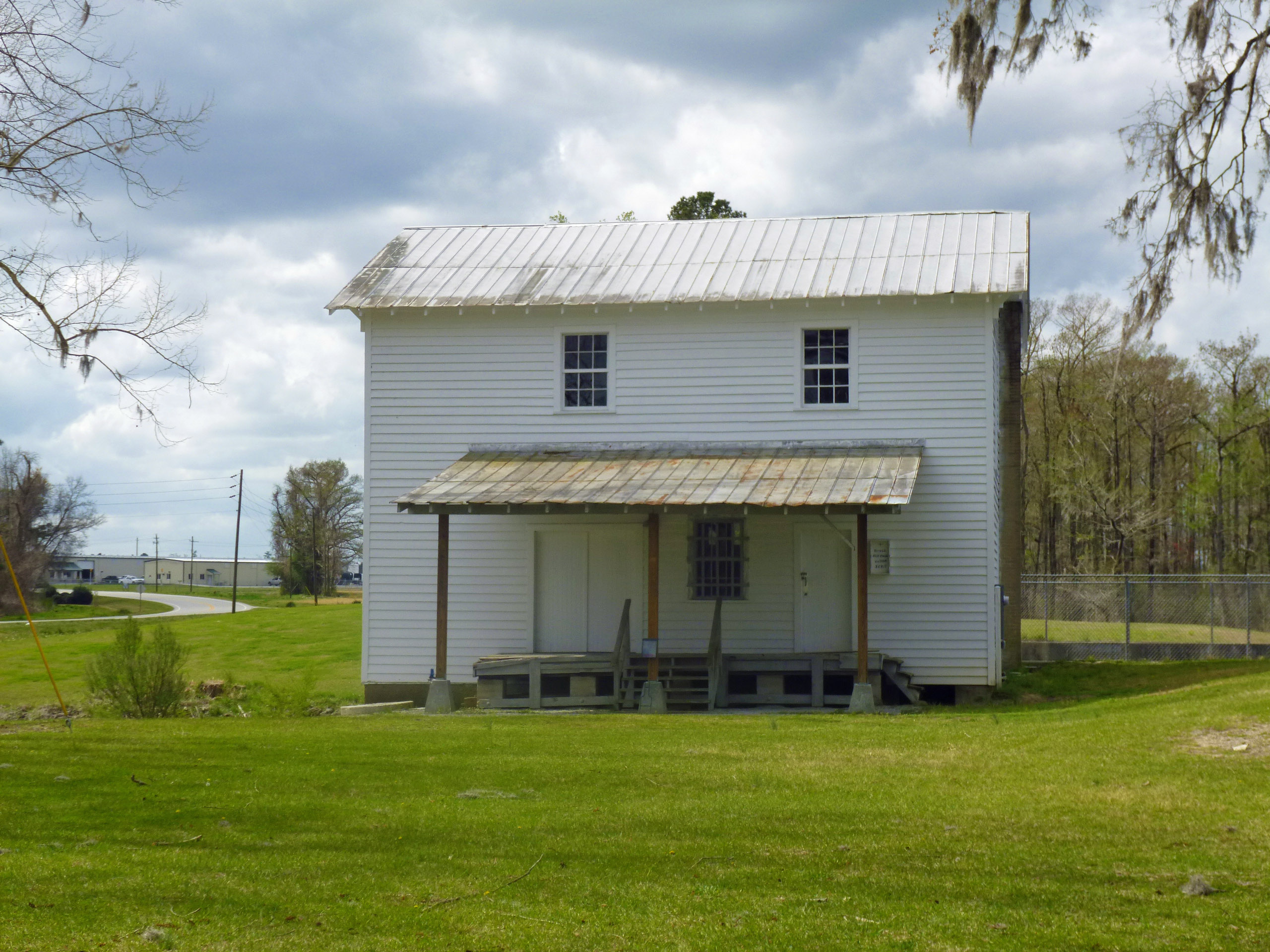
Too bad it was closed for the day – would like to see the inside workings.
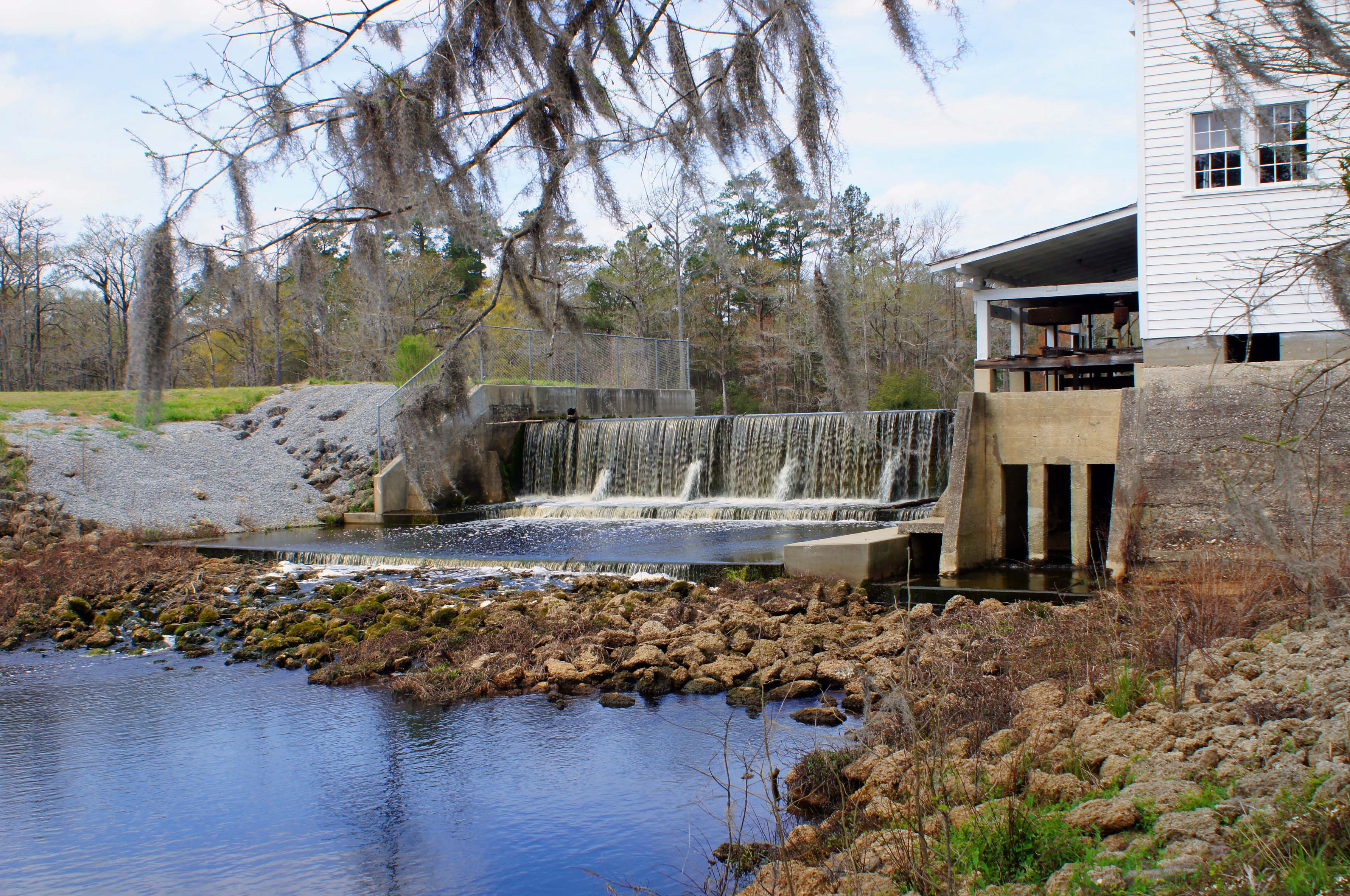
The dam
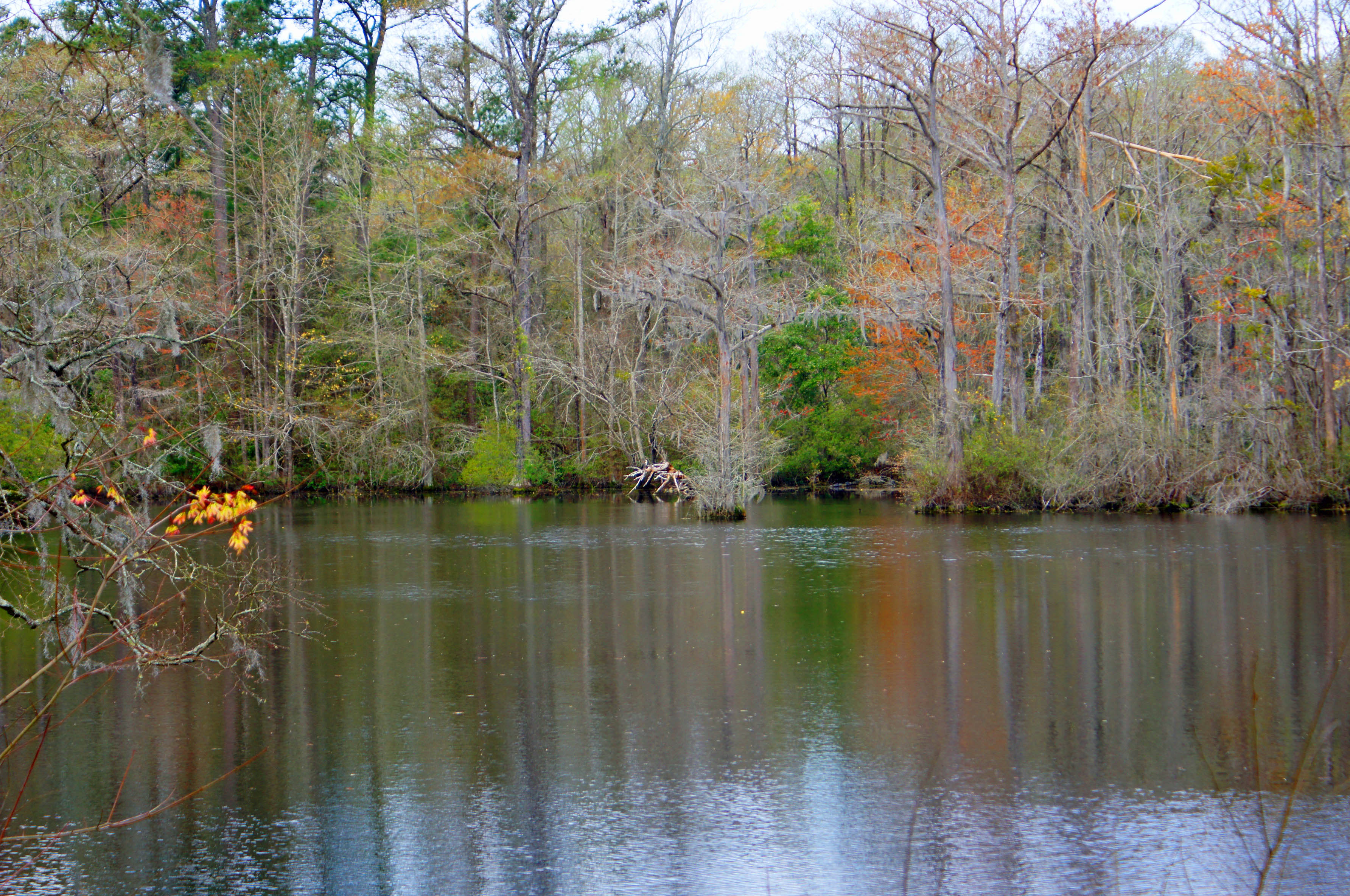
The pond – Kayak adventure waiting to happen!

04 Monday Apr 2016
Posted in HISTORY, Photography, Travel
Took a road trip to Indian Beach, North Carolina the other day. On the way we stopped at an old mill, c1700s. Nice.
Too bad it was closed for the day – would like to see the inside workings.
The dam
The pond – Kayak adventure waiting to happen!
18 Friday Mar 2016
Posted in Baltimore, Sewage History
Tags
Baltimore, boats, engineering, glass plate negatives, Health, HISTORY, photography, Public Works, sewage, Sewage History
The sewage of Baltimore City is pumped to the sewage plant at Back River in Baltimore County, where it is ‘cleaned’ and then discharged into the river. Interesting fact about the below photos from a 1955 report is this – “A number of leaks were repaired in the wood stave discharge pipes by a diver. The pier at the river, which had been damaged by hurricanes was rebuilt.”
As the photographs from the early 1900s show, the discharge pipes are above the water? So were they lowered into the water after assembly? That seems unlikely as there are hundreds of adjusting bolts holding the pipes into the air? Maybe I will find the answer one day in the many reports still to be read…


16 Wednesday Mar 2016
Posted in Baltimore, Sewage History
Tags
Baltimore, bricks, engineering, HISTORY, photography, Public Works, sewage, Sewage History, writing
While on a break from Facebook, I have been working on my new sewer history book, completing so far, 159 pages with 101,232 words. Now I need a break from writing! So I will just post some photographs with mini-captions!
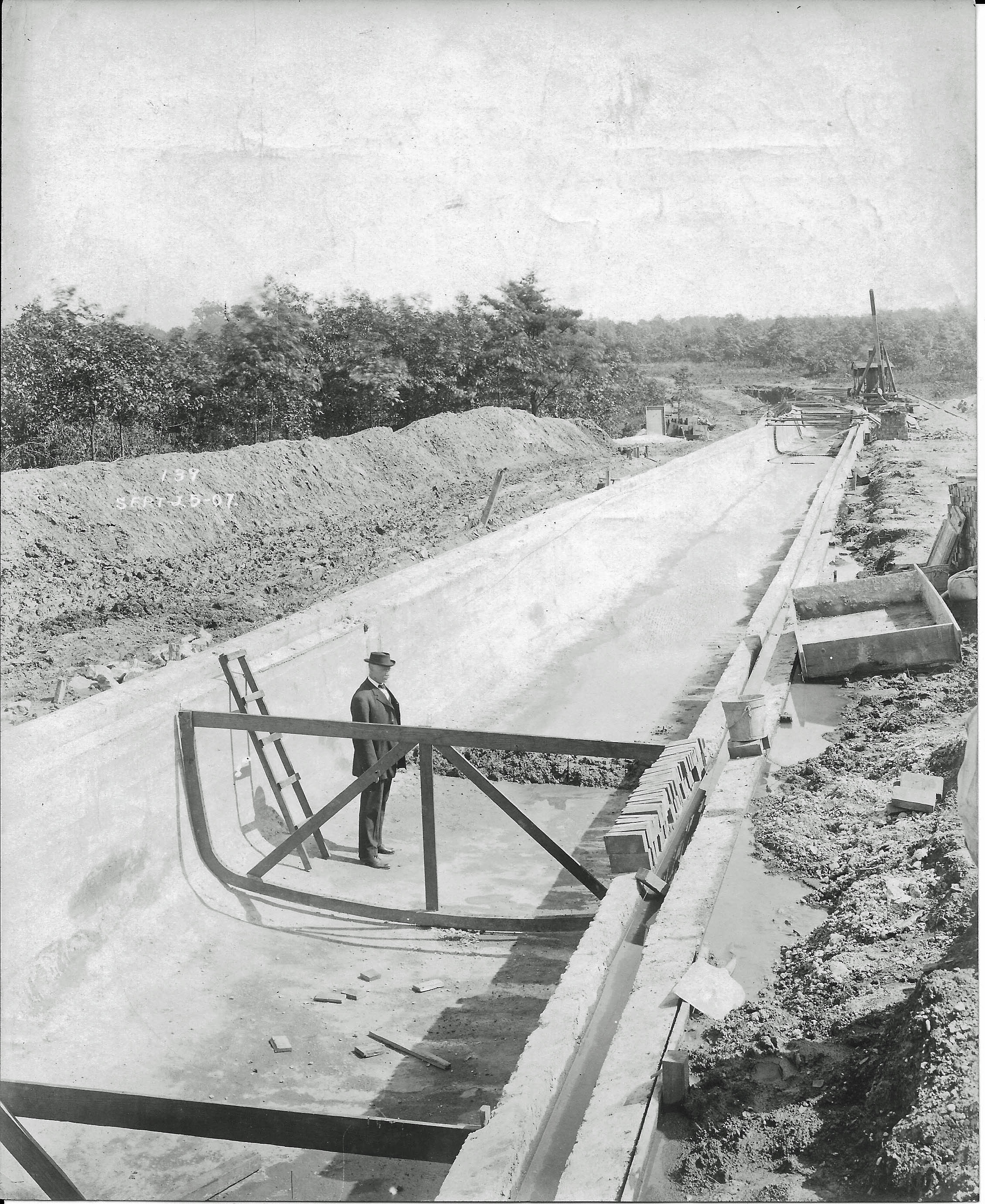
Section #6 Showing David Peoples, contractor, in concrete invert, ready for brick work. 1907
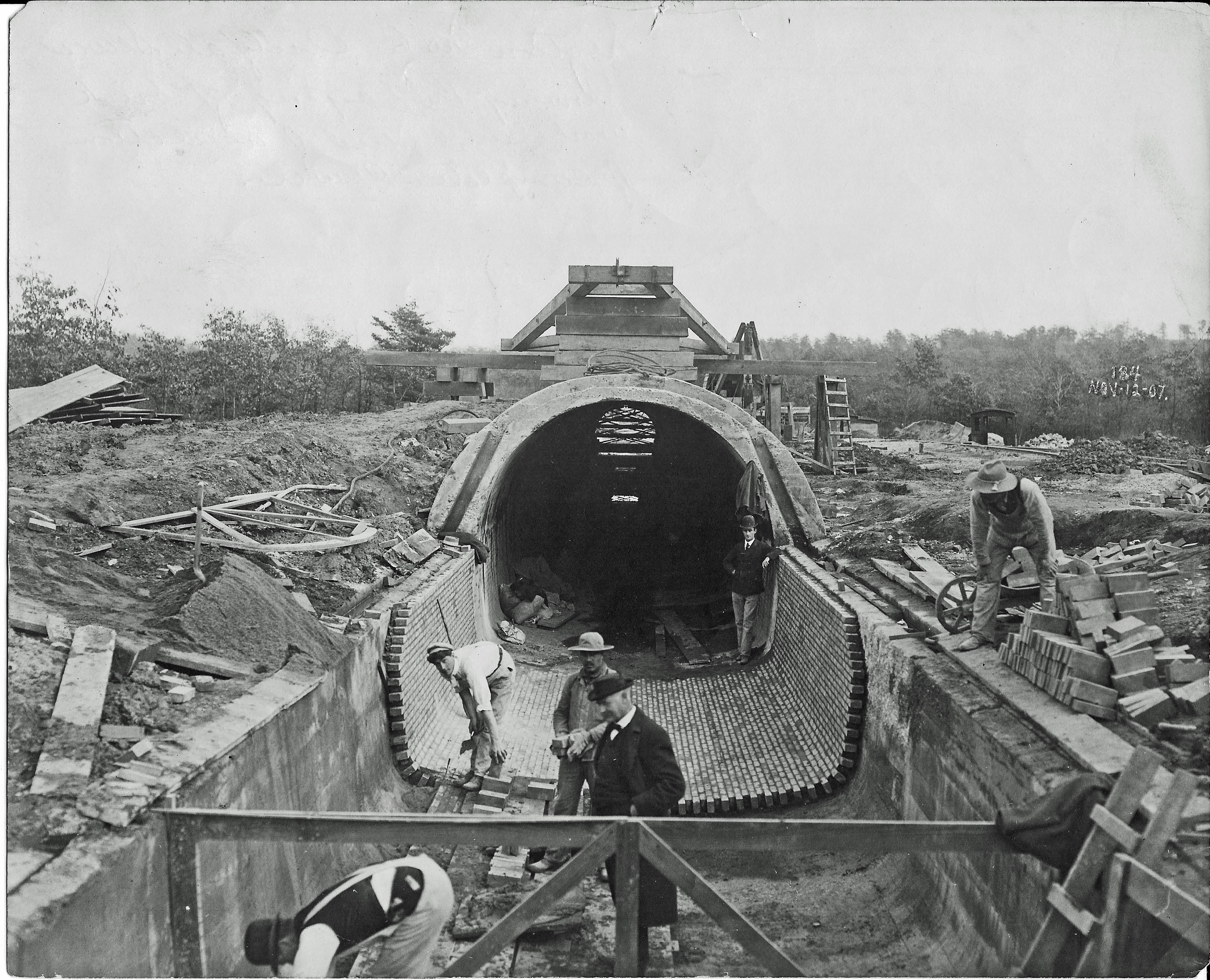 Section #6 Laying brick and completed section near Back River Road. 1907

Section #9 Showing inside of completed sewer at manhole Daylight exposure for this shot. 1907

Section #9 Showing bridge at Eastern Ave. over sewer trench. Danger sign in driveway where a teamster drove into bridge and threw a mule into the trench (Go slow danger) 1908
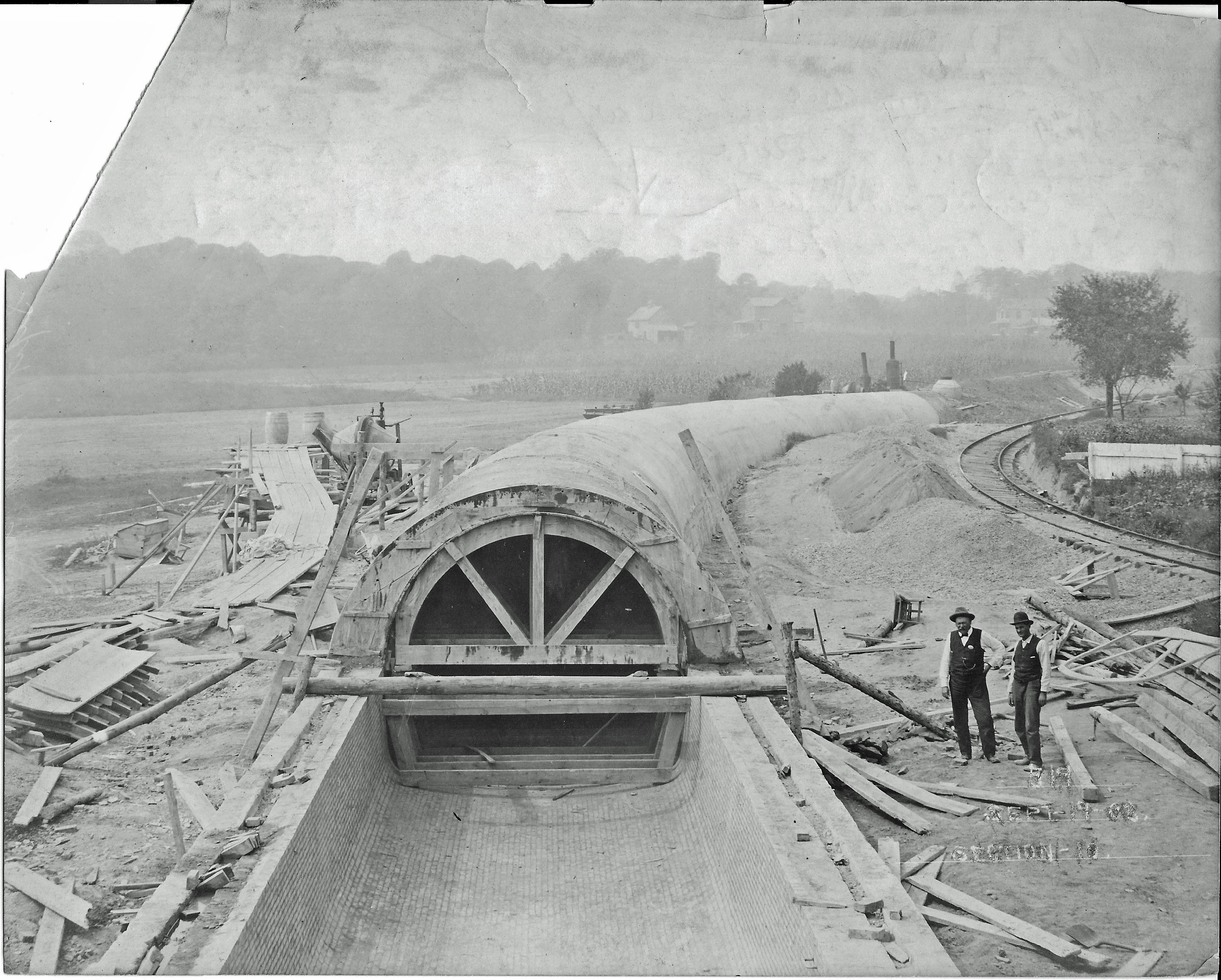
Section #10 South of Eastern Ave, section of sewer on 7 degree curve. 1908
08 Tuesday Mar 2016
Posted in Baltimore, water history
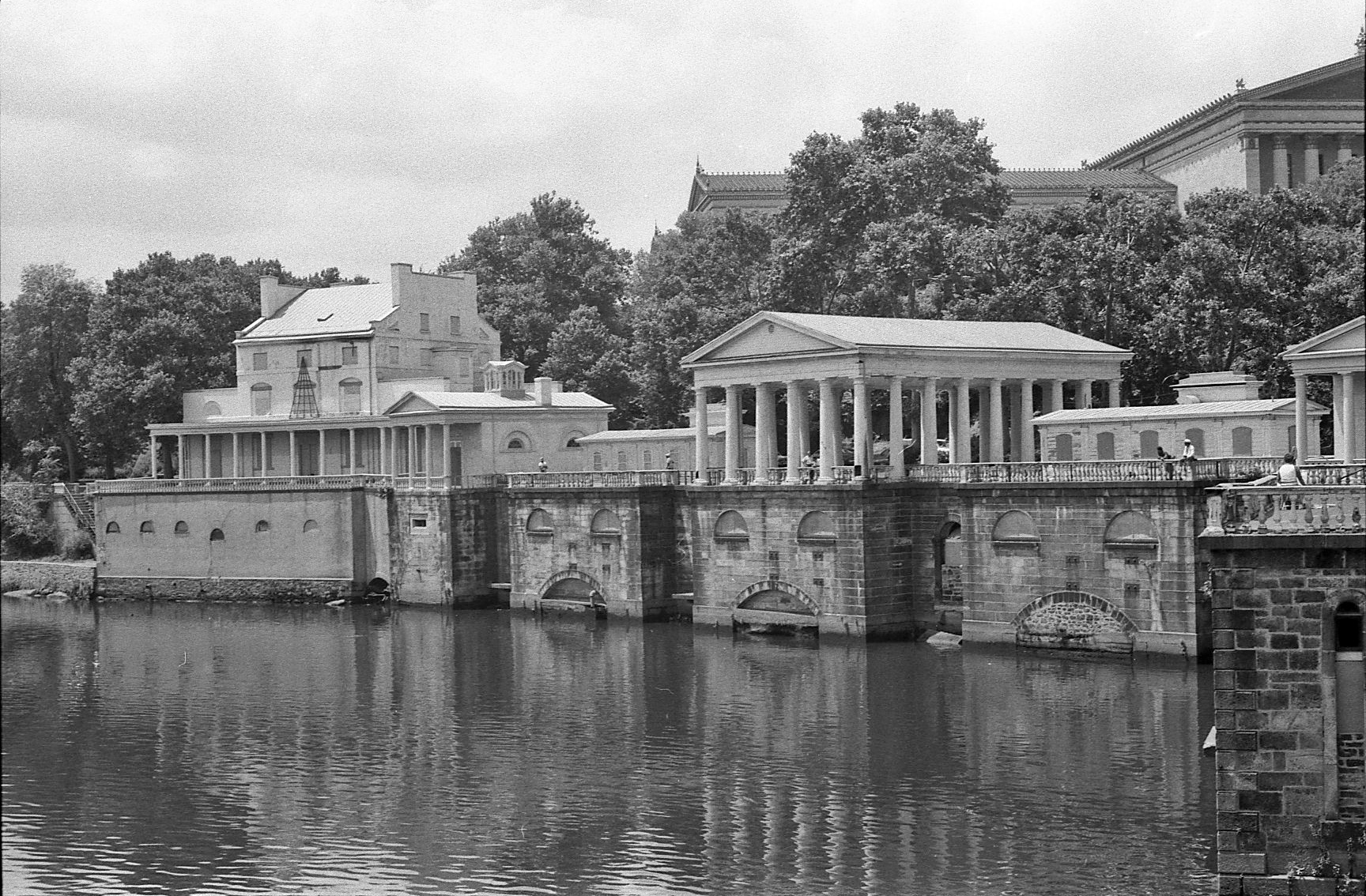
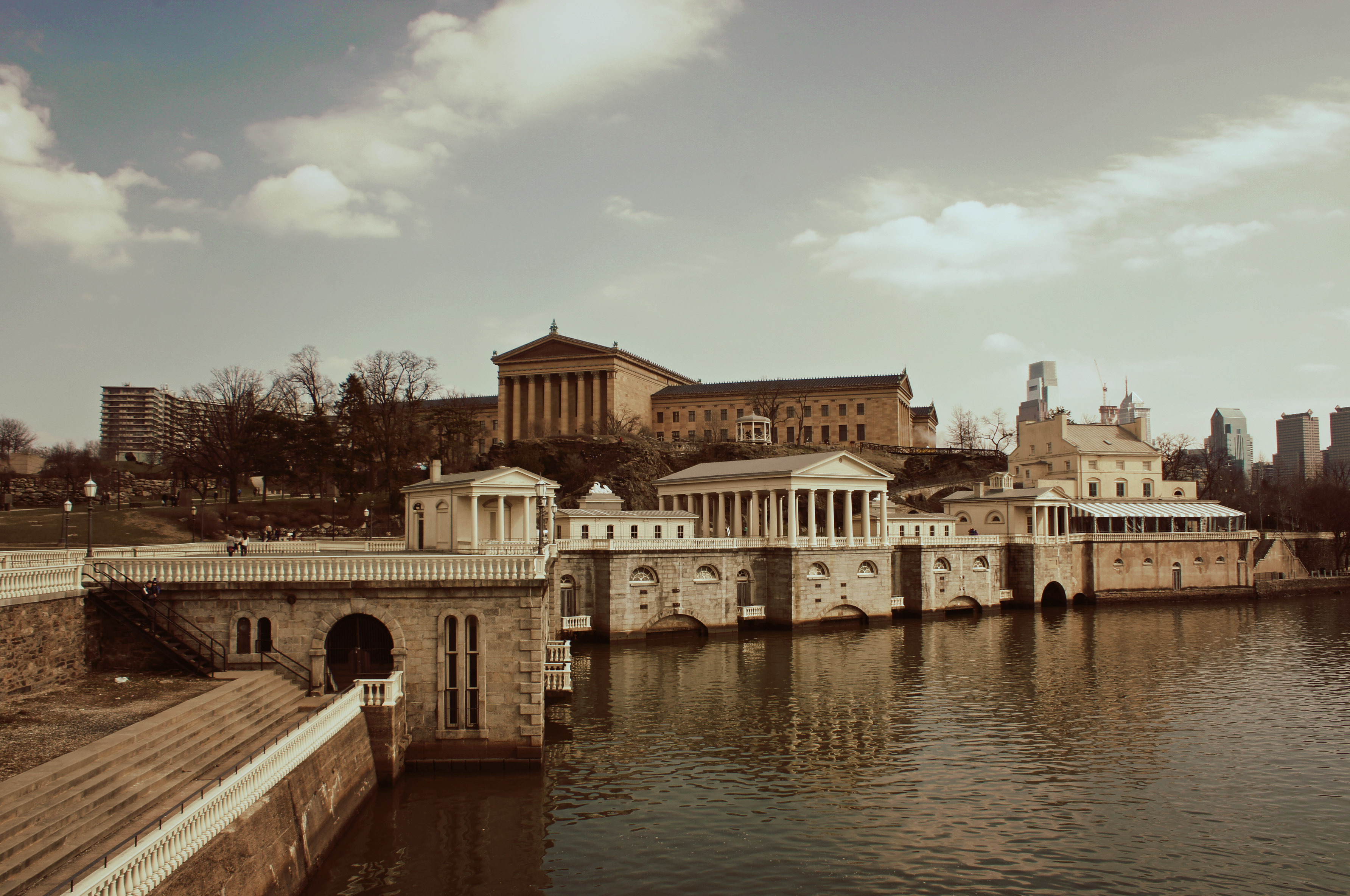
…but, it was a really great place to visit on Sunday, in Philadelphia. Although Philly was packed because of a flower show, it was still a good visit. We visited the art museum first and then walked down the hill to the Water Works (Fairmount). They just celebrated their 200th Anniversary.
Here is a brief history from the Interpretive Center:
Perched on the banks of the Schuylkill River, the Water Works was not only a source of the City’s water, its rambling Classic architecture and cutting-edge engineering made it an international 19th century tourist attraction. Water was pumped from the river into a reservoir (where the Art Museum now stands) and then distributed through the city via wooden water mains.
The one photo below (B&W) I found in Baltimore’s DPW Museum Archives and after some research, found out what it was. The other photo I took myself at the works.
28 Sunday Feb 2016
Posted in Hiking, Photography
Tags


Walking along the Big Gunpowder Falls today, looked up and saw this.
18 Thursday Feb 2016
Posted in Baltimore, HISTORY, Sewage History
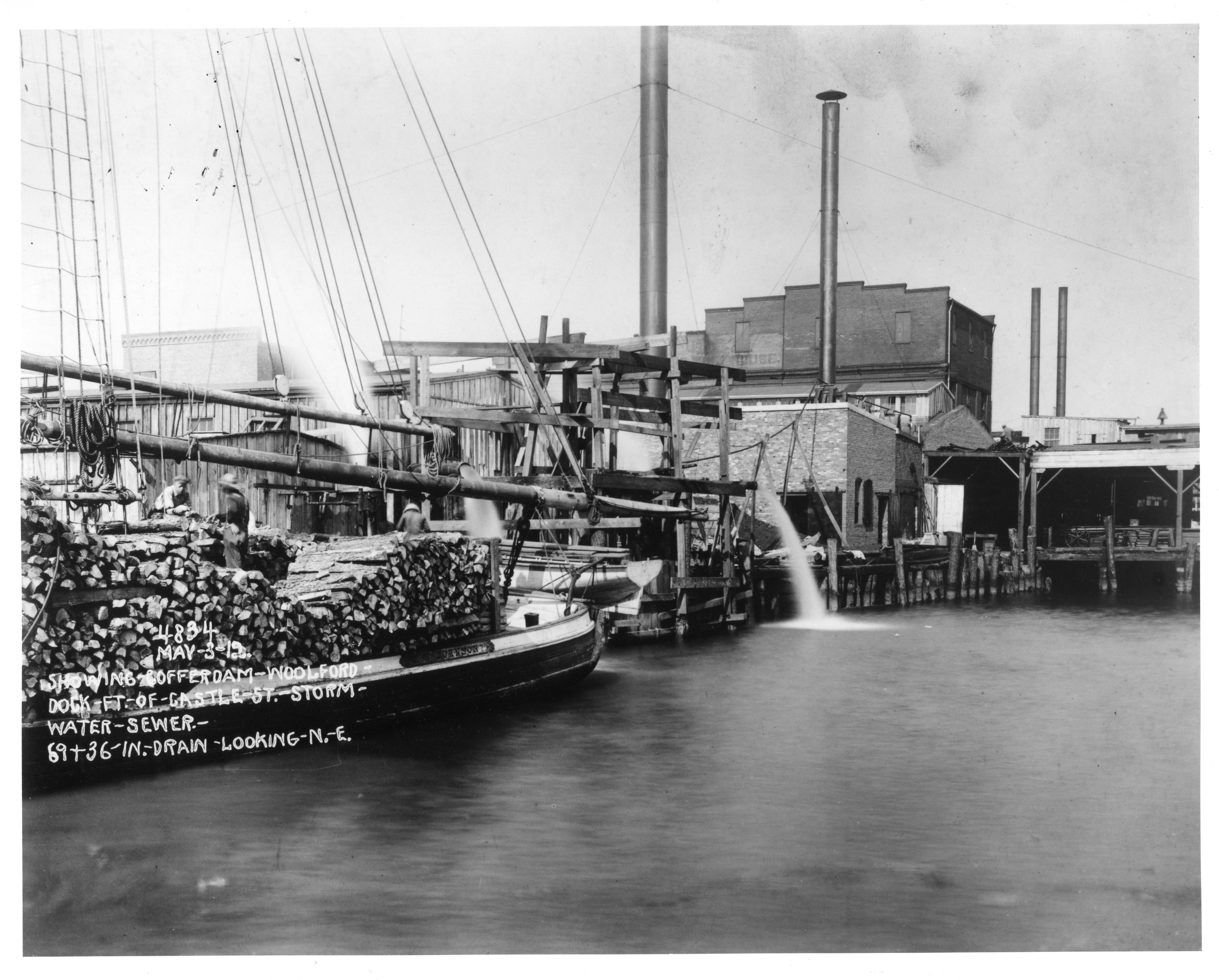
As previously mentioned in another post, the Jones Falls suffered much flooding along with a tremendous amount of pollution.
The below photograph shows a storm drain dumping into the Falls. This one was fed not by just the rain onto the street, but by the houses and over-flowing cesspools.
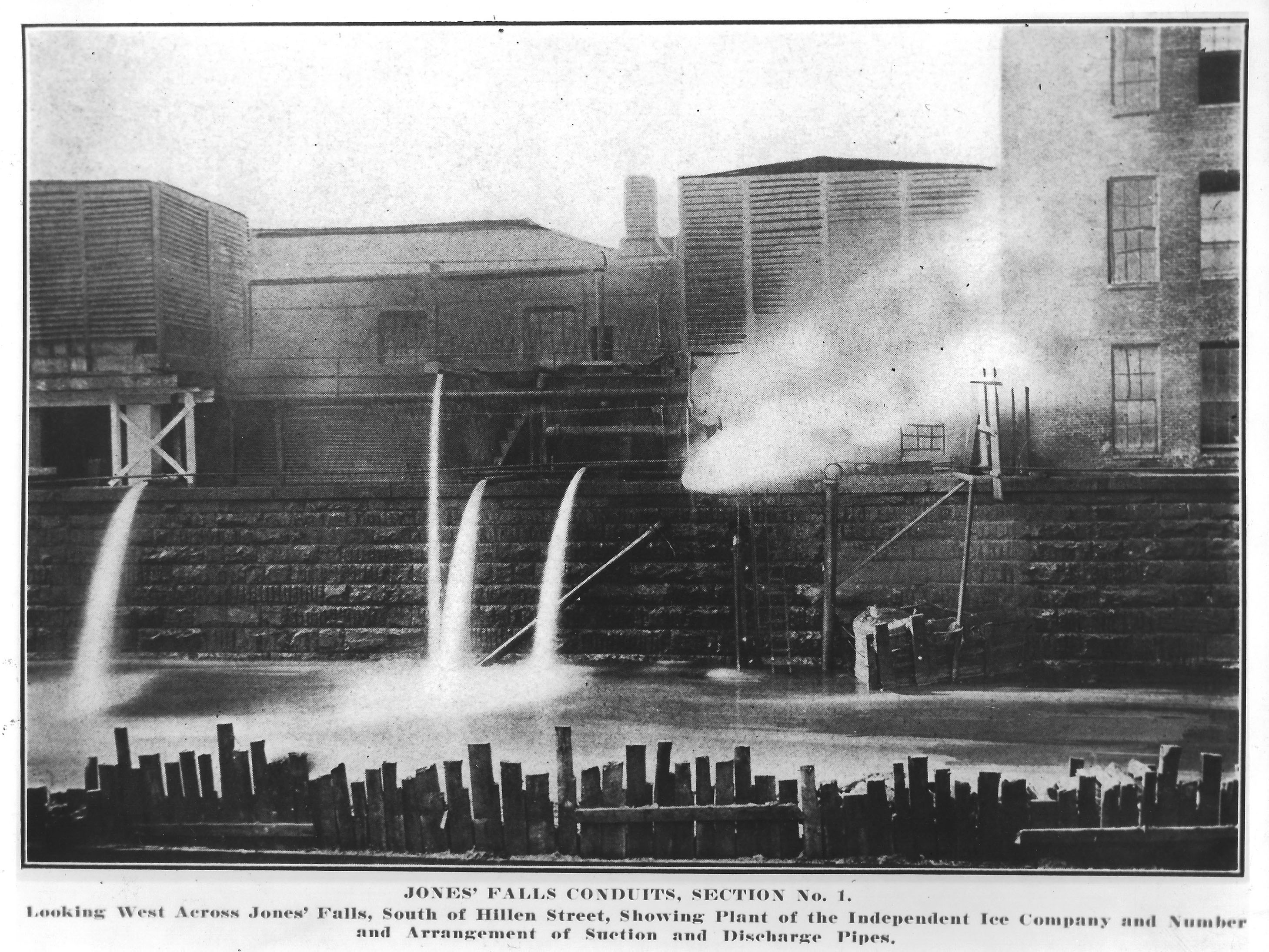
This photograph shows an ice company dumping its wasted water into the Jones Falls, then pumping the water back out, to make ice.
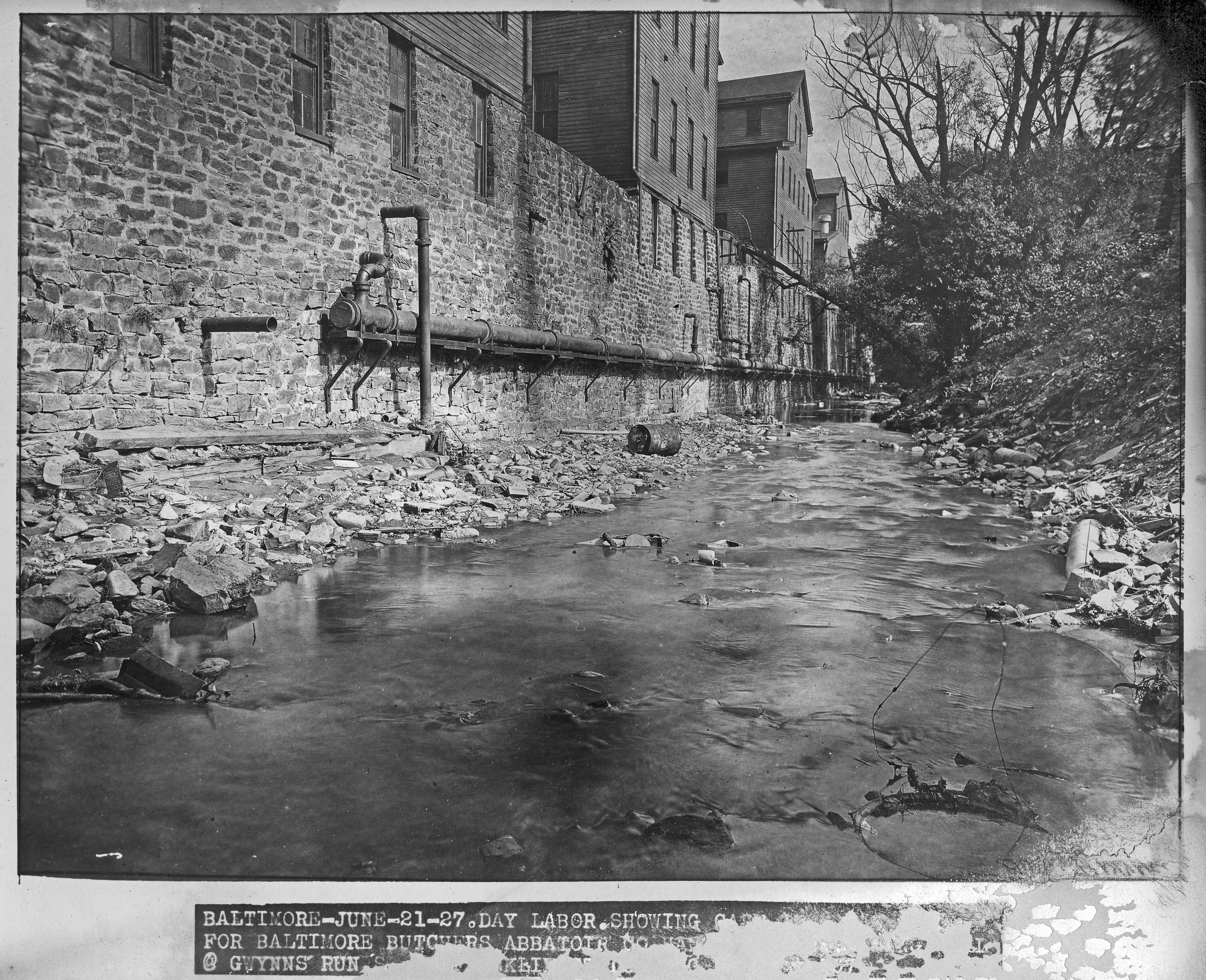
And this is a meat packing plant, slaughter house, that dumped all its waste into Gwynns Falls, which also dumped into Baltimore’s Harbor. This photograph came from an album that was first in a fire (at the warehouse it was stored) and then suffered water damage. The caption underneath reads: …for Baltimore Butcher’s [Abattoir] (slaughterhouse) Co ? @ Gwynns’ Run…
13 Saturday Feb 2016
Posted in Photography, water history
Cromwell Valley Park, after the snow.


08 Sunday Mar 2015
Tags
Baltimore, engineering, FILTRATION, glass plate negatives, Gunpowder Falls, HISTORY, Lake Clifton, Lake Montebello, Montebello, photography, valve house, water history
Since starting my research in a museum archives, I’ve found quite a few discrepancies in the labelling of photographs and negatives. Some archival boxes were marked as Loch Raven Construction – 1909 (Which didn’t start until late 1912. These photos were actually the building of Lake Ashburton). Then there are the glass plate negatives marked as Loch Raven 1875-1881. A few of these are of Lake Montebello and Clifton. This is ok only because I know they are from a group known as the “permanent supply”, they belong together. But my problem is that somewhere along the timeline known as “History” someone decided to call the gatehouses ‘valve houses’ Why?? I do not understand the intent of changing the engineer’s designation of a structure from gatehouse to valve house? The drawings I have along with engineer’s reports all call these structures Gatehouses. Who changed it? Would it be alright to call one of Baltimore’s Little Tavern Restaurants – Small Bar Restaurants? Hell no! Words mean the same but they aren’t. You go to a small bar to get drunk – you go to the Little Tavern for their bags of hamburgers!!
I recently found a photograph of one I already have, that was mislabeled. Below is the photo from a glass plate , the other is from a framed photo that hung in the engineer’s office (Bottom Photo from 1894). The framed one clearly calls the Clifton Gatehouse a gatehouse, not a valve house – Stop the insanity and call it what it is!!!

From a mislabeled GPN saying this is Loch Raven

Framed photograph clearly marked as Gate House at Lake Clifton

Engineer Kenley’s office, 1894 with framed photographs hanging on the wall.
01 Sunday Mar 2015
Posted in HISTORY
Tags
Baltimore, engineering, FILTRATION, Gunpowder Falls, HISTORY, Jones Falls, Lake Clifton, Lake Montebello, Montebello, photography, water, water history
In 1881 the Permanent Supply started delivering water to Baltimore City, to help supplement the failing Jones Falls. Over the next few years, the Jones Falls would become so bad that larger reservoirs would be needed. Especially after the annexation of 1888. Plans started to take shape in 1904, after the Big Fire, to increase Loch Raven. And because of pollution, Baltimore started testing various forms of filtration.
These photos epitomize the sanitation conditions of our rivers and streams, and why water sources were failing:


Testing forms of filtration at both Montebello and Loch Raven gatehouses:

New pumping stations and reservoirs were built and/or their water redirected. Mt Royal no longer was receiving water from the Jones Falls, but from the Gunpowder Falls, via pumping stations. Below is the Mount Royal Reservoir, followed by the High Service Reservoir at Pimlico and below that the Eastern Pumping Station, which pumped water from Clifton to Guilford.


15 Sunday Feb 2015
Tags
Baltimore, engineering, FILTRATION, Gunpowder Falls, HISTORY, Lake Clifton, Lake Montebello, Montebello, photography, water, water history
The Gunpowder Temporary Supply was in use between 1873 and 1881, as the City required it. Work on the Permanent Supply started in 1875. This new supply would consist of a dam at Loch Raven, a 6-1/2 mile tunnel to Montebello, where a lake would be built with a gatehouse, to connect to another lake at Clifton. The properties at Montebello and Clifton belonged to Garrett and Hopkins.


On September 29, 1881, Lake Montebello reached its full height elevation of 163′. Lake Clifton would not be completed until late 1887. The water from Montebello flowed thru pipes, to the site of the lake and connected to pipes, to supply the City. Until the lake and gatehouse were completed at Clifton, a temporary shed was built over the pits that housed the gate valves. There was a house built on the property for the Gatekeeper. There was recent talk of leasing the Clifton Gatehouse for a Farmers Market, if the person would restore the building.
 Water and Me