• About
  • History Writings

Water and Me

Water and Me

Tag Archives: POLITICS

Odorless Excavating Apparatus

29 Friday Apr 2016

Posted by Ronald Parks in Baltimore, Health, Sewage History

≈ Leave a comment

Tags

Baltimore, engineering, FILTRATION, garbage, Health, HISTORY, Jones Falls, Lake Roland, POLITICS, Public Works, sewage, Sewage History, water, water history

Baltimore, situated as she is, with one main water course through her center (Jones Falls), she had plenty of water for the people. Pure, clean drinking water….until people started dumping their sewage into it. Many Health Commissioner’s Reports talk about what to do with the sewage of Baltimore. Contractors were hired to haul it away. Here are a couple HCRs on what happened over a few short years in Baltimore, until a proper system of sewage could be built.

1865 – The withdrawal of a large share of the water flowing in this stream (Jones Falls), by the completion of the lake and storage reservoirs (Lake Roland, originally called Swann Lake), with the extension of the water works in the city, has left too small a portion of water to keep the original course clean if nothing was thrown into it; but to this deficiency of water add its use as a receptacle for every species of offal from factories, foundries, tanneries, stables and dwelling houses, and we are not surprised at its present condition. We have had one of these sources of nuisance carefully examined, and find that not only are most of the privies attached to dwellings on the streets adjoining the Falls drained into it, by means of private sewers, but that wherever a sewer leading to it can be reached, this sewer is connected with privies for drainage purposes.

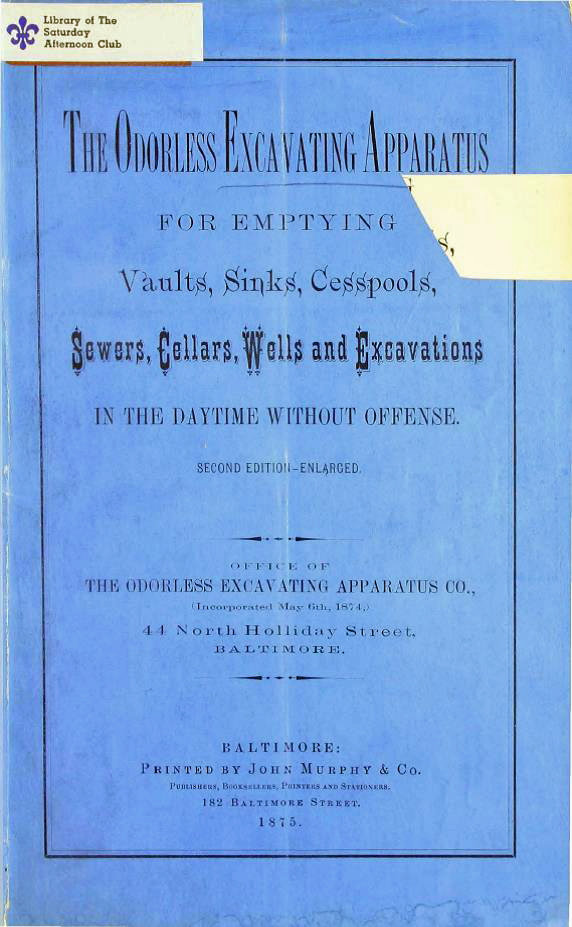
1873 – The late City Council have distinguished their administration by the passage of an ordinance permitting the use of the “odorless excavating apparatus” for emptying privies in the day time. This is the inauguration of a new era, and destined to prove one of the greatest blessings of the age. As stated in a communication on this subject to the late City Council, your Commissioner holds that a large proportion of the cases of cholera infantum occurring in all large cities during the heated term are to be ascribed to the ancient and vile mode of doing this work, as well as to its transportation through the streets of the city, poisoning the air which is wafted into every open window.
1875 Odorless Apparatus2

1875 Odorless Apparatus1888 – The adoption of a proper system of sewers for the present privy-wells will assist the Health Department in its endeavor to bring the City to a point where the ordinary sanitary condition will be such that epidemics of disease, resulting from or aggravated by filth, could be avoided or reduced to a minimum. The danger is greater than the people realize; the trouble is deep-seated and not to be reached by the Spring ‘cleaning up’ nor even by inspection. In most of the houses of this City there exists a latent power for evil, which is liable when its hour arrives to exert itself to the full of its terrible might.

I don’t believe that this apparatus lasted too long. It is no longer mentioned after the 1876 report.

Dumps and Incinerators

21 Thursday Apr 2016

Posted by Ronald Parks in Baltimore, HISTORY, Sewage History

≈ Leave a comment

Tags

Baltimore, engineering, garbage, glass plate negatives, Health, HISTORY, Jones Falls, POLITICS, Public Works, sewage, Sewage History, water history

In the 1884 Street Cleaning report are listed the following five dumps: Canton, Spring Garden, Back Basin, Eager St. and South Baltimore. By the 1920s, Baltimore was burning its garbage at two incinerators. One at Sisson and 28th street. The other on Philadelphia road. What does this have to do with sewage? Both places are on streams. Sisson street on Jones Falls, which still has a household hazardous waste collection site (original building appears to be gone). And Philadelphia road, as seen in the one photo below dumped right into Herring Run, which empties into Back River then on to the Chesapeake Bay. These photographs come from glass plate negatives that were broken due to improper storage. If you have GPNs, handle them with care.

img008r

The horse drawn cart was replaced by the modern dump truck. Here they are backing into the Sisson Street Incinerator, also known as #1 incinerator.

img002r

Instead of just piling the refuse into a dump, hoping somehow it would disappear, the garbage was sorted and then burned. #2 Incinerator on Pulaski Highway.

img010r

Pulaski Highway #2 Incinerator showing how any liquids and washed down materials were dumped into Herring Run. And yes, there use to be Herring in that stream.

Garbage 1886

20 Wednesday Apr 2016

Posted by Ronald Parks in Baltimore, Health, Sewage History

≈ Leave a comment

Tags

Baltimore, garbage, Health, HISTORY, Jones Falls, POLITICS, Public Works, sewage, Sewage History

1886 – From the Mayor’s Message: Health Department –  Garbage, etc. – The amount of garbage collected and removed during the past year was thirty-three thousand eight hundred and forty-nine cart-loads. Table G (below) shows the large number of dead animals, fowls, etc., collected and removed by this Department. The present methods of disposal of garbage and carrion are exceedingly unsatisfactory. Much annoyance and discomfort is experienced by residents adjacent to the present dumps, and frequent and continued complaints are made of the offensive odors. This annoyance, and menace to public health, can be obviated by burning them.

Chart gThis is a lot of dead animals. When this refuse was not picked up immediately and taken to the dumps (5 in the city), it was washed into the sewers which emptied into the Inner Harbor.

End Fluoride

07 Thursday Apr 2016

Posted by Ronald Parks in Baltimore, Fluoride, water history

≈ Leave a comment

Tags

Baltimore, engineering, FILTRATION, fluoride, Health, HISTORY, Montebello, POLITICS, Public Works, water history

In May 2008 the Mayor of Baltimore had a program called the “Innovation Bank” This was a program that allowed City Employees to make suggestions on how the City could save money. The winner could win up to $5,000.00 for their idea.

The first idea that popped into my mind was to end Fluoridation of the drinking water supply. Back then the over-all savings to the City would have been $670,000.00 a year. Today it is closer to one million a year. After about a month of waiting for a reply to my proposal, I called the Mayor’s Office and was told – “Yeah, she saw it” (Was that a snicker I heard in her assistant’s voice?)

Today I received an email from a woman who had started a campaign a couple years ago to end fluoridation of Baltimore’s Water. It said: Breaking news:  The resolution/bill to study water fluoridation is being introduced TODAY at the City Council meeting, in City Hall, 5pm.  You are all welcome to attend; however, there is no actual action taking place today except that the bill will be read off a list as being officially introduced.  Exciting!  And now: Its on.  Time to start prepping for a hearing about 6 weeks from now.

This is great news! I could list all the reasons WHY we should have stopped (or not started at all) but I will let the experts tell you. For me, my dislike for the poison came my first week on the job in 1981 when I was asked to work on the fluoride pumps and saw how the leaking acid ate thru the metal stand and concrete base. I thought to myself – this stuff can’t be good for you! You can read what the experts say here:

http://fluoridealert.org/

Below is a photograph showing when Baltimore first started using fluoride

Fluor 11-52

The trapping of inlets to sewers

21 Monday Mar 2016

Posted by Ronald Parks in Baltimore, Sewage History

≈ Leave a comment

Tags

Baltimore, engineering, Health, HISTORY, Jones Falls, POLITICS, Public Works, sewage, Sewage History

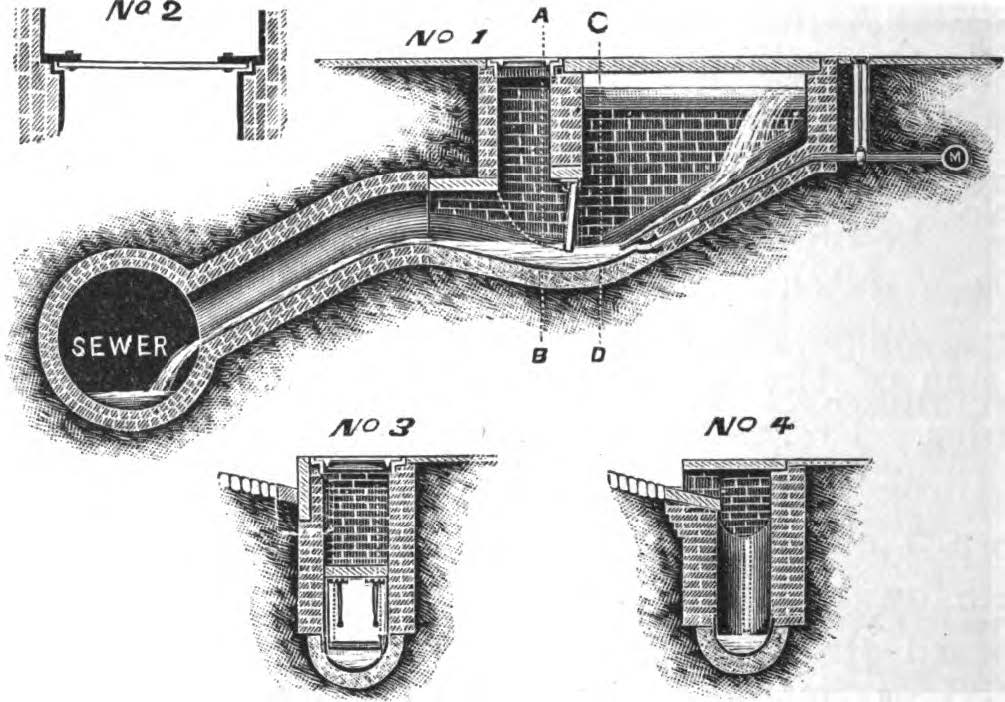
From the 1887 Annual Report of the City Commissioners – This, perhaps, has, as much as any other subject connected with the sewerage of cities, occupied the attention of inventors. Many plans have been devised, from time to time, and for which patents have been granted, for the construction of a perfectly sealed trap. Now, the bad features of all inlets I have yet seen, or know of, are done away with by the simple and comparatively inexpensive contrivance patented by one of the attaches of this office, Mr. Charles P. Kahler. By resolutions of your honorable body, two of these traps have been placed in the inlets to Howard street sewer, at the intersection of Conway and Howard Streets, and at the corner of Camden and Howard streets, which are working clearly up to the degree of efficiency claimed for them by the inventor. I have no hesitation in recommending this invention for adoption. Mr. Kahler can explain the principle involved in his trap more fully to those who may call on him than could be done in this report. A cut representing the improved inlet is annexed.

THE KAHLER PATENT INLET.

CityCommissioner 1872-1887

No. 1–Longitudinal section of Inlet.

No. 2–Section of valve or door with gum packing.

No. 3–Section through A. B.

No. 4–Section through C D.

M—Water mains.

A System of Sewerage 1906

04 Thursday Feb 2016

Posted by Ronald Parks in HISTORY, water, water history

≈ Leave a comment

Tags

Baltimore, engineering, HISTORY, Jones Falls, POLITICS, water, water history

Baltimore starts construction for a system of sewerage, officially, on October 22, 1906, with a groundbreaking by Mayor Clay Timanus at Ensor and Lanvale streets. Behind Greenmount Cemetery.

img007b (2)

As was typical for the times, a plaque was created and placed on the cemetery wall

Tablet

In the 1906 Annual Report of the Sewerage Commission are listed some interesting facts about Baltimore:

The population, according to a police census was 555,000. The city being 31-1/2 square miles consists of, approximately, the following buildings:

Asylums, Homes and Hospitals; Jail, Penitentiary and House of Refuge 77. Apartment Houses 26. Banks and Libraries 47. Breweries and Distilleries 21. Car Barns and Railroad Stations 45. Churches and Missions 364. Coal, Wood, Stone and Lumber Yards (Sheds) 130. Clubs and Office Buildings 57. Department Stores 10. Engine Houses and Police Stations 46. Hotels 32. Livery Stables 55. Industrial Plants 266. Manufacturing Plants 367. Markets 10. Residences 108,340 (of which, 15,000 dumped household waste directly into the Jones Falls/harbor). Schools, public and private; Colleges, Convents 169. Stables, small 1461. Theatres and Halls 38.

Total 111,561

Montebello FWR II

25 Sunday Jan 2015

Posted by Ronald Parks in HISTORY, water

≈ Leave a comment

Tags

Baltimore, engineering, FILTRATION, HISTORY, Montebello, POLITICS, water, water history

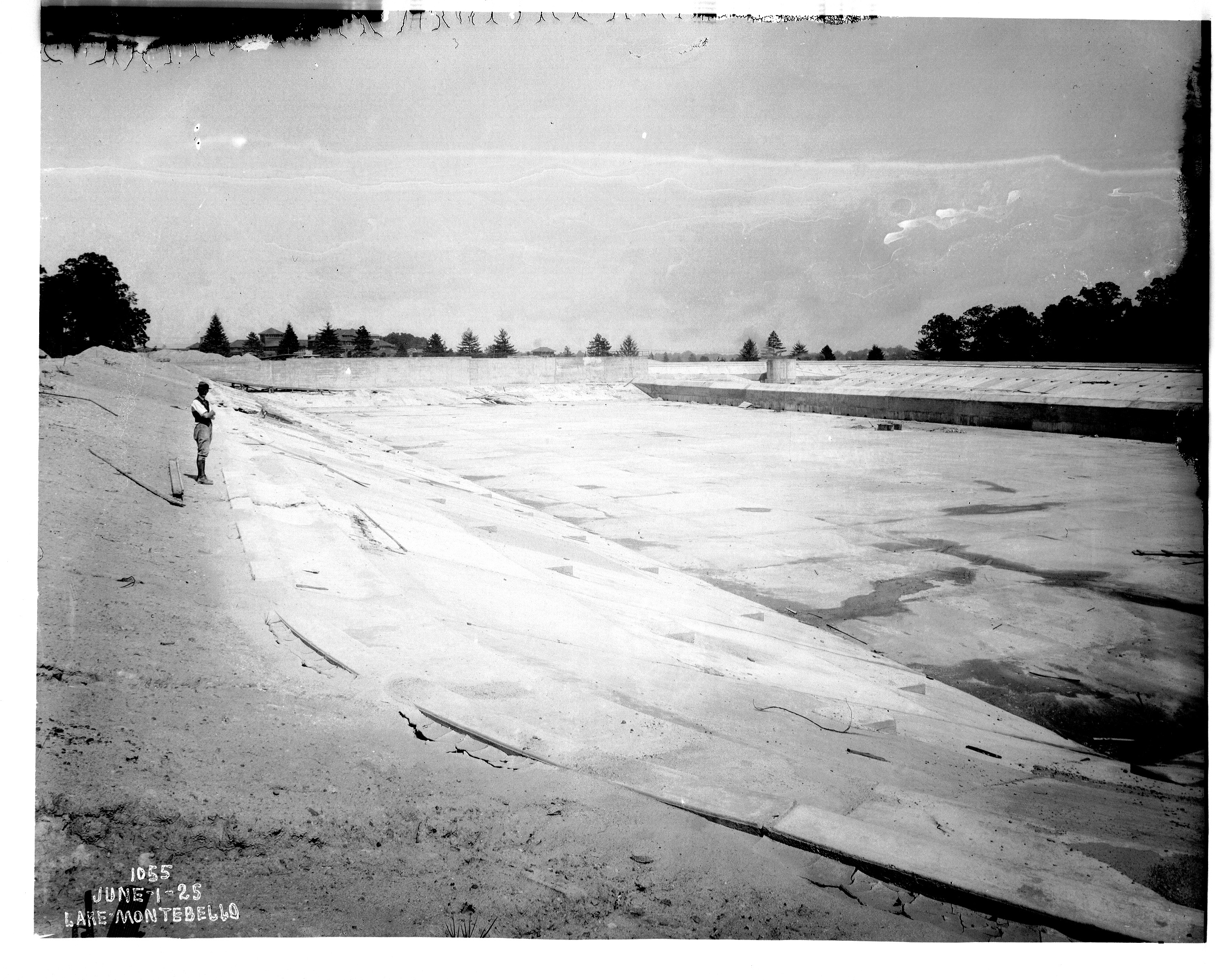
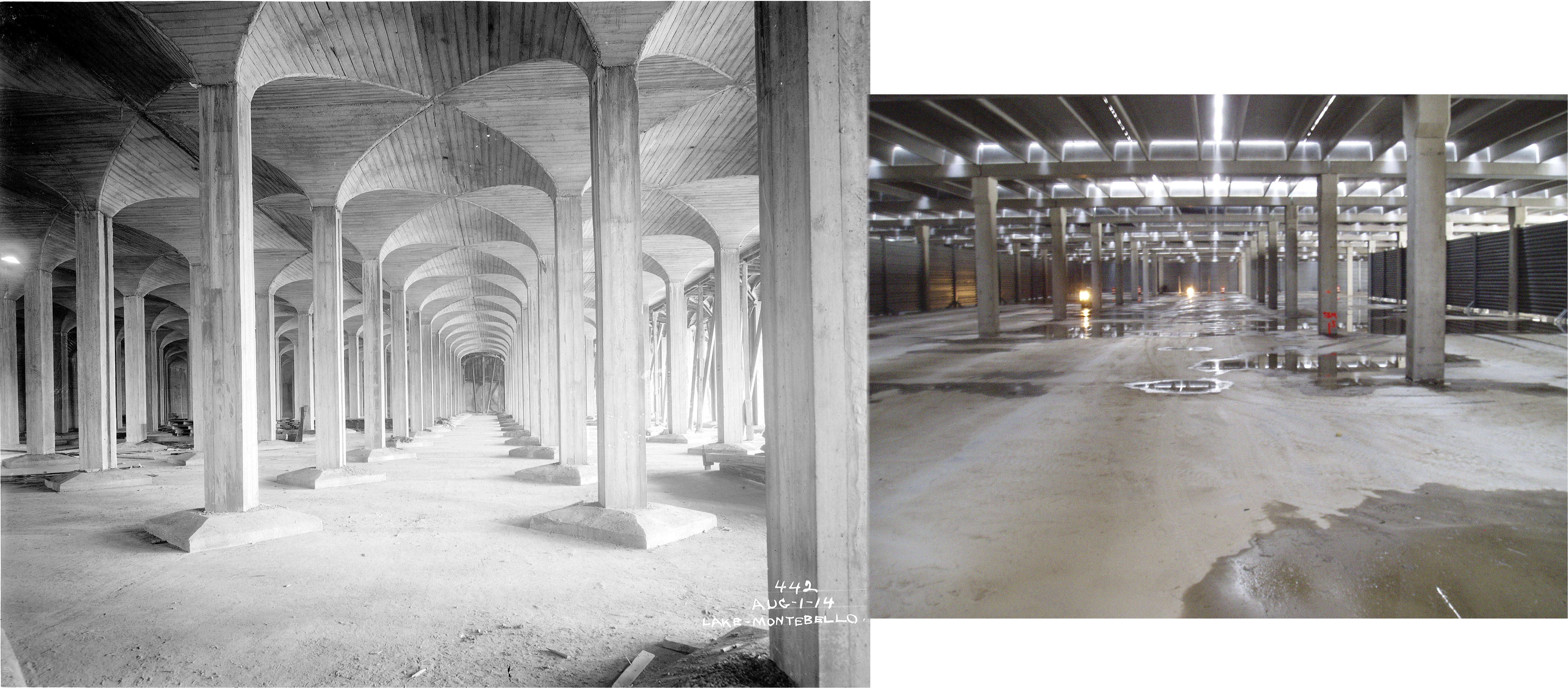
In 1924-1926 the City built a new reservoir and filtration plant. The reservoir was supposed to be covered like the Plant I FWR but the City said it would cost too much money, so they didn’t.

Mont 6-25 1056 Mont 6-25 1055

As can be seen in the top photo, flat supports were poured to hold the columns for the roof.

So the federal gov’t decides that all open reservoirs need to be covered. Instead of covering the existing FWR, they demolished it and built a new one. The old one was 20 million gallons. This one is about 32 million gallons. Speaking of millions – this new one cost millions and millions more than what it would have cost to cover it originally (couple hundred thousand)

So I ask, the old underground reservoir which has been there for 100 years or this new one – which do you think will last longer??

Untitled-1 copy


Copy-Rights

16 Tuesday Jul 2013

Posted by Ronald Parks in Baltimore, filtration, general, Health, HISTORY, water

≈ Leave a comment

Tags

Baltimore, engineering, FILTRATION, HISTORY, POLITICS, water

Just to go off track a little bit here, as far as Baltimore’s Water Supply history goes, I was just wondering if I could get some clarification on Copyrights? I really don’t understand these laws. It is of my own opinion that everything that has to do with history should be free to the public. I know there are certain cost involved with printing and reproduction and even research, BUT, who the hell owns the photographs and the words associated with them??

Case in point: I am revising my water history book by adding more photographs and trying to make it more ‘reader friendly’, getting rid of repetitious comments and adding an index. All the photographs that I have used come from glass plate negatives, lantern slides or the actual photographs that are stored here. While reading through my book I found some areas that could use a couple of pics to liven up the paragraphs but found I lacked those photos. Some research pointed me in the direction of the Enoch Pratt Free Library and The Tribune. The Tribune is now the keeper of the Baltimore Sun photo collection. Both of these are charging me anywhere from $10 to $40 for reprints, although the Tribune sold me the ‘originals’ for $15. Each want upwards of $150 for permission to use the photos in a book, depending on the print run. I asked the guy at the library what ever happened to the ‘Free’ in Enoch Pratt Free Library??

The library had received, in earlier years, copies of all the City of Baltimore’s Annual Reports, which included photographs. These photos were taken by either a City photographer or one hired by the contractor doing the construction. They are called ‘Progress Photographs.’ As far as the SunPapers goes, well they would send reporters who would come out to the plant with a photographer to cover newsworthy events. Like the tunnel explosion of 1938 where ten miners were killed (Although the Sun really fell on that one. Most pics and stories were done by the Washington Post, to whom I had to pay $3 for a mimeographed copy of the stories) They came onto the property, took pictures of the property, naming city workers and saying what happened.

Who really owns all this and why do they charge for reproducing the photos in a book? As far as print run, I can not tell them how many will be printed. I print my books thru Publish on Demand. As far as making money off of it – No!

So as not to cause any legal BS, I found this pic of an 1848 Fountain in Baltimore. Here is the link: http://www.mdhs.org/digitalimage/marsh-market-fountain-baltimore-street-0

To Colorize or Not!

15 Tuesday Jun 2010

Posted by Ronald Parks in general, HISTORY, POLITICS, science, Uncategorized, water

≈ 3 Comments

Tags

Baltimore, engineering, FILTRATION, HISTORY, POLITICS, science, water


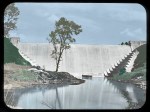
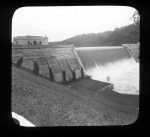
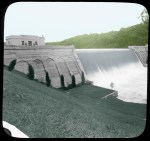
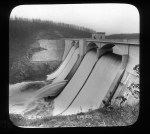
When I first started scanning Lantern slides and glass plate negatives, I played around with my new scanner software and saw that I could add color to old photos. As I’ve been going through and cleaning out some old files, I came across the above pictures. When I first colored them I thought it was pretty neat that this could be done, now I’m not too sure if it should be? I really like the old B&W movies from when I was a child. When they started to colorize them, I thought, How odd is that? What do you think? The colors that I used were based on the old lithograph colors used in reports, to match those and not so much as what the colors should really be.

BRIBES OR GIFTS???

13 Tuesday Jan 2009

Posted by Ronald Parks in general, HISTORY, POLITICS, water

≈ Leave a comment

Tags

Baltimore, engineering, FILTRATION, HISTORY, POLITICS, water

Here is another history folder that I recently documented that goes with the times:


1959 thru 1962 – File Folder No. 1497: Christmas gift letters. It is unbelievable what the water engineers received as Christmas gifts during their employment. This list only covers three years. There are business cards attached along with notes and delivery receipts. Received were: chocolates (Wright Contracting Co. and Newton Co.), diary (Consolidated Engineers), pencil holder (Ruth Engineering), liquor and hot dish holder (Brooklyn Engineering), ‘wet goods’ and ham (Frank Angelozzi), gift basket (Matricciani Co.), cooler (Arundel Corp.), fluid remembrance and flowers (RK&K), whiskey (San Joe Construction Co., Spiniello Constr., Forest Co., Lock Joint Pipe Co., Masonry Resurfacing and Constr. Co., RKK, Alpine Constr., Cohen and Ass., and Square Constr. Co.), liquor and cigars (Peters Co. twice, Iacoboni and Sons 2x), lighter and cigarette box (Gill-Simpson Electric), diary and travel guide (Woody of Kahn Electric Co.), good cheer “…it will do much to add to my enjoyment during the holidays.” (Woody), delicacies (Atherholt, Brinton and Glover 2x), subscription to Coronet magazine (Wilson and Sons), ham (Wright Contracting and Matz, Childs and associates 2x), coffee maker and liquor (Gill-Simpson Electric), pears (WRA 3x), executive record and travel guide (Woody), clock (Arundel Corp.), desk diary (AP Smith Mfgr.), pitcher (Panitz), ham and champagne (Matricciani 2x), pen (Ruth Engr.), basket of whiskey (Lock Joint 2x), desk caddy (Leopold), ham and liquor (Regester consultants), turkey (Matricciani and Forest Co.), book (Arundel Corp.), desk calendar (Smith Mfgr.), Fruit cake!! (Gray Concrete Pipe 2x!!), candy (Mercantile Safe Deposit and Trust 2x and RKK), subscription to the ‘Saturday Evening Post’ (Herman Born and Sons), atlas (Atherholt), carving set (Arundel Corp.), turkey and whiskey (Wright Contr.), Rancho Lynn apples (Smith-Blair Inc.), traveling clock (Arundel Corp.), ham and fluid remembrances (Wright Co.), monetary contribution to Bucknell University (Atherholt), monetary contribution to Catholic Charities, Community Chest, Red Cross and the Associated Jewish Charities (Kahn), floral centerpiece (RK&K), Franciscan dinnerware (Lock Joint Pipe), subscription to ‘Look’ magazine (Wilson and Sons), smoking set (Panitz), cocktail shaker (Foley), barometer (Arundel Corp.), Bodine book, ‘The Face of Maryland’ (Arundel), tray of hors d’vours (Panitz), cheese (Foley), Christmas decorations and spirits (Forest Co.), oranges and grapefruits (Breesee and Gray), guest for dinner and spirits (Masonry Resurfacing Const. Co.).

            December 21, 1962 letter from Schuerholz to Langenfelder and Son, Inc. returning a gift certificate in the amount of $100 to be used at Hamburger’s (Men’s clothing store). He writes, “…I do not feel justified in accepting a gift certificate of this magnitude. I am retaining the money clip in which it was delivered; this will serve as a remembrance of your thoughtfulness.” It was returned via registered mail.

            Side note: In January 2009, both Mayor Sheila Dixon and Councilwoman Holton were indicted on bribery charges stemming from them receiving gifts from a contractor.

← Older posts
Newer posts →

Blogroll

  • Flouride Action Network
  • lulu
  • My Book
  • WordPress.com
  • WordPress.org

Recent Posts

  • Bermuda 2023
  • ICELAND April 2023
  • George Chalmers of Fochabers
  • In Search of The Skipjack Ada Mae
  • Trap Pond Kayak

Blog at WordPress.com.

  • Subscribe Subscribed
    • Water and Me
    • Join 231 other subscribers
    • Already have a WordPress.com account? Log in now.
    • Water and Me
    • Subscribe Subscribed
    • Sign up
    • Log in
    • Report this content
    • View site in Reader
    • Manage subscriptions
    • Collapse this bar
 

Loading Comments...