• About
  • History Writings

Water and Me

Water and Me

Category Archives: Baltimore

Montebello 100

01 Monday Feb 2016

Posted by Ronald Parks in Baltimore, filtration, HISTORY, water

≈ Leave a comment

Tags

Baltimore, engineering, FILTRATION, HISTORY, Lake Montebello, Montebello, water, water history

10346511_10203067321618257_3677658577017900641_n
P1050889

So the Montebello 100th anniversary has come and gone. It was a pretty nice affair. I will start doing some more Water History on here, but it will probably be more Baltimore Sewage history. I have been doing some extensive research on the subject and will share some of it here. I will most likely put it in book form, to go with my water history book.

The first photo is inside the gate house, of which I talked earlier about. The second is a State Historical marker that was placed outside the gate house.

Debate: Gatehouse vs Valvehouse

08 Sunday Mar 2015

Posted by Ronald Parks in Baltimore, HISTORY

≈ Leave a comment

Tags

Baltimore, engineering, FILTRATION, glass plate negatives, Gunpowder Falls, HISTORY, Lake Clifton, Lake Montebello, Montebello, photography, valve house, water history

Since starting my research in a museum archives, I’ve found quite a few discrepancies in the labelling of photographs and negatives. Some archival boxes were marked as Loch Raven Construction – 1909 (Which didn’t start until late 1912. These photos were actually the building of Lake Ashburton). Then there are the glass plate negatives marked as Loch Raven 1875-1881. A few of these are of Lake Montebello and Clifton. This is ok only because I know they are from a group known as the “permanent supply”, they belong together. But my problem is that somewhere along the timeline known as “History” someone decided to call the gatehouses ‘valve houses’ Why?? I do not understand the intent of changing the engineer’s designation of a structure from gatehouse to valve house? The drawings I have along with engineer’s reports all call these structures Gatehouses. Who changed it? Would it be alright to call one of Baltimore’s Little Tavern Restaurants – Small Bar Restaurants? Hell no! Words mean the same but they aren’t. You go to a small bar to get drunk – you go to the Little Tavern for their bags of hamburgers!!

I recently found a photograph of one I already have, that was mislabeled. Below is the photo from a glass plate , the other is from a framed photo that hung in the engineer’s office (Bottom Photo from 1894). The framed one clearly calls the Clifton Gatehouse a gatehouse, not a valve house – Stop the insanity and call it what it is!!!

Plate482

From a mislabeled GPN saying this is Loch Raven


IMG_1254

Framed photograph clearly marked as Gate House at Lake Clifton


Eng 5-94

Engineer Kenley’s office, 1894 with framed photographs hanging on the wall.


MFH 2

15 Sunday Feb 2015

Posted by Ronald Parks in Baltimore, HISTORY

≈ 1 Comment

Tags

Baltimore, engineering, FILTRATION, Gunpowder Falls, HISTORY, Lake Clifton, Lake Montebello, Montebello, photography, water, water history

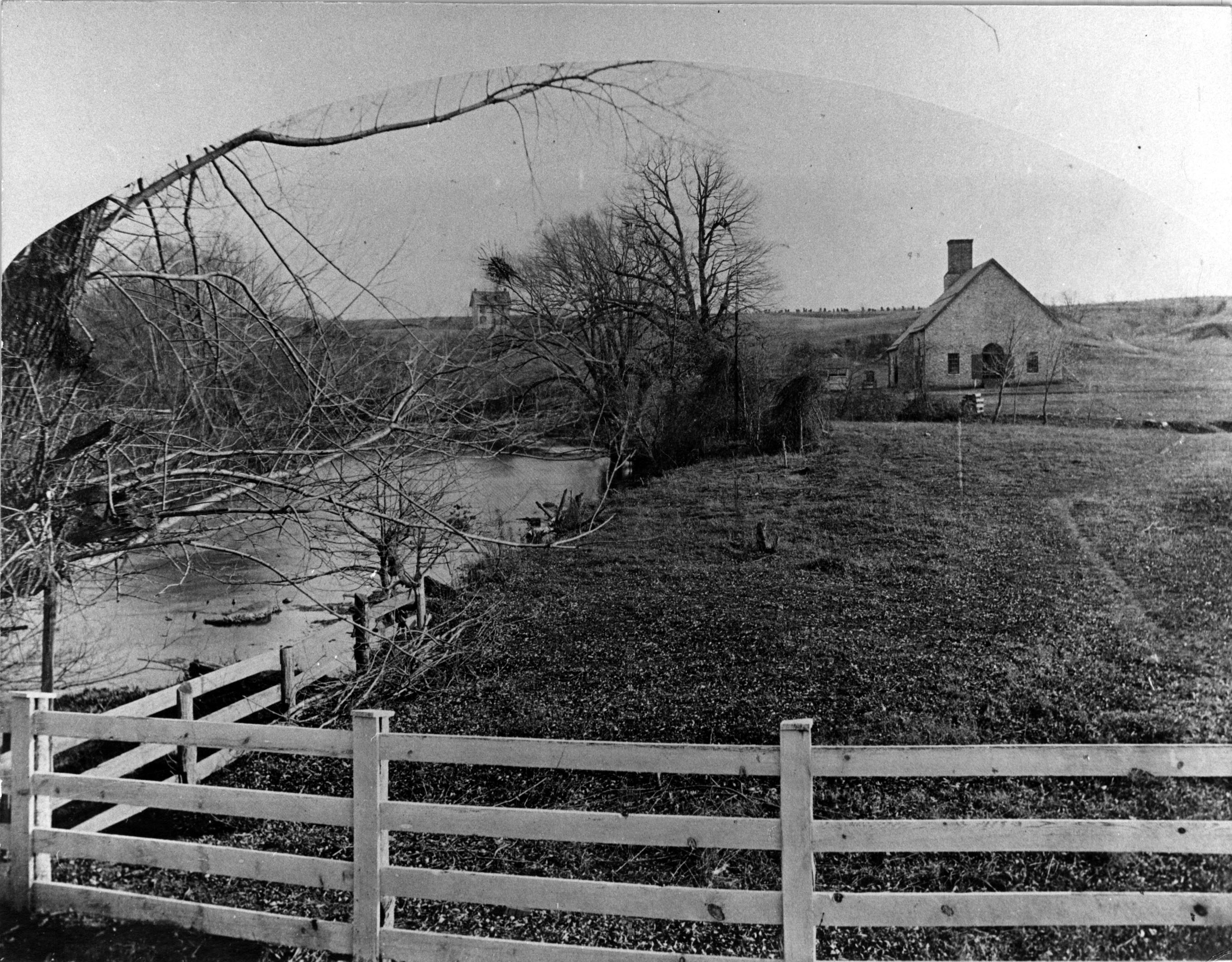
The Gunpowder Temporary Supply was in use between 1873 and 1881, as the City required it. Work on the Permanent Supply started in 1875. This new supply would consist of a dam at Loch Raven, a 6-1/2 mile tunnel to Montebello, where a lake would be built with a gatehouse, to connect to another lake at Clifton. The properties at Montebello and Clifton belonged to Garrett and Hopkins.

Building the Loch Raven Dam

Part of Montebello Lake
Under the Montebello Gatehouse
Lake Clifton

Clifton Gatehouse a couple years ago
After removal of Loch Raven Gatehouse
Old dam during a storm

One of the stones from building the dam
Recent Montebello Gatehouse
Dignataries getting ready to place the last stone into the dam

On September 29, 1881, Lake Montebello reached its full height elevation of 163′. Lake Clifton would not be completed until late 1887. The water from Montebello flowed thru pipes, to the site of the lake and connected to pipes, to supply the City. Until the lake and gatehouse were completed at Clifton, a temporary shed was built over the pits that housed the gate valves. There was a house built on the property for the Gatekeeper. There was recent talk of leasing the Clifton Gatehouse for a Farmers Market, if the person would restore the building.

Montebello Filters History 1

12 Thursday Feb 2015

Posted by Ronald Parks in Baltimore, HISTORY

≈ Leave a comment

Tags

Baltimore, engineering, FILTRATION, Gunpowder Falls, HISTORY, Jones Falls, Lake Roland, Montebello, water, water history

Before the Montebello Filtration Plant came to be in 1915, Baltimore received its water from various sources. Mostly at the direction of the City Commissioners to form a water company, for fire protection. Wells were sunk and springs directed to fountains. But like every other growing city, Baltimore had its fair share of problems – drought, pollution, pestilence, etc.

In 1854 the Bureau of Water Supply became a Municipal Utility Corporation. 1861 saw Swann Lake (Lake Roland), Hampden Reservoir and the new Mt Royal Reservoir put into service. These received water from the Jones Falls. In 1864 the City started construction of Lake Chapman (Druid Lake). By 1866, Mayor Chapman realized the inadequacy of the Jones Falls, so authorization for the purchase of lands along the Gunpowder Falls began. 1869-70 saw one of the worst droughts in Baltimore history. In 1871 a reservoir at Pimlico was built, but this was still receiving water from the Jones Falls, which was failing. 1873 saw an urgent need for a supplementary water supply.  A temporary pump, pumping station and a 36-inch cast iron discharge water main were constructed for the delivery of the Gunpowder Falls water from Meredith’s Ford Bridge to Roland Run, a tributary of the Jones Falls, above Lake Roland.  The water flow would be forced at a rate of 10 million gallons a day into Roland Run, a distance of 3-1/2 miles. To the dismay of the property owners. This was known as the Temporary Supply.

Original photo

Original photo

A. Hoen litho from  original photo

A. Hoen litho from original photo 1875

M100 #3

05 Thursday Feb 2015

Posted by Ronald Parks in Baltimore, HISTORY

≈ Leave a comment

Tags

Baltimore, boats, engineering, FILTRATION, HISTORY, models, Montebello, war, water history

Met to discuss the plans for the anniversary – a lot of events are being lined up. Two have to do with boats and water. Rec and Parks wants to have “Boating on the Lake” where attendees can get in a kayak or canoe and go out onto the lake. The lake is pretty big. The road around it is 1.3 miles.

Another event is for the Model Yacht Club to hold some demonstrations. When the water plant opened, all the way to the beginning of WWII the water engineer and the politicians battled it out over allowing model boat sailing on one of our lakes. We have two. The engineer had no qualms about letting people know how much he did not want the boats on either lake. Finally, the boat people won. When WWII broke out and security tightened around the water plant – no more boaters (I think the engineer started that war, just to have a reason to stop them!) On a few occasions, the engineer purposely sent the lake to drain – oops! sorry, forgot you guys were coming this weekend!

boatlake3b boatlake1b

The below photograph is where the party will be. The small lake to the right is where the model yachts use to sail…

AERIALS 021

Montebello Filtered Water Reservoir

22 Thursday Jan 2015

Posted by Ronald Parks in Baltimore, filtration

≈ 1 Comment

Tags

Baltimore, engineering, FILTRATION, Health, HISTORY, Montebello, water, water history

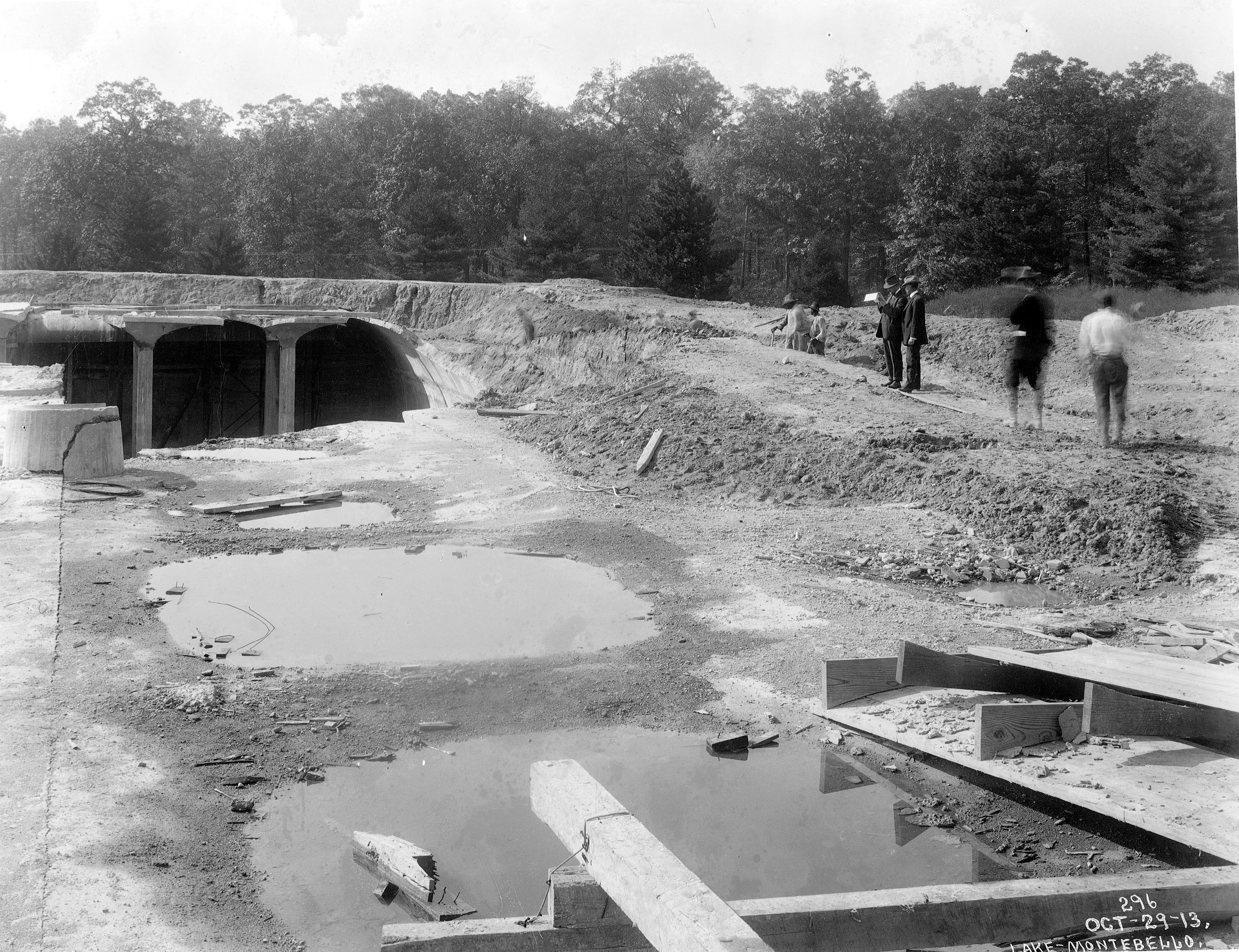
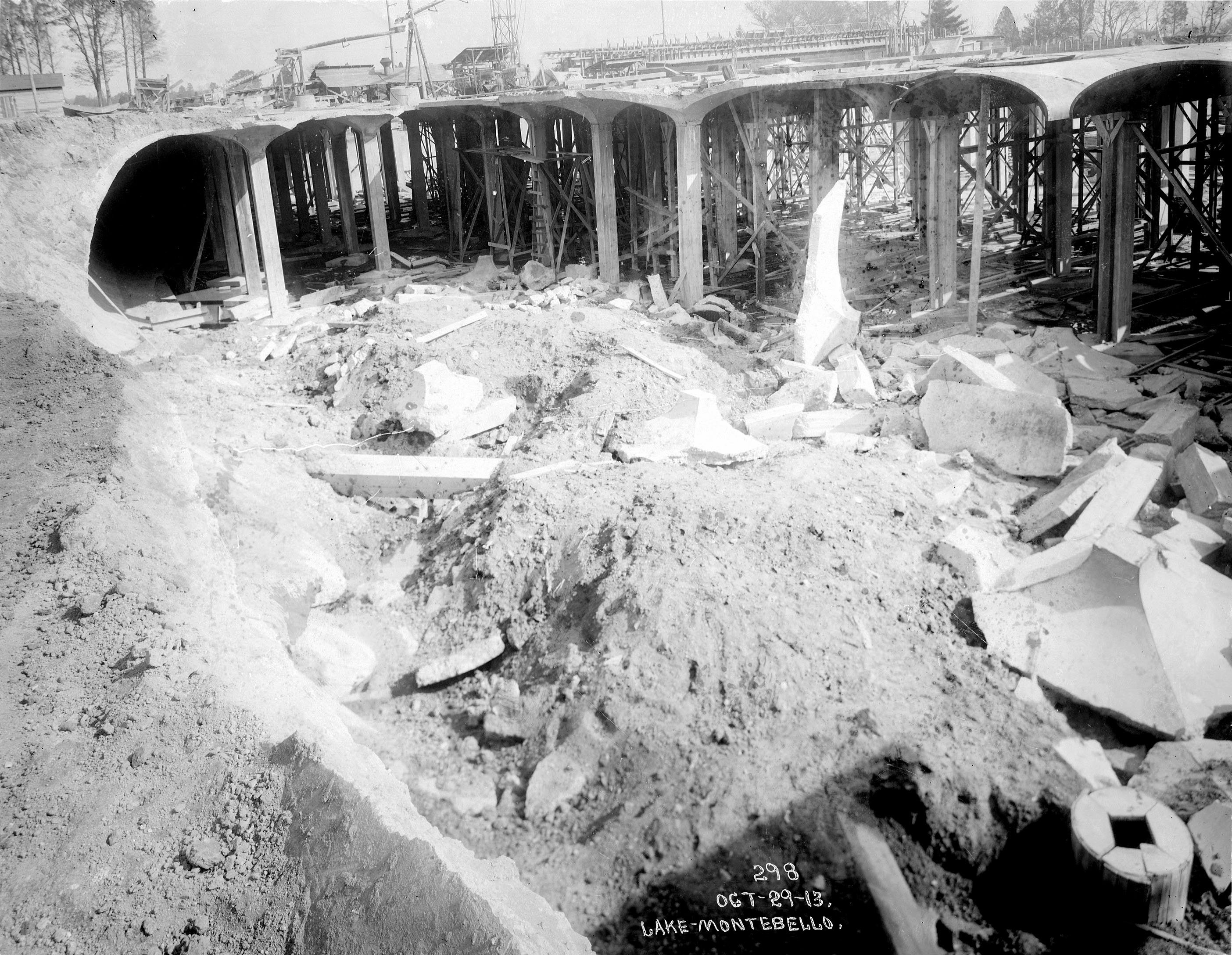
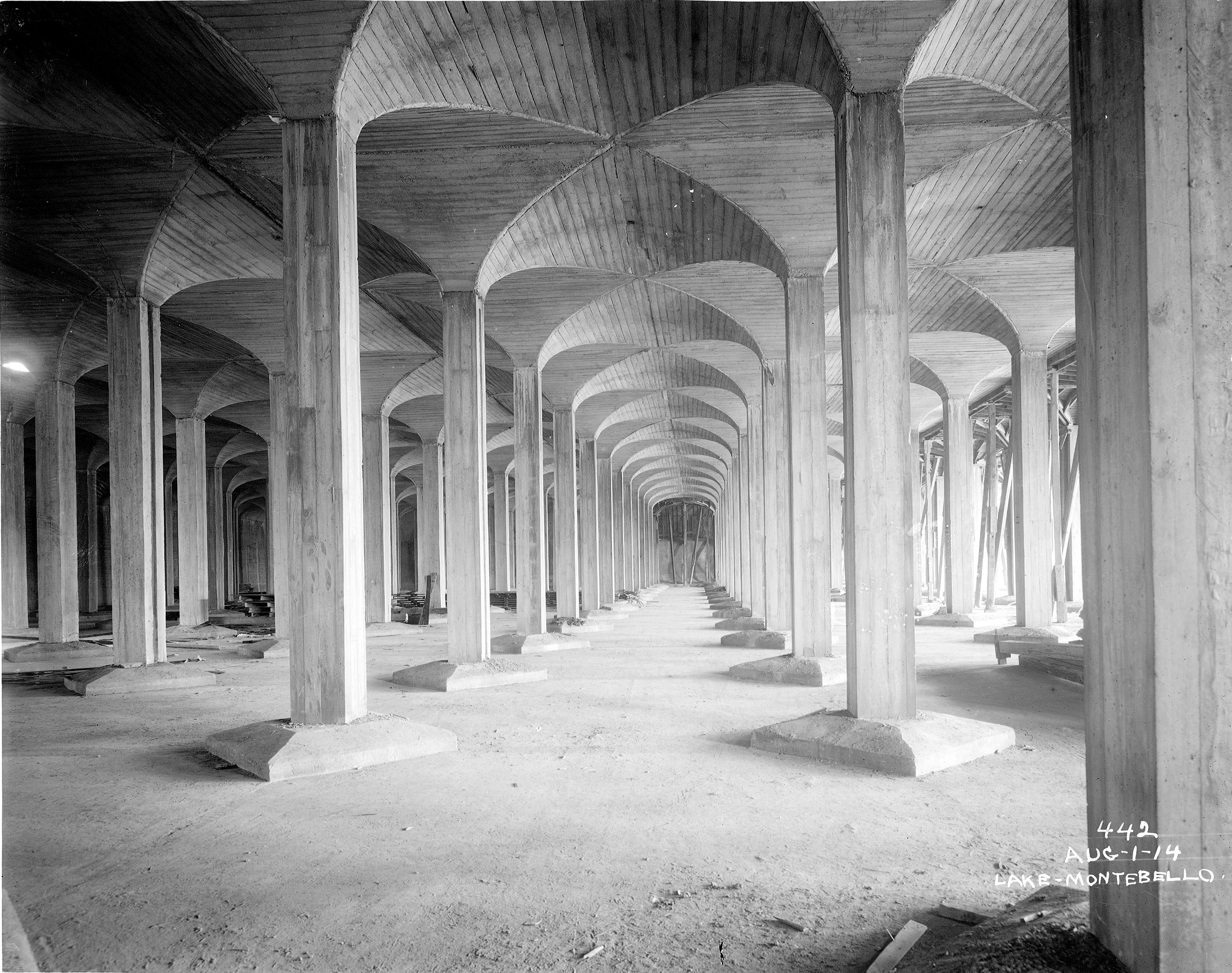
In 1913, while building the underground reservoir for the filtration plant at Montebello, Baltimore Md., the contractor in his zest for an early completion bonus decided to start filling over the reservoir with dirt. Haste makes waste!
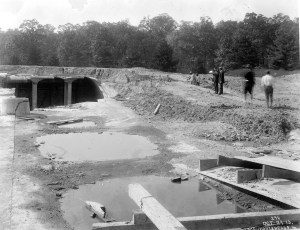
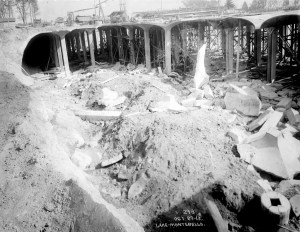
001 002

The majority of the structure collapsed. The contractor needed to start over and by late 1914, he was almost done. Because of other related projects, the water works would not be completed until 1915.
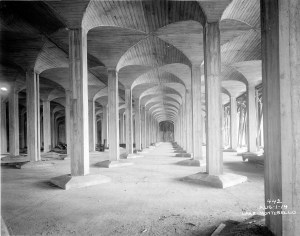
003

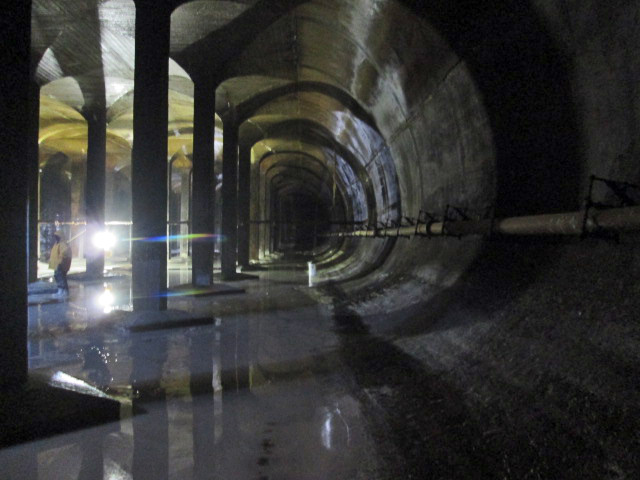
The above photo is what it looked like near completion. This structure, which holds close to 20 million gallons was built using wood forms and poured in place concrete. When the wood was removed, the slat marks stayed.

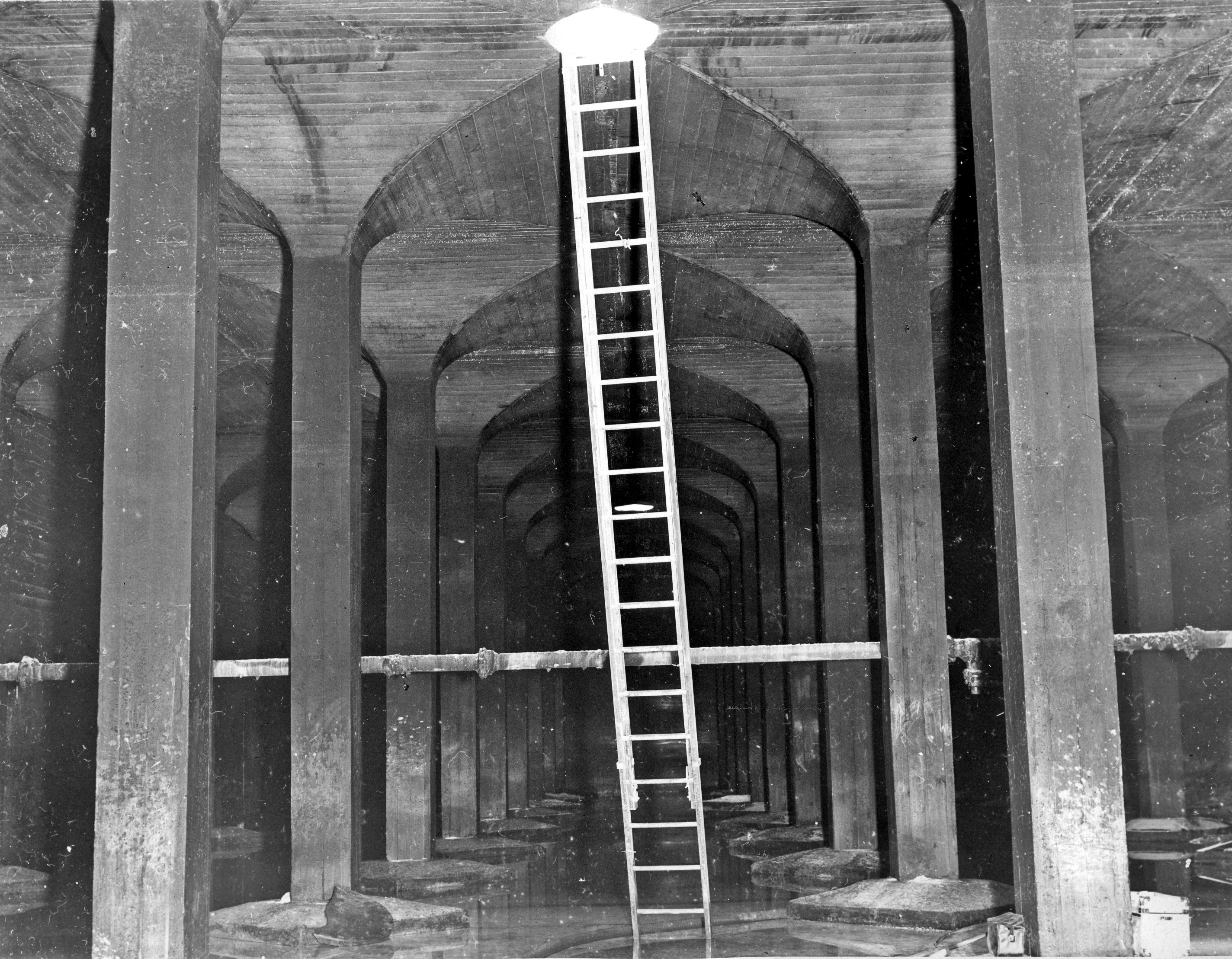
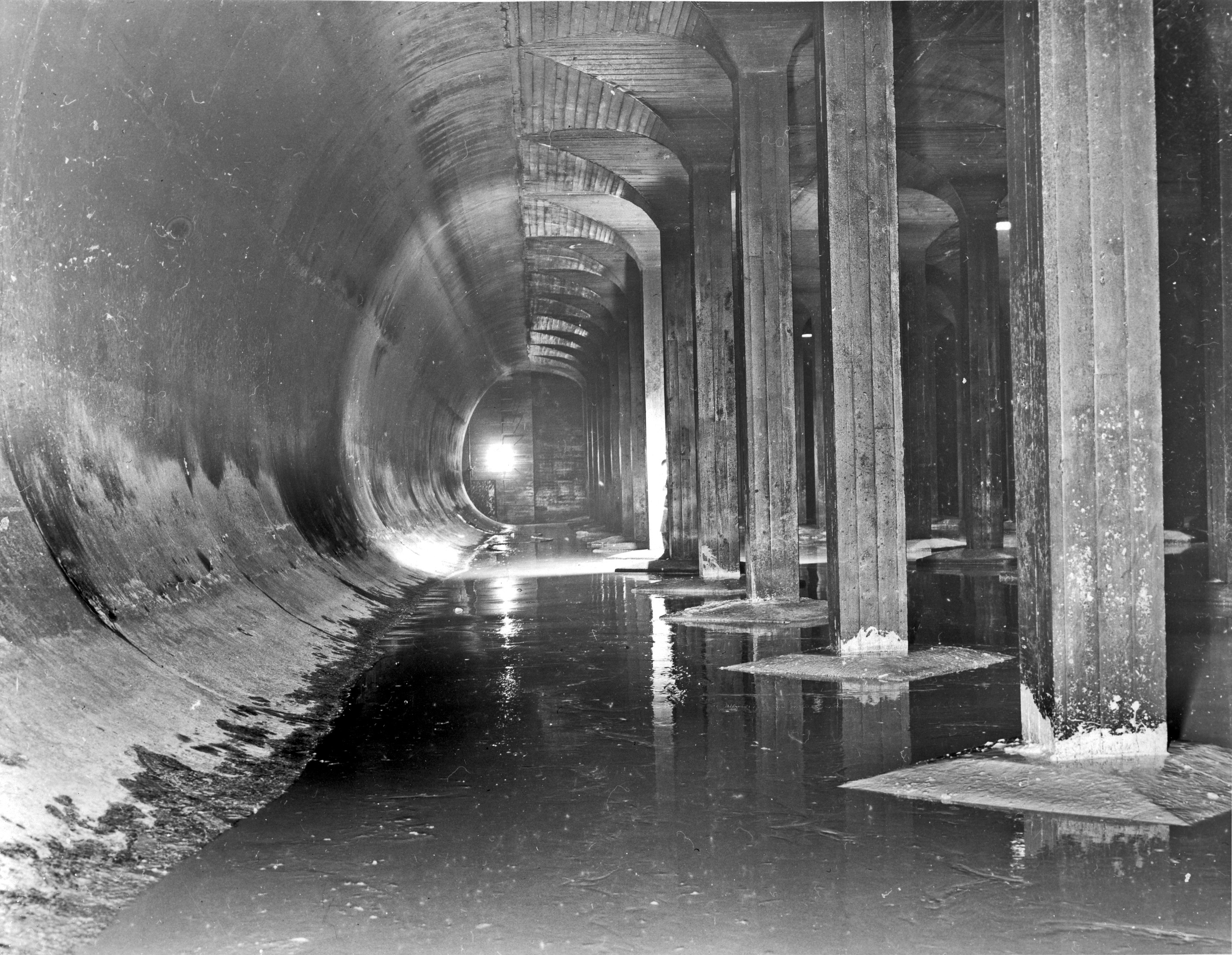
The next set of photos I found were from 1965, when the reservoir was being cleaned (It was usually cleaned every 4-5 years, to remove lime deposits)
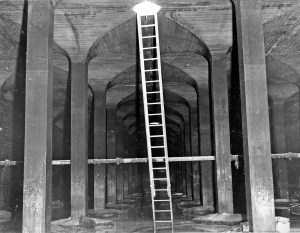
005 004

The only way in and out was thru a site well and down the ladder. Men with fire hoses washed it down. Lime visible on side wall and columns.

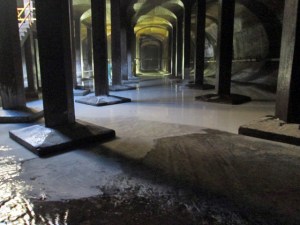
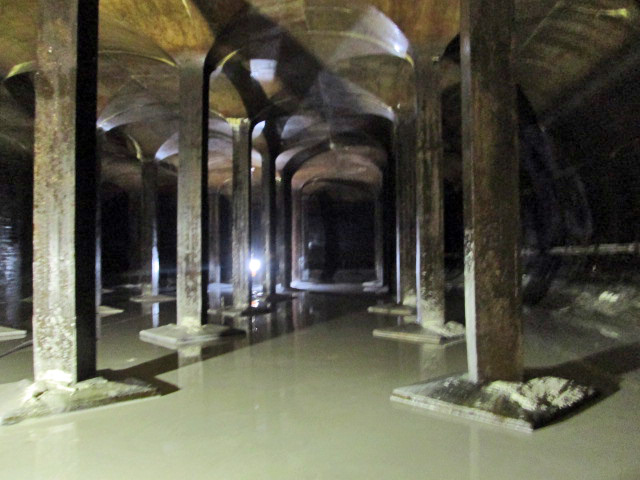
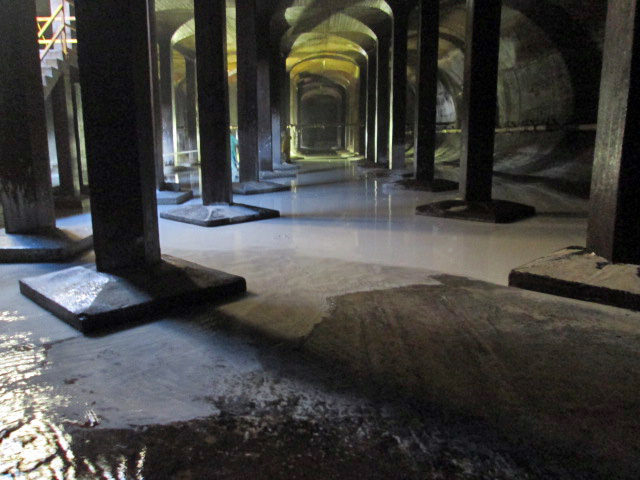
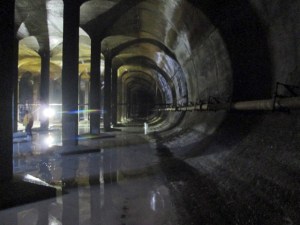
These next pics show the same reservoir 100 years later being cleaned. It is a very time consuming task. Before the Clean Water Act and all those other fed and state regs, we could just send it all to drain and have it cleaned in a couple days. Now it takes weeks and we have to monitor ph and Cl2 levels.

010 007 006

Looking into the far left corner of the last photo you will see a set a stairs. They were installed in 1983. As can be seen, 100 years later and it still looks the same.

Water Freeze

07 Tuesday Jan 2014

Posted by Ronald Parks in Baltimore, filtration, Health, water

≈ Leave a comment

Tags

Baltimore, engineering, FILTRATION, HISTORY, ice, water history, winter

HydrantThaw

From my book: 1919 thru 1937 – File Folder, No. 1432, General: AWWA paper on Freezing of Water in Mains Laid in Salt Water and in Mains and Services Laid on Land by William Brush. Pamphlet from 1919 (re-dated 1936) Frozen Services and the Method of Thawing. A how-to book on thawing water service to your house using an electric thawing apparatus. They ask that fires not be built in valve boxes, that hot water should be poured into them. Five pages of newspaper articles glued to the pages. One article mentions the water department receiving one thousand frozen pipe calls in a day. Various articles on gas leaks and explosions. February 10, 1936 Resolution (No 240) that the Board of Estimates gives money to the water department to buy ice thawing machines. February 12, 1936 News Post article by Carroll Delaney on the city’s inability to thaw out pipes. February 15, 1936 memo from Small to Crozier listing expenditures for thawing so far – $45,500.00. March 11, 1936 memo from Small to Crozier on cost associated with the cold weather. Welding machines at 500 amps needed to be rented from different companies and the laboring cost associated with their use was noted as to why there was an increase in expenditures for the water department. April 13, 1936 memo from Small to American Electric Welding Company noting payment of $72 for 480 gallons of gasoline ($.15 per gallon). The welder was for thawing frozen pipes around Baltimore. Brochure on “Hydra Thaw” equipment. May 26, 1936 memo from the Bureau of Accounts informing Crozier that the Mayor approved $127,150.00 that was owed to the Water Supply for work during ‘Freeze’. A total of $600,000.00 was spent throughout the city. January 15, 1937 memo from Small to Thomas Young, City Collector notifying him to put this stamp on water bills: “No adjustment will be made for water wasted to prevent freezing of pipes.” Apparently, last year during the big freeze, consumers were told to leave a small amount of water running to prevent freezing pipes. They did not.

Baltimore’s Water Supply History

12 Thursday Dec 2013

Posted by Ronald Parks in Baltimore, filtration, HISTORY

≈ Leave a comment

Tags

Baltimore, engineering, FILTRATION, HISTORY, water, water history

Here is the revised, updated version of my Tidbits book.

Baltimore's Water Supply History

https://www.createspace.com/4511014

Bodine

09 Friday Aug 2013

Posted by Ronald Parks in Baltimore, HISTORY, Photography, water

≈ Leave a comment

Tags

Baltimore, bodine, engineering, FILTRATION, HISTORY, photography, water history

Susq L232

Susq L238

Susq L244

There is a lot to be said for an A. Aubrey Bodine photograph but unfortunately not enough is said about the City Engineers and contractors who took progress photos during the building of water projects. These were taken by a city engineer during the construction of the intake structure of the Susquehanna – Baltimore 108″ tunnel.

Indians

29 Monday Jul 2013

Posted by Ronald Parks in Baltimore, filtration, HISTORY, Reservoir, water

≈ Leave a comment

Tags

Baltimore, engineering, FILTRATION, HISTORY, Indian graves, mills, water, water history

Liberty Lumber 

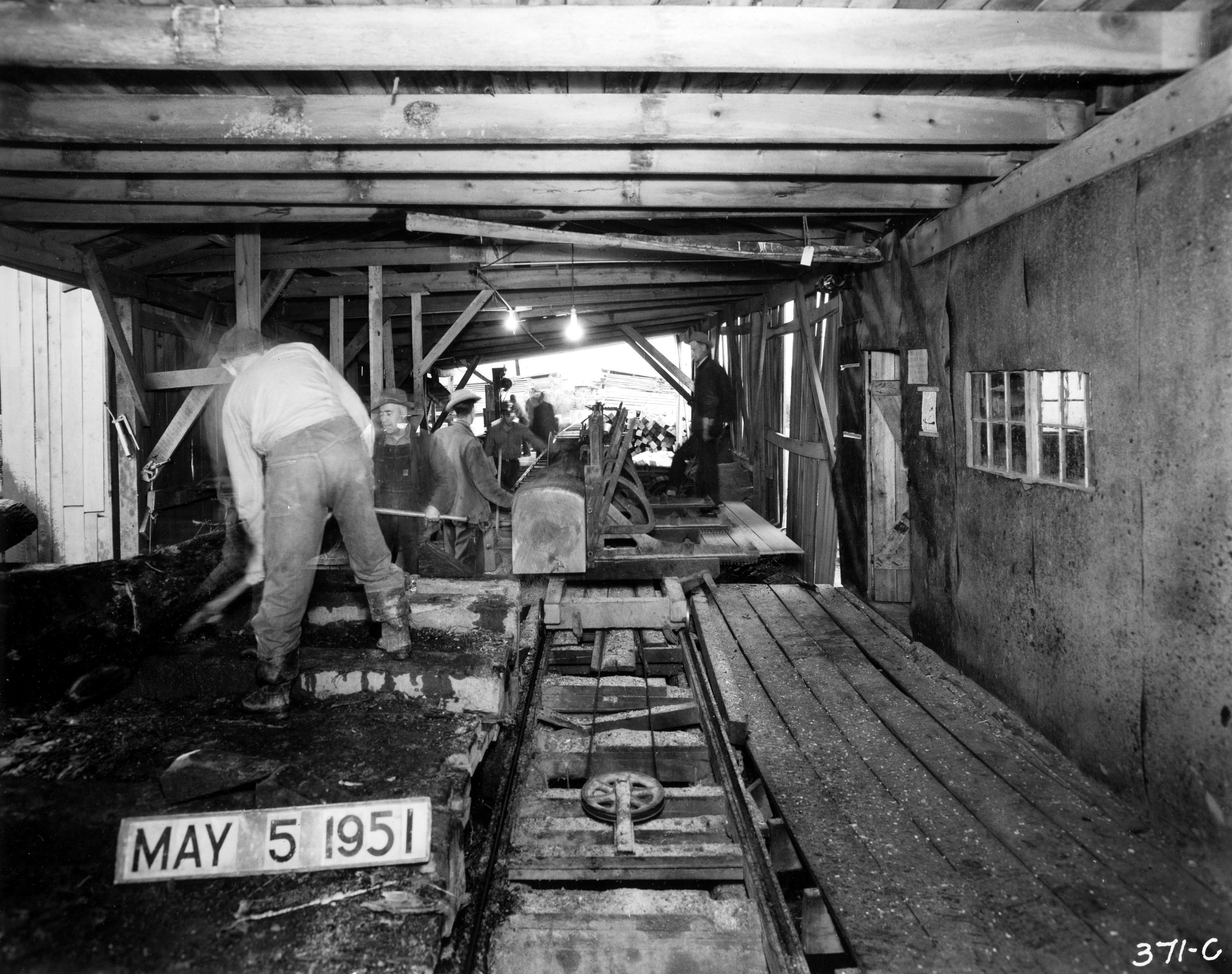
In the 1950s, the City of Baltimore operated a saw mill near the site of the future Liberty Reservoir.


Indian Grave

In 1952 while clearing the site for the new dam and reservoir they found this marker. The caption in the album reads:

“Taken February 8, 1952-showing old grave discovered near city saw mill while clearing land. Believed by some to be the grave of a Maryland Indian.”

A few questions about this – Is it? If so, what do the markings say? What happened to it? The one thing about coming across items like this is – now I have to try to find the old engineers/inspectors journals and see if they make mention of it or is it just a random photo some one took and placed in an album??

← Older posts
Newer posts →

Blogroll

  • Flouride Action Network
  • lulu
  • My Book
  • WordPress.com
  • WordPress.org

Recent Posts

  • Bermuda 2023
  • ICELAND April 2023
  • George Chalmers of Fochabers
  • In Search of The Skipjack Ada Mae
  • Trap Pond Kayak

Blog at WordPress.com.

  • Subscribe Subscribed
    • Water and Me
    • Join 231 other subscribers
    • Already have a WordPress.com account? Log in now.
    • Water and Me
    • Subscribe Subscribed
    • Sign up
    • Log in
    • Report this content
    • View site in Reader
    • Manage subscriptions
    • Collapse this bar
 

Loading Comments...