• About
  • History Writings

Water and Me

Water and Me

Tag Archives: Jones Falls

Pollution of the Jones Falls

18 Thursday Feb 2016

Posted by Ronald Parks in Baltimore, HISTORY, Sewage History

≈ Leave a comment

Tags

Baltimore, engineering, Health, HISTORY, Jones Falls, photography, sewage, water history

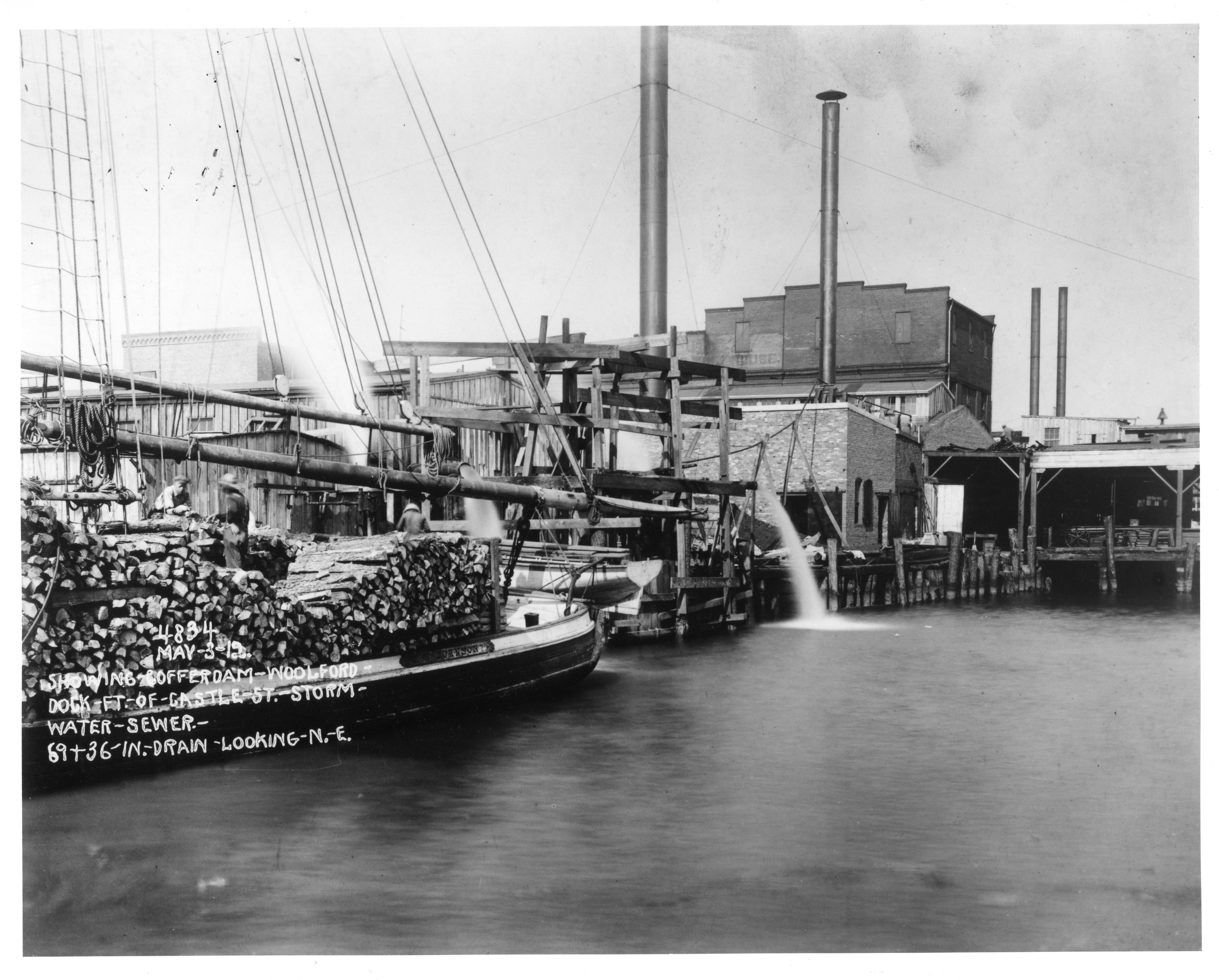
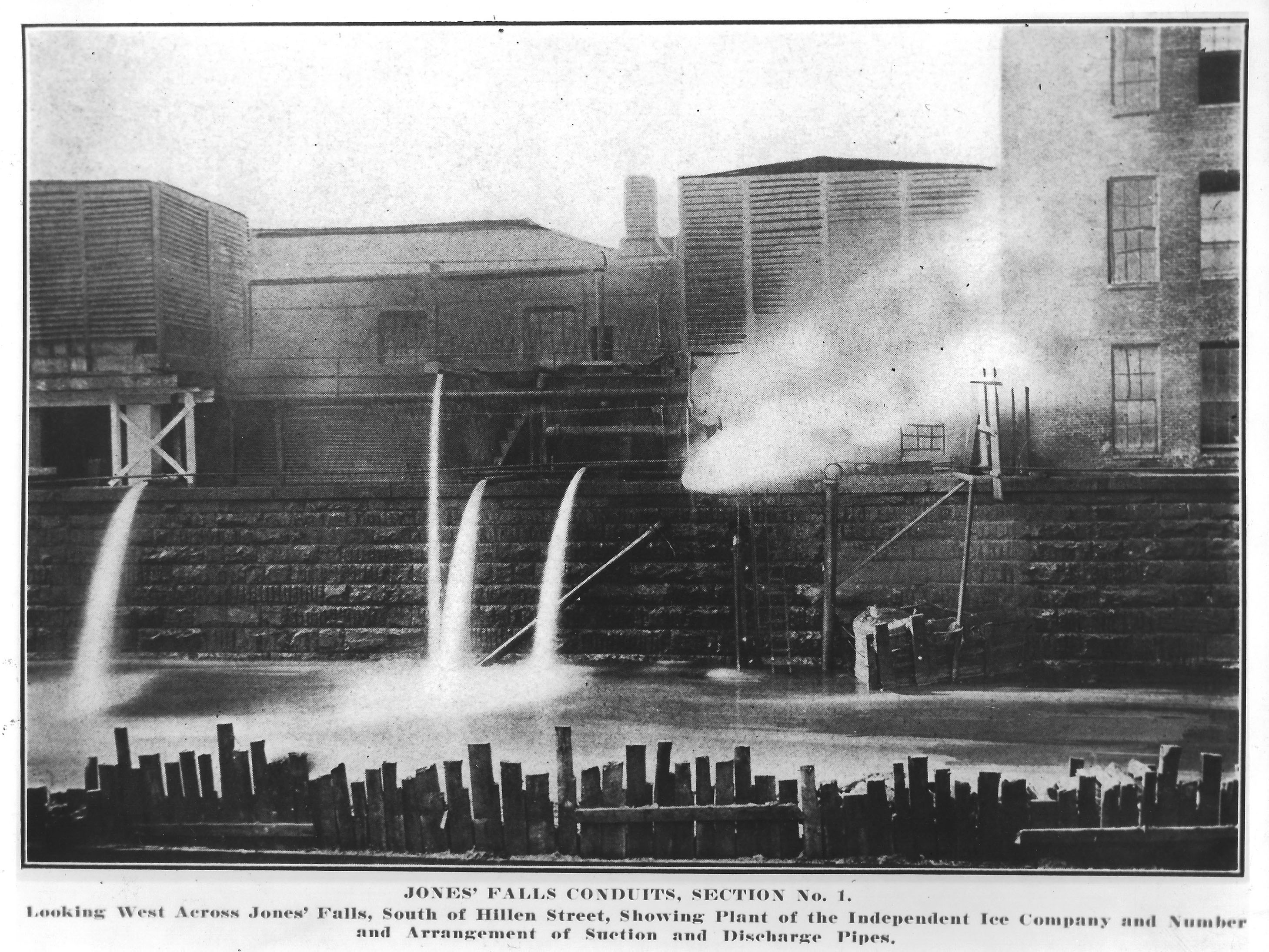
As previously mentioned in another post, the Jones Falls suffered much flooding along with a tremendous amount of pollution.

The below photograph shows a storm drain dumping into the Falls. This one was fed not by just the rain onto the street, but by the houses and over-flowing cesspools.

img107


This photograph shows an ice company dumping its wasted water into the Jones Falls, then pumping the water back out, to make ice.

001


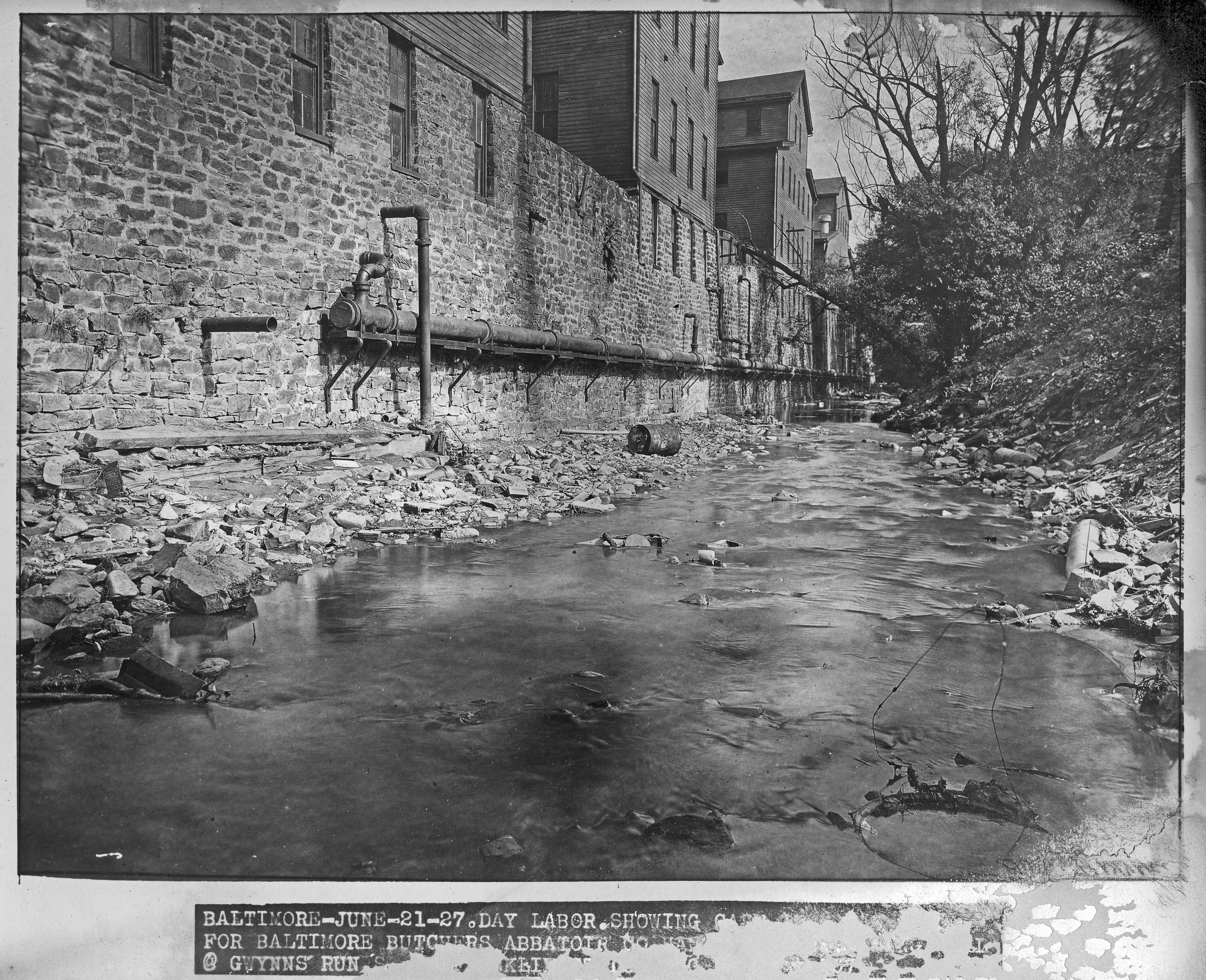
And this is a meat packing plant, slaughter house, that dumped all its waste into Gwynns Falls, which also dumped into Baltimore’s Harbor. This photograph came from an album that was first in a fire (at the warehouse it was stored) and then suffered water damage. The caption underneath reads: …for Baltimore Butcher’s [Abattoir] (slaughterhouse) Co ? @ Gwynns’ Run…

img011

Street Sweepers

16 Tuesday Feb 2016

Posted by Ronald Parks in Baltimore, Sewage History

≈ Leave a comment

Tags

Baltimore, engineering, Health, HISTORY, Jones Falls, sewage, water, water history

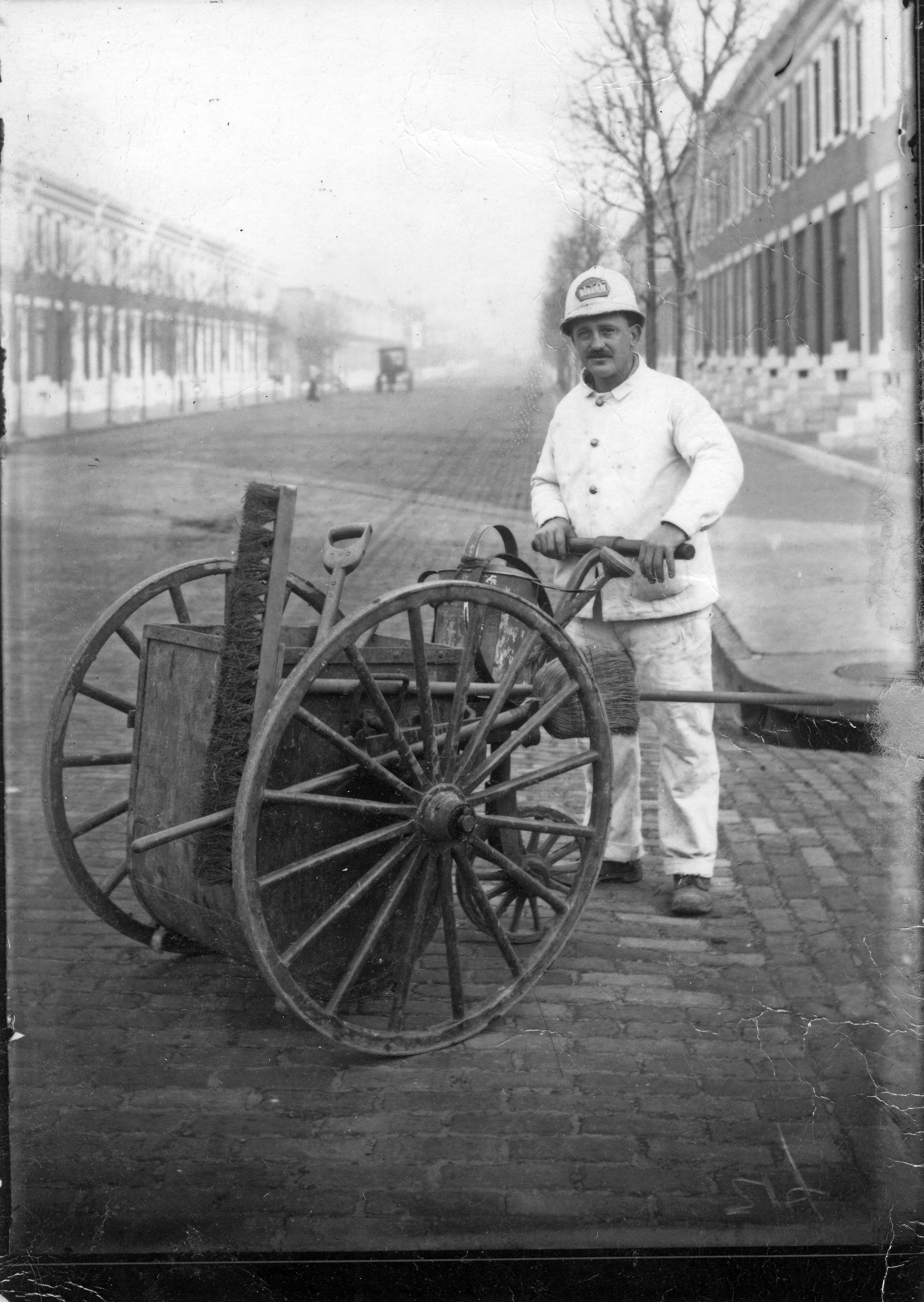
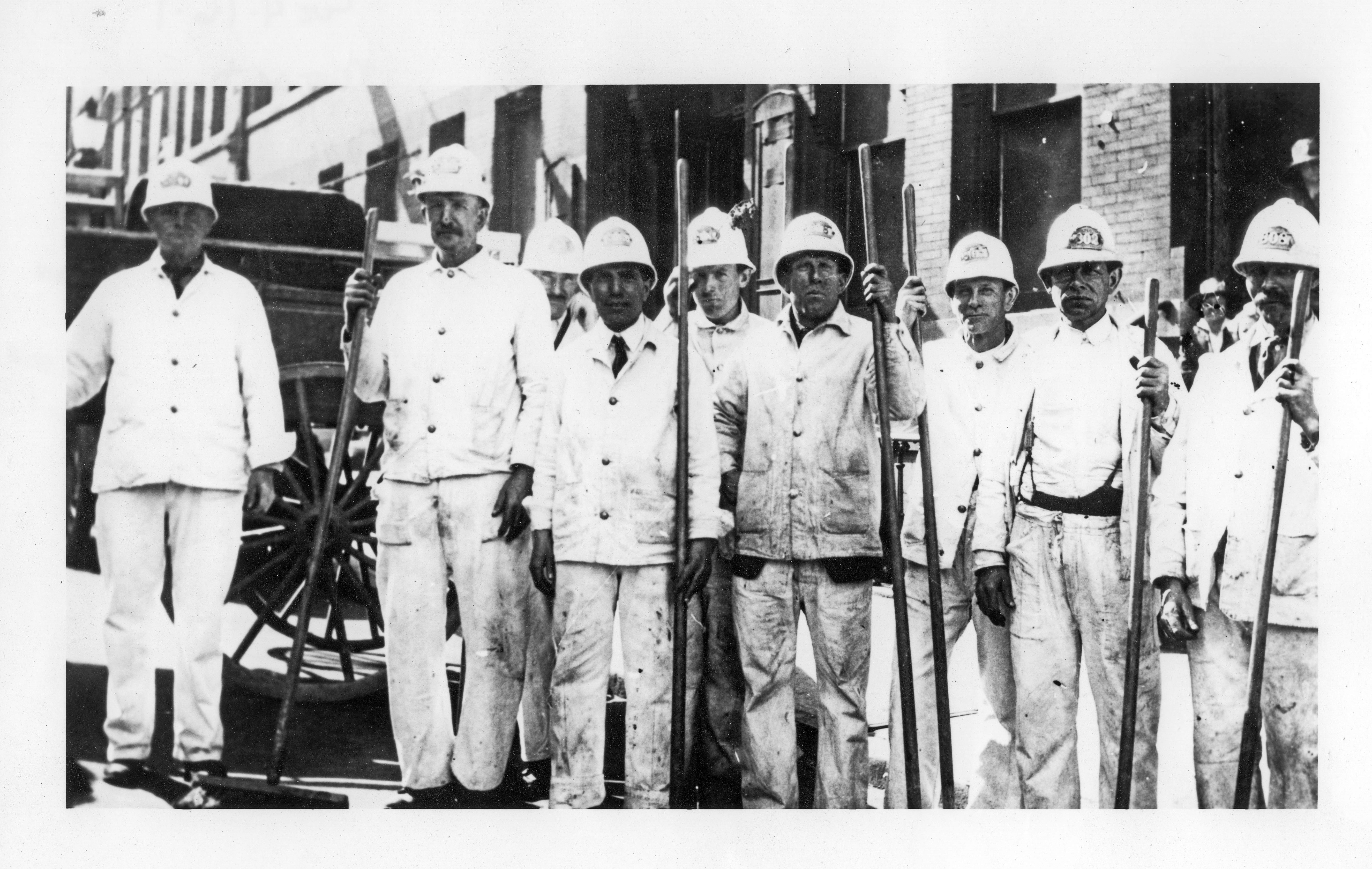
In considering Baltimore’s drainage system, for both sewerage and storm-water, recommendations were made to have them as separate. One reason being:

“A considerable portion of the dirt which finds its way into the sewers goes in through the un-trapped inlets, and it is a matter of common knowledge that the street cleaners, in order to lighten somewhat their labors, are accustomed to pushing the street sweepings into the inlets, thus allowing large quantities of dirt to be washed into the sewers. It must be borne in mind, however, that it is much more expensive to remove deposits of dirt from the sewers by hand than it is to remove them from the surfaces of the streets by carts. If this system of drains had been maintained in a perfectly clean condition at all times, it is undoubtedly true that the capacity of the drains during “maximum” storms, when flooding has occurred in this territory, would have been greatly increased and much less damage would have resulted.”

img277 img278

Drift-Catcher

11 Thursday Feb 2016

Posted by Ronald Parks in Baltimore, HISTORY, Sewage History, water history

≈ Leave a comment

Tags

Baltimore, engineering, HISTORY, Jones Falls, sewage, water, water history

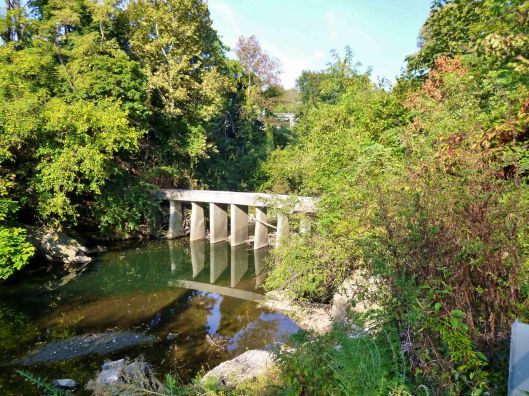
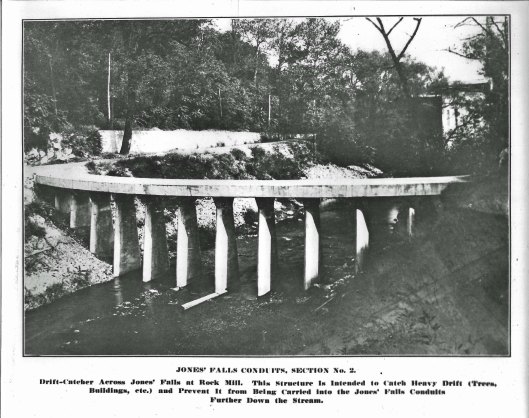
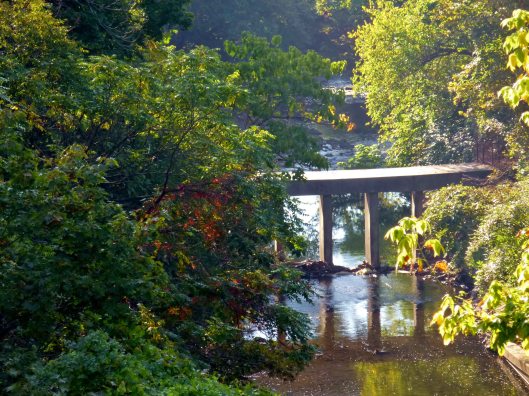
When I first saw the structure below, in the color photographs, I thought it was some sort of old pedestrian bridge. After some research, and a look through the DPW Archives, I found the following information:

On June 9 and 10, 1911, Messrs. Hering, Gray and Stearns again visited Baltimore for the purpose of inspecting Jones’ Falls above North Avenue Bridge, also to examine the plans for a drift-catcher, and on July 27 reported to the Commission approving the plans, etc., of the Chief Engineer. The drift-catcher, or interceptor, will be constructed at a point south of the Cedar Avenue Bridge, most available from an engineering and practical standpoint, rights having been obtained, without cost, from the Northern Central Railway, which owns the property on the west side of the Falls, and from Mrs. Fannie A. Timanus, on the east side

Appendix A: Report of the Consultant Engineers. Concerning a drift catcher and Jones Falls conduits. We have considered Mr. Hendrick’s suggestion of the possible obstruction of these conduits by trees, bridges, small buildings or other things which might be washed away by a phenomenal flood, such as is provided for in this case, and while it seems probable that with conduits of such magnitude nearly all large objects would pass through without obstructing them, some large objects, if not intercepted elsewhere, might lodge on the dividing walls at the head of the triple conduit and cause an obstruction. We, therefore, approve the adoption of some plan which will provide at a suitable place above the head of the conduits means for intercepting large floating objects.

The arch and pier type of structure, which we approve, is shown in part upon the preliminary plan furnished by Mr. Hendrick, entitled “Studies for Drift-Catcher,” and in part upon a plan, dated July 12, 1911, giving alternate designs of the drift-catcher. The general design consists of narrow piers about 20 feet high, spaced 8 feet apart from center to center, held at the bottom by being concreted into pits excavated in the rock, and at the top by a horizontal concrete arch extending from one side of the valley to the other and abutting against the ledge.

Completed in 1912.
067107029 (2)

A System of Sewerage 1906

04 Thursday Feb 2016

Posted by Ronald Parks in HISTORY, water, water history

≈ Leave a comment

Tags

Baltimore, engineering, HISTORY, Jones Falls, POLITICS, water, water history

Baltimore starts construction for a system of sewerage, officially, on October 22, 1906, with a groundbreaking by Mayor Clay Timanus at Ensor and Lanvale streets. Behind Greenmount Cemetery.

img007b (2)

As was typical for the times, a plaque was created and placed on the cemetery wall

Tablet

In the 1906 Annual Report of the Sewerage Commission are listed some interesting facts about Baltimore:

The population, according to a police census was 555,000. The city being 31-1/2 square miles consists of, approximately, the following buildings:

Asylums, Homes and Hospitals; Jail, Penitentiary and House of Refuge 77. Apartment Houses 26. Banks and Libraries 47. Breweries and Distilleries 21. Car Barns and Railroad Stations 45. Churches and Missions 364. Coal, Wood, Stone and Lumber Yards (Sheds) 130. Clubs and Office Buildings 57. Department Stores 10. Engine Houses and Police Stations 46. Hotels 32. Livery Stables 55. Industrial Plants 266. Manufacturing Plants 367. Markets 10. Residences 108,340 (of which, 15,000 dumped household waste directly into the Jones Falls/harbor). Schools, public and private; Colleges, Convents 169. Stables, small 1461. Theatres and Halls 38.

Total 111,561

Jones Falls Flooding 1868

02 Tuesday Feb 2016

Posted by Ronald Parks in HISTORY, water, water history

≈ Leave a comment

Tags

Baltimore, engineering, HISTORY, Jones Falls, water, water history

The Jones Falls flooded on many occasions, bringing with it all the sewage, manure, street sweepings, etc. and dumping it into the Inner Harbor. The flood of July 24, 1868 was another wake up call to the City, that something needed to be done.

img084

Many engineers were asked to come up with a game plan on what to do. Benjamin Latrobe and two others suggested to channel the Falls away from downtown, diverting it to Herring Run, at the mouth of Back River.

Plan and Profile of Proposed Diversion

Throughout the years, other plans were also devised.

MFH 3

01 Sunday Mar 2015

Posted by Ronald Parks in HISTORY

≈ Leave a comment

Tags

Baltimore, engineering, FILTRATION, Gunpowder Falls, HISTORY, Jones Falls, Lake Clifton, Lake Montebello, Montebello, photography, water, water history

In 1881 the Permanent Supply started delivering water to Baltimore City, to help supplement the failing Jones Falls. Over the next few years, the Jones Falls would become so bad that  larger reservoirs would be needed. Especially after the annexation of 1888. Plans started to take shape in 1904, after the Big Fire, to increase Loch Raven. And because of pollution, Baltimore started testing various forms of filtration.

These photos epitomize the sanitation conditions of our rivers and streams, and why water sources were failing:

066-21
Contamination  418


Testing forms of filtration at both Montebello and Loch Raven gatehouses:

Mont 8-12 050LochRaven 8-12 043


New pumping stations and reservoirs were built and/or their water redirected. Mt Royal no longer was receiving water from the Jones Falls, but from the Gunpowder Falls, via pumping stations.  Below is the Mount Royal Reservoir, followed by the High Service Reservoir at Pimlico and below that the Eastern Pumping Station, which pumped water from Clifton to Guilford.

br072

br013LS504

Montebello Filters History 1

12 Thursday Feb 2015

Posted by Ronald Parks in Baltimore, HISTORY

≈ Leave a comment

Tags

Baltimore, engineering, FILTRATION, Gunpowder Falls, HISTORY, Jones Falls, Lake Roland, Montebello, water, water history

Before the Montebello Filtration Plant came to be in 1915, Baltimore received its water from various sources. Mostly at the direction of the City Commissioners to form a water company, for fire protection. Wells were sunk and springs directed to fountains. But like every other growing city, Baltimore had its fair share of problems – drought, pollution, pestilence, etc.

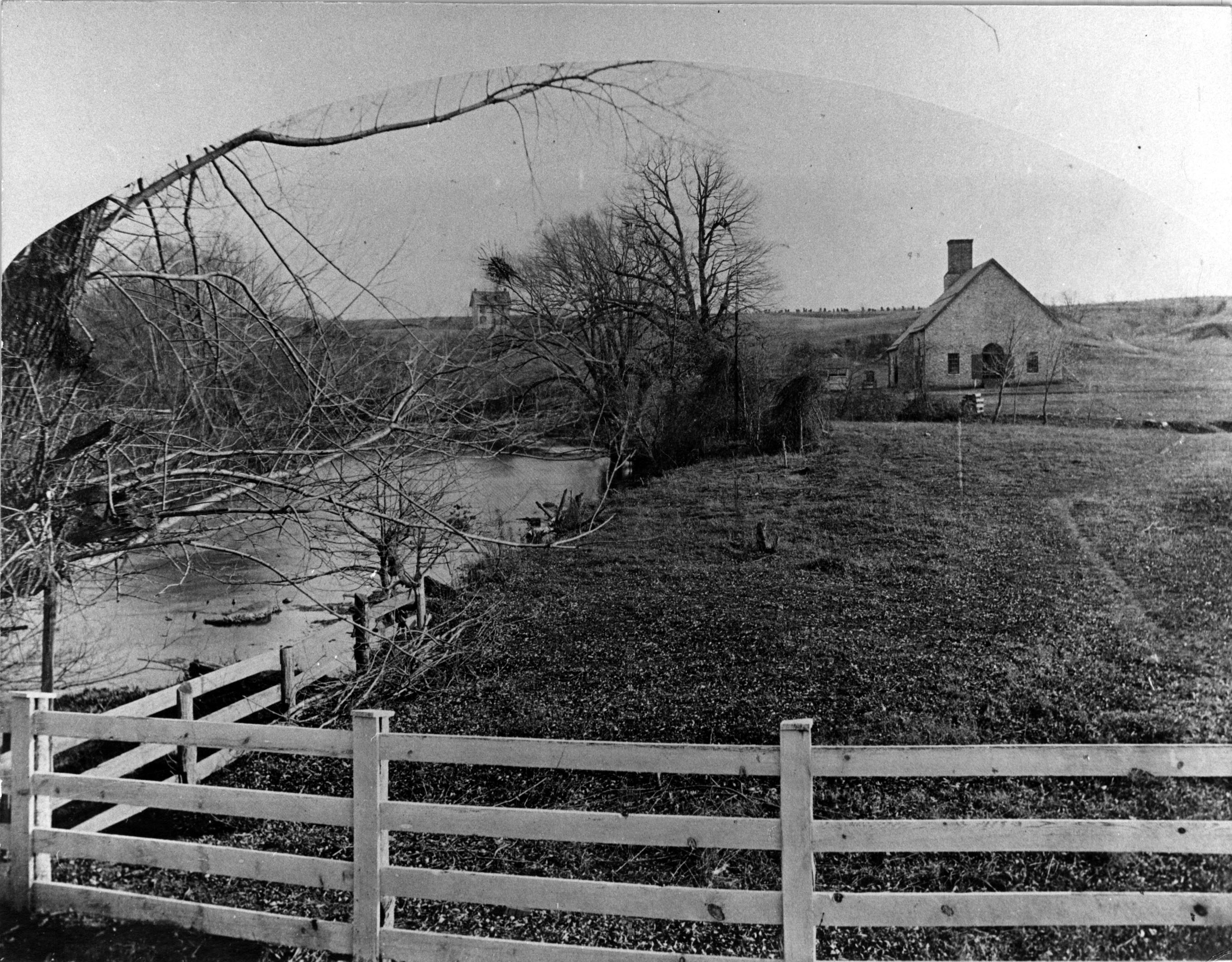
In 1854 the Bureau of Water Supply became a Municipal Utility Corporation. 1861 saw Swann Lake (Lake Roland), Hampden Reservoir and the new Mt Royal Reservoir put into service. These received water from the Jones Falls. In 1864 the City started construction of Lake Chapman (Druid Lake). By 1866, Mayor Chapman realized the inadequacy of the Jones Falls, so authorization for the purchase of lands along the Gunpowder Falls began. 1869-70 saw one of the worst droughts in Baltimore history. In 1871 a reservoir at Pimlico was built, but this was still receiving water from the Jones Falls, which was failing. 1873 saw an urgent need for a supplementary water supply.  A temporary pump, pumping station and a 36-inch cast iron discharge water main were constructed for the delivery of the Gunpowder Falls water from Meredith’s Ford Bridge to Roland Run, a tributary of the Jones Falls, above Lake Roland.  The water flow would be forced at a rate of 10 million gallons a day into Roland Run, a distance of 3-1/2 miles. To the dismay of the property owners. This was known as the Temporary Supply.

Original photo

Original photo

A. Hoen litho from  original photo

A. Hoen litho from original photo 1875

Newer posts →

Blogroll

  • Flouride Action Network
  • lulu
  • My Book
  • WordPress.com
  • WordPress.org

Recent Posts

  • Bermuda 2023
  • ICELAND April 2023
  • George Chalmers of Fochabers
  • In Search of The Skipjack Ada Mae
  • Trap Pond Kayak

Blog at WordPress.com.

  • Subscribe Subscribed
    • Water and Me
    • Join 231 other subscribers
    • Already have a WordPress.com account? Log in now.
    • Water and Me
    • Subscribe Subscribed
    • Sign up
    • Log in
    • Report this content
    • View site in Reader
    • Manage subscriptions
    • Collapse this bar
 

Loading Comments...