• About
  • History Writings

Water and Me

Water and Me

Tag Archives: POLITICS

Building Montebello Filters and Loch Raven Dam

12 Thursday Oct 2017

Posted by Ronald Parks in Archives, HISTORY, water history

≈ Leave a comment

Tags

Baltimore, Dams, engineering, FILTRATION, Gunpowder Falls, HISTORY, Lake Montebello, Loch Raven, Montebello, POLITICS, Public Works, Research, water, water history

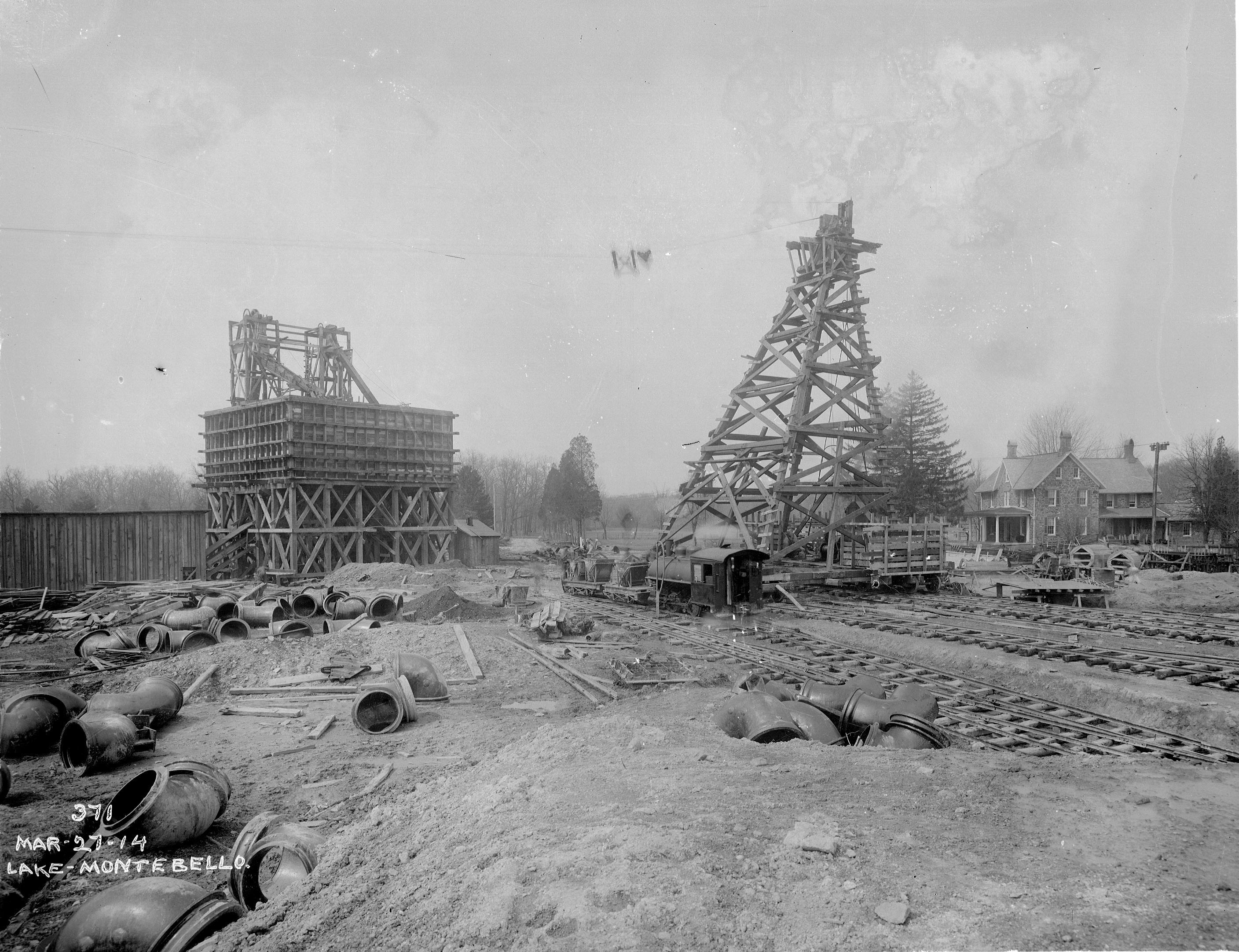
I am now in the process of documenting Water Board minutes from 1912-1919, Baltimore City. Over the course of blogging water history, some readers had asked information concerning relatives that may have worked on the New Dam at Loch Raven and/or constructing the Filtration Plant at Montebello. These ledgers have list of employees and their addresses and in some cases, their titles and pay rates. If you think this may be you, send me their names and I will try to look up that info. Keep in mind this is for the above dates. Once I am finished documenting, these books are going into the archives…

Water and the United Nations

11 Friday Aug 2017

Posted by Ronald Parks in Baltimore, POLITICS, water

≈ 1 Comment

Tags

Baltimore, food&water, POLITICS, Public Works, Research, United Nations, water

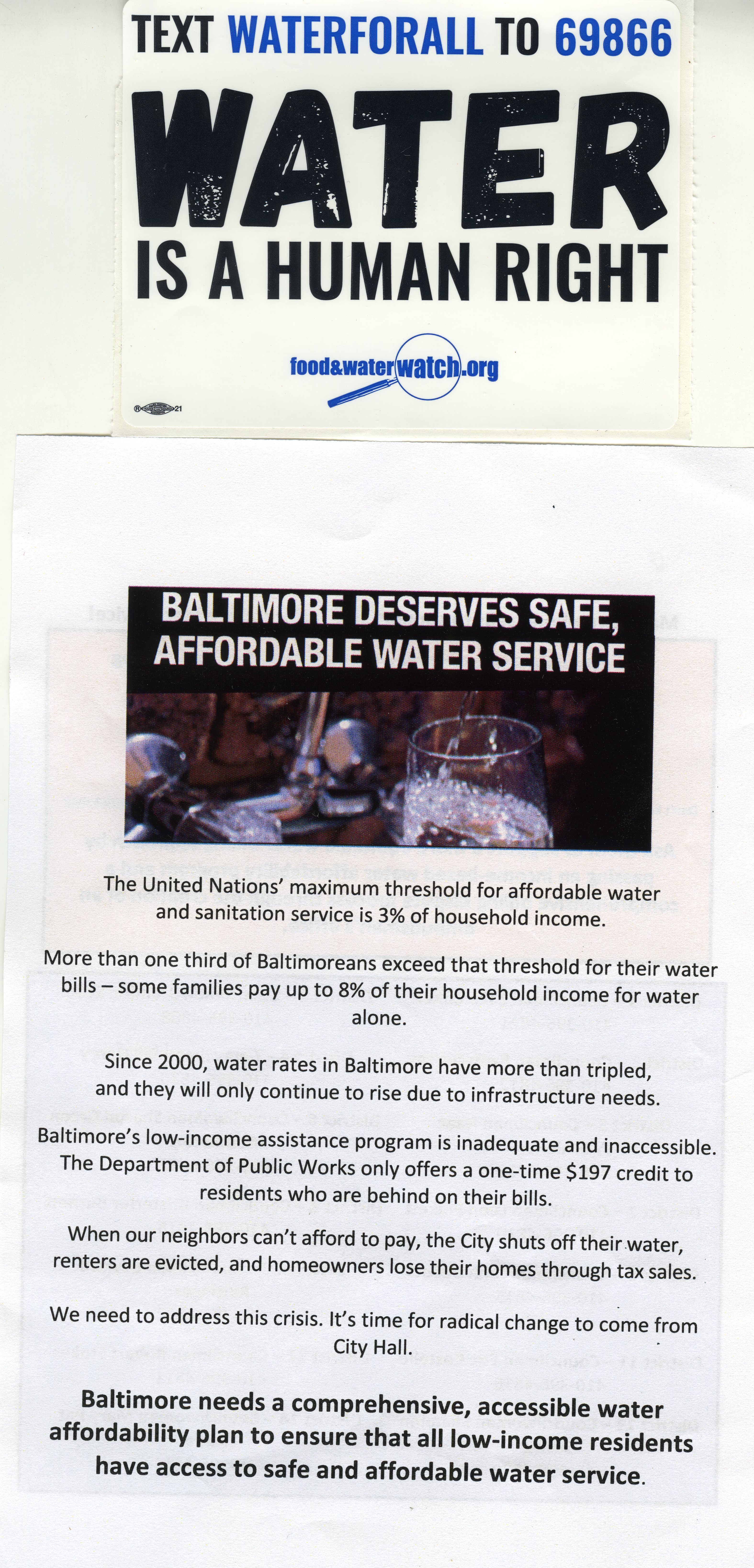
August 9th I attended a meeting at Red Emma’s Bookstore in Baltimore. For some reason I thought they were going to try and start another “Free Water Movement”, which has happened in Baltimore before. But this was not the case. They talked about water being a human right and that the U.N. says so:

As can be seen in this flyer, the UN notes that water and sanitation services should not exceed 3% of a families income.

Here is the panel that spoke and the accompanying info from their FB page: Last night more than 160 Baltimoreans came to the Water for All: A Panel on Baltimore’s Water Affordability Crisis. Thank you to everyone who came, to our coalition partners and panelists who made this event so powerful and to Red Emma’s Bookstore Coffeehouse for hosting!
We look forward to working with everyone to ensure that everyone in our city has access to safe, affordable water!
Panelists will include:
-Delegate Mary Washington, 43rd District
-Eddie Conway, Producer, The Real News Network
-Komal Vaidya, Clinical Teaching Fellow with the Community Development Clinic, University of Baltimore
-Yvonne Wenger, Baltimore City and Social Services Reporter, The Baltimore Sun
-Zafar Shah, Attorney, Public Justice Center

And below is me in the crowd

Because I did not know a lot of the information presented, I went to the UN website and looked it up. It is a lot to read and decipher:  “The United Nations General Assembly passed and adopted the resolution on the human rights to water and sanitation on 17th December 2015.
• Everyone is entitled “to have access to sufficient, safe, acceptable, physically accessible and affordable water for personal and domestic use”
• Everyone is entitled “to have physical and affordable access to sanitation, in all spheres of life, that is safe, hygienic, secure, and socially and culturally acceptable and that provides privacy and ensures dignity.” I also found other resolutions from 2002 and 2012.

The panelist talked about how people are losing their homes because they cannot afford their water bills (tax liens/sales) Rent, food and medication comes first. In Baltimore 2015 there were 5,301 water shut-offs. in 2016 there were 1,149. They did not explain the decrease in those numbers. One panelist brought up race and the affect this has on the Black Community. This affects everyone, not just blacks. These disproportionate numbers may come from their being more blacks in Baltimore? Population of Baltimore is 620,961 with 63% being black/African Americans. Which to me, brings up another point I was hoping to address but we ran out of time: If Baltimore’s Water Dept supplies water to 1.8 million people and only 600 thousand plus people live here – why aren’t the other peoples/counties carrying the brunt of these water bills? And the big corporations here should be paying more without those big tax write-offs!

So as not to only express problems, they offered a couple solutions. The one I wasn’t sure what they meant so I won’t bring it up, the other is a fairly good idea: Baltimore should create an income-based billing program. And along with that, no one should lose there home over their inability to pay a water bill.

The UN’s Universal Declaration of Human rights with Preamble and 30 Articles is a good read also.

Boy Scouts

25 Tuesday Jul 2017

Posted by Ronald Parks in Baltimore

≈ Leave a comment

Tags

Baltimore, HISTORY, Monuments, POLITICS, Statues

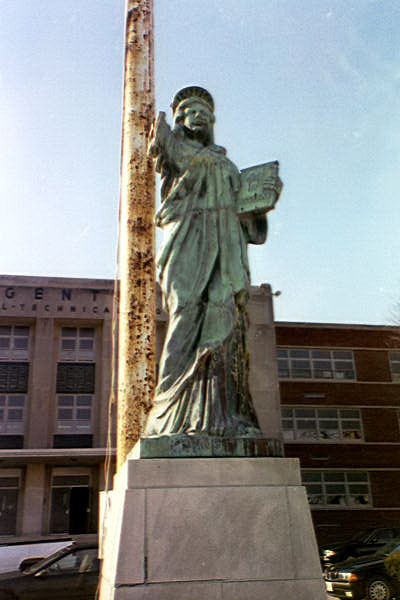
There are over 200 of these replicas in 39 states in the U.S. and several of its possessions and territories. The project was the brainchild of Kansas City businessman, J.P. Whitaker, who was then Scout Commissioner of the Kansas City Area Council. The copper statues were manufactured by Friedley-Voshardt Co. (Chicago, IL) and purchased through the Kansas City Boy Scout office by those wanting one. All were erected in the early 1950’s by Boy Scout troops and others to celebrate Scouting’s 40th anniversary theme, “Strengthen the Arm of Liberty.”
The statues are approximately 8 1/2 feet tall without the base, constructed of sheet copper, weigh 290 pounds, and originally cost $350 plus freight.

Maryland had two of them. This one was in front of Mervo until it was destroyed and sold as scrap by the contractor. The other is supposedly in Belair.

Electrical Survey

20 Thursday Jul 2017

Posted by Ronald Parks in Baltimore, engineering, HISTORY

≈ 2 Comments

Tags

Baltimore, bricks, Electrical engineering, engineering, glass plate negatives, HISTORY, POLITICS, Public Works, Research

This afternoon I will be giving a tour to a group of electrical consultants. They want to come up with new ways to save the City money by cutting back on our electrical use. Every time there is a new administration, new “Offices” and Bureaus are created. To prove their worth for their new job and new title, they come up with these new major plans for the City. Actually, there is nothing new about it. This will be the fourth or fifth time this has happened. Once in the 80s it was decided to turn 1/2 the lights out in the hallways and filter areas. Personnel complained that they couldn’t see, so they turned the lights back on, which in turn, maintenance then removed the bulbs. Just a few years ago they (paid consultants) came up with the idea to switch out all lights with LED bulbs. That definitely was not going to be cost saving.

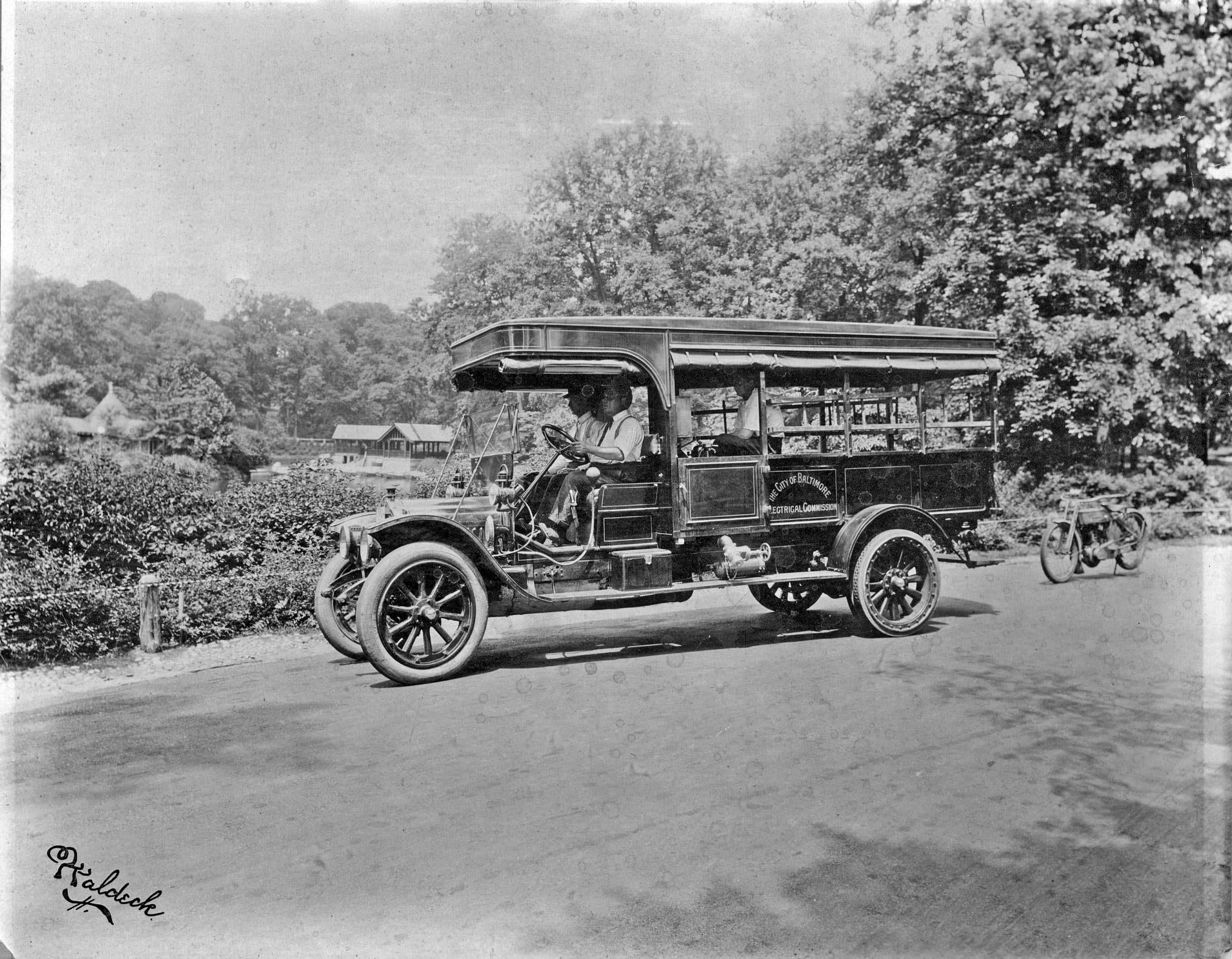
I started looking through some old files and came across these Electrical Commission photographs from the 1920s:

Electrical Commission office for operations, maintenance and construction. 

On the wall to the left of the first photo was this photograph. It was in bad shape when it was removed from the wall and placed in storage.

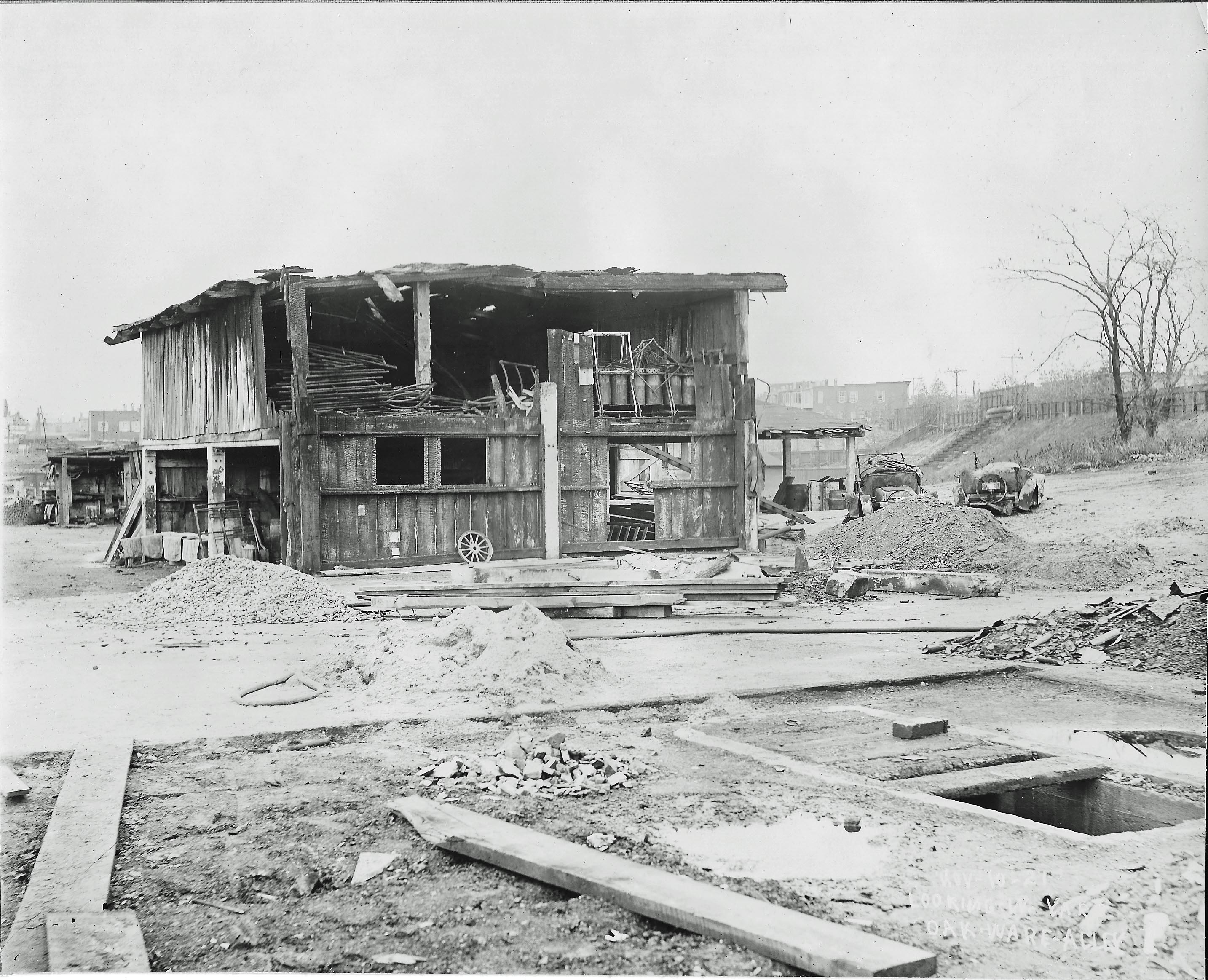
The commission’s garage and work area was destroyed by fire. Looking thru the building on the left you can see the burnt autos.


More damage from fire.

Work still continues despite the damage.

Clay duct banks. These were used to rebuild the garages…

…as can be seen here.

A new fleet of vehicles while the rebuilding continues in the background.

Swimming Bathing Drowning

06 Thursday Jul 2017

Posted by Ronald Parks in Baltimore, HISTORY, water history

≈ 3 Comments

Tags

Baltimore, engineering, FILTRATION, Health, HISTORY, Jones Falls, Lake Montebello, Loch Raven, Montebello, POLITICS, Public Works, Swimming, water history

For your summer reading pleasure:

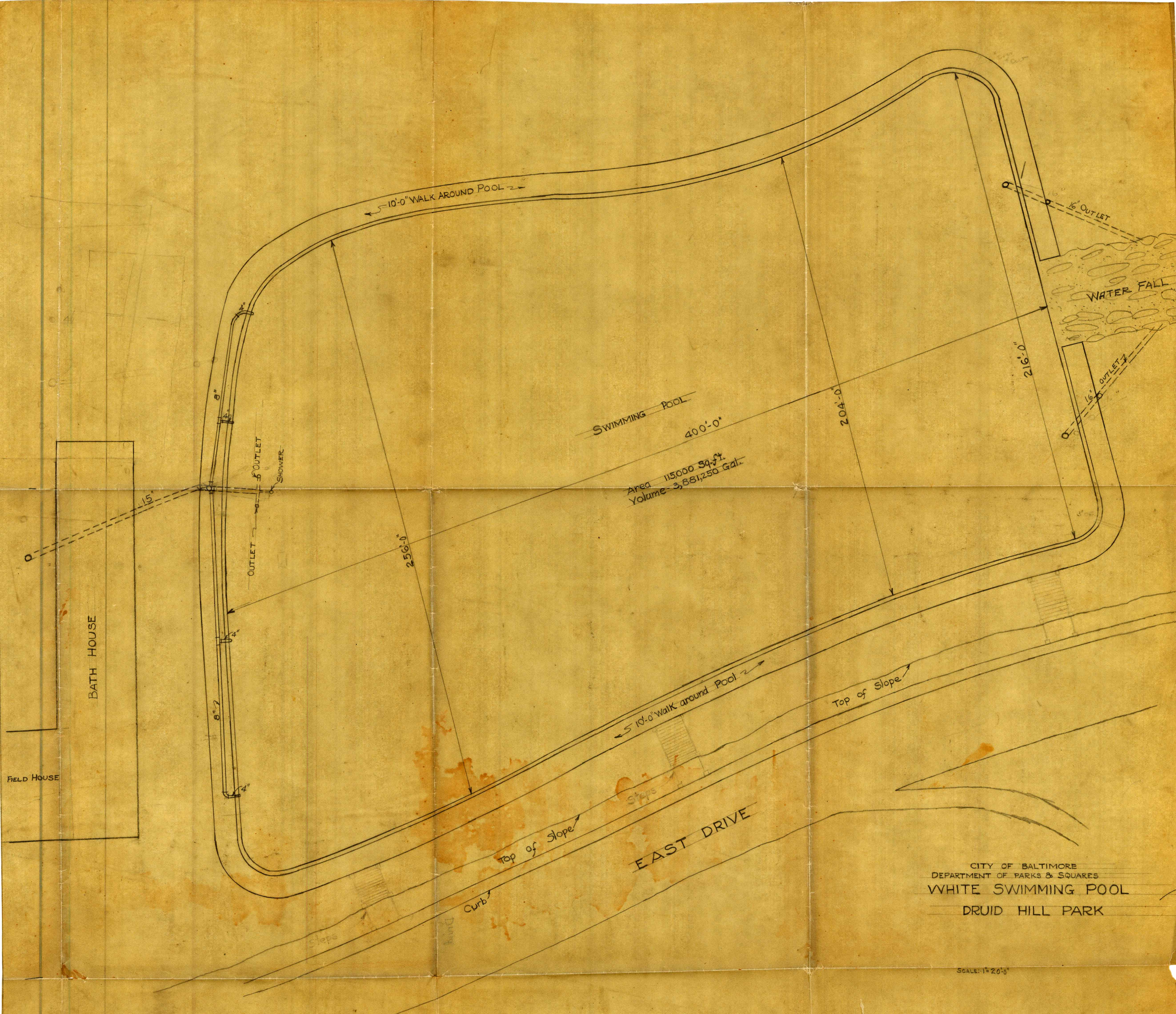
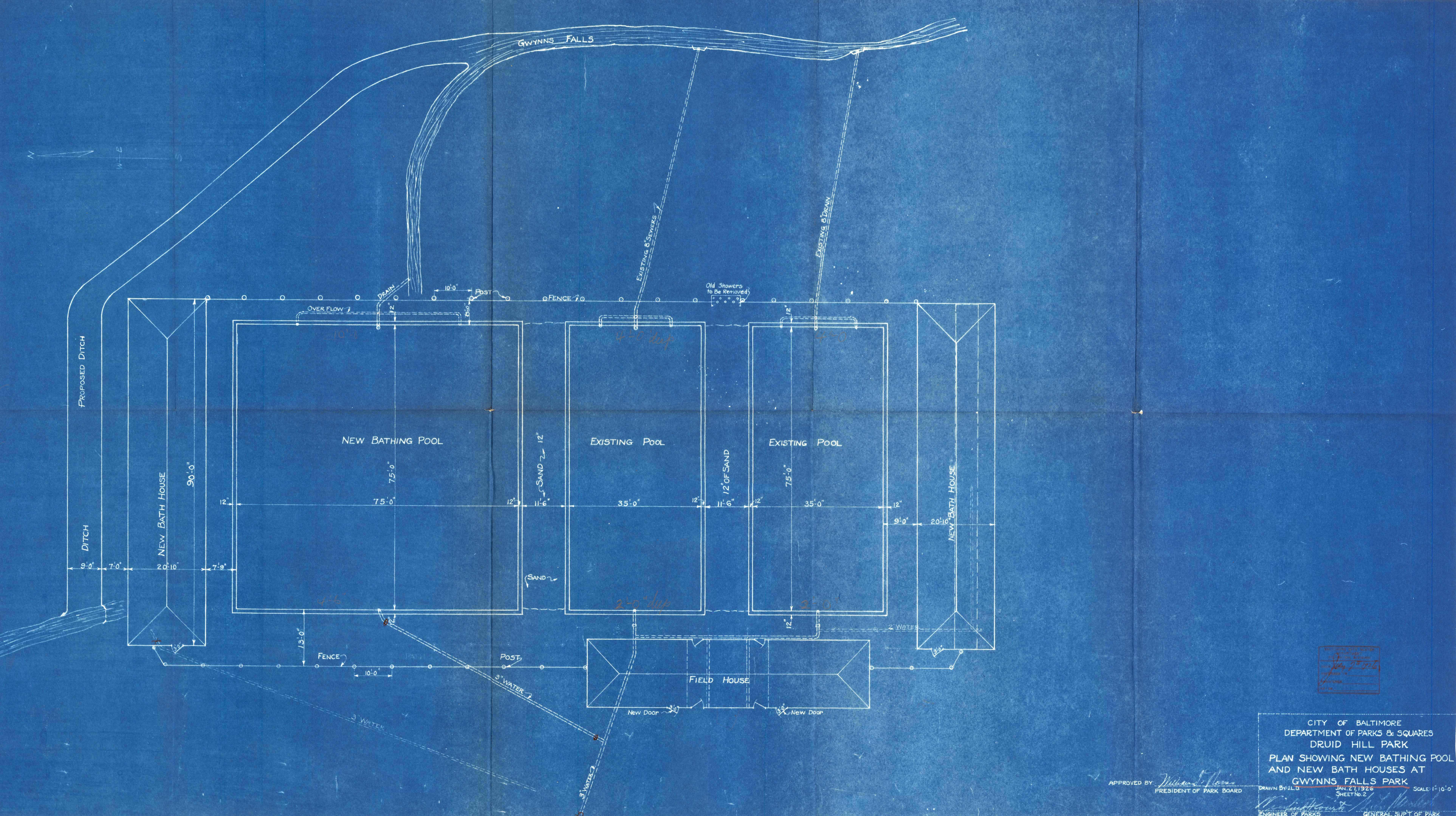
1916: A 16,000 gallon swimming pool was being built next to Lake Roland. July 19, 1917 letter from Water Engineer Walter Lee to the Baltimore County Commissioners asking that they police the area around Lake Roland as it has been reported that 10-15 persons bathe there every day. They reply that the city should get their own men to do it. June 9, 1923 letter requesting permission for the L’Hirondelle Club to be allowed to swim in Lake Roland. March 1924 newspaper clipping on drowning of boy, thirteen, in Lake Roland. The city investigation tried to place blame on the Pennsylvania Rail Road, who they say had some timbers floating about, which the boy fell off of as he used them as a raft. The PRR said it was a contractors fault, who used the timbers for some work they were doing. They also note that the boys were trespassing at the time of the incident. October 10, 1917 letter from Walter Lee to Mayor Preston notifying him of the intent of two ladies from Hampden, asking that a swimming pool be constructed on the property of the Hampden reservoir. They were also soliciting for his honor to pass a city ordinance in which they were to propose. Lee asks that if this happens, would the mayor turn the property over to Park Board? June 20, 1922 letter from Megraw to Christhilf Construction and other contractors, asking that they put in a modest bid (For charities sake) for the construction of a swimming pool at West Park (New name of Hampden Reservoir area) March 22, 1923 memo concerning the creation of a swimming pool between the upper and lower dams complete with toilet, shower facilities and a snack shack. June 20, 1924 letter from Armstrong to Siems concerning the swimming in the waters between the dams. He says it is prohibited. June 20, 1926 letter from the Baltimore Federation of Labor to Bernard Siems concerning the city using non-union workers to build the Druid Park Swimming Pool. On the bottom of this memo is a union logo: Specify UNION LABOR, have the job done Right!
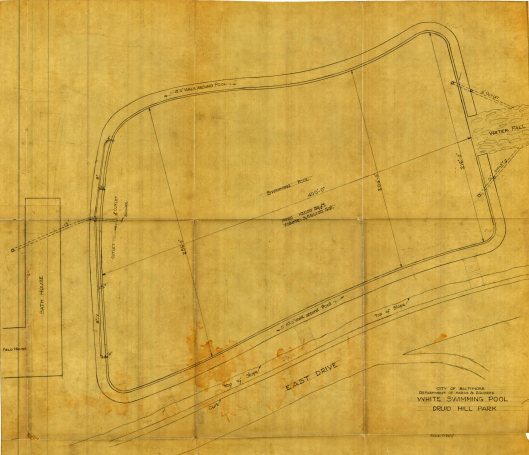
Druid Park Swimming Pool

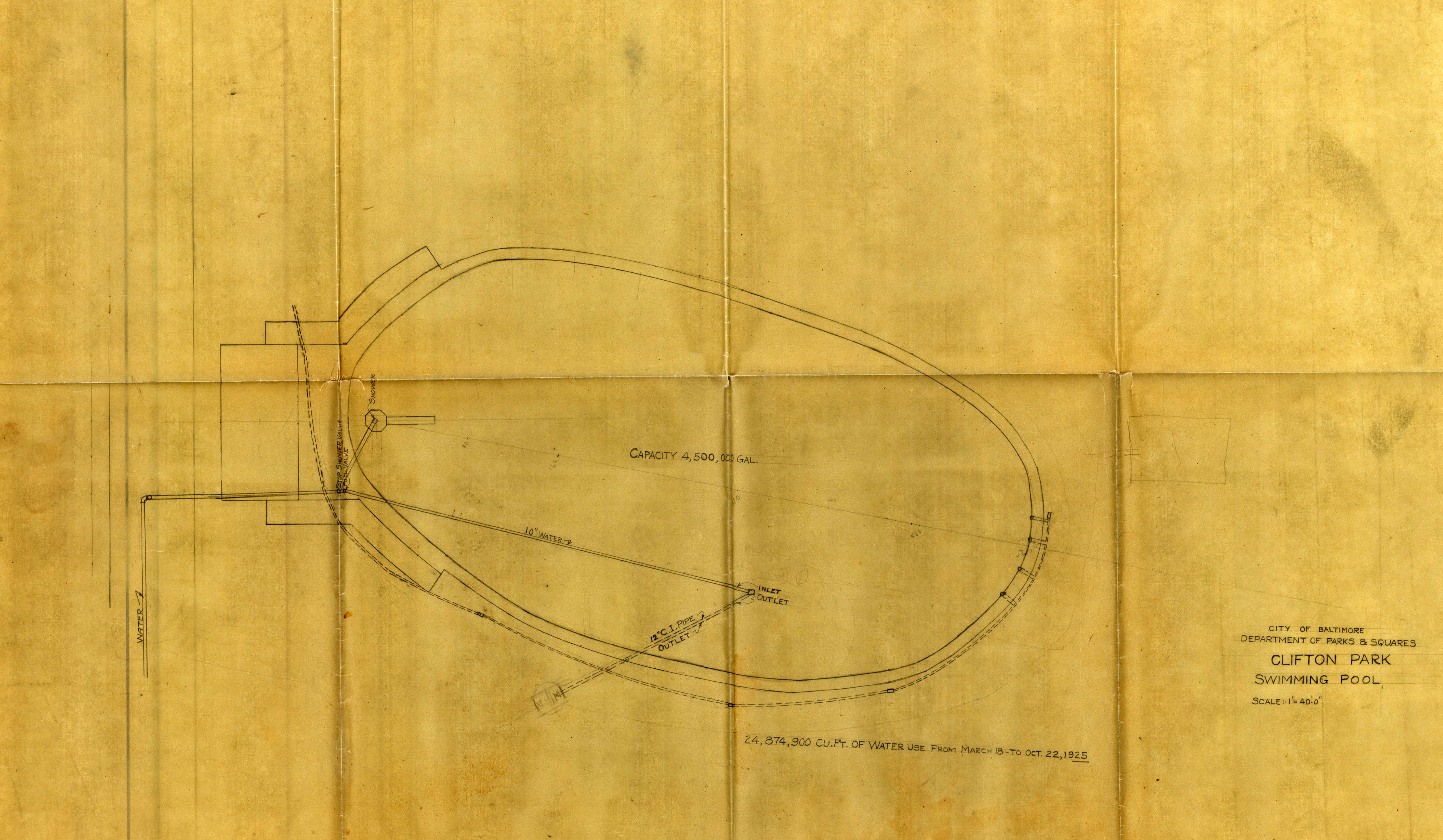
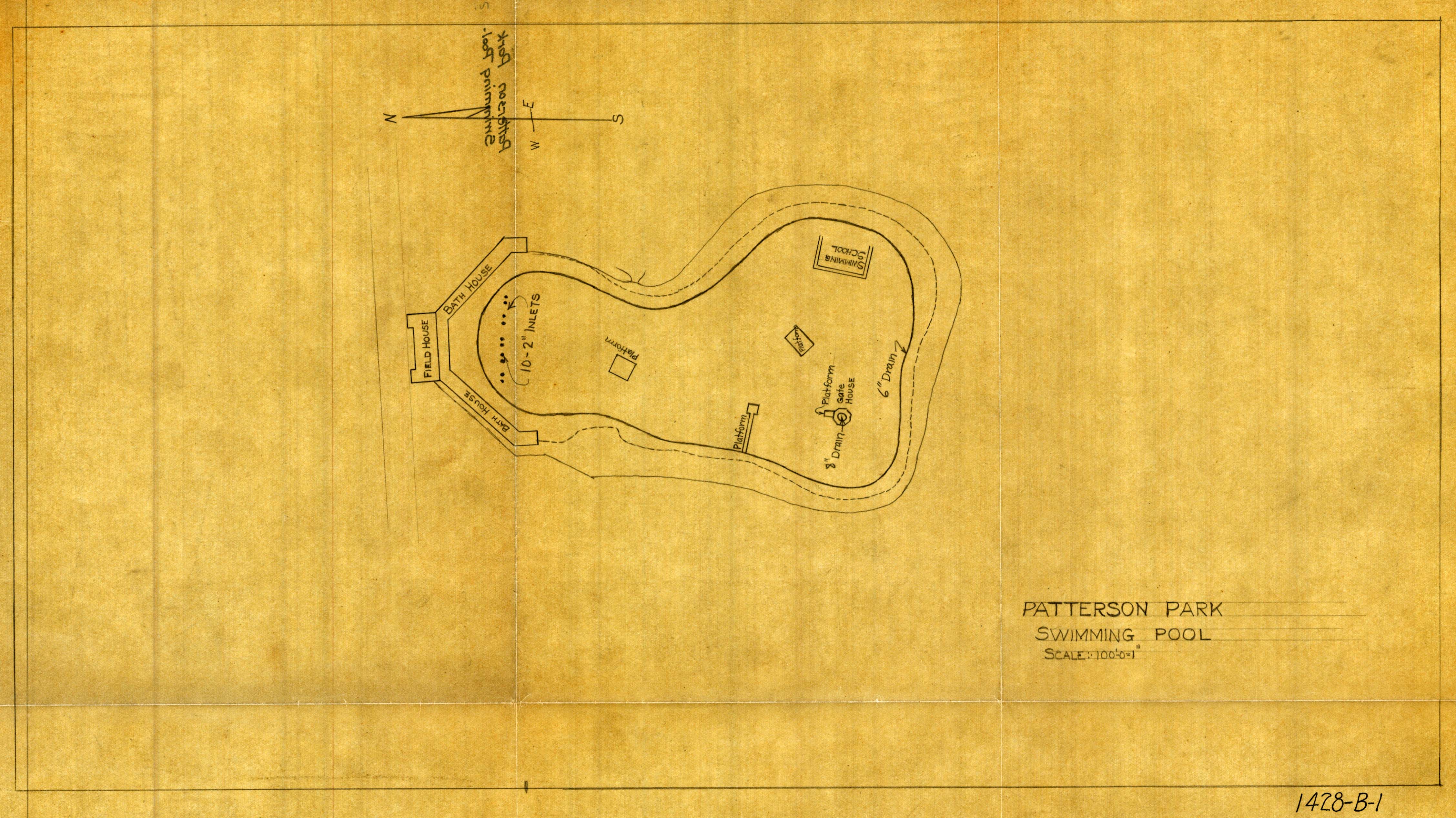
July 11, 1927 letter from Wolman to Wieghardt, “…when the pool was inspected by us a couple years ago we were informed that the Hampden Reservoir contained filtered water…the Hampden reservoir obtains all its water from the Jones Falls. In other words, the pool has been obtaining a completely untreated water from a relatively dangerous source, which has been abandoned for all municipal purposes for over 10 years…” July 14, 1927 letter refers to the Hampden Reservoir area as Roosevelt Park instead of West Park. June 24, 1930 memo from Rost to the Police Commissioner asking that the police stop the boys from climbing over the fence and swimming in the Montebello Plant II filtered water reservoir. 1932 Pools listed are: Druid Hill Colored Pool, Druid Hill White Pool, Gwynns Falls Park Pool, Carroll Park Wading Pool, Riverside Park Pool, Patterson Park Pool, and Clifton Park Pool.
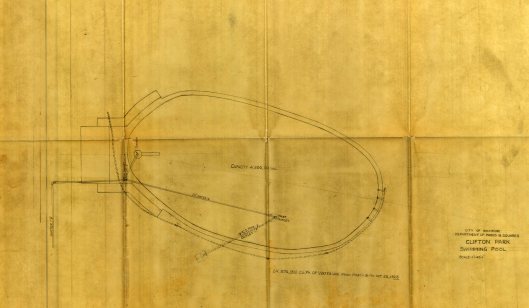
Clifton Park Pool

June 10, 1933 police report on a ten year old who went swimming with three other youths and he drowned. The others left him and told no one. July 18, 1935 request from the National Guard for a shooting range at Loch Raven. Small does not want this. August 15, 1935 Brigadier General Washington Bowie writes Small back stating, “I note what you state in regard to the interference with the recreational purposes. If you had been with me last Sunday…when I saw three negroes in bathing suits swimming back and forth near where I wish to locate the range, or on a previous occasion when I found a half-dozen white boys swimming…I think you would find a rifle range more desirable than such recreational use…the portion outlined on your print is constantly used by both negroes and whites for swimming. The rifle range would at least make this unpopular.”  Bowie then goes over Small’s head to Crozier. Crozier agrees with Small. A few months later, the Mayor agrees with Small and Crozier. June 14, 1938 list of names of swimmers at Loch Raven. Officer Goetz is to arrest these people and take them to Towson jail if they are caught again swimming in the reservoir. June 14, 1945 memo from A. Bailey to L. Small concerning kids swimming in the waste lake, “The boys in the Northwood neighborhood…are using it as a swimming pool…groups up to about thirty…during the daylight and night hours, sometimes as late as 12pm. They have been warned a number of times by various employees of this division only to be cursed for their troubles…radio police have been summoned but made no attempt to stop this practice…I talked with two patrolmen while eight to ten boys were in the lake and asked that they talk to the boys…they promised they would but walked to the opposite side of the lake and blew their whistles instead. Yesterday, June 13, there were even a greater number of swimmers than any time previous, so I contacted these boys personally and told them that it was my orders to have them arrested…they paid little attention to what I said…placed twelve ‘No Trespassing’ signs up. By 9pm all signs but one were removed and destroyed. At 10pm, a great commotion was heard, a group of three boys were in swimming and one had gotten into trouble and was so far gone when they rescued him, that it was necessary to apply artificial respiration…police called and all three were taken to Sydenham Hospital. The police, at least the patrolmen, do not seem to want to cooperate with us and make no attempt to put a stop to the practice of swimming. (We) could drain the lake and keep it drained in the summer months…parents may then be willing to stop their kids, but judging from what I have seen of these people, I do not believe they have enough control over their children to prevent them from doing anything that they wish to do. Child delinquency for this section is bad, if not worse than the average for Baltimore City. August 23, 1945 memo from Bailey to Strohmeyer about unwanted visitors to the plant. Young men swimming in the waste lake, one almost drowned. Two, three year olds, alone, swimming in waste lake. One threw a fit and refused to leave. The police were called. Two teenagers running through Plant II and when told to leave, went and got their father who dared anyone to stop them from coming into the plant. An undated memorandum: “Yesterday afternoon … three young men found swimming in the Balancing Reservoir at Loch Raven in their birthday clothes.”

Gwynn’s Falls Pool – the overflow goes right into the stream, adding more pollution.

The largest of the pools back then.

Saving History, One Piece at a Time

16 Friday Jun 2017

Posted by Ronald Parks in Baltimore, HISTORY, water history

≈ 3 Comments

Tags

Baltimore, Clifton Gate House, Dams, engineering, FILTRATION, Gunpowder Falls, HISTORY, Lake Montebello, Loch Raven, Montebello, POLITICS, Public Works, water history

Anyone that has been following my blog will remember my writing about a few construction projects that are water related. Such as the new buildings at Loch Raven, the contractor busting a hole in the ten foot conduit that supplies water to Baltimore, another contractor digging up the foundation to an old pumping station, the attempts to save the Clifton Gate House, the Roland Tower, the residence at Montebello, etc.

When I first wrote about the work along Loch Raven, I wrote about the house and buildings they were tearing down. After being notified of this project, I went to investigate and saw a bunch of metal signs. Not necessarily ultra historic, but a part of Baltimore’s Water Supply History nonetheless. I was able to retrieve from the contractor, 2 of the 8 that were there. The other six were taken by a company the reuses old building materials.

Here is one of the eight signs. This all happened a few months ago. The other day I received an email. One of those courtesy type ones from the big bosses downtown, trying to keep me in the history loop. Well, I was dumbfounded when I read the email. It just said FYI and had the attached photo along with two other attachments.

I couldn’t believe what I was seeing! This photo is of the marble plaque that was in the original 1881 gate house to the first Loch Raven Dam!!! i always wondered what happened to this thing.

The third attachment is a quote, only partially shown to protect the parties involved. Two marble plaques? The quote went on to say that the other one was dated 1887!! Holy crap! Only one water works related to Loch Raven was built at that time and that was the Clifton Gate House!! My eyes were playing tricks on me!! This couldn’t be!

But wait! How did this company get these things and were they really trying to sell them back to the City? City property??!! I don’t think I ever cussed in an email to one of the bosses downtown but I just couldn’t contain myself “What the hell! This is City property. How can they charge us for something that is ours?!” I suggested he gets the Environmental Police involved to check this out. If not, tell them I will give them $500 and we won’t press charges. He said he turned it over to the EP. And he did. Today I received a copy of the investigative report stating that these items were picked up by accident and would be returned to the City. And they were this afternoon!!

More on this later so stay tuned! (I want to go into a lengthy bit of comment on what we should learn from this…)

When they were giving out brains, you thought they said trains…

30 Tuesday May 2017

Posted by Ronald Parks in Baltimore, engineering, water history

≈ Leave a comment

Tags

Baltimore, engineering, FILTRATION, HISTORY, Montebello, POLITICS, Public Works, Research, water history

Contractor on site called me over once again because they hit something unknown.

Turned out to be a set of train tracks from original construction 1913-1915.

As can be seen here, there were a lot of tracks laid for construction. These veer off to the right to hook up with the ones below.

In this photo, lower right is about where the tracks are that the contractor dug up. I told them they would have to suspend their work until I talk with the historical people – these may be the tracks that President Woodrow Wilson’s train was on during his visit when the plant opened in 1915. Not. Montebello Lake is in the background.

Random Archives

04 Thursday May 2017

Posted by Ronald Parks in Baltimore, HISTORY, Sewage History

≈ Leave a comment

Tags

Baltimore, baseball, Democrats, Latrobe, mayor, plumbing, POLITICS, Public Works, Research, Sewage History, stadium, water history

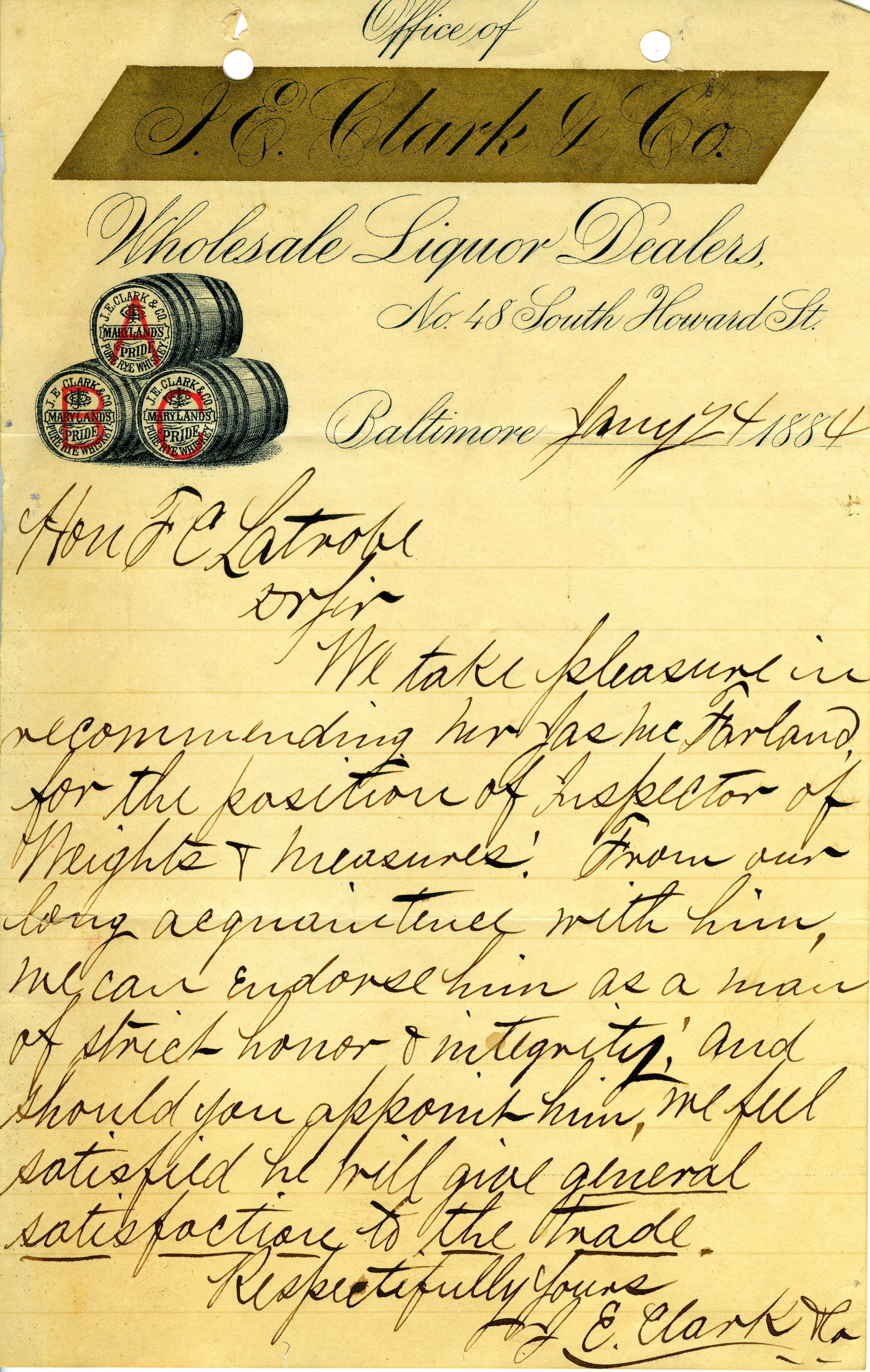
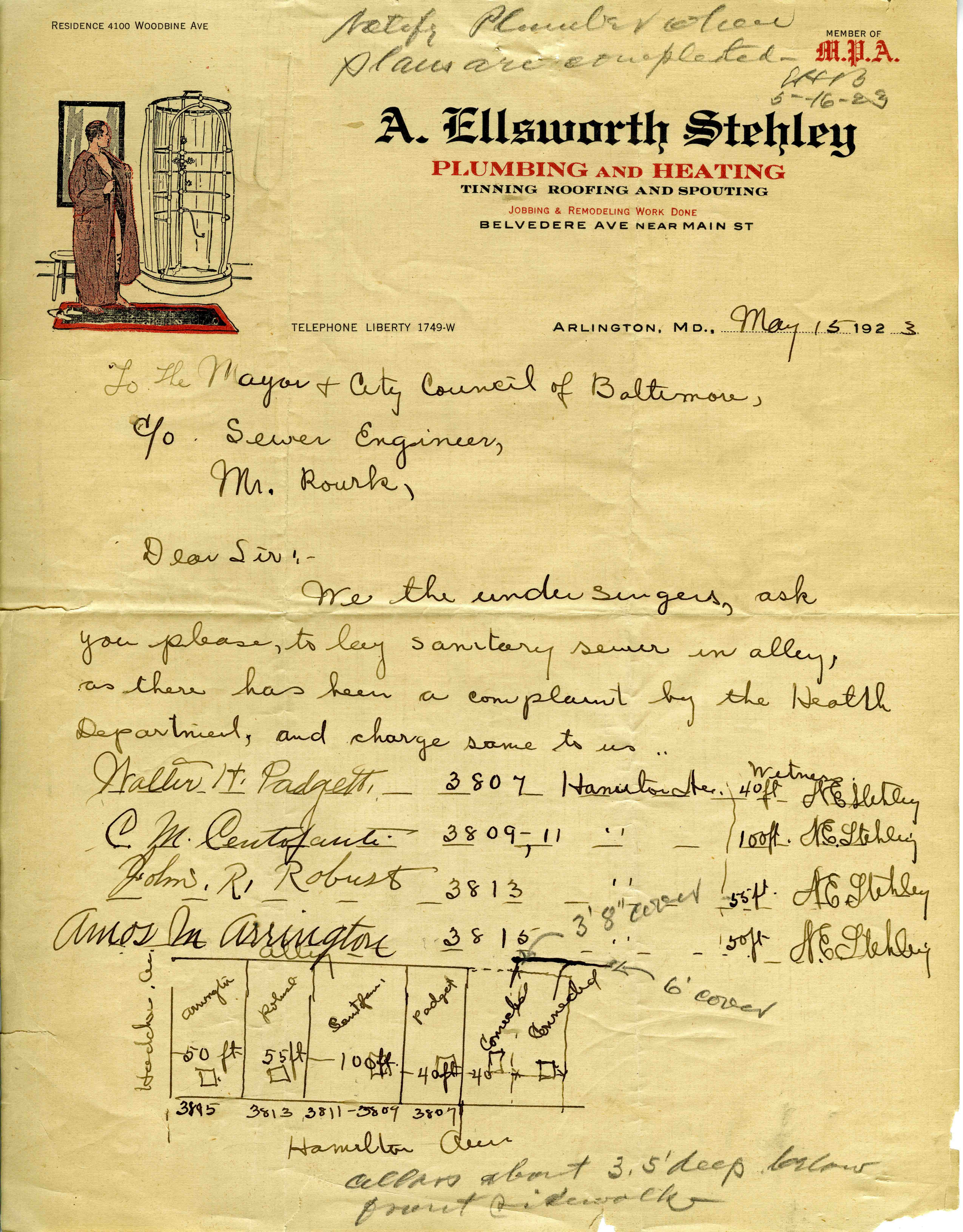
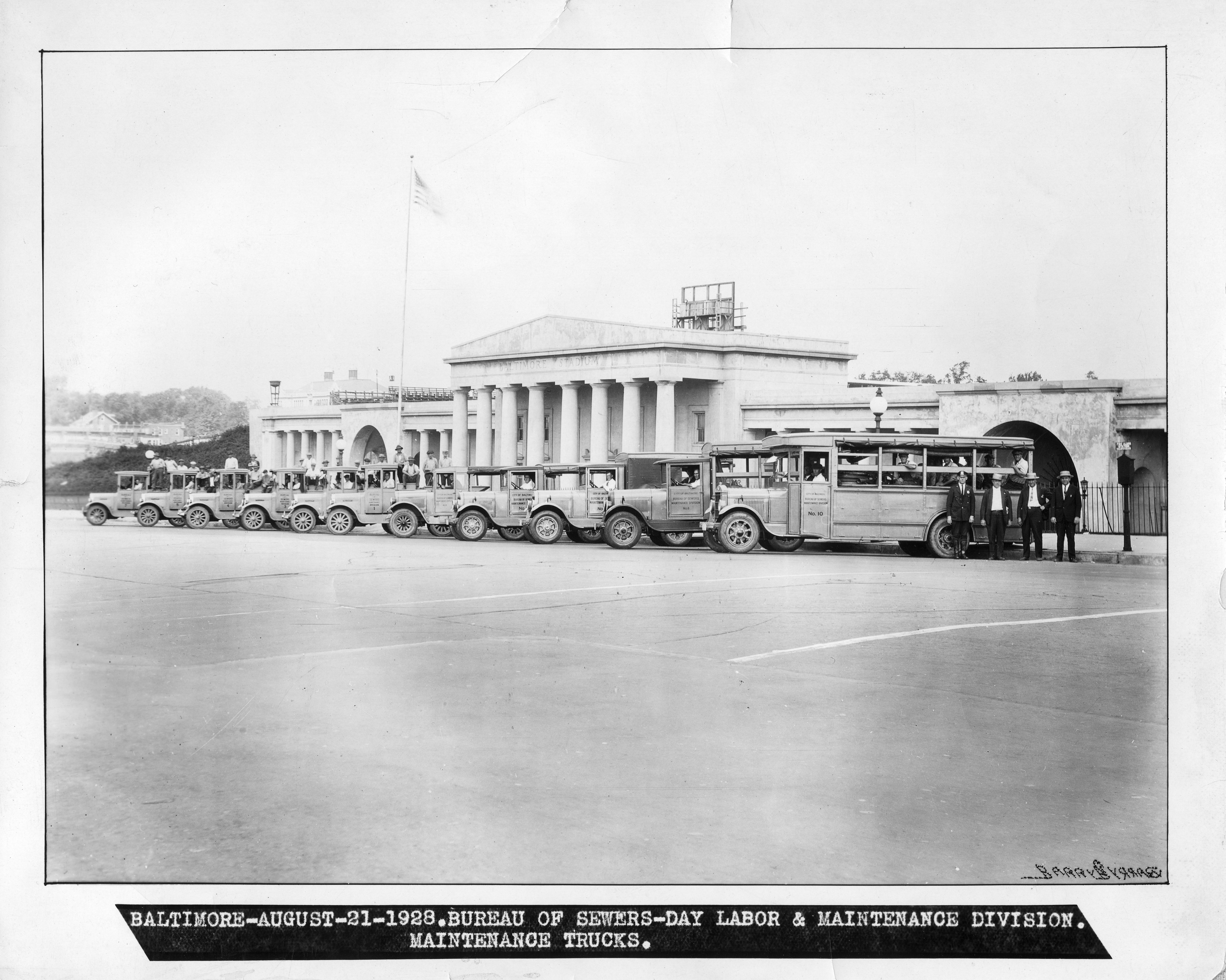
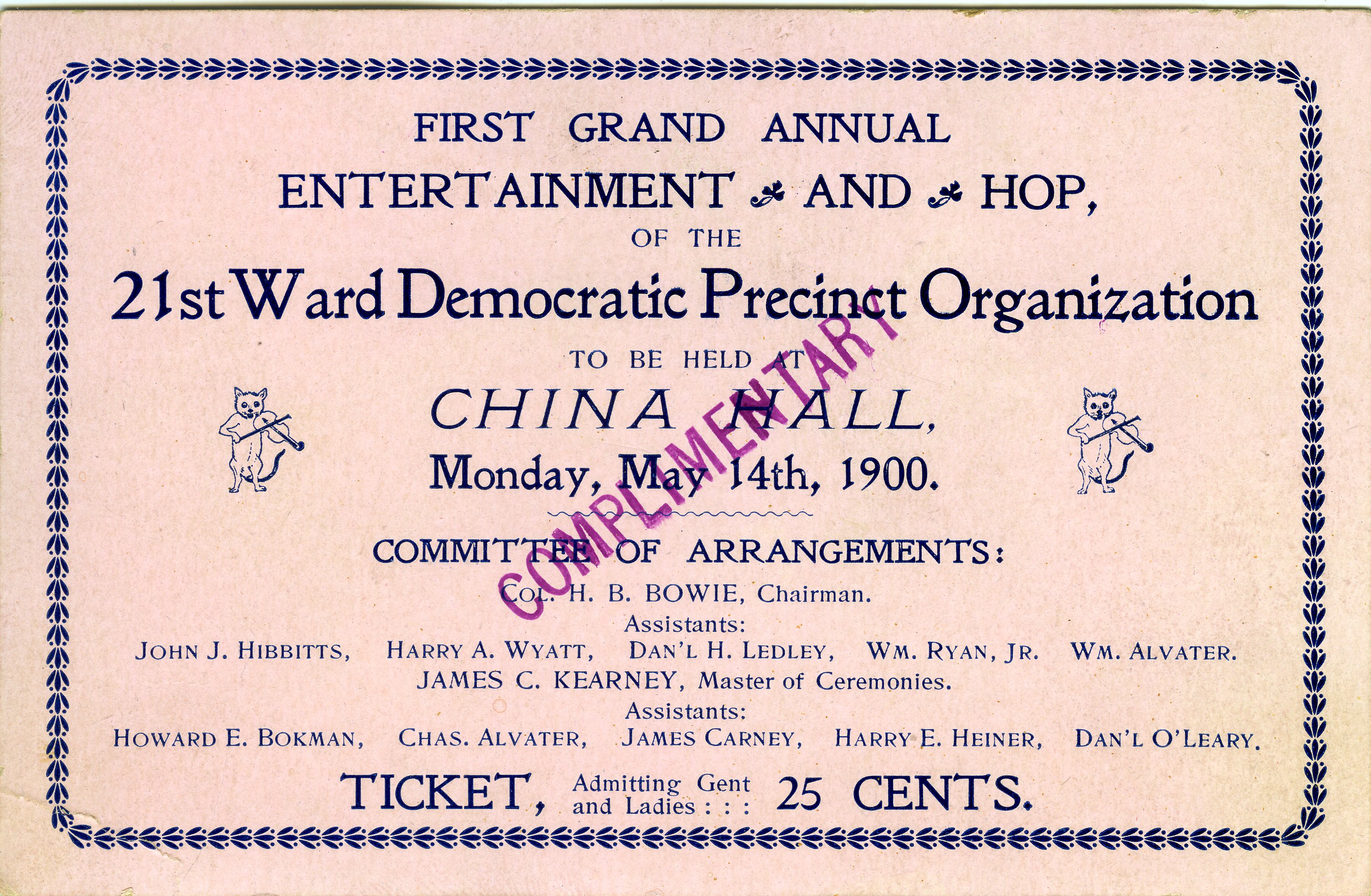
Sorting and documenting more archives from the DPW Museum.

January 24, 1884 Letter from the office of J.E. Clark & Co., Wholesale Liquor Dealers, No. 48 S. Howard St. Baltimore to Hon (Honorable) (Mayor) F.E. Latrobe: Dr. (Dear) Sir, We take pleasure in recommending hon (honorable) Jas. McFarland for the position of Inspector of Weights and Measures! From our long acquaintance with him, we can endorse him as a man of strict honor & integrity and should you appoint him, we feel satisfied he will give general satisfaction to the trade. Respectfully Yours J. E. Clark & Co.

May 15, 1923 Letter from Stehley Plumbing to the Mayor and the sewerage engineer Ruark asking for a sanitary sewer in the alley, houses along Hamilton Ave. and ? (Where Remmell Ave. is now)(Not sure if initials in upper right are Mayor Broening’s? Note says to notify plumber when plans are completed).

I looked on a few maps and still cannot find the name of the intersection that 3815 Hamilton Ave. was at back then. Someone once asked me when did Northeast Baltimore get a sewer system? It was about this time.

A photo I posted on Facebook a couple years ago, showing Sewerage Maintenance trucks and workers back in 1928, parked in front of the Baltimore Stadium.

Democrats doing the Hip-Hop back in 1900! I looked up the 21st District to see where the China Hall was located. Found China Alley but no Hall.

Clifton Gate House – Update

19 Wednesday Apr 2017

Posted by Ronald Parks in Baltimore, Gate House, water history

≈ Leave a comment

Tags

art, Baltimore, engineering, FILTRATION, Lake Clifton, Lake Montebello, Montebello, photography, POLITICS, Public Works, water history

Back in July 2016 I wrote about the renewed interest in doing something with the Lake Clifton Gate House. A farmers market, a cafe, a historical showcase for the water department, etc. The other day I received an email to attend a meeting on another proposal, submitted by Civic Works and their vision for the Valve House (Note: Valve House and Gate House are interchangeable when talking about this structure – Pump House is not – it never had pumps in it). Attached to the proposal was this photograph:

I thought to myself, how the heck did I miss this driving back and forth to City Lights?? Well, this didn’t happen. It is a piece of art. “This is an animation of a specific artist’s winning proposal to mount this public art installation. BOPA is hoping that the installation will be able to move forward under the watchful eye of Civic Works.”

Here is an excerpt from John, at Civic Works, on their proposal for the Gate House:

When the Valve House is renovated and attractively landscaped, it will attract people who pause for pastry, coffee, ultra-local freshly harvested foods and flowers, art and stories of Baltimore. Stories from our past, presented here, will be outshined by news of the structured opportunities, offered “next door” for careers in the expanding green business sectors.

As the renovations to the Valve House are fully realized, the adjacent Lake Clifton campus will become the operational base for Baltimore Center for Green Careers, Civic Works Food and Farm programs and other pathways to prosperity. In the coming decades, these two work in harmony – the information packed social hub and the sustainable-jobs work preparation center.

I personally think this is a great idea! And I really hope it happens.

Here is a 1927 aerial of Lake Clifton and its relation to Lake Montebello. Clifton being the one at the bottom. Water flowed from the dam at the Gunpowder Falls, via a 7 mile tunnel to Montebello, then by conduit to Clifton, at which point it was dispersed to the city.

From the 1970s showing the interior of the Gate House with the water chambers covered over with wood.

The reverse of the above photo, from the Sunpaper files showing that back in 1970 there was an interest in restoring the Gate House.

Another 1970s Sunpaper photo showing the stained glass windows nearly intact. Most have since been broken out. (Note:Photos from my personal collection)

Lewis M Keizer Farm

24 Friday Feb 2017

Posted by Ronald Parks in HISTORY, water history

≈ 4 Comments

Tags

Baltimore, Cromwell Park, engineering, glass plate negatives, Gunpowder Falls, HISTORY, Loch Raven, POLITICS, Public Works, water, water history

I was called up to Loch Raven today because the contractor punched a hole through the ten foot water supply conduit, but that is a another story for another time. A lot of finger pointing going on so I should stay quiet for now…

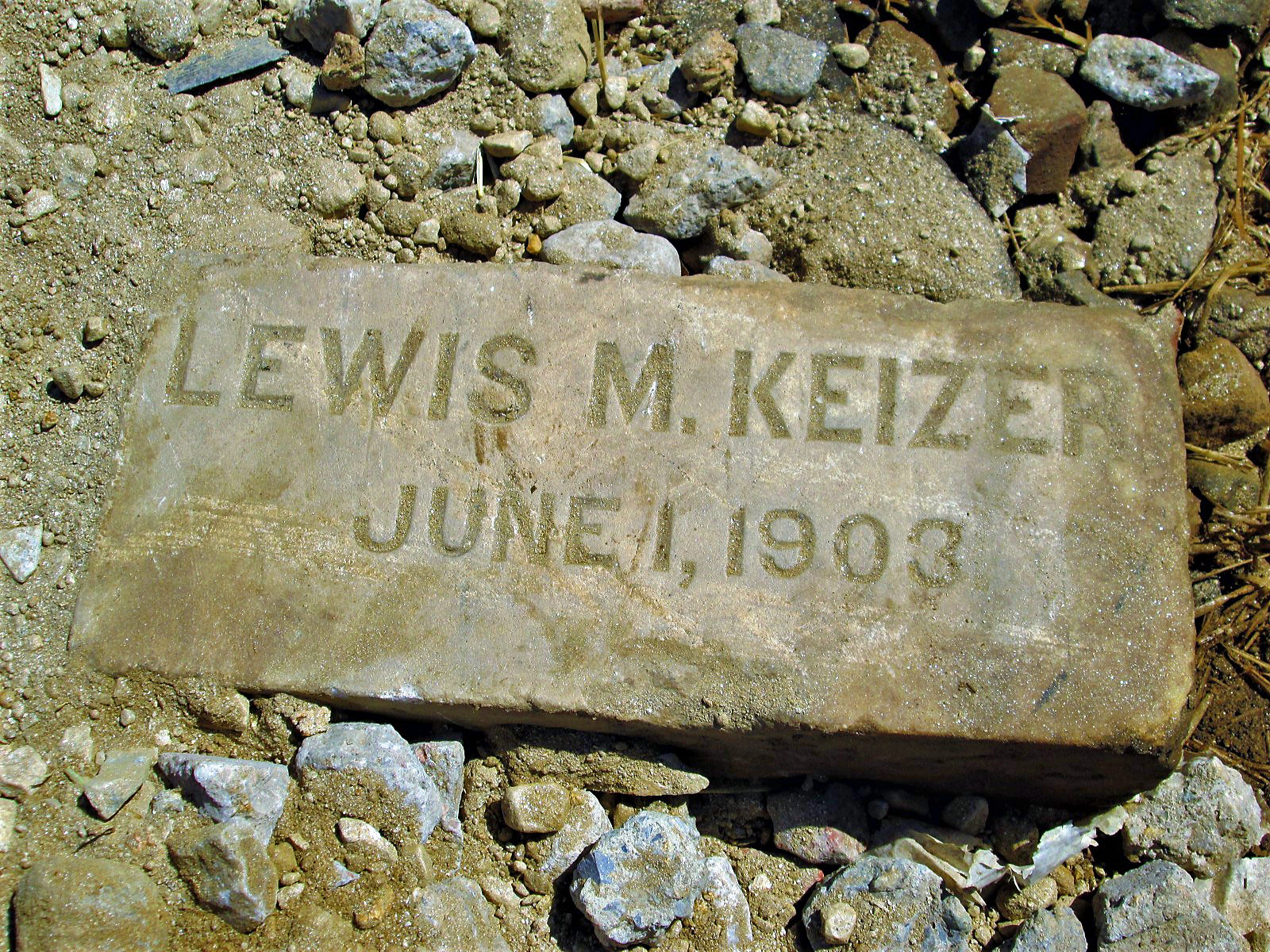
Anyway, while up there one of the laborers approached me and asked if I was the history guy and did I want to see something? Ok. He showed me the below stone:

067

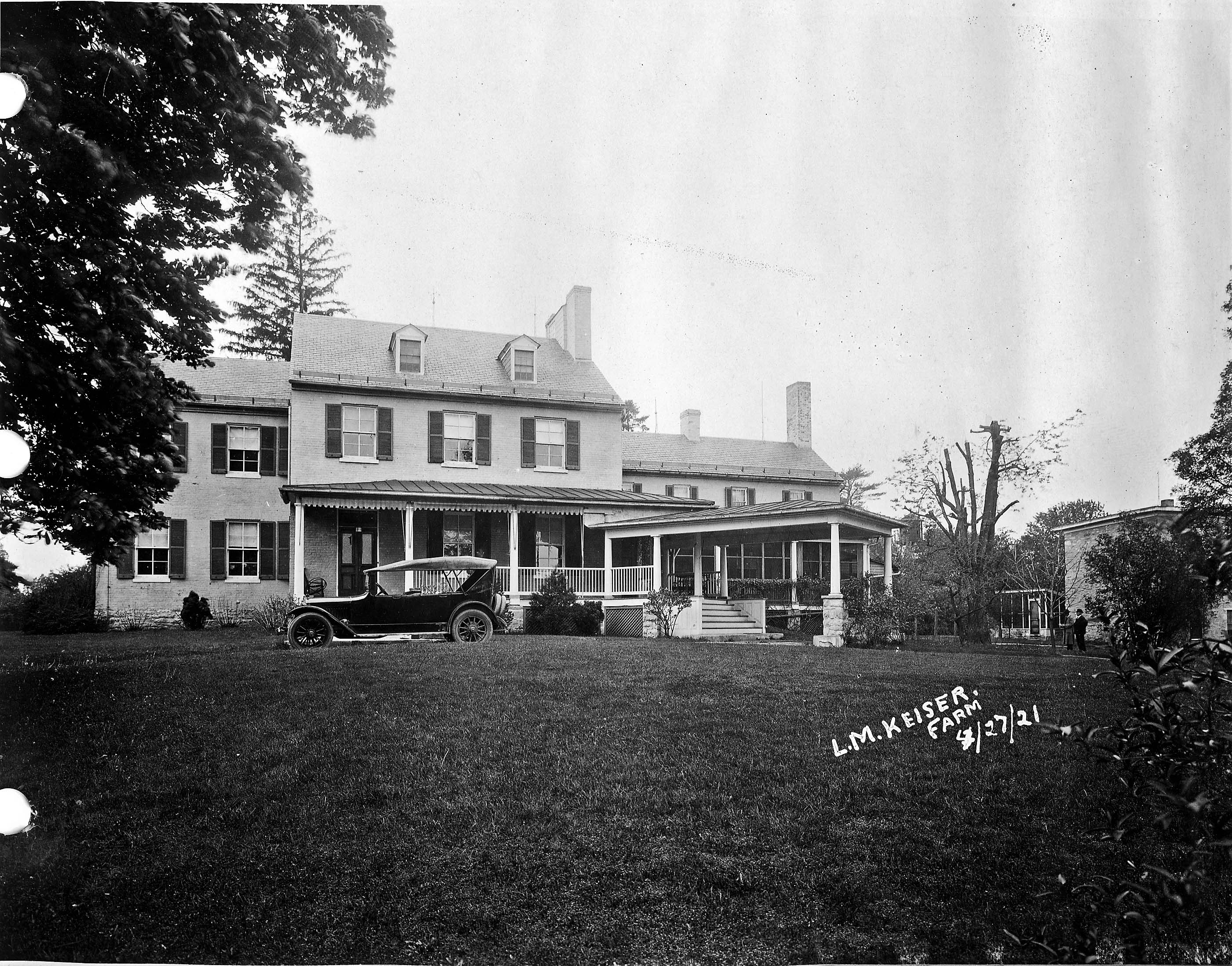
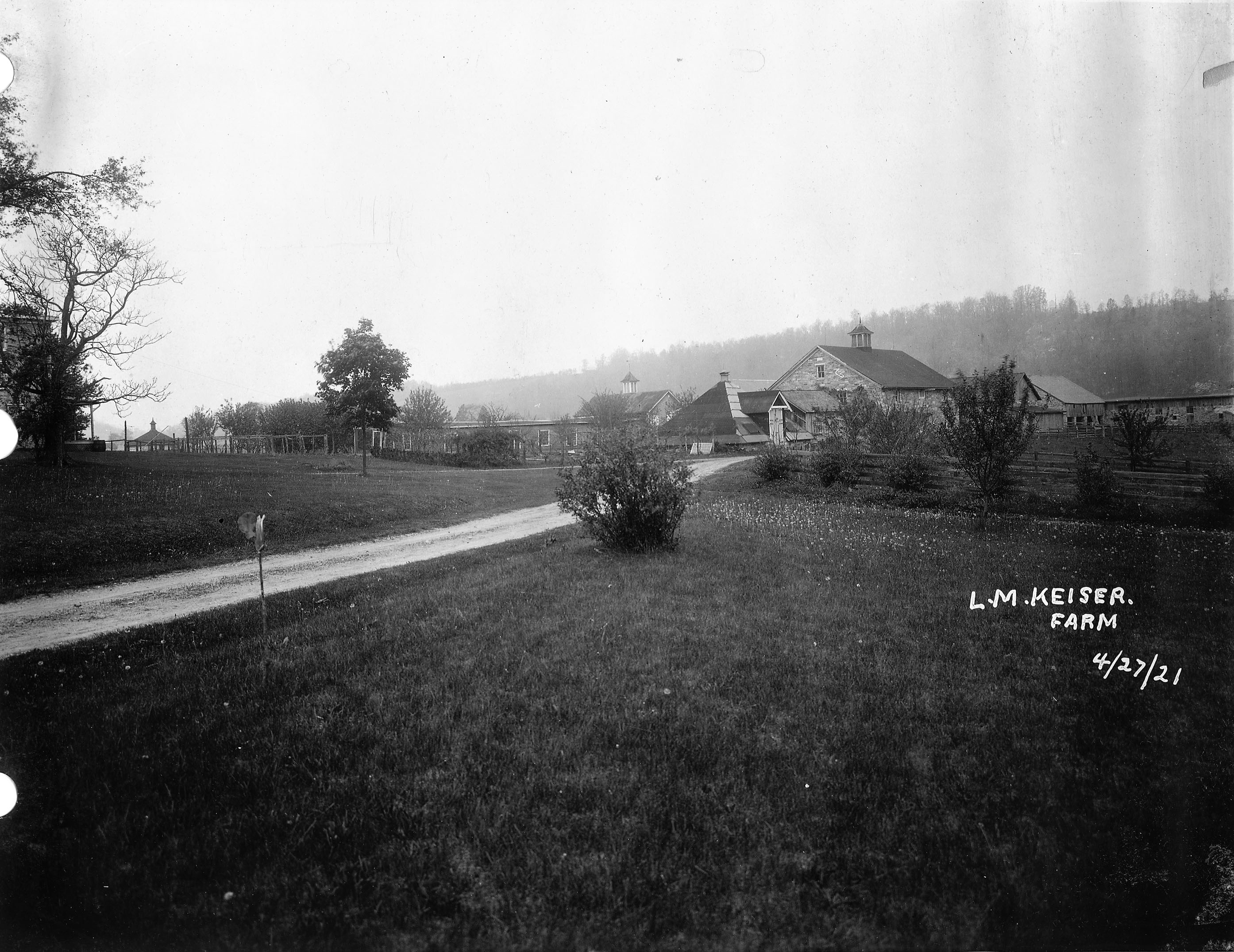
This is a nice sized marker (I hope it’s not part of a grave marker!) I recognized the name from some research I had done. So I did a quick look to see what I could find. I asked two of the workers there to load it onto my truck for me. Below are 2 photos of the old farm in 1921.

tract86a-1

This was when the city was buying up all the property around the Gunpowder Falls for the watershed, to raise the dam.

tract86a-2

It was a nice farm and the city didn’t tear it down, instead they used it as can be seen in the below excerpts:

1880 record of land acquisition and plat.
October 19, 1922 letter from assistant engineer Browne to Loch Raven resident engineer Allen, “…Megraw here today…you were to appoint a watchman for the Keiser property…a man who is now employed by Keiser known as Arc [Tracry]. Please permit me to tell you that this man has a (?) rep in this vicinity…he is a common thief. He has also deserted his wife and is living openly here in a city house with another woman…” October 23, 1922 letter, marked at top “Confidential Department Business” from assistant engineer Browne to Loch Raven Resident Engineer Allen, “I wish to advise you that [darkey] on Keiser property is about to move some property from such place during next day or so.”
November 6, 1922 memo from assistant Engineer Brown to Resident Engineer Allen, “The negro Henderson, former farm hand for Mr. Keiser, has visited this property and endeavored to start a row here. All due to his not moving his things…he comes and takes what he wants…need some direction from you as to what to do.”
January 23, 1928 letter to Armstrong from Rost, “Kindly permit Doctor Stuart Cassard to inspect the Keiser property (Near Phoenix, Loch Raven watershed). April 21, 1928 request from Girls Vocational School for tours of both Loch Raven and Montebello. July 3, 1928 letter, “To Whom It May Concern, This letter gives authority to bearer, Mr. G.S. Koller…and party to use the grounds of the Keiser property…for an outing. The request for this permission was endorsed by Mr. McKeldin, secretary to Mayor Broening.” October 10, 1928 another letter giving permission to inspect Keiser property, including the mansion house.
A different Keizer farm but a head scratcher never the less: May 17, 1948 letter from Fenwick Keyser to Small: Becoming involved with such people is a profitless occupation. They would only retaliate by harming my cattle, my dogs, or setting fire to farm buildings. All of the neighbors who own their homes around me are sober, industrious people. We are all on the best of terms. We do not shoot each other’s dogs or heap abuse on each other. I have tried to get along with your tenants. A few months ago I rounded up the escaped goats owned by the renter in the old Kiser place. He replied by killing our pet cat a few weeks later.

Nice history! But as can be seen in the 1928 note, the property was at Phoenix so what was this marker doing where the laborer found it? Eight miles away as the crow flies? A Google search also shows that Lewis Keizer had 3 patents for engine carburetors.

← Older posts
Newer posts →

Blogroll

  • Flouride Action Network
  • lulu
  • My Book
  • WordPress.com
  • WordPress.org

Recent Posts

  • Bermuda 2023
  • ICELAND April 2023
  • George Chalmers of Fochabers
  • In Search of The Skipjack Ada Mae
  • Trap Pond Kayak

Blog at WordPress.com.

  • Subscribe Subscribed
    • Water and Me
    • Join 231 other subscribers
    • Already have a WordPress.com account? Log in now.
    • Water and Me
    • Subscribe Subscribed
    • Sign up
    • Log in
    • Report this content
    • View site in Reader
    • Manage subscriptions
    • Collapse this bar
 

Loading Comments...