• About
  • History Writings

Water and Me

Water and Me

Tag Archives: sewage

Discharge Into River

18 Friday Mar 2016

Posted by Ronald Parks in Baltimore, Sewage History

≈ Leave a comment

Tags

Baltimore, boats, engineering, glass plate negatives, Health, HISTORY, photography, Public Works, sewage, Sewage History

The sewage of Baltimore City is pumped to the sewage plant at Back River in Baltimore County, where it is ‘cleaned’ and then discharged into the river. Interesting fact about the below photos from a 1955 report is this – “A number of leaks were repaired in the wood stave discharge pipes by a diver. The pier at the river, which had been damaged by hurricanes was rebuilt.”

As the photographs from the early 1900s show, the discharge pipes are above the water? So were they lowered into the water after assembly? That seems unlikely as there are hundreds of adjusting bolts holding the pipes into the air? Maybe I will find the answer one day in the many reports still to be read…

img013-3172 img014-3190 img016-3753 img162

Low Level Interceptor

17 Thursday Mar 2016

Posted by Ronald Parks in Baltimore, Sewage History

≈ Leave a comment

Tags

Baltimore, engineering, glass plate negatives, Health, HISTORY, Jones Falls, Public Works, sewage, Sewage History

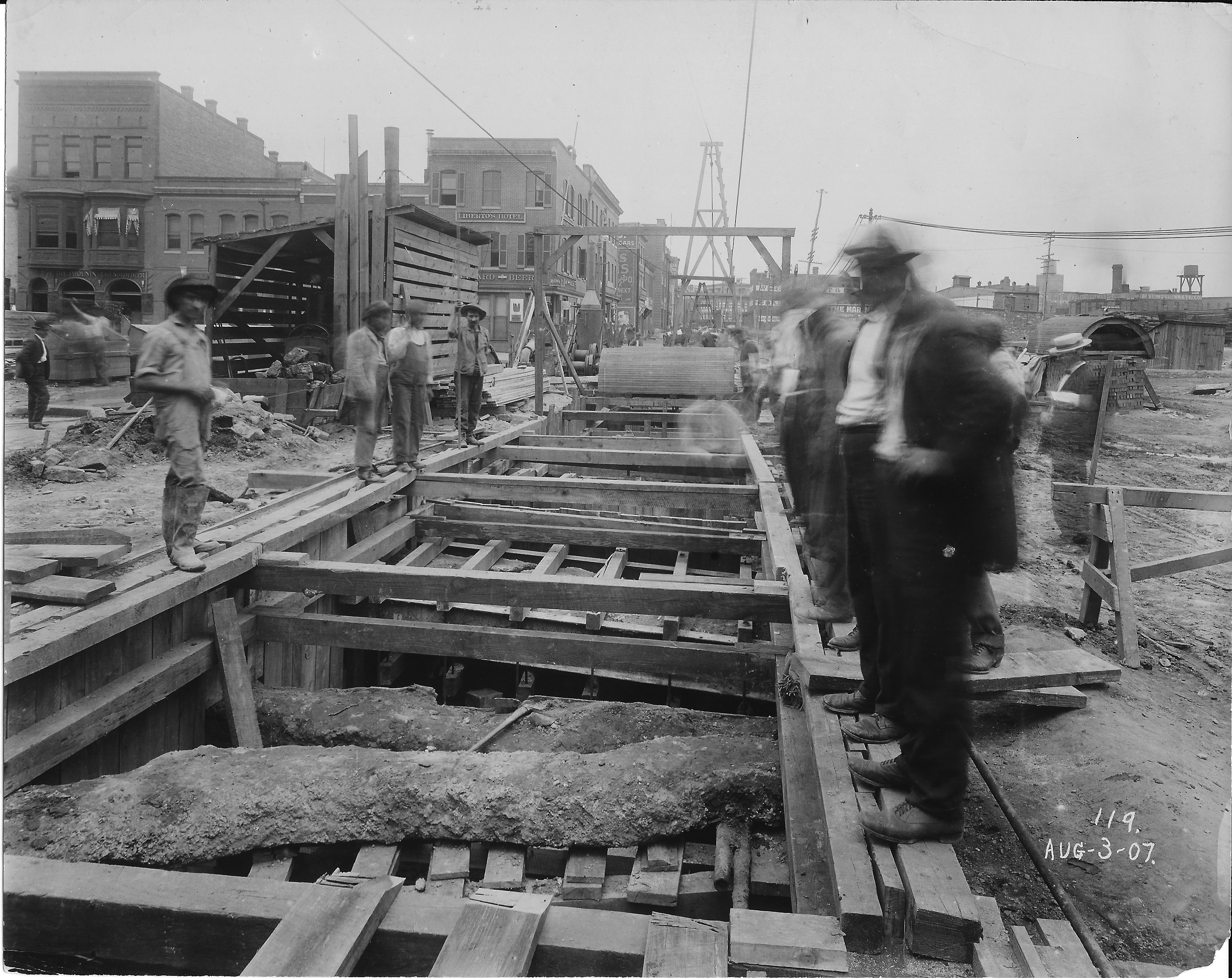
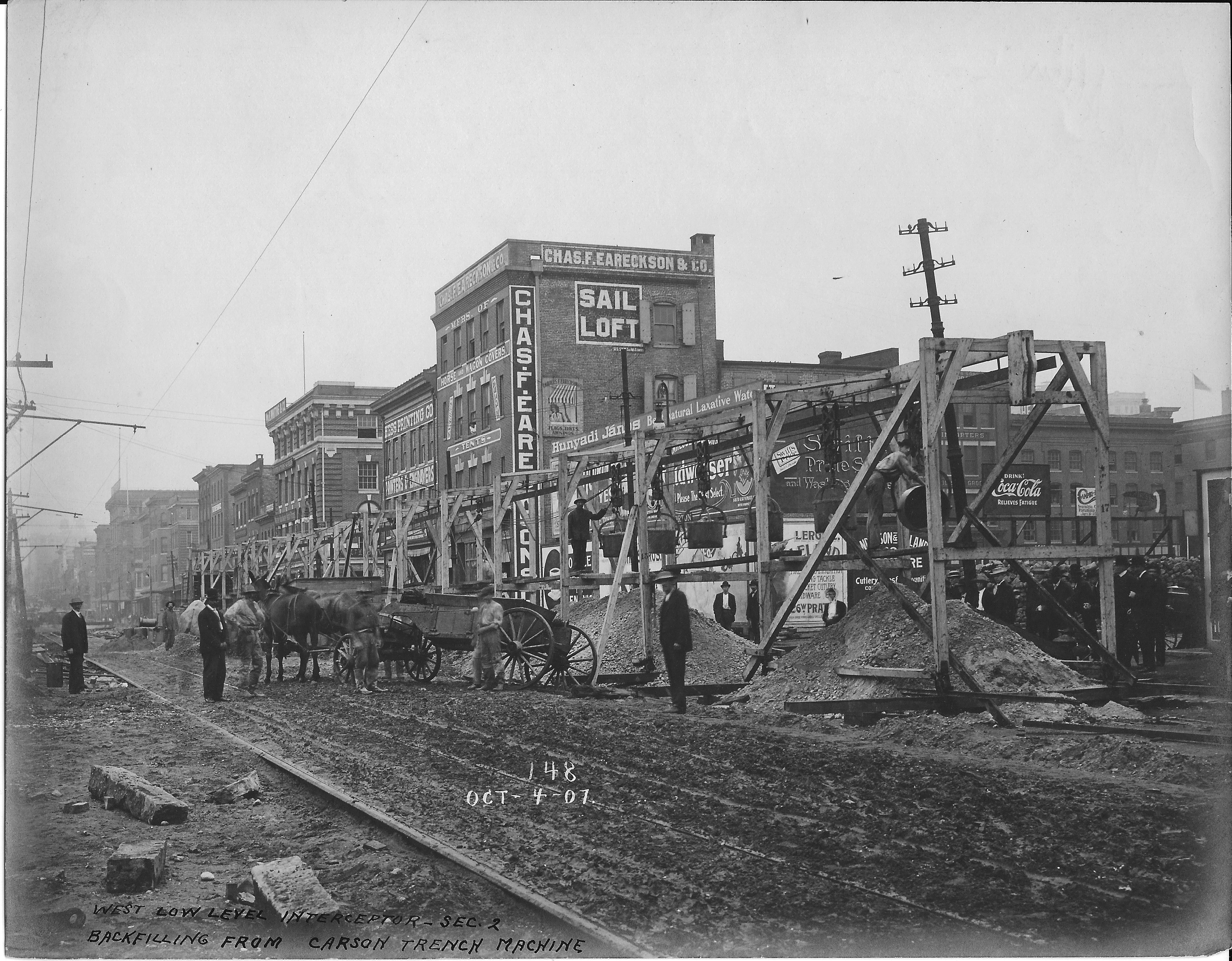
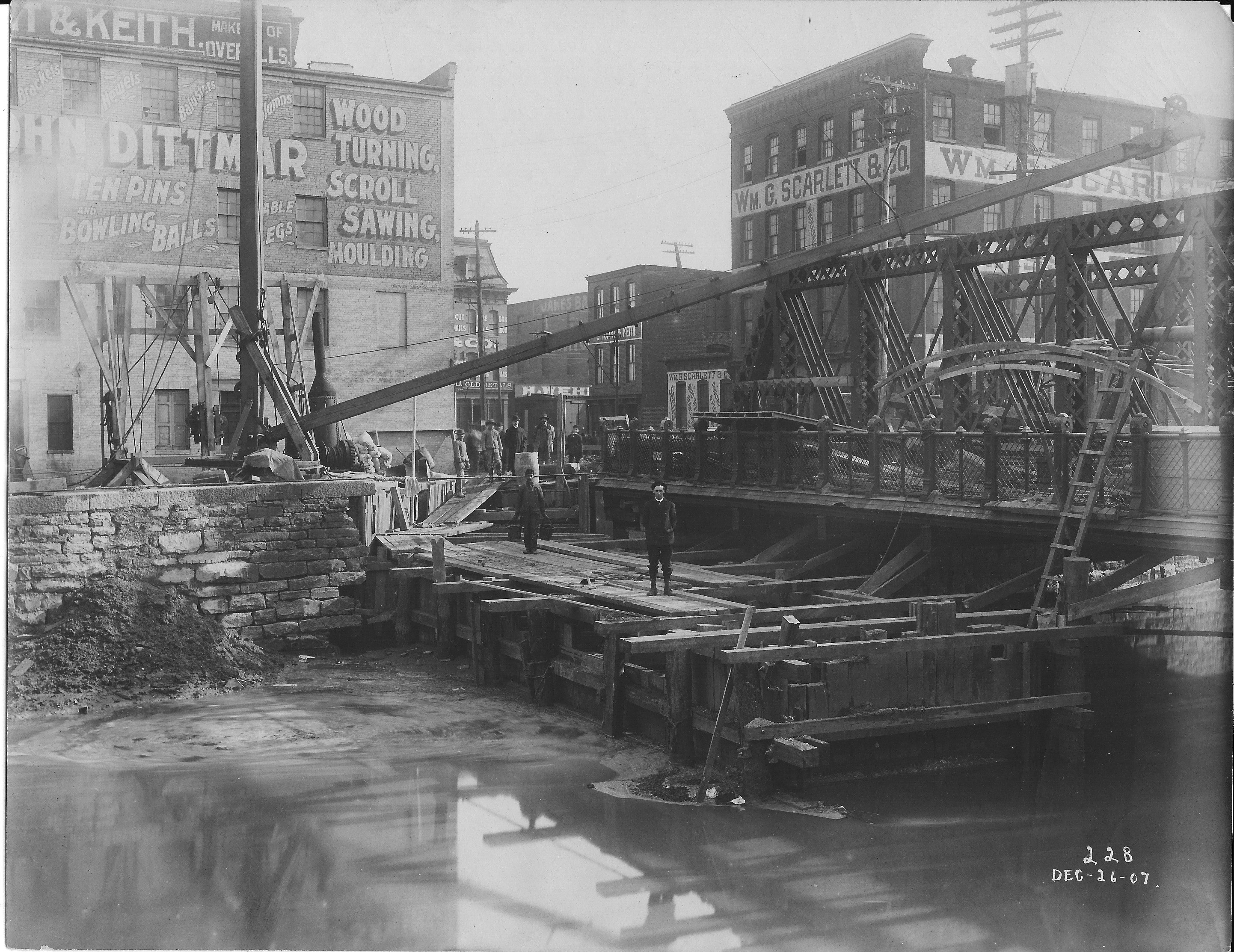
Report of the Low Level Division, Kenneth Allen, Engineer: Section One begins at the Sewerage Pumping Station at President St and Eastern Ave. and extends through President street to Pratt street, and thence westerly to Center Market Space, crossing under Jones Falls on the north side of the Pratt street bridge. General notes on construction. The excavation in general was through a dark material containing particles of sand which appears to be a compacted deposit of mud, with clay, sand, fullers’ earth, gravel and quicksand in places. Gravel was usually found at or near sub-grade, and where this or other firm material was absent the material was excavated and refilled with gravel. Near Pratt street and West Falls avenue, where the depth to sub-grade was some 23 feet, a fine running sand was encountered above sub-grade, which made progress slow and difficult. Previous to excavation, the corner of the four-story brick dwelling on the corner of West Falls avenue was hung by 5 sets of needle beams and twenty 8-ton jacks. Section Two: This section extends from Pratt street and Center Market Space to Pratt and Light streets. The diameter of the sewer is 74 inches throughout the section.

005-119Section #1 Center Market Place showing supports to conduits in foreground and supports to large conduits leading to United (?) & Electric company Power House.

009-148

Section #2 Backfilling from Carson Trench Machine.

016-228

Section #1 Cofferdam for going under the Jones Falls at Pratt Street.

More Pics of Outfall

16 Wednesday Mar 2016

Posted by Ronald Parks in Baltimore, Sewage History

≈ 3 Comments

Tags

Baltimore, bricks, engineering, HISTORY, photography, Public Works, sewage, Sewage History, writing

While on a break from Facebook, I have been working on my new sewer history book, completing so far, 159 pages with 101,232 words. Now I need a break from writing! So I will just post some photographs with mini-captions!

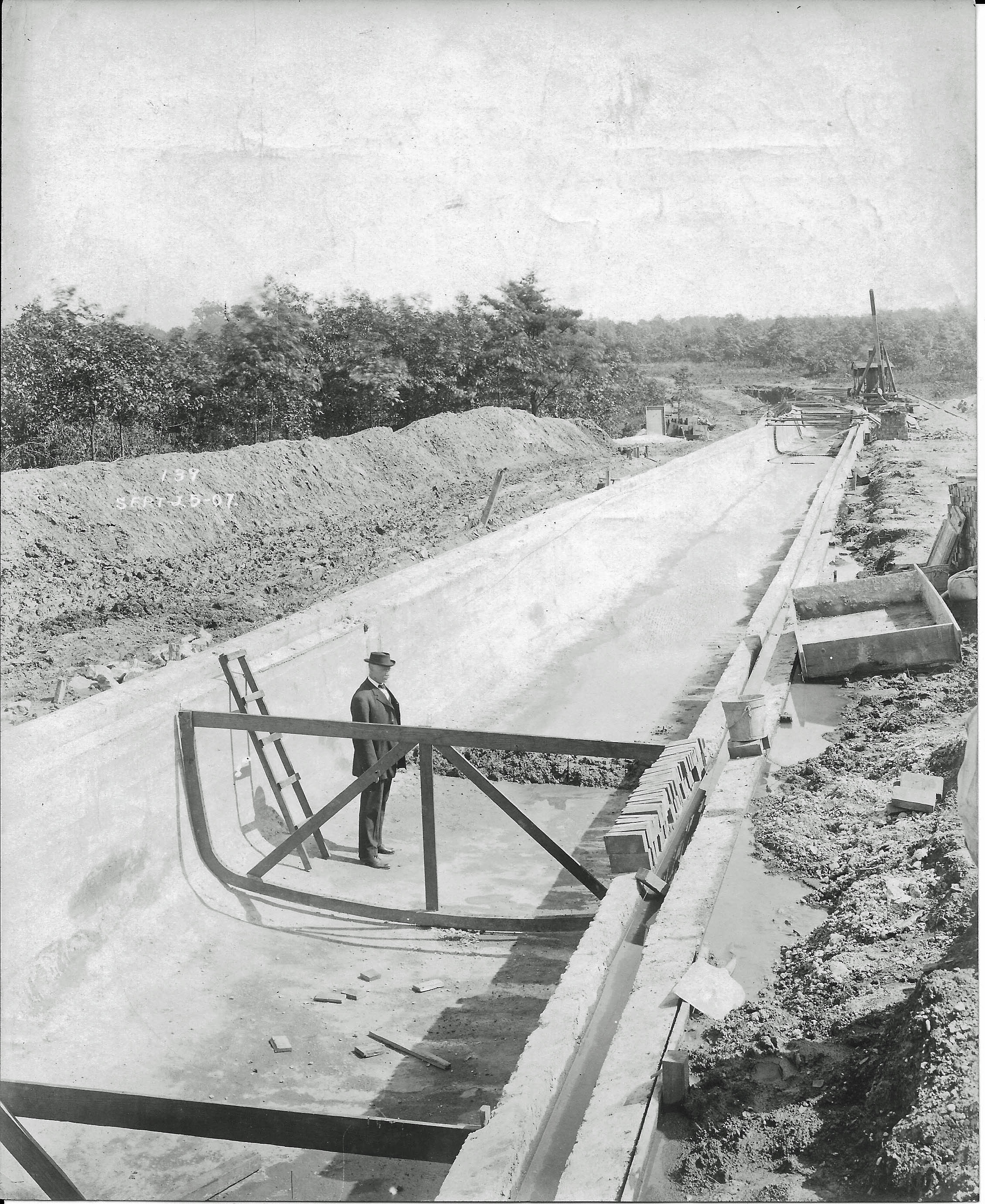
006-139

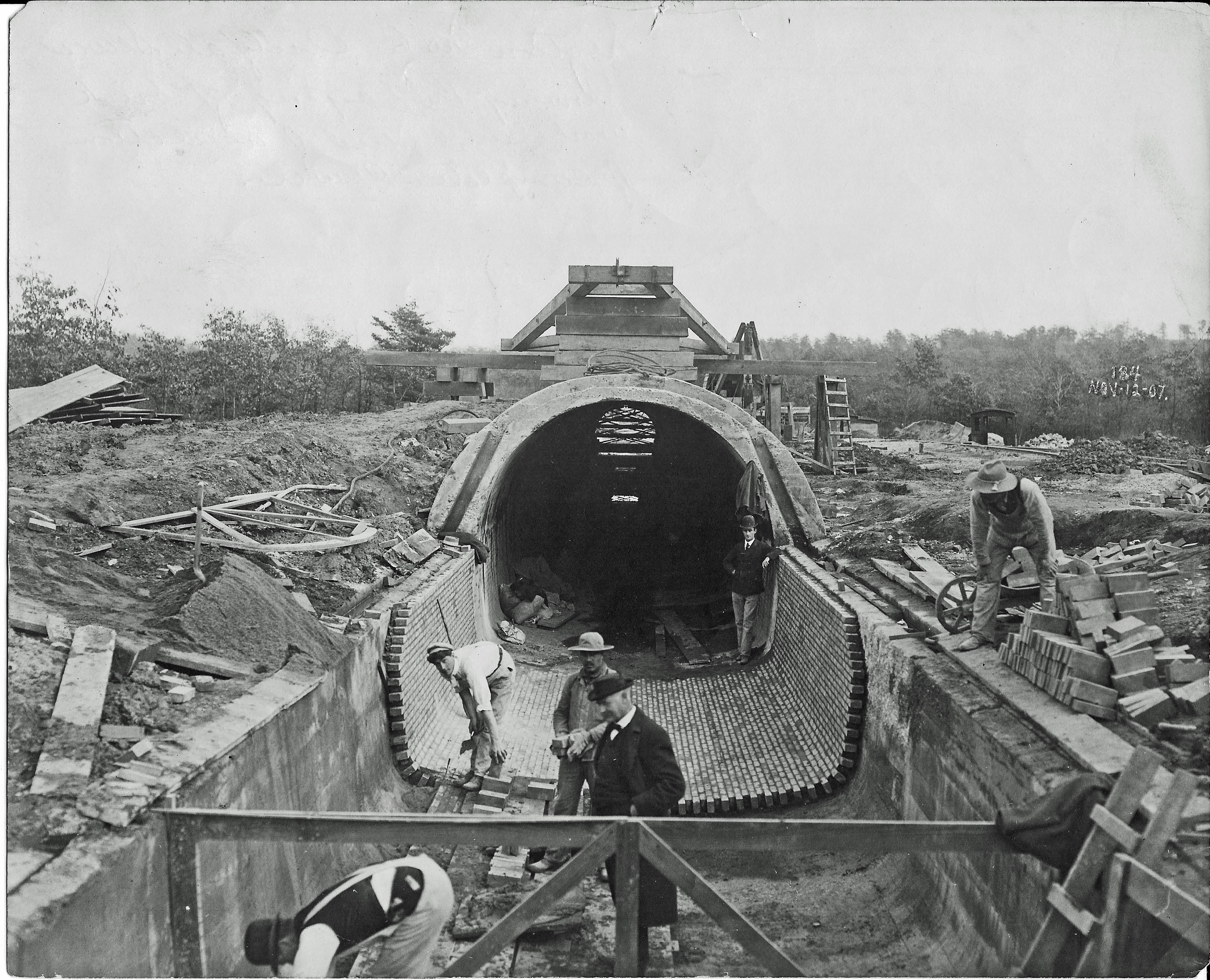
Section #6 Showing David Peoples, contractor, in concrete invert, ready for brick work. 1907

010-134Section #6 Laying brick and completed section near Back River Road. 1907

012-183

Section #9 Showing inside of completed sewer at manhole Daylight exposure for this shot. 1907

035-303

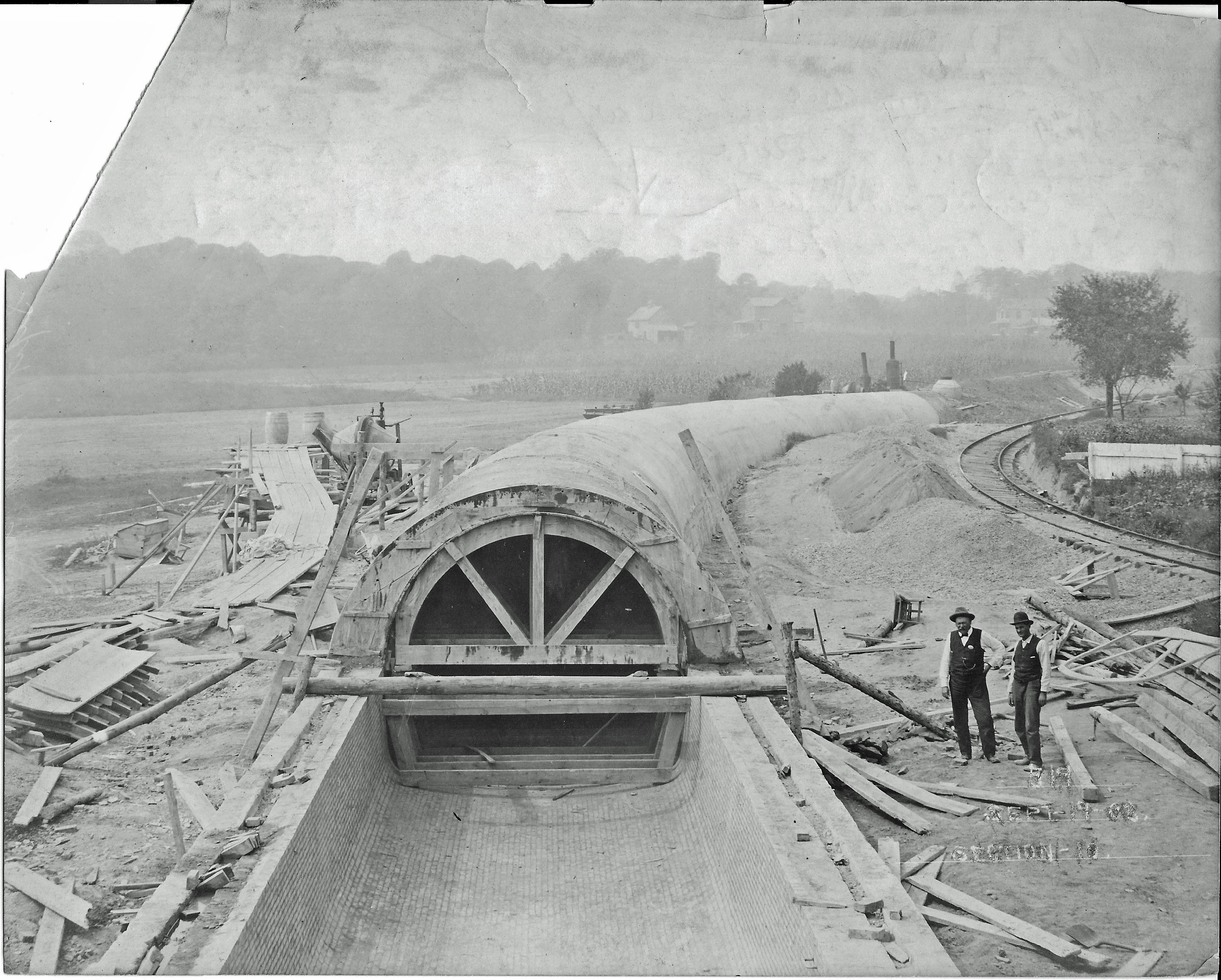
Section #9 Showing bridge at Eastern Ave. over sewer trench. Danger sign in driveway where a teamster drove into bridge and threw a mule into the trench (Go slow danger) 1908

038-519

Section #10 South of Eastern Ave, section of sewer on 7 degree curve. 1908

Outfall Sewer

14 Monday Mar 2016

Posted by Ronald Parks in Baltimore, Sewage History

≈ Leave a comment

Tags

Baltimore, bricks, engineering, HISTORY, Public Works, sewage, Sewage History

The Walbrook Testing Plant gathered information on sewage disposal. The Eastern Ave Pumping Station would pump Baltimore’s sewage to a newly built Sewage Treatment Plant at Back River. (For the most part, the sewage of Baltimore would flow by gravity to Back River except in the area downtown, near City Hall. This area is below a sufficient elevation to allow the sewage to flow on its own, or the shit is just deeper in City Hall)

An Outfall Sewer was built from the Eastern Ave Pumping Station to Back River, connected by force mains and interceptors. The contract for the Outfall Sewer was divided into 10 sections.

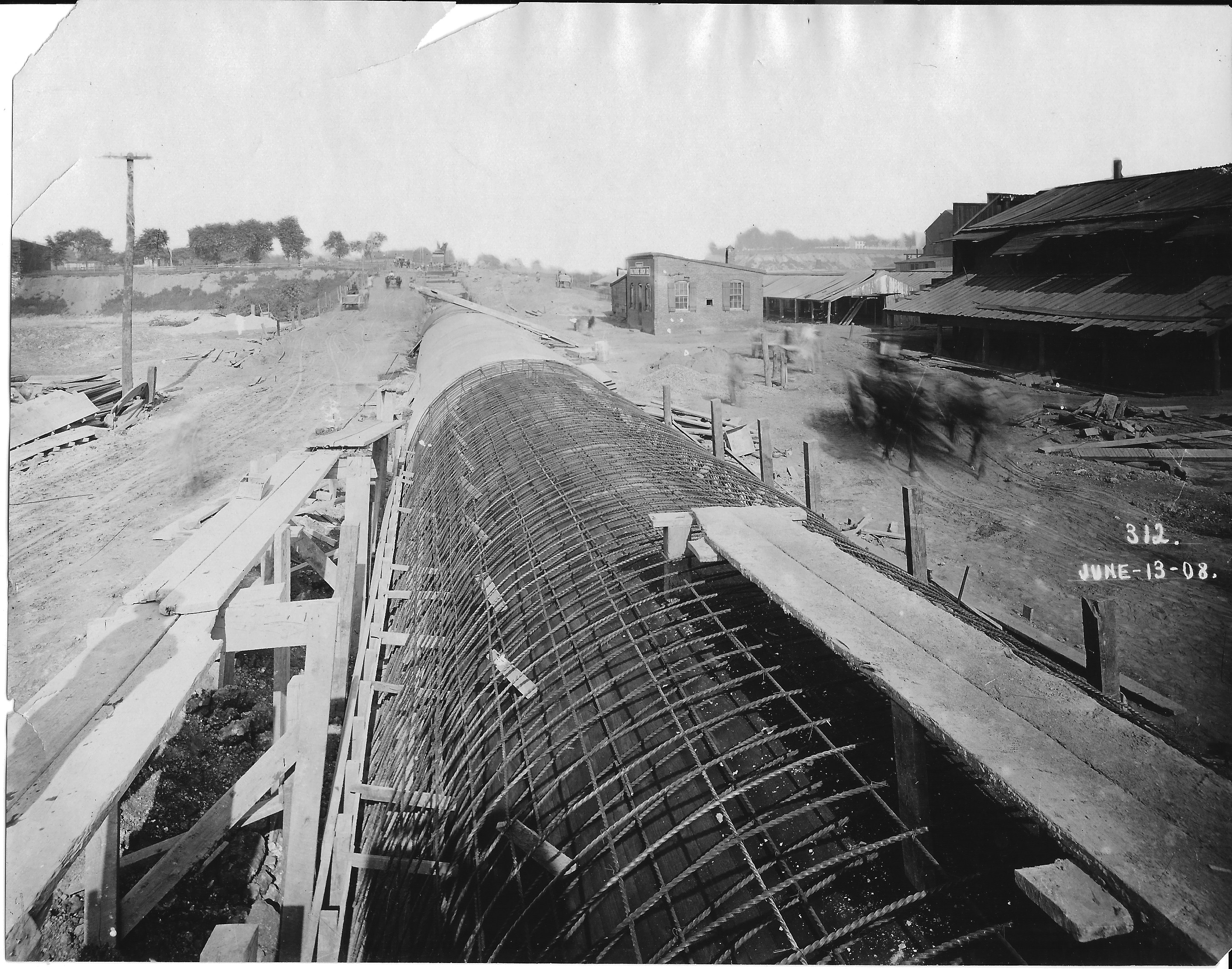
Below is section #3, showing what I consider a few points of interest: The Baltimore Brick Company to the right, which means this is looking west on Monument street. Making the house in the far off right on Edison Highway – Loney’s Lane. After the new Edison Highway bridge was built, I grew up in that area, west of the road. I was told as a kid to not play under the bridge because of there being quicksand on the other side. This area is now occupied by a covered-over landfill. Armco steel was in the vicinity for years, taking over a cemetery on the west side of Edison. I do remember the Brick Company. They had sample walls built along Edison, showing the types of bricks they manufactured. Bocek Park was there also.

037-312A

Storm Water Study

11 Friday Mar 2016

Posted by Ronald Parks in Baltimore, HISTORY, Sewage History

≈ Leave a comment

Tags

Baltimore, engineering, FILTRATION, HISTORY, Lake Montebello, Montebello, sewage, Sewage History, water history

When the sewer system was to be built, a separate and independent storm water collection system was also constructed. This seemed to work fine in the early parts of the 1900s, but as the City grew, problems arose and this is what happened next:

1948 Annual Report – It has been recognized that the technology of storm drainage design could be improved if a better experimental background were established to guide the designer. To accomplish this purpose, the City together with the Baltimore County Metropolitan District and the State Roads Commission of Maryland have agreed to jointly sponsor a Storm Water Research Program to be conducted at the Johns Hopkins University.

1959 Annual Report – A Parshall flume was installed in the vicinity of the outlet of a 48” drain at the east side of Hillen Road south of Argonne Drive in order to measure the amount of run-off from a shopping center (Northwood) type of drainage area. Both rainfall and run-off data for this area are collected by automatic recording devices.

1965 Annual Report –  The Storm Water Research Program is in its 17th year (and still no results mentioned)

I found the structure where this site was located on our property. I sent off an email to Johns Hopkins University to see what became of the report. You would think that a study conducted for 17 years would have a report. The Environmental Engineering section and others have no clue what happened to that study?? 077

This is the structure where the recording equipment was stored. The door is padlocked but I was able to stick my camera under it to see what is in there – nothing but an old recording device.P1060414

Here is the guy that was guarding itP1060418

This is the 48″ drain from the Northwood shopping center.

I was looking for historical information on this study but at the same time, the plant was receiving complaints that the Montebello Lake had a green tint to it. Besides the processes inside the plant, this is the only other source of water that empties into the lake. The lab is now analysing the water to see what caused the discoloration.

Eastern Ave Pumping Station

04 Friday Mar 2016

Posted by Ronald Parks in Baltimore, Sewage History

≈ Leave a comment

Tags

Baltimore, engineering, HISTORY, Jones Falls, Public Works, sewage, Sewage History

Another “Breaking Ground” ceremony took place in 1908, with Mayor Mahool. It was for the start of construction, for the Eastern Avenue Pumping Station. The plans for this were started in 1906 and the first contract was let in 1907 for the purchase from Bethlehem Steel, three pumps. Later the contract was let for the building itself. Not only did they break ground, they also broke the pile driver used to set the foundation. Because the building was to be so close to the harbor, they had to go deep to hit solid rock. The 3 pumps were going to be heavy.

I hope to be able to find the original photographs in the archives, so I can stop using the pictures from the reports. The first shows the Mayor breaking ground. The second is a panoramic view of the construction site. The third is the broken pile driver.

1908 mayor

img106Pano

pile

Where to Start?

03 Thursday Mar 2016

Posted by Ronald Parks in HISTORY, Sewage History

≈ Leave a comment

Tags

Baltimore, engineering, HISTORY, Jones Falls, Museum, Public Works, sewage, writing

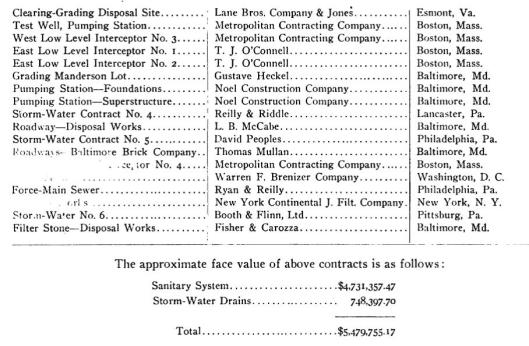
My original intention, to post on here, was to do so in chronological order, the building of Baltimore’s Sewage and Storm-Water systems. But, as can be seen in the tables below, a lot was going on all at one time. So the photographs and comments will be scattered. My new book will not be, hopefully!

The information that I present here comes from a wide variety of reports that I have read and sorted out. A couple years ago I was asked to document the archives from the Public Works Museum in Baltimore. I also was asked to move these archives to another location, which I have done. The artifacts, files, photographs, etc were stored in a fairly haphazard way. Scanning, photographing, reading, inventory, documenting….well, this is what I do.

So much information and so little time!

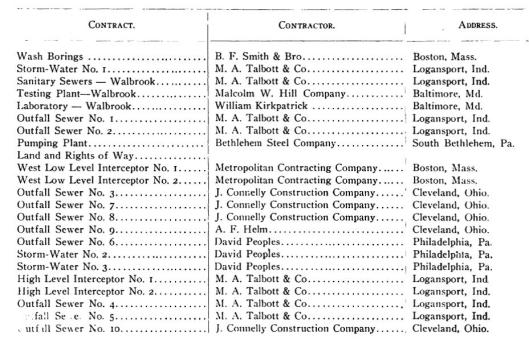
From the 1908 Annual Report: It is reported that the City has saved upwards of $1 million on construction cost due to breaking the work up into smaller portions so the competition for bidding would be greater. List of contracts and contractors.

chart

chart2

Posing for Pics

01 Tuesday Mar 2016

Posted by Ronald Parks in Baltimore, Sewage History

≈ Leave a comment

Tags

Baltimore, engineering, HISTORY, sewage, Sewage History, water history

On February 4th I posted a photograph of Mayor Timanus of Baltimore, breaking ground for the new sewerage works, behind Greenmount Cemetery on October 22, 1906. I recently found another photo of him breaking ground on that same date, about 3 miles away as the crow flies. This was for the Testing Plant.

img002b

Testing Plant

25 Thursday Feb 2016

Posted by Ronald Parks in HISTORY, Sewage History

≈ 2 Comments

Tags

Baltimore, engineering, FILTRATION, glass plate negatives, HISTORY, Jones Falls, sewage, water history

1906 – Before building a complete, City-wide sewerage system, a Testing Station was built to figure out the best means of treatment.

At Hampden and Walbrook, surveys were made and every house located, and in each place a plan for a comprehensive sewerage system was made. As a result of these studies Walbrook was selected as offering the most advantages.

Establishment of experimental testing station at Walbrook: In accordance with the Chief Engineer’s recommendation, the Commission on June 14th, 1906 authorized the erection of an experimental Testing Station. On October 2nd sufficient land was secured, without charge, from the Walbrook Land Corporation for the site of the Testing Station, for a period of seven years. On October 10th the contract for the erection of this testing station was awarded to the lowest responsible bidder, Malcolm W. Hill Company of Baltimore, Md., at their bid of six thousand, nine hundred and thirty dollars and forty-seven cents ($6,930.47). The contract for the Laboratory Building in connection with the Testing Station was awarded to the lowest responsible bidder, Wm. Kirkpatrick, of Baltimore, Md., on October 18th, at his bid of three thousand, seven hundred and fifty dollars ($3,750.00). The contract for the permanent sanitary sewers which will lead to the Testing Station was awarded to the lowest responsible bidder, M. A. Talbott & Company, of Baltimore, Md., on October 29th, at their bid of thirty-three thousand, two hundred and thirty dollars and ninety-eight cents ($33,230.98).

1907 – “Sir: In obedience to the requirements of Section I, Chapter 349, of the Acts of the General Assembly of Maryland for 1904, this Commission has the honor to make a report of its official transactions for the year 1907.” The first sanitary sewers to be constructed were those in Walbrook for the drainage of houses embraced within a prescribed area, and which were constructed as auxiliary to the experimental testing station, as part of the permanent system. Work on outfall sewer and interceptors was begun. There was criticism as to the size chosen for the sewers, but the Commission stuck to the plans of the advisory engineers: Rudolph Hering, Samuel Gray and Frederick Stearns.

These photos show constructing the Testing Station and Lab. Also the sprinkling filters.

81_6_56 81_6_159 img041

1908 sewage map walbrook

Here is the only reference I could find concerning the exact location of the Testing Plant.It comes from the Johns Hopkins Sheridan Library. I cut it down in size for viewing here. The location is never mentioned in any of the Annual Reports other than “Walbrook”. The testing plant is represented by the two circles at the bottom of the dark lines, just above Patterson Ave.

From Sewage Commissioner’s Report: The sewage testing part of the laboratory has been closed for a number of months, but the testing of all materials for construction work is being carried on, which has proved of great value in getting desired results. The plant is continuing to receive and purify the sewage carried to it from the system of sewers throughout Walbrook. On account of the disposal plant being operated by gravity, the cost of maintenance is reduced to a minimum.

1904 Fire

24 Wednesday Feb 2016

Posted by Ronald Parks in Baltimore, HISTORY, Sewage History, water history

≈ Leave a comment

Tags

Baltimore, engineering, HISTORY, Jones Falls, sewage, water, water history

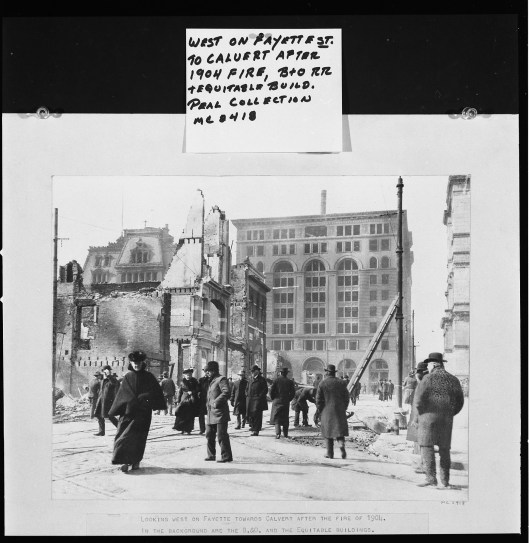
Many of the history books that I have read concerning Baltimore, all point to the Great Fire as the reason for new water and sewer systems. But as I read thru the records of the Commissioners and Engineer’s Annual Reports, it shows that the need for new sewage works was on the minds of every Baltimorean as early as 1815. With the increase of the water supply, from the Gunpowder River in 1881, there was an enormous amount of waste – cesspools and privies overflowed so badly that the Baltimore Harbor became a disgrace.

Here is a view of the 1904 fire in Baltimore: Courtesy of the DPW Museum and the Peale Museum

img092

← Older posts
Newer posts →

Blogroll

  • Flouride Action Network
  • lulu
  • My Book
  • WordPress.com
  • WordPress.org

Recent Posts

  • Bermuda 2023
  • ICELAND April 2023
  • George Chalmers of Fochabers
  • In Search of The Skipjack Ada Mae
  • Trap Pond Kayak

Blog at WordPress.com.

  • Subscribe Subscribed
    • Water and Me
    • Join 231 other subscribers
    • Already have a WordPress.com account? Log in now.
    • Water and Me
    • Subscribe Subscribed
    • Sign up
    • Log in
    • Report this content
    • View site in Reader
    • Manage subscriptions
    • Collapse this bar
 

Loading Comments...