• About
  • History Writings

Water and Me

Water and Me

Category Archives: engineering

Electrical Survey

20 Thursday Jul 2017

Posted by Ronald Parks in Baltimore, engineering, HISTORY

≈ 2 Comments

Tags

Baltimore, bricks, Electrical engineering, engineering, glass plate negatives, HISTORY, POLITICS, Public Works, Research

This afternoon I will be giving a tour to a group of electrical consultants. They want to come up with new ways to save the City money by cutting back on our electrical use. Every time there is a new administration, new “Offices” and Bureaus are created. To prove their worth for their new job and new title, they come up with these new major plans for the City. Actually, there is nothing new about it. This will be the fourth or fifth time this has happened. Once in the 80s it was decided to turn 1/2 the lights out in the hallways and filter areas. Personnel complained that they couldn’t see, so they turned the lights back on, which in turn, maintenance then removed the bulbs. Just a few years ago they (paid consultants) came up with the idea to switch out all lights with LED bulbs. That definitely was not going to be cost saving.

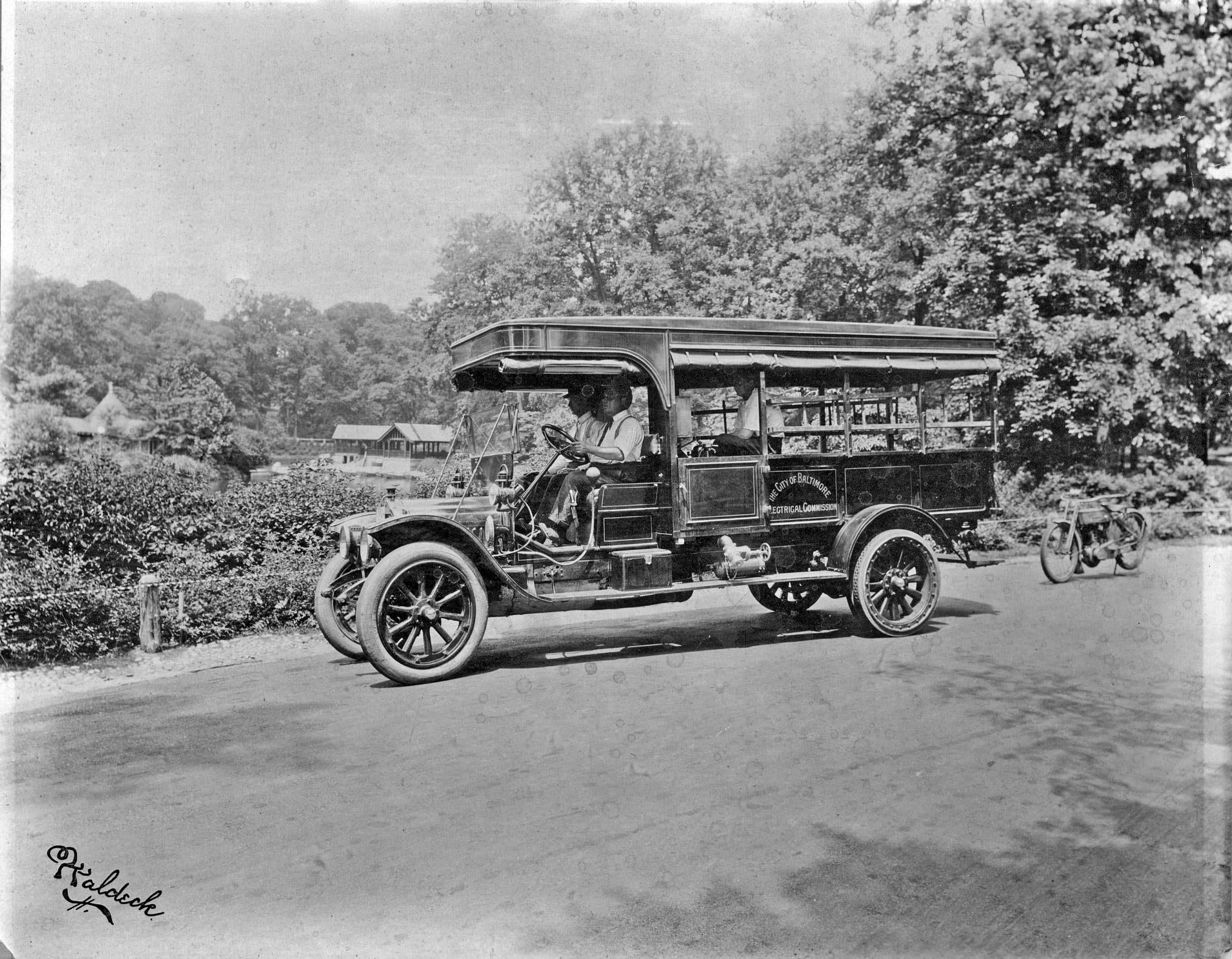
I started looking through some old files and came across these Electrical Commission photographs from the 1920s:

Electrical Commission office for operations, maintenance and construction. 
On the wall to the left of the first photo was this photograph. It was in bad shape when it was removed from the wall and placed in storage.

The commission’s garage and work area was destroyed by fire. Looking thru the building on the left you can see the burnt autos.
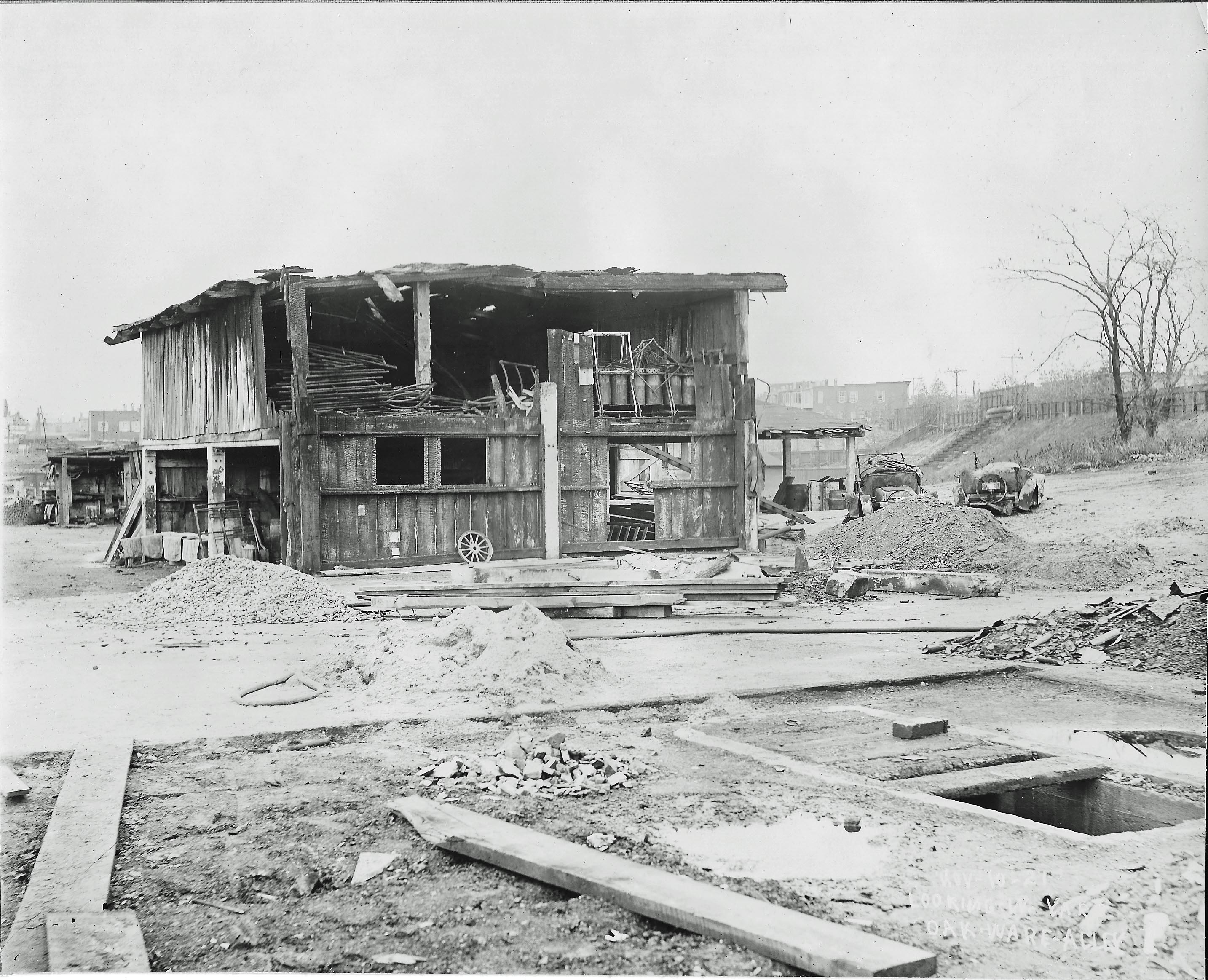
 

More damage from fire.

Work still continues despite the damage.

Clay duct banks. These were used to rebuild the garages…

…as can be seen here.

A new fleet of vehicles while the rebuilding continues in the background.

Tunnel Inspection Part 2

30 Friday Jun 2017

Posted by Ronald Parks in Baltimore, engineering, water history

≈ 4 Comments

Tags

Baltimore, bricks, engineering, FILTRATION, Gunpowder Falls, HISTORY, Lake Montebello, Loch Raven, Montebello, nature, Public Works, water, water history

Over a year ago I was asked to be part of an inspection team, to walk/boat through the 12′ tunnel that connects the Loch Raven Reservoir to the Montebello Filters. This tunnel was built between 1875 and 1881. In the early years it was inspected quite often. In the 1960s it was decided, after a parallel tunnel was built in the late 1930s, to reverse the flow in this old tunnel to supply drinking water to Towson via the Cromwell Pumping Station. The old tunnel was last inspected in 1984. For that info you can see my post linked here:  https://rep5355.com/2016/04/06/tunnel-inspection/

In preparation for the inspection, I did all the necessary training – Red Cross/CPR, Confined Space, etc. Then we were told that it was too unsafe to send anyone in the tunnel. Totally bummed!

So now they have finally gotten around to inspecting the tunnel with a remote operated vehicle. It has been a long week starting last Friday. First order of business was to clear the site for the contractor to bring in his equipment.

Area cleared and the phragmites sprayed.

Next, construction mats were placed across the phrag roots – which is very soft. (And the equipment very heavy) These boards did the trick.

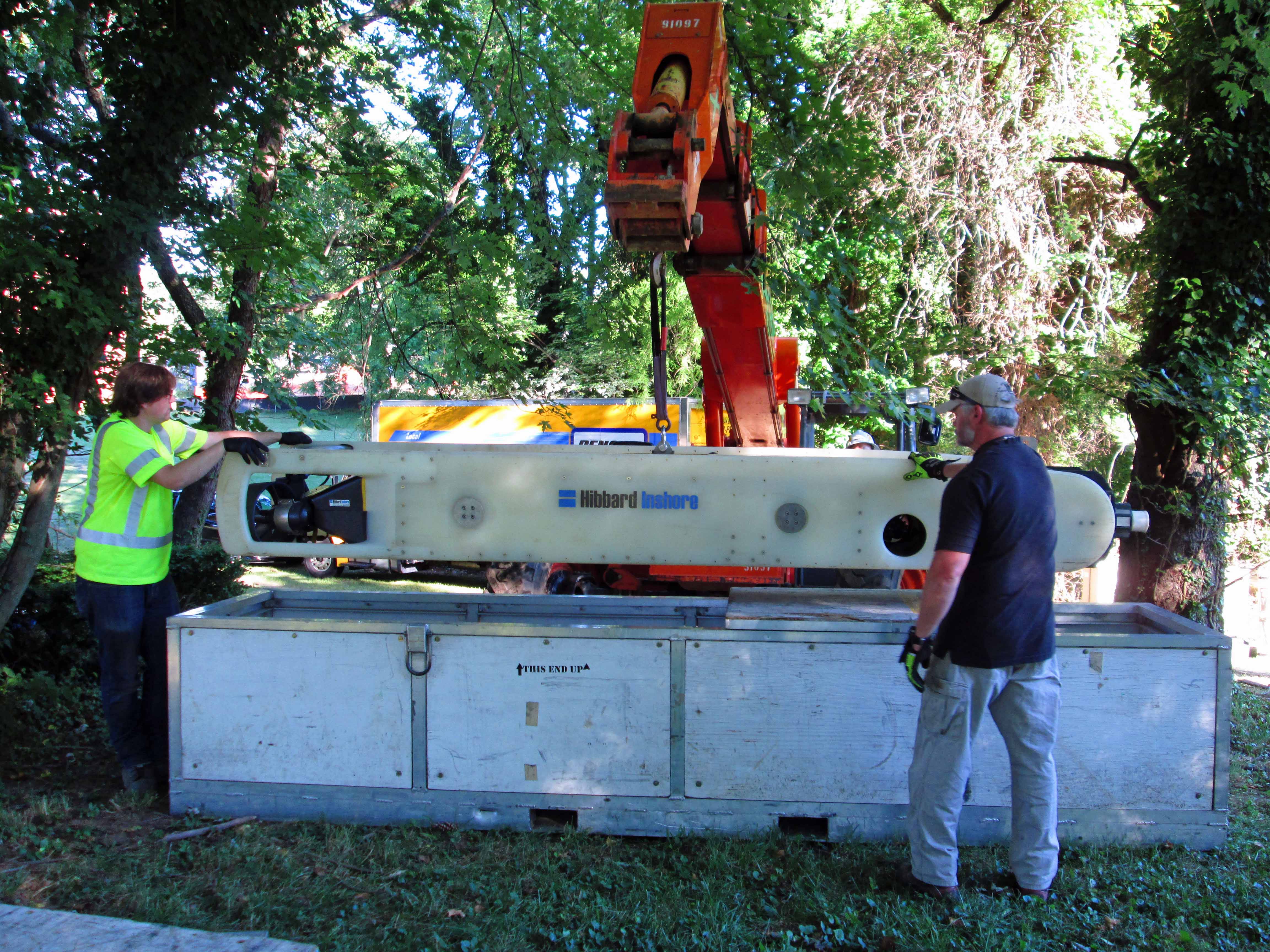
The equipment was unloaded. This is the inspection vehicle. It is about 14′ long and weighs 1500 pounds.

This is the tether. The sub is connected to this. It is 7 miles long, but only needs to go 5-1/2 miles.

The sub will enter at the top right. This is looking down the shaft towards the tunnel.

Here she goes.

Because this is a pipe that is in use, with drinking water, everything that enters the water was sprayed with a chlorine solution.

The control center. All this information on all these screens will be made into a report for the City to decide if the tunnel is still usable. The interesting one is bottom center. If you watch that and there is a change in the circle, say a rise in the bottom, that means the sub is going over a rock fall. You then look at the camera display and you can actually see it.

In my previous tunnel inspection post is a photo where the balancing shaft enters the tunnel at Cromwell. It is mostly smooth. Unlike this entry point – it looks like someone busted thru the top of the tunnel with a sledge hammer.

The sub was moving at a nice pace – looked like the Enterprise going at warp speed! Not sure what those particulates are just yet. Probably just some stirred up lime deposits.

And when I got bored, I went looking for nature. There are 3 young bucks…

A couple babies.

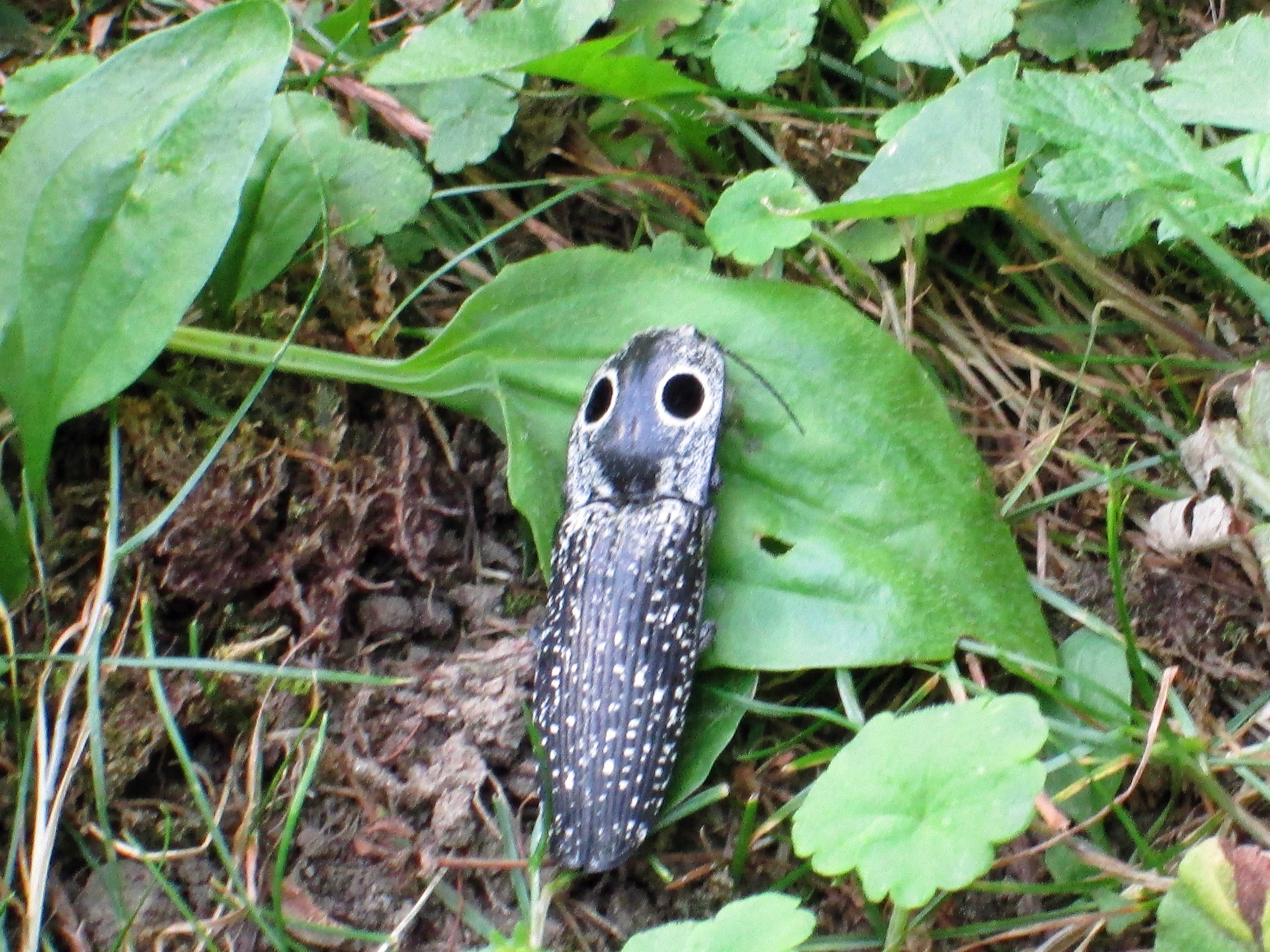
An Eastern-eyed Click Beetle

Bunches of other bugs.

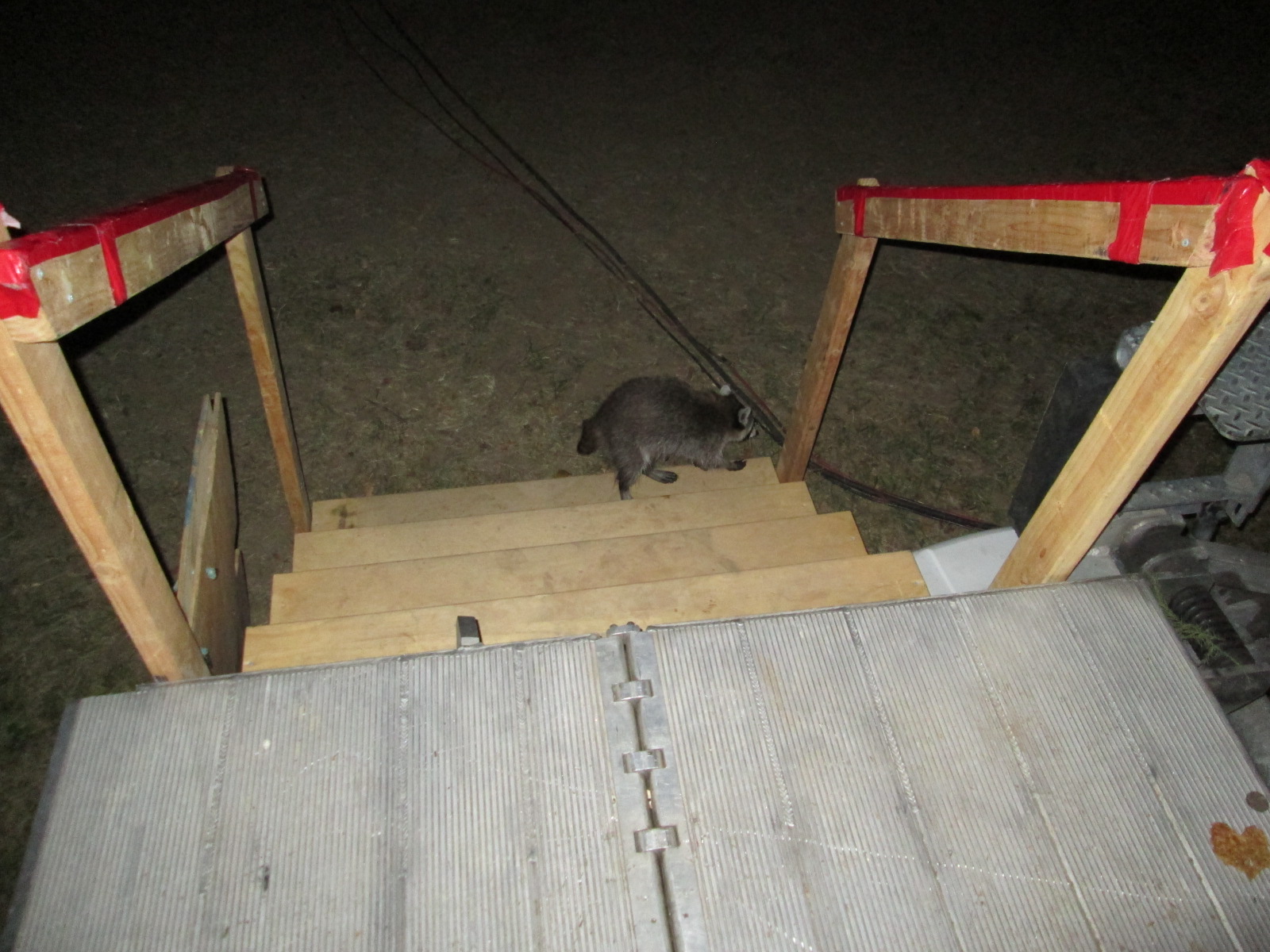
And our night time visitor looking for food.

When they were giving out brains, you thought they said trains…

30 Tuesday May 2017

Posted by Ronald Parks in Baltimore, engineering, water history

≈ Leave a comment

Tags

Baltimore, engineering, FILTRATION, HISTORY, Montebello, POLITICS, Public Works, Research, water history

Contractor on site called me over once again because they hit something unknown.

Turned out to be a set of train tracks from original construction 1913-1915.

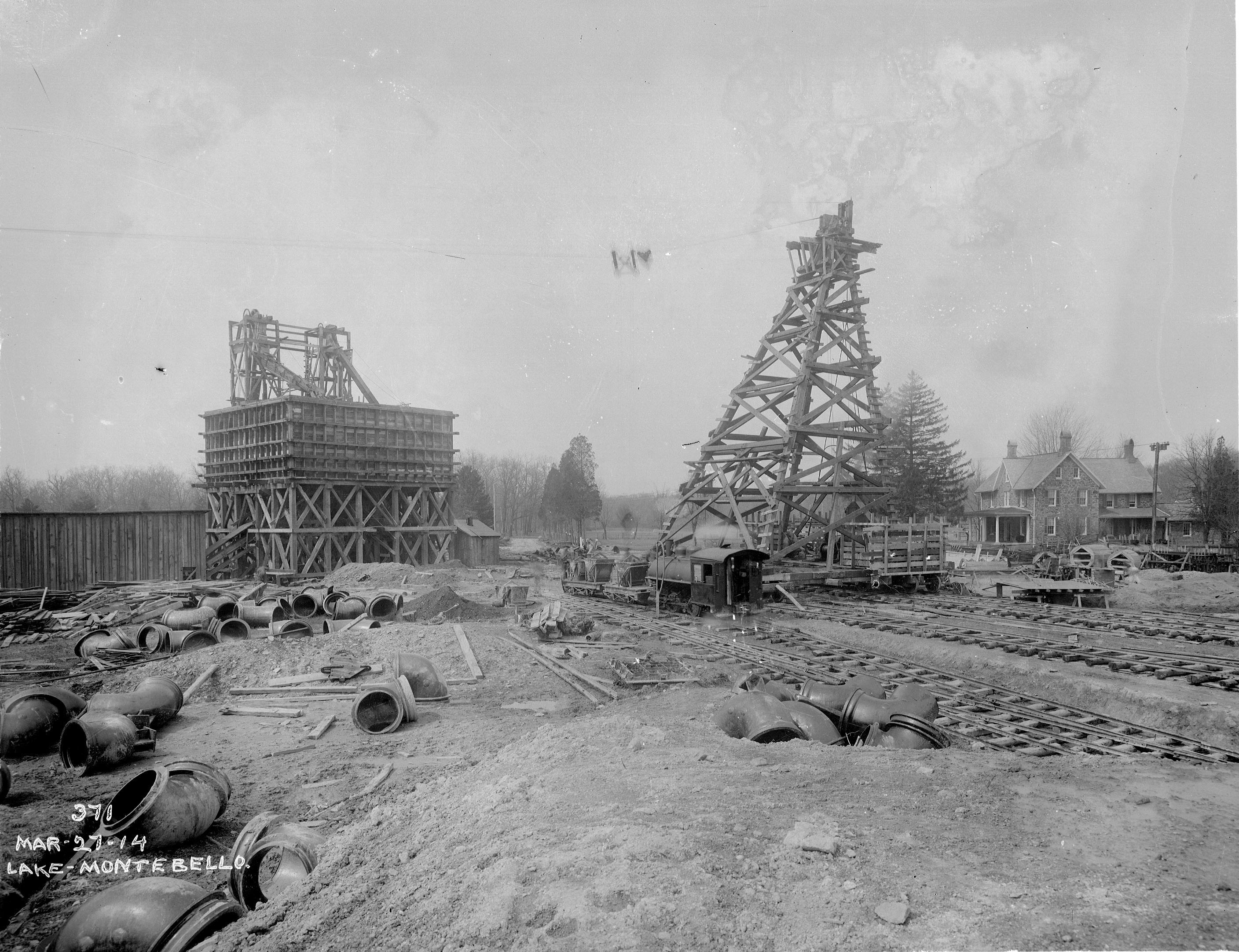
As can be seen here, there were a lot of tracks laid for construction. These veer off to the right to hook up with the ones below.

In this photo, lower right is about where the tracks are that the contractor dug up. I told them they would have to suspend their work until I talk with the historical people – these may be the tracks that President Woodrow Wilson’s train was on during his visit when the plant opened in 1915. Not. Montebello Lake is in the background.

Ghost in the Conduit

18 Thursday May 2017

Posted by Ronald Parks in Dams, engineering, HISTORY, water history

≈ 8 Comments

Tags

Baltimore, Dams, engineering, FILTRATION, fishing, Gunpowder Falls, HISTORY, Loch Raven, Montebello, Public Works, water history

Awhile back I had posted some photographs of the construction work at Loch Raven. The contractor hit and poked a hole through the ten foot conduit that supplies water to Baltimore from the Loch Raven Reservoir. Fortunately, another one of the conduits was in service, so the damage did not affect our drinking water supply. This conduit was installed in 1915. It is riveted, welded steel. Some portions are encased in concrete and a good portion is lined with cement.

I would like to thank Pure Technologies for giving me permission to use their photographs.

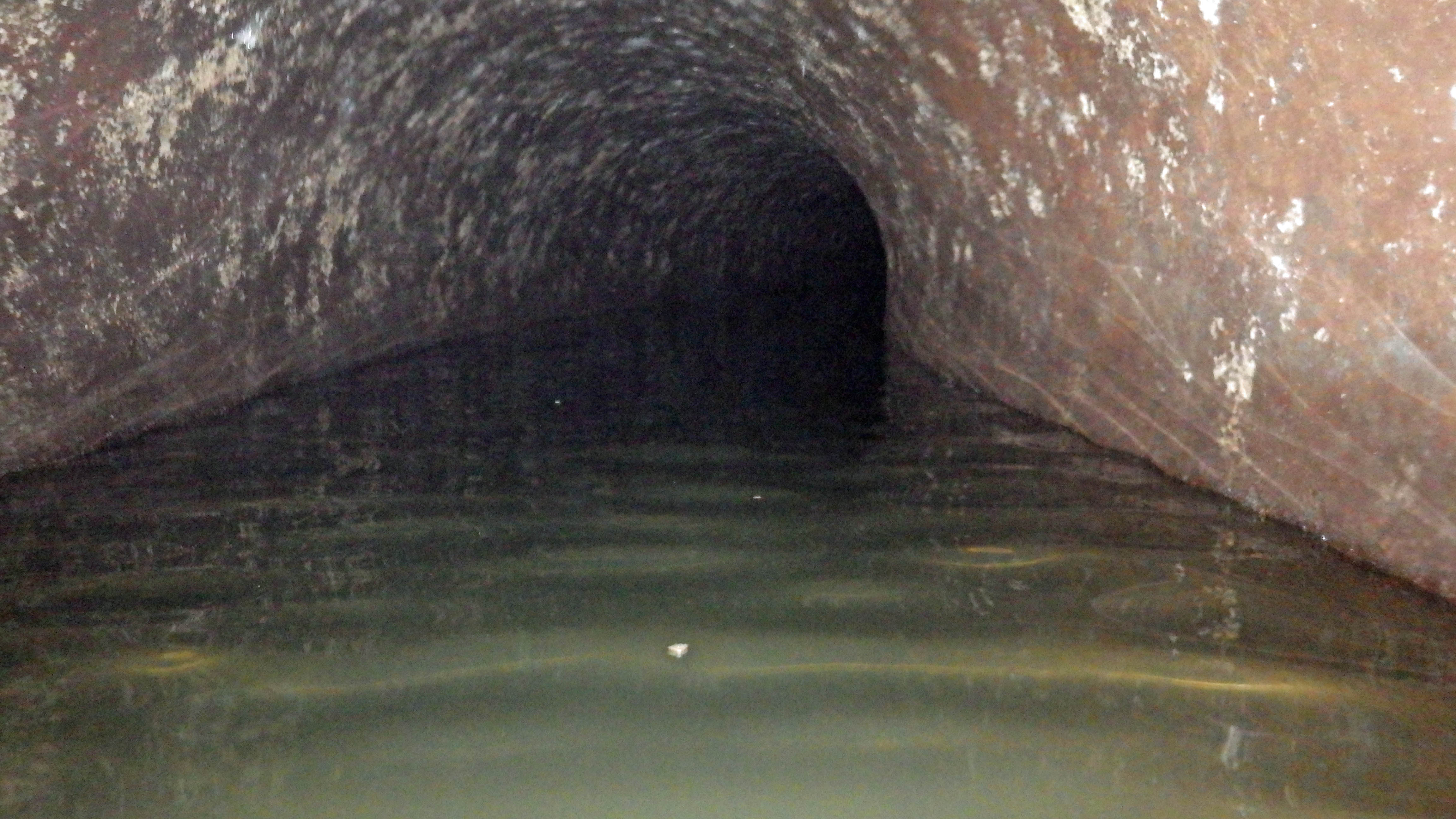
Pure crew heading into the conduit. This is near Mine Bank Run, heading towards the dam. The water would eventually be at chest level.

This was interesting and took a little research to figure it out. The smaller opening on the right connected to the 1880 rock and brick tunnel. In 1937 they built a parallel pipe line from Loch Raven to Baltimore and that is the conduit on the left. There is a valve in the smaller pipe stopping the flow of water towards Baltimore. Down stream further, the raw water pipeline becomes potable water from Baltimore, to Towson, at Cromwell.

Continuing the inspection of the conduit. Pretty good shape for being over 100 years old.

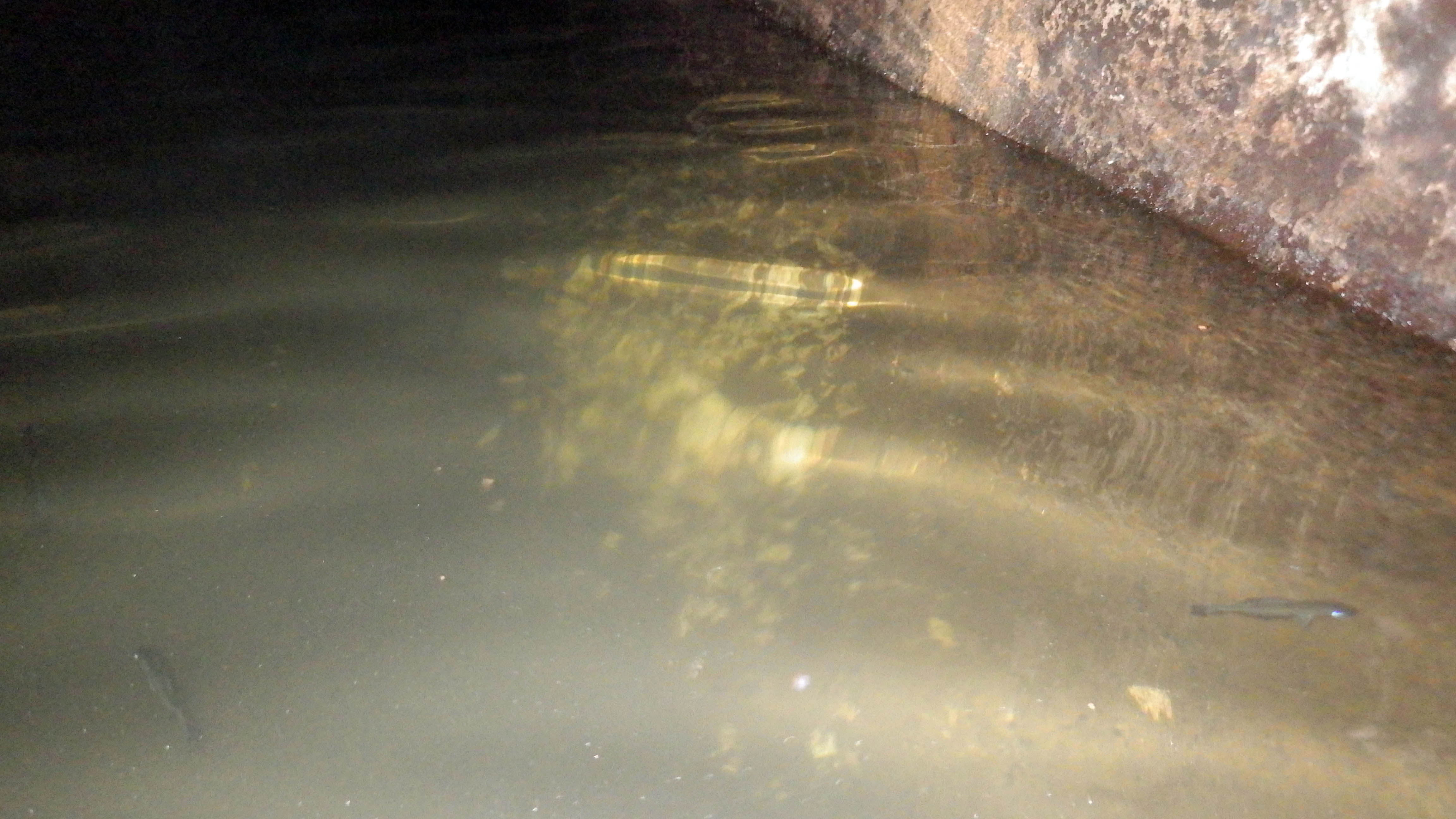
The fish like the water (Baltimore water finished in the top ten again this year in a national taste test)

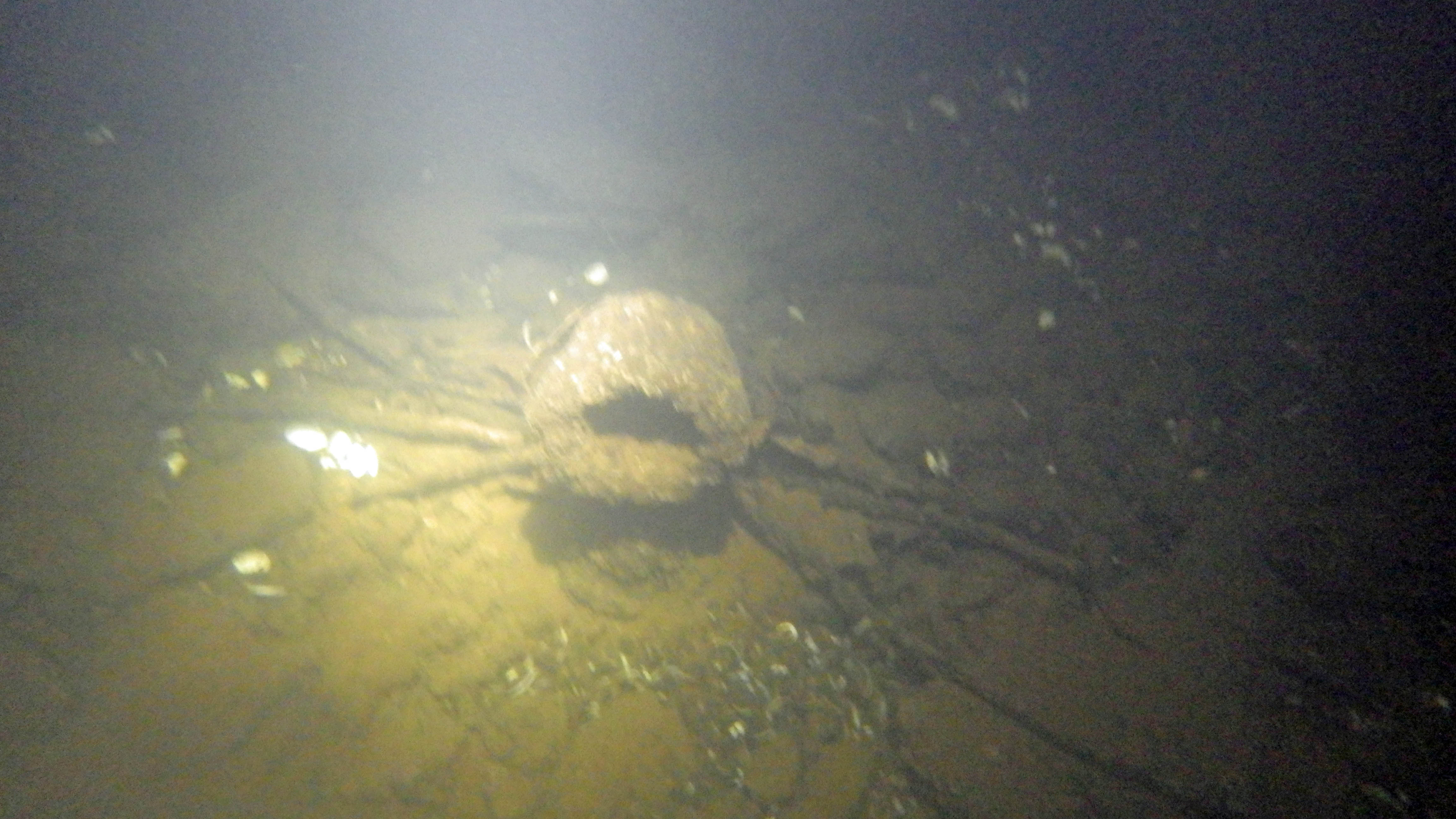
Not sure what this is. Looking at the drawings I saw where there is a drainage system under the steel conduit. But didn’t see this in the drawings.

Pure finally reached their destination. The damage is a little more than we thought. The cement lining has been knocked off.

It is about a 3’x4′ section of damage.

This is the hole that the excavator punched through. There are also about 5-6 dents in the pipe.

When the inspection crew climbed out, I think they brought something with them…

Roundhouse

05 Wednesday Apr 2017

Posted by Ronald Parks in Baltimore, engineering, water history

≈ 2 Comments

Tags

Baltimore, engineering, FILTRATION, glass plate negatives, Gunpowder Falls, HISTORY, Lake Montebello, Loch Raven, Montebello, Public Works, Research, water history

A couple weeks ago the contractor called me over to the site because they struck something that is not on the drawings. This was about the 12th time in 10 days they hit something buried, not on the drawings. i go over and this is what I saw:

At first glance, it looks like an electrical ductbank, enclosed in concrete. I told the contractor I would go look in my drawings to see what I could come up with. When I retuned, unable to find anything, the contractor had cleared some more dirt from the concrete.

Am I hallucinating or does that thing have a curve to it?? Holy crap, that looks like the foundation to the old roundhouse, which was the Montebello Pumping Station, built in 1914-1915. More research to do.

This hole was dug and goes about 75 feet down at which point they busted through the 1881 tunnel from Loch Raven. The pumping station was to be used to pump water from Loch Raven, into the filtration plant. This was due to the city not getting permission to raise the new dam above an elevation of 188′ (The new dam is now at 240′)

This photo shows the foundation for the pumps and the piping waiting to be placed.

Looking at the top tier here it can be seen the structure matches the first photo above. The hole in the center is the suction well.

View from the outside of the roundhouse. This is facing south towards the filtration building.

This is looking north from the the head house. The roundhouse foundation is flush with the ground level.

Nearing completion.

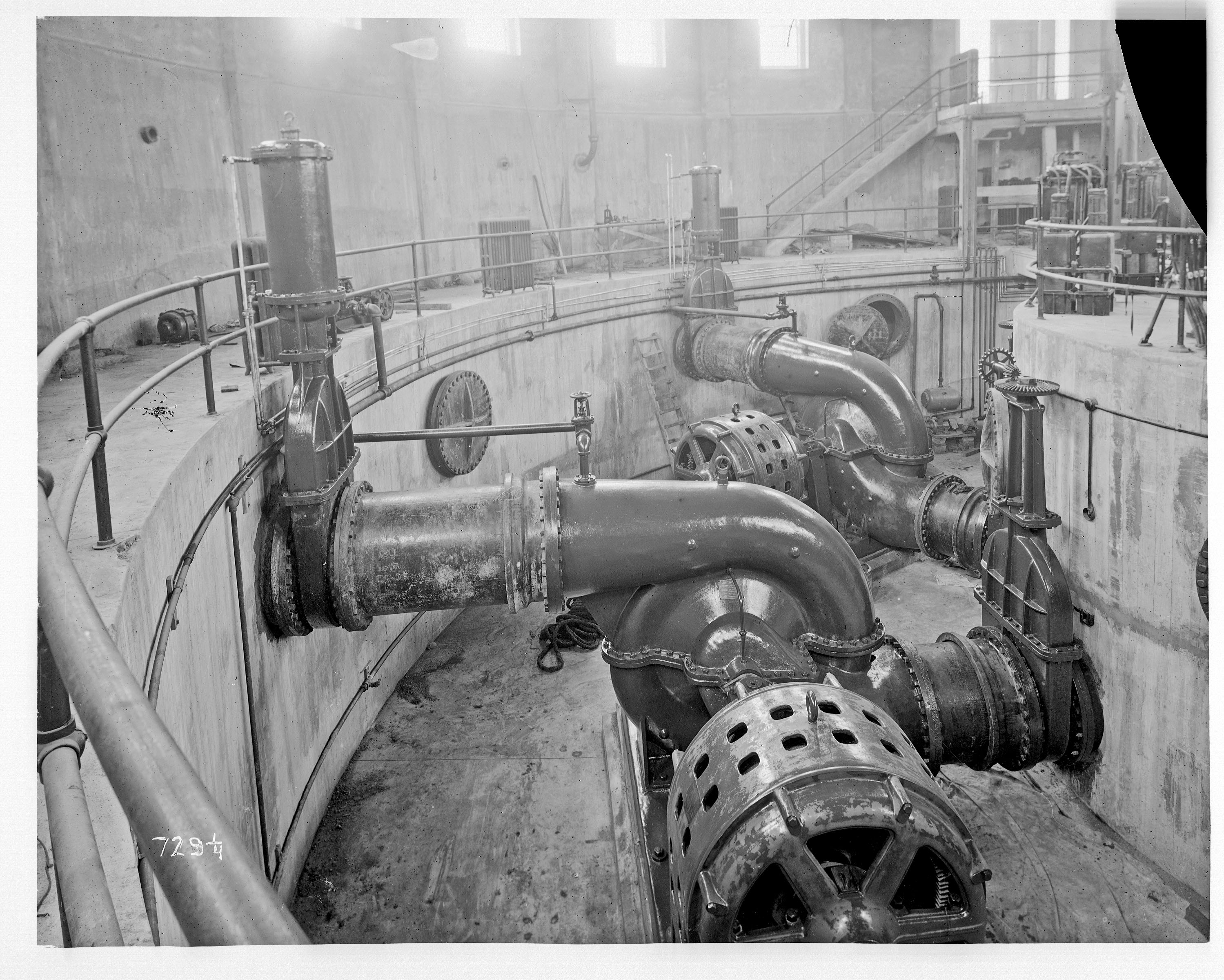
The pumps.

From the time this was built until about 1957, this pumping station had more than its fair share of problems – wrong size pumps, electrical problems, building being struck by lightening a few times, power surge from Holtwood Electric, water hammers that raised and cracked the foundation, etc. In 1963 the building was demolished but, the foundation remains. And now the problem is, what’s down there? Will this area support the weight of a generator and fuel tanks? And is that hole still open (there is an air vent coming out of dead center)? The tunnel underneath originally supplied water to Montebello from Loch Raven. Now this tunnel supplies drinking water to Towson, via the Cromwell Pumping Station.

This shows where the roundhouse use to be, north of Filter building.

Updates: Batcave and Drain

20 Monday Mar 2017

Posted by Ronald Parks in Baltimore, engineering

≈ Leave a comment

Tags

Baltimore, Cromwell Park, Dams, engineering, Gunpowder Falls, HISTORY, Loch Raven, nature, photography, Public Works, water history

When I was up Loch Raven checking on the drain pipe to the 10′ tunnel, I checked on the unknown tunnel that was busted a couple days before. The contractor took it upon himself to start digging it out before anyone could verify what it was. As said before, this thing was built prior to 1875.

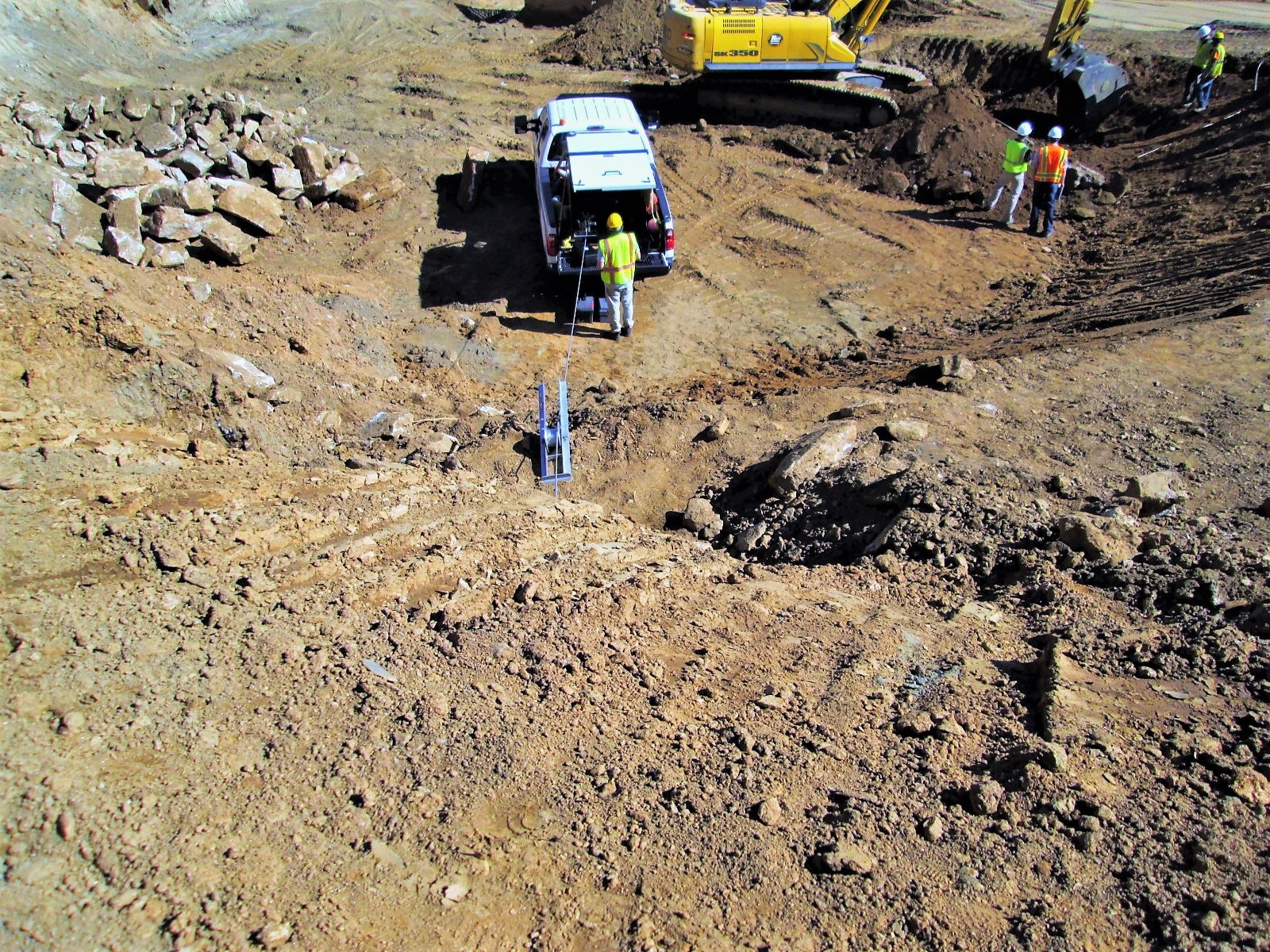
Fortunately the City’s closed circuit TV guys showed up before it was totally destroyed. In the upper left shows the rocks removed, that were used to build the tunnel. From where the spool is, center of photograph, to where the front of the excavator is, is what they dug out.

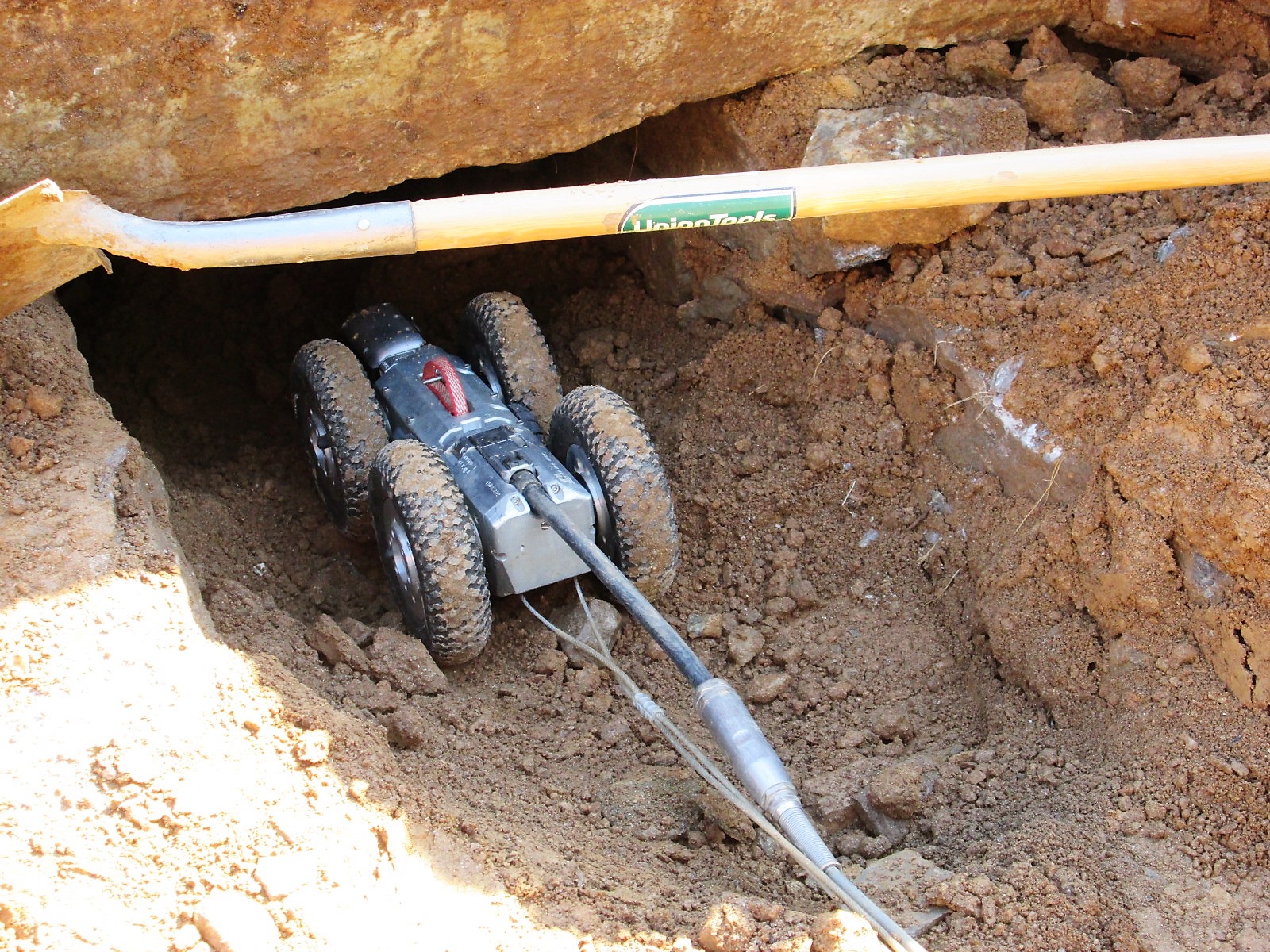
Here is the remote camera. Pretty neat toy. They burnt me a dvd of the exploration.

What was unexpected was that the tunnel branched off to the right. The camera couldn’t make the turn. It went about 38′ in at both areas. This side had a built up wall at the end. The other side was collapsed, probably from them compacting the soil for the new building. Real shame that we don’t know what this was. I personally believe it was an aqueduct, to bring water from Shanghai Run or Towson Run down to the farm?

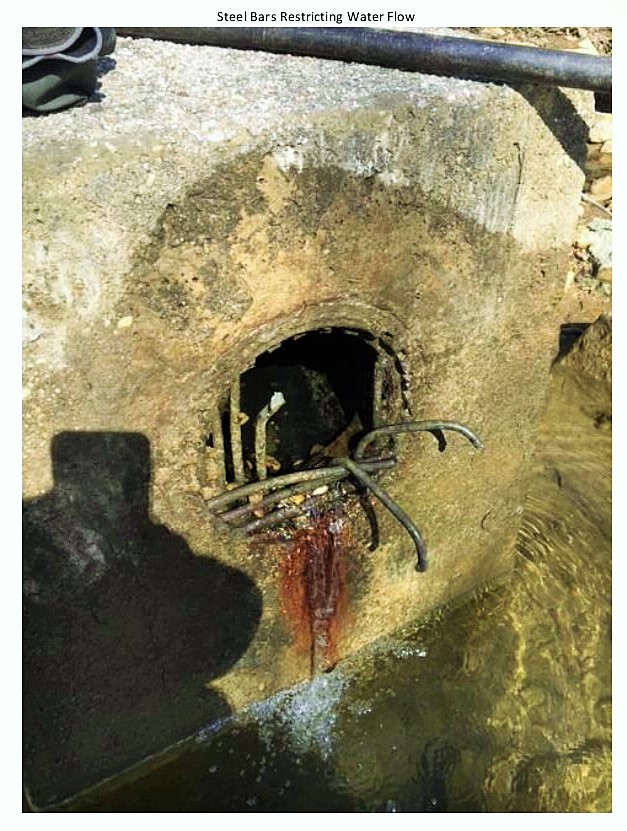
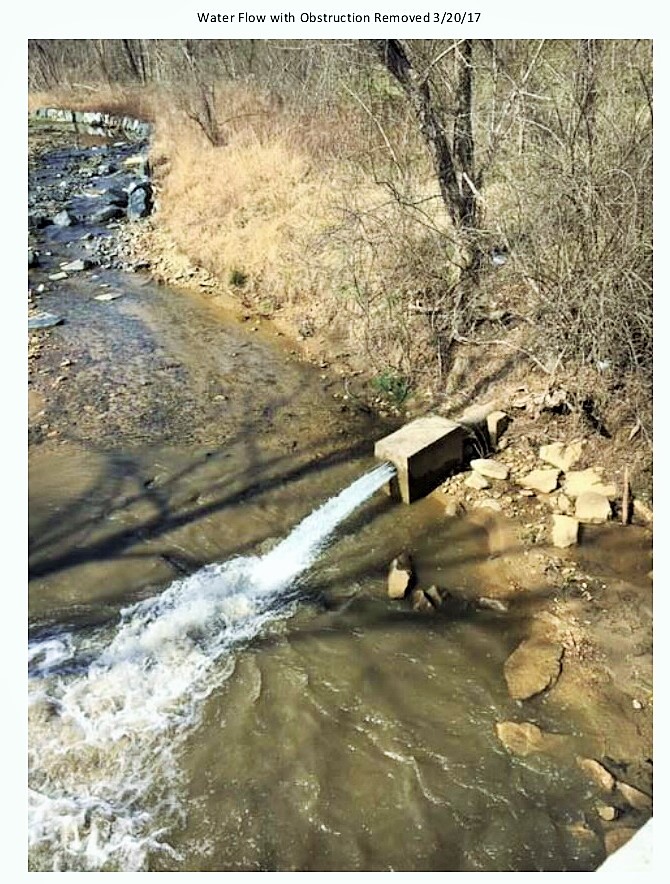
Meanwhile, back at the drain. The contractors removed the steel bars in front of the drain opening.

The flow was better but the contractor needs it opened more to drain the 10′ tunnel, so they can start repairs. I believe the above photo is at 8 turns, 20%.

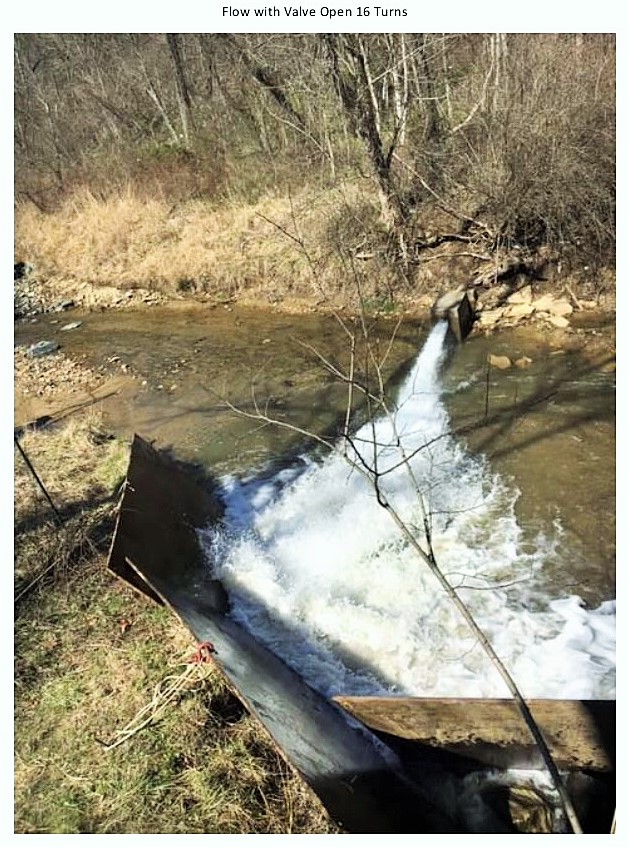
And this will be at about 40%. They installed the metal plates in hopes of stopping the erosion of the shore line. I am concerned with the bed of the stream, They think it will be alright. We will find out if the steel plates start slipping downwards…

Holy Bat Cave Batman

16 Thursday Feb 2017

Posted by Ronald Parks in Baltimore, Dams, engineering, water history

≈ 2 Comments

Tags

Baltimore, batman, bats, Cromwell Park, Dams, engineering, Gunpowder Falls, Hiking, HISTORY, nature, photography, Public Works, Research, water history

The other day I received an email with the following photograph. It asked if I knew what this ‘tunnel’ was for? It was holding up progress on the construction of some new buildings. In the email there was an attached drawing of the building site with the location of the tunnel circled in red. Holy crap! The drawing, to scale, would mean that this tunnel was about 30′ wide! After researching drawings from 1873 onwards, not finding it in any, I went up to look.
untitled-1

What I found was an opening of about 18″ x 24″. Talk about a let down! Below is the contractor’s foot, for size reference.

088

So, since I was there I stuck my camera into the hole to get some pics – glad I didn’t climb in there. Do you see what I see on the left, dangling from a crevice in the rocks??

009

Well so much for finding part of the Underground Railroad or an Indian Burial Ground or a secret cache of moonshine (yes, that was suggested). After about 2 hours of meetings and investigations, I took a walk.

046

Looking across the construction site to the upper dam.

064

The lower, older dam is my favorite. The inspector told me that since it is marble, someone should pressure spray it clean. Ok, I’ll get right on that!

058

First, get someone to remove that log, which has been on there since the storm of 2010!

122

This dam has held up pretty good since 1880

124

The valves which were inside the old gate house.

038

Sorry Batman – the only bat cave I could find…

Love – Hate Relationships

14 Tuesday Feb 2017

Posted by Ronald Parks in engineering, HISTORY

≈ 2 Comments

Tags

Baltimore, bridges, Dams, engineering, FILTRATION, glass plate negatives, Gunpowder Falls, HISTORY, Public Works, water history

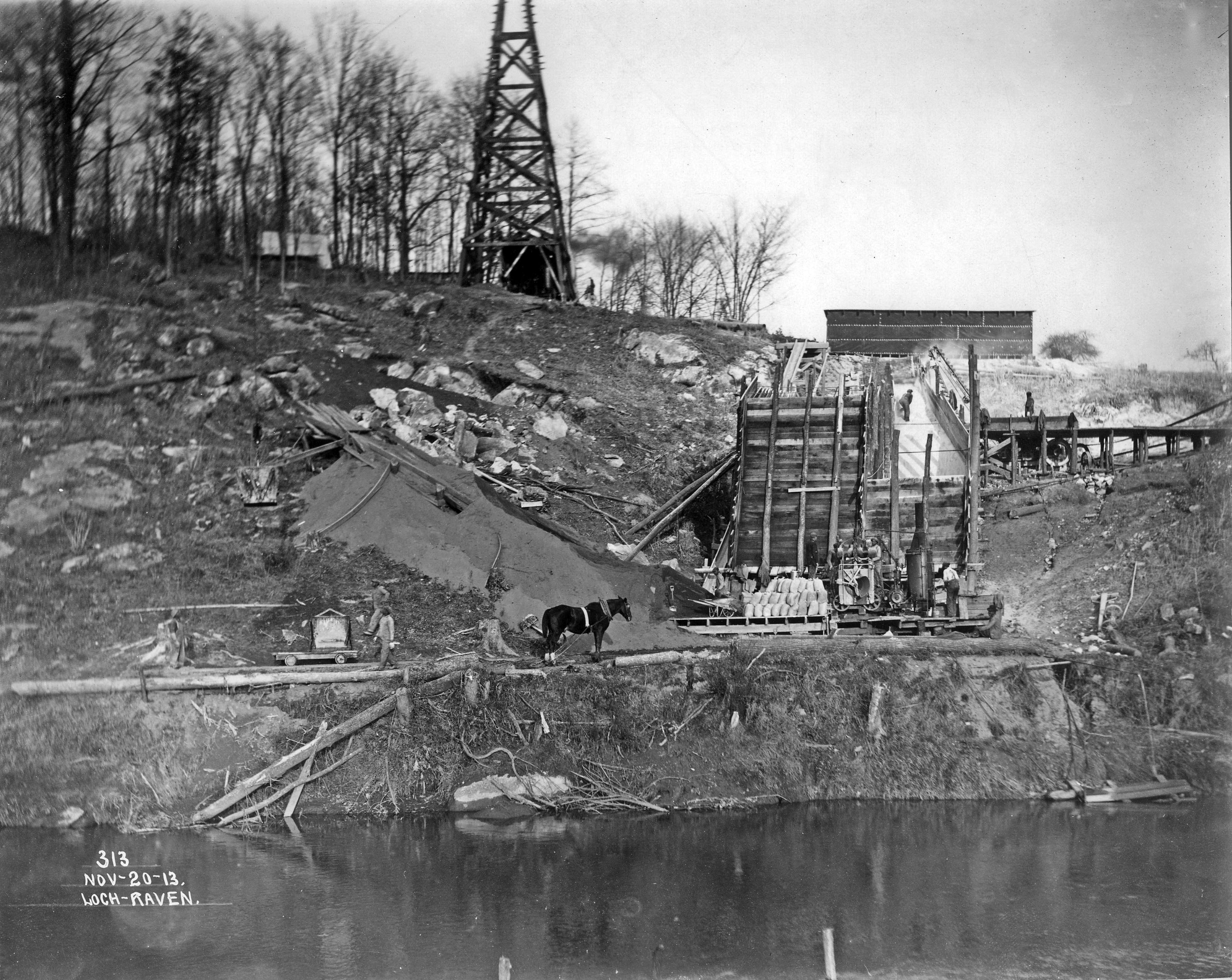
Sorry, this is not a Valentines Blog! This is in regards to my job. Co-workers know I do the archiving, so when they think it’s time to clear out some filing cabinets, they bring all their junk drawers to me. I hate it! So I sort and document and throw out a bunch of stuff…but then, hidden between the pages of some obscure files, I find a folder of photographs! I love it! This particular group of photos are from the 1913-1915 building of the Loch Raven dam. They are the actual prints from the glass plate negatives. Some of which I’ve never seen or ones that I have, scanned from plates that were cracked or silvering. Poor quality. These are near perfect prints.

ic-006

 I have a very poor quality of this one with no real description. On the back it says – “Crushing Plant at Department Quarry near Bridge #1”

ic-001

Building Bridge #1 which is the first bridge up Loch Raven Drive from the dam. One thing I don’t understand about engineering is…

ic-002

…how do they take the upside down bridge and turn it right side up??

ic-003

I’m not sure what this one is, which is ok. I will look thru the old records and see if I can match it up some how. I thought it was of the construction of bridge #1 but the date wouldn’t be right.

ic-004

No description on this one either, but I like the guy in the back with a hatchet, wearing Frye Boots!

ic-005

This one is of the building of the bridge. Look close and you can see a typical City worker, sitting down on the job to the right!

1881 Tunnel Inspection, Again?

27 Friday Jan 2017

Posted by Ronald Parks in Baltimore, engineering, water history

≈ Leave a comment

Tags

Baltimore, engineering, FILTRATION, Gunpowder Falls, HISTORY, Lake Montebello, Montebello, Public Works, water, water history

Last year in another post I wrote about my excitement to go on an inspection of the old Loch Raven – Montebello Tunnel, which was built between 1875 and 1881. This tunnel, being 7 miles long was built mostly through solid rock. A lot of which is collapsing. Which is bad because potable water has been flowing thru it since the late 1950s, from Montebello to Towson. When it was built, the raw water from Loch Raven flowed to Montebello Lake. The inspection for last year was cancelled, saying it was unsafe? (Last inspected in 1984). Last night I get an email telling me that the consultants want to see where the exit point will be if the inspection does happen…

010-996b

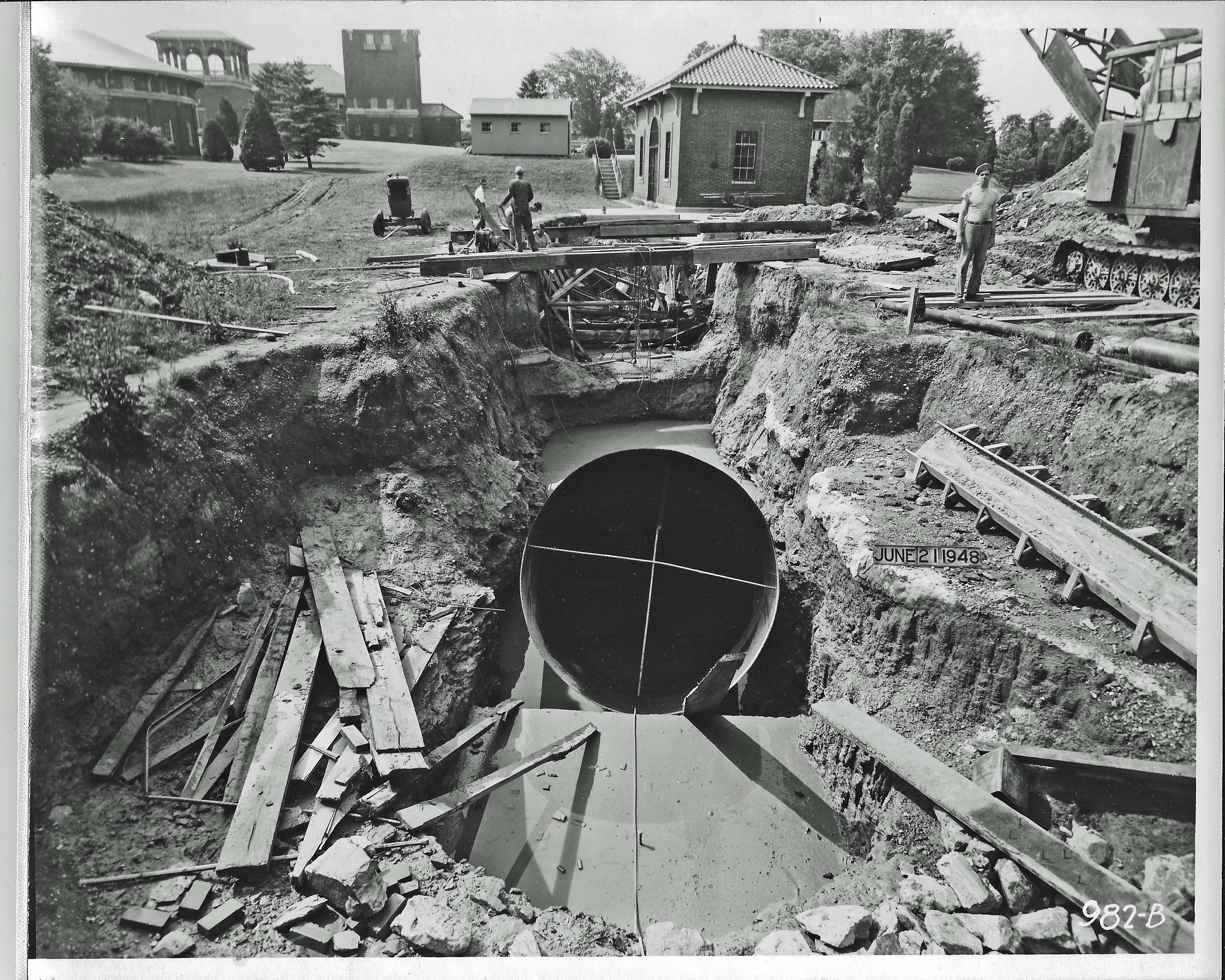
This is where we would exit. At the waste lake, Montebello Filters. If you look back at my post from a few months ago on the waste lake dredging, you can see that it no longer looks like this. It is grown over with phragmites. This photo from 1948 shows them dewatering the tunnel so a new surge shaft could be built.

001-982b

The new surge shaft is connected to the 1938 Loch Raven Tunnel (steel, not rock) which is connected to the old rock tunnel, soon to be connected to the just being built Patapsco Tunnel. (Confused yet? You should work here!)

002-984b

As with most construction projects with the city, there are always problems. This one being a storm washing away some of the work already completed.

013-1c

The almost finished surge shaft. Wrap it in brick and put a Spanish tile roof on and you are done. I hope we can actually do an inspection of the tunnel.

Weather News

15 Thursday Dec 2016

Posted by Ronald Parks in Baltimore, engineering, Reservoir, water history

≈ Leave a comment

Tags

Ashburton, Baltimore, engineering, FILTRATION, glass plate negatives, HISTORY, Public Works, Snow, water history, weather

First thing that popped up on my news feed said – Double Polar Vortex to Slam U.S. Did they talk like that in 1908? Or did they just say, “Folks we had us some snow last night, so bundle up!”

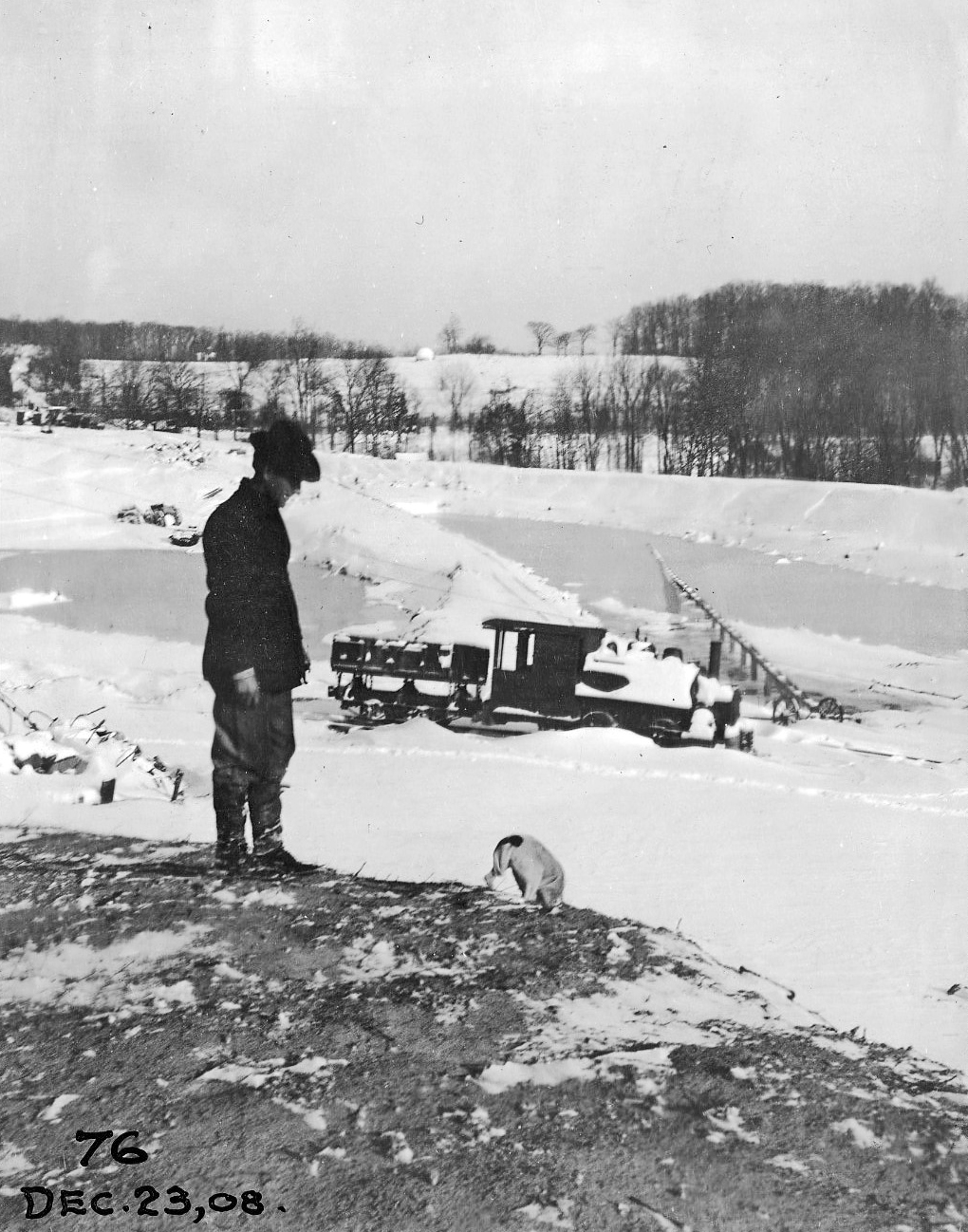
Building the High Service Reservoir, also known as Lake Ashburton.

lake-ashburton-12-08-077

The little train that couldn’t.

lake-ashburton-12-08-075

Steam engines used to pull cables on derricks, to lift construction materials.

lake-ashburton-12-08-076

A boy and his dog. Look close, center on horizon. Does that look like a giant snow ball someone is about to roll down the hill?

← Older posts
Newer posts →

Blogroll

  • Flouride Action Network
  • lulu
  • My Book
  • WordPress.com
  • WordPress.org

Recent Posts

  • Bermuda 2023
  • ICELAND April 2023
  • George Chalmers of Fochabers
  • In Search of The Skipjack Ada Mae
  • Trap Pond Kayak

Blog at WordPress.com.

  • Subscribe Subscribed
    • Water and Me
    • Join 231 other subscribers
    • Already have a WordPress.com account? Log in now.
    • Water and Me
    • Subscribe Subscribed
    • Sign up
    • Log in
    • Report this content
    • View site in Reader
    • Manage subscriptions
    • Collapse this bar
 

Loading Comments...