• About
  • History Writings

Water and Me

Water and Me

Tag Archives: Montebello

Almost Done

19 Wednesday Oct 2016

Posted by Ronald Parks in engineering, filtration, water history

≈ Leave a comment

Tags

Baltimore, Dams, engineering, FILTRATION, kayaking, Lake Montebello, Montebello, Public Works, water, water history

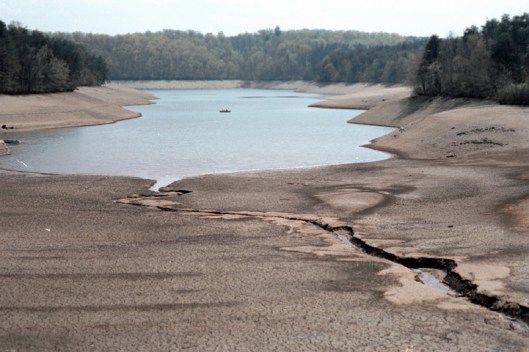
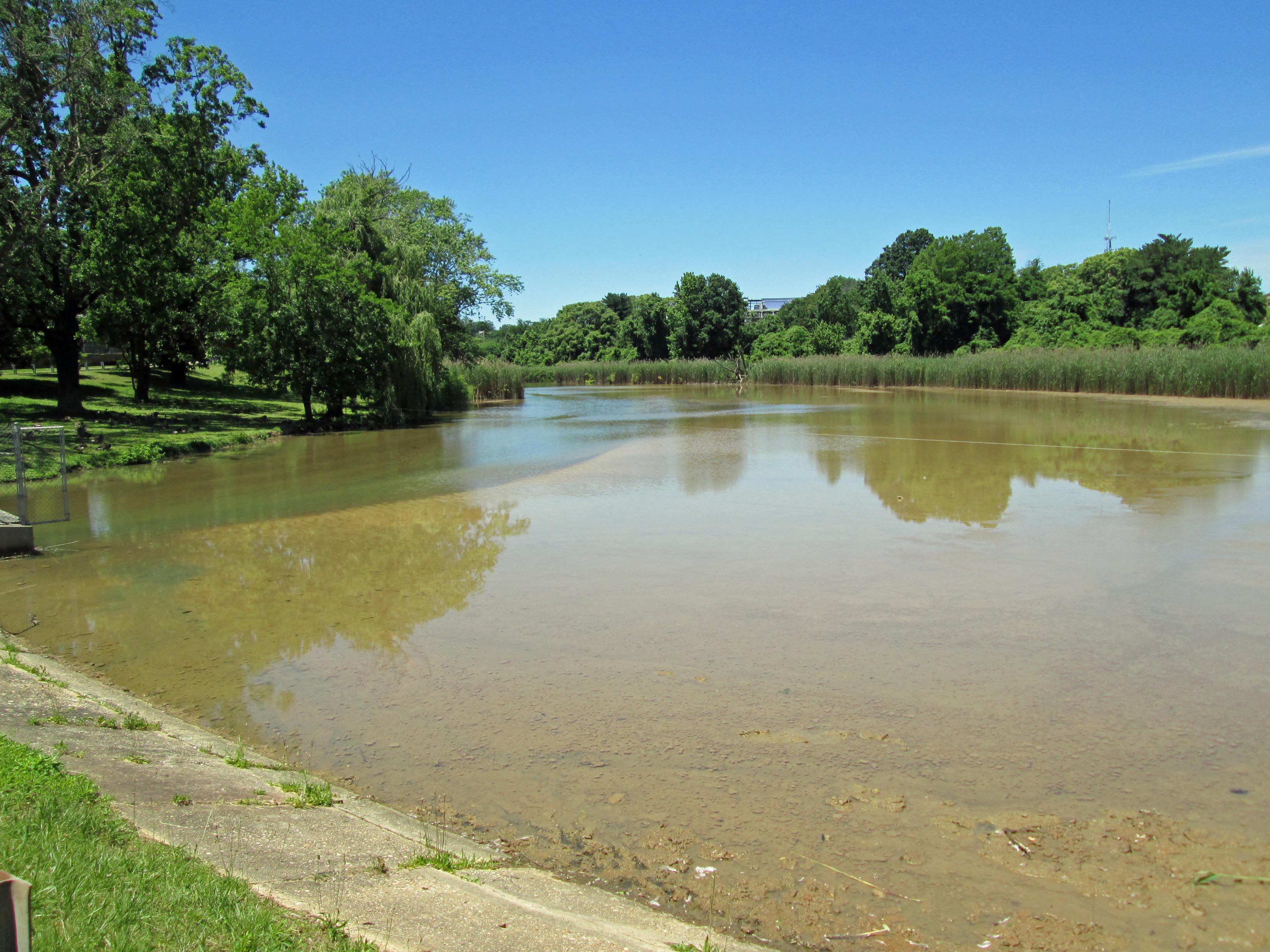
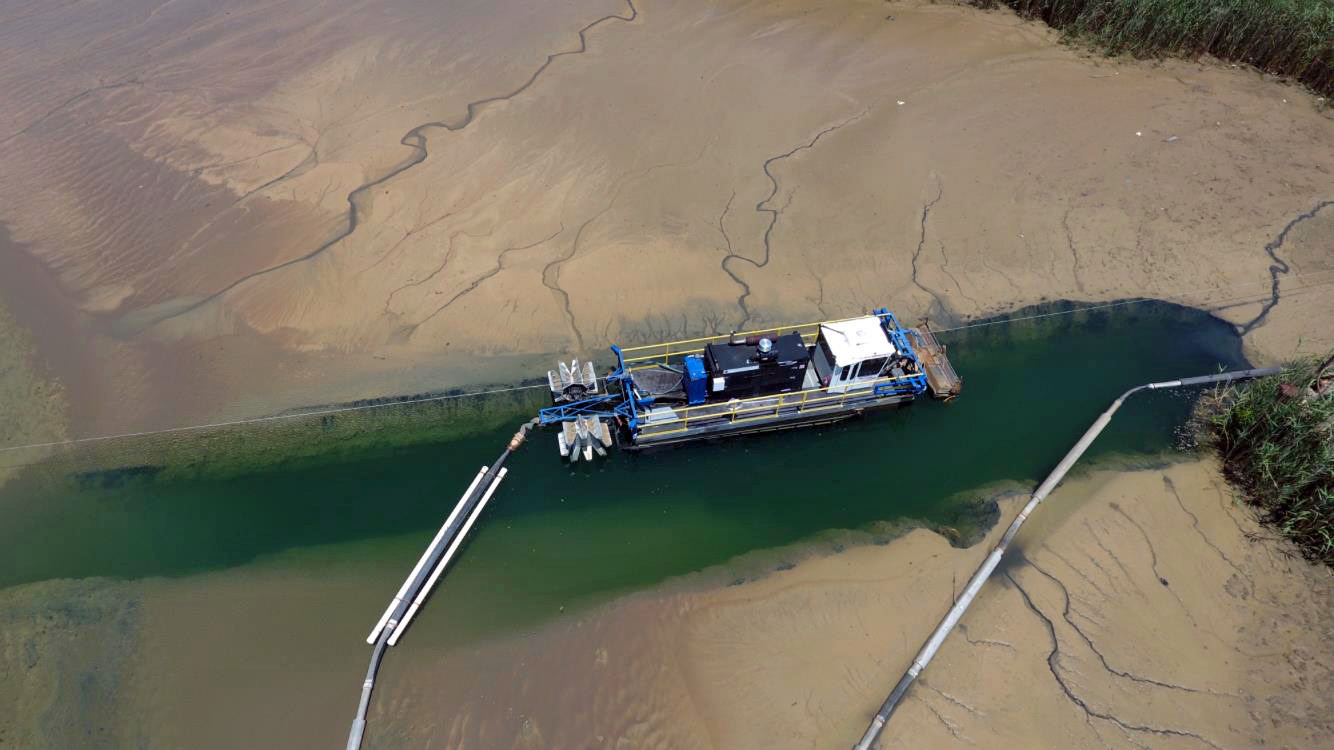
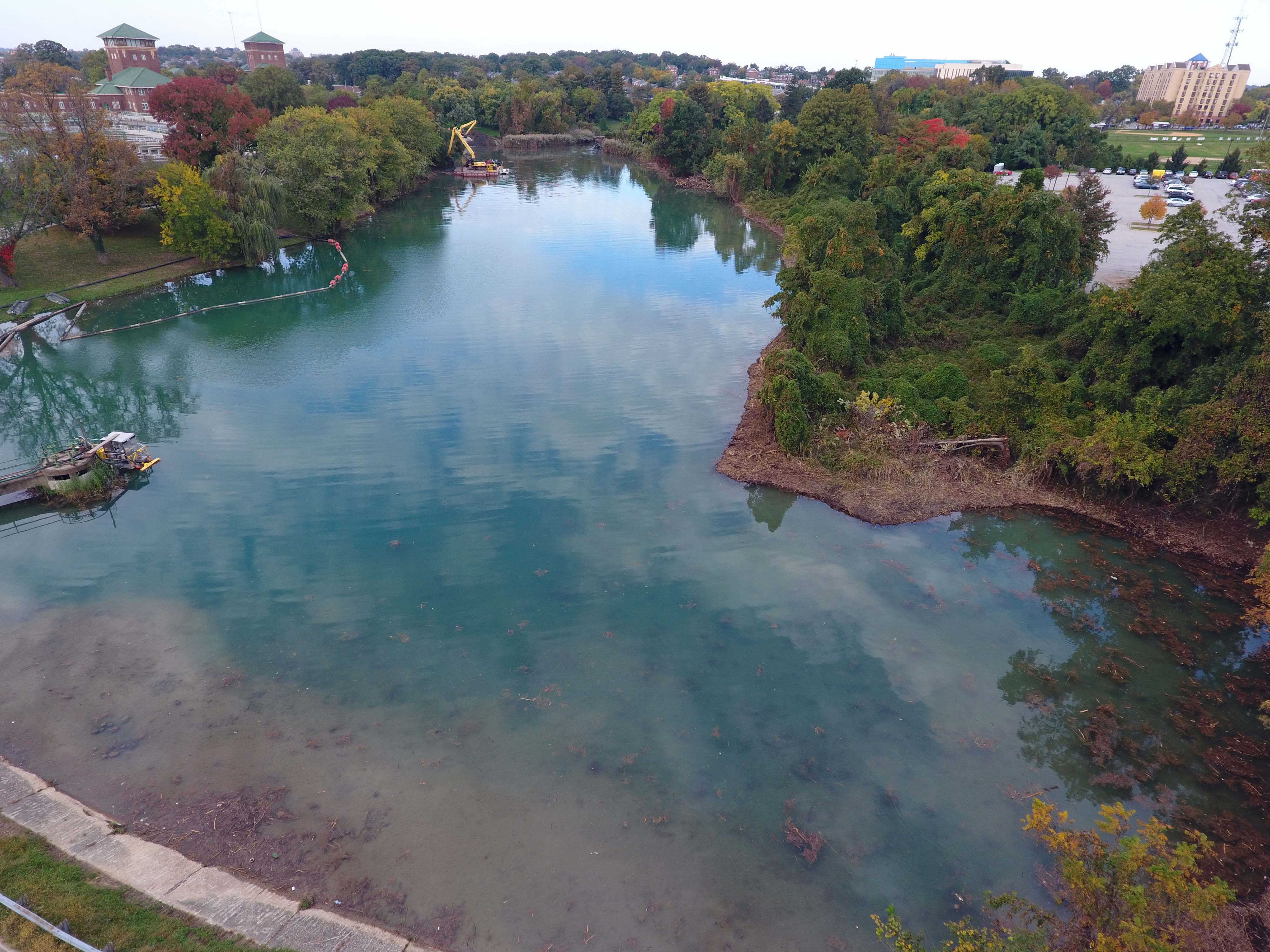
Construction Management sent me this photo and asked if I know what lake this is! If you ever need a pond or lake dredged, these guys do it right. And ahead of schedule.

That cove on the right hasn’t been cleared in about 40 years! I need to bring my kayak to work! For inspection purposes of course!

Waste Lake Progress

17 Monday Oct 2016

Posted by Ronald Parks in Baltimore, water history

≈ 2 Comments

Tags

Baltimore, boats, engineering, FILTRATION, HISTORY, Lake Montebello, Montebello, POLITICS, Public Works, water, water history

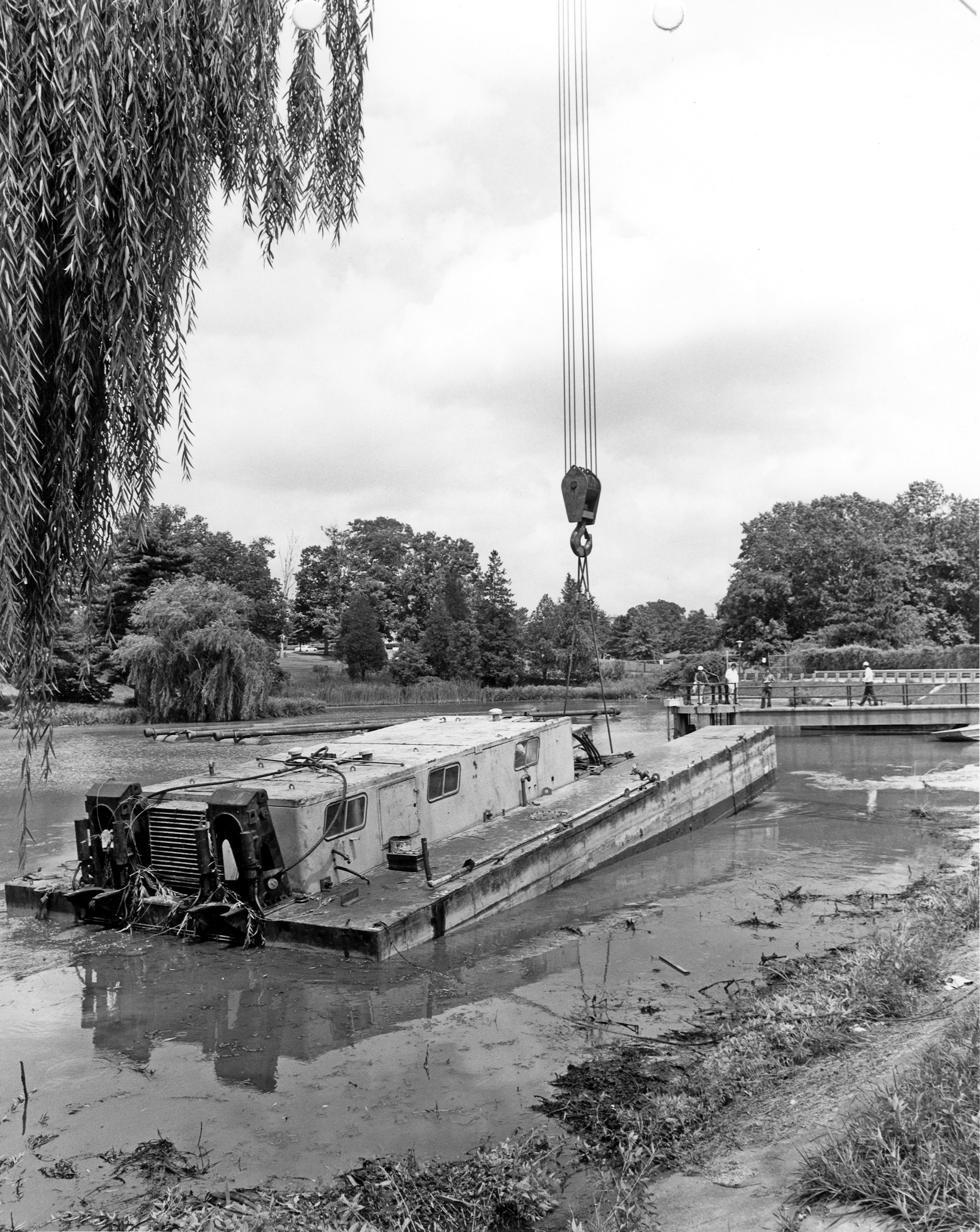
The downtown consultants for the dredging of the waste lake at Montebello had underestimated the amount of material that could be possibly dredged from our waste lake – so they asked if it would be alright to remove the phragmites. A big OK to that.

Back in July I posted an aerial of the lake filled with sludge. This view shows most removed. The phrags were attached to the outfall structure and the contractor cut by hand. (At end of catwalk, lower center of lake). At lower right of lake more sludge accumulated due to a polymer added to belt presses, dumping back into this area.

Barge and excavator removing phragmites. The one shore is completed. Would be nice to have enough budgeted money to remove growth along shoreline.

Within one month the phragmites have grown a couple feet around outfall. Because the growth mat is attached to the structure, pulling away the growth will damage the wall. This outfall leads directly to Herring Run and we can not have this water going there.

What the waste lake by the outfall structure use to look like. Those houses are long gone.

Another view of the lake from years past. This is looking towards the NW corner where the surge pipe from Loch Raven is located. It was nice and clear of growth, inside and out. Those houses are also gone.

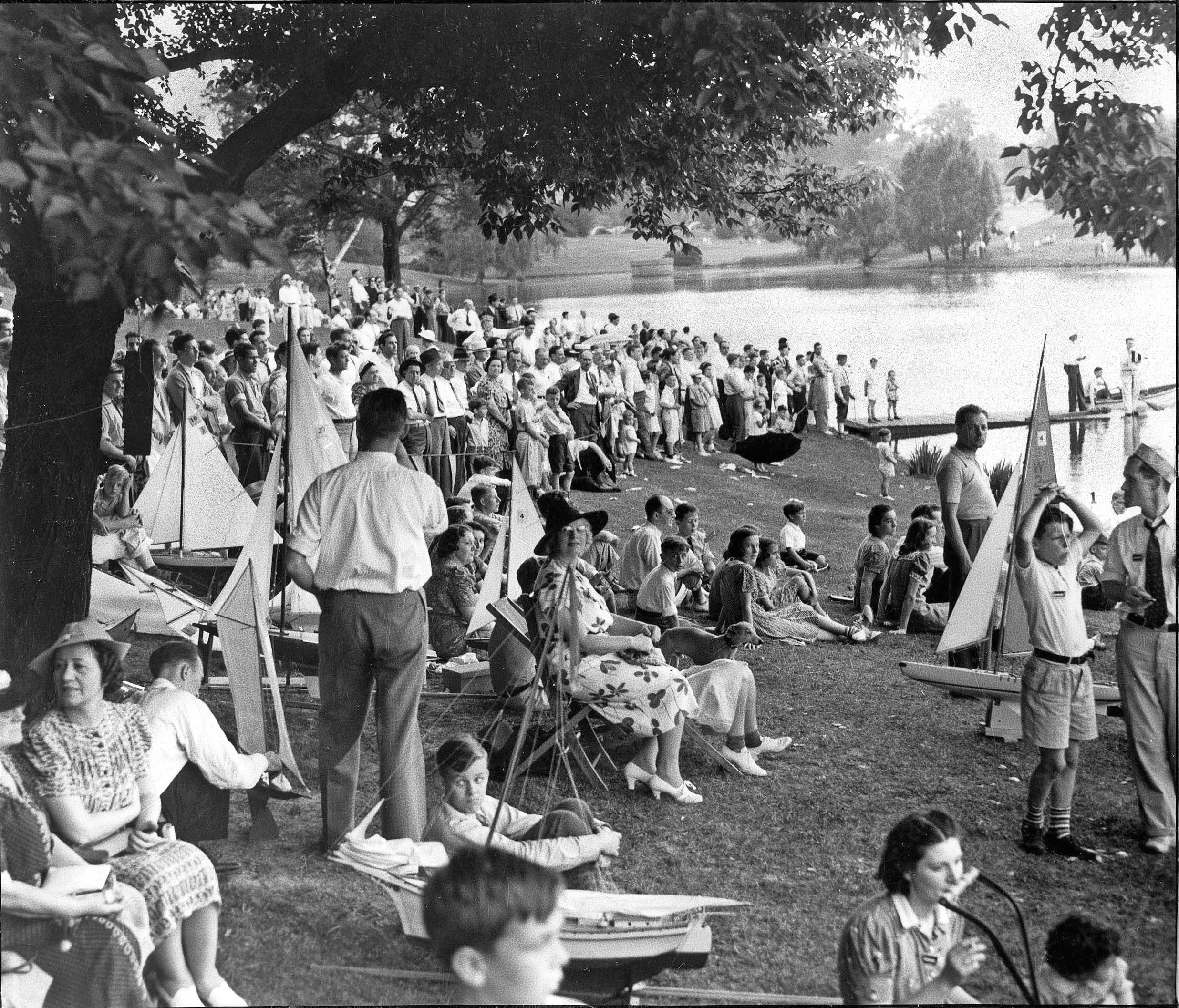
The waste lake shoreline was so clear that kids would come in and sail their model boats. This is looking towards the outfall structure.

Fullerton WTP or Show Me The Money

11 Tuesday Oct 2016

Posted by Ronald Parks in Baltimore, POLITICS, Reservoir, water history

≈ 2 Comments

Tags

Baltimore, engineering, FILTRATION, HISTORY, Montebello, POLITICS, Public Works, water history

I was asked last week about a new filtration plant to be built at Fullerton, Baltimore County. Here is what I found:

1955 – Dr. John C. Geyer, Consultant for Baltimore City, and Mr. Jerome B. Wolff, Consultant for Baltimore County Metropolitan District, having concluded their study of the entire distribution system submitted their report on July 1, 1955. According to the Fullerton Reservoir Study Preliminary Design Report of 2000, the 1955 Geyer-Wolff Report recommended purchasing a tract of land in the Fullerton area – which the City of Baltimore did purchase – for the future construction of a water treatment facility, a water storage reservoir, and a water pumping station.
1962 – On November 23, the sinking of shafts for the Fullerton Tunnel began. Both shafts were completed but no Fullerton Tunnel had been driven to date. (Project, Section #6 Susquehanna conduit) Tunnel completed for Fullerton in 1963.
1993 – Design of the Fullerton Pumping Station. PS completed in 1999
1997 – Design for Fullerton Reservoir
1999 – The design of the reservoir would be based on receiving 120 MGD from the future filtration plant. The study showed that the system could not support a 160 MGD reservoir. The reservoir was to be designed to elevation 226. The design proposed two reservoirs to be built, each with baffles. The reservoirs would have separate influent and effluent chlorination provided. As of December, 1999, the study was 75% completed. (Same report info in 2003)
2006 – A two year study began on May 2006. Approval was given to construct a pilot plant to test the operation of the membrane technology.
2007 – Reason contract on-hold is due to financial constraints caused by the artificial 9% rate cap; studies on the construction of the Fullerton Filtration Plant; continuation of the hypochlorite conversion project; and, the federal requirement to cover finished water reservoirs.
2008 – The draft of the Project Development Report for Fullerton, dated May 2008, was submitted for review and returned with comments. There were 4 alternatives in the review. As of October no method has been selected from the alternatives selected. Due to the economy at the time, the cost for each of these alternatives was in excess of $400M. The study had been extended to March 28, 2009. The cost proposal, received on June 23, was not accepted. The cost allocations to all concerned is still being worked on.
2009 – The Fullerton Filtration Plant construction had been delayed until 2017. If this project is ever resurrected, a new consultant agreement will need to be executed.
2010 – The contract for designing the facility could not be advertised until the cost allocation had been agreed upon.
2011 – The contract for designing the facility (Treatment Plant) could not be advertised until the cost allocation had been agreed upon. Also this year, repairs to the Montebello filters were initiated – “The filters were needed to be kept in service for another decade until the Fullerton Facility had been built and the new Montebello Facility was released for construction.” (New Montebello Filters never happened – Band-Aid after Band-Aid)
2012 – Fullerton Water Filtration Study: The contract for designing the facility could not be advertised until the cost allocation had been agreed upon. The Fullerton construction had been delayed originally until 2017. The Fullerton Reservoir would need to be constructed first. The design contract was expected to be released for bid in 2013 under the Fiscal Year 2014 budget, with a design completion date set for 2016. Construction was expected to begin in 2017 and was to be completed by 2021.
2014 – The Office of Environmental Compliance and Laboratory Services began gathering information in preparation of the contracts’ future pending design release. In 5-years the DPW of Baltimore expected the Fullerton Filtration Plant to be built and online thus clearing the path to fully renovate one of the two Plants at Montebello and shutting down operation of the second Montebello Plant.

Readers Digest version: The 100 year old Montebello Filters keeps being patched up while the City and Counties fight over who is going to pay what, for a new filter treatment plant at Fullerton. Status of Fullerton – it will be built, sometime in the future.

Parades

09 Friday Sep 2016

Posted by Ronald Parks in Baltimore, water history

≈ Leave a comment

Tags

Baltimore, bricks, engineering, FILTRATION, glass plate negatives, Gunpowder Falls, HISTORY, Lake Montebello, Montebello, Public Works, water history

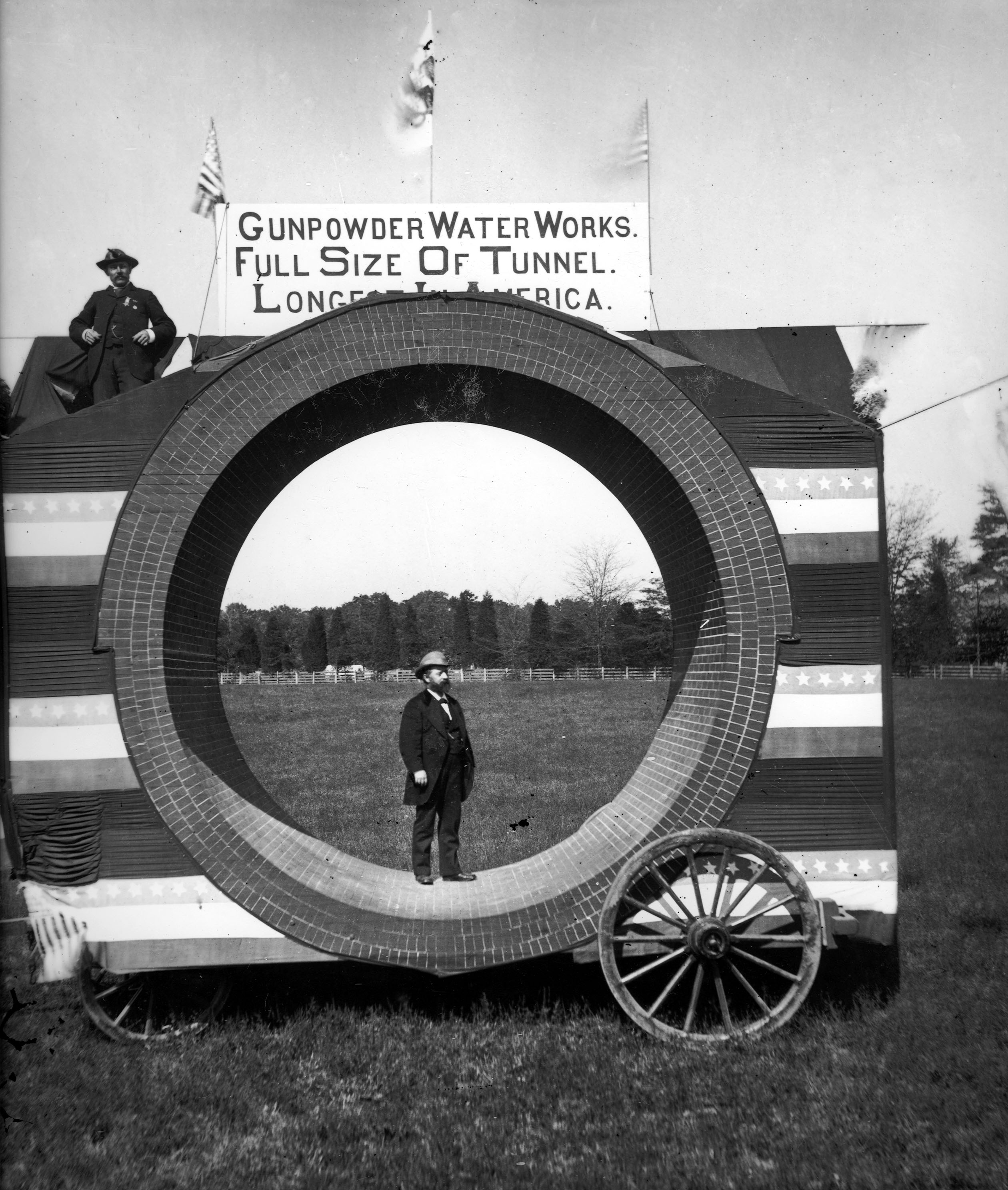
Who doesn’t love a parade. Wish I would have been around for this one!

gunpowderpipe

This float was built in the 1880s to promote the building of the Loch Raven – Montebello tunnel. Longest in America at the time – 7 miles long.

Dam Jam 2016

19 Friday Aug 2016

Posted by Ronald Parks in Baltimore, Hiking, water history

≈ 1 Comment

Tags

Baltimore, DPW, engineering, FILTRATION, Gunpowder Falls, Hiking, HISTORY, Montebello, Public Works, water, water history

Happening tomorrow! Loch Raven is nice but I liked the one at Prettyboy Dam a couple years ago, only because I got to go to the bottom-insides of that dam.


You will get to walk out here. This use to be open all the time, now only open to the public on special occasions.

Ask your tour guide who is responsible for closing these gates during the 100 year storm?? Enquiring minds want to know!

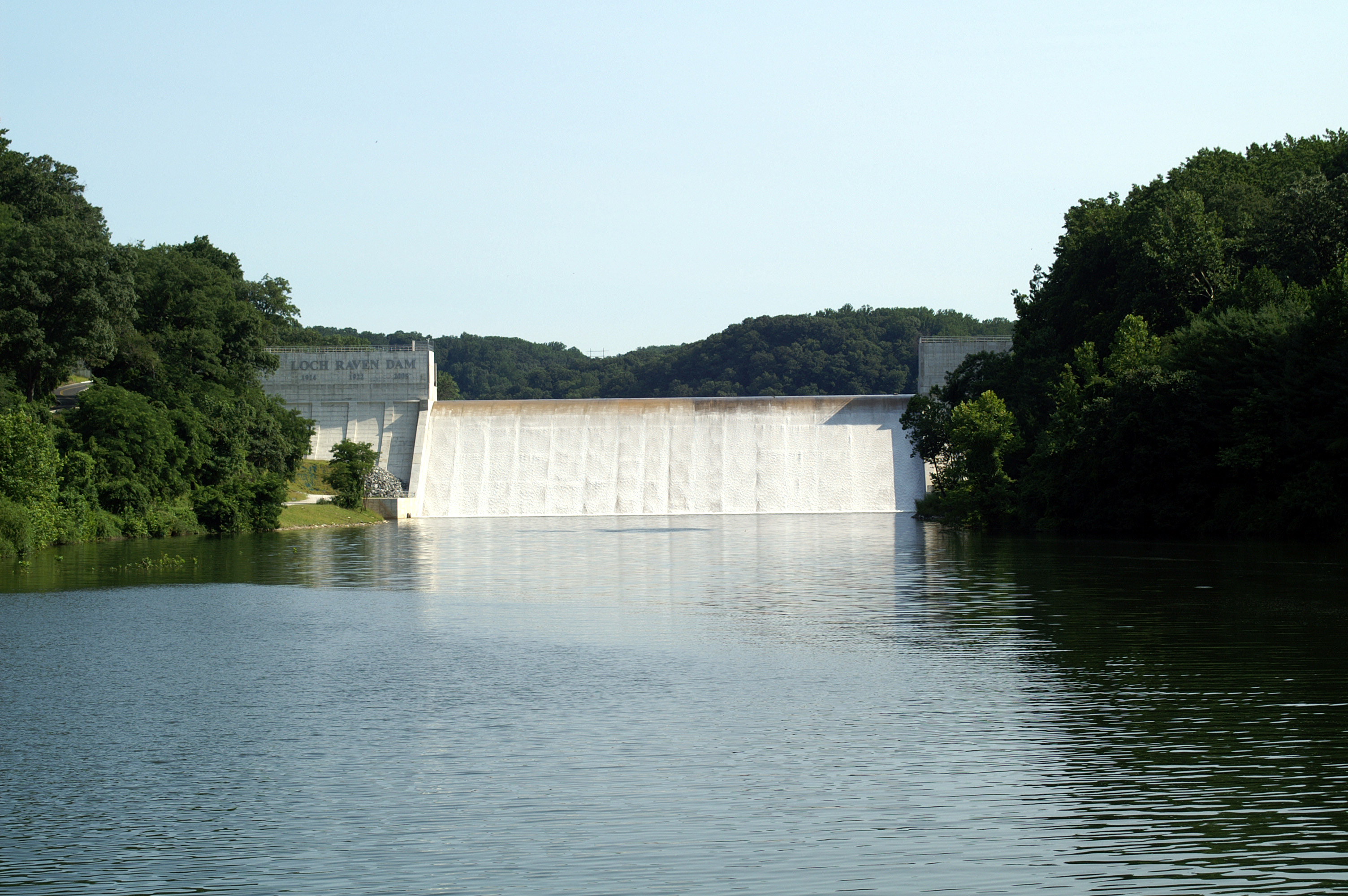
Looking upstreams from the old dam to the new.

This is what it looked like after the storm of 2011. Lots of water going over the crest.

This is the 1880 dam during the same storm.

KONICA MINOLTA DIGITAL CAMERA

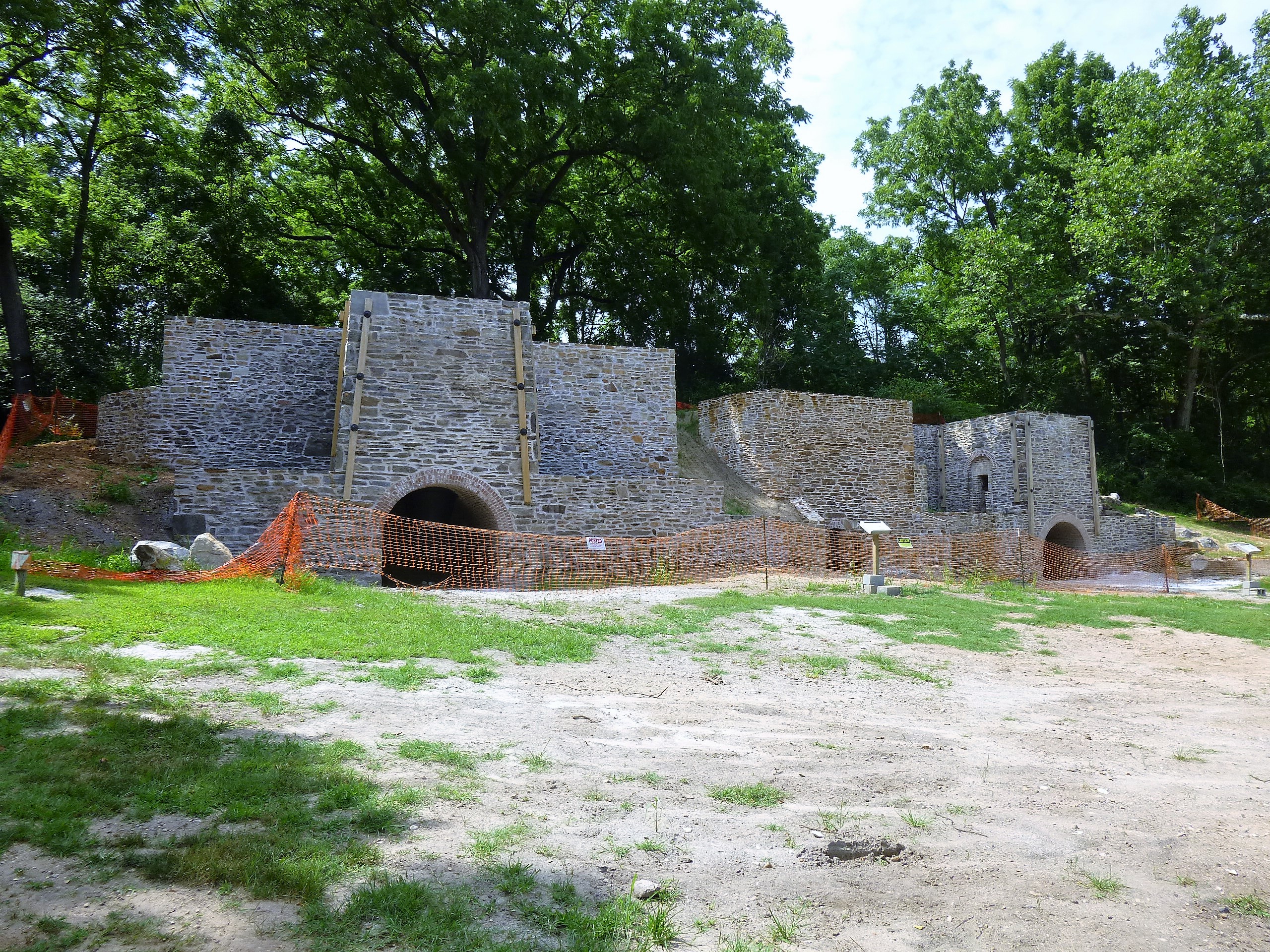
There will be tours of the lime kilns by Jim Kelly, who will be giving away copies of my book (Might as well give them away – nobody buys them anymore!) (That’s ok, a good cause) This photo was from 2006

Volunteers started clearing the weeds back in 2011.

P1070168

Jim and company have had a lot of work done to the kilns. He will be giving a presentation on the 3 different kilns, talking about their history.

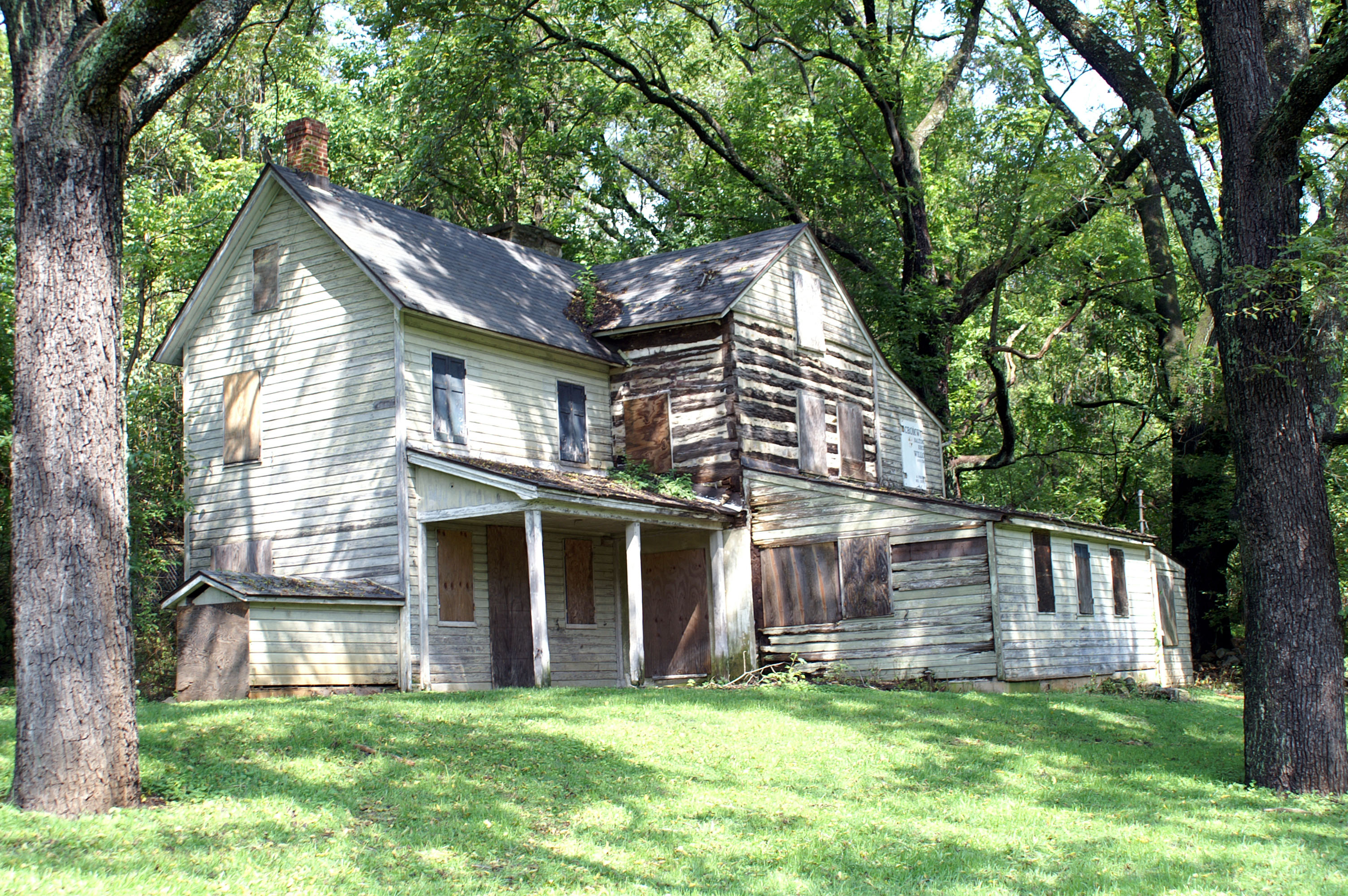
He will also be talking about this house, which has been restored.

PP236.1693A Loch Raven. Balancing reservoir. Throwing shaft over

Thom Grizzard will be giving a tour of this area. Where the old balancing reservoir and shaft are. No sense in bringing your bathing suit – it no longer looks like this. It is grown over. The volunteers have cleared a lot of the trails around here – making exploration of Cromwell Valley Park a lot of fun!

A Dumpster Fire by any other name….

10 Wednesday Aug 2016

Posted by Ronald Parks in Baltimore, water history

≈ 2 Comments

Tags

Baltimore, FILTRATION, Fire, garbage, HISTORY, Montebello, Public Works, water history

…is not just a fire, especially when there are historic records involved…or HAZMAT…or combustibles, like lime.

We are used to having dumpster fires here at work. Over the years they have become few and far between. Most people know not to throw unslaked pebble lime into the dumpster. We have a special area for that. But, every once in a while a new employee or some one forgets and viola! Fire. For those who don’t know, lime will heat up when mixed with water. It gets very hot – hot enough to melt plastic and then cause paper items to ignite. Lime is used in water treatment for ph and it coats the pipes throughout the system, so things like lead don’t leach into your drinking water. It was originally used as a disinfectant in the water system, replaced by chlorine.

006

Anyway, back to the title of this post – maybe a dumpster fire should be a felony? Or at least be considered criminal negligence? As the firemen were pulling out the burning debris, I couldn’t help but notice some brown folders thrown into the mix. As the folders looked familiar, like historical records, I pulled a couple out. Shit!!! They are ‘As Built Drawings’ from the mid 1920’s! Drawings of one of the two water filtration plants! Shit!! It is unbelievable that someone would throw this stuff into a dumpster!

The City has a policy on what to do with old records. You send them to the City Archives. A couple months ago an employee from the Finance Dept. downtown called me and said that as he was walking by the recycle bin he noticed an old rolled up drawing. He wanted to know if I wanted it? Sure! Well when I received it, it turned out to be a profile drawing of the work schedule during the building of the Loch Raven Tunnel – dated 1875 – 1881! It is about 20 feet long on cloth paper, drawn in color. Unbelievable!! (I know, I keep saying ‘unbelievable’ but actually it is not. After 35 years here, every stupid thing people do is very much believable!)

007

Not only were there historical documents in the dumpster, someone threw in some air cylinders, aerosol cans (2 of which exploded) and God only knows what else! And to top it all off, one of the employees wanted to climb up on the dumpster and try to put the fire out with an extinguisher! Really? Another wanted to stand on the front end loader bucket, hold a fire hose and try to extinguish it. God created firemen for a reason – let them do their job!

Baltimore Droughts – a brief history

27 Wednesday Jul 2016

Posted by Ronald Parks in Baltimore, Reservoir, water history

≈ 2 Comments

Tags

Baltimore, engineering, FILTRATION, Gunpowder Falls, HISTORY, Lake Montebello, Montebello, POLITICS, Public Works, water, water history

I have been asked numerous questions and for information on what is the procedure for the water plant, in dealing with drought scenarios? All new bosses asking. There are a lot of procedures that will need to be followed, so I will be updating the information I have collected over the years, all the different ways to keep Baltimore drinking water flowing. To be brief, when the reservoir at Loch Raven gets below an elevation of 235′, a decision will need to be made – Open gates at Prettyboy Dam, start low lift pumps, and/or introduce water from the Susquehanna River. Right now the 3 reservoirs are only about 1-2′ below normal. In most cases, when Prettyboy and Loch Raven drop, the pumps from the Susquehanna are used instead of our Low Lift Pumps. Here is a brief history:

1869 – 1870 – The City suffers a severe drought in the summers. It was concluded that the Jones’ Falls water supply was not sufficient for the future. After an investigation for a future water source, it was decided the source would be the Gunpowder Falls. Noting that due to the severe drought of this past year (1869), Engineers Curran and Martin went to the Great Gunpowder Falls to gauge its flow. In twenty-four hours, one hundred and sixty four million plus gallons flowed, which is twenty times more than the present supply. Following the drought was a heavy rain in October, during the farmers’ plowing of their fields. The runoff caused Druid Lake to be too muddy for the consumer. It was not fit for use for twenty-six days.
1872 – Notwithstanding the confident assertions and opinions of the advocates of the Jones’ Falls supply that there would be no want of water at any time after its introduction, in the severe drought of 1872 it became apparent that unless the Gunpowder was resorted to, Baltimore would encounter the risk of a water famine in every dry summer.
1877 – The temporary supply pumps (on the Gunpowder) were needed this year due to a drought.
1896 – Long drought.
1900 – There was a drought condition during the year. This was the first recorded drought during the use of Loch Raven water. The drought was referred to when the water consumption exceeded the total flow of the Gunpowder River. “An unusually severe drought occurred and the city escaped a water famine by the narrowest margin”
1910 – Worst drought, only 418 million gallons left in reserve storage, depleted 1.06 billion gallons of reserve storage. The year 1910 recorded the second drought since the City began using Loch Raven water as a water source.
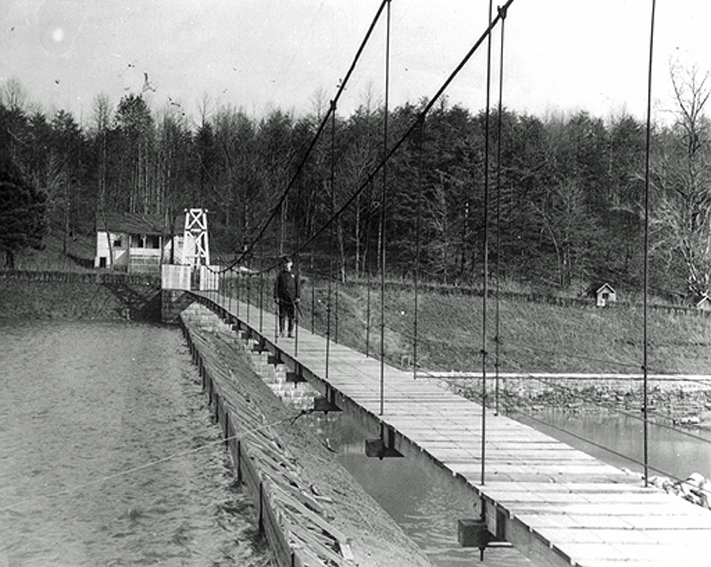
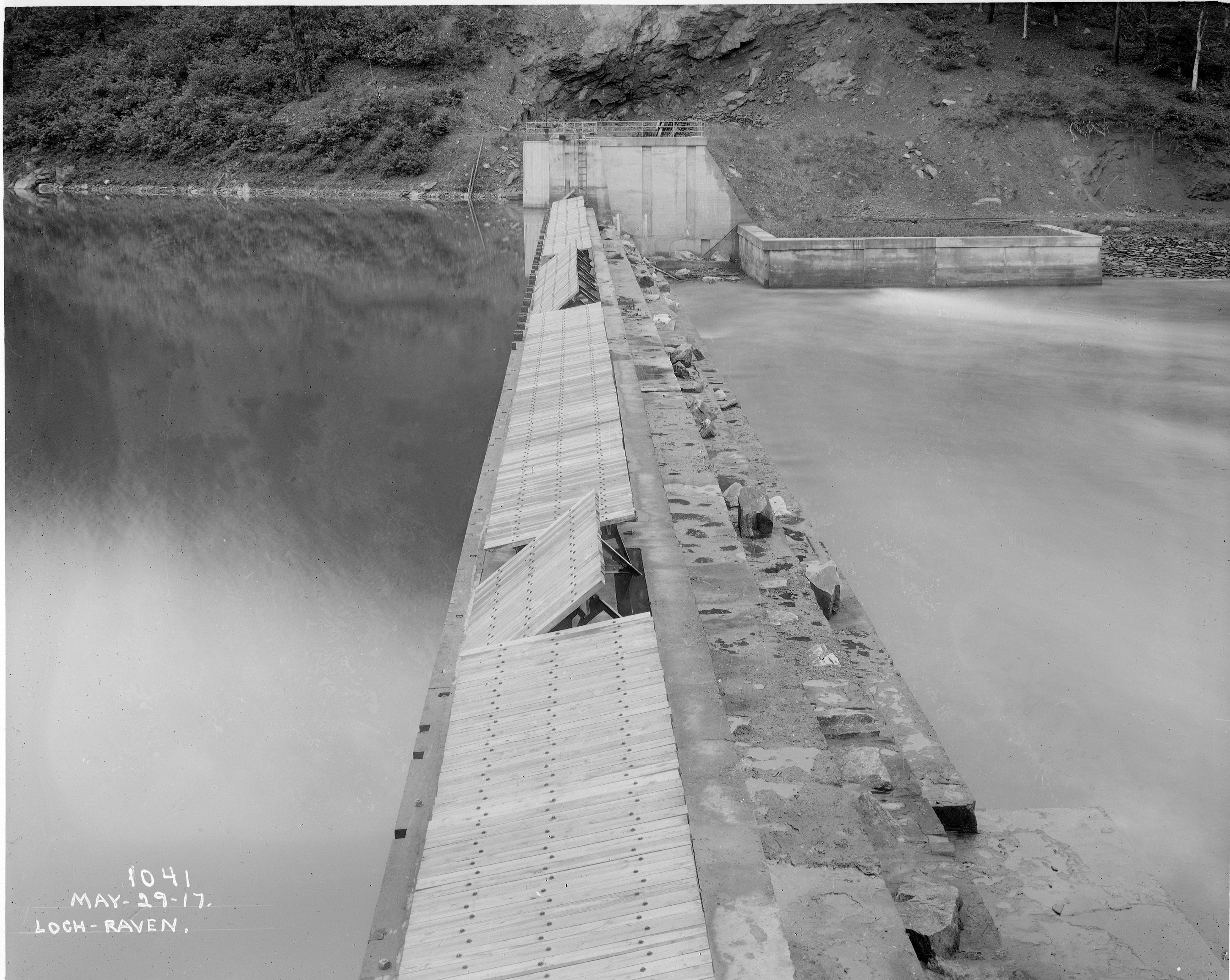
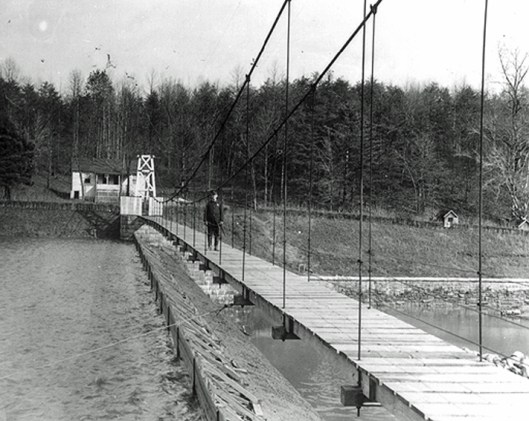
1911 – Due to drought, wooden flash boards were placed at the dam at Loch Raven and at the Waste Weirs at Lake Montebello and Lake Clifton in order to increase the storage capacity at each location by three to six feet in depth. (This is prior to the new dam being built in 1915)
Drought lochraven2

Drought LochRaven 5-17

The top photo shows the baffle boards on the original 1881 dam. The second photo shows that up until 1917 they still used the boards, this time on the second dam.

1914 – Recorded the third drought since the City began using Loch Raven. The average daily water consumption for the year 1914 was 72.677 million gallons. It was estimated the total population supplied was 593,000.
1929 – 1930 – There was a long continued drought this year with occasional spells of unusually hot weather. The lack of rainfall had actually begun in 1929. As of December 31, the Loch Raven Dam was at an elevation of 227.2 feet A.M.T. (Normal is 240’) The typhoid death rate had risen to 3.3 per 100,000. Because the typhoid death rate was rising in most of the eastern states, it was concluded that the prolonged drought was the contributing factor. As a result of the long drought, low flow of the Gunpowder River, and the depletion of the Loch Raven Reservoir, the Water Department decided to reclaim the water used for washing filters. It was estimated that 2,000,000 gallons of water could be saved each day. The water was pumped from the washwater reservoir and pumped into the raw water supply tunnel through the surge tank. (This building is still there, covered in overgrowth, pumps having been removed years ago).
1931 – The drought continued through the year 1931. As of December 31, 1931 the water level at the Loch Raven Dam was 15.5 feet below the crest which is 2.7 feet lower than at the beginning of the year.
1932 – The drought which started in July 1930 and continued through the entire year of 1931 came to an end in 1932. By May 14, 1932 the water finally ran over the crest of the dam at Loch Raven; and, on May 15 the water restrictions on the public were removed. On May 14 when the water started overflowing the crest at the dam, the preparation plans to use an emergency water supply and filtration plant at Avalon was discontinued. At Montebello, the emergency pump that was used to recycle washwater by discharging the washwater back into the raw water tunnel was discontinued when the water flowed over the dam.
1941 – There was a prolonged drought which caused a great drop in the Loch Raven Reservoir. It was then necessary to open the valve at the Prettyboy Reservoir (Dam crest elevation 520’). This was the first time that it was necessary to open the valve at Prettyboy to supply water to Loch Raven. The Prettyboy Reservoir construction had been completed in 1933. The valves remained opened until the spring rains came in 1942. Water quality improved from Prettyboy because of the aeration affect while the water traveled downstream.
1943 – In addition to the water consumption by the war industrial activity and the general population, there was a drought condition throughout summer and fall which in effect set a new daily water consumption record of 165.19 million gallons.
1955 – 1956 – The drought that began in December 1955 ended in February 1956. Liberty Dam (Dam crest elevation 420’) did not relieve effects of the two year drought. Mayor asks for study on scientific rain making.
1965 – By the end of the year, the combined water storage of the three reservoirs was at 36.8% of full capacity. This serious deficiency led to the decision to activate the Susquehanna line as soon as the Susquehanna project was completed. The dedication of the completed Susquehanna project was being scheduled for January 28, 1966.
drought pb 65

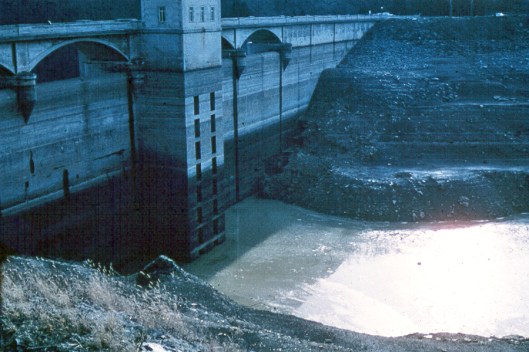
Prettyboy drought in 1965.

1966 – Due to the continuing drought conditions, it became necessary by August 1966 to supply water to a part of Harford County via Winter’s Run. The water supply was accomplished by installing an emergency connection to the Susquehanna pipe line; and installing a meter and control valve set to discharge 1 MGD to Winter’s Run. The temporary connection was activated on August 5, 1966 through August 15, 1966. The temporary connection was then dismantled. Because of the low water level in Loch Raven, the low lift pumps at the Montebello Raw Water Distribution Center were operated from January 1, 1966 until February 21, 1966. On January 28, 1966, the Deer Creek Pumping Station was dedicated by Mayor Theodore R. McKeldin. By June 30, due to the drought conditions and water use, the raw water reservoirs were as follows: Liberty – 14.75 feet below crest; Loch Raven Reservoir – 7.2 feet below crest; and, Prettyboy Reservoir – 29.27 feet below crest. On March 28, 1966 the Bureau of Water Supply initiated the Montebello Plants to begin withdrawing 158 MGD of Susquehanna water via Deer Creek Pumping Station in an attempt to halt the decline and firm up the raw water reserves of the Gunpowder and Patapsco. By March 30, 1966 the Philadelphia Electric Company had opened the control gates at the Conowingo dam thereby dropping the water level; and, thereafter the Montebello Plants were restricted to withdrawing only 112 MGD from Susquehanna. On May 25, 1966 the elevation at Loch Raven reached 236.9 feet and pumpage from Susquehanna ceased. On June 10, 1966 one 56 MGD pump at Deer Creek Pumping Station was reactivated when the Loch Raven Reservoir dropped to elevation 234.75 feet. The water level continued to decline at Loch Raven and a second pump at Deer Creek Pumping Station went online on June 22, 1966. On November 16, the Susquehanna water was shut off because the water hardness had reached 200 ppm and the customers had been complaining about the quality of the water. On December 20, 1966 the Montebello Plants began blending 50 MGD of Susquehanna water with Loch Raven water.
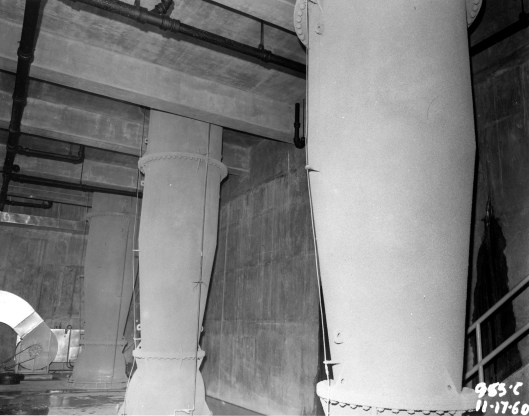
Drought LL 1960

The low lift pumps suction well.

Drought Susq 253-D 1963

A section of the Susquehanna pipe line – 36 miles from the river to Baltimore.
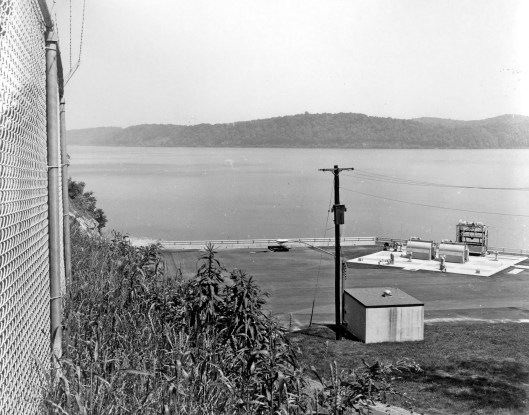
Drought DC552-D 1965

The intake structure on the Susquehanna River.

Drought DC670-D

The pumps at Deer Creek. Because of the variation in the elevation of the pipe line, the water will not flow by gravity, so pumps are used.

1968 – On May 30, 1968 all three raw water reservoirs were at overflow elevation for the first time since 1961.
2001 – 2002 – There was a drought during the year. The drop in elevations which had begun in August/September of 2001 continued through the year. Water Management tried to maintain Loch Raven at a certain level once the drought became official. Susquehanna water was required to be blended with the Loch Raven water until the drought was over. By the end of December all three raw water reservoirs were at the following elevations: Loch Raven Reservoir was at about full capacity; Prettyboy Reservoir was down by about 25 feet below full capacity or about 1.5 feet below 50% full; and, Liberty Reservoir was down by about 22.5 feet below full capacity or about 1 foot below 50% full.
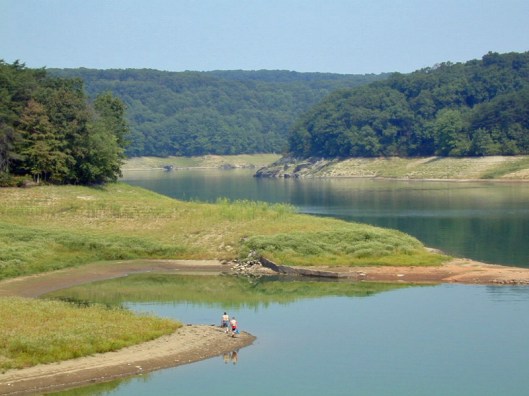
Drought LR 02

Loch Raven in 2002

Drought PB 02

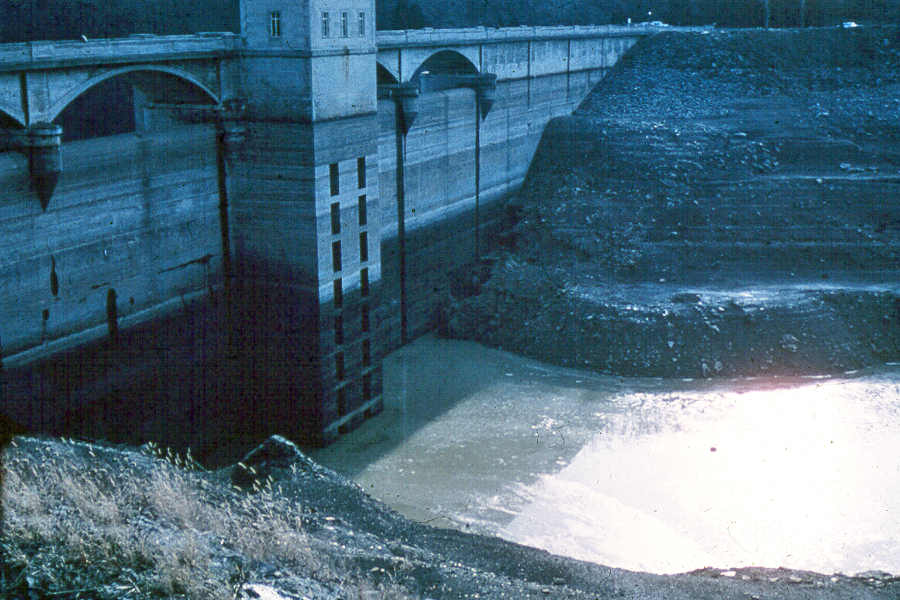
Prettyboy in 2002

2007 – Low accumulation of snow during the year and the lack of rain during summer/fall created a strain on the reservoirs towards the end of the year, creating a drought scenario. The Loch Raven Reservoir dropped below full capacity by the end of June, and by the beginning of December was at an elevation of 233.8 feet, about 6.2 feet below full capacity or about 1.3 feet above 75% full. Water Management at this time was trying to balance the elevations between Loch Raven and Prettyboy so that Loch Raven would not overflow while Prettyboy remained significantly low, should the groundwater increased the raw water levels, as had happened in 2002. The Prettyboy Reservoir dropped below full capacity by the end of May and continued dropping for months. By the beginning of December, Prettyboy Reservoir was at an elevation of 497.3 feet, about 23 feet below full capacity or about 0.8 feet above 50% full. The Liberty Reservoir dropped below full capacity by the end of May and continued dropping for the remainder of the year. By the beginning of December, Liberty Reservoir was at an elevation of 407.08 feet, about 13 feet below full capacity or about 3 feet below 75% full. On December 11, 2007 it was planned by Water Management to open the Susquehanna line to relieve the dwindling raw water reservoir levels. The opening of the Susquehanna line was delayed due to the Director’s health and eventual death, which also delayed notification to the public of a pending drought situation and the planned opening of the Susquehanna line. Days later after the death of the Director, the public was notified of the pending drought situation and the Susquehanna water line would be opened on December 18, 2007, first to flush the line of brackish water before blending with Loch Raven raw water.
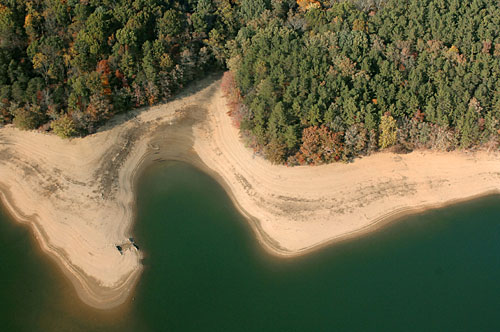
Drought pb 07

Prettyboy in 2007

Drought pb 07b

Prettyboy in 2007

Note – some of these photos come from the dPW collection, some from people sending to me and some downloaded from US Geological.

Montebello Waste Lakes

05 Tuesday Jul 2016

Posted by Ronald Parks in Baltimore, water history

≈ Leave a comment

Tags

aerial, Baltimore, drone, engineering, FILTRATION, Health, HISTORY, Lake Montebello, maps, Montebello, POLITICS, Public Works, water, water history

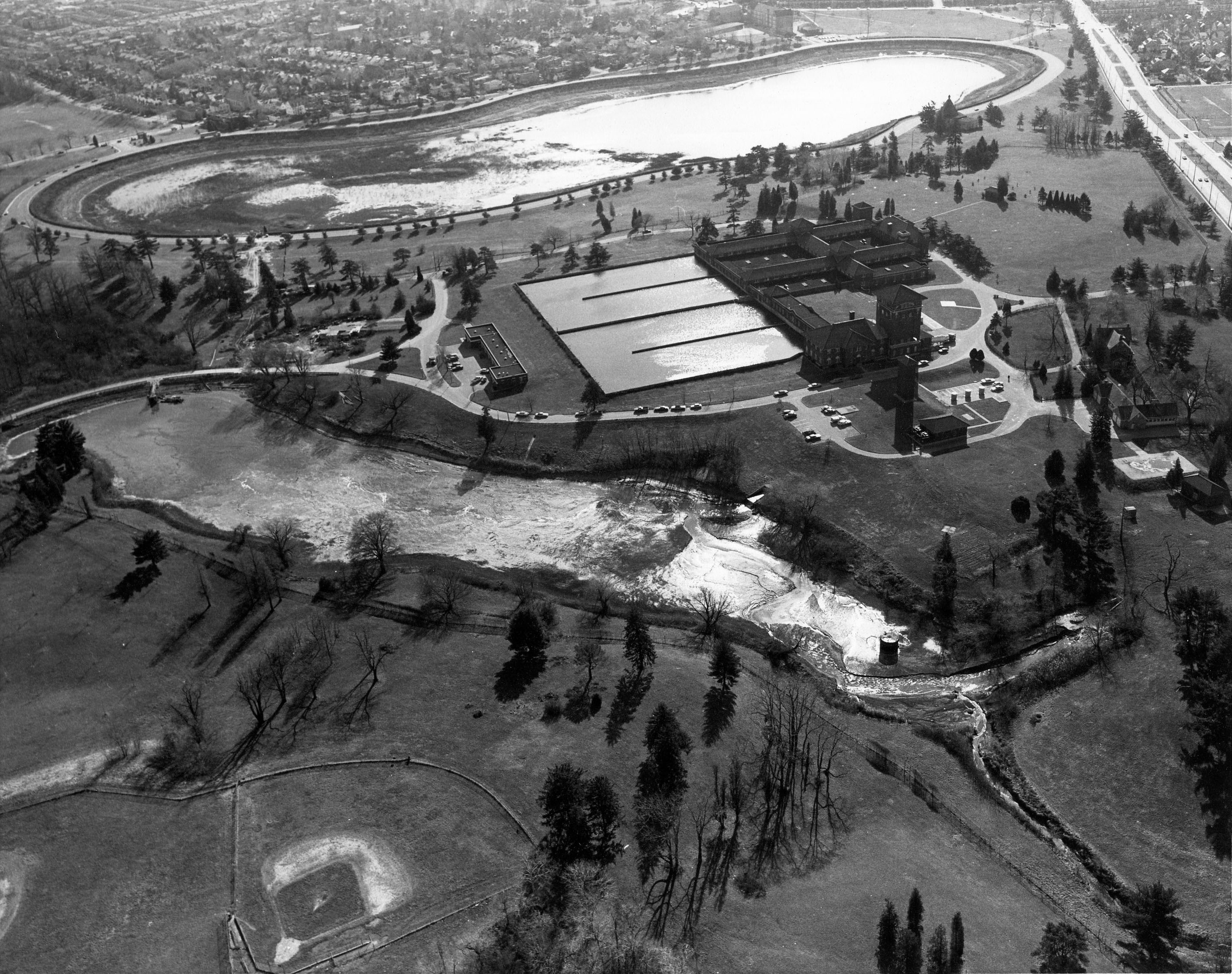
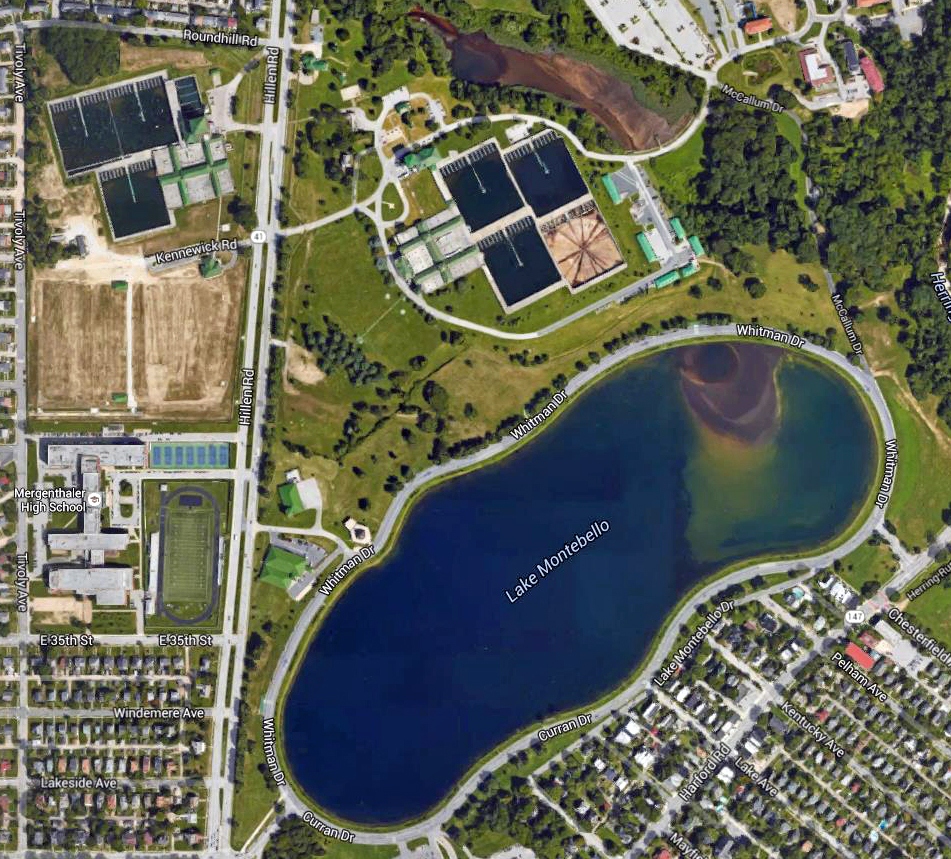
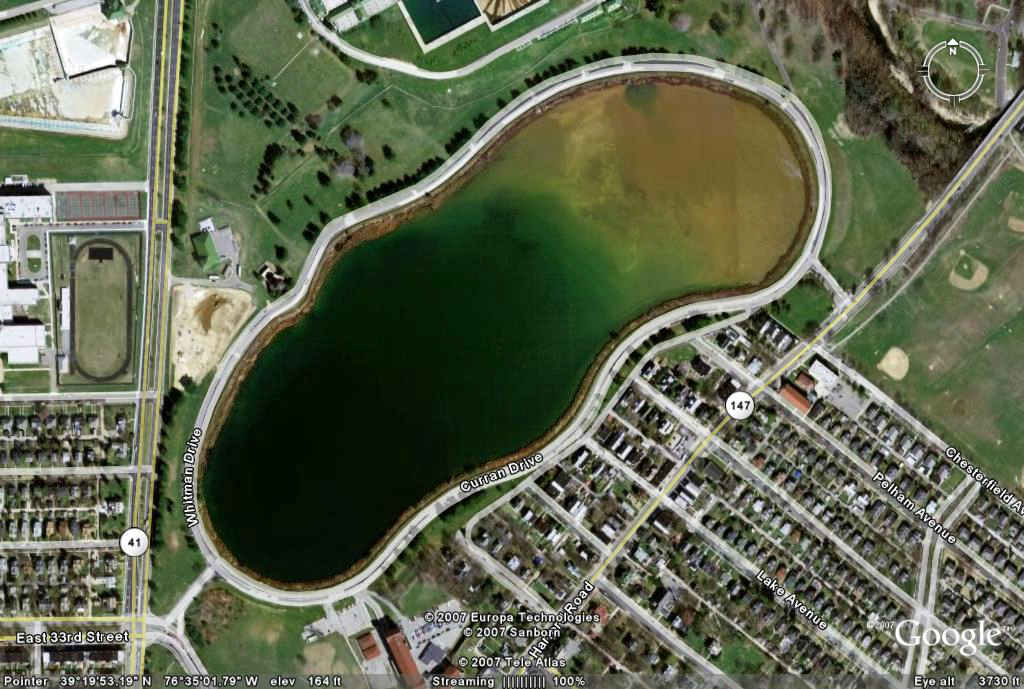
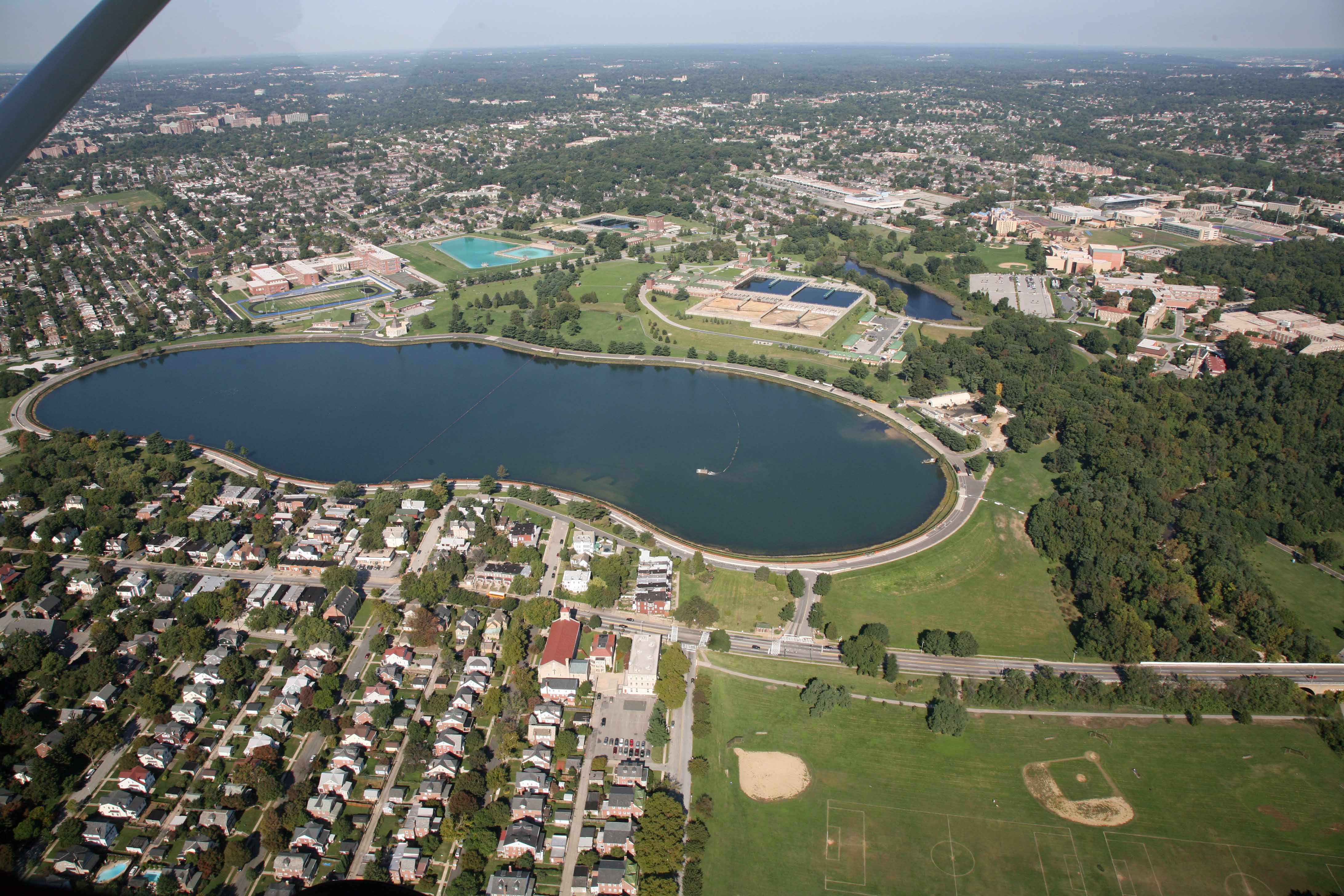
Yes, there are two waste lakes at Montebello. The large one that people use every day as a park and a smaller one, hidden from view, on the filtration plant property. The large one was at one time (1881-1915) used as drinking water. The small one (1915) has always been used to settle out the waste by-products of the filtration process.

To the dismay of the Filter Engineer, he was forced to allow the Model Yacht Club to use the small lake for their club activities in the late 1930s. Sometimes when he was pissed off, he would drain the lake down. At the start of WWII, for security reasons, the club could no longer use the lake.

wl1939

wl1939b

Because of the amount of water processed and the waste created by this process, the lakes would need dredging. It was a lot easier to dredge the smaller one than to do the big one. Unfortunately, the dredged material would be pumped into the big lake. That one was to be dredged every 30 years. An optimal plan would be to dredge the small lake every five years.

wl1978

In 1978 thru 1984, the small lake was dredged.

wl1984

What was called a “sonic survey” took place in 1984, this was to show the nearby residents what needed to be done to the lakes. Both lakes were partially drained to show the amount of sludge build-up.

wl2003

This is a google map aerial of the lake in 2003. The brown sludge build-up is the overflow from the small lake. (Note that Google Map dates are not always correct)

wl2007

2005-2007 a portion of the small lake was dredged and a little over 1/3 of the big lake. Why? Money constraints. They should have completely dredged both lakes, but consulting engineers and politics dictates what goes on.

wl2010

By 2010 the small waste lake is practically filled, again (to the lower right of the 4 square basins) and it is now flowing into the large lake (Hard to see but it is in the lower right corner)

wl2015

By 2013 the big lake starts filling up rather quickly. The small lake is full

wl2016b

In 2016 it was decided to start dredging the small lake, only partially??

wl2016

The present day dredge cutting a path thru the sludge. The waste lake is about 30 feet deep here. they have only reached 17 feet (Photo courtesy Merrill Bros. drone)

Lime

24 Tuesday May 2016

Posted by Ronald Parks in Baltimore, Sewage History, water history

≈ Leave a comment

Tags

Baltimore, engineering, FILTRATION, Gunpowder Falls, Health, HISTORY, Lake Montebello, Montebello, Public Works, sewage, Sewage History, water, water history

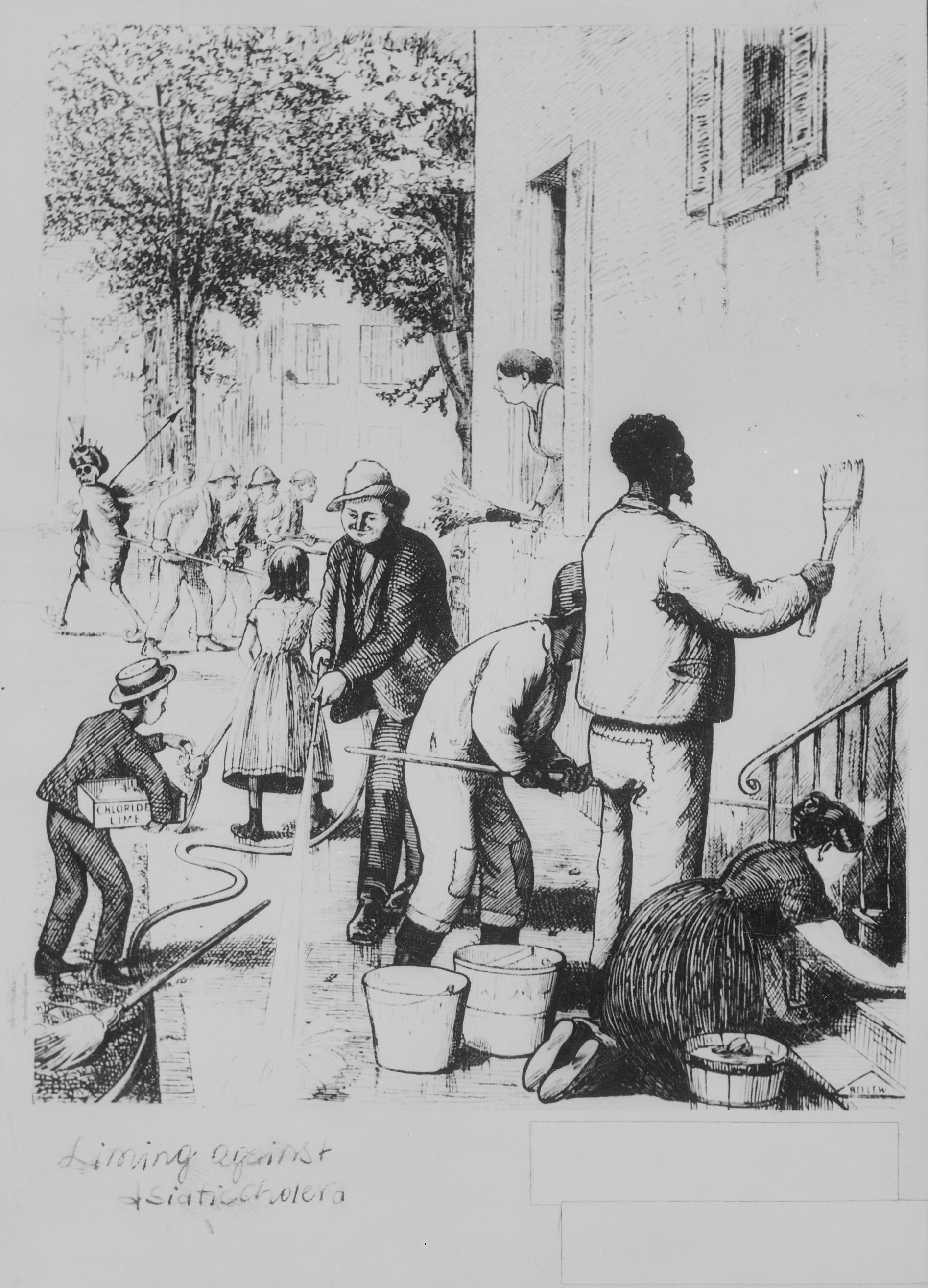
As can be seen from the list below, Lime has been used as a disinfectant for many years as far as the sewerage system and health goes.

1865 – Board of Health: The general health account shows an expenditure of $2,918.11. This account includes the appropriation for enclosing the Eastern Potter’s Field, erecting a dead house &c. and that for lime and incidentals.

1866 – Board of Health: 11,000 oysters were thrown away (This was in response to a cholera epidemic where 9 of 10 cases were found from eating oysters). We have used lime, Ridgewood’s and Sim’s disinfectant, and carbolic acid freely in the alleys and sewers.

1880 – General Superintendent of Streets: Your instructions in reference to the free use of lime in all alleys, gutters, vacant lots and places where stagnant pools of water were to be found, have been faithfully carried out.

1886 – Health Department: Disinfection – There was distributed in the streets, lanes, and alleys six hundred and thirty-seven cart-loads of lime. In addition, the Department manufactured and distributed twenty-two (22) tons of disinfectants; the principal portion of which was used in sewers and inlets.

1888 – Assistant Health Commissioner’s Report – During the year six thousand and thirty-one (6031) cart loads of refuse were removed from sewers, inlets and covered gutters. Six hundred and ten loads of lime and twelve tons of carbolate of lime were distributed for the purposes of purification and disinfection.

Liming against Asiatic Cholera.

Lime1

In 1910 Baltimore used chloride of lime (along with calcium hypochlorite and intermittent applications of alum sulfate) as a disinfectant in the water supply. And in 1922 it was specifically used for corrosion control.
Mont 8-12 050

The above photo, from a previous post, was before the Montebello Filtration Plant was built. The water supply came from the Gunpowder River (7 miles away), directly to this gate house and emptied into the Montebello Lake.
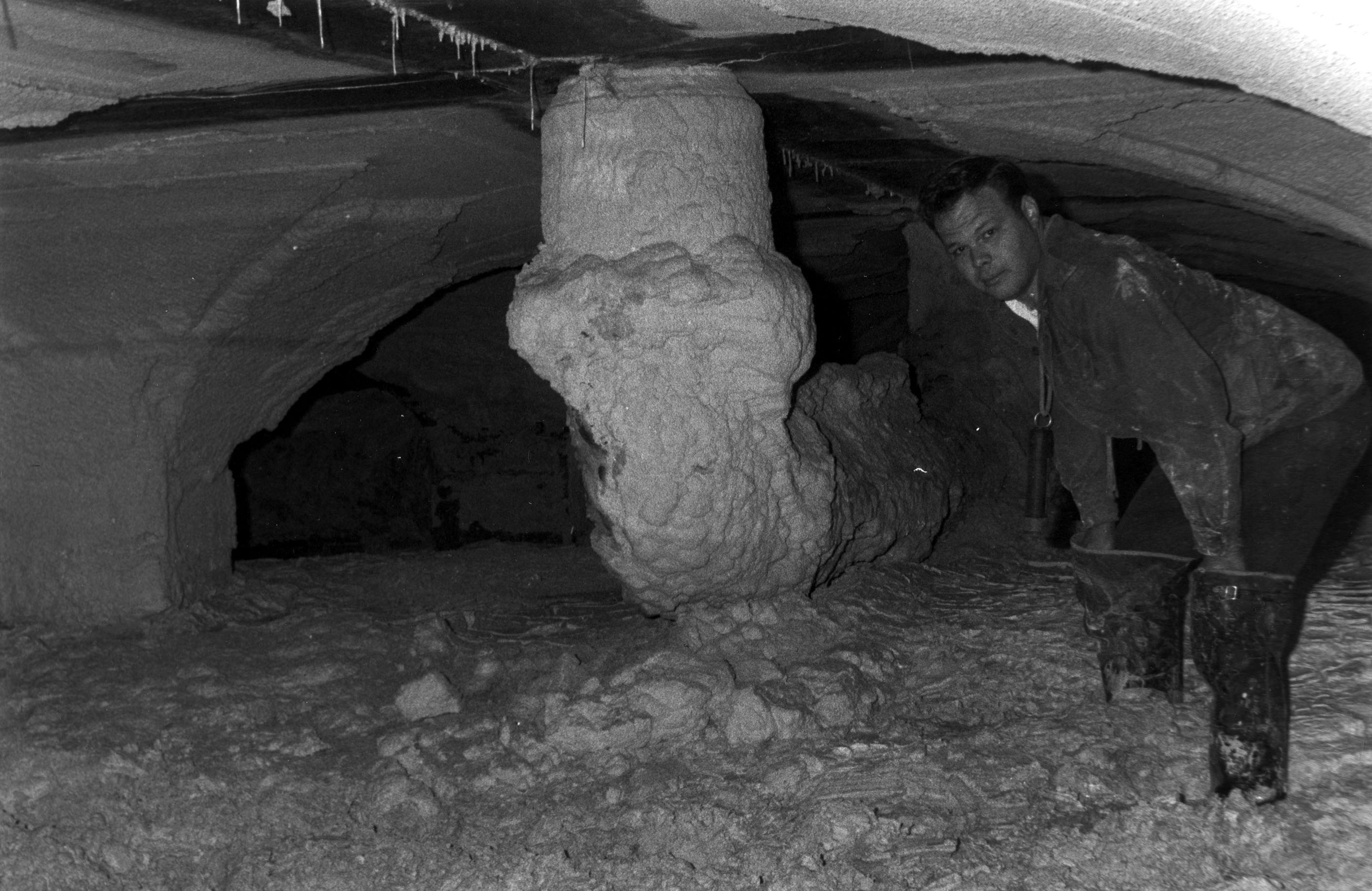
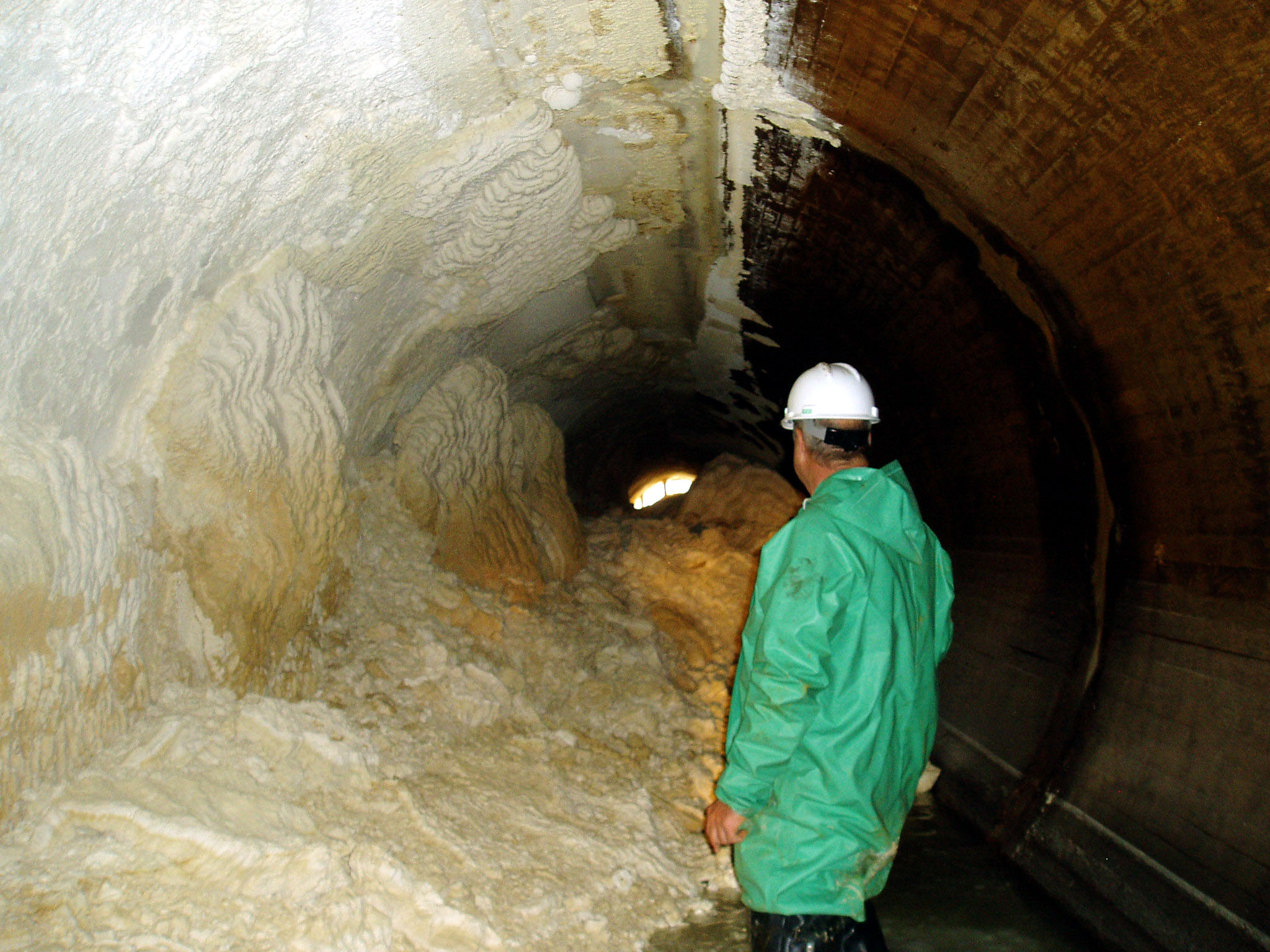
As can be seen, too much lime is not a good thing.

Lime2

This is after about 10 years of lime application, under the clear-well at Plant 1 Montebello.

OLYMPUS DIGITAL CAMERA

And this is after about 20 years. No clear-well at Plant 2, this pipe goes directly to the reservoir. There is about a 6″ pipe overhead that drops lime directly into this conduit.

Montebello Lake

25 Monday Apr 2016

Posted by Ronald Parks in Baltimore, filtration, HISTORY, water history

≈ 1 Comment

Tags

Baltimore, engineering, FILTRATION, Health, HISTORY, Lake Montebello, Montebello, photography, Public Works, water, water history

Last week I received a request from my boss to check out the Montebello Lake. That it was reported that someone was seen dumping petroleum and chlorine into the lake. My first question was – “Did the person who spotted this call the police?” It is a crime to tamper with the water supply, let alone dump toxic chemicals into a lake on our property. This lake is no longer part of the city water supply system, other than being a settling basin for what goes on in the filtration plant. It is a by-product of filtration, waiting to settle out before flowing into Herring Run. Most people, even the neighbors don’t know this. They still believe the lake is drinking water. It hasn’t been drinking water since 1915.

I go and check out the lake but didn’t find anything amiss. (Not only do people NOT call the police, but after 35 years of being here, I learn to take those calls for lake problems with a grain of salt. Most are not true and unsubstantiated, but they do need to be checked out)

004

This is the view across the lake towards the gate house. The brown you see in the water is sludge build-up. This lake was dredged in 2005-2007, but the contractors only did a small portion of the smaller lake where most plant sludge is collected before flowing to this lake. That lake will soon be dredged. (It should be every 3-5 years, with the big lake not needing to be done for 30 years)

040 031 006

The ducks, turtles, fish and other wildlife all seem to be fine. No effects from a toxic dump here. I also did not see any dead growth on the grass which would indicate dumping.

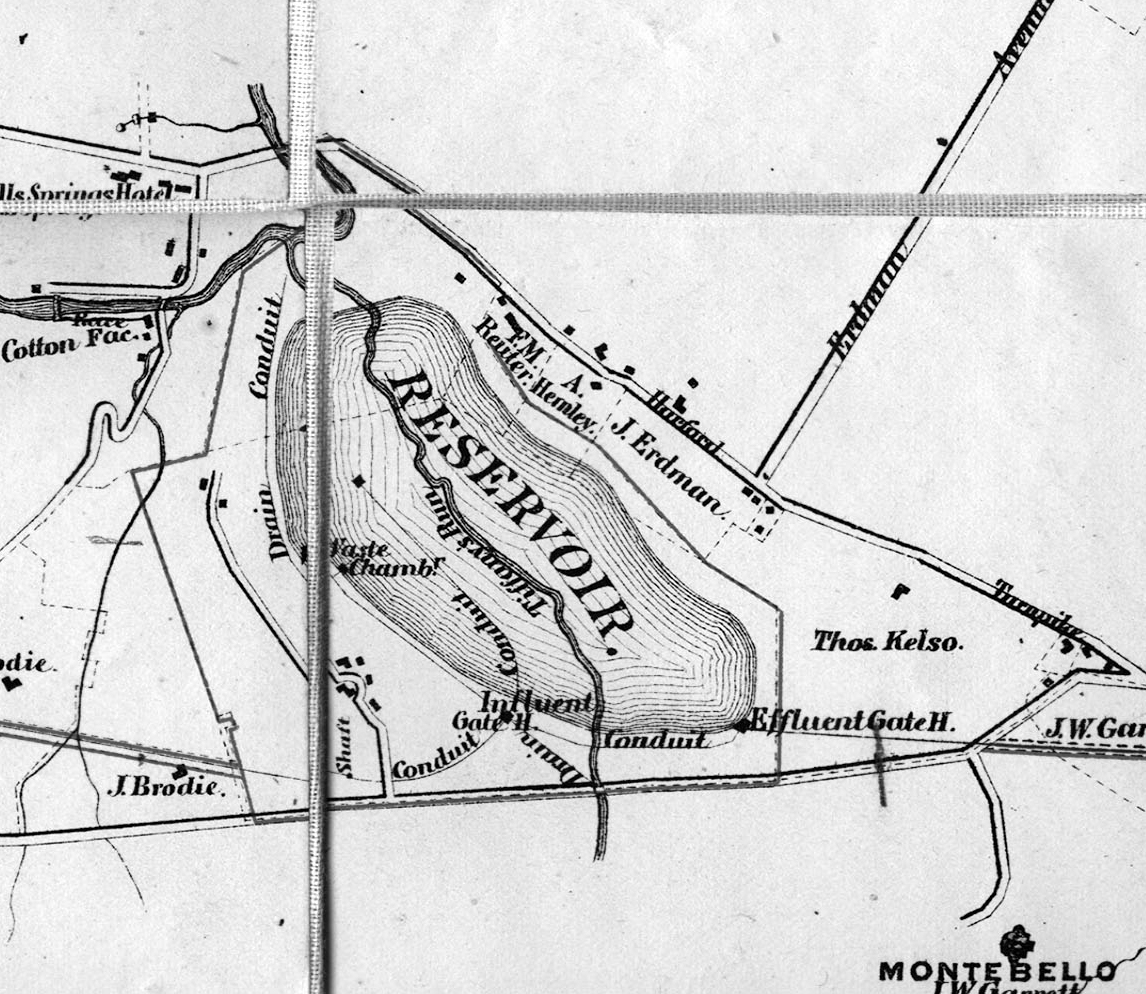
tiffanyrThis is one of the original drawings from 1875 showing the lake being built over Tiffany Run, which dumps into Herring Run. The run was diverted into a tunnel from the gate house, lower left of lake then heads along, marked as drain conduit to Herring Run.

016

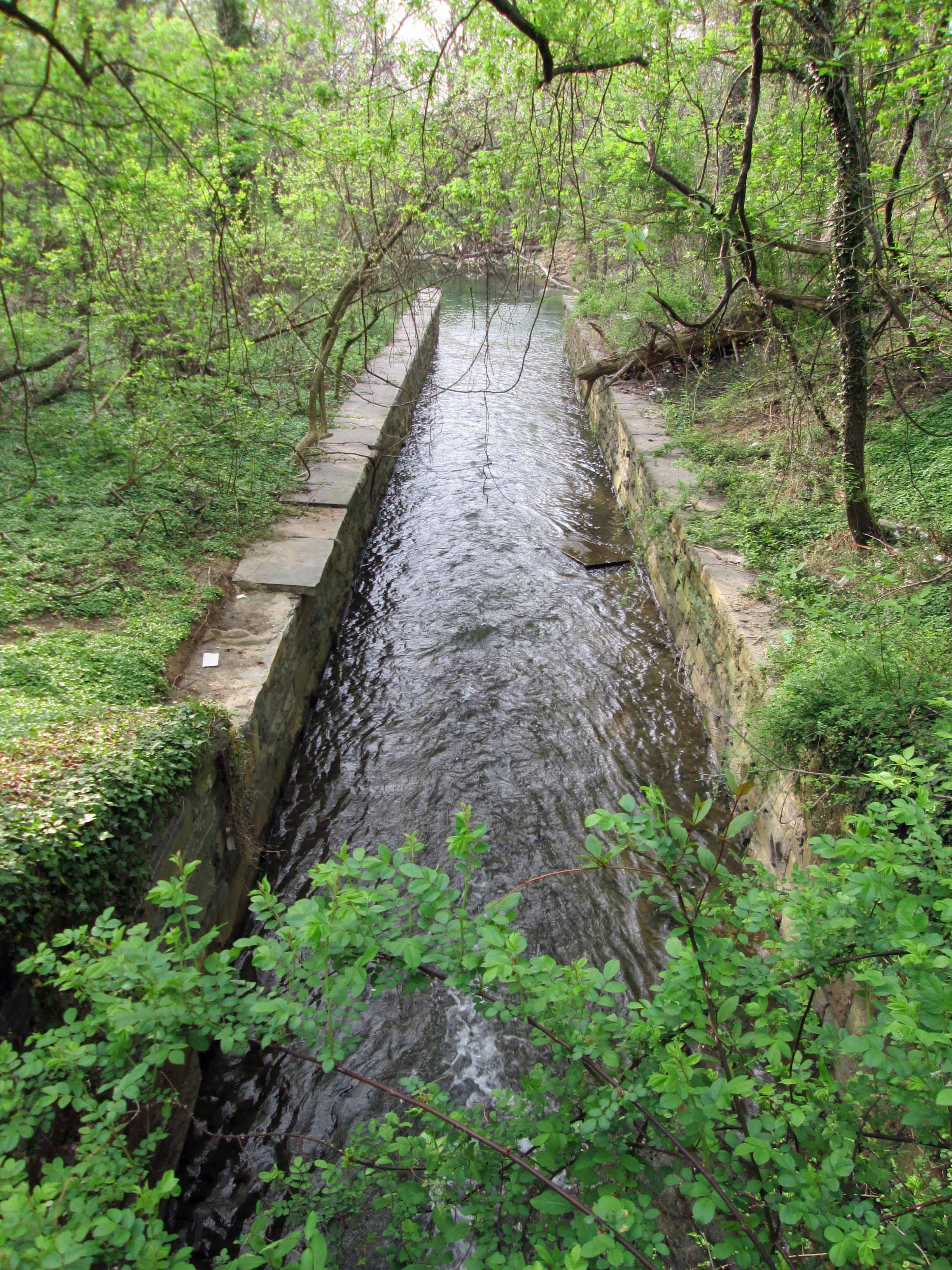
This is the original 1880s Tiffany Run drain. It has been relined a couple times since being built.

011

Channel from Tiffany drain to Herring Run. This is probably the best part of my job, other than historical research – getting to roam around in the woods. All 300 acres.

← Older posts
Newer posts →

Blogroll

  • Flouride Action Network
  • lulu
  • My Book
  • WordPress.com
  • WordPress.org

Recent Posts

  • Bermuda 2023
  • ICELAND April 2023
  • George Chalmers of Fochabers
  • In Search of The Skipjack Ada Mae
  • Trap Pond Kayak

Blog at WordPress.com.

  • Subscribe Subscribed
    • Water and Me
    • Join 231 other subscribers
    • Already have a WordPress.com account? Log in now.
    • Water and Me
    • Subscribe Subscribed
    • Sign up
    • Log in
    • Report this content
    • View site in Reader
    • Manage subscriptions
    • Collapse this bar
 

Loading Comments...