• About
  • History Writings

Water and Me

Water and Me

Tag Archives: engineering

M100 #3

05 Thursday Feb 2015

Posted by Ronald Parks in Baltimore, HISTORY

≈ Leave a comment

Tags

Baltimore, boats, engineering, FILTRATION, HISTORY, models, Montebello, war, water history

Met to discuss the plans for the anniversary – a lot of events are being lined up. Two have to do with boats and water. Rec and Parks wants to have “Boating on the Lake” where attendees can get in a kayak or canoe and go out onto the lake. The lake is pretty big. The road around it is 1.3 miles.

Another event is for the Model Yacht Club to hold some demonstrations. When the water plant opened, all the way to the beginning of WWII the water engineer and the politicians battled it out over allowing model boat sailing on one of our lakes. We have two. The engineer had no qualms about letting people know how much he did not want the boats on either lake. Finally, the boat people won. When WWII broke out and security tightened around the water plant – no more boaters (I think the engineer started that war, just to have a reason to stop them!) On a few occasions, the engineer purposely sent the lake to drain – oops! sorry, forgot you guys were coming this weekend!

boatlake3b boatlake1b

The below photograph is where the party will be. The small lake to the right is where the model yachts use to sail…

AERIALS 021

Montebello 100 #2

31 Saturday Jan 2015

Posted by Ronald Parks in HISTORY

≈ Leave a comment

Tags

Baltimore, Cemetery, engineering, FILTRATION, Graves, HISTORY, Montebello, water, water history

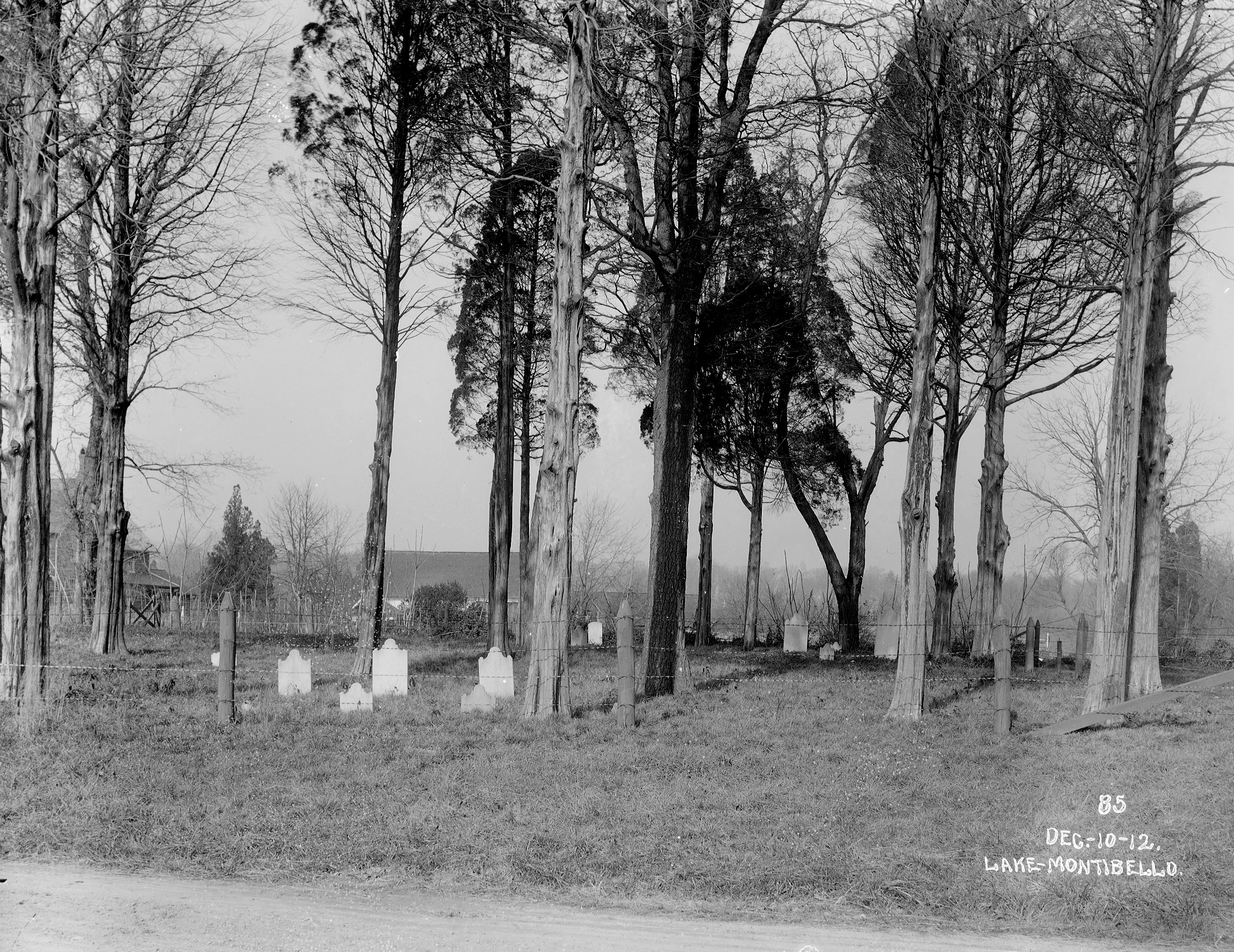
Momentum is starting to build for this years 100th anniversary celebration. I just received a list of proposed events and speeches for this momentous occasion and we are meeting next week to discuss. This event is going to be so big that other yearly events are being cancelled to focus on this one, which is unfortunate because some of them are really nice. But one thing I don’t see on the list of events is – Ghost Walk Tours! Below is a photo of the property where the filtration plant is now located. What happened to all those graves??

I see dead people! in the form of present day city employees….

Mont 12-12 085

Montebello FWR II

25 Sunday Jan 2015

Posted by Ronald Parks in HISTORY, water

≈ Leave a comment

Tags

Baltimore, engineering, FILTRATION, HISTORY, Montebello, POLITICS, water, water history

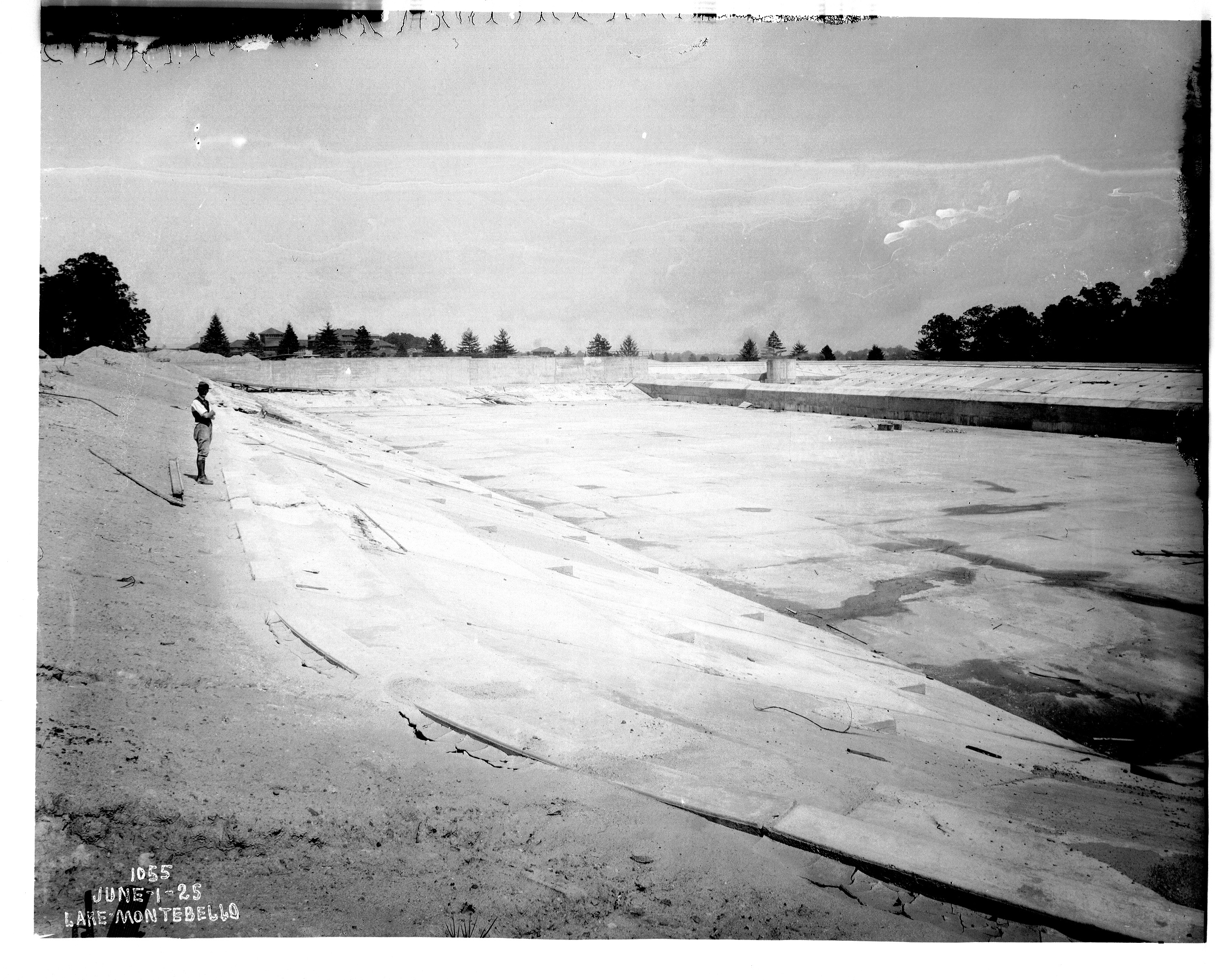
In 1924-1926 the City built a new reservoir and filtration plant. The reservoir was supposed to be covered like the Plant I FWR but the City said it would cost too much money, so they didn’t.

Mont 6-25 1056 Mont 6-25 1055

As can be seen in the top photo, flat supports were poured to hold the columns for the roof.

So the federal gov’t decides that all open reservoirs need to be covered. Instead of covering the existing FWR, they demolished it and built a new one. The old one was 20 million gallons. This one is about 32 million gallons. Speaking of millions – this new one cost millions and millions more than what it would have cost to cover it originally (couple hundred thousand)

So I ask, the old underground reservoir which has been there for 100 years or this new one – which do you think will last longer??

Untitled-1 copy


Montebello Filtered Water Reservoir

22 Thursday Jan 2015

Posted by Ronald Parks in Baltimore, filtration

≈ 1 Comment

Tags

Baltimore, engineering, FILTRATION, Health, HISTORY, Montebello, water, water history

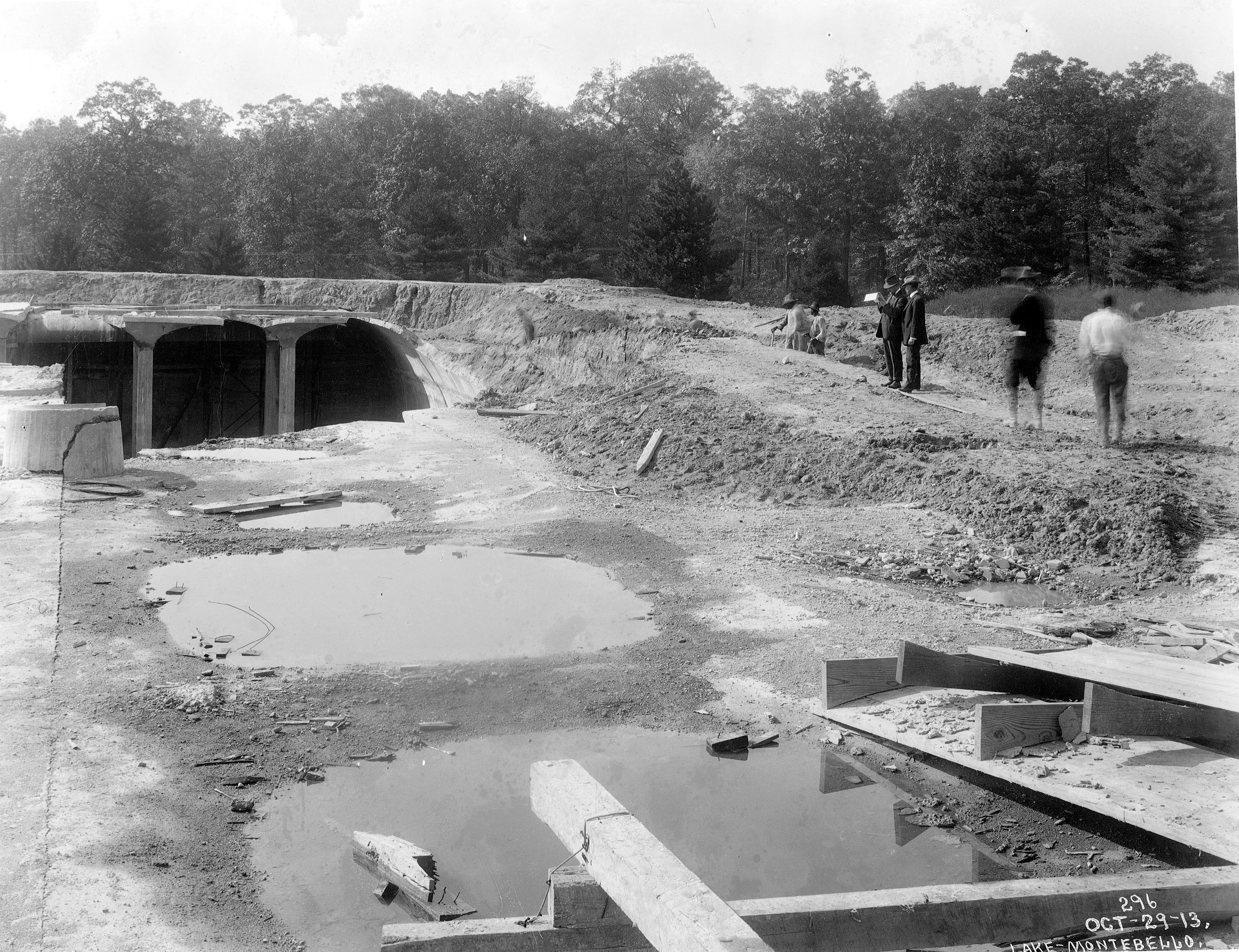
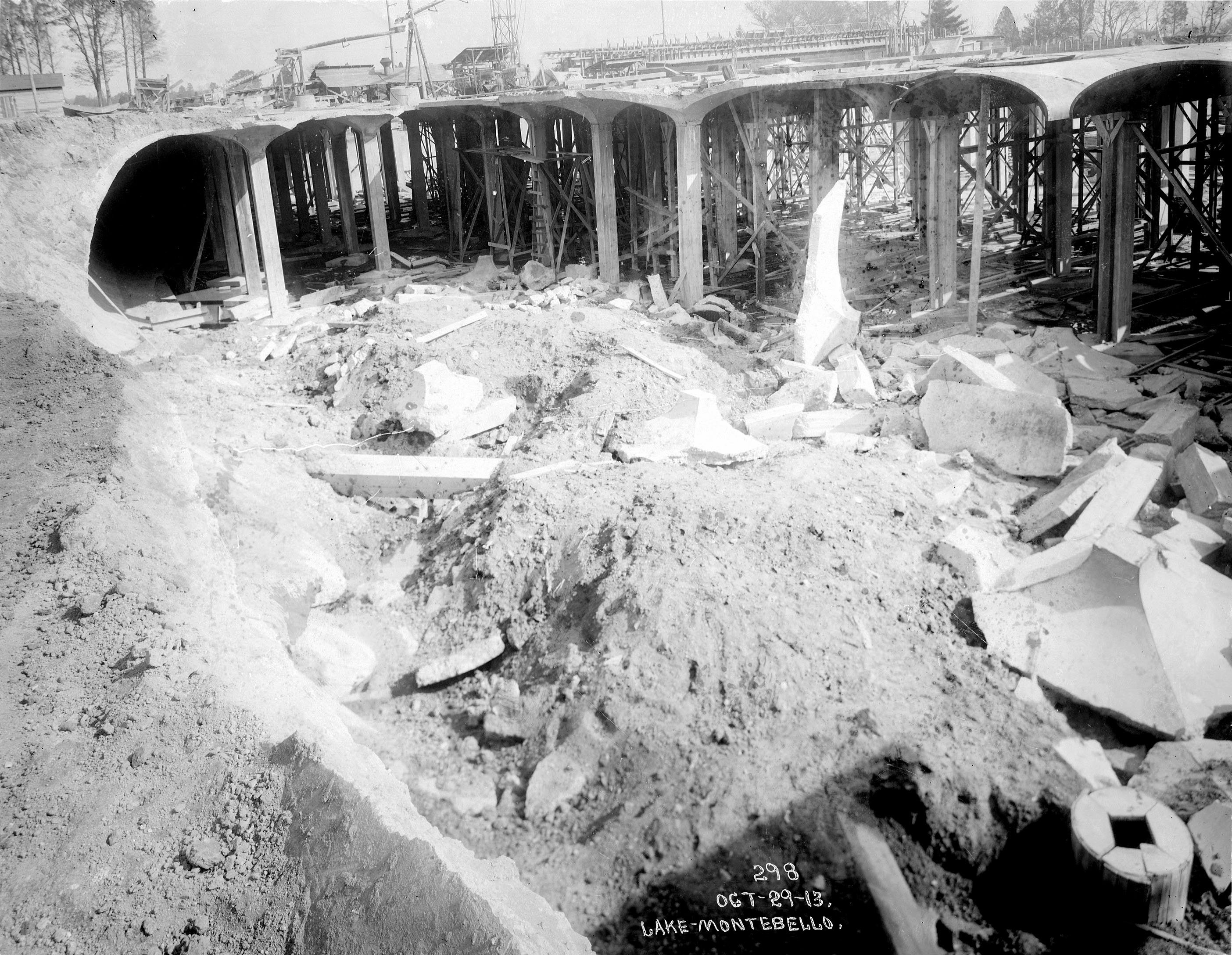
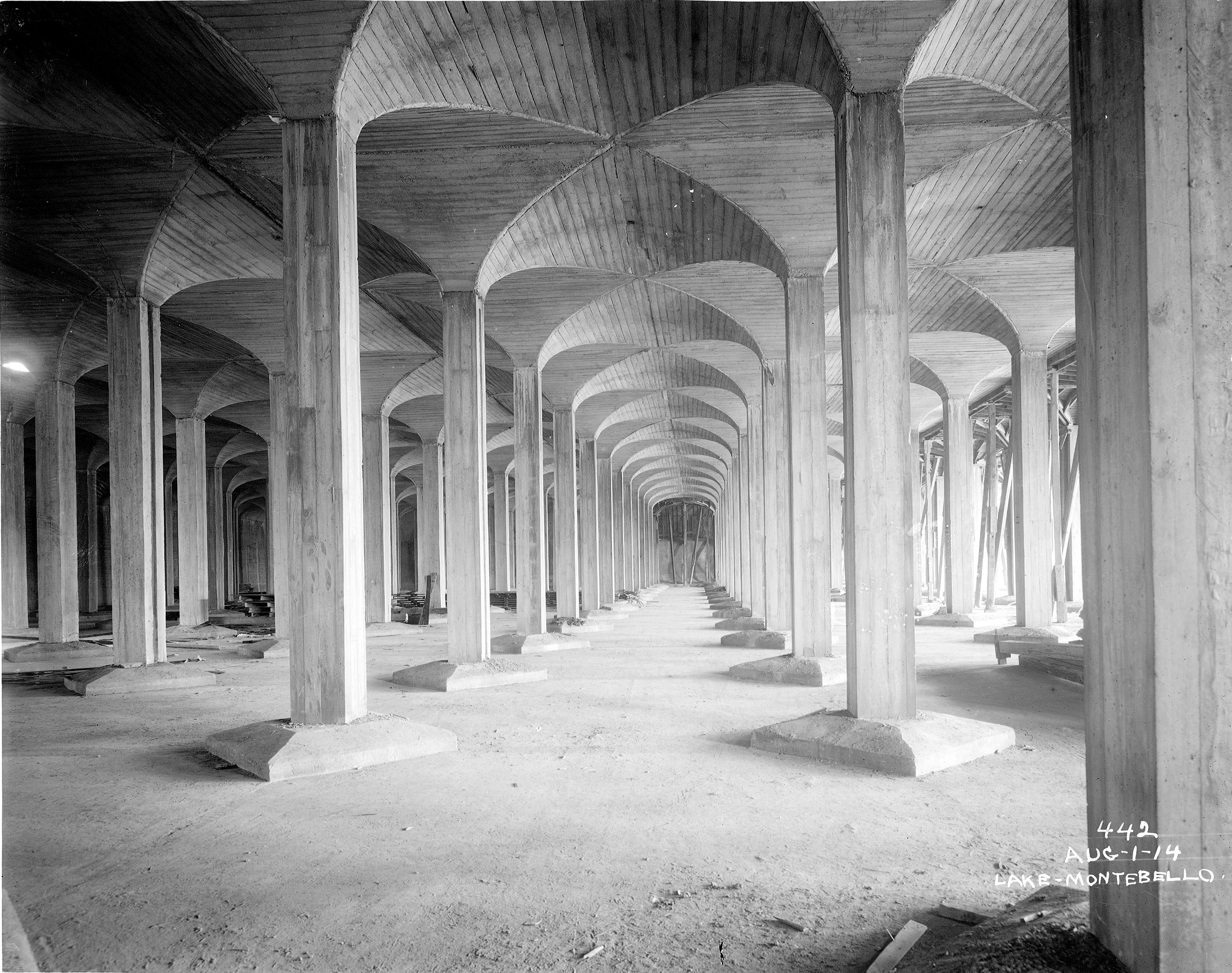
In 1913, while building the underground reservoir for the filtration plant at Montebello, Baltimore Md., the contractor in his zest for an early completion bonus decided to start filling over the reservoir with dirt. Haste makes waste!

001 002

The majority of the structure collapsed. The contractor needed to start over and by late 1914, he was almost done. Because of other related projects, the water works would not be completed until 1915.

003

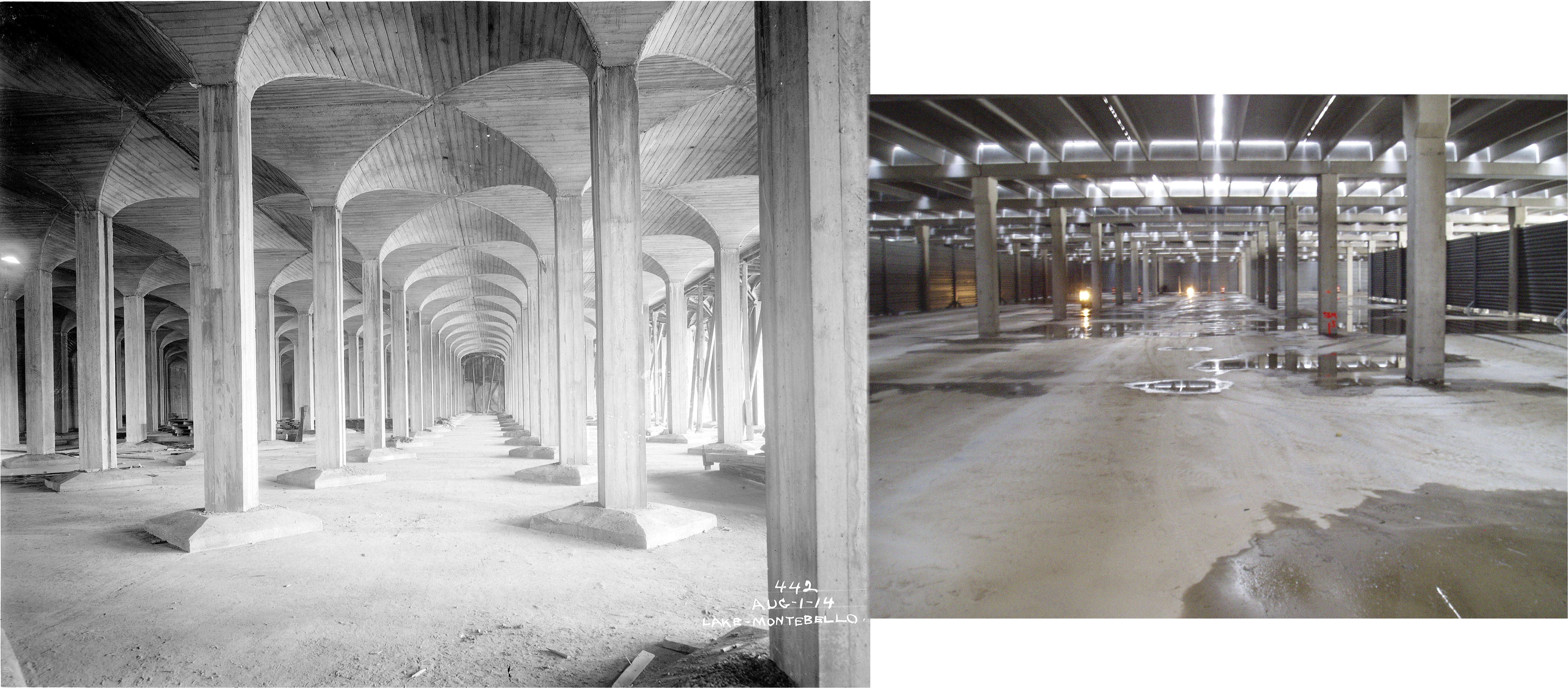
The above photo is what it looked like near completion. This structure, which holds close to 20 million gallons was built using wood forms and poured in place concrete. When the wood was removed, the slat marks stayed.

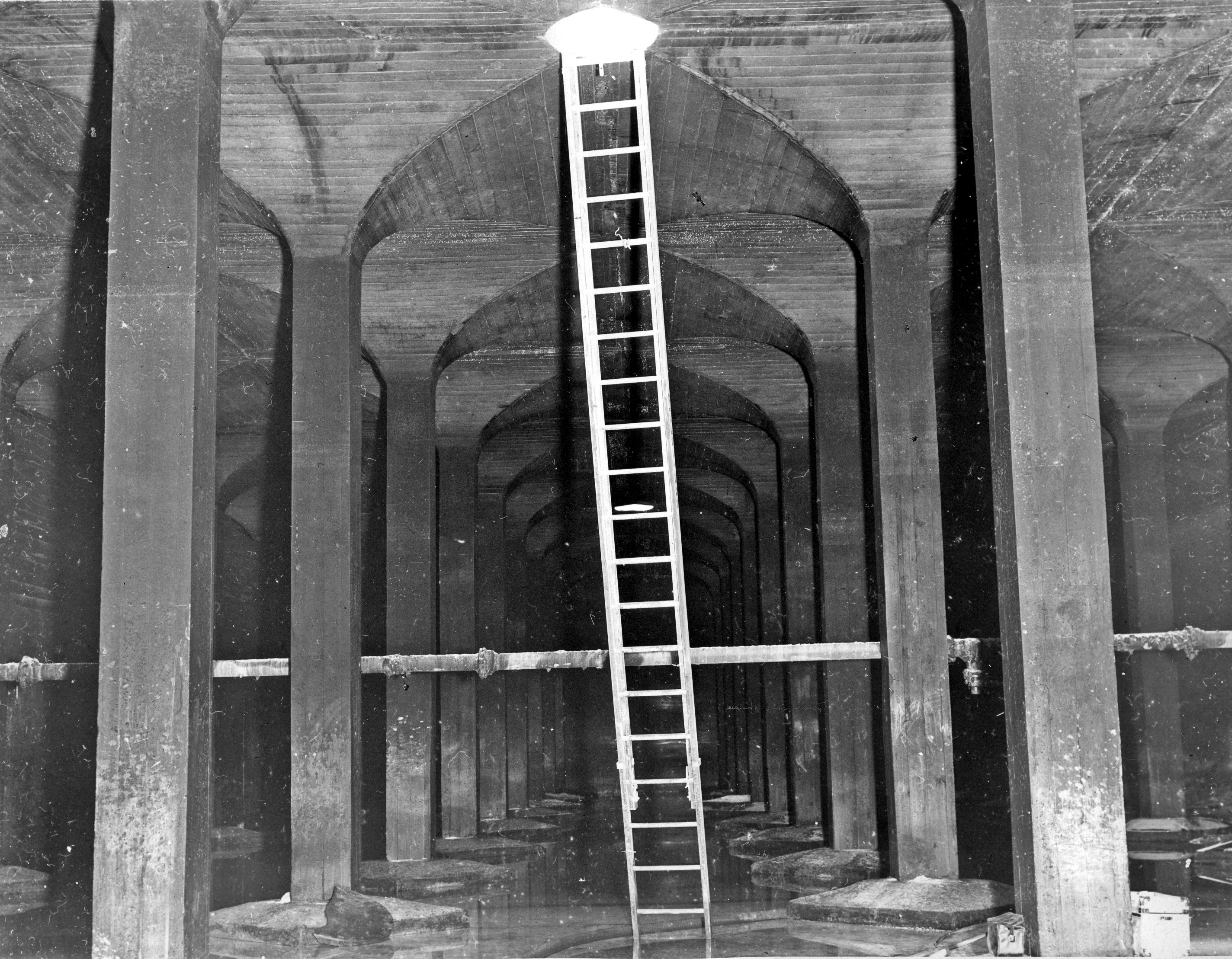
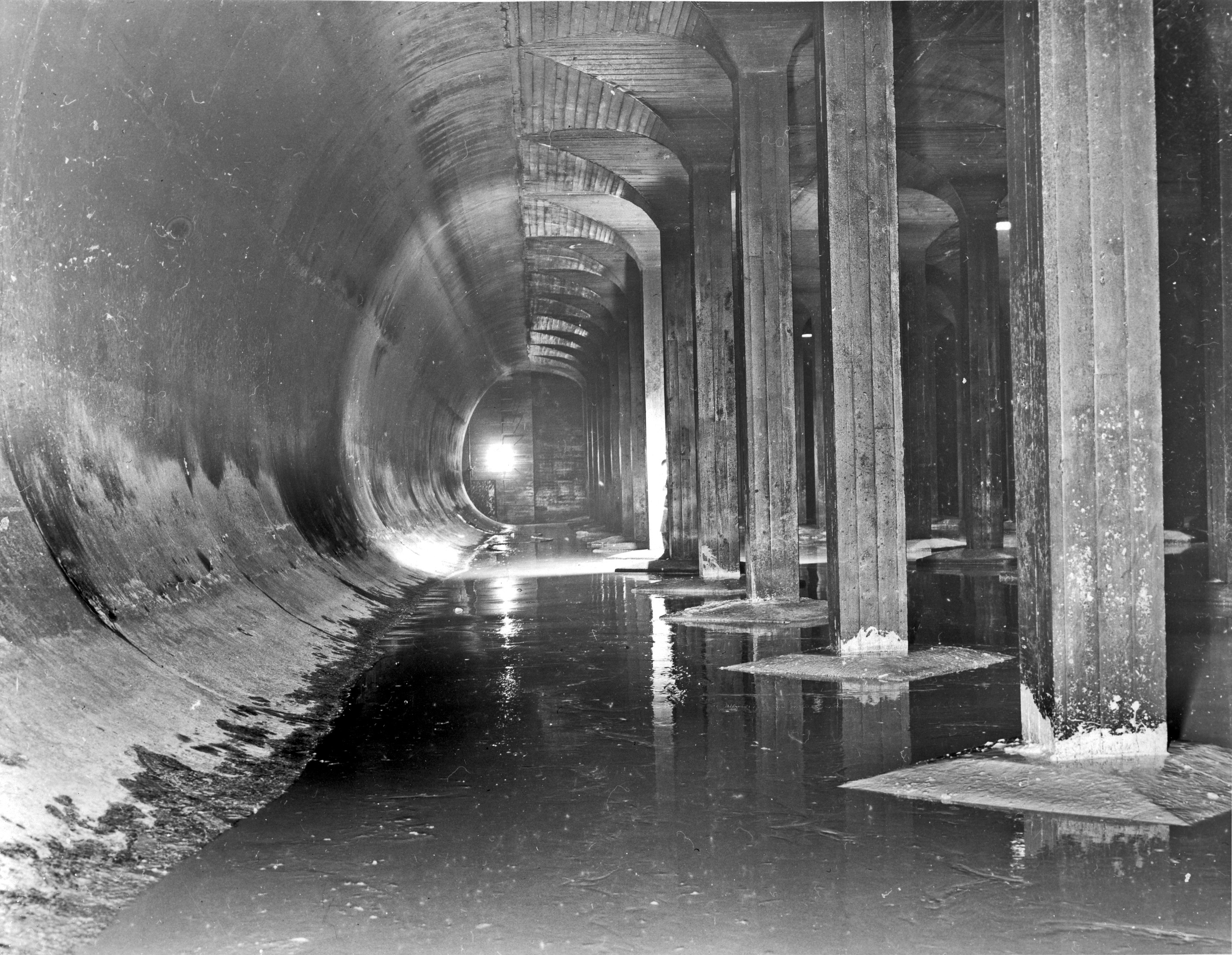
The next set of photos I found were from 1965, when the reservoir was being cleaned (It was usually cleaned every 4-5 years, to remove lime deposits)

005 004

The only way in and out was thru a site well and down the ladder. Men with fire hoses washed it down. Lime visible on side wall and columns.

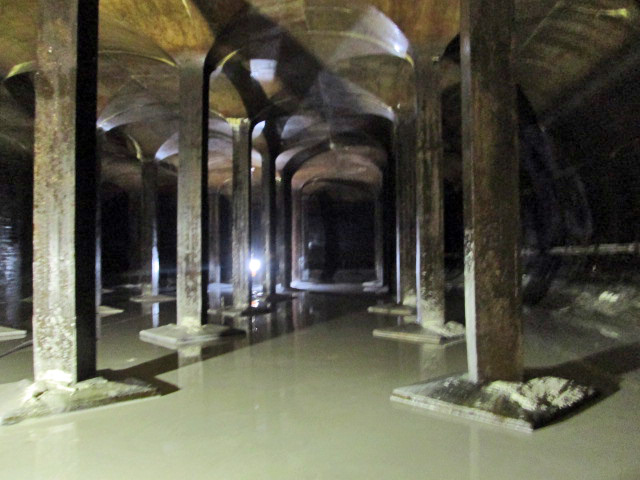
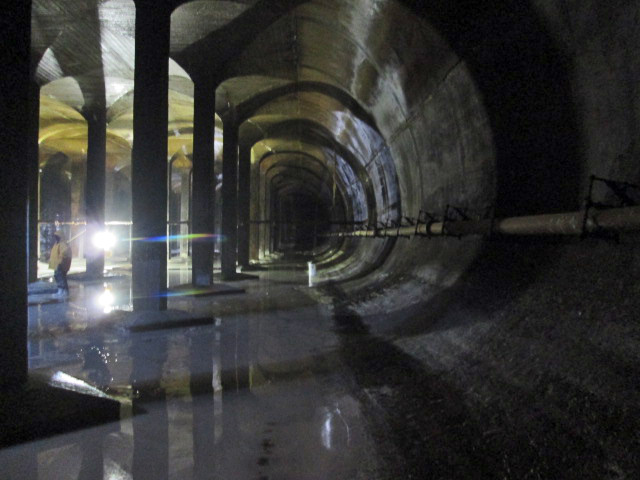
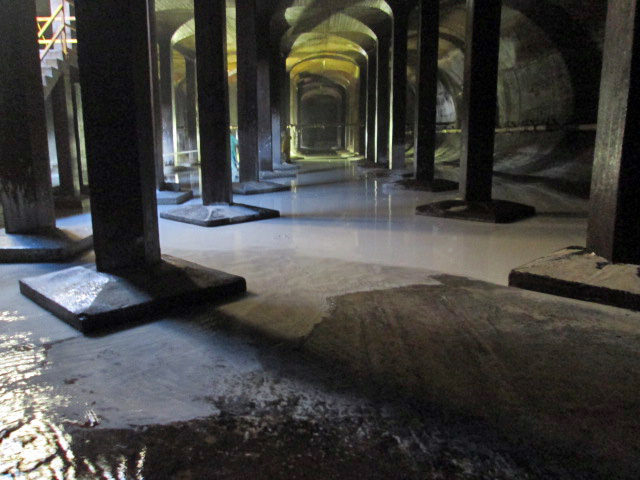
These next pics show the same reservoir 100 years later being cleaned. It is a very time consuming task. Before the Clean Water Act and all those other fed and state regs, we could just send it all to drain and have it cleaned in a couple days. Now it takes weeks and we have to monitor ph and Cl2 levels.

010 007 006

Looking into the far left corner of the last photo you will see a set a stairs. They were installed in 1983. As can be seen, 100 years later and it still looks the same.

Water Freeze

07 Tuesday Jan 2014

Posted by Ronald Parks in Baltimore, filtration, Health, water

≈ Leave a comment

Tags

Baltimore, engineering, FILTRATION, HISTORY, ice, water history, winter

HydrantThaw

From my book: 1919 thru 1937 – File Folder, No. 1432, General: AWWA paper on Freezing of Water in Mains Laid in Salt Water and in Mains and Services Laid on Land by William Brush. Pamphlet from 1919 (re-dated 1936) Frozen Services and the Method of Thawing. A how-to book on thawing water service to your house using an electric thawing apparatus. They ask that fires not be built in valve boxes, that hot water should be poured into them. Five pages of newspaper articles glued to the pages. One article mentions the water department receiving one thousand frozen pipe calls in a day. Various articles on gas leaks and explosions. February 10, 1936 Resolution (No 240) that the Board of Estimates gives money to the water department to buy ice thawing machines. February 12, 1936 News Post article by Carroll Delaney on the city’s inability to thaw out pipes. February 15, 1936 memo from Small to Crozier listing expenditures for thawing so far – $45,500.00. March 11, 1936 memo from Small to Crozier on cost associated with the cold weather. Welding machines at 500 amps needed to be rented from different companies and the laboring cost associated with their use was noted as to why there was an increase in expenditures for the water department. April 13, 1936 memo from Small to American Electric Welding Company noting payment of $72 for 480 gallons of gasoline ($.15 per gallon). The welder was for thawing frozen pipes around Baltimore. Brochure on “Hydra Thaw” equipment. May 26, 1936 memo from the Bureau of Accounts informing Crozier that the Mayor approved $127,150.00 that was owed to the Water Supply for work during ‘Freeze’. A total of $600,000.00 was spent throughout the city. January 15, 1937 memo from Small to Thomas Young, City Collector notifying him to put this stamp on water bills: “No adjustment will be made for water wasted to prevent freezing of pipes.” Apparently, last year during the big freeze, consumers were told to leave a small amount of water running to prevent freezing pipes. They did not.

Baltimore’s Water Supply History

12 Thursday Dec 2013

Posted by Ronald Parks in Baltimore, filtration, HISTORY

≈ Leave a comment

Tags

Baltimore, engineering, FILTRATION, HISTORY, water, water history

Here is the revised, updated version of my Tidbits book.

Baltimore's Water Supply History

https://www.createspace.com/4511014

Bodine

09 Friday Aug 2013

Posted by Ronald Parks in Baltimore, HISTORY, Photography, water

≈ Leave a comment

Tags

Baltimore, bodine, engineering, FILTRATION, HISTORY, photography, water history

Susq L232

Susq L238

Susq L244

There is a lot to be said for an A. Aubrey Bodine photograph but unfortunately not enough is said about the City Engineers and contractors who took progress photos during the building of water projects. These were taken by a city engineer during the construction of the intake structure of the Susquehanna – Baltimore 108″ tunnel.

Indians

29 Monday Jul 2013

Posted by Ronald Parks in Baltimore, filtration, HISTORY, Reservoir, water

≈ Leave a comment

Tags

Baltimore, engineering, FILTRATION, HISTORY, Indian graves, mills, water, water history

Liberty Lumber 

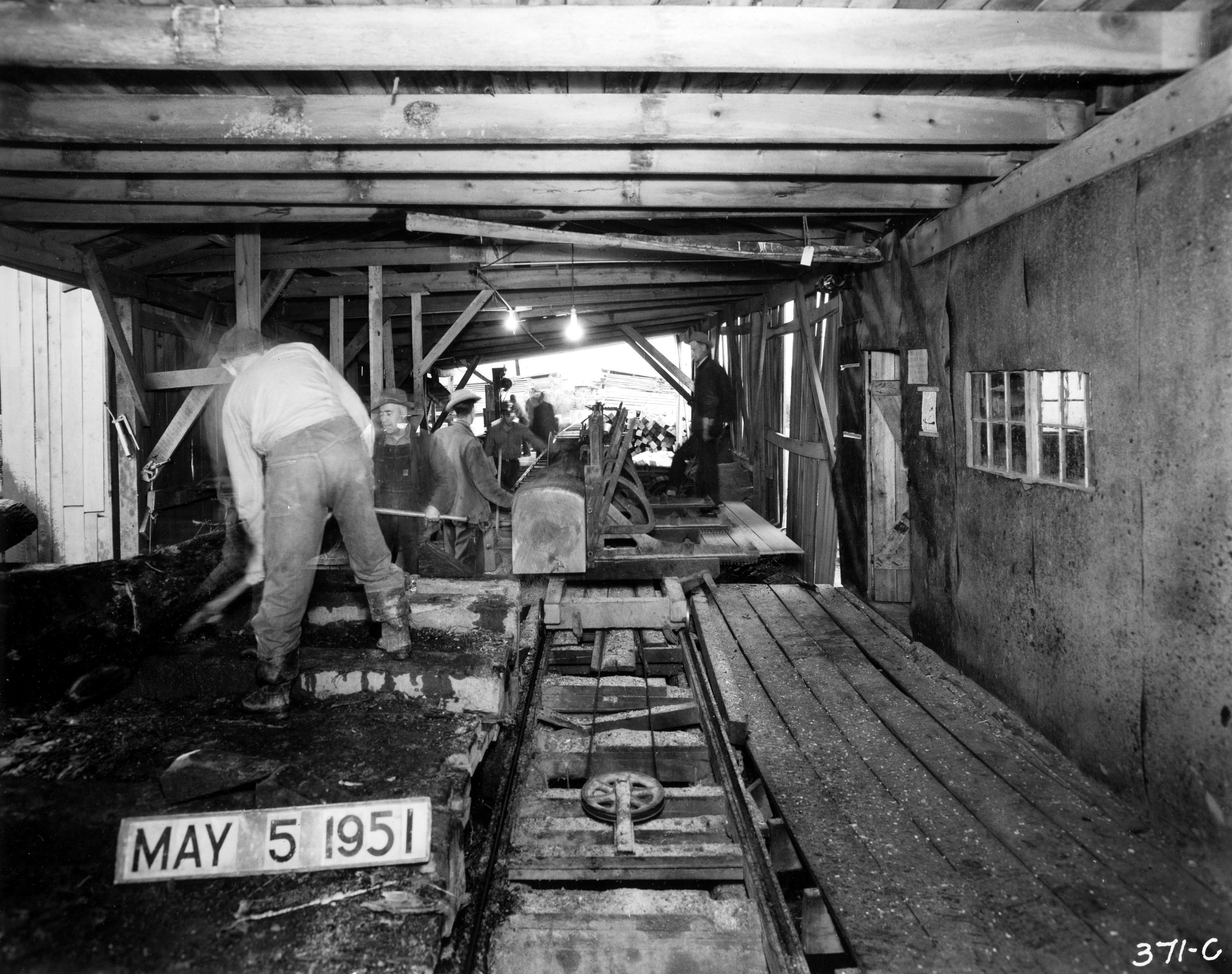
In the 1950s, the City of Baltimore operated a saw mill near the site of the future Liberty Reservoir.


Indian Grave

In 1952 while clearing the site for the new dam and reservoir they found this marker. The caption in the album reads:

“Taken February 8, 1952-showing old grave discovered near city saw mill while clearing land. Believed by some to be the grave of a Maryland Indian.”

A few questions about this – Is it? If so, what do the markings say? What happened to it? The one thing about coming across items like this is – now I have to try to find the old engineers/inspectors journals and see if they make mention of it or is it just a random photo some one took and placed in an album??

The Susquehanna

25 Thursday Jul 2013

Posted by Ronald Parks in HISTORY, Photography, water

≈ Leave a comment

Tags

Baltimore, engineering, FILTRATION, HISTORY, photography, water, water history

Coffer Dam Intake Structure 108" Tunnel

Since working for the City Water Department, I can only remember three times that we have used the Susquehanna River as a source of supply during a drought. I know it was used when it was first built in 1966. The first time I saw the water from the Susquehanna being dumped into our waste lake, I became fascinated with the river. A couple years ago I started documenting the Susquehanna through photographs (Another story, another time)

The history of the river and its role in supplying Baltimore with water starts in 1919 when an electrical engineer from Pennsylvania Power suggested to the consulting engineers, that they could build a tunnel, 32 miles in length from the Susquehanna to Loch Raven Reservoir, to a new dam there with hydro-electric capabilities. His plan was referred to as the Keilholtz Scheme. The consultants brushed him off.

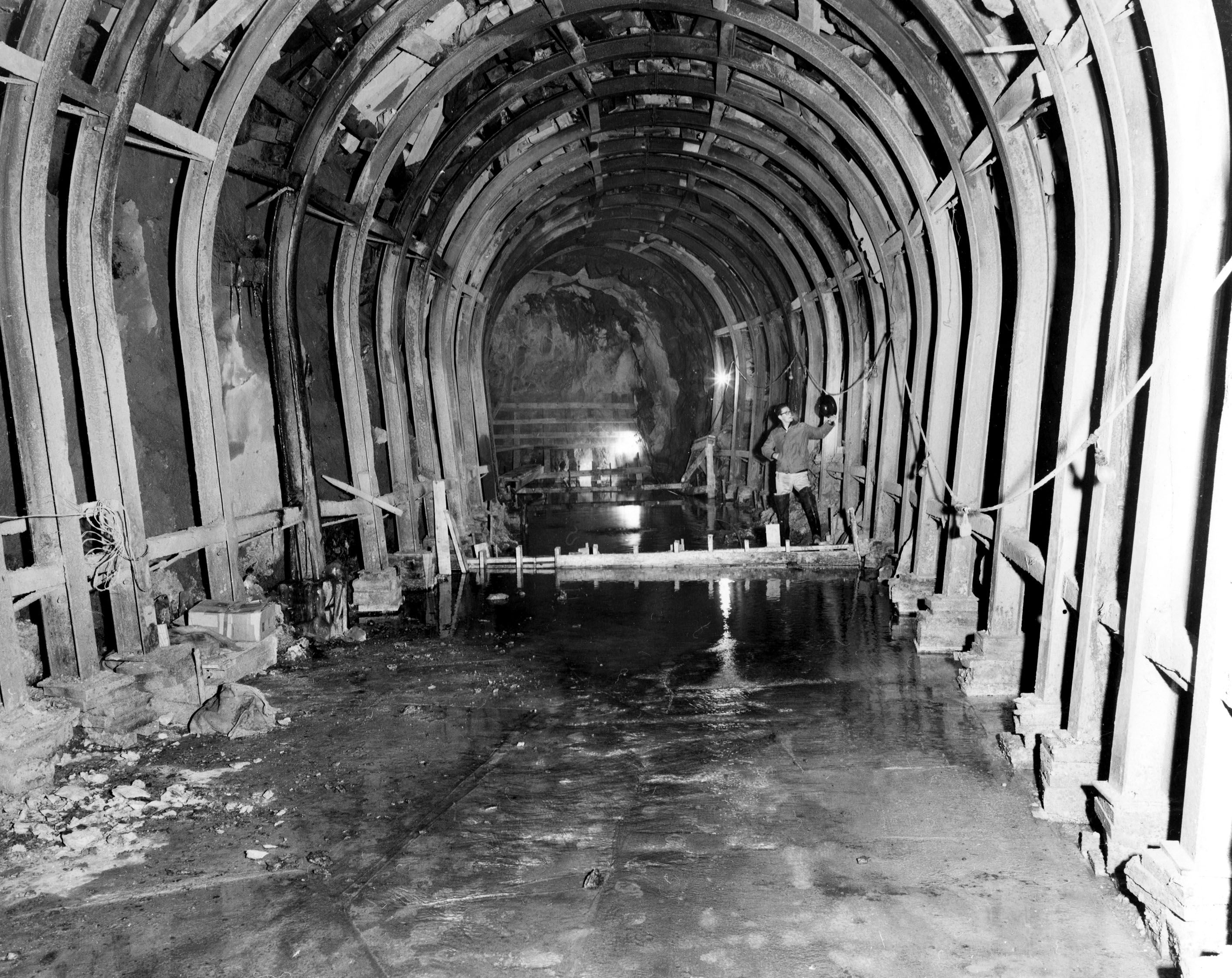
Between 1926 and 1928 the Conowingo Dam was built. In the 1950s it was thought about once again to use the Susquehanna as a water supply, so in 1960 a tunnel was started. It was referred to as the “Big Inch” as it was 108 inches in diameter. Instead of going to Loch Raven, it was built to connect the Montebello Plant, in Baltimore, with the Susquehanna. A total of 38 miles. It was completed in 1966, just in time for the drought.

The photos above show the building of the coffer dam, in the Susquehanna, to hold back the water as they build the intake structure. and a photo of the interior of the tunnel.

History and Photography

20 Saturday Jul 2013

Posted by Ronald Parks in HISTORY, Photography, water

≈ Leave a comment

Tags

Baltimore, eden mill, engineering, FILTRATION, HISTORY, photography, water, water history

Eden Mill


It is a typical mill on a typical creek in Maryland. Maryland had many of these years ago. This one still stands and I have been to it many times to take photographs. When I look through my camera and put it into focus, I focus on more than just the building. I focus on the history of this building. For me, it is not a matter of taking a lot of pictures then rushing home to hurry up and put them on Facebook. (Then keep checking FB  every 10 minutes to see who commented. Yes – guilty!) I see something that I’m grateful to be able to see.

Back in Baltimore’s water history, between 1910-1930, there were many consultants and engineers hired to help the City find new sources of water. One of the recommendations was to build a dam, at what is called the ‘Rocks’ on Deer Creek, right where the Ma & Pa train tracks were. The dam would have a crest elevation of 540′. The top of the Eden Mill, pictured above, is at 535′ which means that the mill would have ended up under water and people from 1940 on would not have been able to see it.

So, the next time you take a picture of an older building, dam, bridge, etc., think of its history and not how fast you can upload to FB!!

← Older posts
Newer posts →

Blogroll

  • Flouride Action Network
  • lulu
  • My Book
  • WordPress.com
  • WordPress.org

Recent Posts

  • Bermuda 2023
  • ICELAND April 2023
  • George Chalmers of Fochabers
  • In Search of The Skipjack Ada Mae
  • Trap Pond Kayak

Blog at WordPress.com.

  • Subscribe Subscribed
    • Water and Me
    • Join 231 other subscribers
    • Already have a WordPress.com account? Log in now.
    • Water and Me
    • Subscribe Subscribed
    • Sign up
    • Log in
    • Report this content
    • View site in Reader
    • Manage subscriptions
    • Collapse this bar
 

Loading Comments...