• About
  • History Writings

Water and Me

Water and Me

Tag Archives: FILTRATION

Ghost in the Conduit

18 Thursday May 2017

Posted by Ronald Parks in Dams, engineering, HISTORY, water history

≈ 8 Comments

Tags

Baltimore, Dams, engineering, FILTRATION, fishing, Gunpowder Falls, HISTORY, Loch Raven, Montebello, Public Works, water history

Awhile back I had posted some photographs of the construction work at Loch Raven. The contractor hit and poked a hole through the ten foot conduit that supplies water to Baltimore from the Loch Raven Reservoir. Fortunately, another one of the conduits was in service, so the damage did not affect our drinking water supply. This conduit was installed in 1915. It is riveted, welded steel. Some portions are encased in concrete and a good portion is lined with cement.

I would like to thank Pure Technologies for giving me permission to use their photographs.

Pure crew heading into the conduit. This is near Mine Bank Run, heading towards the dam. The water would eventually be at chest level.

This was interesting and took a little research to figure it out. The smaller opening on the right connected to the 1880 rock and brick tunnel. In 1937 they built a parallel pipe line from Loch Raven to Baltimore and that is the conduit on the left. There is a valve in the smaller pipe stopping the flow of water towards Baltimore. Down stream further, the raw water pipeline becomes potable water from Baltimore, to Towson, at Cromwell.
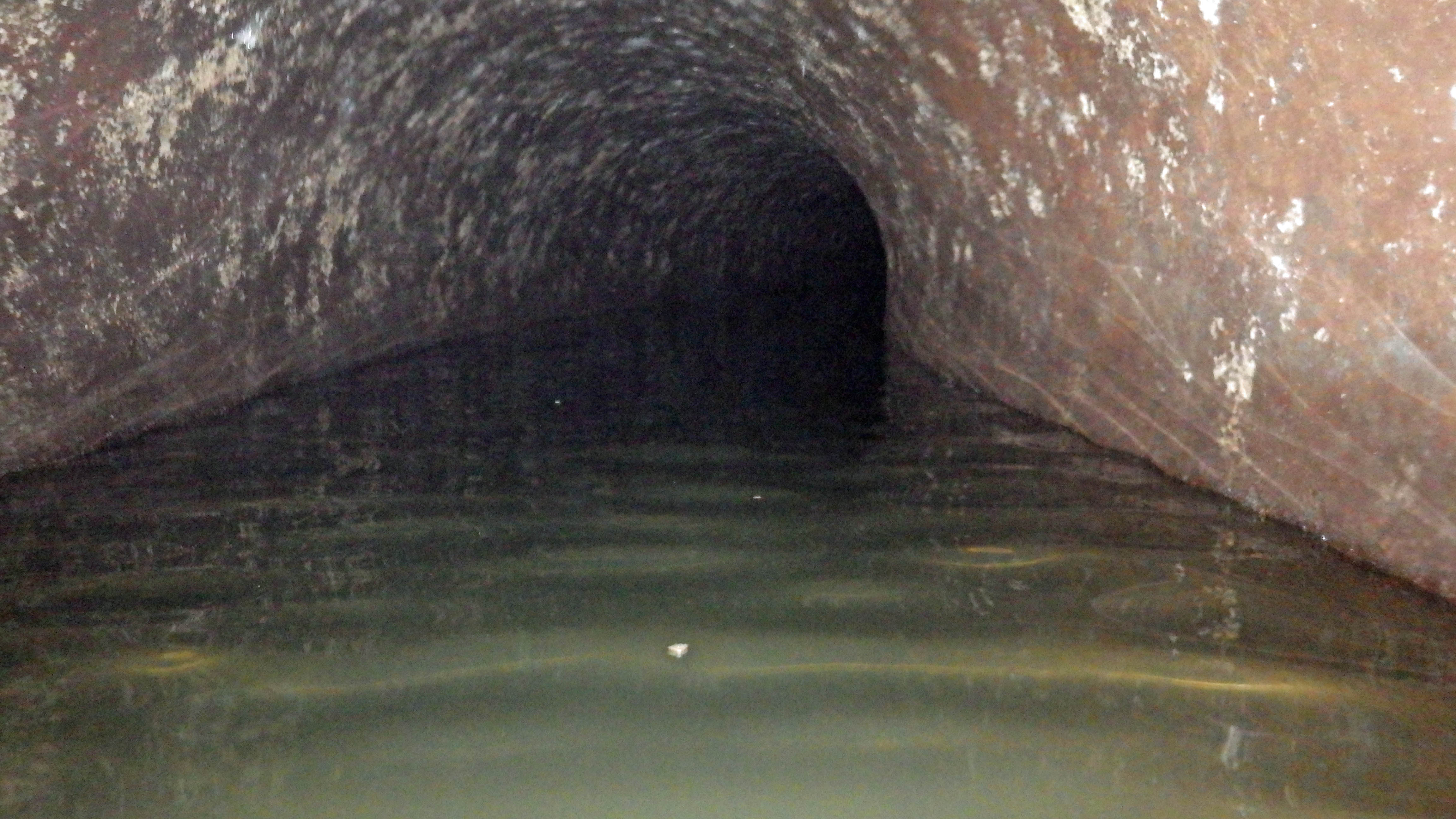
Continuing the inspection of the conduit. Pretty good shape for being over 100 years old.
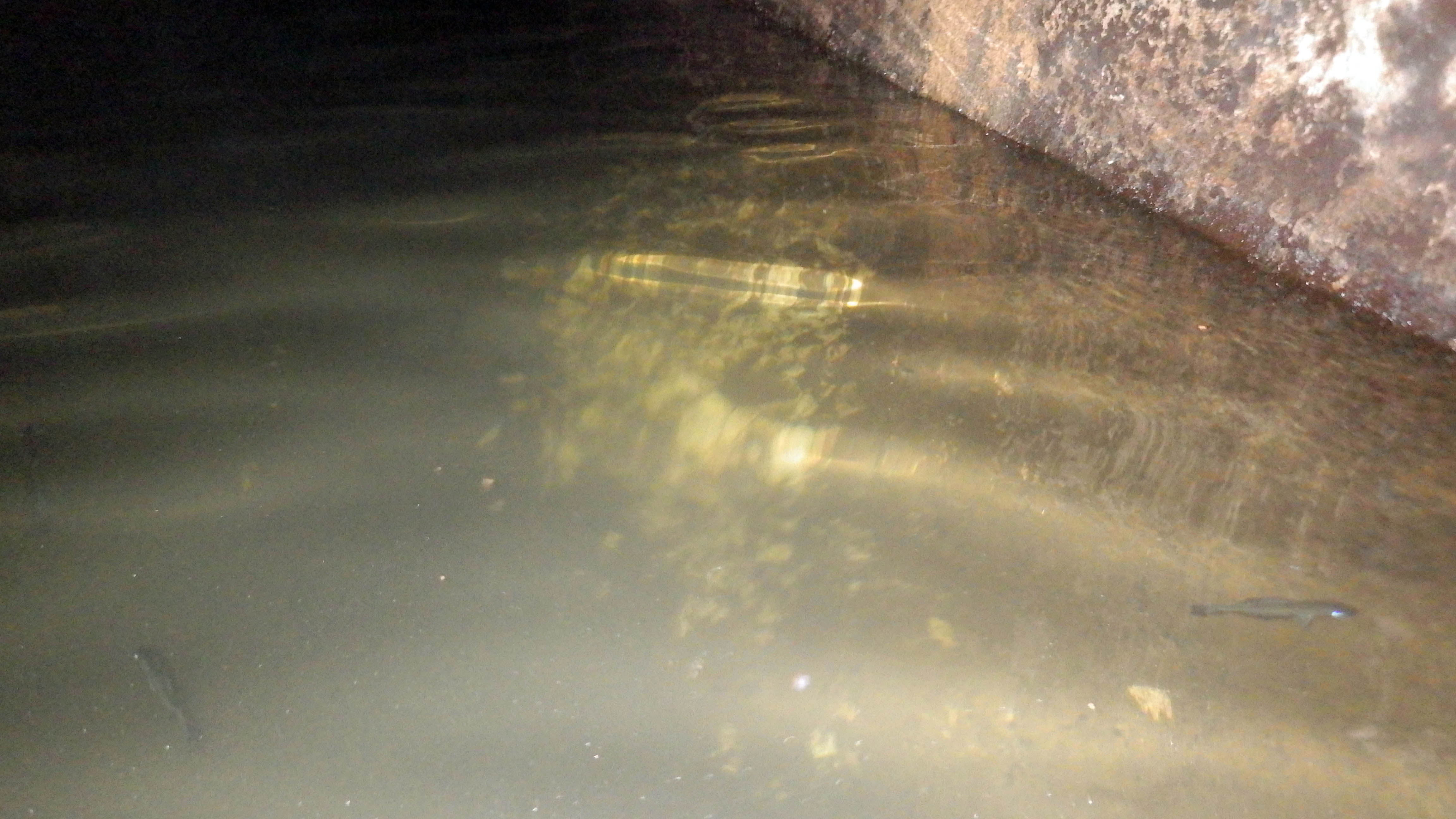
The fish like the water (Baltimore water finished in the top ten again this year in a national taste test)
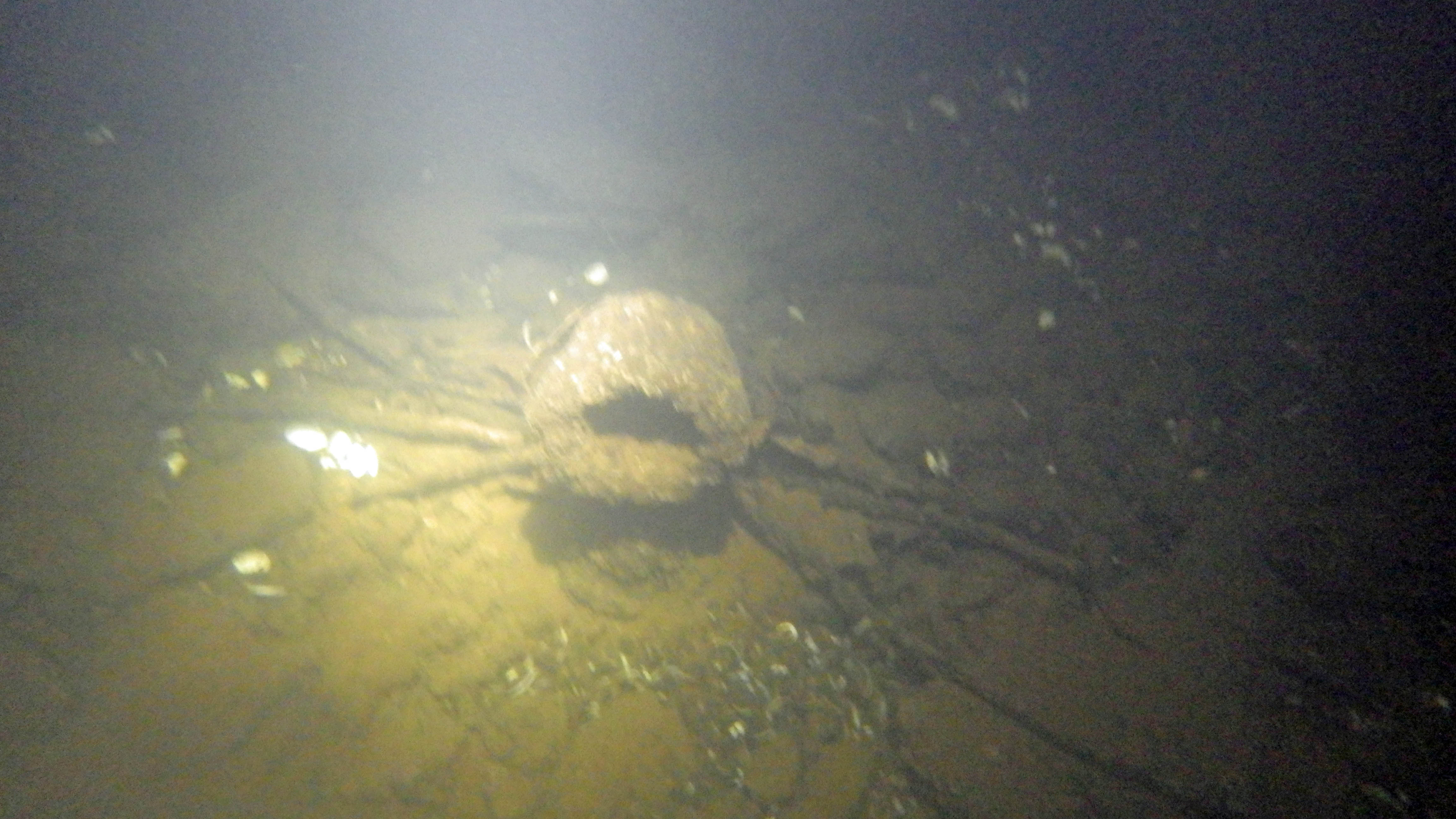
Not sure what this is. Looking at the drawings I saw where there is a drainage system under the steel conduit. But didn’t see this in the drawings.

Pure finally reached their destination. The damage is a little more than we thought. The cement lining has been knocked off.

It is about a 3’x4′ section of damage.

This is the hole that the excavator punched through. There are also about 5-6 dents in the pipe.

When the inspection crew climbed out, I think they brought something with them…

Clifton Gate House – Update

19 Wednesday Apr 2017

Posted by Ronald Parks in Baltimore, Gate House, water history

≈ Leave a comment

Tags

art, Baltimore, engineering, FILTRATION, Lake Clifton, Lake Montebello, Montebello, photography, POLITICS, Public Works, water history

Back in July 2016 I wrote about the renewed interest in doing something with the Lake Clifton Gate House. A farmers market, a cafe, a historical showcase for the water department, etc. The other day I received an email to attend a meeting on another proposal, submitted by Civic Works and their vision for the Valve House (Note: Valve House and Gate House are interchangeable when talking about this structure – Pump House is not – it never had pumps in it). Attached to the proposal was this photograph:

I thought to myself, how the heck did I miss this driving back and forth to City Lights?? Well, this didn’t happen. It is a piece of art. “This is an animation of a specific artist’s winning proposal to mount this public art installation. BOPA is hoping that the installation will be able to move forward under the watchful eye of Civic Works.”

Here is an excerpt from John, at Civic Works, on their proposal for the Gate House:

When the Valve House is renovated and attractively landscaped, it will attract people who pause for pastry, coffee, ultra-local freshly harvested foods and flowers, art and stories of Baltimore. Stories from our past, presented here, will be outshined by news of the structured opportunities, offered “next door” for careers in the expanding green business sectors.

As the renovations to the Valve House are fully realized, the adjacent Lake Clifton campus will become the operational base for Baltimore Center for Green Careers, Civic Works Food and Farm programs and other pathways to prosperity. In the coming decades, these two work in harmony – the information packed social hub and the sustainable-jobs work preparation center.

I personally think this is a great idea! And I really hope it happens.

Here is a 1927 aerial of Lake Clifton and its relation to Lake Montebello. Clifton being the one at the bottom. Water flowed from the dam at the Gunpowder Falls, via a 7 mile tunnel to Montebello, then by conduit to Clifton, at which point it was dispersed to the city.

From the 1970s showing the interior of the Gate House with the water chambers covered over with wood.

The reverse of the above photo, from the Sunpaper files showing that back in 1970 there was an interest in restoring the Gate House.

Another 1970s Sunpaper photo showing the stained glass windows nearly intact. Most have since been broken out. (Note:Photos from my personal collection)

Roundhouse

05 Wednesday Apr 2017

Posted by Ronald Parks in Baltimore, engineering, water history

≈ 2 Comments

Tags

Baltimore, engineering, FILTRATION, glass plate negatives, Gunpowder Falls, HISTORY, Lake Montebello, Loch Raven, Montebello, Public Works, Research, water history

A couple weeks ago the contractor called me over to the site because they struck something that is not on the drawings. This was about the 12th time in 10 days they hit something buried, not on the drawings. i go over and this is what I saw:

At first glance, it looks like an electrical ductbank, enclosed in concrete. I told the contractor I would go look in my drawings to see what I could come up with. When I retuned, unable to find anything, the contractor had cleared some more dirt from the concrete.

Am I hallucinating or does that thing have a curve to it?? Holy crap, that looks like the foundation to the old roundhouse, which was the Montebello Pumping Station, built in 1914-1915. More research to do.

This hole was dug and goes about 75 feet down at which point they busted through the 1881 tunnel from Loch Raven. The pumping station was to be used to pump water from Loch Raven, into the filtration plant. This was due to the city not getting permission to raise the new dam above an elevation of 188′ (The new dam is now at 240′)

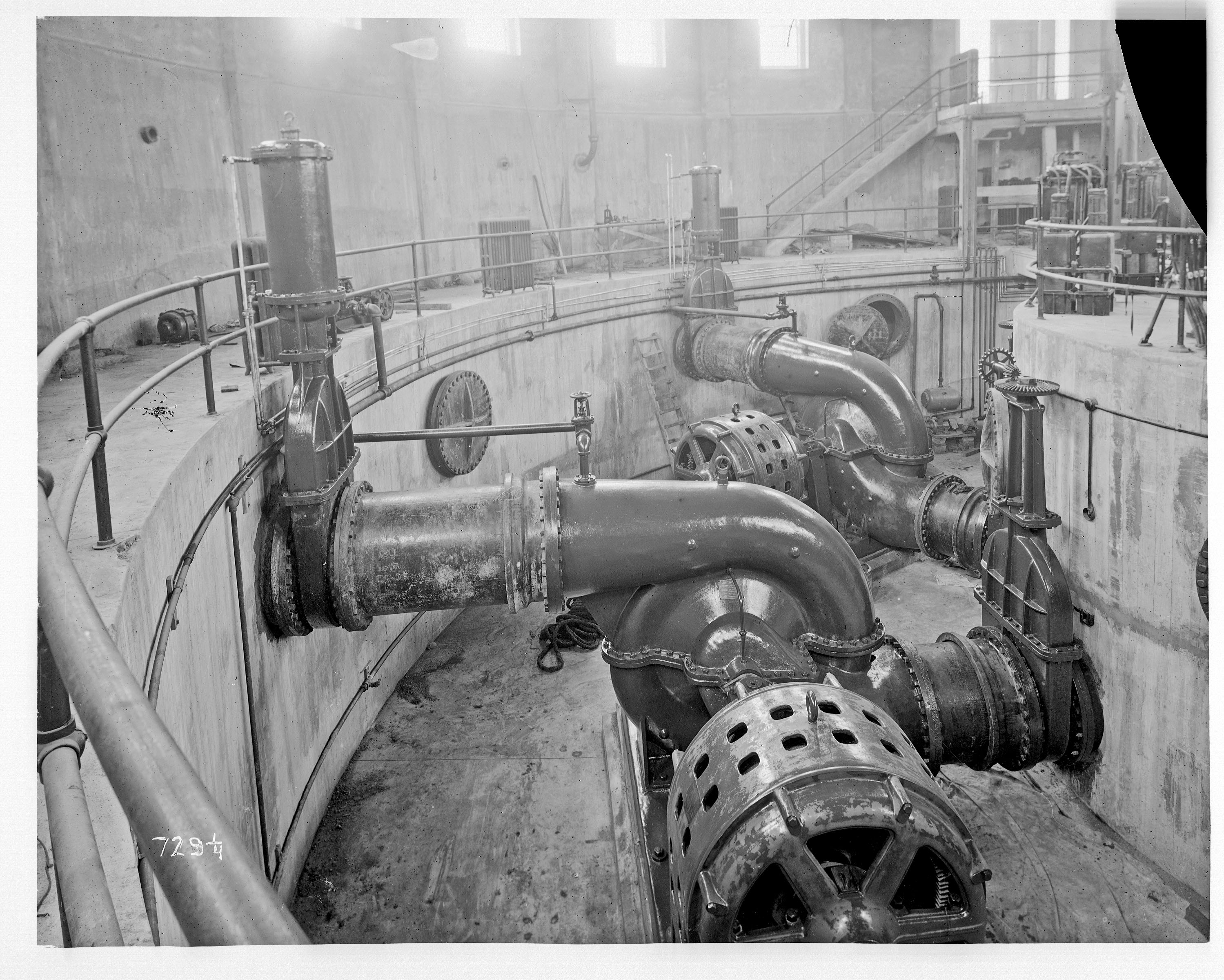
This photo shows the foundation for the pumps and the piping waiting to be placed.

Looking at the top tier here it can be seen the structure matches the first photo above. The hole in the center is the suction well.

View from the outside of the roundhouse. This is facing south towards the filtration building.

This is looking north from the the head house. The roundhouse foundation is flush with the ground level.

Nearing completion.

The pumps.

From the time this was built until about 1957, this pumping station had more than its fair share of problems – wrong size pumps, electrical problems, building being struck by lightening a few times, power surge from Holtwood Electric, water hammers that raised and cracked the foundation, etc. In 1963 the building was demolished but, the foundation remains. And now the problem is, what’s down there? Will this area support the weight of a generator and fuel tanks? And is that hole still open (there is an air vent coming out of dead center)? The tunnel underneath originally supplied water to Montebello from Loch Raven. Now this tunnel supplies drinking water to Towson, via the Cromwell Pumping Station.

This shows where the roundhouse use to be, north of Filter building.

Love – Hate Relationships

14 Tuesday Feb 2017

Posted by Ronald Parks in engineering, HISTORY

≈ 2 Comments

Tags

Baltimore, bridges, Dams, engineering, FILTRATION, glass plate negatives, Gunpowder Falls, HISTORY, Public Works, water history

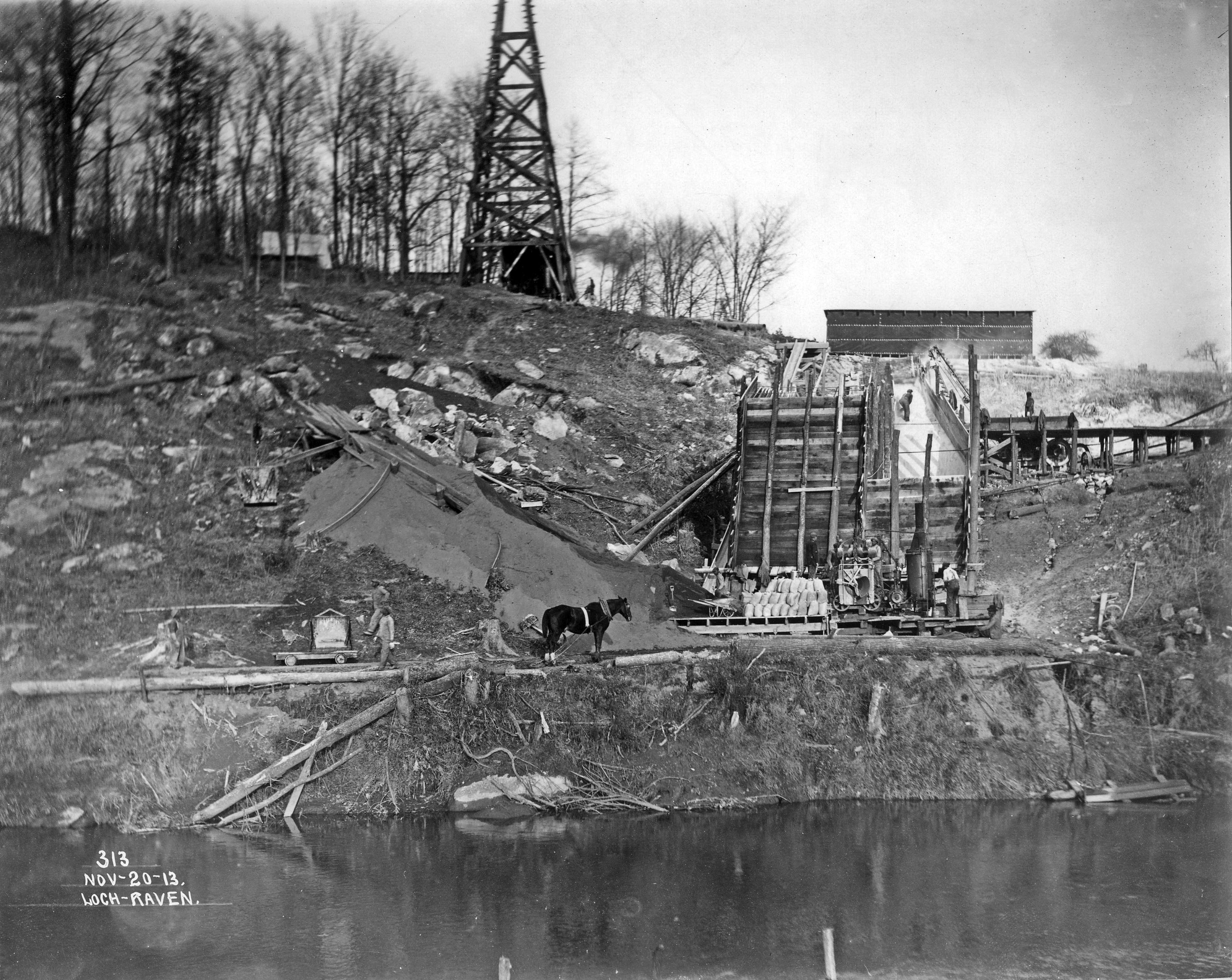
Sorry, this is not a Valentines Blog! This is in regards to my job. Co-workers know I do the archiving, so when they think it’s time to clear out some filing cabinets, they bring all their junk drawers to me. I hate it! So I sort and document and throw out a bunch of stuff…but then, hidden between the pages of some obscure files, I find a folder of photographs! I love it! This particular group of photos are from the 1913-1915 building of the Loch Raven dam. They are the actual prints from the glass plate negatives. Some of which I’ve never seen or ones that I have, scanned from plates that were cracked or silvering. Poor quality. These are near perfect prints.

ic-006

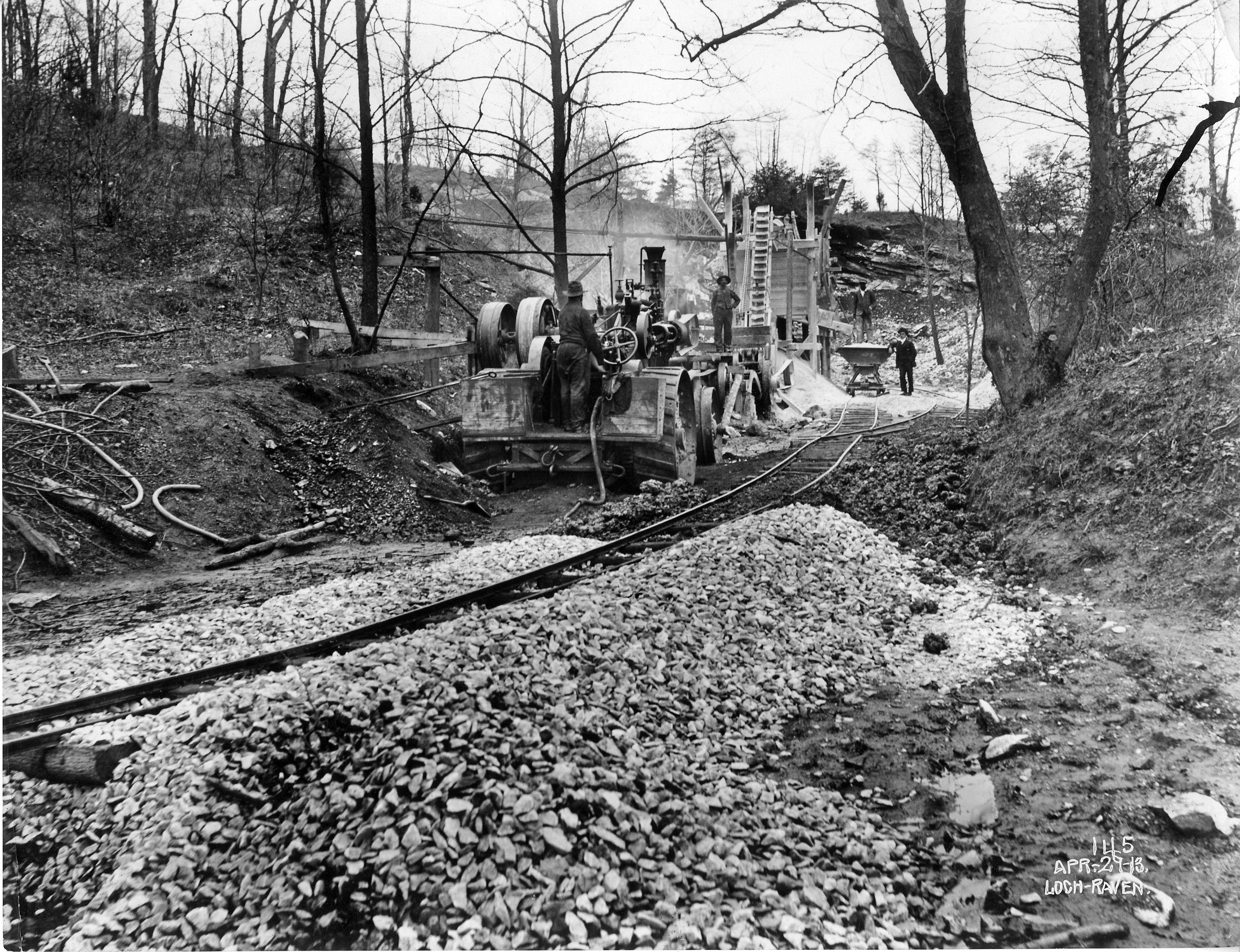
 I have a very poor quality of this one with no real description. On the back it says – “Crushing Plant at Department Quarry near Bridge #1”

ic-001

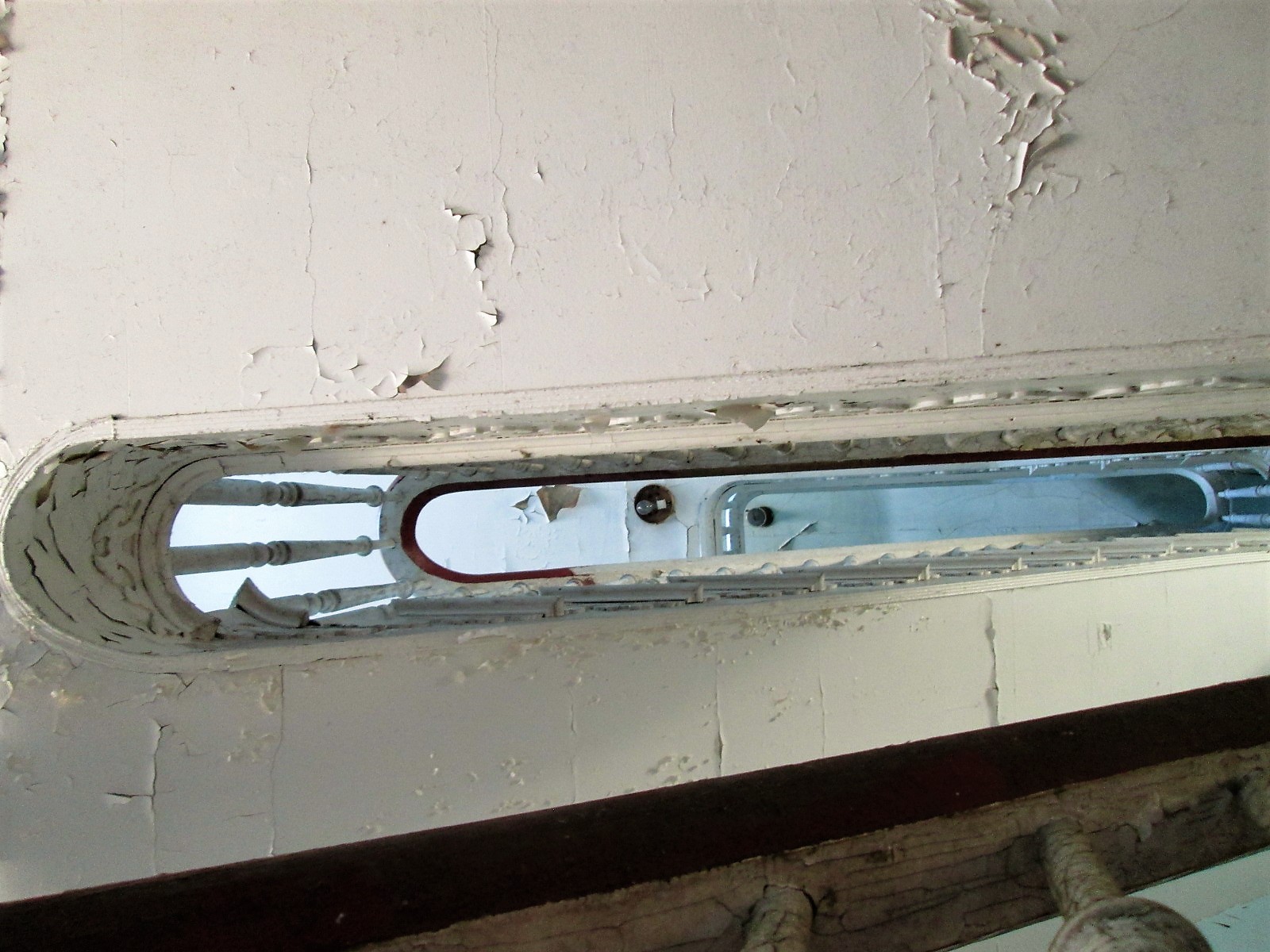
Building Bridge #1 which is the first bridge up Loch Raven Drive from the dam. One thing I don’t understand about engineering is…
ic-002

…how do they take the upside down bridge and turn it right side up??

ic-003

I’m not sure what this one is, which is ok. I will look thru the old records and see if I can match it up some how. I thought it was of the construction of bridge #1 but the date wouldn’t be right.

ic-004

No description on this one either, but I like the guy in the back with a hatchet, wearing Frye Boots!

ic-005

This one is of the building of the bridge. Look close and you can see a typical City worker, sitting down on the job to the right!

1881 Tunnel Inspection, Again?

27 Friday Jan 2017

Posted by Ronald Parks in Baltimore, engineering, water history

≈ Leave a comment

Tags

Baltimore, engineering, FILTRATION, Gunpowder Falls, HISTORY, Lake Montebello, Montebello, Public Works, water, water history

Last year in another post I wrote about my excitement to go on an inspection of the old Loch Raven – Montebello Tunnel, which was built between 1875 and 1881. This tunnel, being 7 miles long was built mostly through solid rock. A lot of which is collapsing. Which is bad because potable water has been flowing thru it since the late 1950s, from Montebello to Towson. When it was built, the raw water from Loch Raven flowed to Montebello Lake. The inspection for last year was cancelled, saying it was unsafe? (Last inspected in 1984). Last night I get an email telling me that the consultants want to see where the exit point will be if the inspection does happen…

010-996b

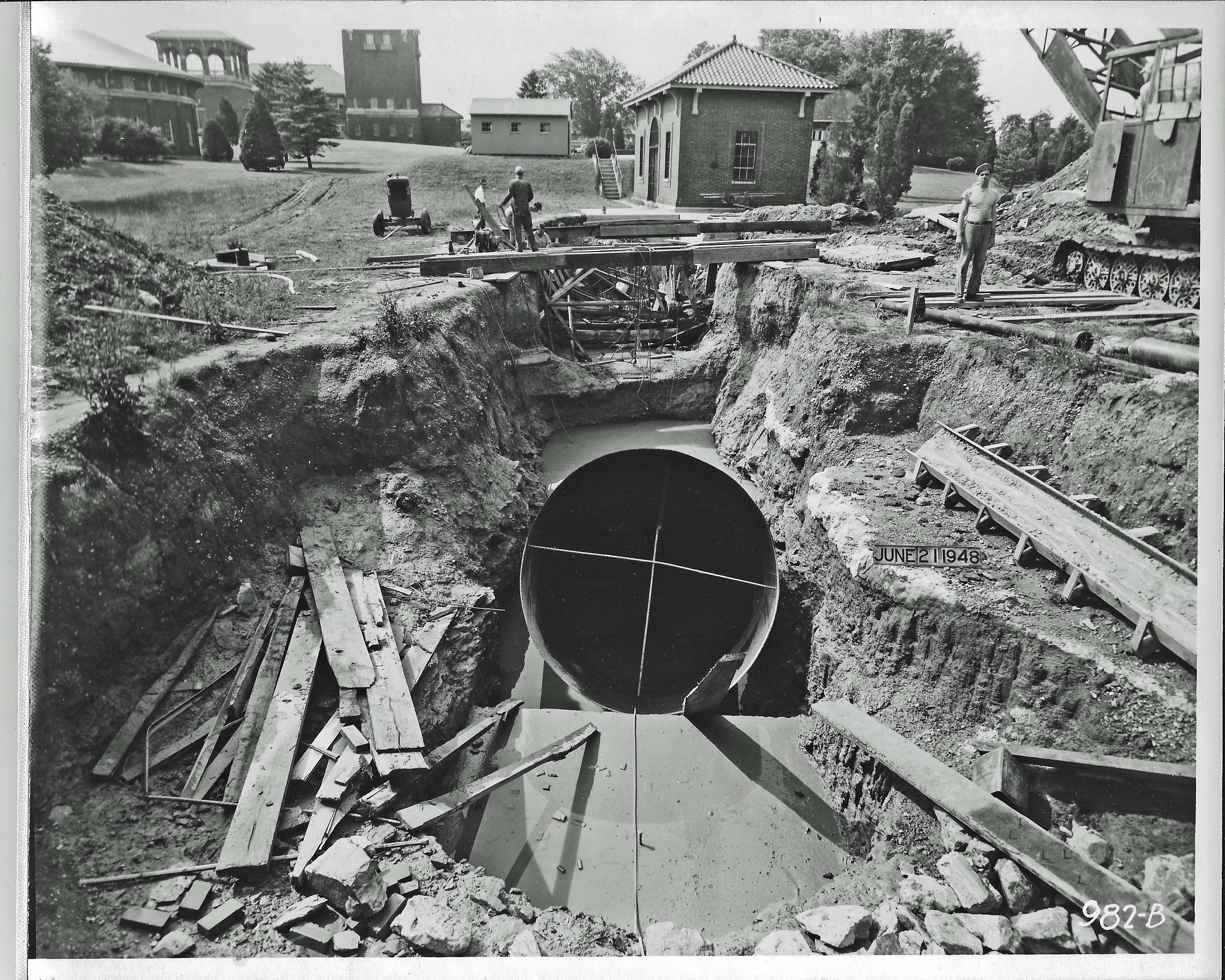
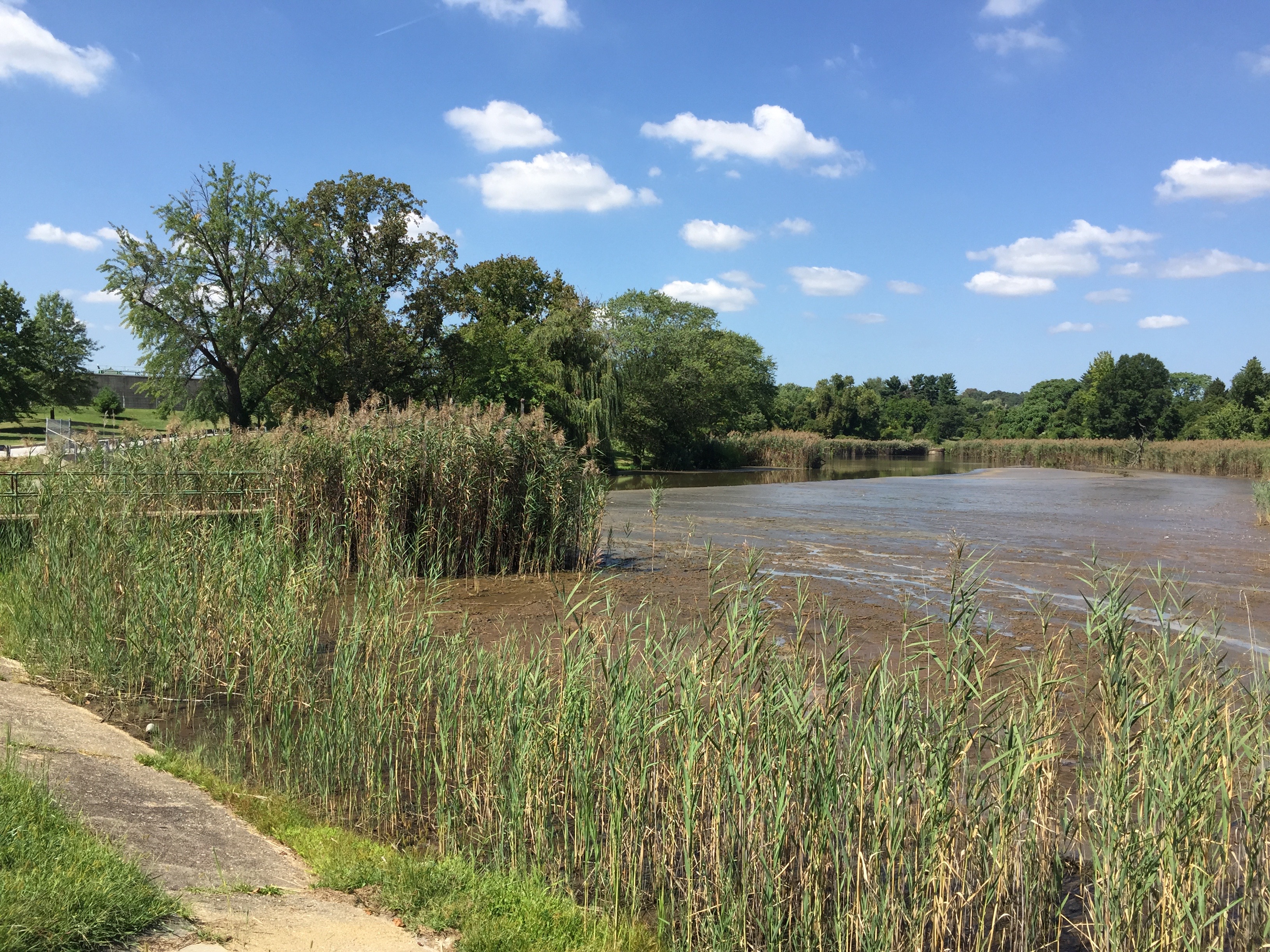
This is where we would exit. At the waste lake, Montebello Filters. If you look back at my post from a few months ago on the waste lake dredging, you can see that it no longer looks like this. It is grown over with phragmites. This photo from 1948 shows them dewatering the tunnel so a new surge shaft could be built.

001-982b

The new surge shaft is connected to the 1938 Loch Raven Tunnel (steel, not rock) which is connected to the old rock tunnel, soon to be connected to the just being built Patapsco Tunnel. (Confused yet? You should work here!)

002-984b

As with most construction projects with the city, there are always problems. This one being a storm washing away some of the work already completed.

013-1c

The almost finished surge shaft. Wrap it in brick and put a Spanish tile roof on and you are done. I hope we can actually do an inspection of the tunnel.

Weather News

15 Thursday Dec 2016

Posted by Ronald Parks in Baltimore, engineering, Reservoir, water history

≈ Leave a comment

Tags

Ashburton, Baltimore, engineering, FILTRATION, glass plate negatives, HISTORY, Public Works, Snow, water history, weather

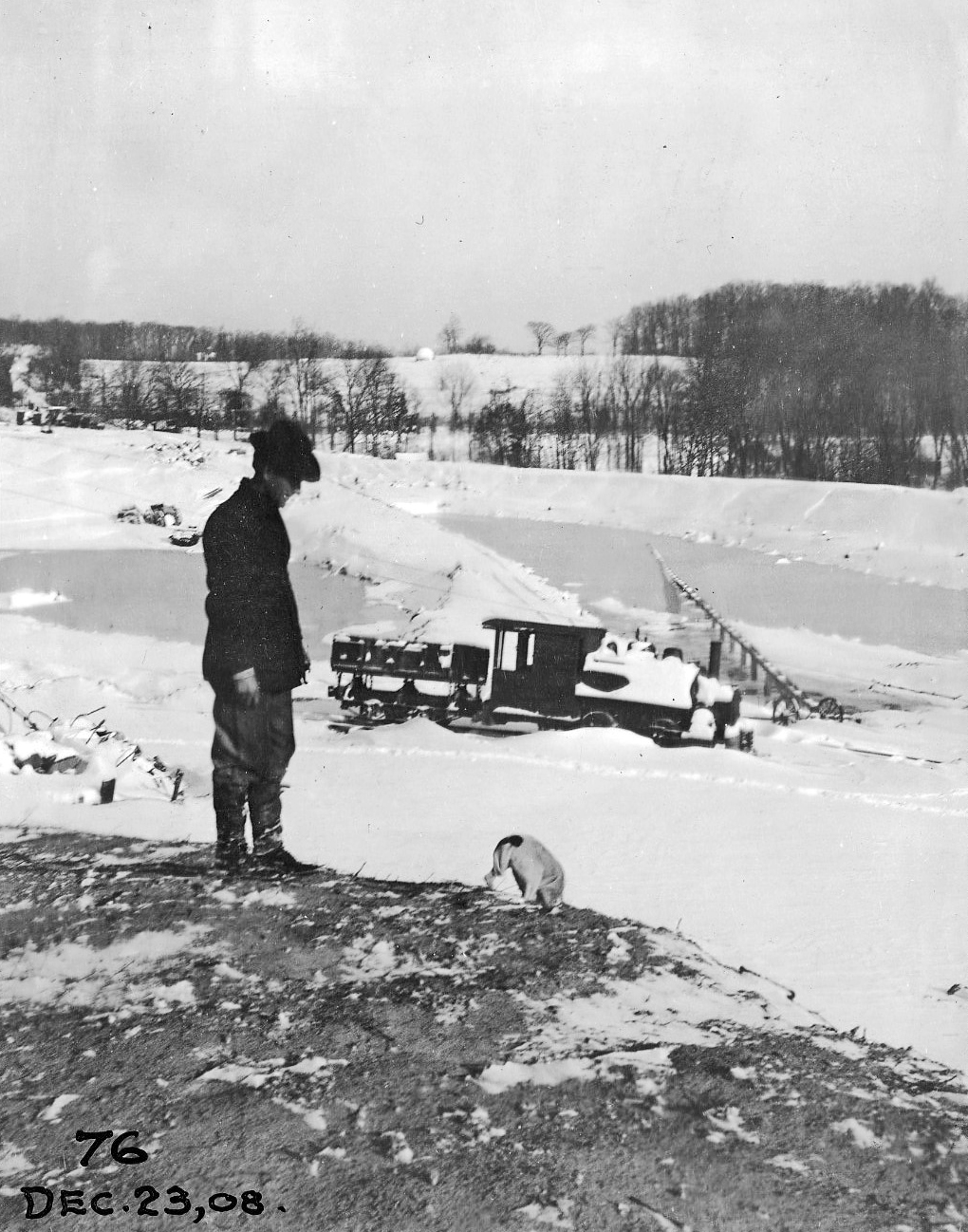
First thing that popped up on my news feed said – Double Polar Vortex to Slam U.S. Did they talk like that in 1908? Or did they just say, “Folks we had us some snow last night, so bundle up!”

Building the High Service Reservoir, also known as Lake Ashburton.

lake-ashburton-12-08-077

The little train that couldn’t.

lake-ashburton-12-08-075

Steam engines used to pull cables on derricks, to lift construction materials.

lake-ashburton-12-08-076

A boy and his dog. Look close, center on horizon. Does that look like a giant snow ball someone is about to roll down the hill?

Loch Raven Property

10 Saturday Dec 2016

Posted by Ronald Parks in Baltimore, Dams, HISTORY

≈ 31 Comments

Tags

abandoned house, Baltimore, bricks, Eagles, engineering, FILTRATION, fishing, glass plate negatives, Gunpowder Falls, Hiking, HISTORY, Montebello, nature, photography, Public Works, water history

The day before taking off work for my daughter’s operation, I was contacted by CHAP – Commission for Historical and Architectural Preservation. They wanted to know if I knew anything about a fireplace mantle from Glenn Ellen Castle that was stored in a maintenance building downstream from the second dam? No. They were getting ready to tear down the buildings and were told by the contractors about the mantle.

tract2-3

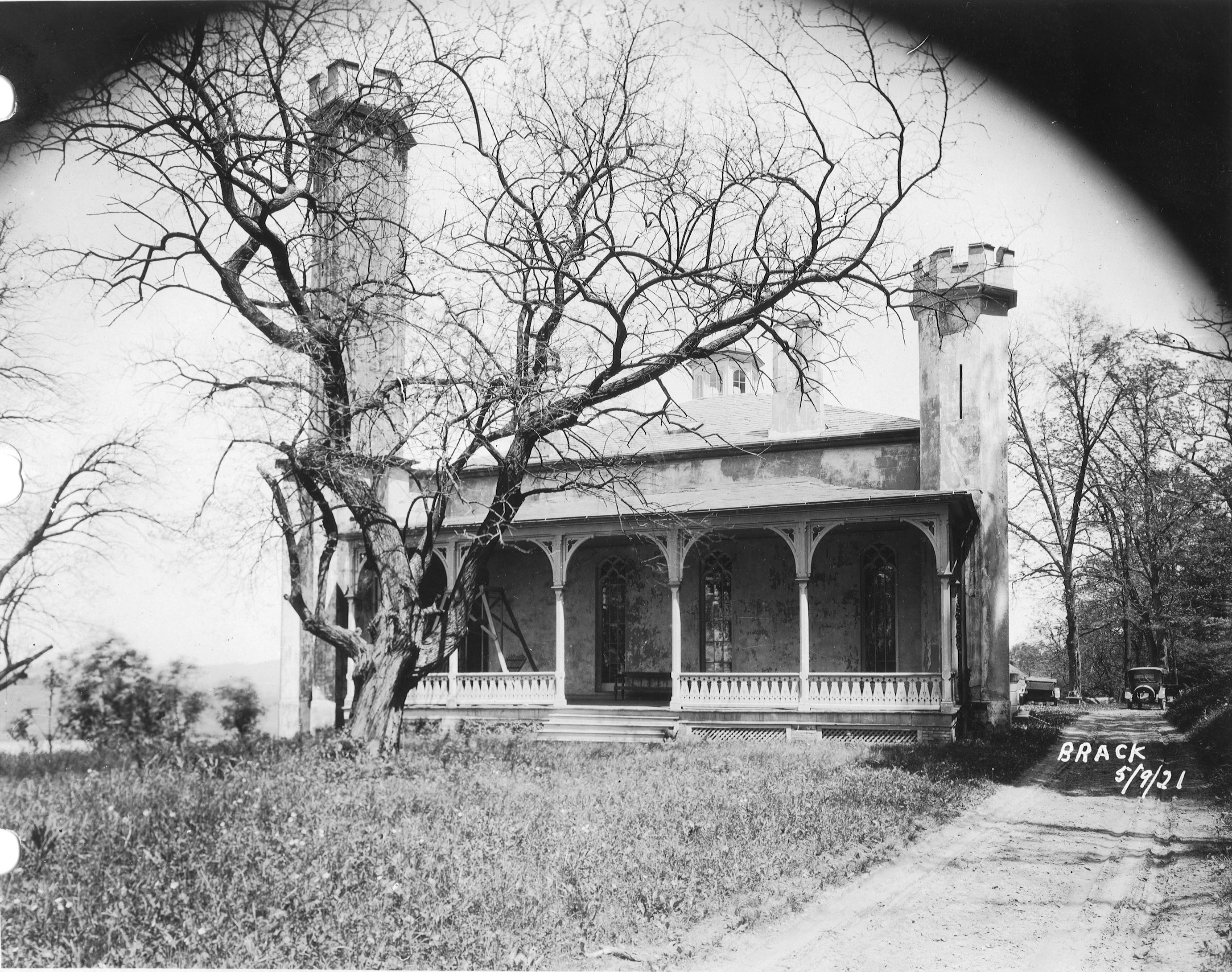
This was Glenn Ellen prior to raising the dam from elevation 188′ to 240′. The reservoir did not reach this height but it was still on watershed property and taken by the City. I think only the foundation exists now.

003

Earlier this week a friend of mine, Thom, contacted me and told me about some signs he saw on the property as he was hiking behind the construction site. At first glance I thought they were bronze plaques so I met him and Wayne to go exploring.

001

The hiking trail is on the hill behind the silt fence. This is where the signs were. Turned out to be steel and not bronze, but still worth keeping a couple for history’s sake!

011

Saw some interesting items so took a closer look. I thought it was odd that the contractor cut the beams instead of just knocking this building down. Come to find out a company called Bricks And Boards came up a removed the wood to re-purpose. The boxes contain core bore samples. Not sure why the City didn’t want to keep these? They do me no good without the engineer’s records saying where the samples came from.

017

After rooting around in the barn we decided to head into the house. This is being knocked down also. A few years ago I was told there were lantern slides stored in here along with some old drawings. Back then, I wasn’t allowed in to look.

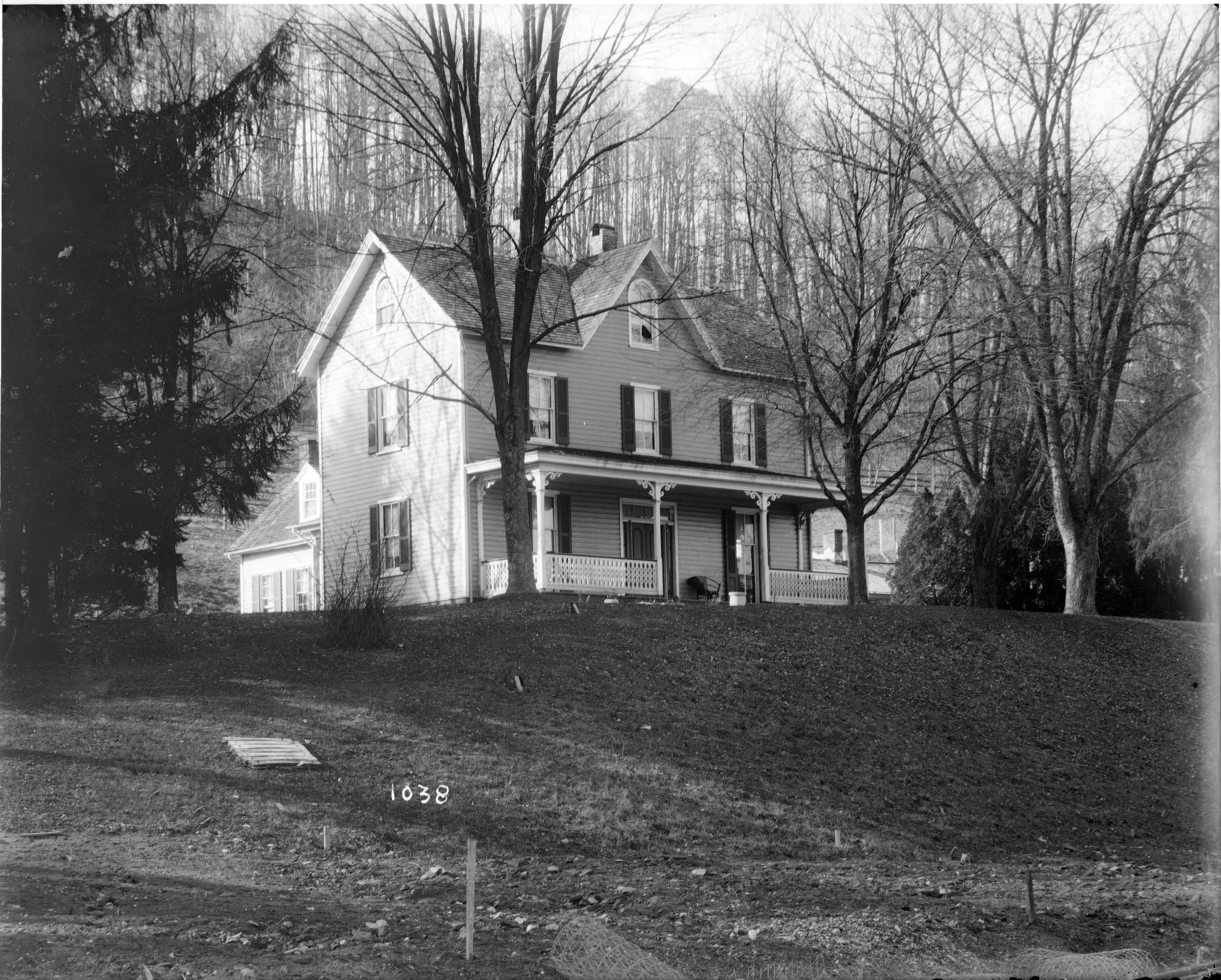
lochraven-1038

The house as it looked about the 1920-30s. I tried to find who was the original owner but had no luck. From a map of 1882 it has it listed as City Property. Adjacent to the Wisner, Shanklin properties. Further investigation is needed.

plate488

Wayne asked the date the house was built. Not sure but it shows up in a 1881 photo. Far right side just up from the Gunpowder River. This photo shows the dam near completion, ready to lay the last stone.

019

Back into the house. Entrance hall.

020

There are 3 fireplaces. One plastered over and two, like this one, with the mantles missing.

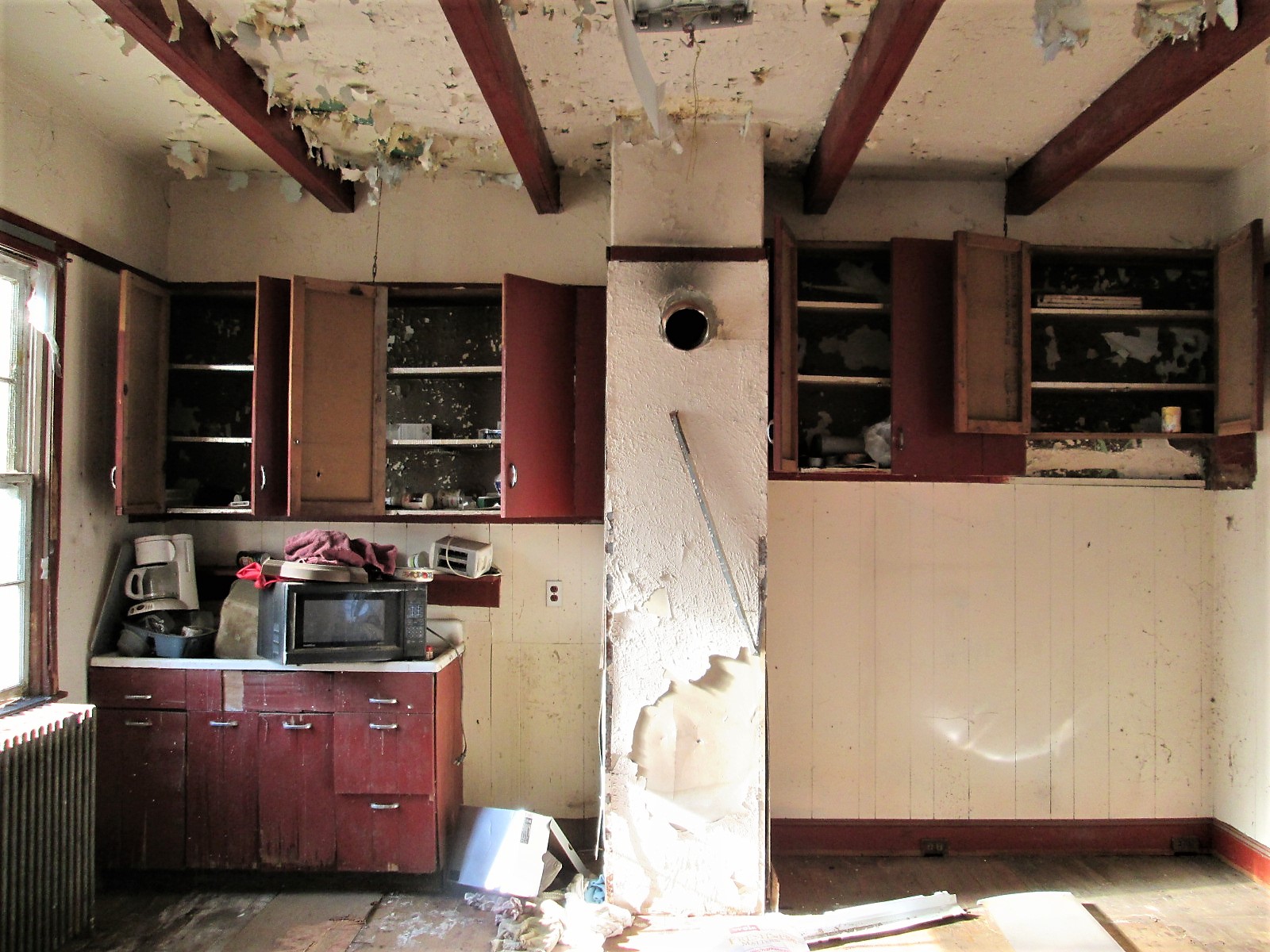
032

Kitchen.

034

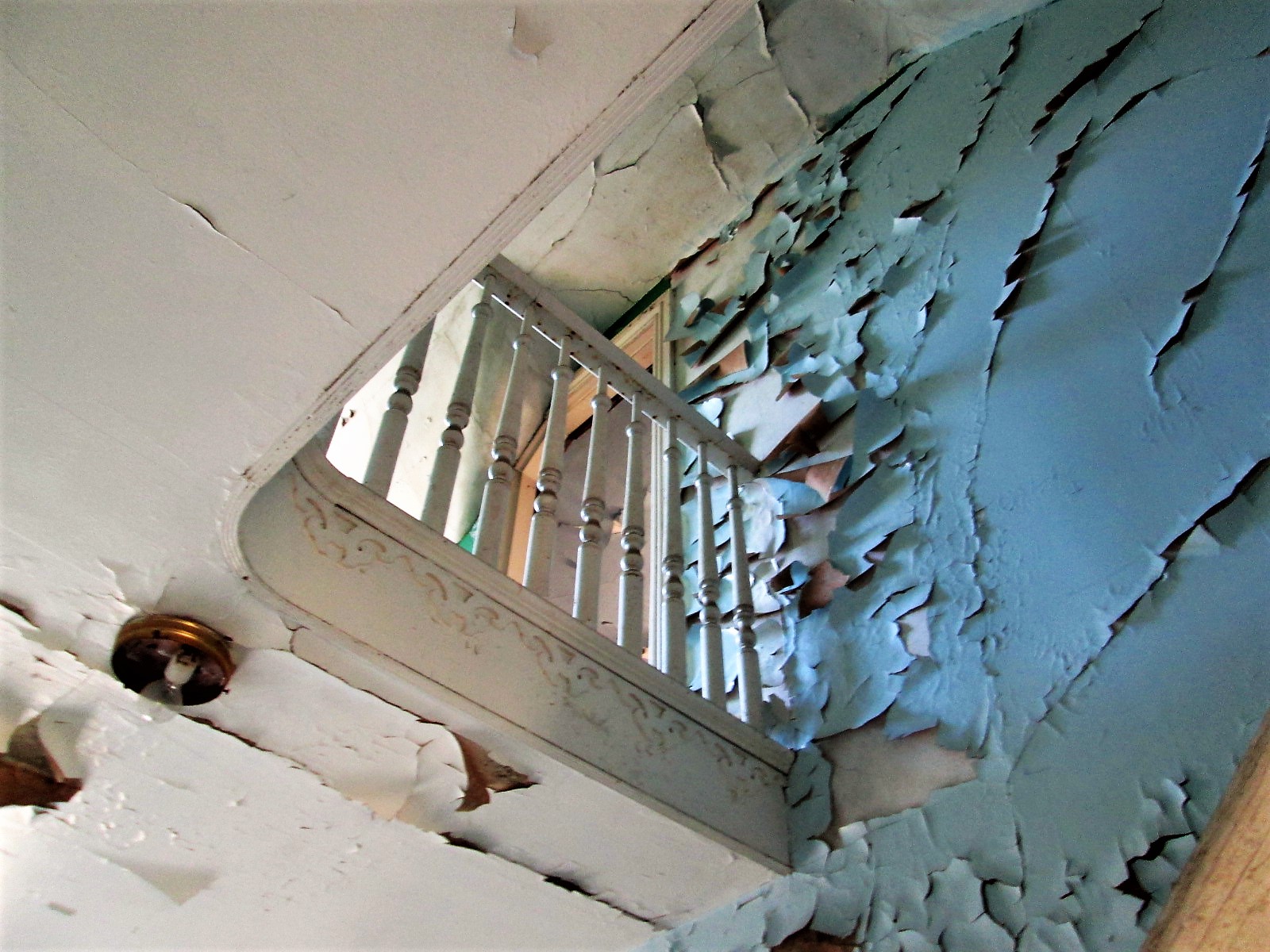
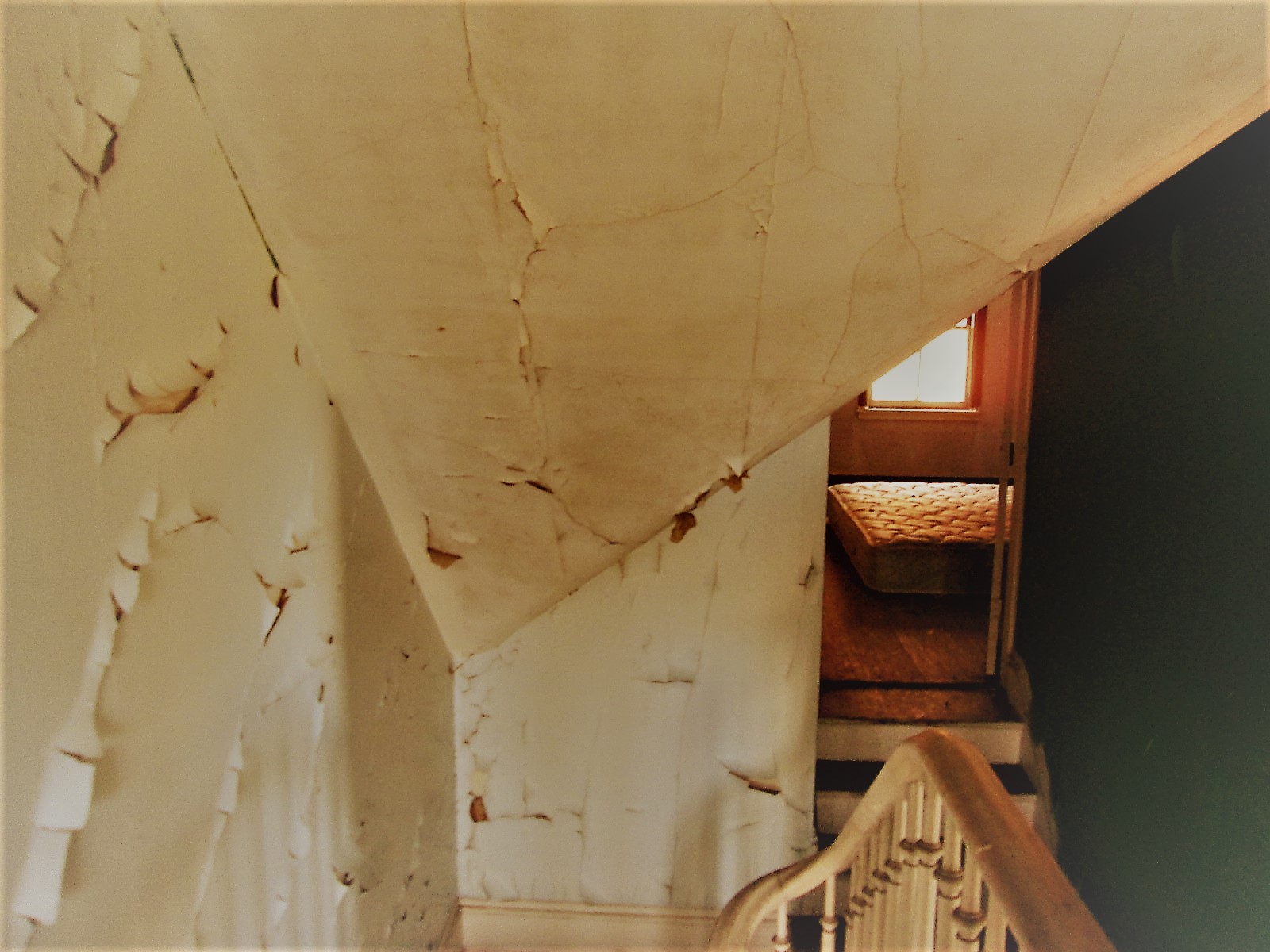
Looking up the stairwell. Three floors.

037

Second floor to third floor

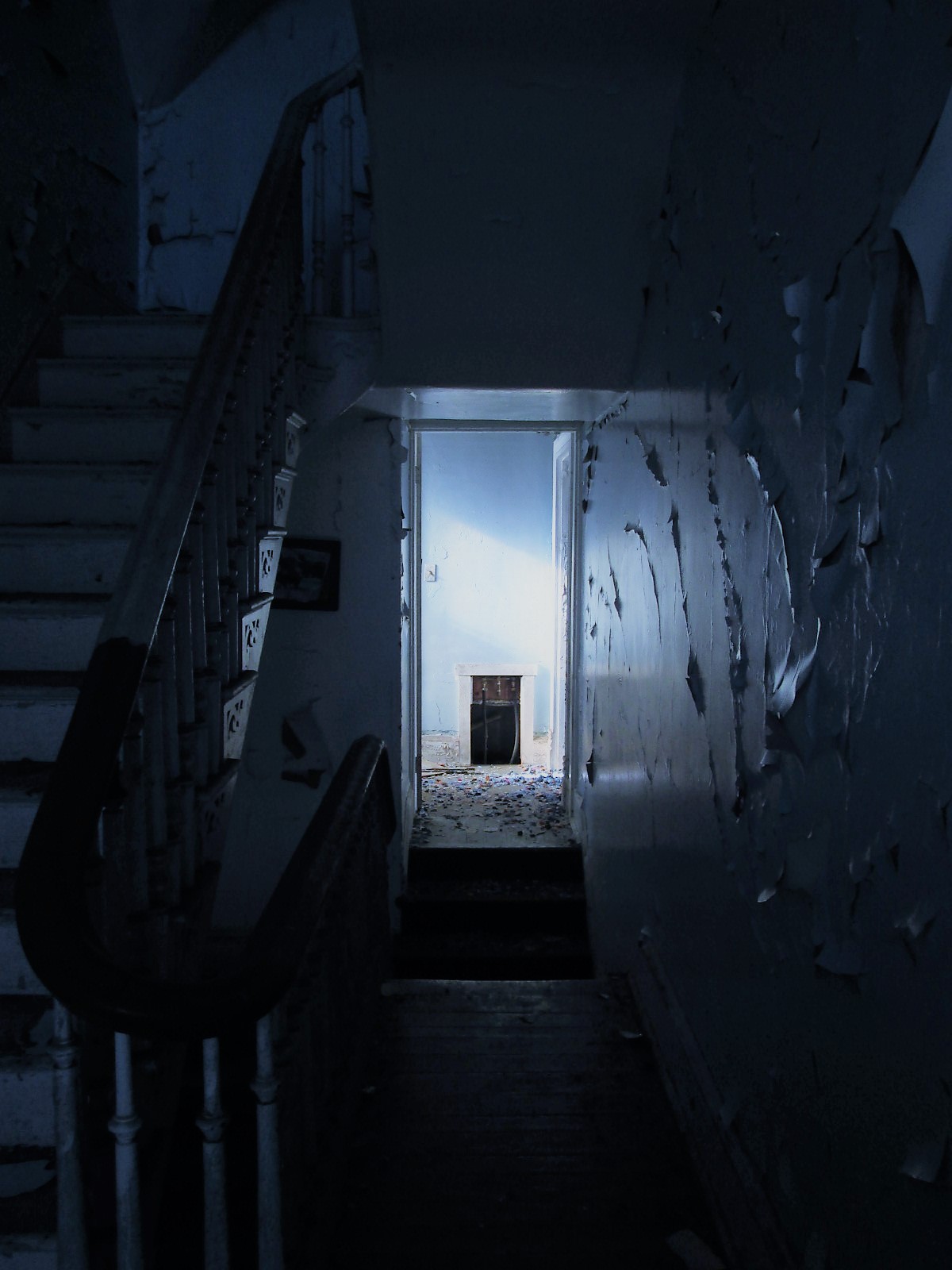
042

This was a nice design – up the stairs to a landing that will take you in both directions. This is a huge house.

071

Lots of rooms – curves and angles.

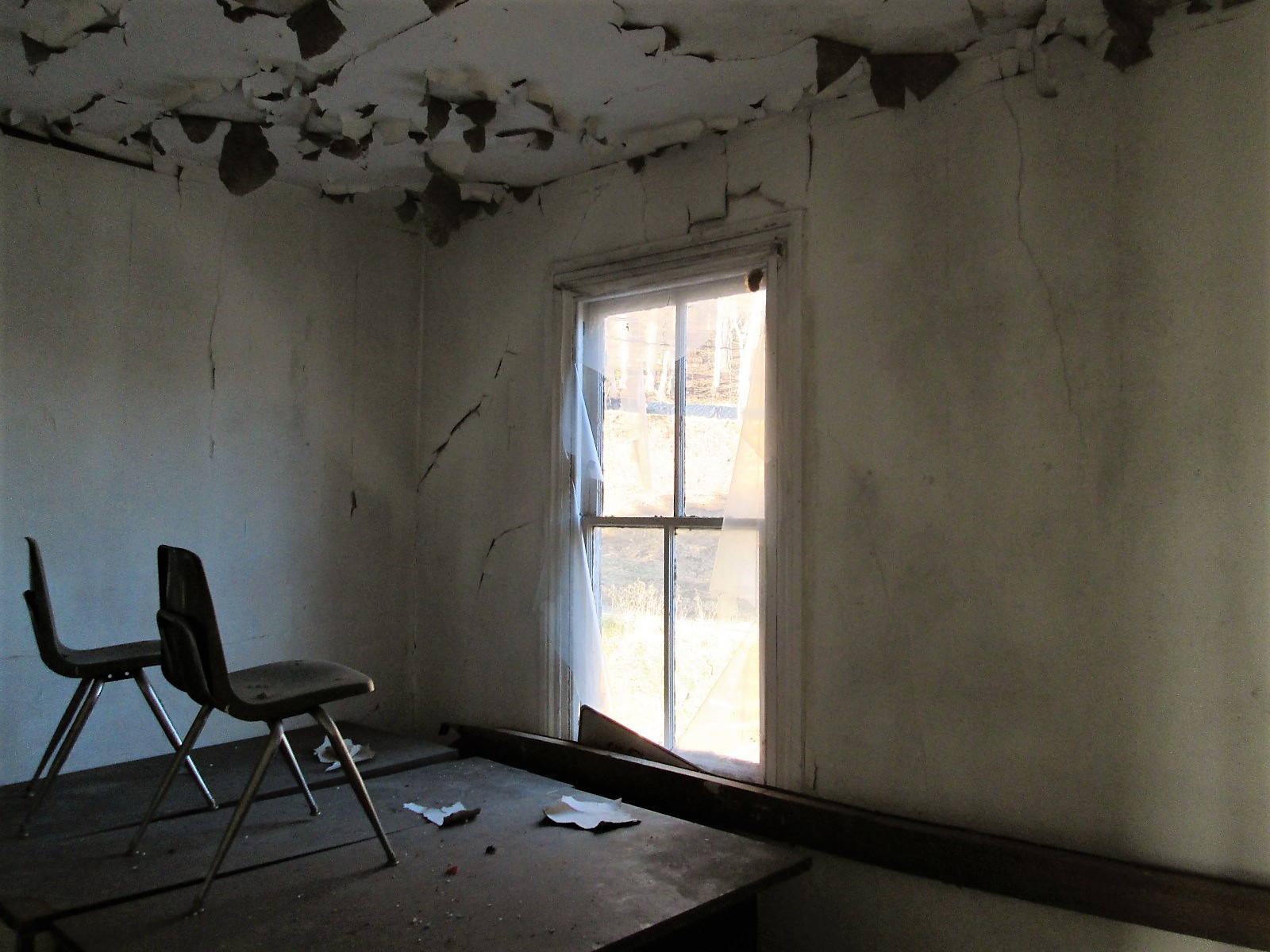
049

Chairs on a desk – watching…

067

One of the many views. Someone nailed a metal sign to the window? I would have loved to live here with this view. Two eagles were playing most of the morning over the lower reservoir. Nice!

072

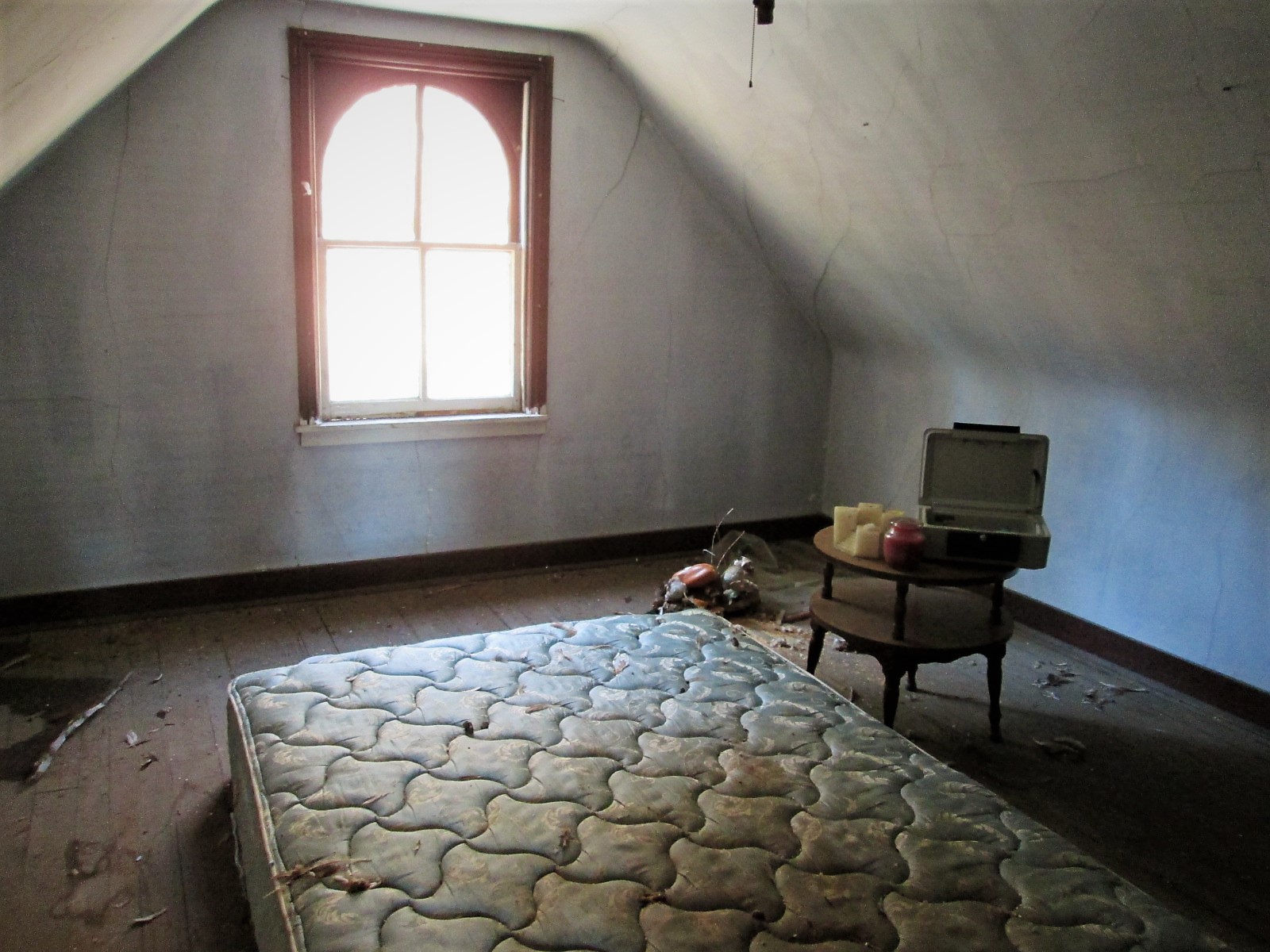
Another room. Candles, a bed, money box and stuffed ducks that look like the turkey buzzards tore open – must of thought they were real!

Prologue: I asked the contractor to hold two of the signs for me until I can come back up. He said ok…but, between my visit and when I sent off the email, Brick and Boards came up and took them. Talked to Max from there and he said they are in his warehouse and I can come pick them up!

Their site: https://baltimorebrickbybrick.com/2016/08/04/brick-board-is-here/

84″ Conduit Inspection

08 Thursday Dec 2016

Posted by Ronald Parks in Baltimore, engineering, water history

≈ Leave a comment

Tags

Baltimore, conduit, engineering, FILTRATION, Lake Montebello, Montebello, pipe, Public Works, water history

Back in 1956 – 1957 a new 84″ pipeline was laid to connect the Montebello Filters with South East Baltimore, doing away with a pumping station. It was inspected this week using what is called a Pipe Diver. A mini-sub looking thing with a bunch of probes. No camera unfortunately.

Here is the pipe prior to connection to the filtered water reservoir in 1957. The reservoir (20 million gallons) is behind that house on the left, underground.

Connection to the clear-well chamber. Years later another connection would be made on the opposite side of the reservoir. The two conduits are connected about 100 yards from the above point.

Back in June, while making my rounds thru the property, I saw a contractor digging a hole. Asked what he was doing and he said he needed to rebuild this manhole and put a new valve on the pipe. That they were getting ready to inspect the 84″ pipe. I asked if he knew that this pipe was full of water. He said he knew and it would be alright. Here is another case in the City when agencies do not communicate. We had no idea they were doing a pipe inspection.

A month later, a contractor comes on site to look at a possible entry point for their pipe diver. I showed them and in November they came back.

They could not relieve the pressure in the pipe enough to insert their tool. So they had to postpone and rethink their strategy.

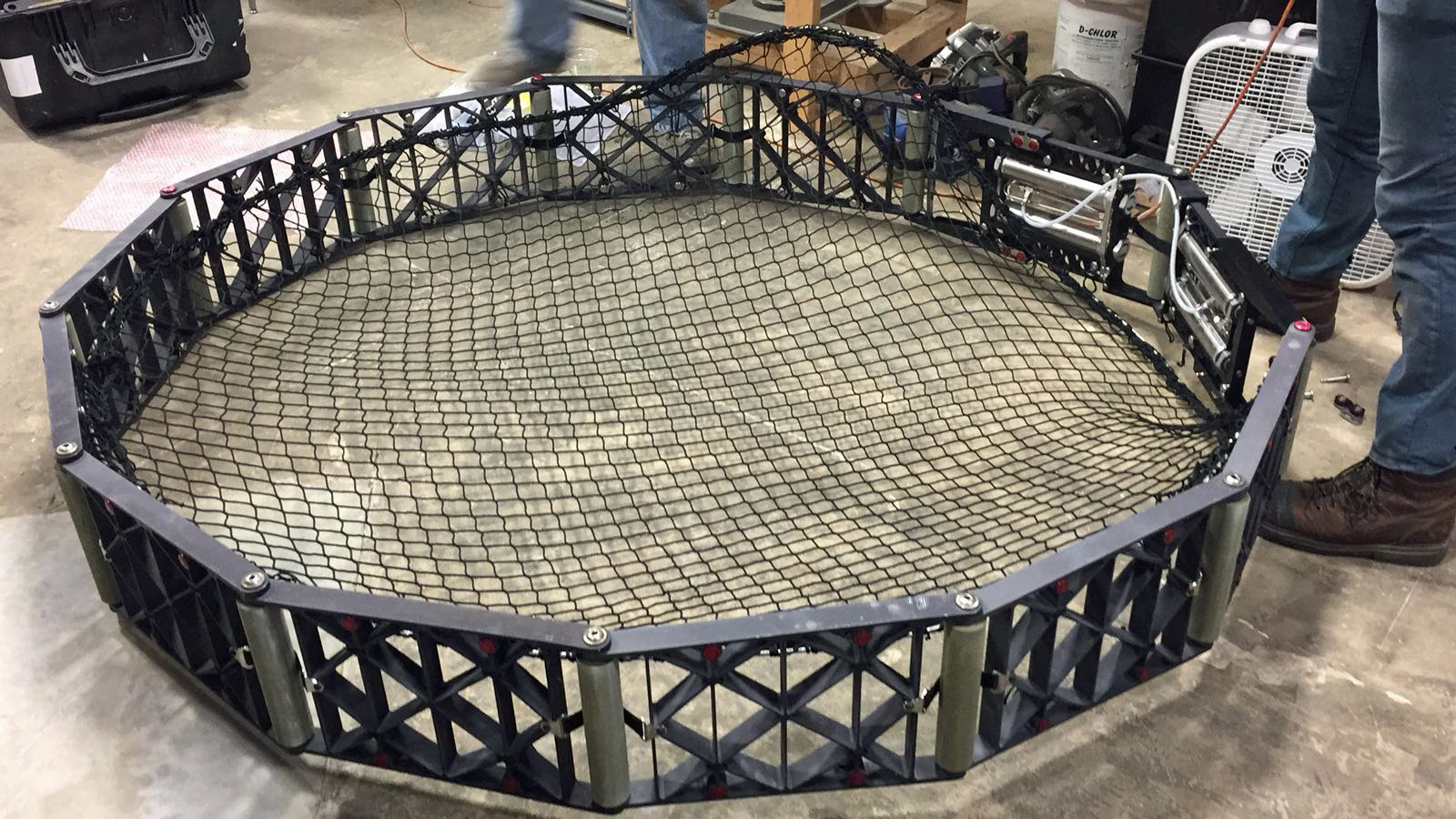
This week they came back. It took a lot longer to relieve the pressure than what they thought. This is the net that was inserted downstream, about 3 miles. It was there to catch the pipe diver.

Installing the net.

This is the equipment that was used to track their diver. It only took about 3-1/2 hours for the machine to flow by water pressure to the net.

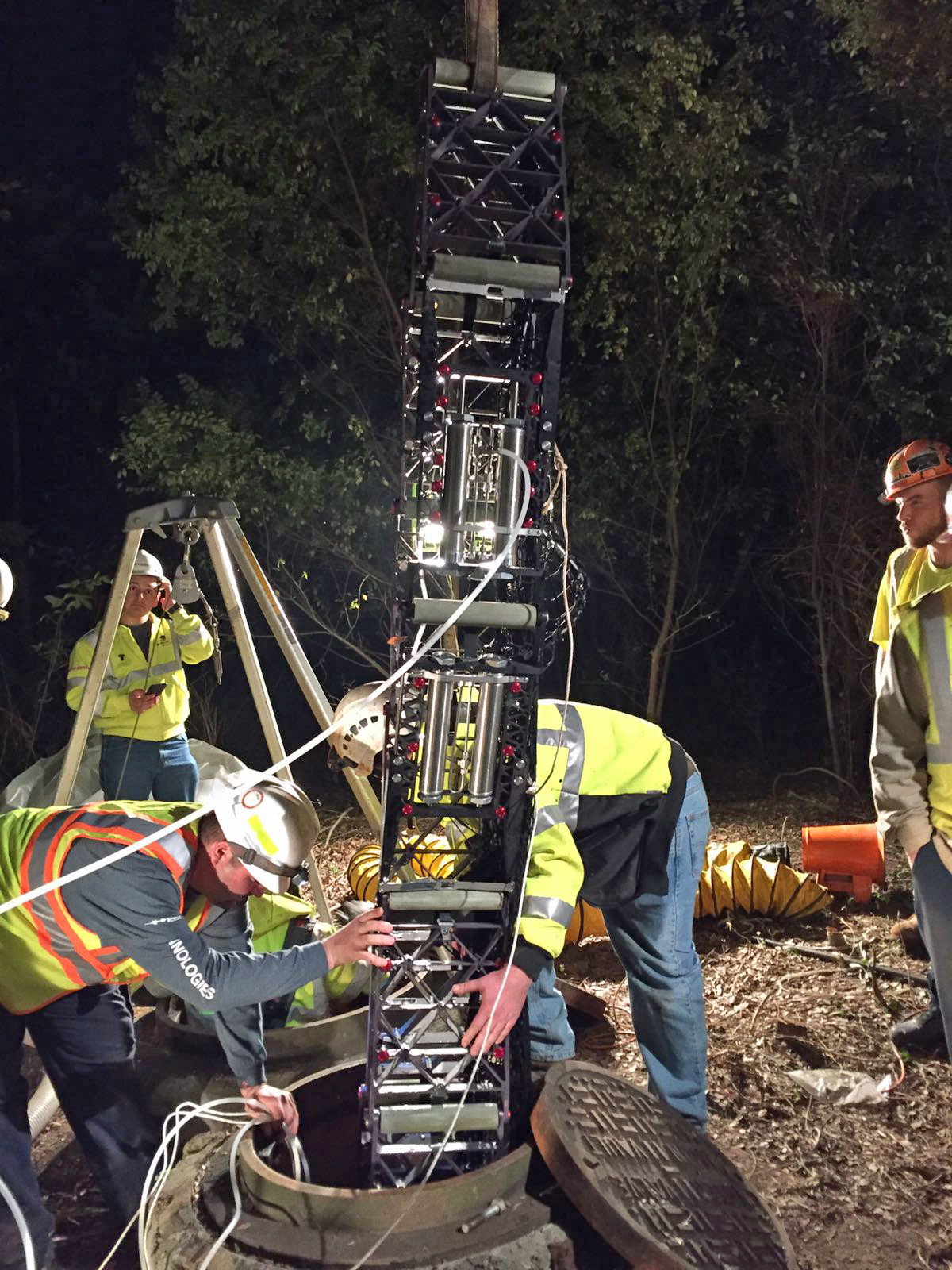
Removing the pipe diver tool. hopefully the information obtained is all good info – that the pipe doesn’t need repairs or in worse case, replacing.

One disturbing photo sent to me is this one, showing where ground cover has washed away, exposing the water pipe. I’ve lived around this stream for many years and I know the force of nature, during storms. Just a matter of time…

Waste Lake Before and After

05 Monday Dec 2016

Posted by Ronald Parks in Baltimore, filtration, water history

≈ 2 Comments

Tags

Baltimore, engineering, FILTRATION, Lake Montebello, Montebello, photography, Public Works, water history

The contract has been completed. Here are the before and after photos.

img_0469 untitled-1-2


Pre-Black Friday Sale

23 Wednesday Nov 2016

Posted by Ronald Parks in Baltimore, water history, Writing

≈ Leave a comment

Tags

Baltimore, engineering, FILTRATION, fluoride, Gunpowder Falls, Health, HISTORY, Lake Montebello, Montebello, POLITICS, Public Works, Research, water, water history, writing

Ok, time to order now for Christmas! Nothing like a little self promoting during the Holiday Season. (Thanks to the person(s) that bought 3 copies this month! My sales report does not list the buyers so I have no way to know who to thank)

These books are cheaper on Amazon than they are on the publisher’s pages. ALL proceeds from the sale of these books goes to Water For People.

This first book is a crazy story about Chuck and Gary and the misadventures that happen because of the fluoride in their toothpaste! I think this may have been an LSD induced novel. But more likely comes from all the research I did concerning the subject that I didn’t know what else to do with!bookcoverimage-1


This next one is about, well, it’s about what the title says it’s about. Taken from the journals of the building inspectors. Ten miners killed in an explosion – called an accident, but I don’t think so…

bookcoverimage-2


And this last one is also about what the title implies. Over 400 pages of more information you will probably ever need concerning water history. Plus a bunch of tidbits thrown in.bookcoverimage


← Older posts
Newer posts →

Blogroll

  • Flouride Action Network
  • lulu
  • My Book
  • WordPress.com
  • WordPress.org

Recent Posts

  • Bermuda 2023
  • ICELAND April 2023
  • George Chalmers of Fochabers
  • In Search of The Skipjack Ada Mae
  • Trap Pond Kayak

Blog at WordPress.com.

  • Subscribe Subscribed
    • Water and Me
    • Join 231 other subscribers
    • Already have a WordPress.com account? Log in now.
    • Water and Me
    • Subscribe Subscribed
    • Sign up
    • Log in
    • Report this content
    • View site in Reader
    • Manage subscriptions
    • Collapse this bar
 

Loading Comments...