• About
  • History Writings

Water and Me

Water and Me

Tag Archives: POLITICS

Baltimore Droughts – a brief history

27 Wednesday Jul 2016

Posted by Ronald Parks in Baltimore, Reservoir, water history

≈ 2 Comments

Tags

Baltimore, engineering, FILTRATION, Gunpowder Falls, HISTORY, Lake Montebello, Montebello, POLITICS, Public Works, water, water history

I have been asked numerous questions and for information on what is the procedure for the water plant, in dealing with drought scenarios? All new bosses asking. There are a lot of procedures that will need to be followed, so I will be updating the information I have collected over the years, all the different ways to keep Baltimore drinking water flowing. To be brief, when the reservoir at Loch Raven gets below an elevation of 235′, a decision will need to be made – Open gates at Prettyboy Dam, start low lift pumps, and/or introduce water from the Susquehanna River. Right now the 3 reservoirs are only about 1-2′ below normal. In most cases, when Prettyboy and Loch Raven drop, the pumps from the Susquehanna are used instead of our Low Lift Pumps. Here is a brief history:

1869 – 1870 – The City suffers a severe drought in the summers. It was concluded that the Jones’ Falls water supply was not sufficient for the future. After an investigation for a future water source, it was decided the source would be the Gunpowder Falls. Noting that due to the severe drought of this past year (1869), Engineers Curran and Martin went to the Great Gunpowder Falls to gauge its flow. In twenty-four hours, one hundred and sixty four million plus gallons flowed, which is twenty times more than the present supply. Following the drought was a heavy rain in October, during the farmers’ plowing of their fields. The runoff caused Druid Lake to be too muddy for the consumer. It was not fit for use for twenty-six days.
1872 – Notwithstanding the confident assertions and opinions of the advocates of the Jones’ Falls supply that there would be no want of water at any time after its introduction, in the severe drought of 1872 it became apparent that unless the Gunpowder was resorted to, Baltimore would encounter the risk of a water famine in every dry summer.
1877 – The temporary supply pumps (on the Gunpowder) were needed this year due to a drought.
1896 – Long drought.
1900 – There was a drought condition during the year. This was the first recorded drought during the use of Loch Raven water. The drought was referred to when the water consumption exceeded the total flow of the Gunpowder River. “An unusually severe drought occurred and the city escaped a water famine by the narrowest margin”
1910 – Worst drought, only 418 million gallons left in reserve storage, depleted 1.06 billion gallons of reserve storage. The year 1910 recorded the second drought since the City began using Loch Raven water as a water source.
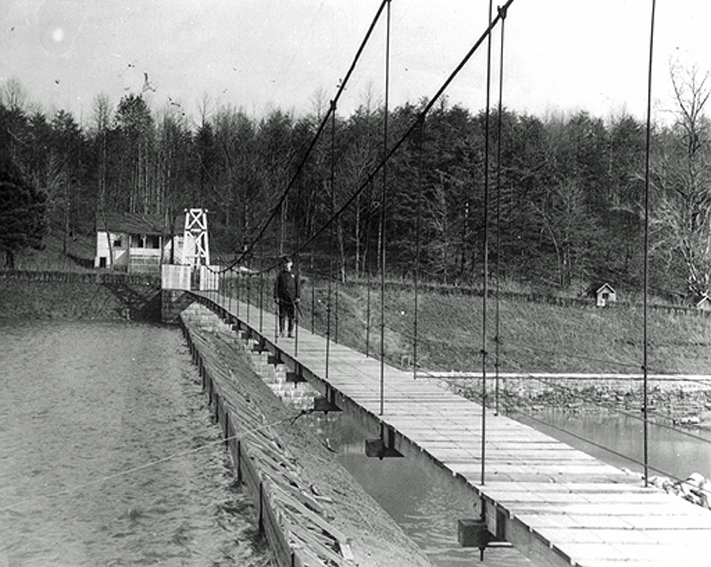
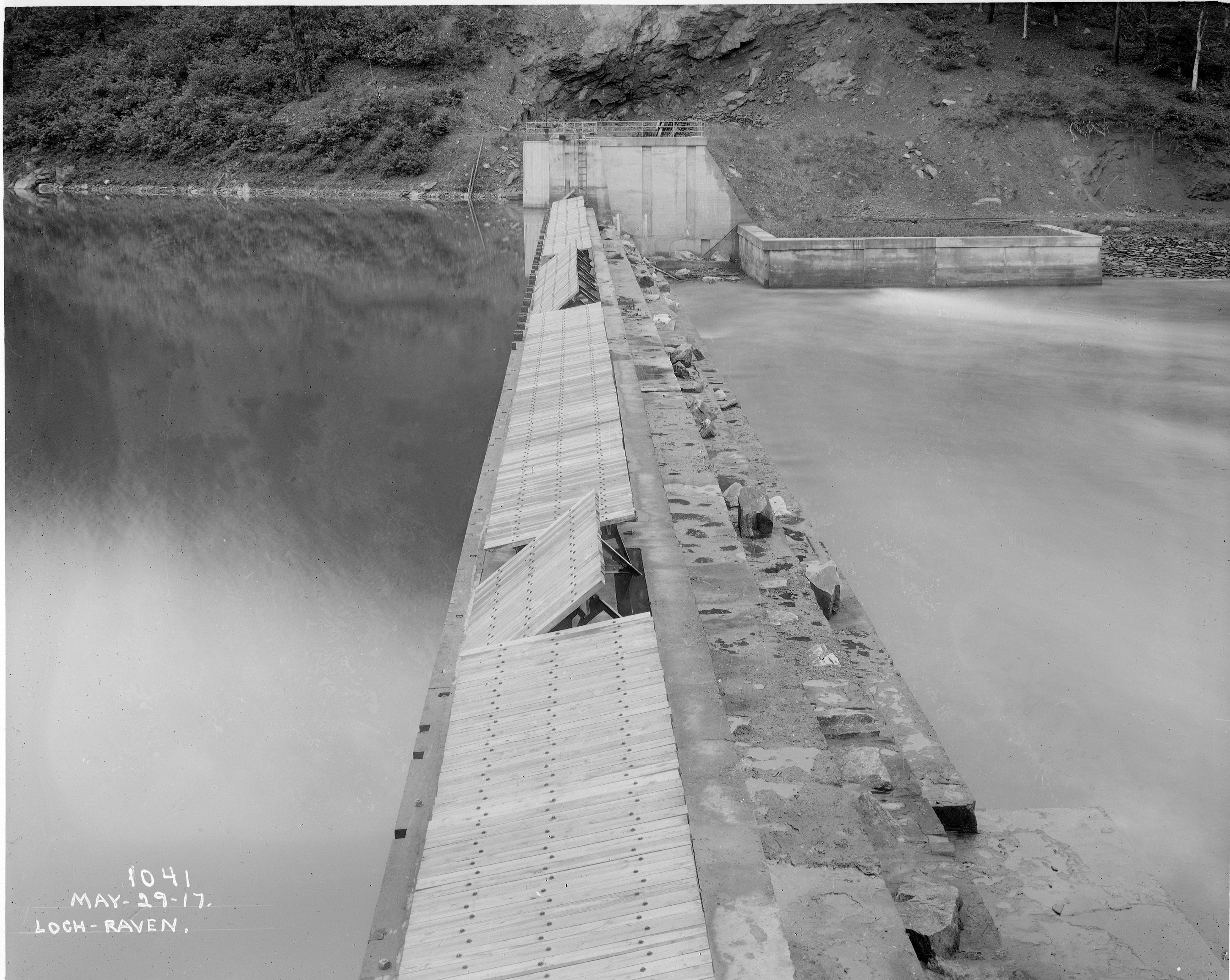
1911 – Due to drought, wooden flash boards were placed at the dam at Loch Raven and at the Waste Weirs at Lake Montebello and Lake Clifton in order to increase the storage capacity at each location by three to six feet in depth. (This is prior to the new dam being built in 1915)
Drought lochraven2

Drought LochRaven 5-17

The top photo shows the baffle boards on the original 1881 dam. The second photo shows that up until 1917 they still used the boards, this time on the second dam.

1914 – Recorded the third drought since the City began using Loch Raven. The average daily water consumption for the year 1914 was 72.677 million gallons. It was estimated the total population supplied was 593,000.
1929 – 1930 – There was a long continued drought this year with occasional spells of unusually hot weather. The lack of rainfall had actually begun in 1929. As of December 31, the Loch Raven Dam was at an elevation of 227.2 feet A.M.T. (Normal is 240’) The typhoid death rate had risen to 3.3 per 100,000. Because the typhoid death rate was rising in most of the eastern states, it was concluded that the prolonged drought was the contributing factor. As a result of the long drought, low flow of the Gunpowder River, and the depletion of the Loch Raven Reservoir, the Water Department decided to reclaim the water used for washing filters. It was estimated that 2,000,000 gallons of water could be saved each day. The water was pumped from the washwater reservoir and pumped into the raw water supply tunnel through the surge tank. (This building is still there, covered in overgrowth, pumps having been removed years ago).
1931 – The drought continued through the year 1931. As of December 31, 1931 the water level at the Loch Raven Dam was 15.5 feet below the crest which is 2.7 feet lower than at the beginning of the year.
1932 – The drought which started in July 1930 and continued through the entire year of 1931 came to an end in 1932. By May 14, 1932 the water finally ran over the crest of the dam at Loch Raven; and, on May 15 the water restrictions on the public were removed. On May 14 when the water started overflowing the crest at the dam, the preparation plans to use an emergency water supply and filtration plant at Avalon was discontinued. At Montebello, the emergency pump that was used to recycle washwater by discharging the washwater back into the raw water tunnel was discontinued when the water flowed over the dam.
1941 – There was a prolonged drought which caused a great drop in the Loch Raven Reservoir. It was then necessary to open the valve at the Prettyboy Reservoir (Dam crest elevation 520’). This was the first time that it was necessary to open the valve at Prettyboy to supply water to Loch Raven. The Prettyboy Reservoir construction had been completed in 1933. The valves remained opened until the spring rains came in 1942. Water quality improved from Prettyboy because of the aeration affect while the water traveled downstream.
1943 – In addition to the water consumption by the war industrial activity and the general population, there was a drought condition throughout summer and fall which in effect set a new daily water consumption record of 165.19 million gallons.
1955 – 1956 – The drought that began in December 1955 ended in February 1956. Liberty Dam (Dam crest elevation 420’) did not relieve effects of the two year drought. Mayor asks for study on scientific rain making.
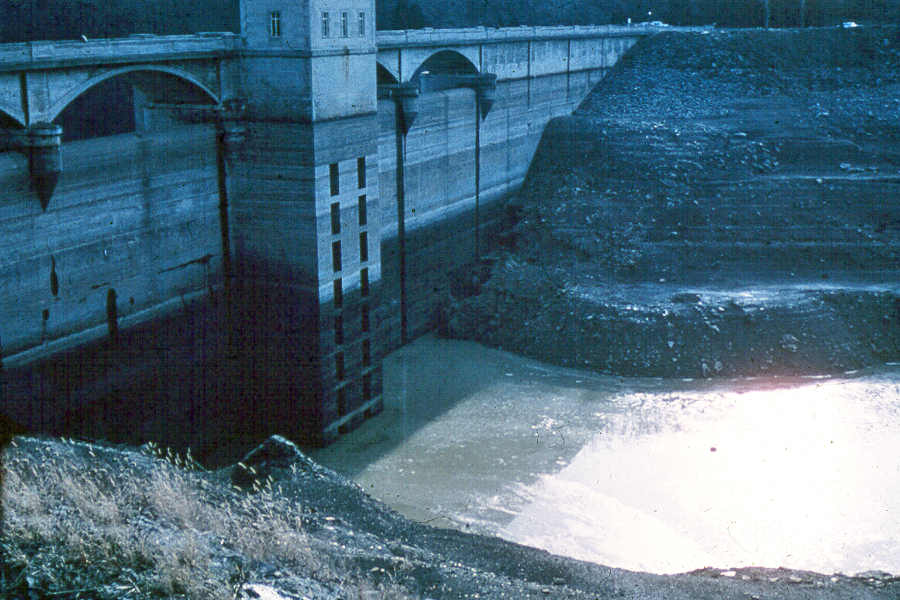
1965 – By the end of the year, the combined water storage of the three reservoirs was at 36.8% of full capacity. This serious deficiency led to the decision to activate the Susquehanna line as soon as the Susquehanna project was completed. The dedication of the completed Susquehanna project was being scheduled for January 28, 1966.
drought pb 65

Prettyboy drought in 1965.

1966 – Due to the continuing drought conditions, it became necessary by August 1966 to supply water to a part of Harford County via Winter’s Run. The water supply was accomplished by installing an emergency connection to the Susquehanna pipe line; and installing a meter and control valve set to discharge 1 MGD to Winter’s Run. The temporary connection was activated on August 5, 1966 through August 15, 1966. The temporary connection was then dismantled. Because of the low water level in Loch Raven, the low lift pumps at the Montebello Raw Water Distribution Center were operated from January 1, 1966 until February 21, 1966. On January 28, 1966, the Deer Creek Pumping Station was dedicated by Mayor Theodore R. McKeldin. By June 30, due to the drought conditions and water use, the raw water reservoirs were as follows: Liberty – 14.75 feet below crest; Loch Raven Reservoir – 7.2 feet below crest; and, Prettyboy Reservoir – 29.27 feet below crest. On March 28, 1966 the Bureau of Water Supply initiated the Montebello Plants to begin withdrawing 158 MGD of Susquehanna water via Deer Creek Pumping Station in an attempt to halt the decline and firm up the raw water reserves of the Gunpowder and Patapsco. By March 30, 1966 the Philadelphia Electric Company had opened the control gates at the Conowingo dam thereby dropping the water level; and, thereafter the Montebello Plants were restricted to withdrawing only 112 MGD from Susquehanna. On May 25, 1966 the elevation at Loch Raven reached 236.9 feet and pumpage from Susquehanna ceased. On June 10, 1966 one 56 MGD pump at Deer Creek Pumping Station was reactivated when the Loch Raven Reservoir dropped to elevation 234.75 feet. The water level continued to decline at Loch Raven and a second pump at Deer Creek Pumping Station went online on June 22, 1966. On November 16, the Susquehanna water was shut off because the water hardness had reached 200 ppm and the customers had been complaining about the quality of the water. On December 20, 1966 the Montebello Plants began blending 50 MGD of Susquehanna water with Loch Raven water.

Drought LL 1960

The low lift pumps suction well.

Drought Susq 253-D 1963

A section of the Susquehanna pipe line – 36 miles from the river to Baltimore.
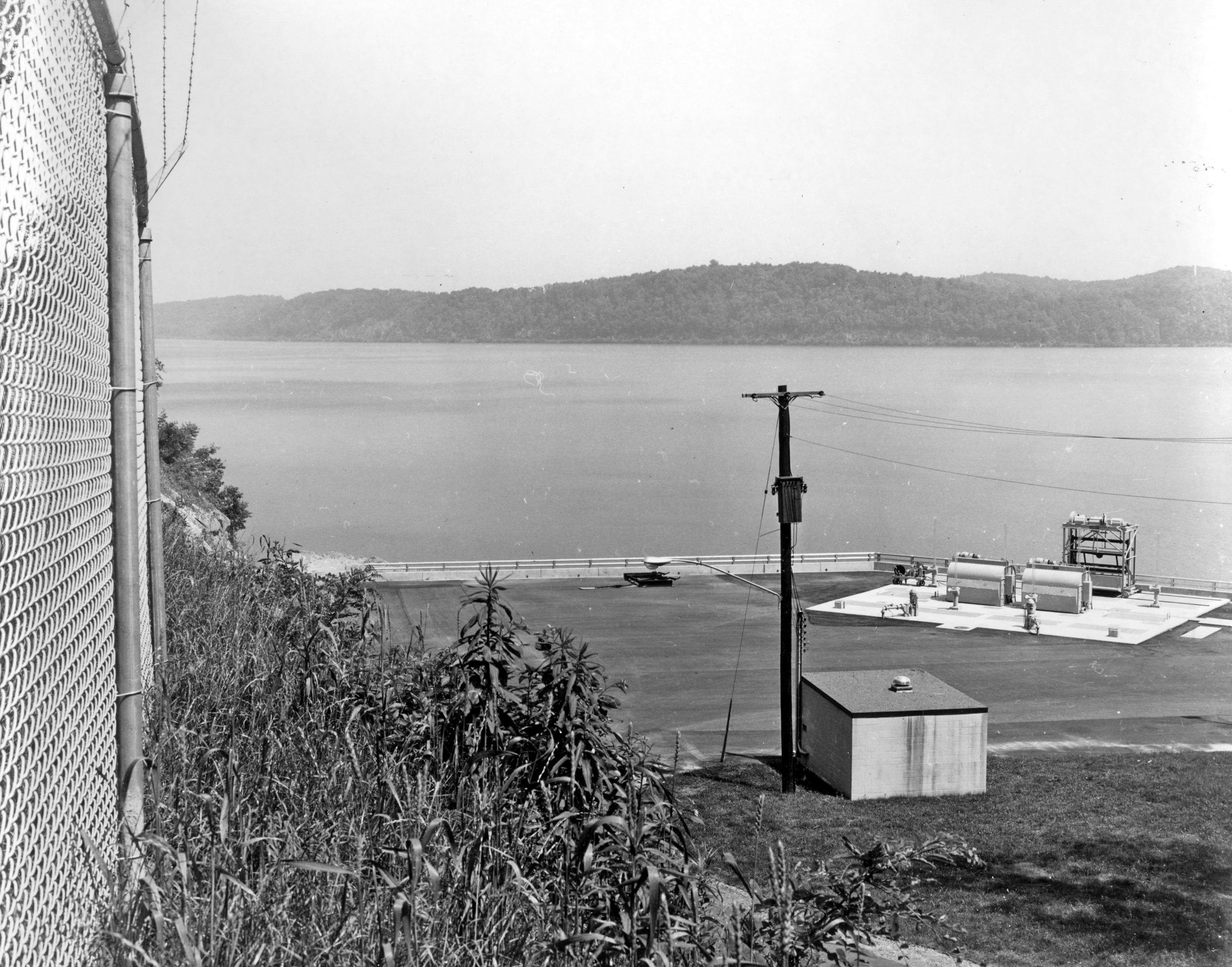
Drought DC552-D 1965

The intake structure on the Susquehanna River.
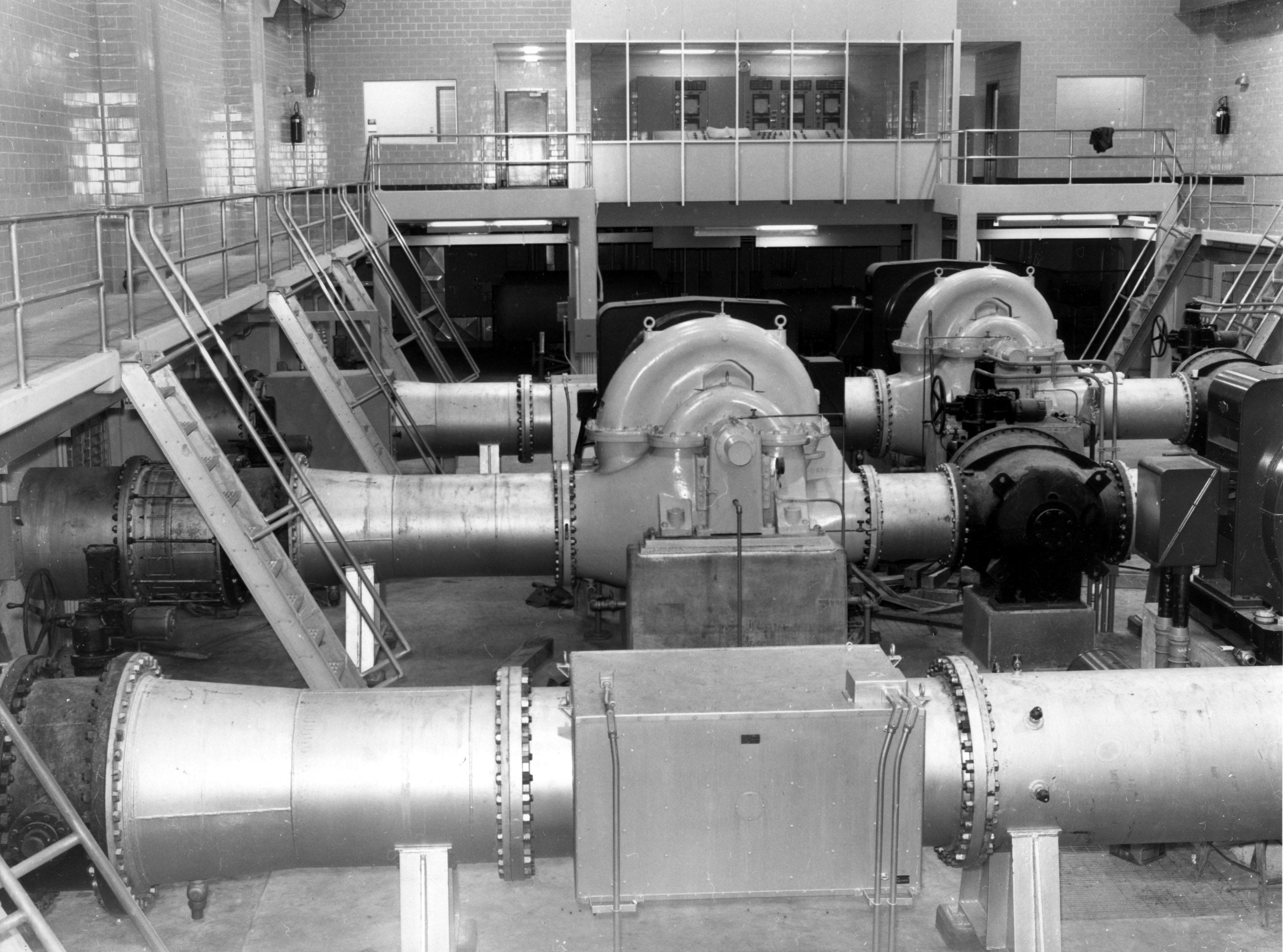
Drought DC670-D

The pumps at Deer Creek. Because of the variation in the elevation of the pipe line, the water will not flow by gravity, so pumps are used.

1968 – On May 30, 1968 all three raw water reservoirs were at overflow elevation for the first time since 1961.
2001 – 2002 – There was a drought during the year. The drop in elevations which had begun in August/September of 2001 continued through the year. Water Management tried to maintain Loch Raven at a certain level once the drought became official. Susquehanna water was required to be blended with the Loch Raven water until the drought was over. By the end of December all three raw water reservoirs were at the following elevations: Loch Raven Reservoir was at about full capacity; Prettyboy Reservoir was down by about 25 feet below full capacity or about 1.5 feet below 50% full; and, Liberty Reservoir was down by about 22.5 feet below full capacity or about 1 foot below 50% full.

Drought LR 02

Loch Raven in 2002

Drought PB 02

Prettyboy in 2002

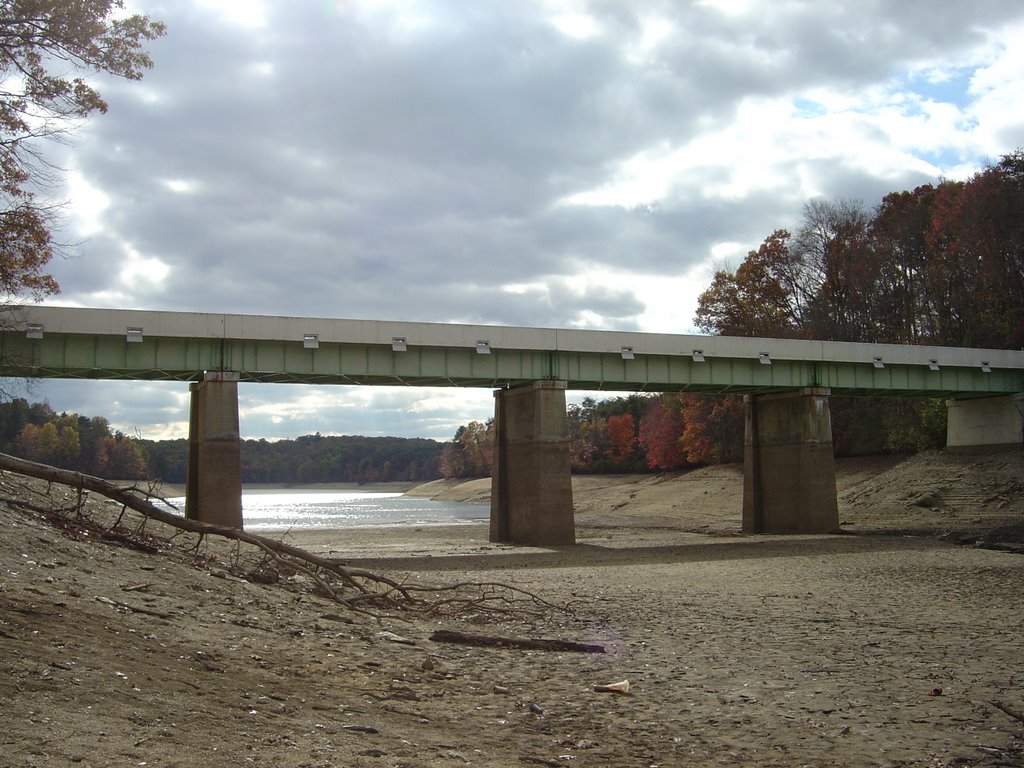
2007 – Low accumulation of snow during the year and the lack of rain during summer/fall created a strain on the reservoirs towards the end of the year, creating a drought scenario. The Loch Raven Reservoir dropped below full capacity by the end of June, and by the beginning of December was at an elevation of 233.8 feet, about 6.2 feet below full capacity or about 1.3 feet above 75% full. Water Management at this time was trying to balance the elevations between Loch Raven and Prettyboy so that Loch Raven would not overflow while Prettyboy remained significantly low, should the groundwater increased the raw water levels, as had happened in 2002. The Prettyboy Reservoir dropped below full capacity by the end of May and continued dropping for months. By the beginning of December, Prettyboy Reservoir was at an elevation of 497.3 feet, about 23 feet below full capacity or about 0.8 feet above 50% full. The Liberty Reservoir dropped below full capacity by the end of May and continued dropping for the remainder of the year. By the beginning of December, Liberty Reservoir was at an elevation of 407.08 feet, about 13 feet below full capacity or about 3 feet below 75% full. On December 11, 2007 it was planned by Water Management to open the Susquehanna line to relieve the dwindling raw water reservoir levels. The opening of the Susquehanna line was delayed due to the Director’s health and eventual death, which also delayed notification to the public of a pending drought situation and the planned opening of the Susquehanna line. Days later after the death of the Director, the public was notified of the pending drought situation and the Susquehanna water line would be opened on December 18, 2007, first to flush the line of brackish water before blending with Loch Raven raw water.
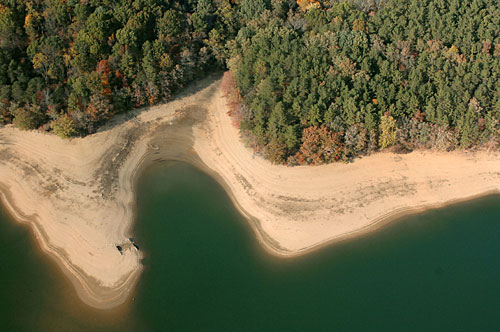
Drought pb 07

Prettyboy in 2007

Drought pb 07b

Prettyboy in 2007

Note – some of these photos come from the dPW collection, some from people sending to me and some downloaded from US Geological.

Clifton Gate House – new project

21 Thursday Jul 2016

Posted by Ronald Parks in Baltimore, HISTORY, Reservoir, water history

≈ Leave a comment

Tags

Baltimore, engineering, FILTRATION, Graves, HISTORY, Lake Clifton, POLITICS, Public Works, water, water history

There is a renewed interest in restoring the old Clifton Gate House. I have been invited to another meeting to determine what is to be done with it. I went to one of these meetings a while ago. A farmer wanted to turn it into a weekend farmers market. He said he had $10,000 he was willing to invest in repairs! That wouldn’t cover one small portion of the roof (Spanish tiles are expensive!) An interested party for this meeting is Civic Works. I hope they get the ok to take it over. They are currently restoring the Clifton Mansion in Clifton Park. Former estate of Johns Hopkins. It is a great project being done. I enjoy going on tours there.
The reservoir, piping and gate house were built between the years 1875 and 1888. The tunnel work between the Montebello Reservoir and the Clifton Estate commenced on August 16, 1876. In 1877 it was suggested to construct an additional lake at Clifton. In 1878 the Clifton Tunnel was completed and brick arched. The decision was made by the Water Board to go ahead and create an additional reservoir at Clifton. This work started in 1879. By 1881 the Lake Clifton construction was left unfinished due to lack of funds. The Clifton gate chamber was completed and a wooden shed is built over it to protect the iron work from the weather. Because of lack of funds, work halted on the lake and did not resume until 1884. (Water was sent to the City via the valves under the wooden shed)(Wish I could find a photo of that!)
Work at Lake Clifton progressed satisfactorily during 1887. The tunnel connecting Lake Clifton to Lake Montebello was in thorough working order. The gate-house superstructure is well under way. It is believed that it is advanced enough where water can be let into the Lake during the year 1888.
1888 – Lake Clifton is finally completed and put into service on December 27, 1888. Lake Clifton has a full capacity of 265 million gallons of water. The water area is 30 acres and is 30 feet deep and has the same elevation as Lake Montebello. (The completion stone for the gate house says 1887)

c3

From a postcard, soon after building.

c2

The lake (reservoir) in service and supplying water to the City.

c7

The completion stone 1887.

c1

Interior view a couple years ago.

c6

Neglected roof.

c4

The lake after being drained, to make room for a new school. Graves were found here.

c5

Clifton Mansion being restored by Civic Works. From up in the tower you can see the gate house and the outline of where the lake was.

Graffiti as History

13 Wednesday Jul 2016

Posted by Ronald Parks in Baltimore, HISTORY

≈ 1 Comment

Tags

art, Baltimore, graffiti, HISTORY, Monuments, POLITICS, preservation, Statues

img013a

During last night’s class on Historic Preservation, the topic of graffiti came up for a brief moment. There is apparently two sets of graffiti inside the Washington Monument in downtown Baltimore. Those written in the base of the monument, dating back, possibly to the mid-1800s and that written in the tower, which was most recently done. There is an attempt to figure out and preserve the graffiti in the base, but yet, the graffiti in the tower is vulgar, obscene and must be removed! I posed this question to the group; wouldn’t the tower graffiti be historic in 100 years? A couple people were adamant that this type of graffiti is not historic.

So that got me thinking – who determines this? Who is to say what is vulgar and what is historic? A quick Google search of Roman Graffiti shows many sites with graffiti quotes that the Romans plastered everywhere. Did this graffiti tell a story of the social lives of people? Was Pompeii a den of iniquity? What about cave drawings? Supposed it was found out that these were all sexual in nature? Would they be removed? And petroglyphs? Rock carvings, some of which may be considered animal cruelty. Or are they the tales of various cultures?

I do not condone graffiti. I was once (when I was 17) considering writing a book about it while hitch hiking cross country. I was amazed at the different graffiti scribbled on the bathroom stalls of gas stations. Short stories and quotes about toilet paper (or the lack thereof) and where to get the best sex in town! Did this graffiti describe nomadic living? I’ve seen much graffiti that defaces public spaces and right next to it will be graffiti, renamed as a commissioned art piece. Who determines which of the two are really works of art? I’ve seen a lot of graffiti that were truly works of art. Someone I know went under a bridge, saw graffiti and did a painting of it. It was really good and I tried to buy her original artwork at auction but was outbid by many others.

Montebello Waste Lakes

05 Tuesday Jul 2016

Posted by Ronald Parks in Baltimore, water history

≈ Leave a comment

Tags

aerial, Baltimore, drone, engineering, FILTRATION, Health, HISTORY, Lake Montebello, maps, Montebello, POLITICS, Public Works, water, water history

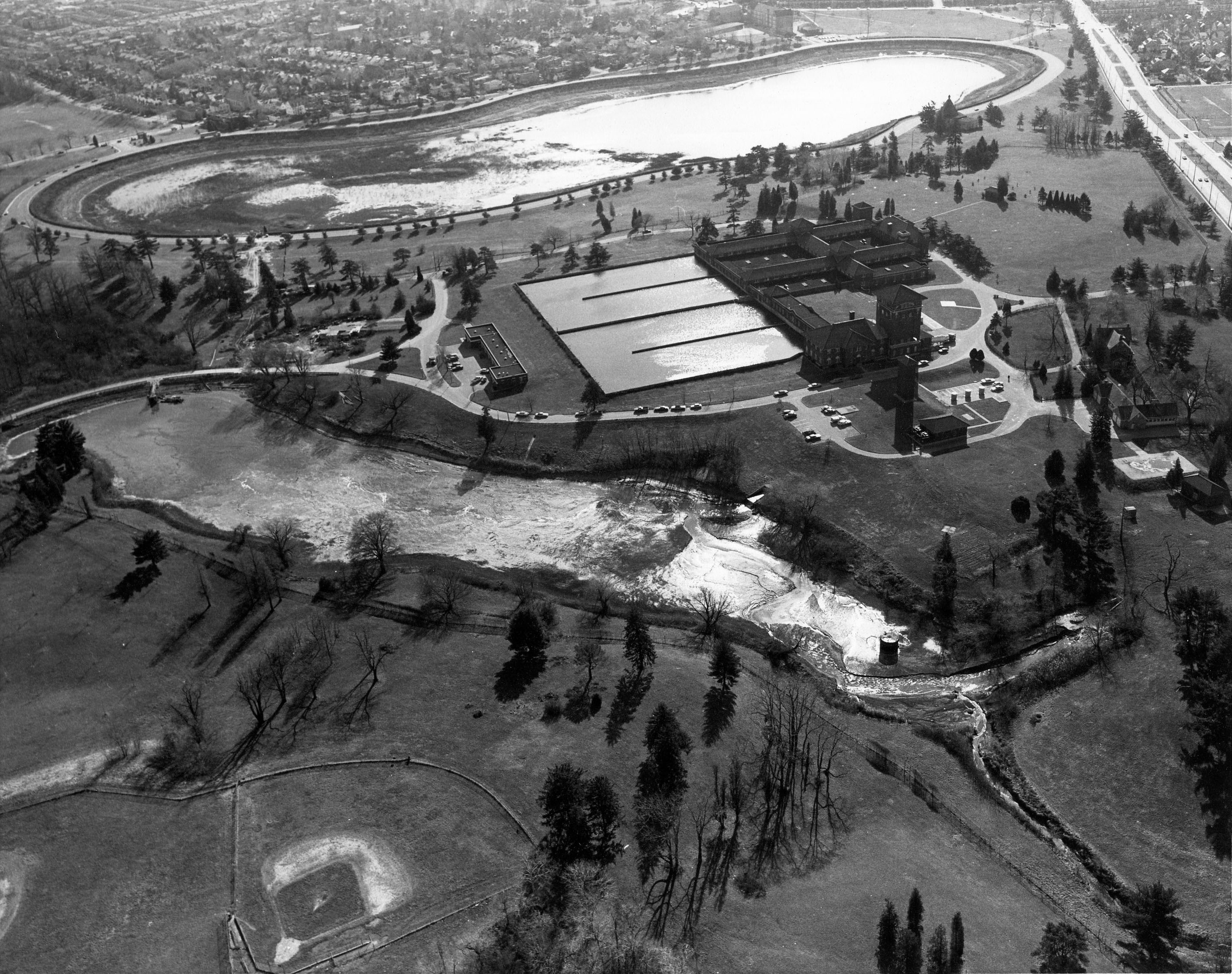
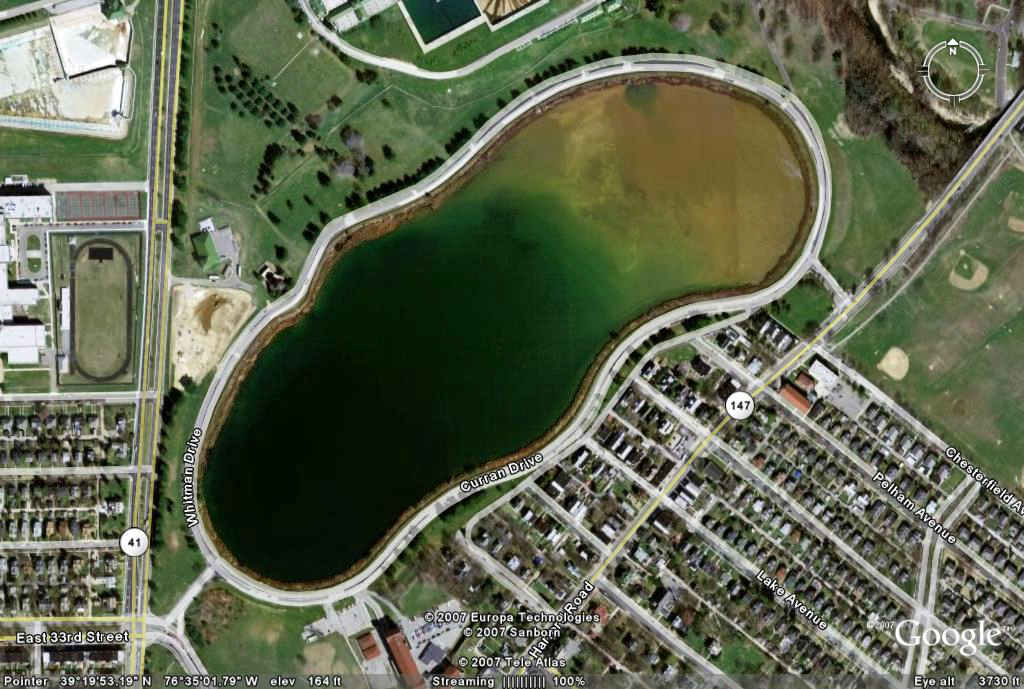
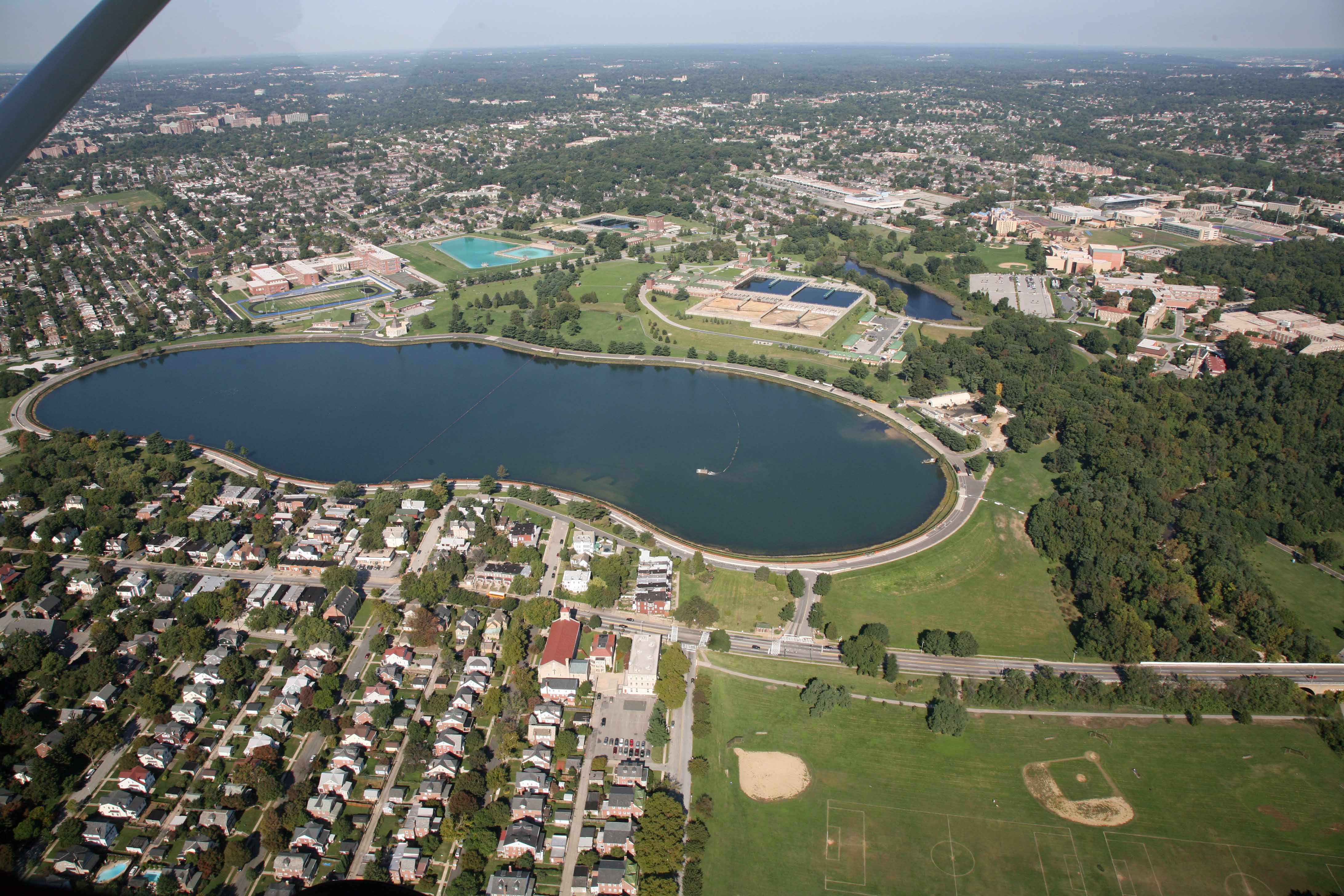
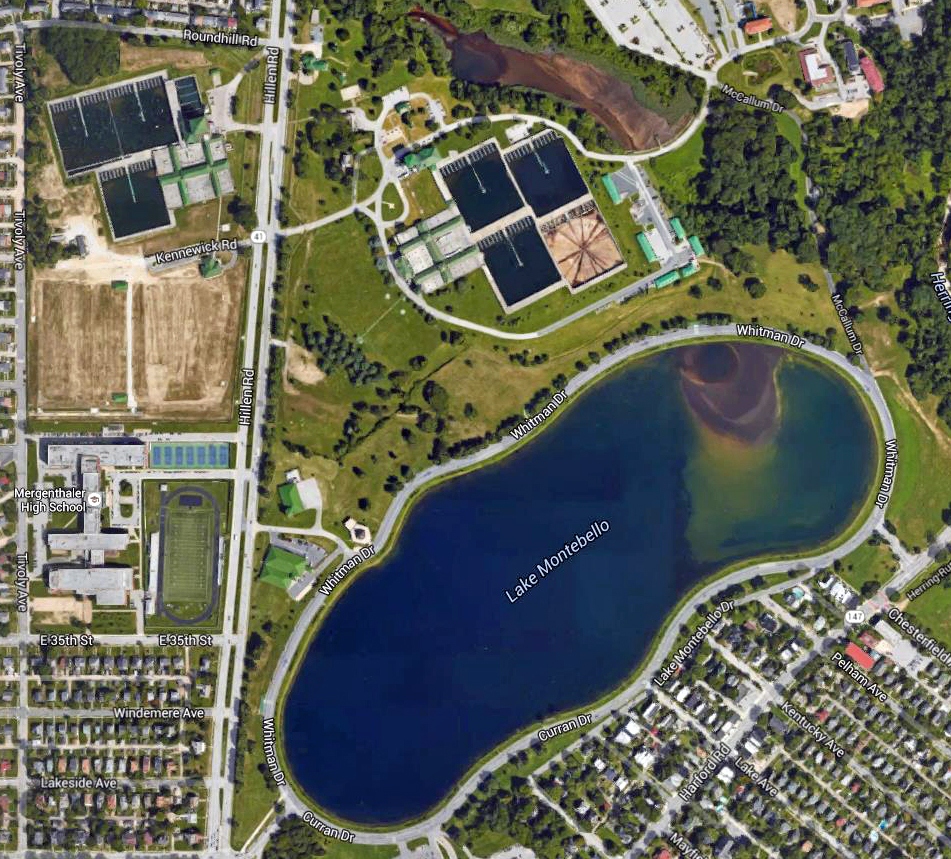
Yes, there are two waste lakes at Montebello. The large one that people use every day as a park and a smaller one, hidden from view, on the filtration plant property. The large one was at one time (1881-1915) used as drinking water. The small one (1915) has always been used to settle out the waste by-products of the filtration process.

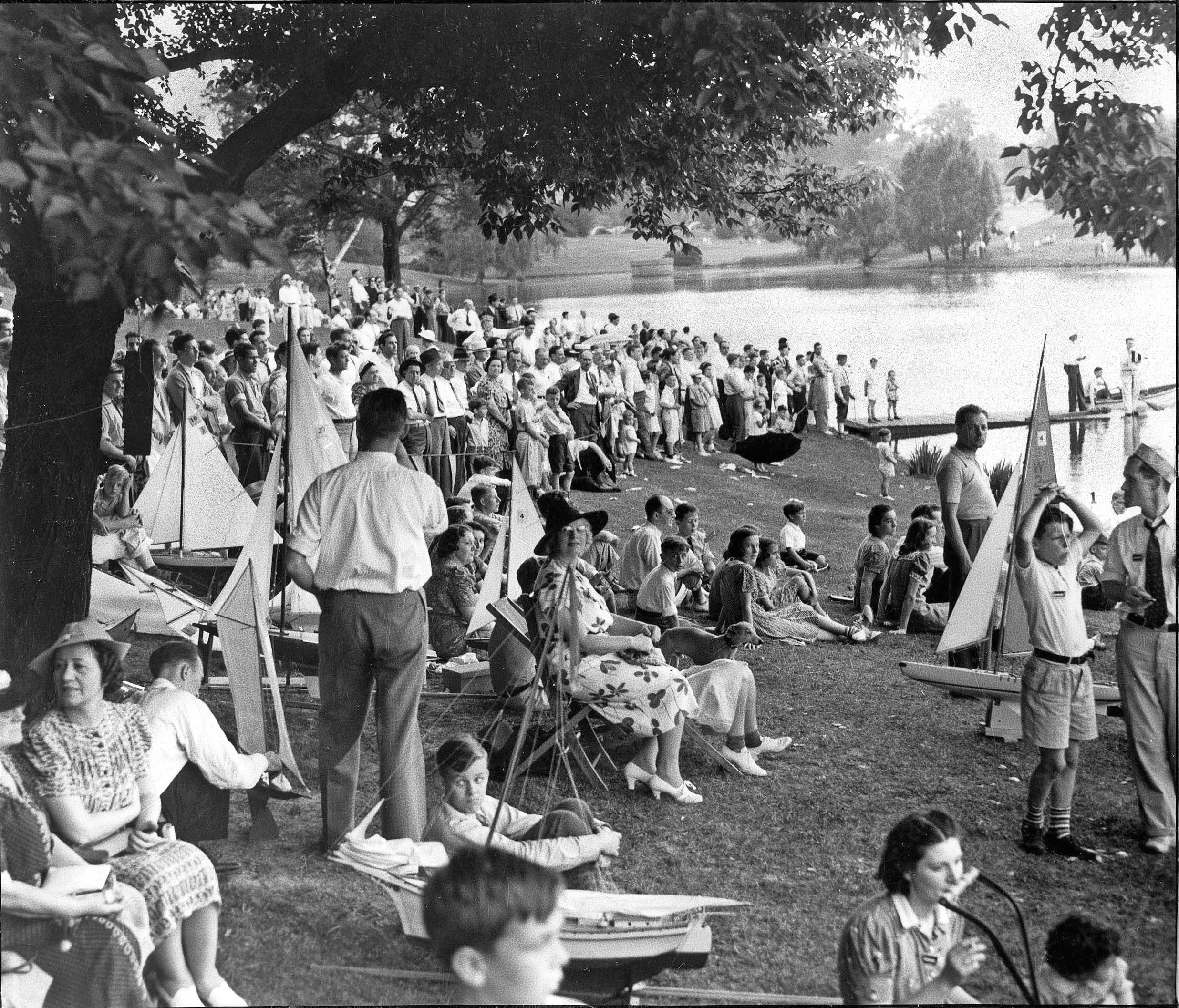
To the dismay of the Filter Engineer, he was forced to allow the Model Yacht Club to use the small lake for their club activities in the late 1930s. Sometimes when he was pissed off, he would drain the lake down. At the start of WWII, for security reasons, the club could no longer use the lake.

wl1939

wl1939b

Because of the amount of water processed and the waste created by this process, the lakes would need dredging. It was a lot easier to dredge the smaller one than to do the big one. Unfortunately, the dredged material would be pumped into the big lake. That one was to be dredged every 30 years. An optimal plan would be to dredge the small lake every five years.

wl1978

In 1978 thru 1984, the small lake was dredged.

wl1984

What was called a “sonic survey” took place in 1984, this was to show the nearby residents what needed to be done to the lakes. Both lakes were partially drained to show the amount of sludge build-up.

wl2003

This is a google map aerial of the lake in 2003. The brown sludge build-up is the overflow from the small lake. (Note that Google Map dates are not always correct)

wl2007

2005-2007 a portion of the small lake was dredged and a little over 1/3 of the big lake. Why? Money constraints. They should have completely dredged both lakes, but consulting engineers and politics dictates what goes on.

wl2010

By 2010 the small waste lake is practically filled, again (to the lower right of the 4 square basins) and it is now flowing into the large lake (Hard to see but it is in the lower right corner)

wl2015

By 2013 the big lake starts filling up rather quickly. The small lake is full

wl2016b

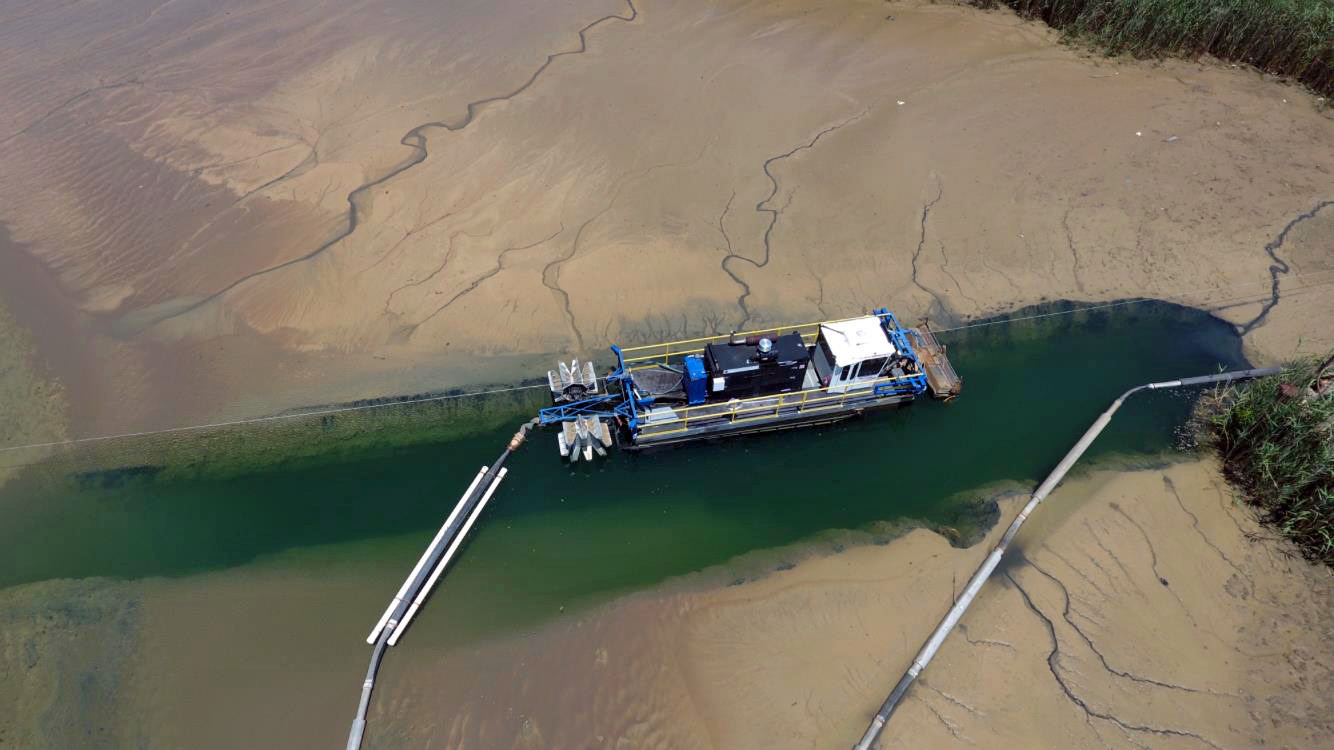
In 2016 it was decided to start dredging the small lake, only partially??

wl2016

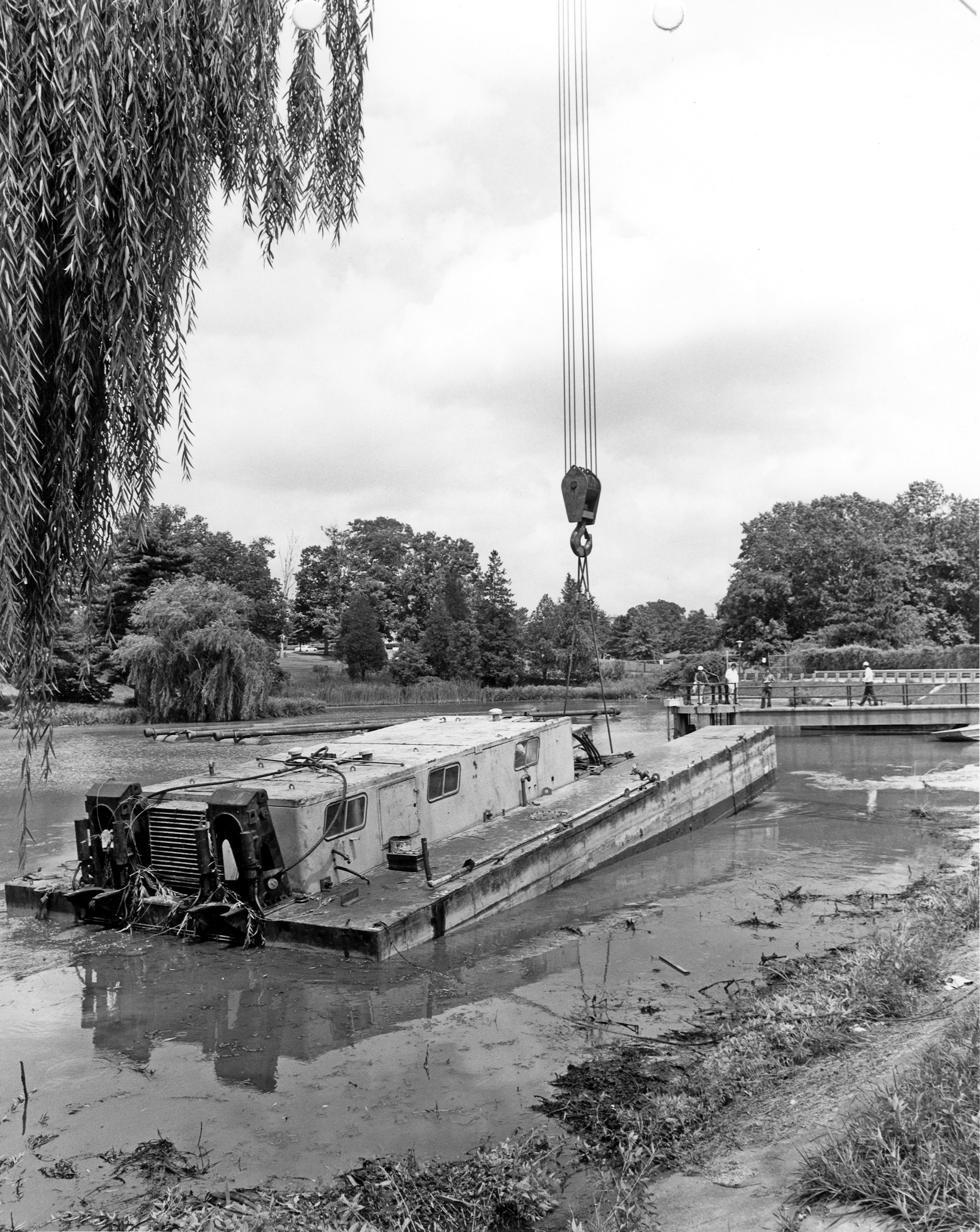
The present day dredge cutting a path thru the sludge. The waste lake is about 30 feet deep here. they have only reached 17 feet (Photo courtesy Merrill Bros. drone)

What Baltimore Could Have Looked Like 1916

30 Thursday Jun 2016

Posted by Ronald Parks in Baltimore, HISTORY, water history

≈ Leave a comment

Tags

Baltimore, engineering, Geology, HISTORY, Jones Falls, maps, POLITICS, Public Works, water history

Here is a 1916 map of the Geological Survey showing the proposals of Senators Ogden and Campbell. They each had their own ideas on how Baltimore should look back then.

BaltiEnlarg1916r

I like how this map shows the reservoirs and the water supply conduits. Of interest to me is the reservoir at Philadelphia Rd. and the Mt Royal Reservoir. There was another Mt Royal one built in 1845. This new one received a name change for some reason.

1845 Original Mount Royal Reservoir:  Started construction of a new reservoir on the east side of Jones Falls above the Belvedere Bridge.

1846 Original Mount Royal Reservoir: The new reservoir replaced the old reservoir located on Calvert Street, and in addition, supplied water to the section of the City east of Jones Falls.  The new reservoir was 18 feet deep, with seven acres of water surface, and a capacity of 15 million gallons.  According to the Maryland Historical Trust Maryland Inventory of Historic Properties Form for the City of Baltimore, Loch Raven Dam, submitted to MHT 1-17-96, this 15 million gallon reservoir was also known as Mount Royal Reservoir.  This Mount Royal Reservoir was built near the location known in the year 1996 as Pennsylvania Station. By 1862, this Mount Royal Reservoir would be abandoned; and, the name of the Mount Royal Reservoir would be transferred to a new reservoir at a different location. (From early water history notes, R. Vann)

Entrance to the Jones Falls

20 Monday Jun 2016

Posted by Ronald Parks in Baltimore, HISTORY, Sewage History

≈ 1 Comment

Tags

Baltimore, bricks, engineering, HISTORY, Jones Falls, photography, POLITICS, Public Works, sewage, Sewage History

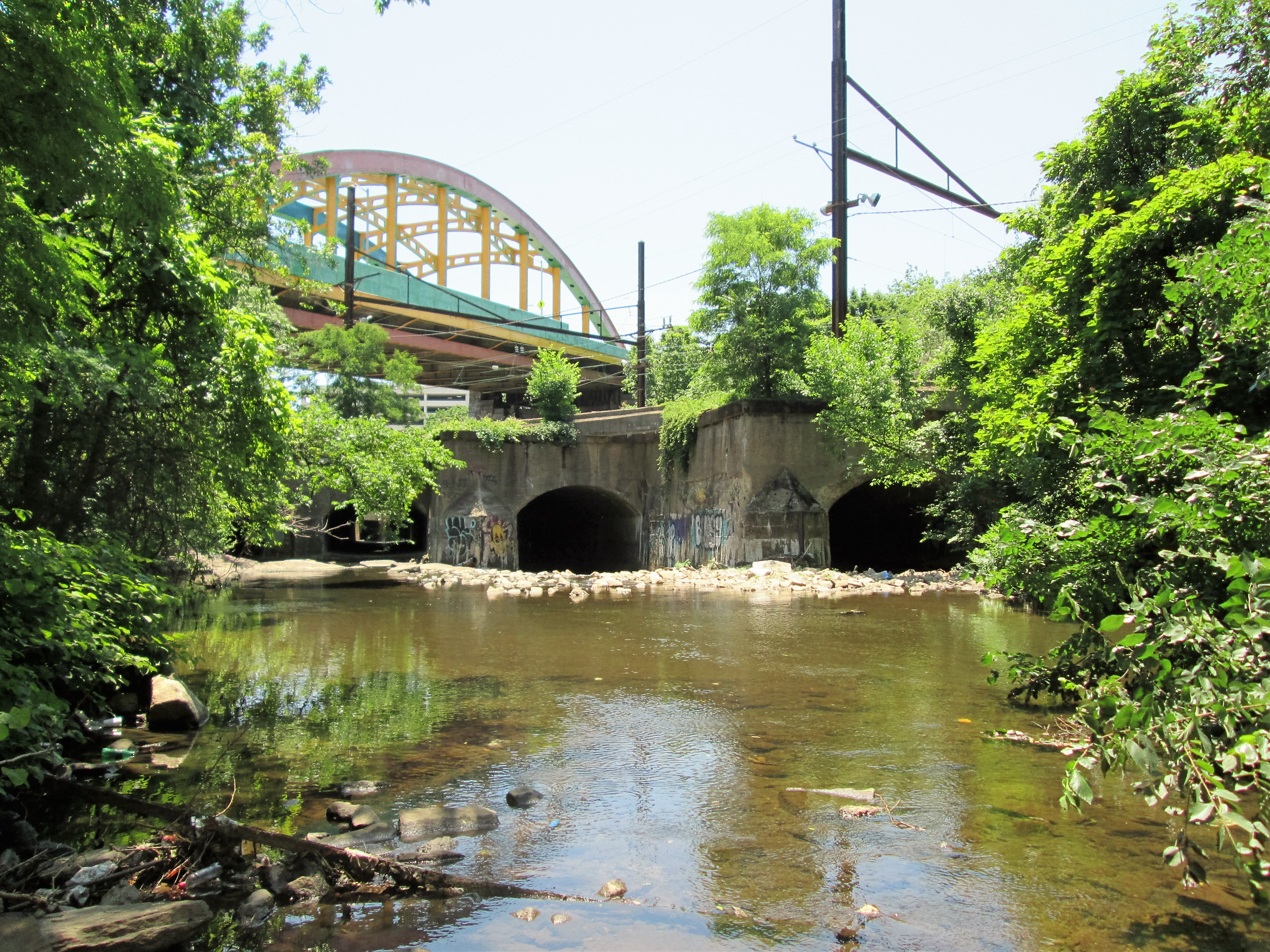
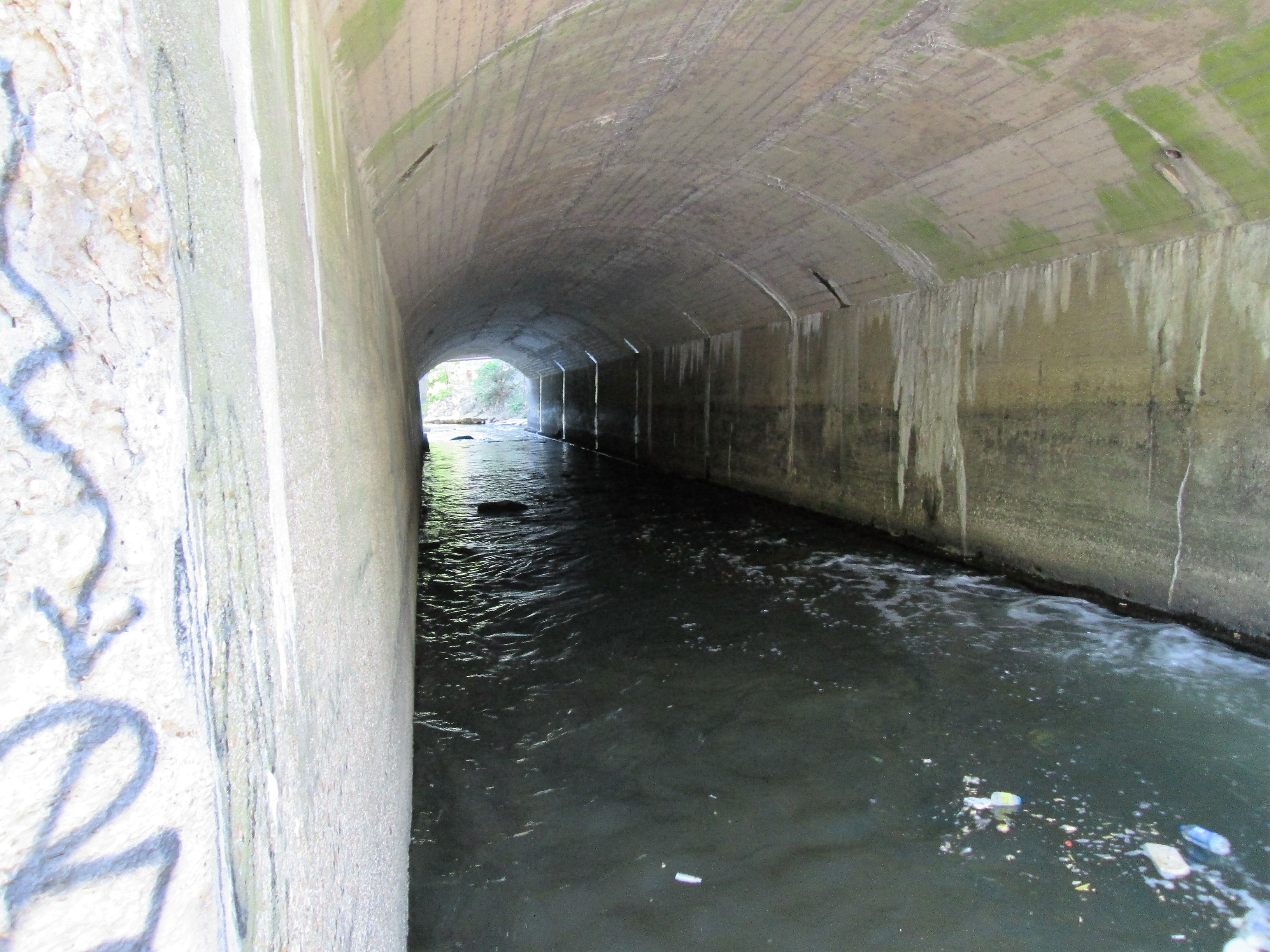
On sunday I went looking for the entry point of the Jones Falls conduit. Here is the 1912 description of where it should be:

The extent of this improvement (Jones Falls conduit) will be from Baltimore street bridge to the westerly side of Maryland avenue, a distance of approximately 8,850 linear feet. The structure planned is of reinforced concrete with a flat roof, designed to carry the heaviest city traffic, and curved inverts, lined with vitrified brick. This design was selected after considerable effort to find an arched structure which would fill the requirements and keep the expense within a reasonable figure. The lack of head room over a considerable part of the distance to be covered made the problem very difficult. The structure proposed can be erected without disturbing the present retaining walls, the invert of the east conduit being first erected to carry the ordinary flow of water while the other conduits are under construction. As the retaining walls are not to be taken down they can be reckoned upon to give side support to the structure which, in consequence, has not been designed to carry all of the lateral pressure which the side banks would impart to it if not already safely supported.

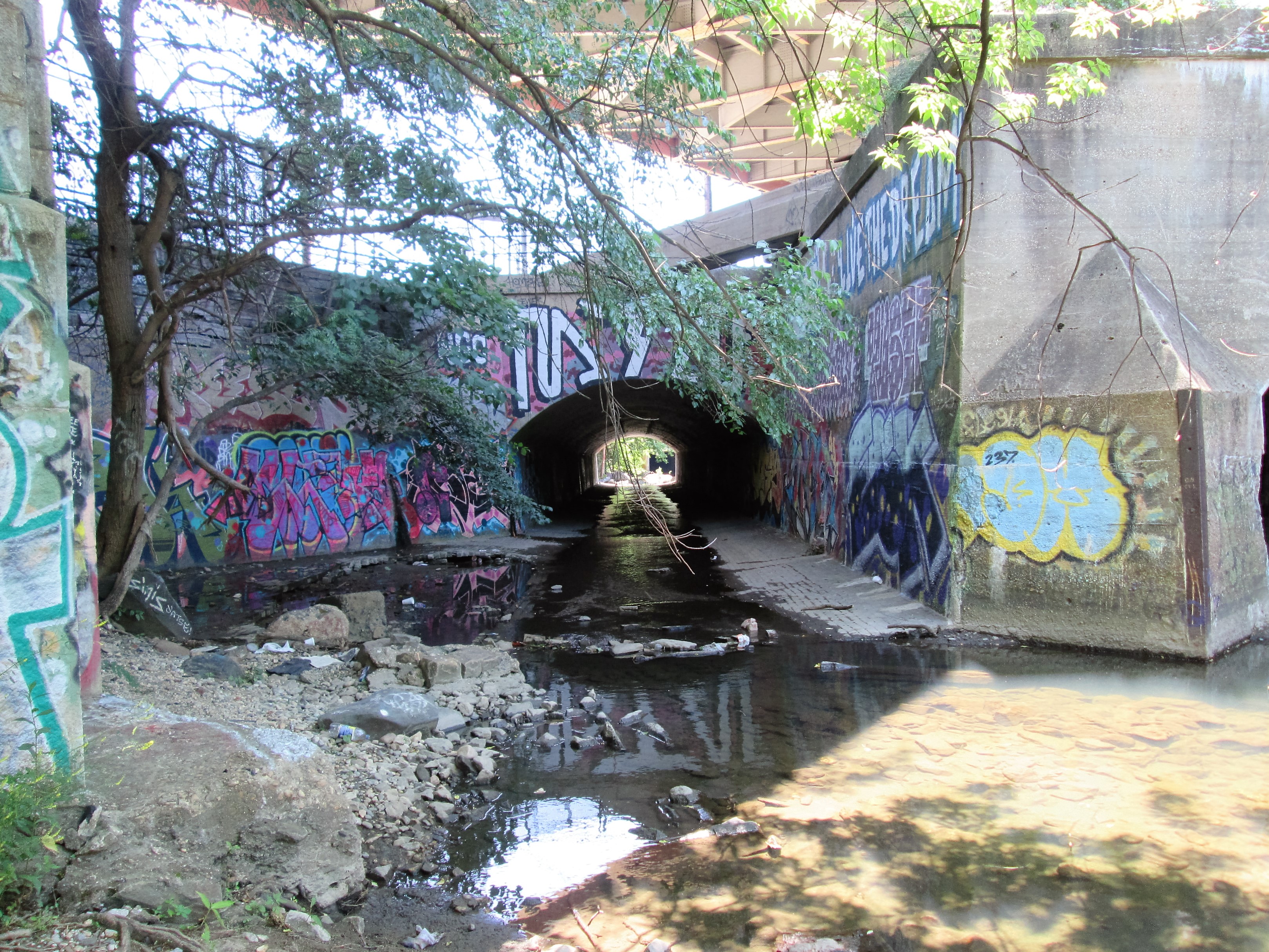
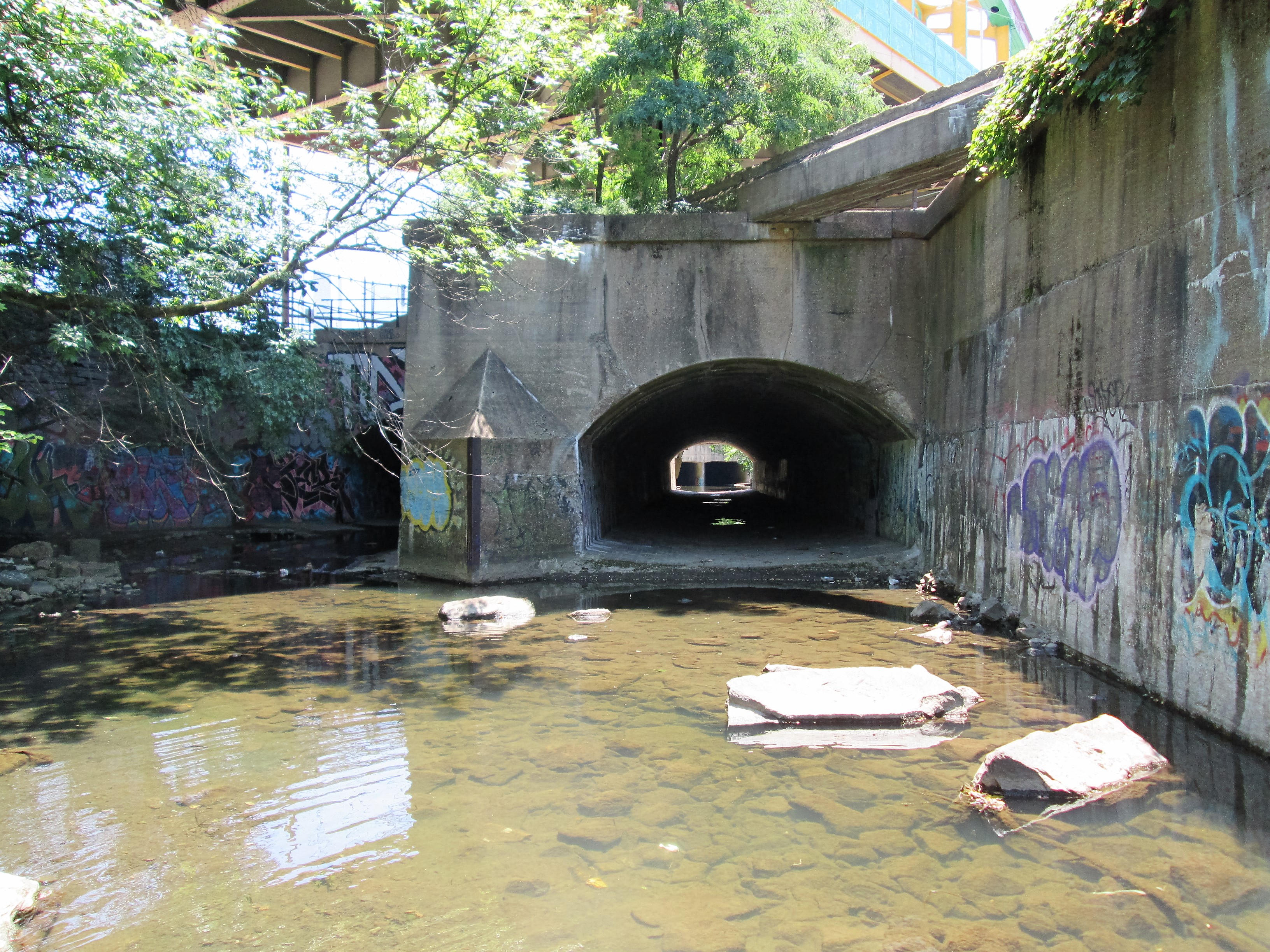
A quick view of Google maps is deceiving because of all the growth under and around the JFX. The plain map view shows the Falls ending right about under Howard St. So there I went. This portion appears to have been built later – for the light rail and Amtrak? Looking thru the tunnels you can see daylight and I believe this is where the actual entrance starts. Didn’t have my water shoes on so I didn’t venture thru the first set of tunnels And it actually smelt pretty bad there – sewage! (Sewage does not belong in the Jones Falls!)

Here is a link to some guys who actually went into the tunnels – amazing and I thank them for the trip!

http://ronniekirchner.com/jones-falls-conduit/077

Howard Street bridge up above

086


094


103


070 (2)

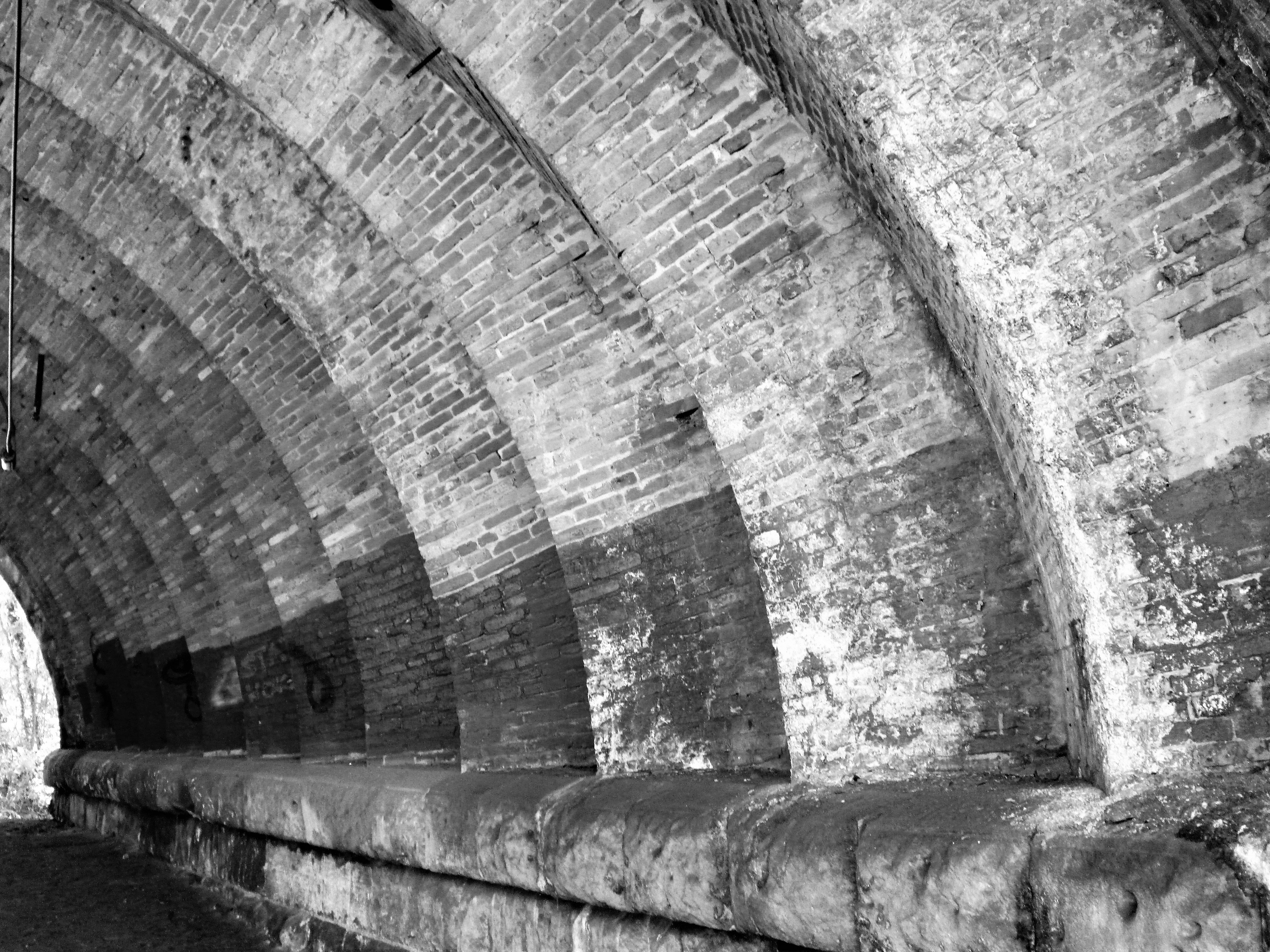
I just added this last one because I like the brick-work.

Bridges Along the Jones Falls

17 Friday Jun 2016

Posted by Ronald Parks in Baltimore, HISTORY, Sewage History

≈ 3 Comments

Tags

Baltimore, boats, bridges, engineering, glass plate negatives, Health, HISTORY, Jones Falls, POLITICS, Public Works, sewage, Sewage History, water history

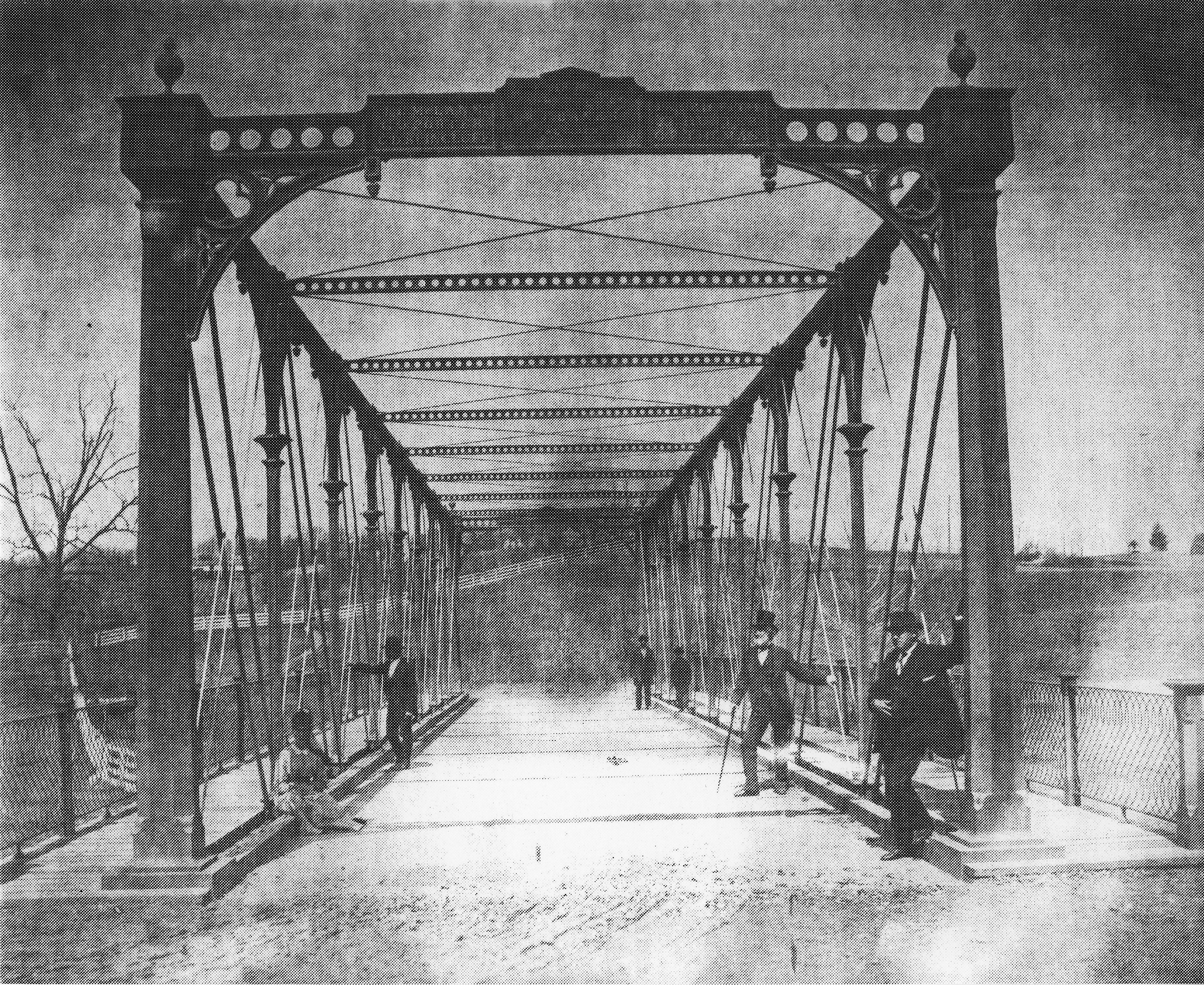
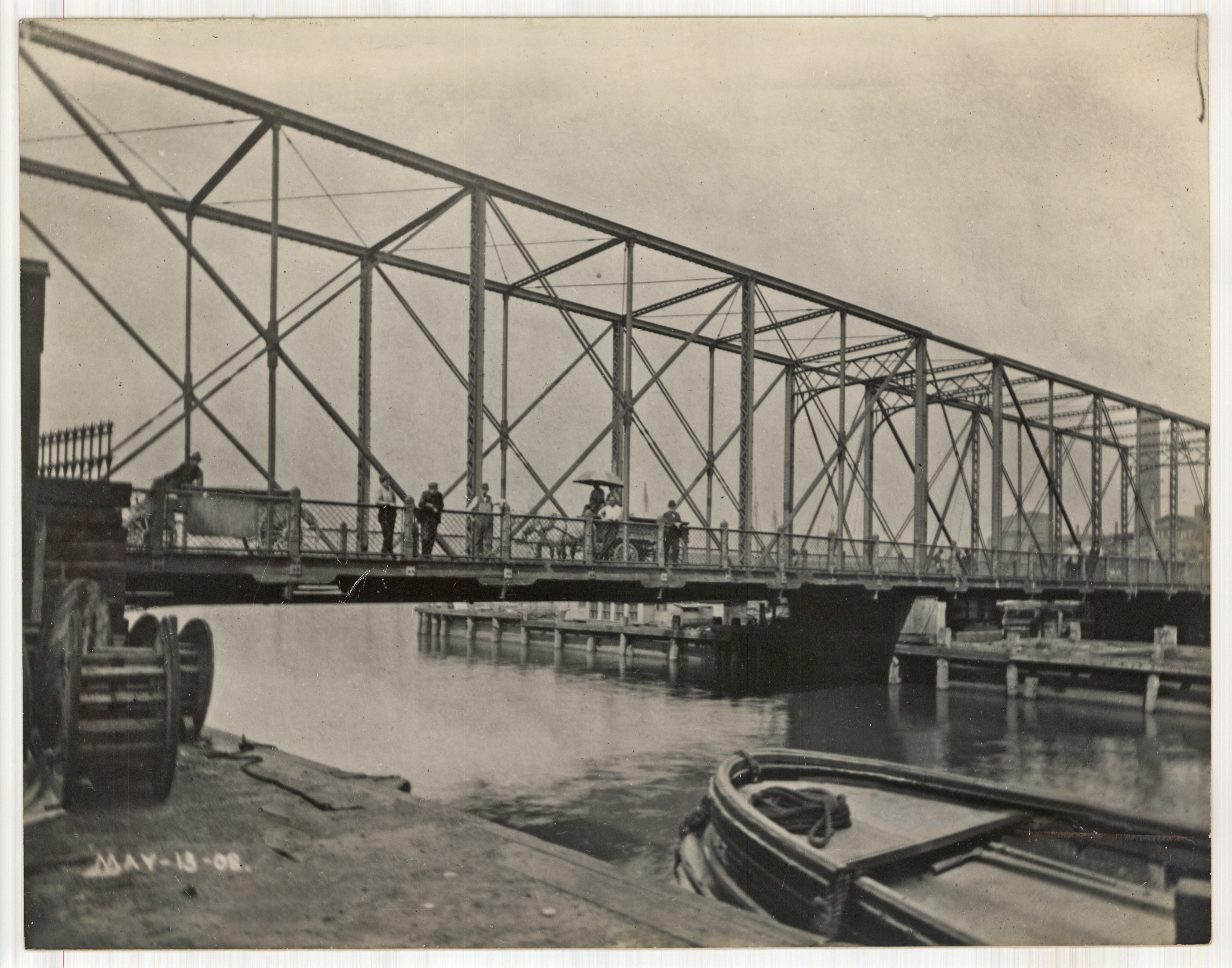
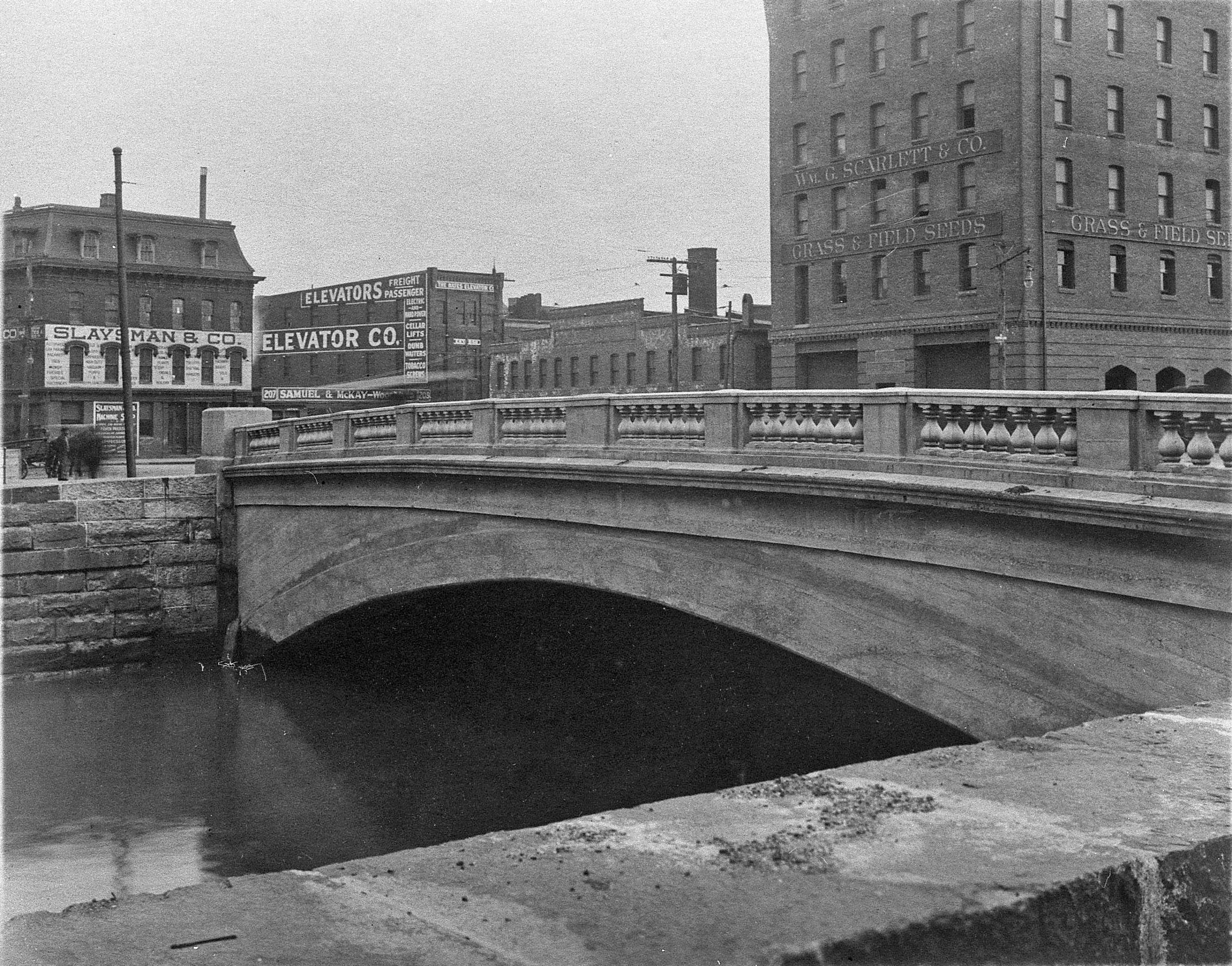
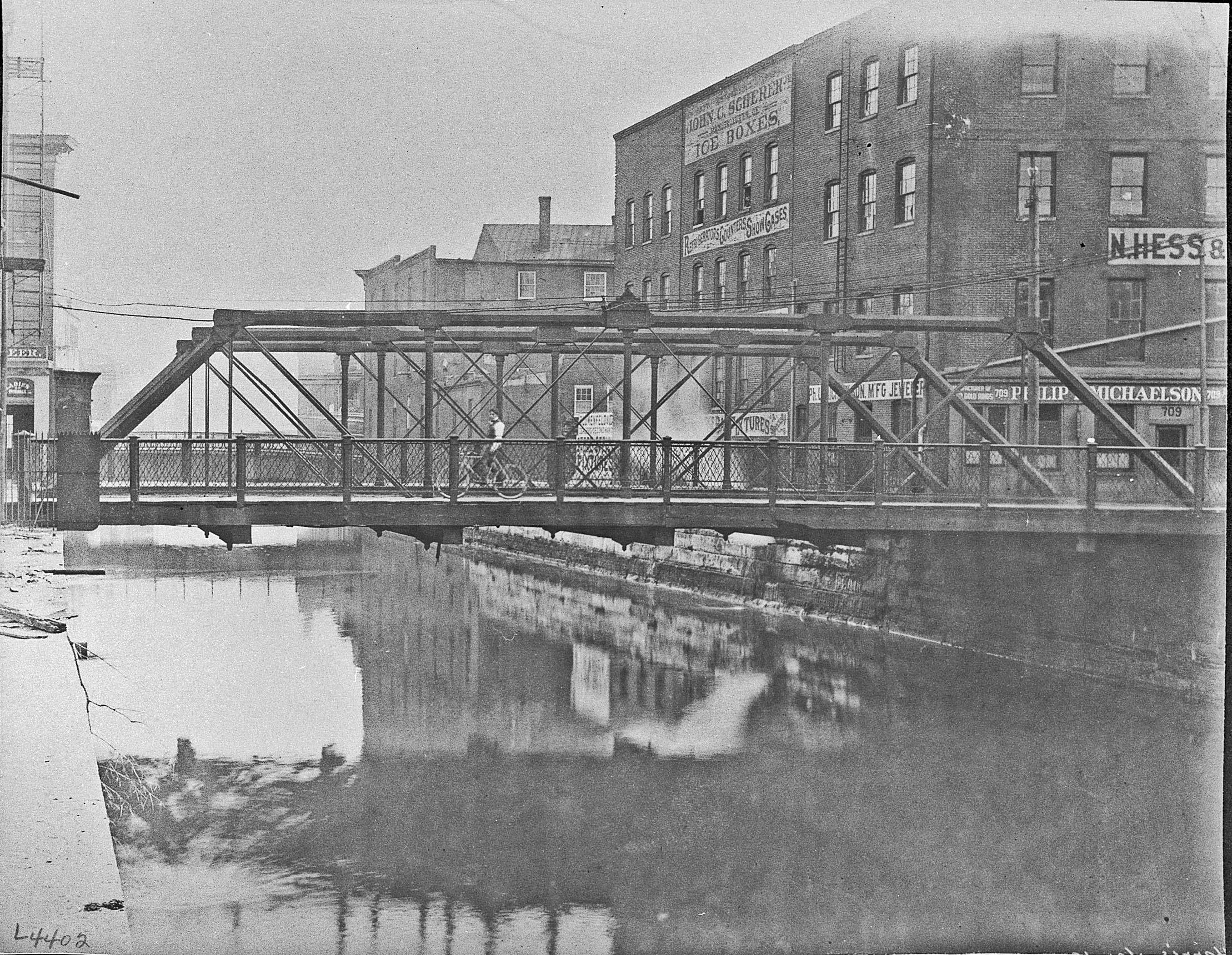
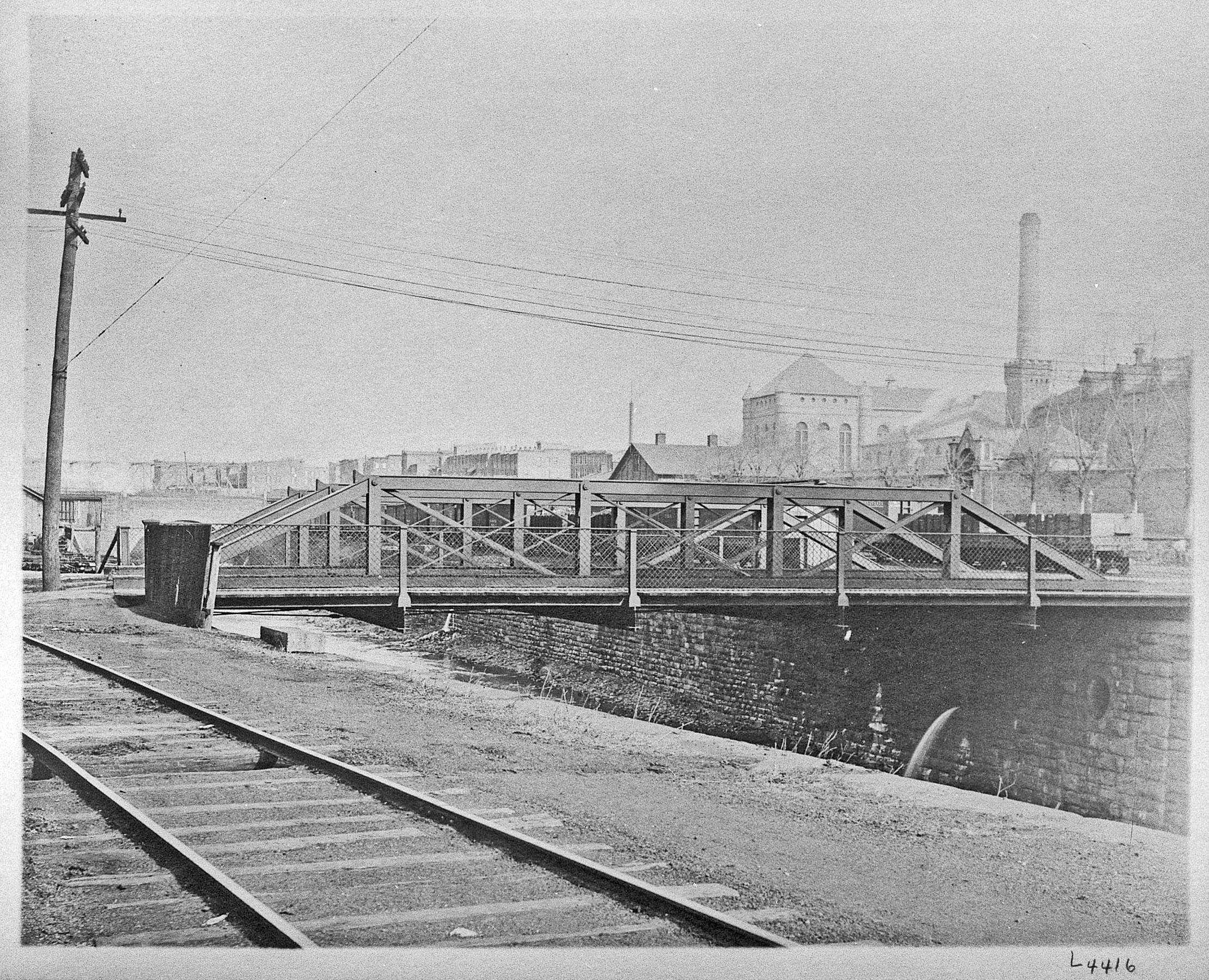
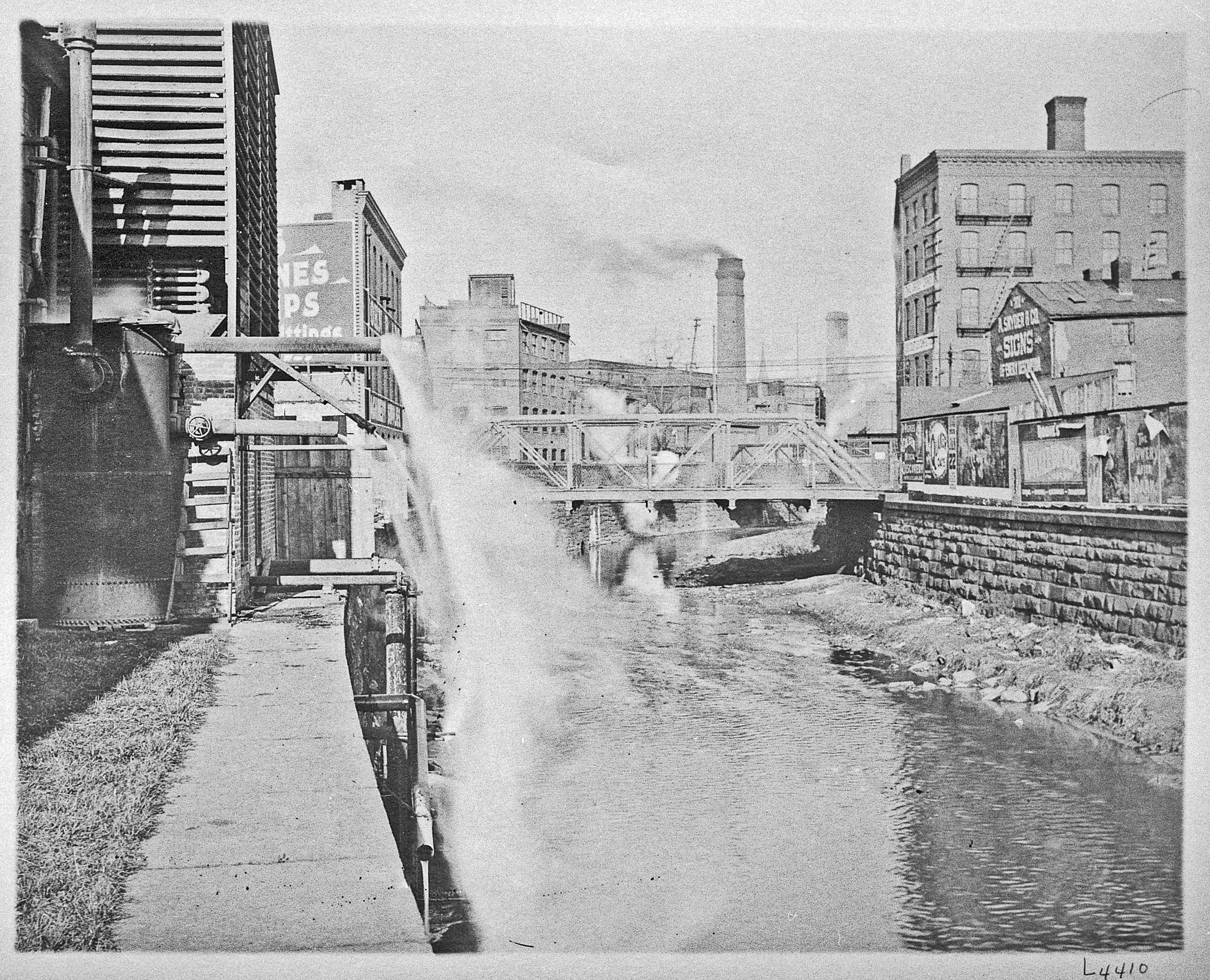
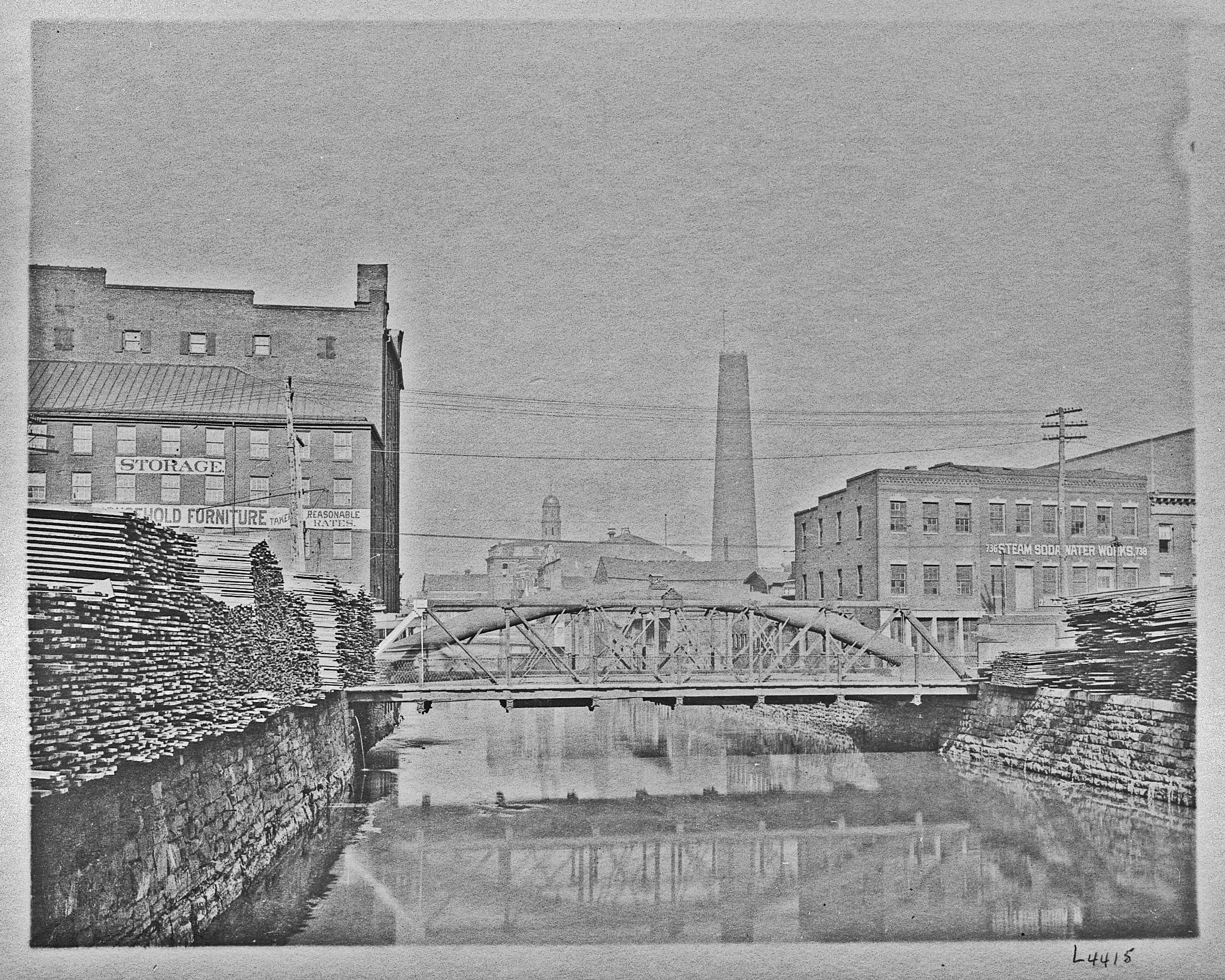
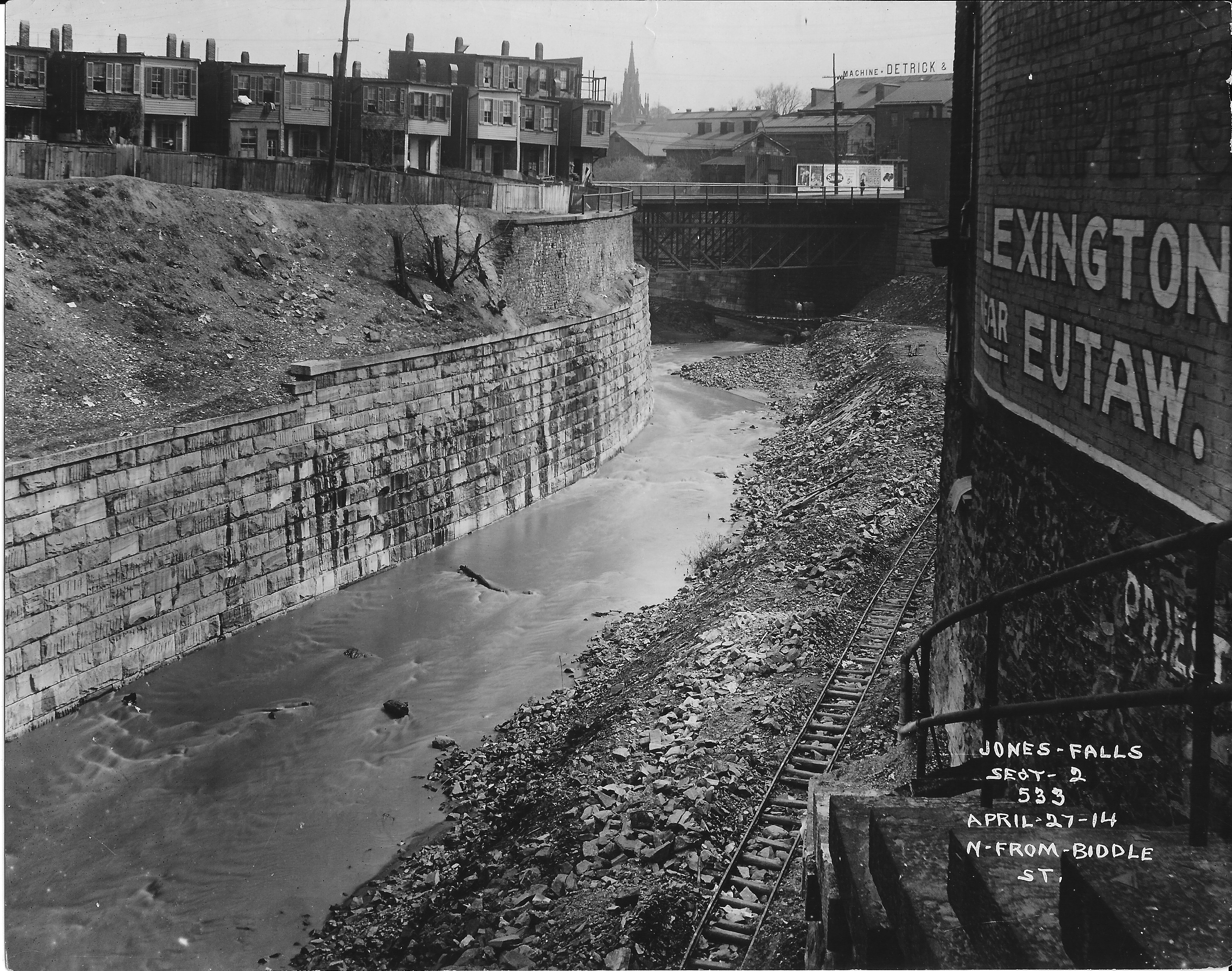
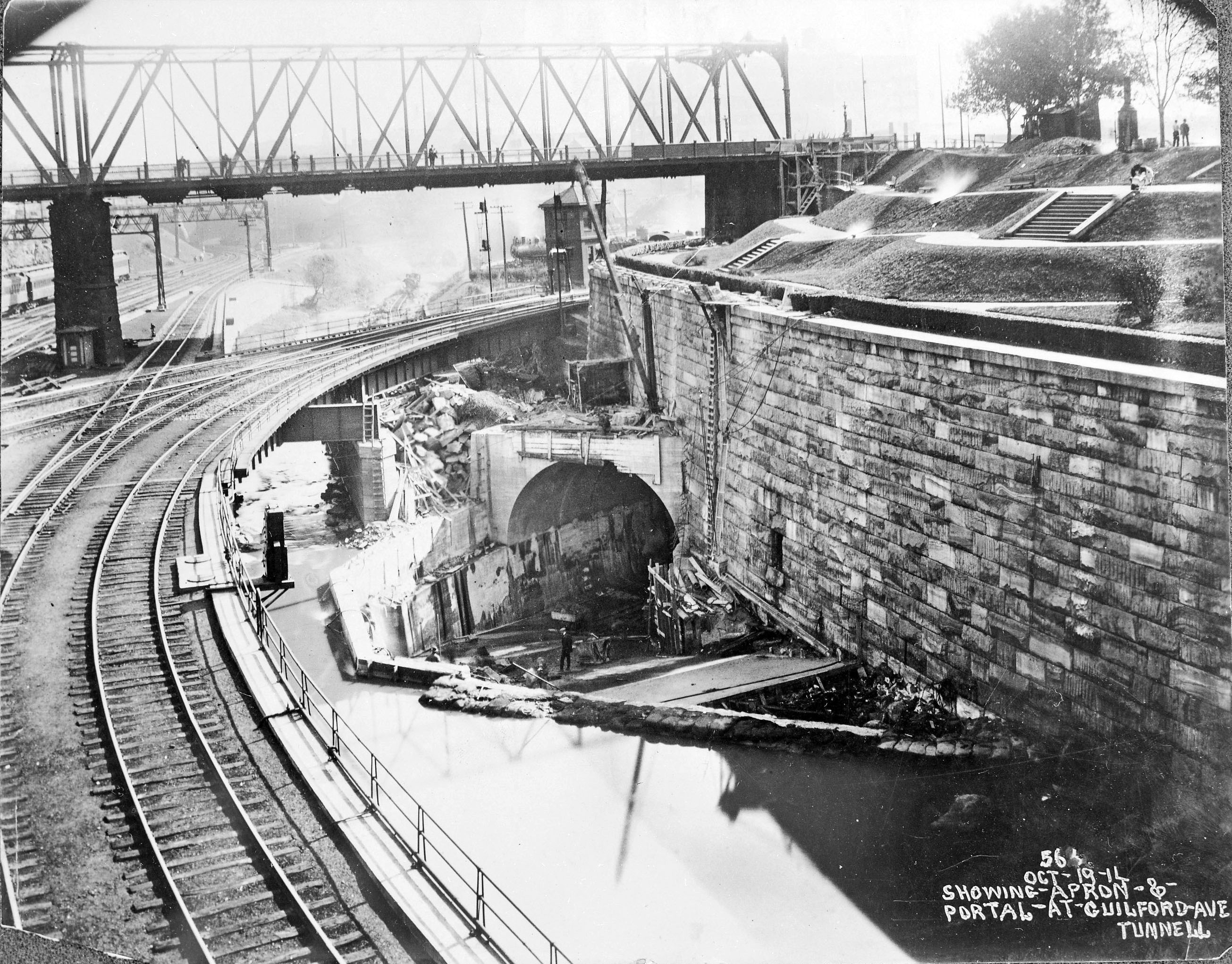
Here are some photos from the DPW collection of various bridges along the Jones Falls. These negatives were all in an unmarked box. I posted them on Facebook a while ago and people told me the names as best they could guess. I am no longer on FB and unfortunately I did not write down the names they told me. Some are marked. Some are duplicates from other views – north to south or south to north.

If you can correctly name these bridges I will send you a copy of my book – Baltimore’s Water Supply History. Thanks.

img075

br045

img517

img515

img511

img510img509

img507

img506

img504

img501

img395c

img395b

img003b

img001e

img001d

img001a

81_6_1338

The Walls of Jones Falls

14 Tuesday Jun 2016

Posted by Ronald Parks in Baltimore, HISTORY, Sewage History

≈ Leave a comment

Tags

Baltimore, engineering, HISTORY, Jones Falls, POLITICS, Public Works, sewage, Sewage History

February 12, 1816: Edward Johnson notes his retiring as mayor after eight years. Jones Falls – A Law has been passed by the General Assembly of Maryland at their late session, authorizing a Lottery to raise a sum of money, not exceeding fifty thousand dollars, clear of all expenses. One half of the net proceeds of which is to be appropriated under the direction of the managers named in the law, to the deepening of Jones’ Falls and walling the public streets binding thereon; the other half in conveying a stream of water that passes down Harford Street in a culvert or tunnel, below the surface of the street into the cove.

January 5, 1829: Jones Falls – The hand rail on Jones’ Falls and Harford Run has been completed, as directed by the resolution No. 15, of February, 1828, and affords security to our citizens. The walling of Harford Run has been continued southerly, as directed by Ordinance. The walling of a part of Jones’ Falls, as directed by the Resolution of April, 1828, has been executed; but the efforts of the City Commissioners in enforcing the provisions of the Ordinance of February, 1826, requiring the owners of property on Jones’ Falls to erect walls, etc., have continued to prove unavailing. It is submitted whether the City Commissioners should not be authorized to have the work done, thereby to avoid future injury to the navigation; and require the owners of property to pay the expenses thereof.

Walls will be built. Walls will be knocked down or tunneled through, all to try and change the course of the Jones Falls, flowing through the city.

wall1

Walls upon walls.

wall2

Tunneling through the walls (I would liked to have seen the park up above)

wall3

Close up of one of the walls (Is that graffiti to the right? HW)

Sewage at Back River

03 Friday Jun 2016

Posted by Ronald Parks in Baltimore, HISTORY, Sewage History

≈ 3 Comments

Tags

Baltimore, engineering, HISTORY, POLITICS, Public Works, sewage, Sewage History

I read with some interest a blog on Baltimore’s disposal plant at Back River, where it was stated that the Outfall Sewer, which connects to the plant, has sunk about four feet and that millions of dollars will be spent to correct this problem. (For 35 years working in the water department, it always amazed me that there was work going on non-stop at Back River. Billions of dollars’ worth. Nothing for the drinking water side though!) It was also mentioned that this ‘sinking’ was possibly caused by poor construction and engineering. I guess it is easier to blame people who are no longer around that can defend their work! The system is over 100 years old. Below is some info on construction.

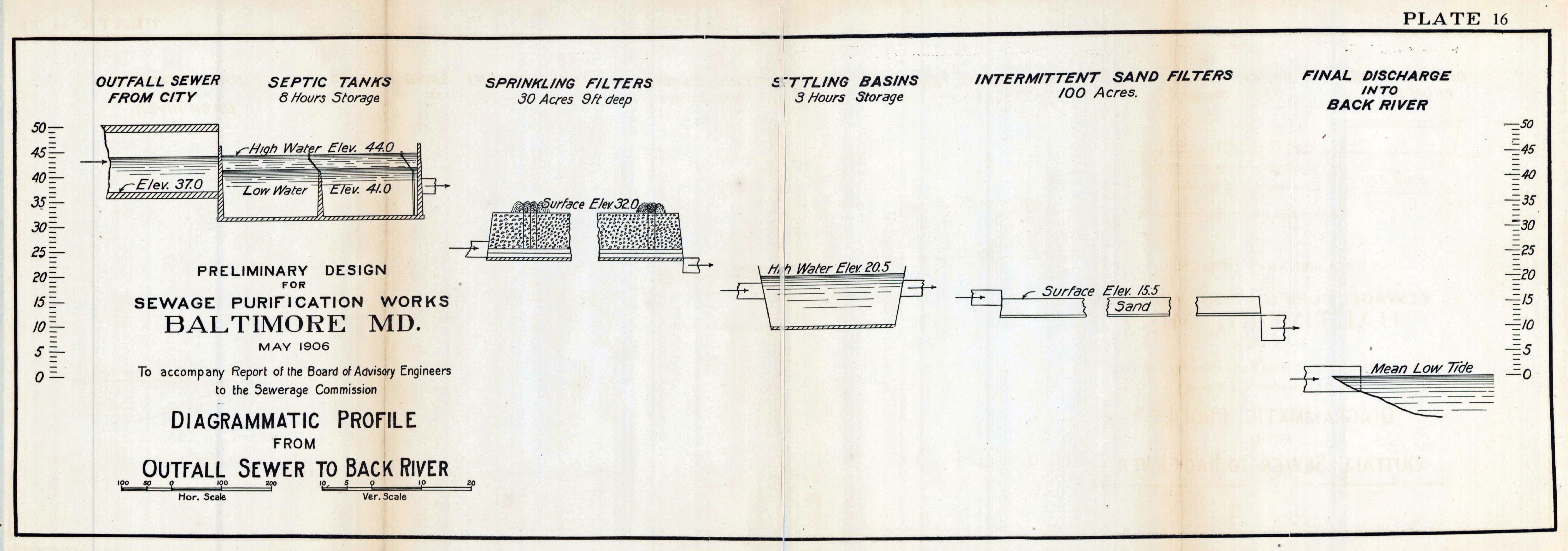
1906 – The Board of Police Commissioners caused a census of the city to be taken by the Police Force, which was completed about April 10, 1906, and showed that by the police computation the population of the city at that time was 543,034. A later estimate made in September, 1906, gives the city a population of 555,000. The capacity of the system in whole, will be for a projected one million persons. The Outfall Sewer extends from Chase and Durham streets to Monument street and Loney’s Lane inside the city limits, a distance of 7,016 feet, or 1.33 miles. This portion is under contract and construction was begun on December 24th. From Chase and Durham streets to Madison and Luzerne streets the sewer will be 10 feet 9 inches high and 12 feet wide; thence to the Disposal Plant it will be 11 feet high and 12 feet 3 inches wide. It will be built of concrete, the lower half being lined with brick. From the city limits the line continues east in Monument street to the Union Railway, thence on the south side of the Union Railway, and with a general easterly and southeasterly direction in Fayette street extended and across private property to the Disposal Area on the west shore of Back River south of Eastern avenue, a distance of 23,354 feet, or 4.42 miles, in Baltimore County, making the total length of the Outfall Sewer 30,369 feet, or 5.75 miles.

1908 – Disposal Works – The fact of being able to intercept two-thirds of the City’s sewage and carry it by gravity to the disposal works, where the sewage of the entire City is to be treated, is an item that future generations will appreciate, as it means an enormous saving for all future time in the cost of operation of the sewerage system.

1908 Engineer Hendrick’s report – “It has been our endeavor to treat the work, both as to letting contracts and the employment and promotion of the men, entirely on a business and merit basis, resulting in an excellent class of work and men, including both contractors and engineers. I wish to express thanks to Mr. W.W. Crosby, Chief Engineer of the Maryland Geological Survey and State Roads Commission, for making various rattler tests on brick; to Dr. E. B. Mathews, Professor of Mineralogy and Petrography, for making examinations of various stones, and to Prof. Earle B. Phelps, of Boston, for his assistance in our chlorine experiments at Walbrook. Considering the many difficulties arising daily in constructing two separate systems of sewers (sanitary and storm water) among the vast number of underground obstructions, in streets crowded with traffic and the rapidity and satisfactory manner in which the work has moved forward, which could not have been accomplished if it had not been for the faithfulness and devotion of everyone connected with the work, regardless of overtime and weather, I take this opportunity of expressing my high appreciation of the faithfulness of my staff, consisting of Mr. Albert M. Brosius, First Assistant Engineer; Mr. Herbert M. Knight, Storm-water and Low Level Divisions; Mr. Oliver W. Connet, High Level Division; Mr. Ezra B. Whitman, Disposal Division; Mr. Thomas D. Pitts, Office Division; also, including the engineers, rodmen and inspectors. As stated in a recent address I made to the Society of Civil Engineers in Washington, D. C., the sewage problem as a world factor is forcing itself to the front very rapidly, and our country is approaching a point where it will have to deal with the sewage question on a broad scale. As rivers run from one State to another, the States cannot deal with the problem without clashing, and it will soon have to be dealt with by a National Sewage Board, similar to those abroad. We have heretofore, on account of the vastness of our country and the size of our rivers, simply disposed of the sewage in the most economical manner at the time, regardless of results, such as dumping it directly into lakes and rivers. This has been a short sighted policy from the fact that large expenditures have been entered into in the way of sewers, which will necessarily have to be readjusted in order to conform to sanitary laws now being passed requiring the treatment of sewage before discharging it into rivers or lakes. The City of Baltimore is showing the same progressive spirit in handling this great sanitary problem that she has shown in many other enterprises of world-wide interest, causing cities all over the world to send committees and engineers to study the plans and methods of prosecuting our work.”200- 2

Here is a drawing showing to the left the supposed sunken outfall connection to the plant. img001b

Here are the engineers that built this structure. It appears to me that if this brick-lined conduit did sink 4′ that there would be a mass amount of broken brick and concrete?

Perception

20 Friday May 2016

Posted by Ronald Parks in Baltimore, Sewage History

≈ Leave a comment

Tags

Baltimore, Health, HISTORY, Jones Falls, POLITICS, Public Works, sewage, Sewage History

Below is the art work of Francis Guy (Brooklyn Museum). Showing what Baltimore looked like in 1802-1803.

Balt 1802

And this is what the mayor had to say about Baltimore in 1803:

Mayor’s Message – February 14, 1803: Mayor Calhoun. Experience evinces that no measure we can take contributes so much to protect us from the malignant effects of fever as cleanliness, and therefore that every exertion ought to be made to remove from the City all impure substances and putrefactive matter, and to fill up low and sunken situations which retain stagnant water and filth; much has already been done in this respect since we have been incorporated, and every observant mind must view with pleasure the great improvements that have been made, as well in the east part of the City as the west, in filling up low and sunken grounds, and in making streets, that were before quagmires, not only passable but elegant; these, together with a variety of other matters, such as watching and lighting the City, erecting and repairing bridges, repairing and improving markets, assisting to build and to support an hospital, erecting a powder magazine, deepening and improving the Harbour, sinking wells and keeping pumps in repair, cleaning the streets, etc., etc., have been attended with heavy expense to the City, and have borne hard on many individuals, but I trust they will reflect that the expense has been unavoidable, and was the only means whereby their property could have been rendered valuable to them.

Hard to see, for me at least, how one is related to the other. The artist shows Baltimore as a clean, nice little town on the Patapsco Basin. The mayor paints a picture of Baltimore as a “quagmire”; talking the politics of how much has improved.

To quote the Talking Heads – it is “The same as it ever was…”

← Older posts
Newer posts →

Blogroll

  • Flouride Action Network
  • lulu
  • My Book
  • WordPress.com
  • WordPress.org

Recent Posts

  • Bermuda 2023
  • ICELAND April 2023
  • George Chalmers of Fochabers
  • In Search of The Skipjack Ada Mae
  • Trap Pond Kayak

Blog at WordPress.com.

  • Subscribe Subscribed
    • Water and Me
    • Join 231 other subscribers
    • Already have a WordPress.com account? Log in now.
    • Water and Me
    • Subscribe Subscribed
    • Sign up
    • Log in
    • Report this content
    • View site in Reader
    • Manage subscriptions
    • Collapse this bar
 

Loading Comments...