• About
  • History Writings

Water and Me

Water and Me

Category Archives: water history

North Patapsco Bridges

25 Wednesday Apr 2018

Posted by Ronald Parks in Baltimore, Dams, engineering, water history

≈ 5 Comments

Tags

Baltimore, bridges, Dams, engineering, HISTORY, Liberty Dam, mills, Public Works, water history

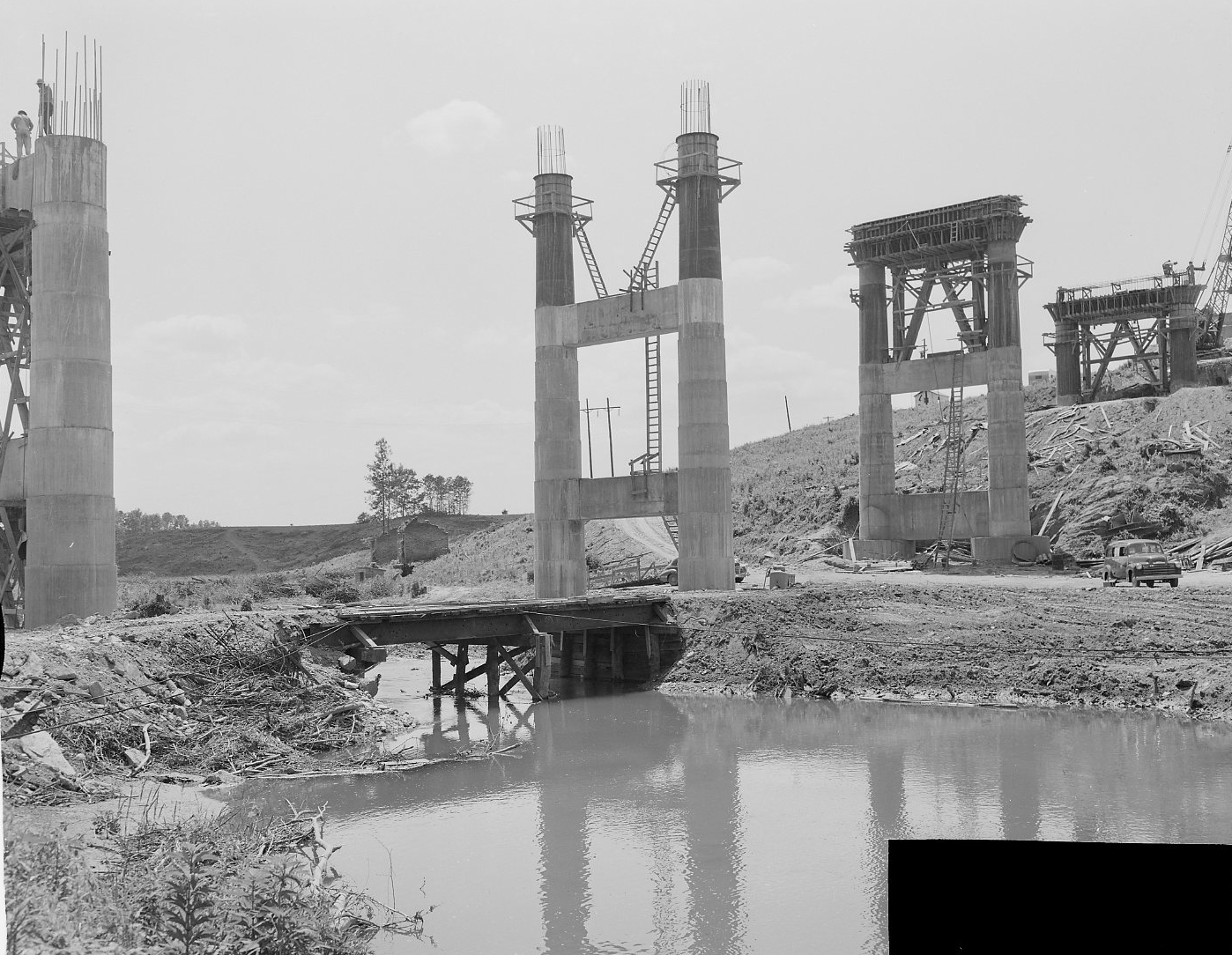
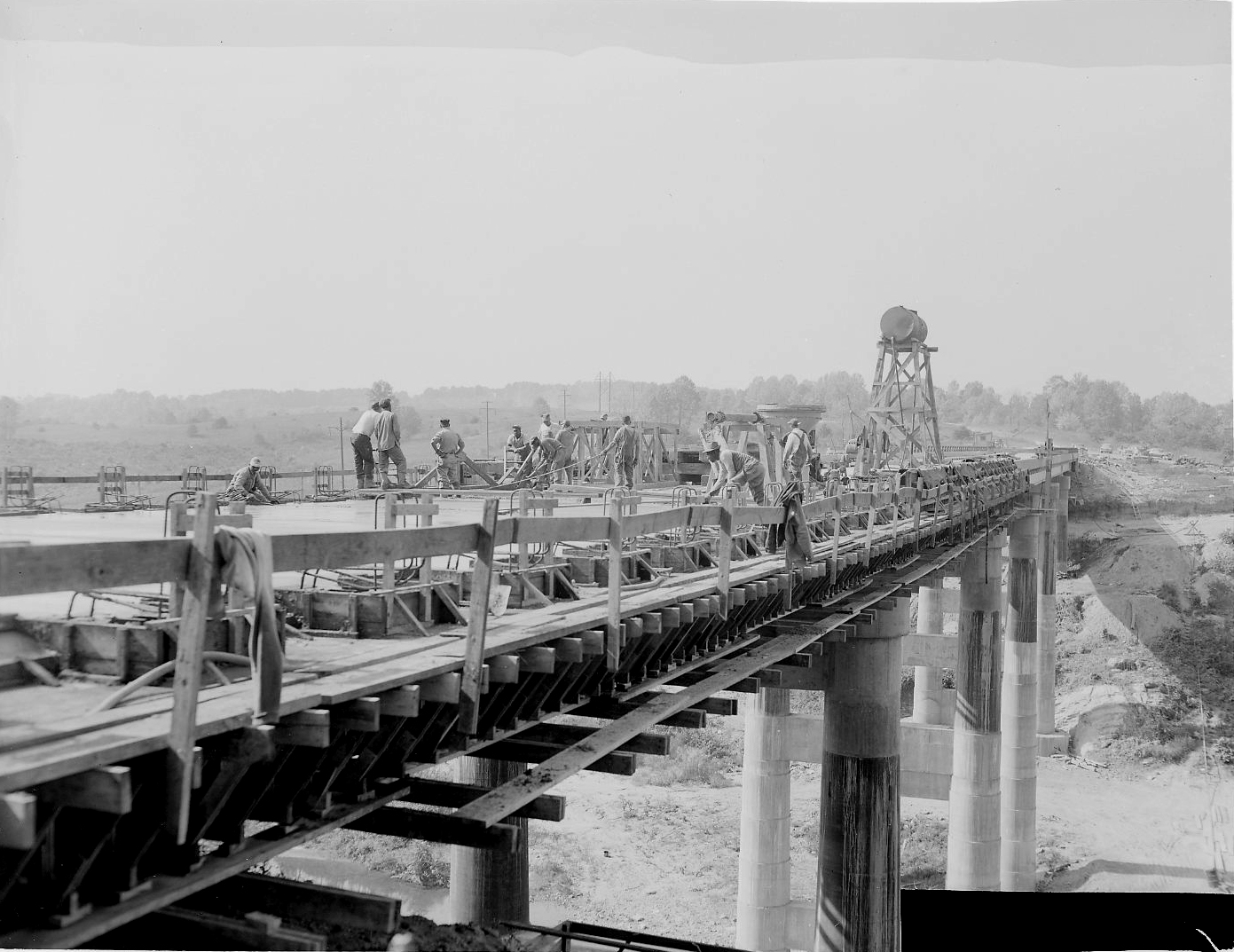
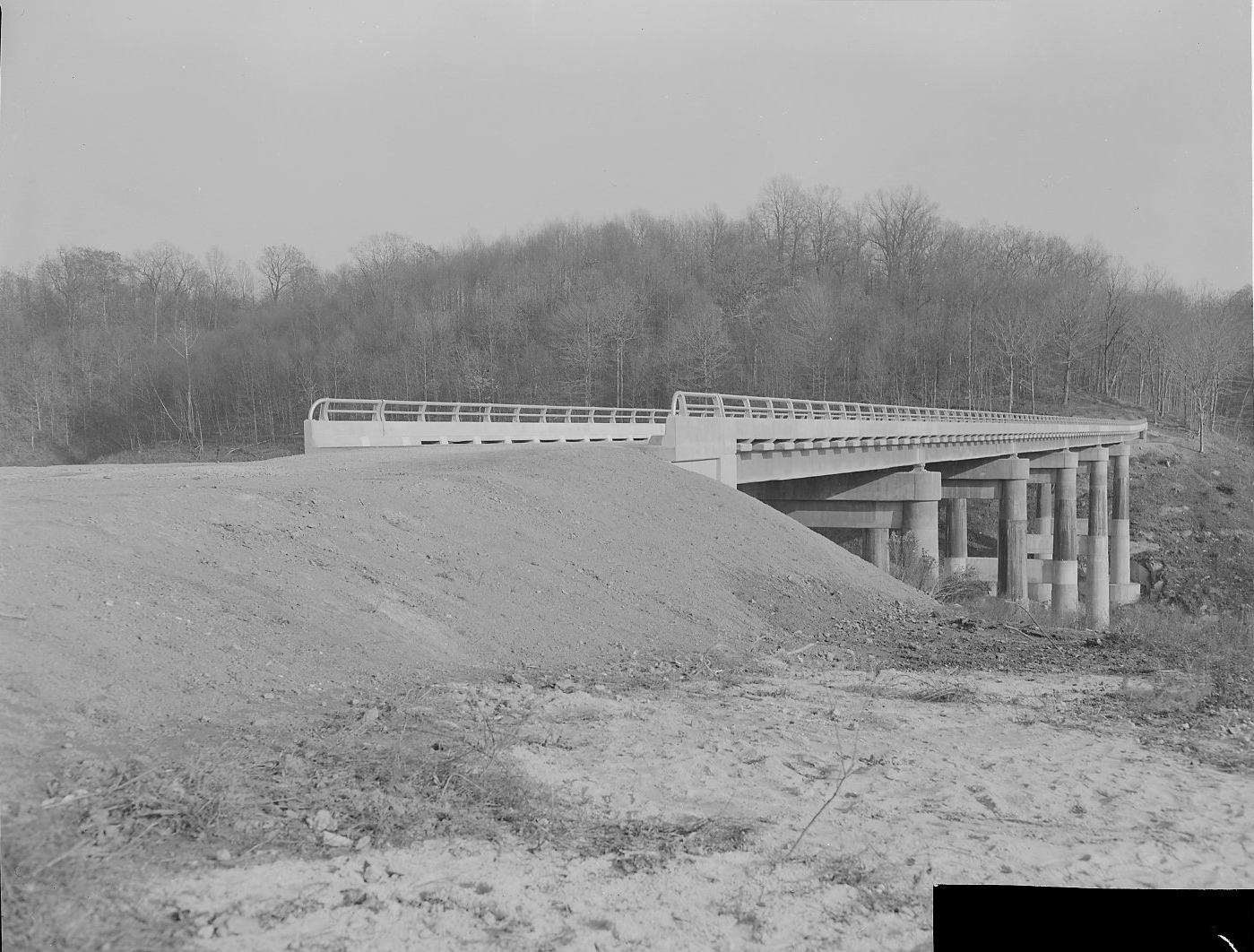
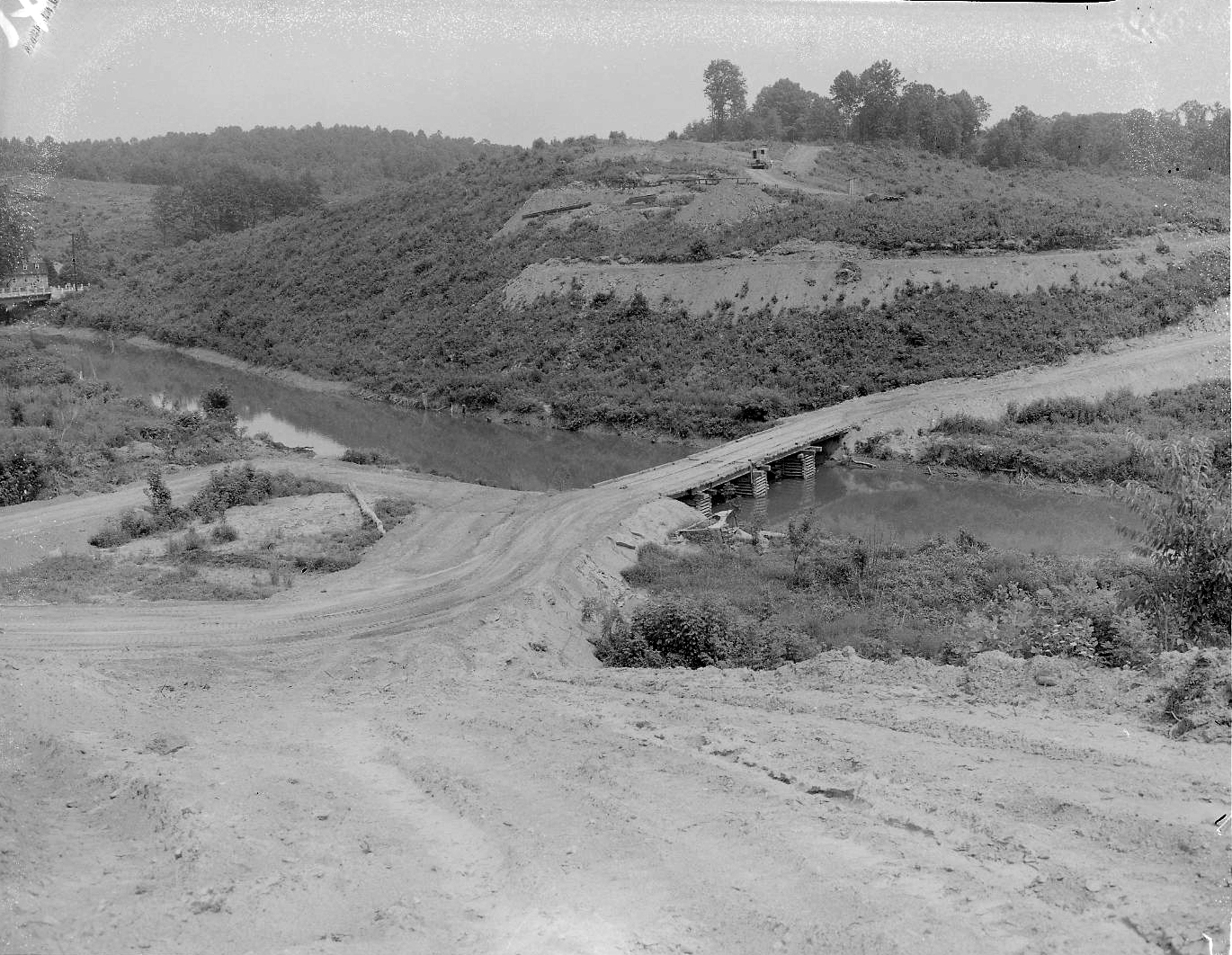
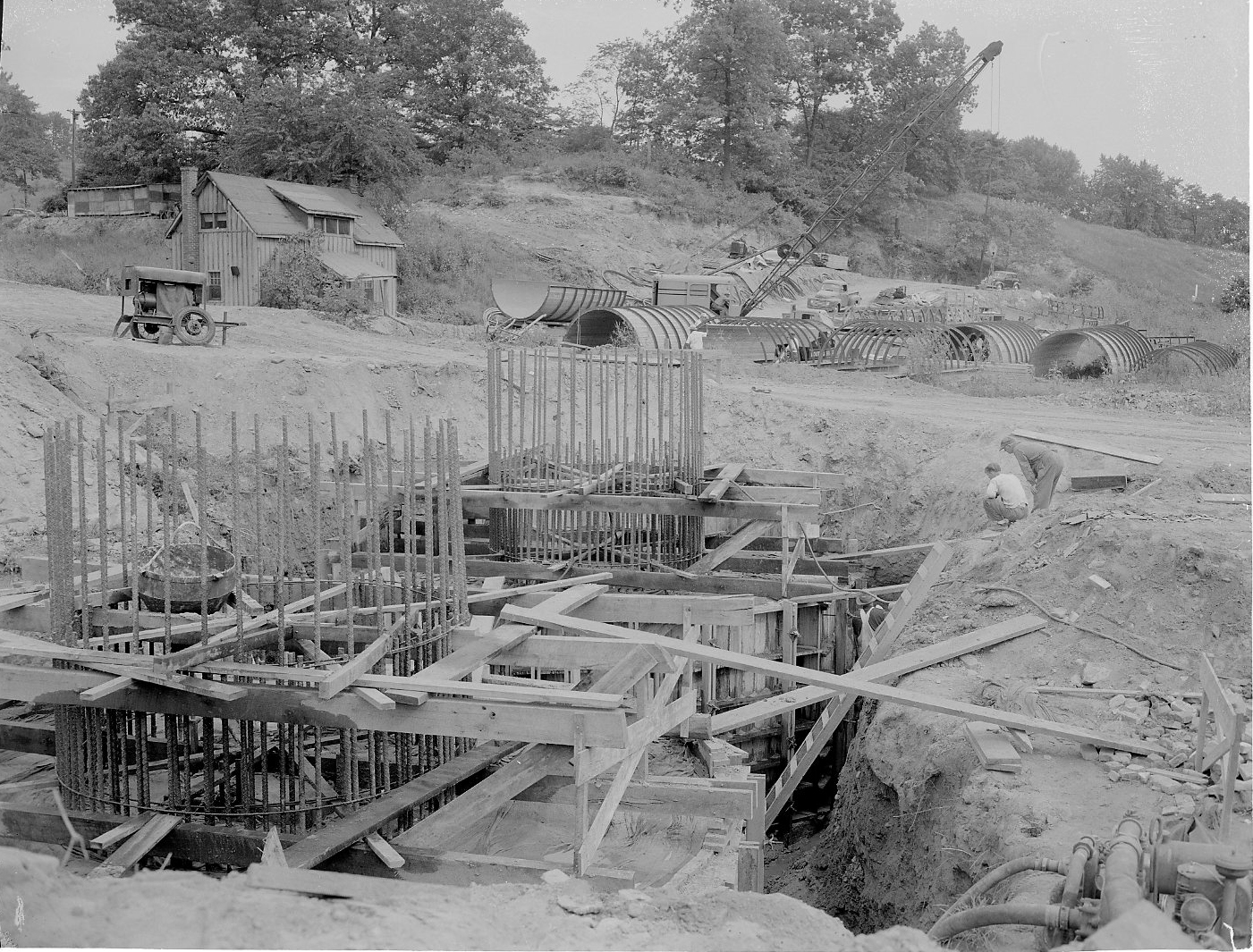
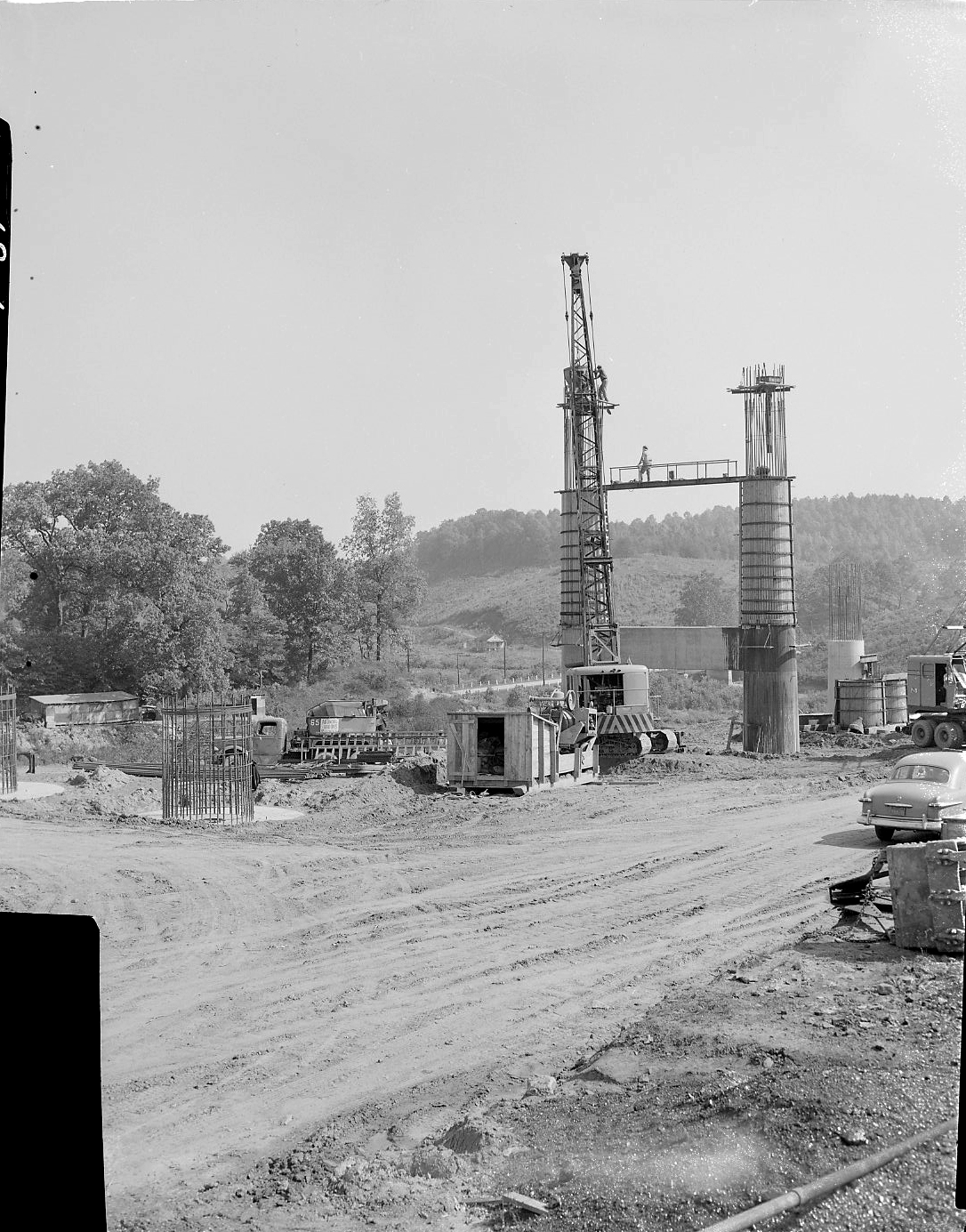
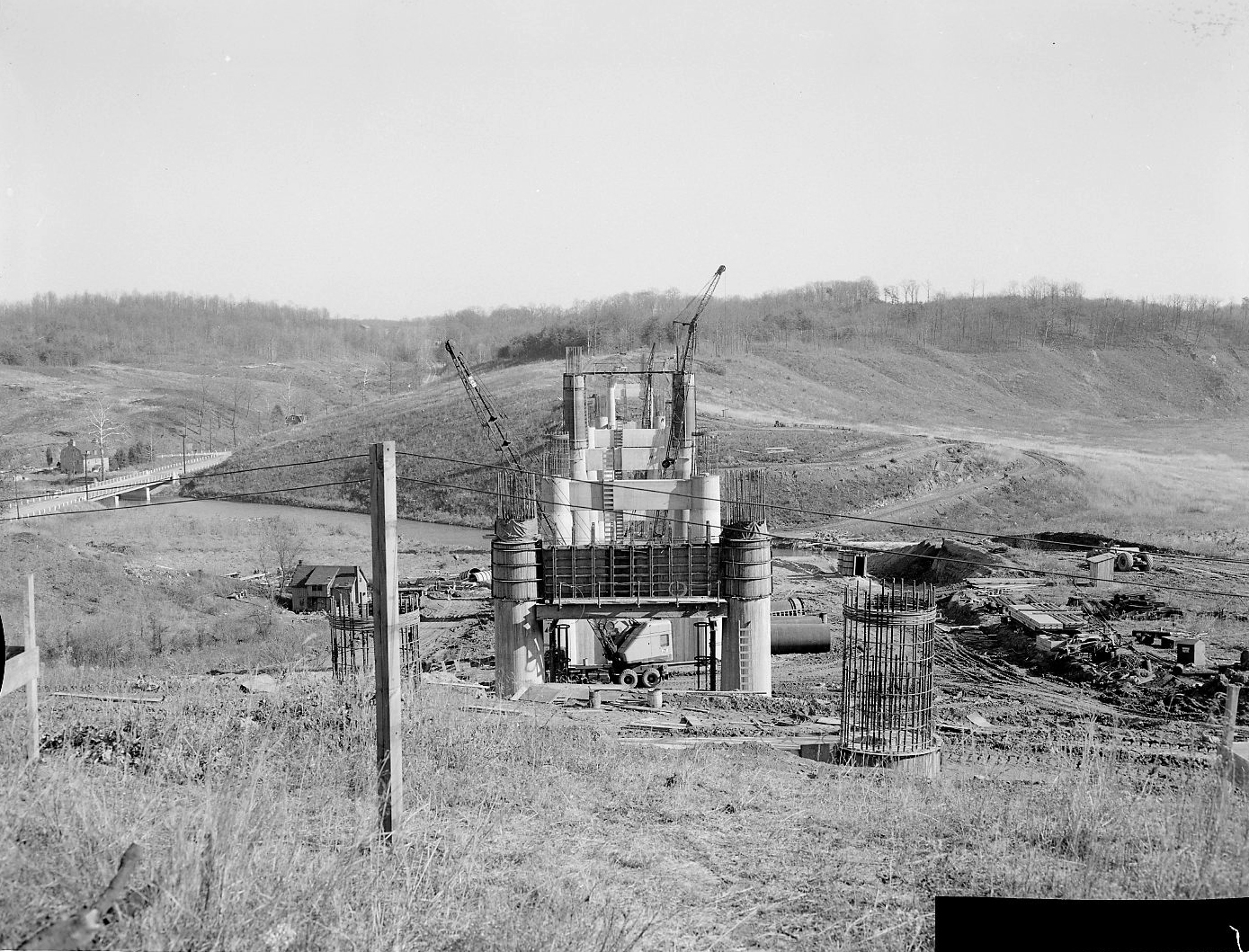
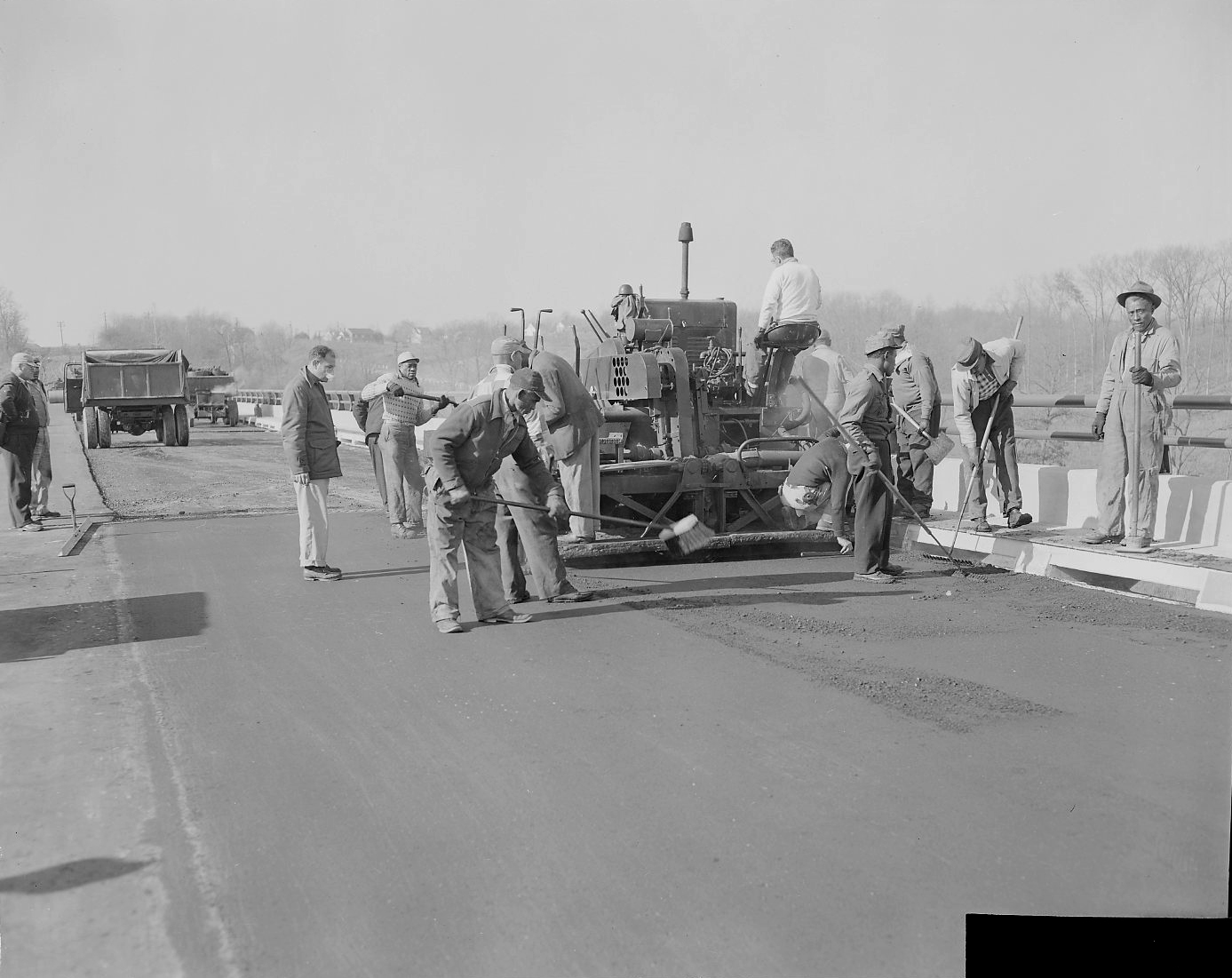
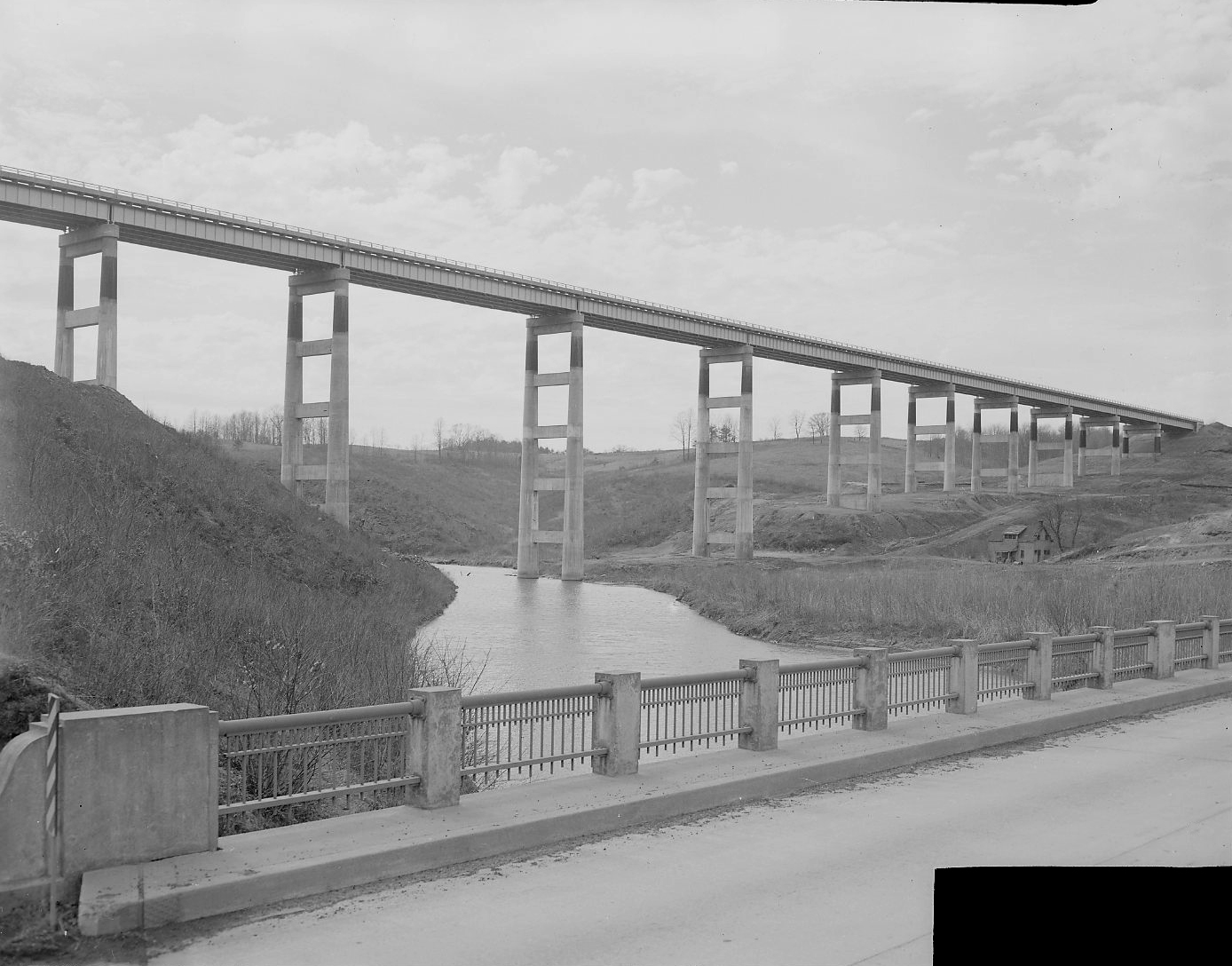
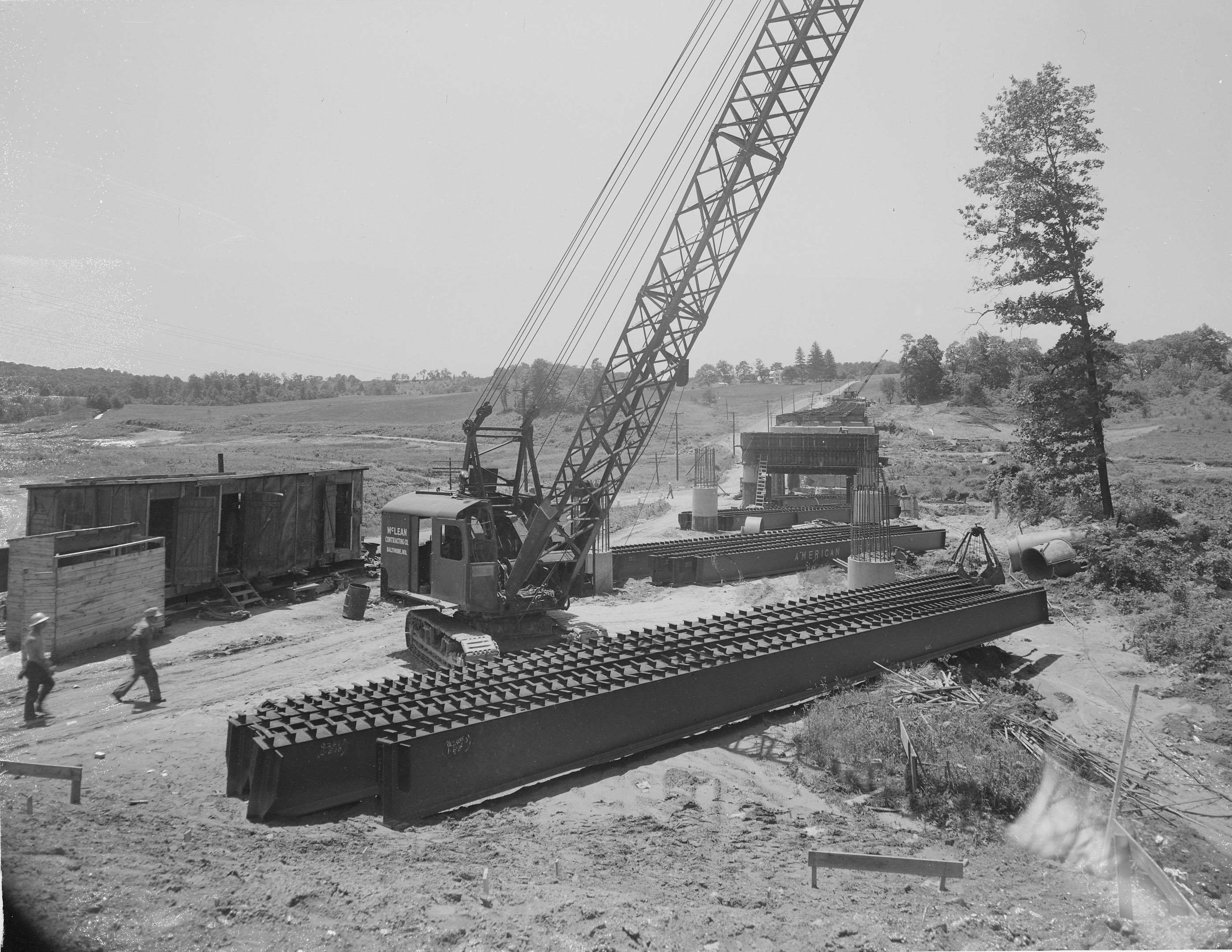
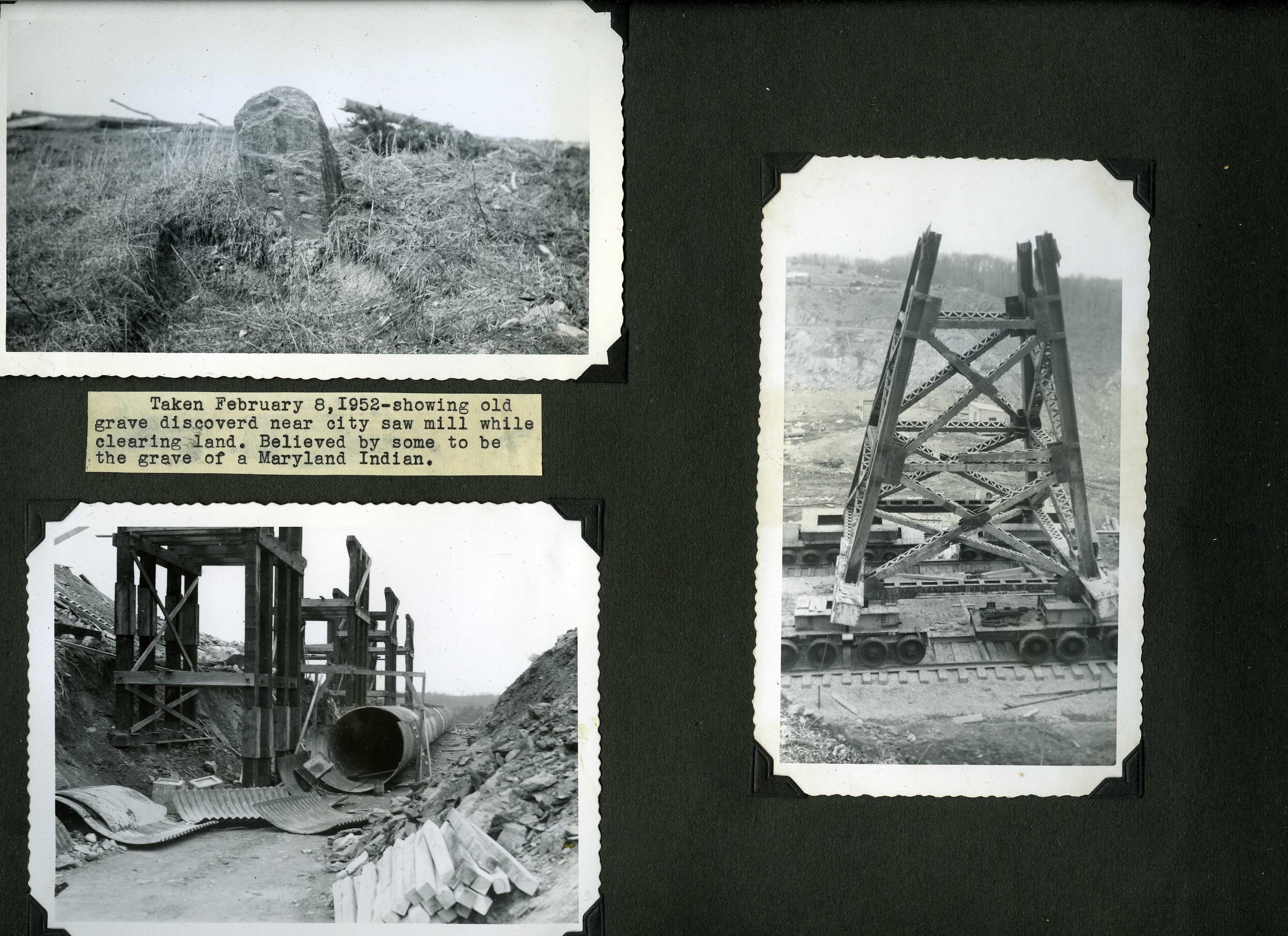
More from the Loose Ends Never Ends files. I have about 500 more negatives to scan in this one collection. Just finished up more of the Liberty Dam and adjacent bridges. I must confess, I have never really done a lot of research concerning these bridges. Over the years I have found hundreds of photographs/negatives, and only found a few of them interesting; like Liberty Lumber, the Indian grave marker and the dam itself. Although I really like climbing on and under bridges, I never gave these photos much thought. Looking at Google Maps, it is hard to place the original/present location of these bridges. I’m just not familiar with the area’s history. Most are from the early 1950s.

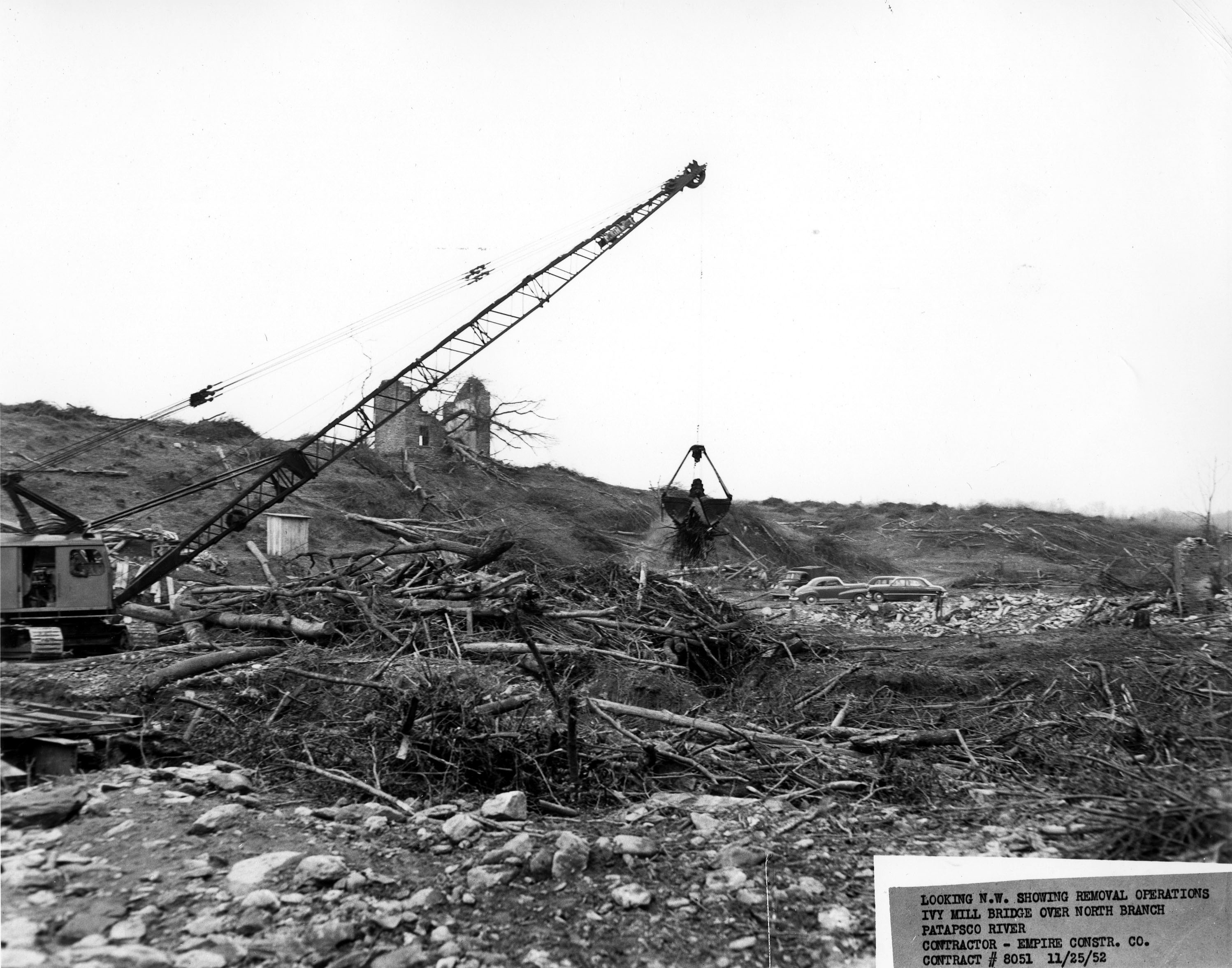
Ivy Mill Bridge is first. I like this one because it shows the old structure in the background. This photo is one of the few with a description attached.

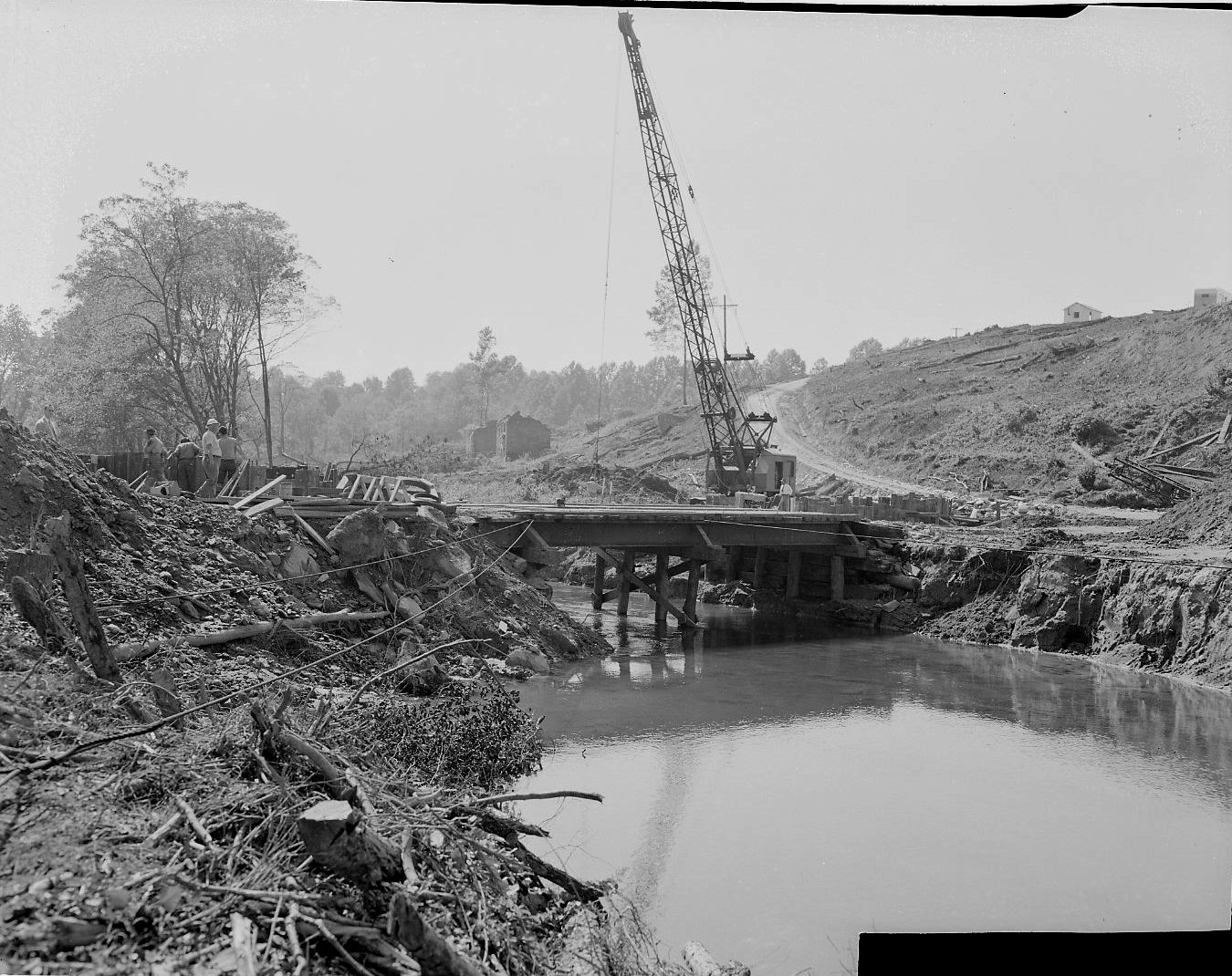
Beginning construction, temporary bridges were built.

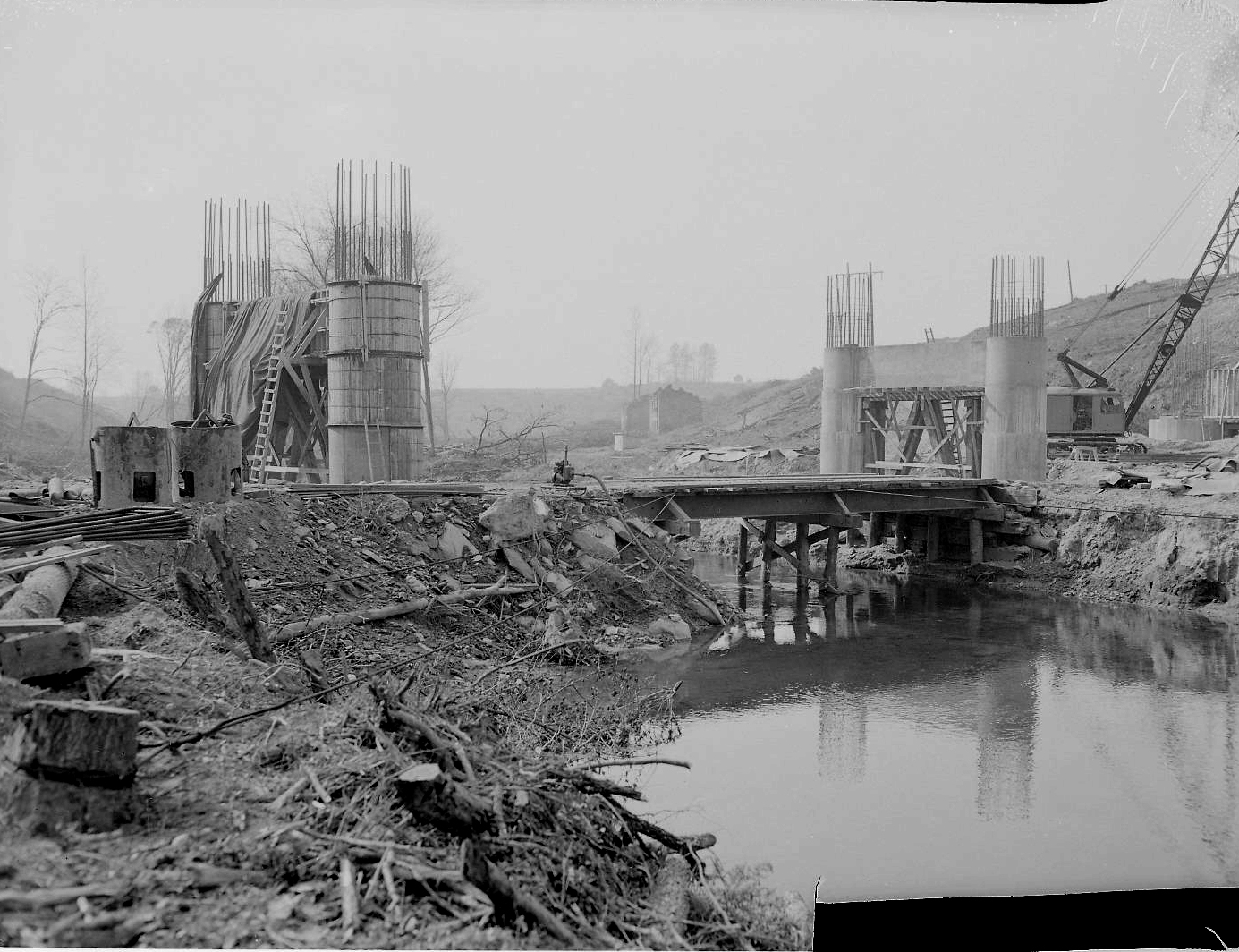
Foundation and columns poured.

As can be seen, these photos are missing the contractor’s descriptions of work – black rectangular areas on photos.

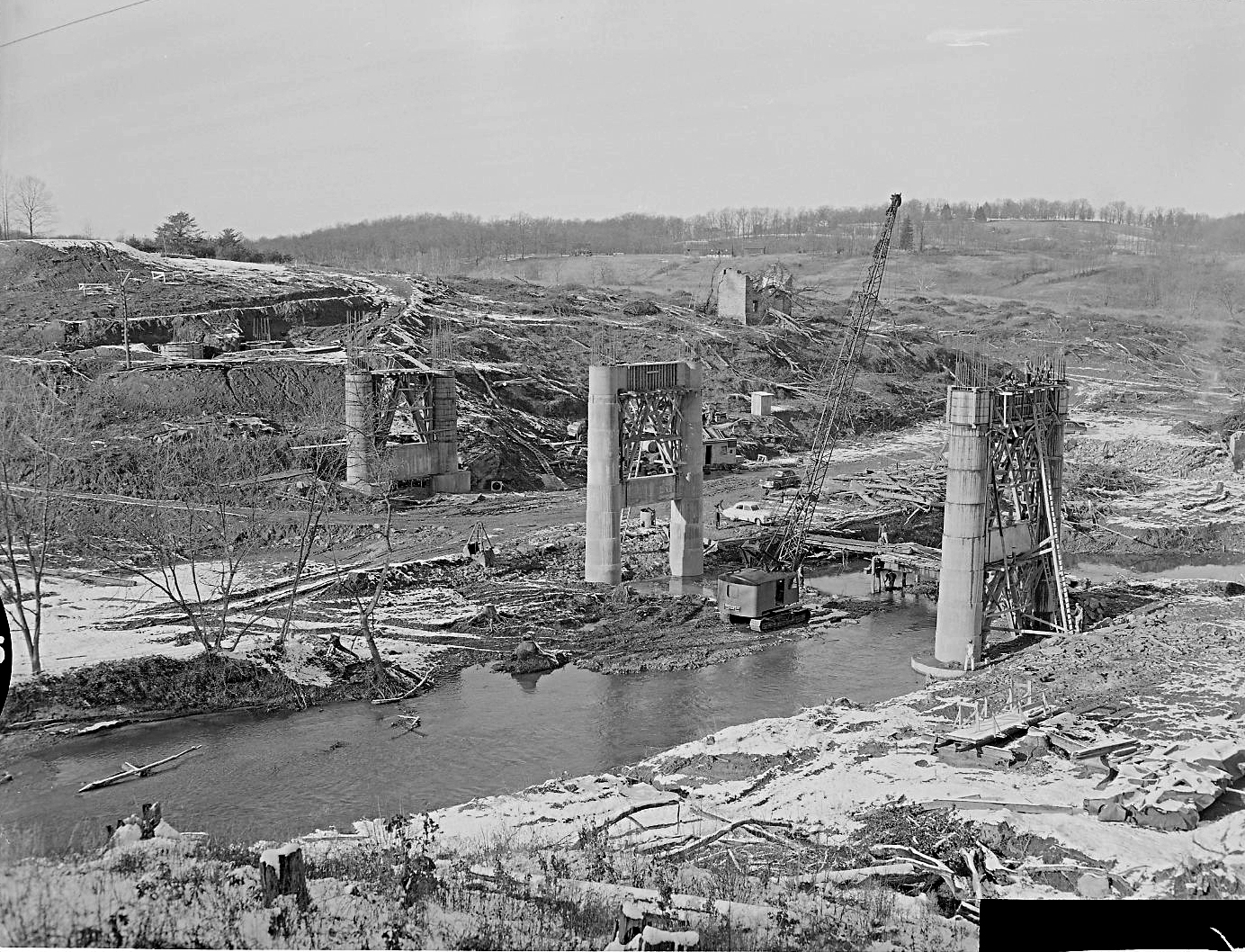
Moving right along with progress.

Reaching the final height and then comes the decking.

The finished bridge.

Next collection of negatives were marked as North Branch Over Patapsco, including Morgan Run. General view of the area.

Setting forms for foundations.

Columns.

Ready to place decking.

Putting on final touches.

Finished bridge from old bridge. (I wonder if this old one is underwater?)

The next group I found were of the Snowden Creek Bridge. Not many photos in this collection. It must be way up there because it looks pretty shallow. Forms poured and ready for decking.

Near completion. 

The next 500+ negatives to document are of building the Susquehanna Tunnel.

Here is the photo of the grave marker, taken from an engineer’s scrapbook. 


Liberty Dam Continued

10 Tuesday Apr 2018

Posted by Ronald Parks in Baltimore, engineering, water history

≈ 6 Comments

Tags

Baltimore, Dams, engineering, HISTORY, Liberty Dam, nature, Public Works, water, water history

There were another 120 negatives in the Liberty Dam collection. I scanned all of those. The file drawer also contained about 250 negatives, building the Ashburton Filtration Plant. Fortunately I had previously scanned these from photo albums – all but 22 that were missing from those albums. I hope when and if they get someone to take my place doing this archiving, they will be able to put all like albums/negatives/photos together in proper groups. I am not sure I will have the time. As it has been, I just scanned and documented them as I pulled them from shelves, dusted them off, documented and then packed them back up for storage.

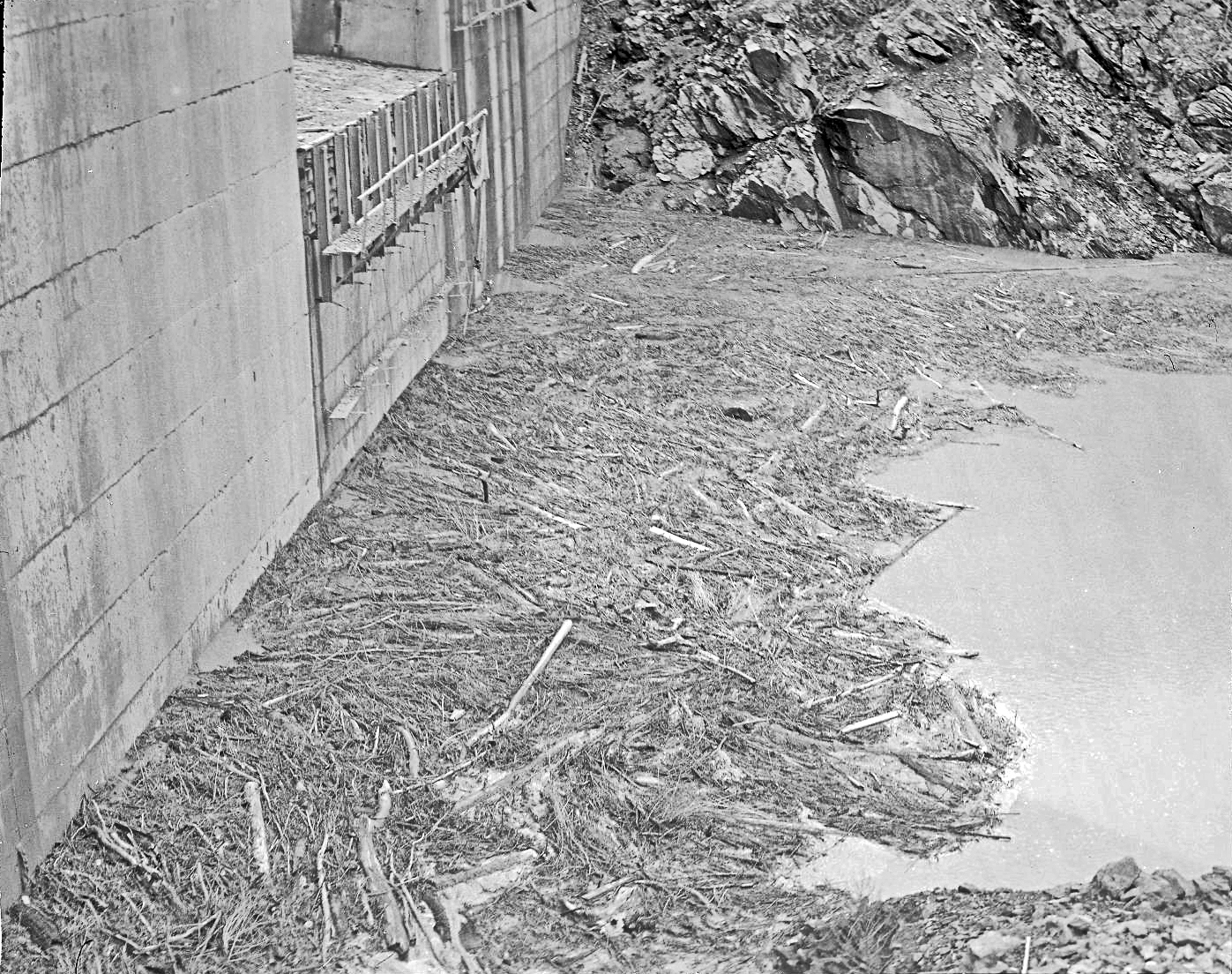
Here are some more from Liberty Dam 9/1/1952 – 10/6/1953 (The next drawer has a bunch of negatives from building the bridges across the reservoir).

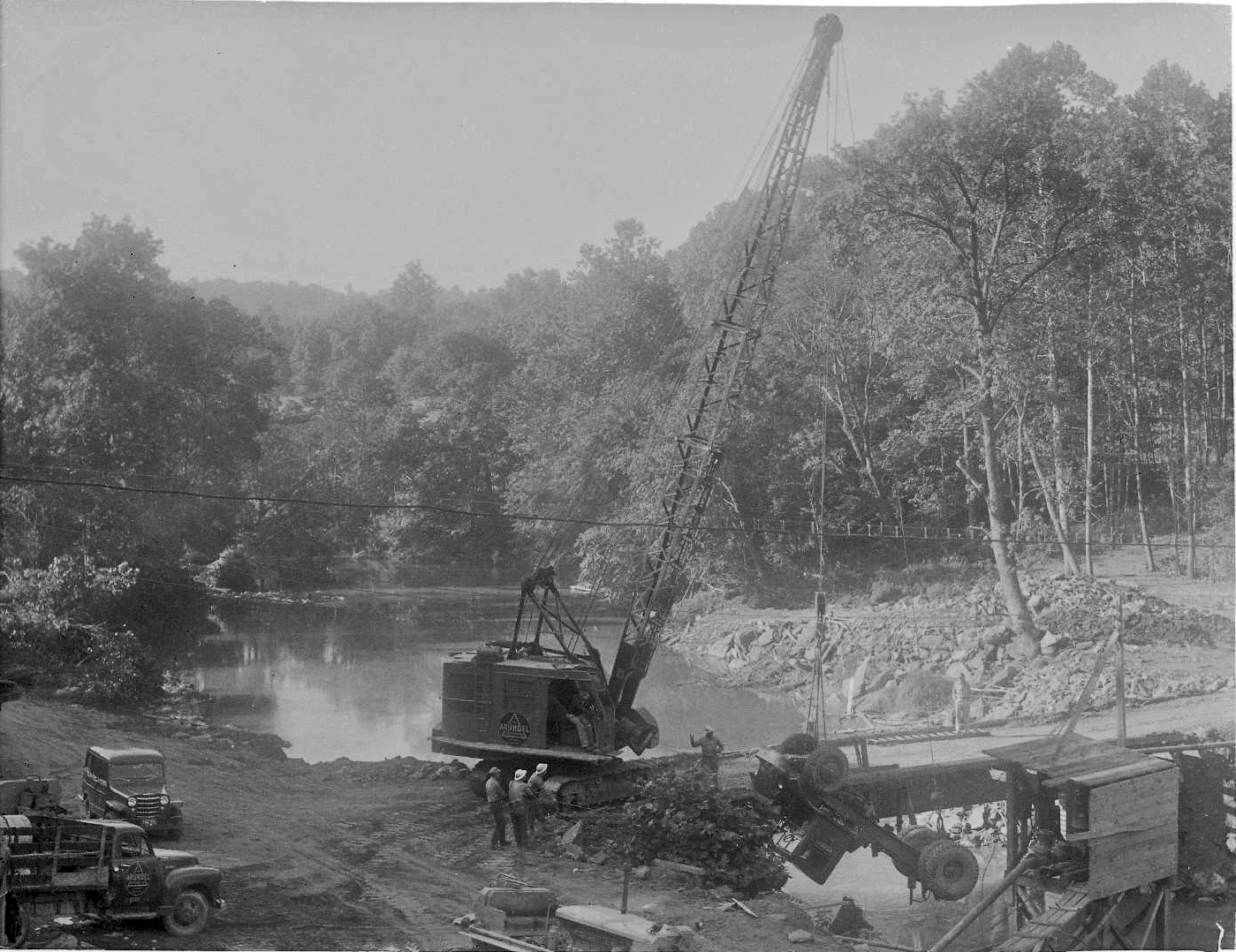
Another accident. A truck went off the bridge and is being hoisted out by crane.

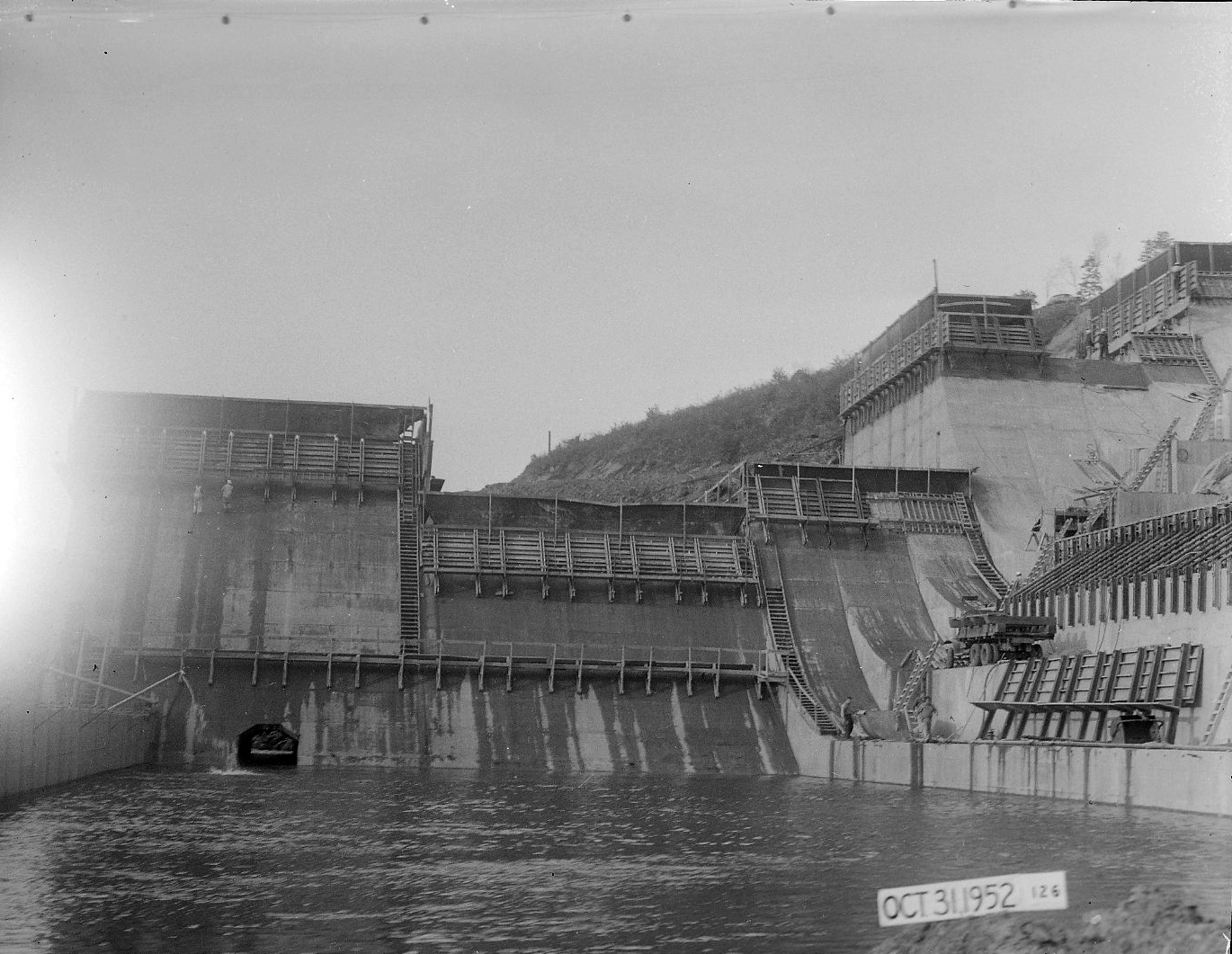
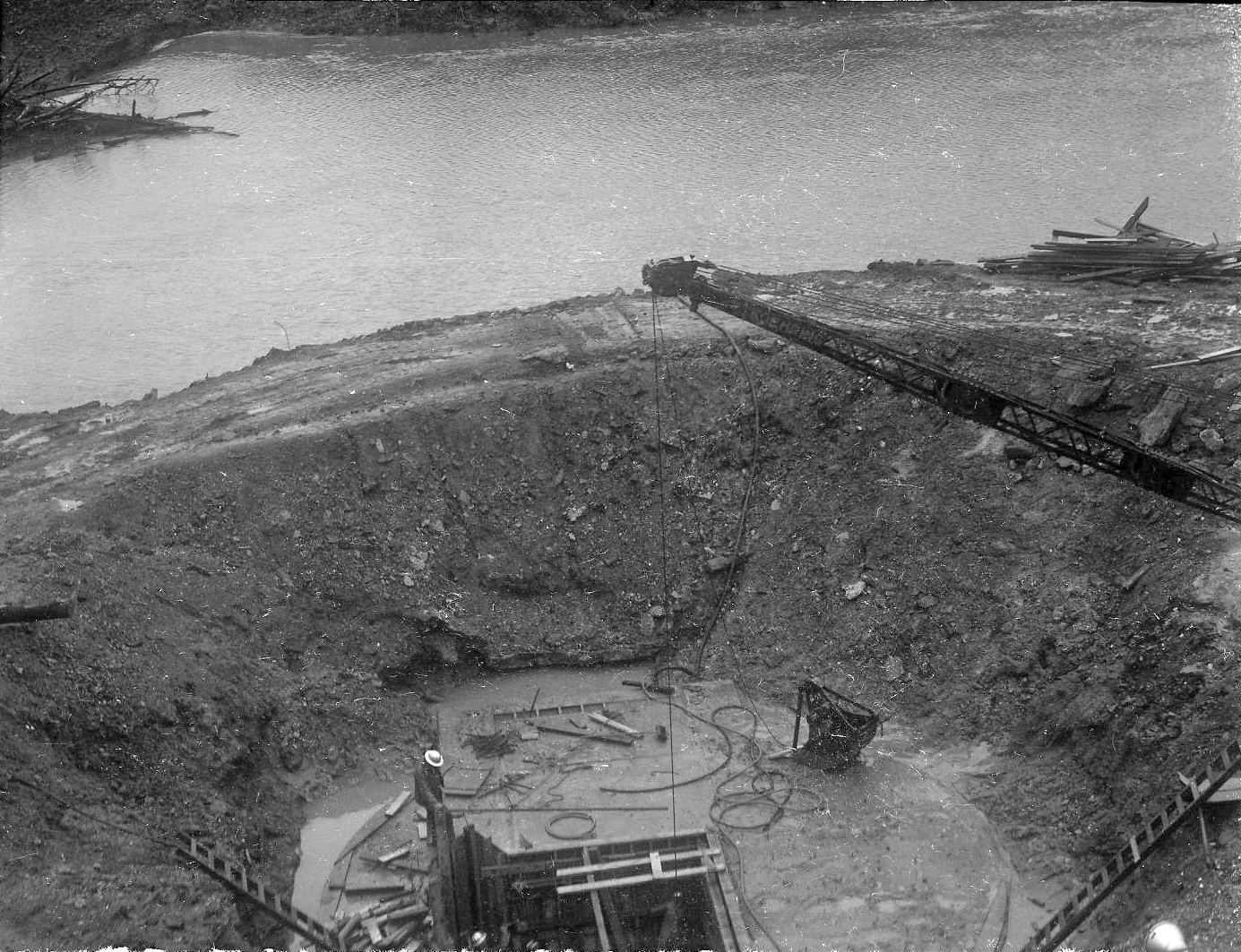
Man, I wish I was there with my kayak! This is the relief opening so the contractor can start building on the opposite side of the river.

Images 125 through about 180, the negatives all have this overexposed spot on the left hand side. Some I trimmed but others I was not able to.

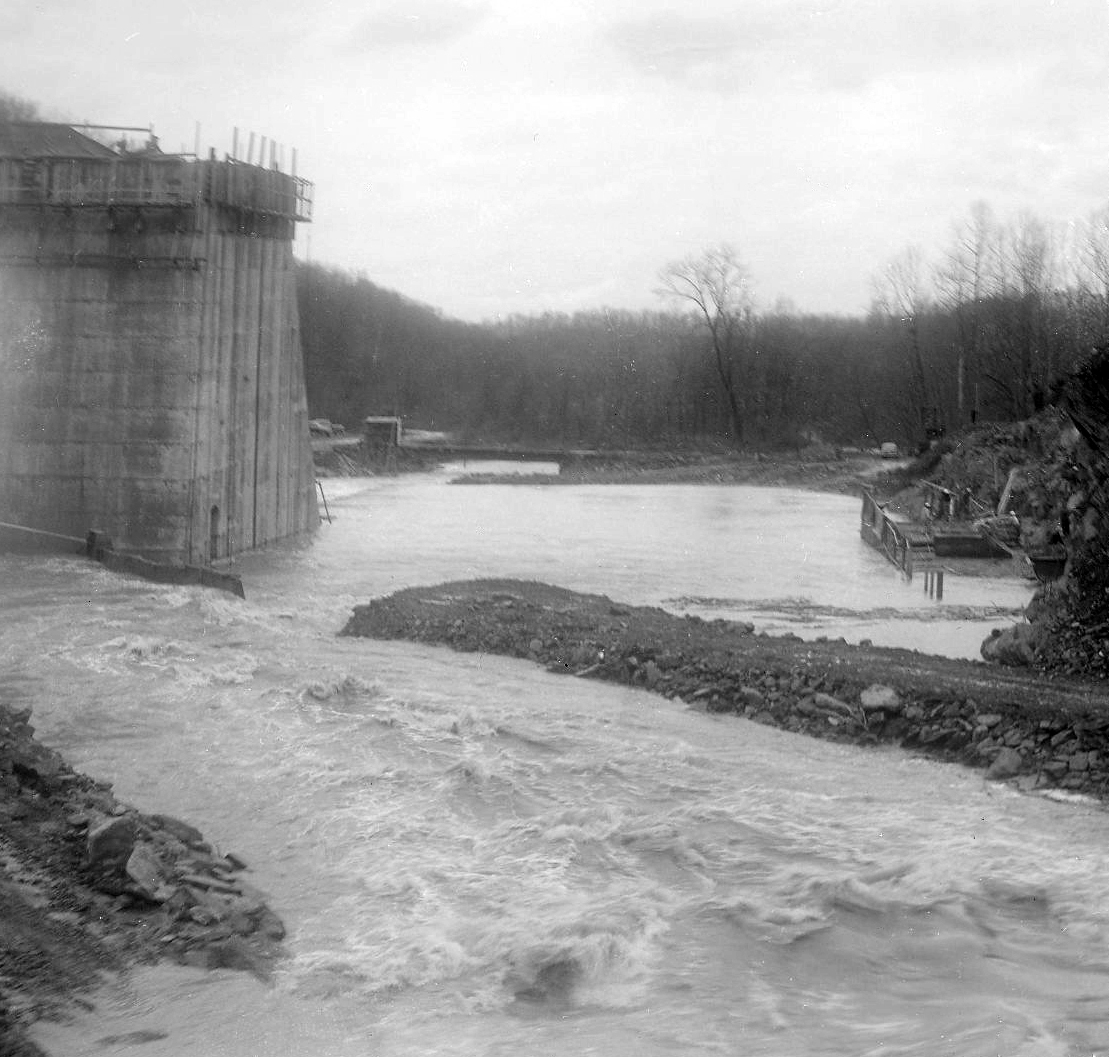
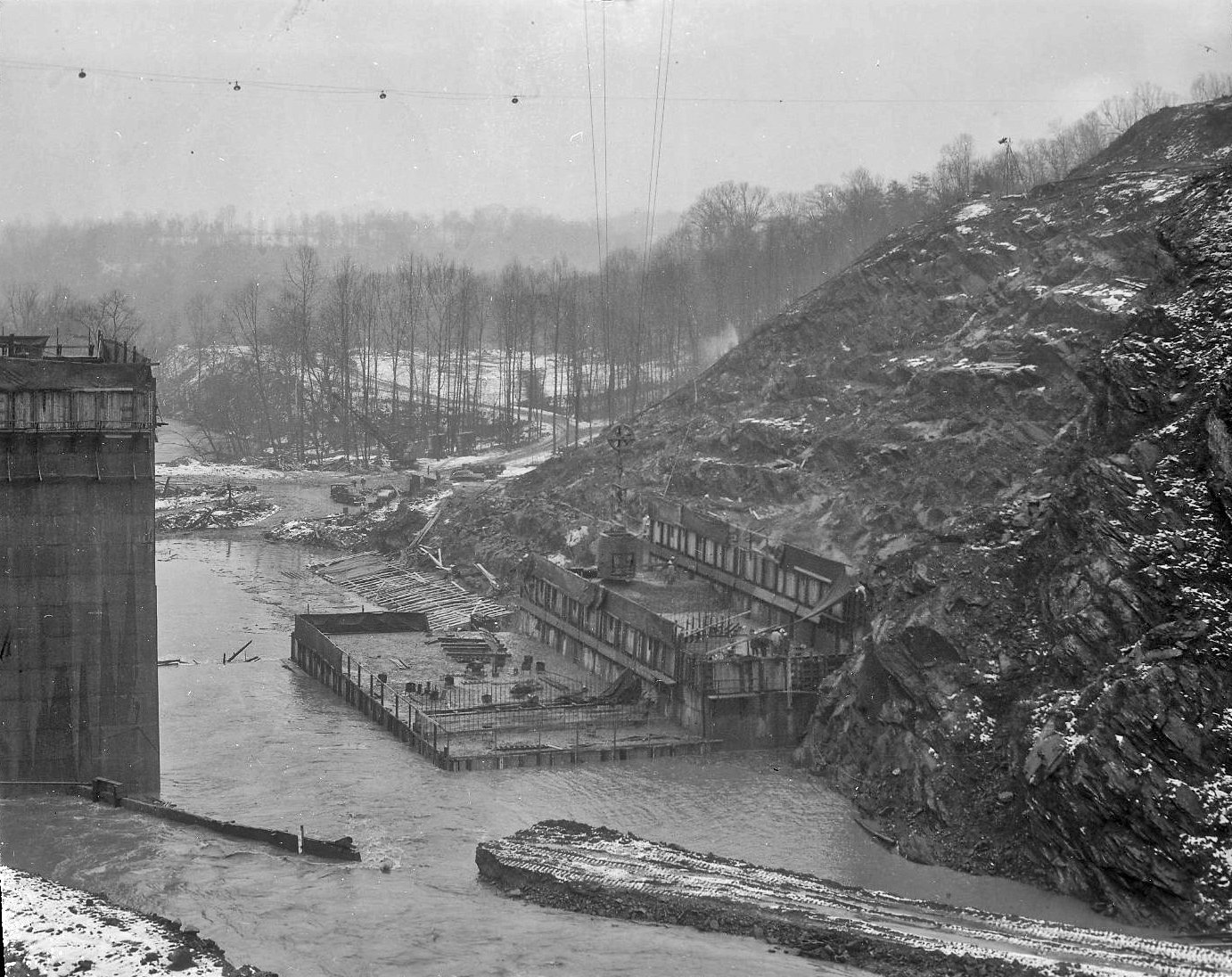
And then the floods came.

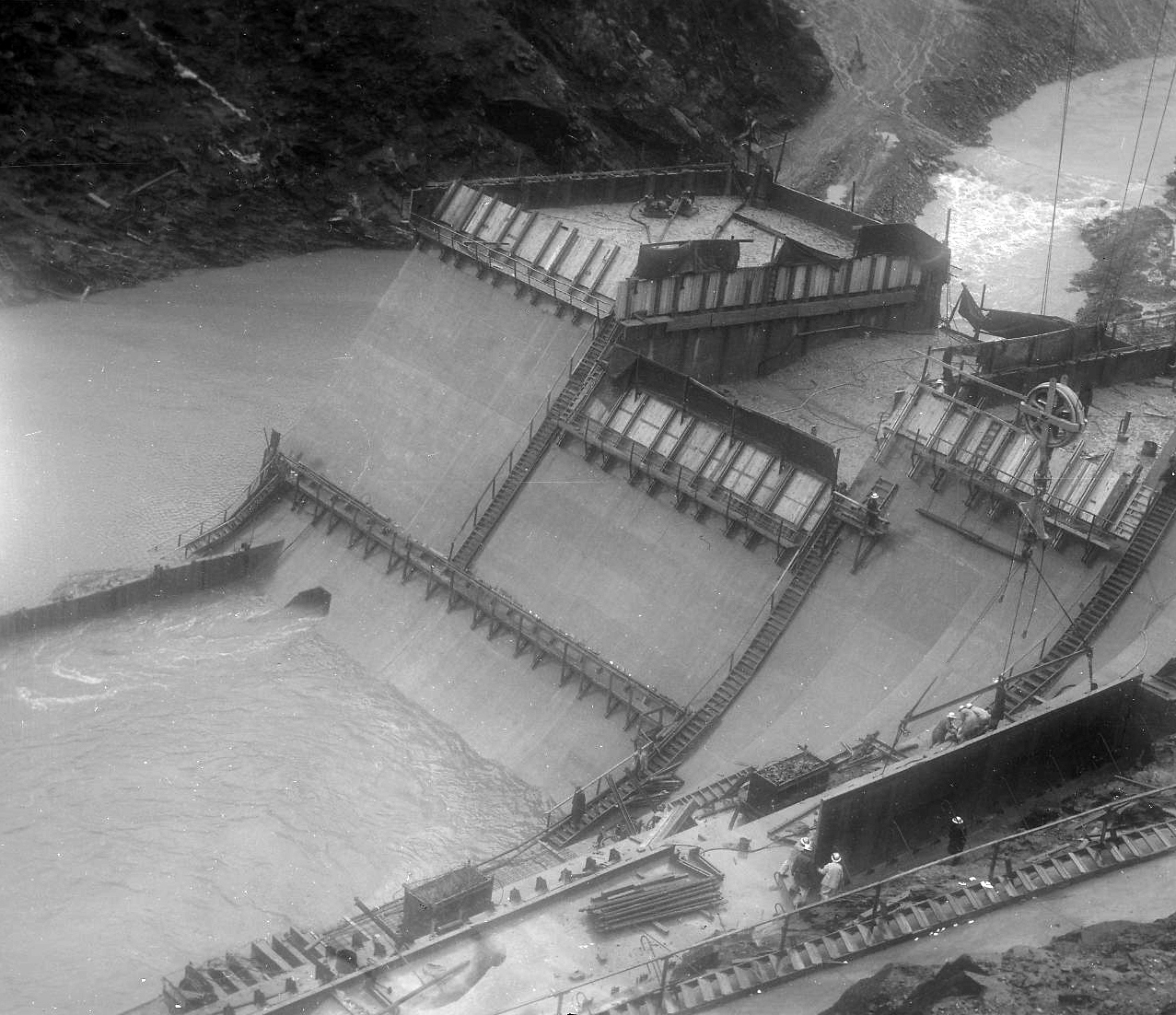
This one was strong enough to wipe out the coffer dam, but the men are steadily working on the right, placing forms for this portion of the dam.

While one crew is placing the foundation to the west, the east gang continues to raise the elevation of the dam.

Still working against the floods and snow.

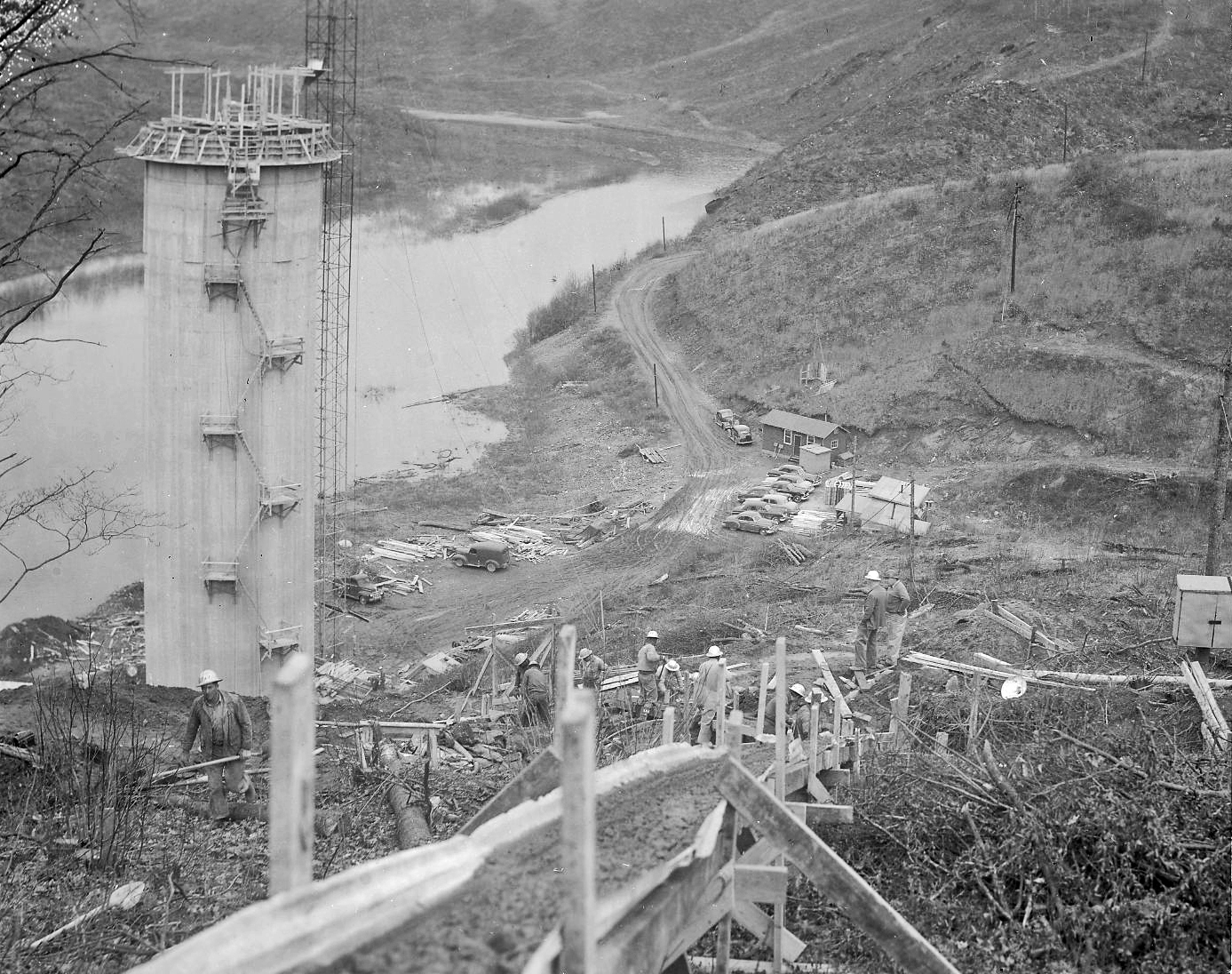
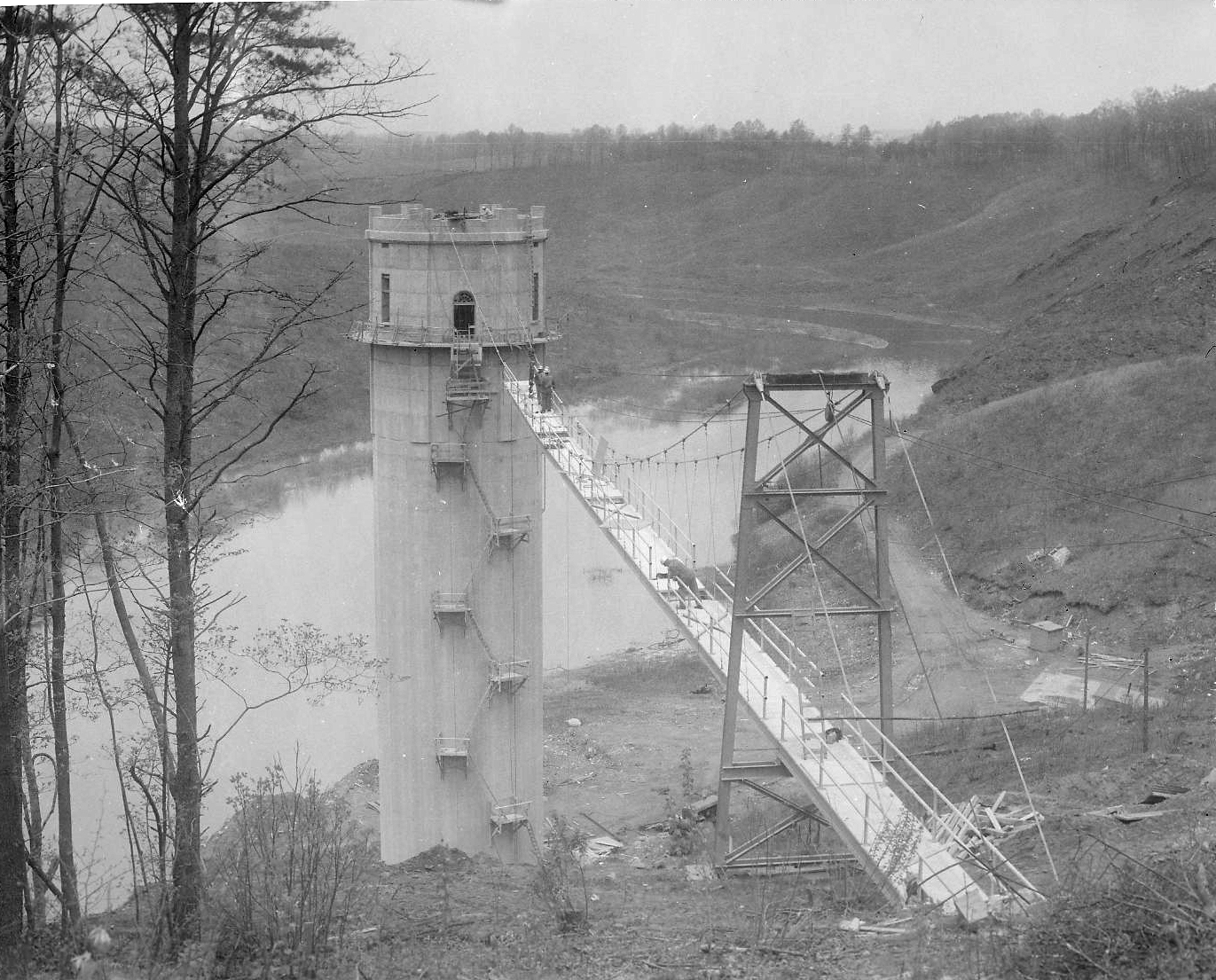
Meanwhile, upstream a ways, the intake structure is almost done. A couple things about this photo – how tall the structure is and how deep the water will be at this point of the reservoir. Also, I’m not sure why they didn’t grub, remove the plant growth that will eventually be underwater?

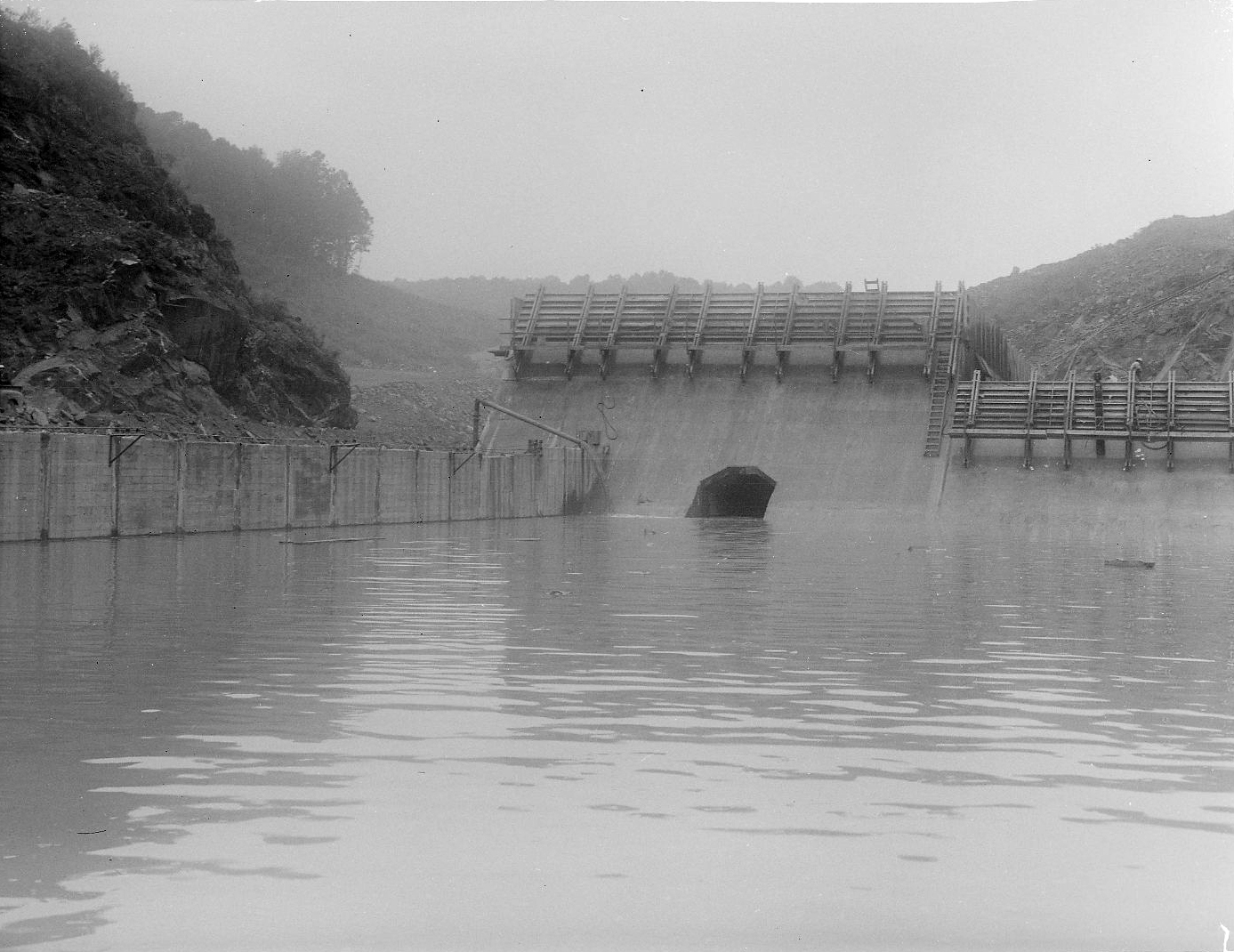
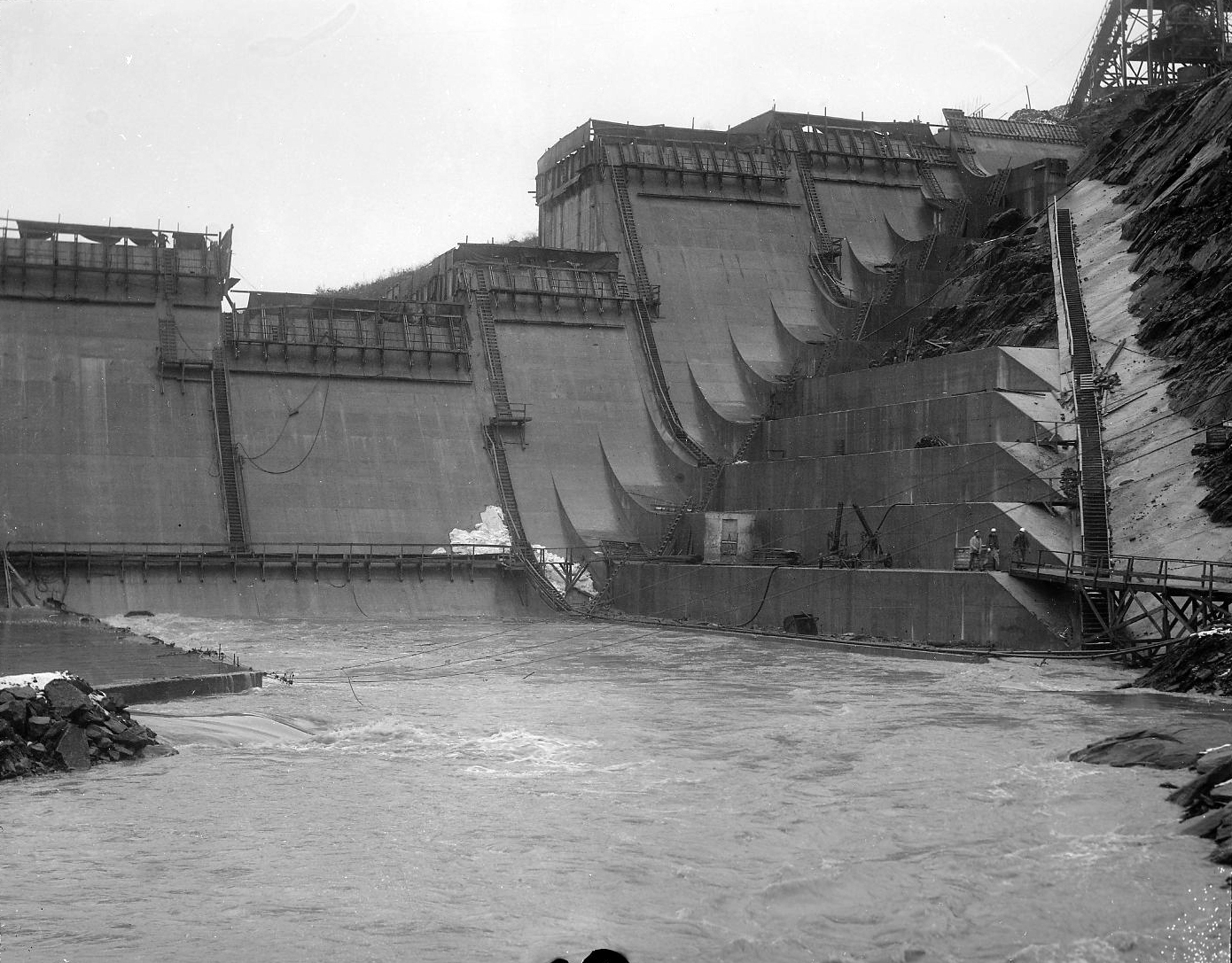
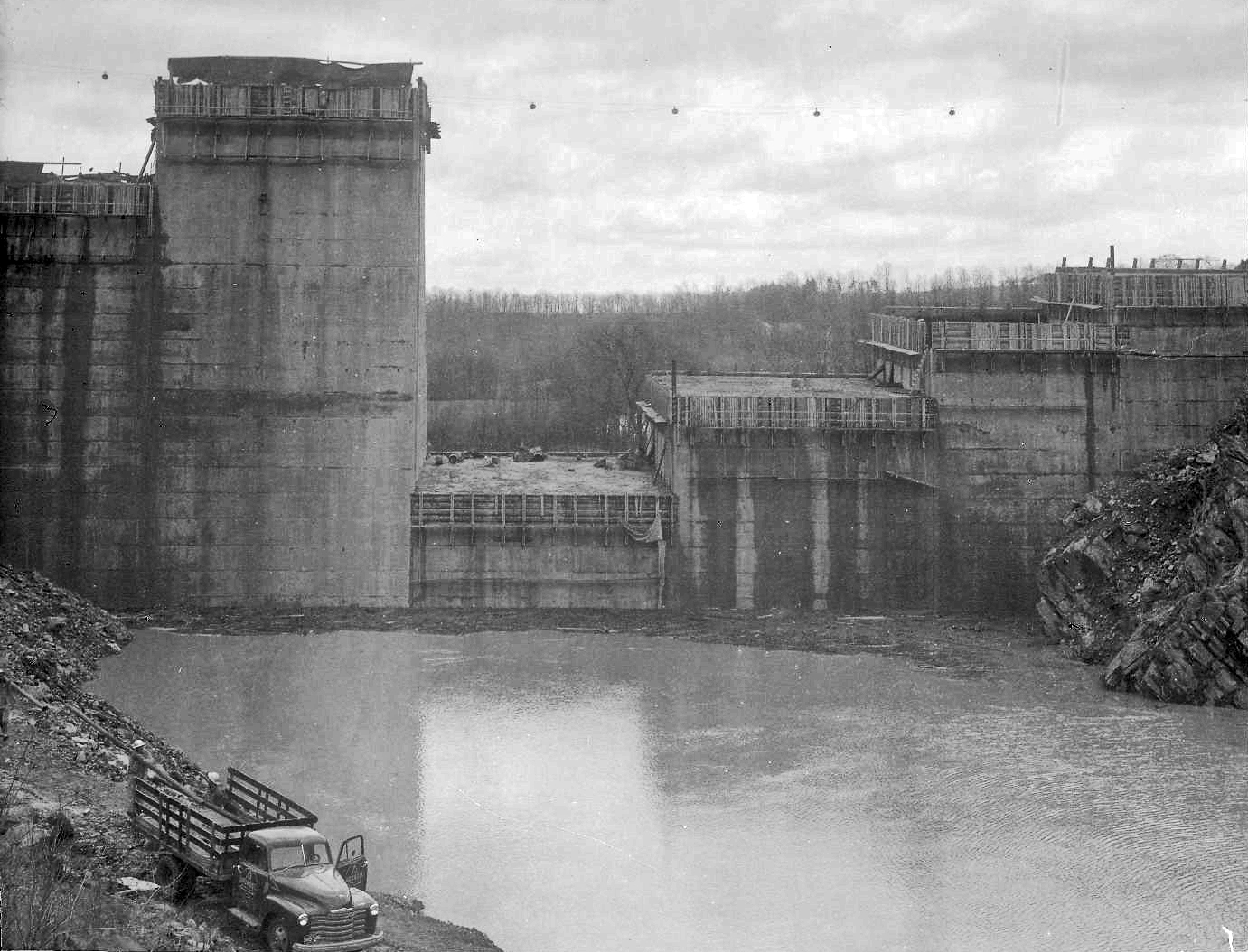
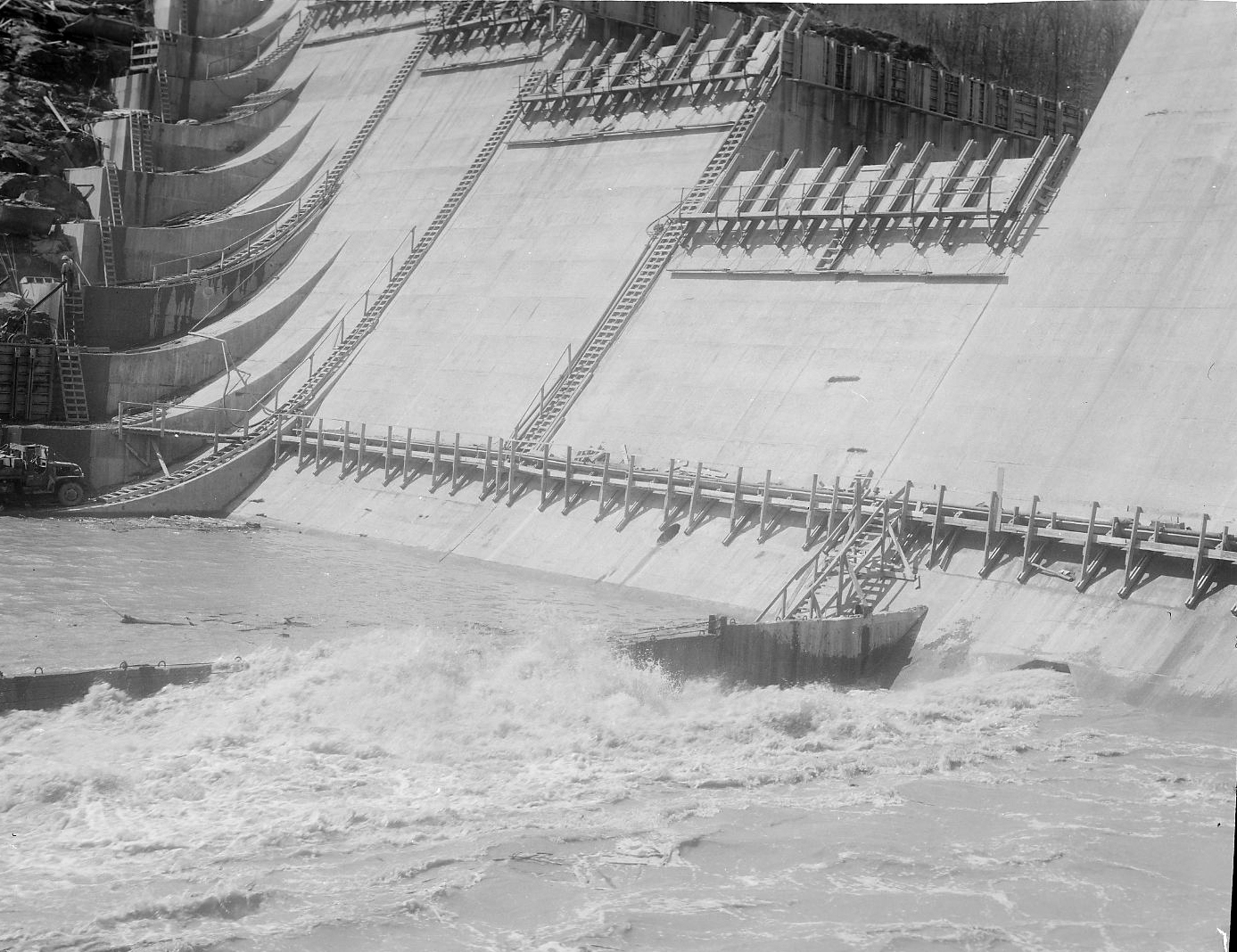
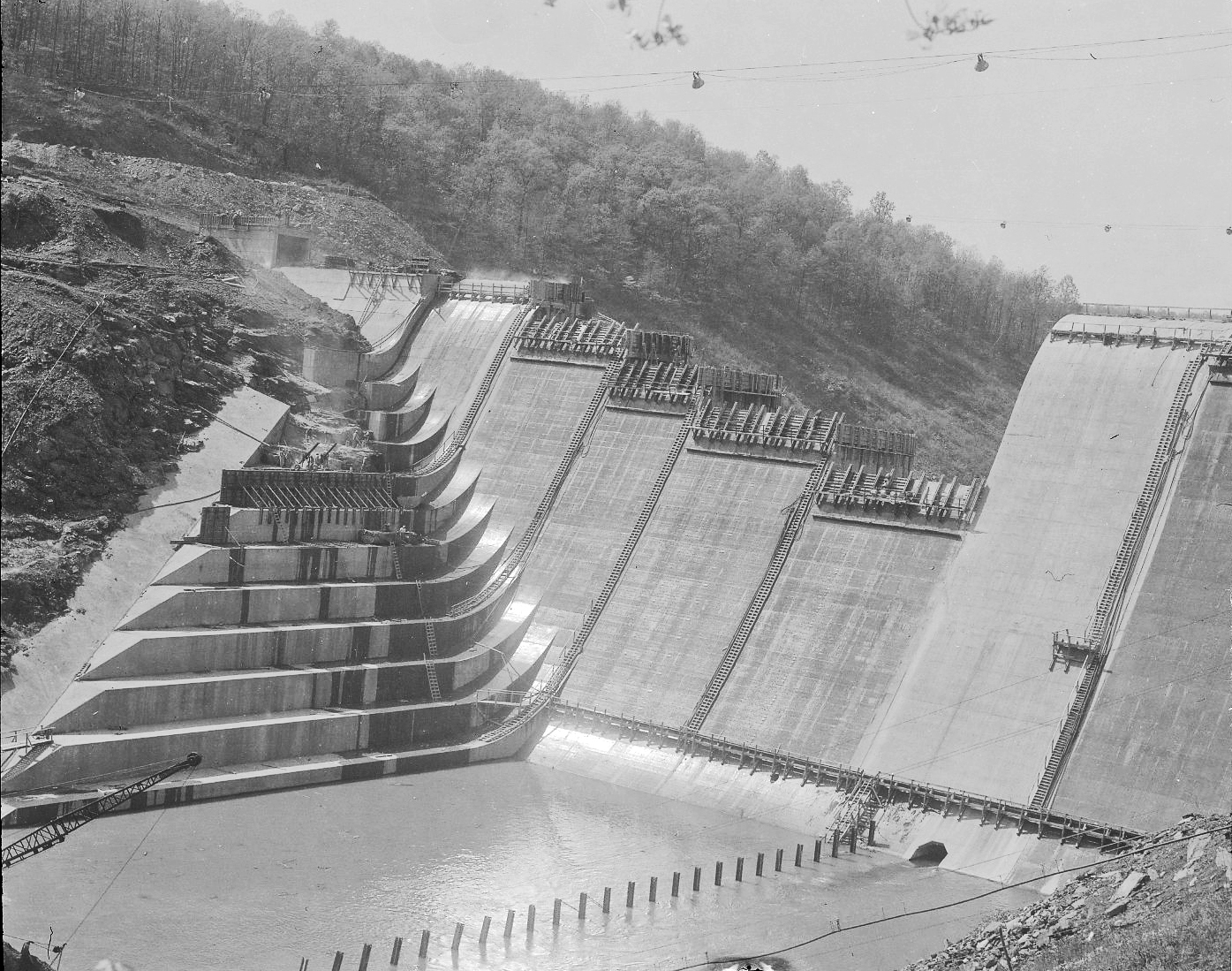
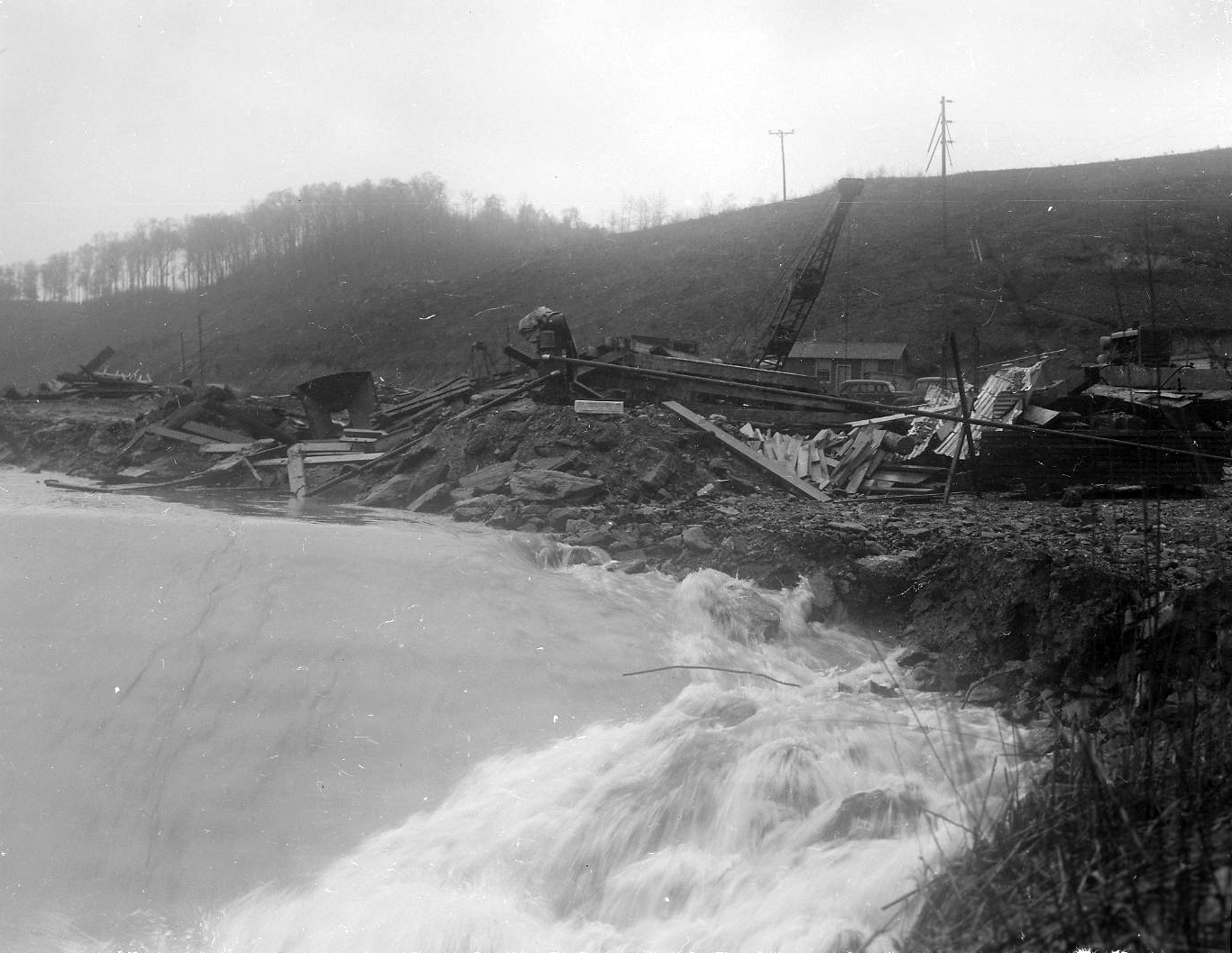
After a few months, the base areas of the dam are completed. Not seen here, underwater, is a relief opening (Kayak hole). Another flood has happened and the water has risen.

Wow – kind of looks like Conowingo Dam on a small scale. I wonder how much sediment is in this reservoir, against the face of this dam?? Since 1956??

The water just rages through. eventually the relief opening will be closed and water will either go over the top of the dam or through the intake structure and head to the Ashburton Filters.

Putting the finishing touches on the intake structure.

Almost done. I have posted on another blog (or Facebook) the finished dam and that engineers were wagering on when the reservoir would fill and the dam would crest? The Liberty Reservoir reached the crest point of four hundred and twenty feet on February 6, 1956, approximately nineteen months after the filling of the reservoir began on July 22, 1954

Loose Ends Never End

05 Thursday Apr 2018

Posted by Ronald Parks in Archives, engineering, water history

≈ 6 Comments

Tags

Baltimore, Construction, Dams, engineering, Patapsco, photography, POLITICS, Public Works, Research, scanning, water history

Loose Ends Never End sounds like some spiritual/metaphysical quote (It does come from the Bhagavad Gita, chapter 9). But in my case it is more about my trying to tie up some loose ends before I retire. Just when I think I’m about done documenting and scanning the archives – Poof!! More just appear out of nowhere. Well actually I found a bunch more under my work bench. Three index drawers full of 3-1/2″ x 5″ photographic negatives. At first I thought there was only 500 or so. There are over 1,500 of them! I started scanning them yesterday and got about 100 done. Below is a sampling of those. 

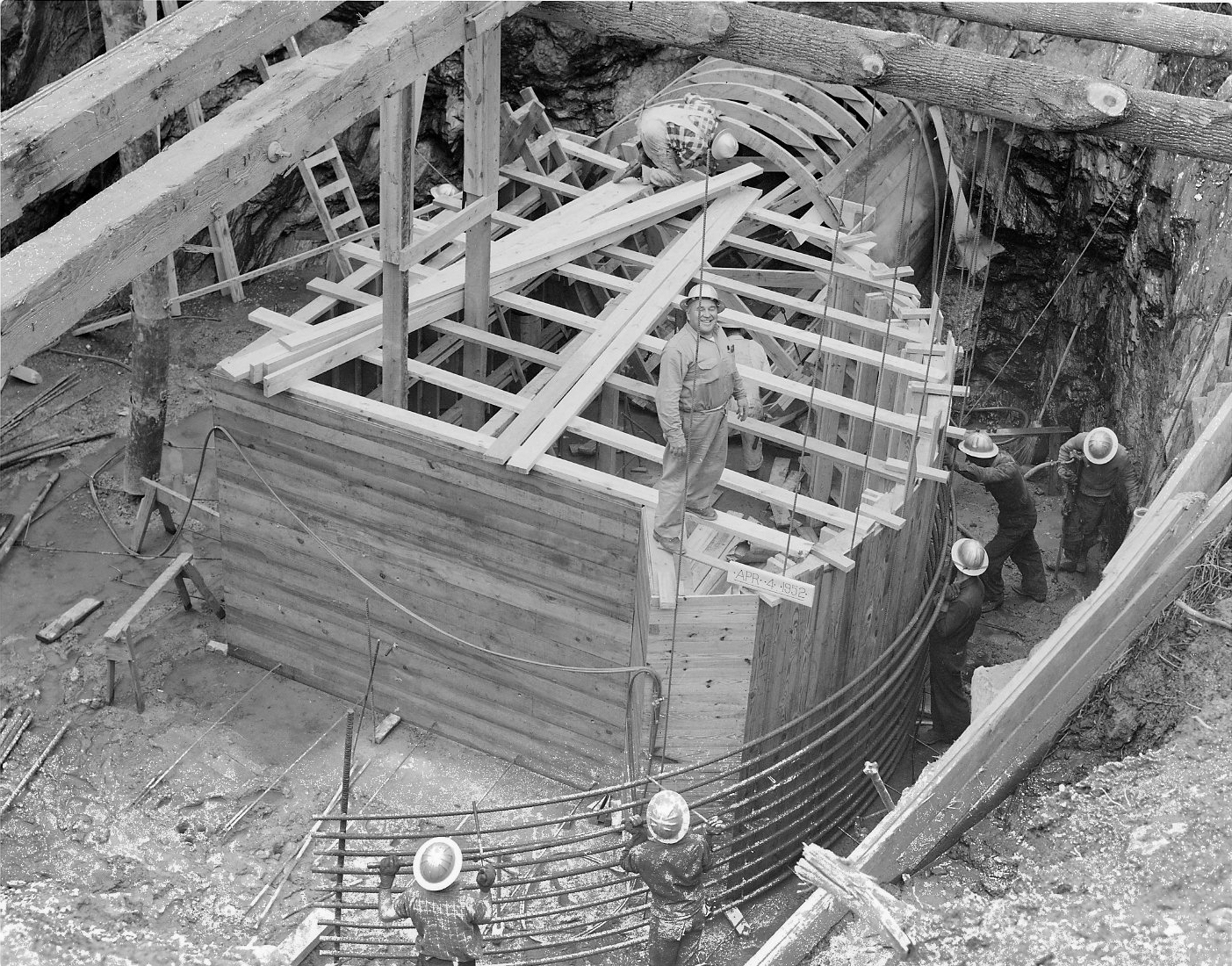
Just glancing through the first couple hundred, it appears these are from the building of the Liberty Dam, starting in 1952. This photo shows a happy foreman on top of the intake structure as it is being built.

The Engineer’s Office – must be before MBE/WBE requirements. Not sure why the one guy has his arm around the other one?

There were four floods on the Patapsco during 1952, all stopping work for a few days – Change Order!

The coffer dams held back some of the water.

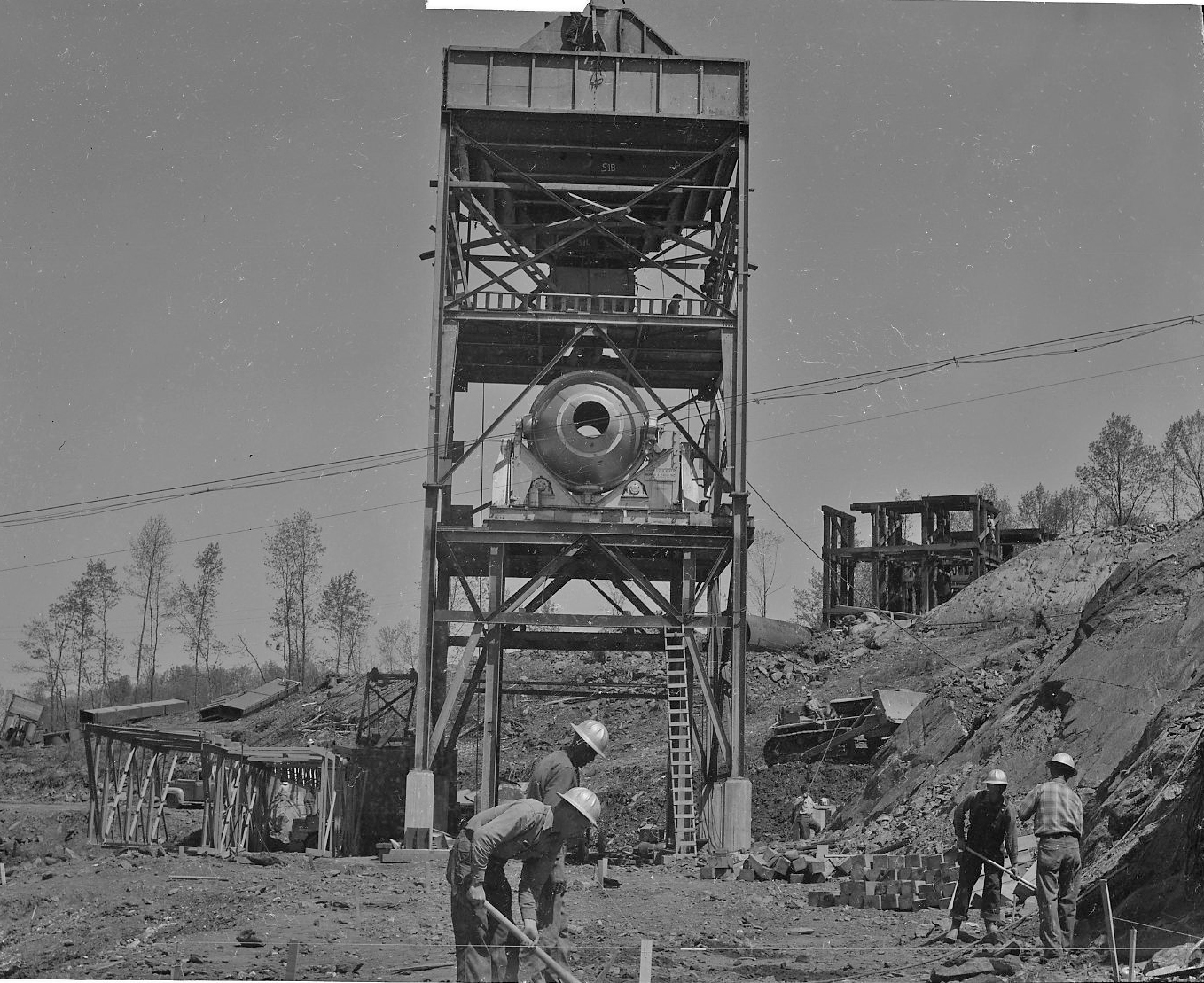
The Arundel Corporation’s cement plant.

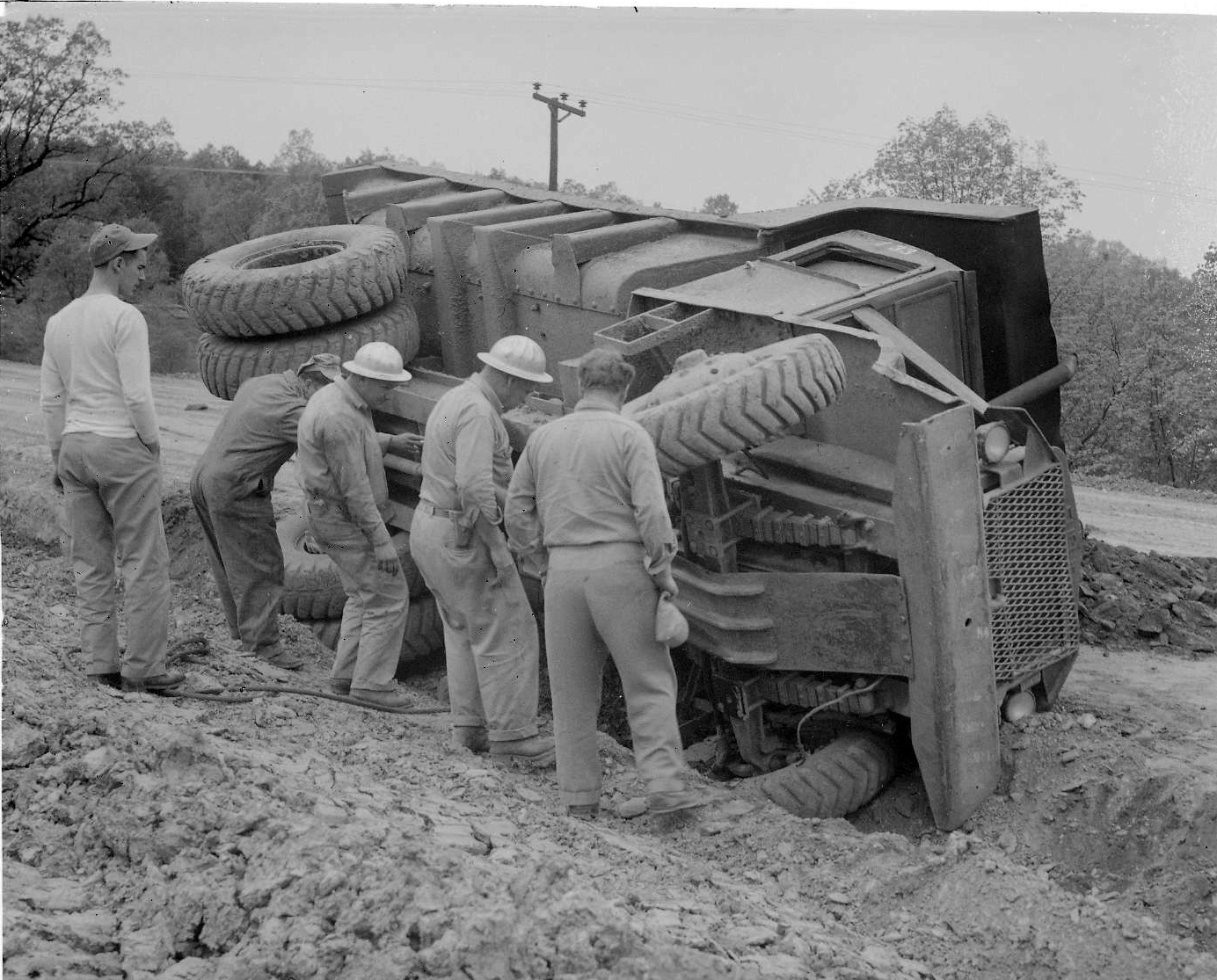
Ooopps! Not looking too happy now. There were a lot of accidents on the job site in 1952. Most notably a crane fell, crushing one of the workers. There are actually a few photos in this group of that, but I am not posting those. One shows the worker’s head crushed under the I-beam. I cannot believe someone took that photo.

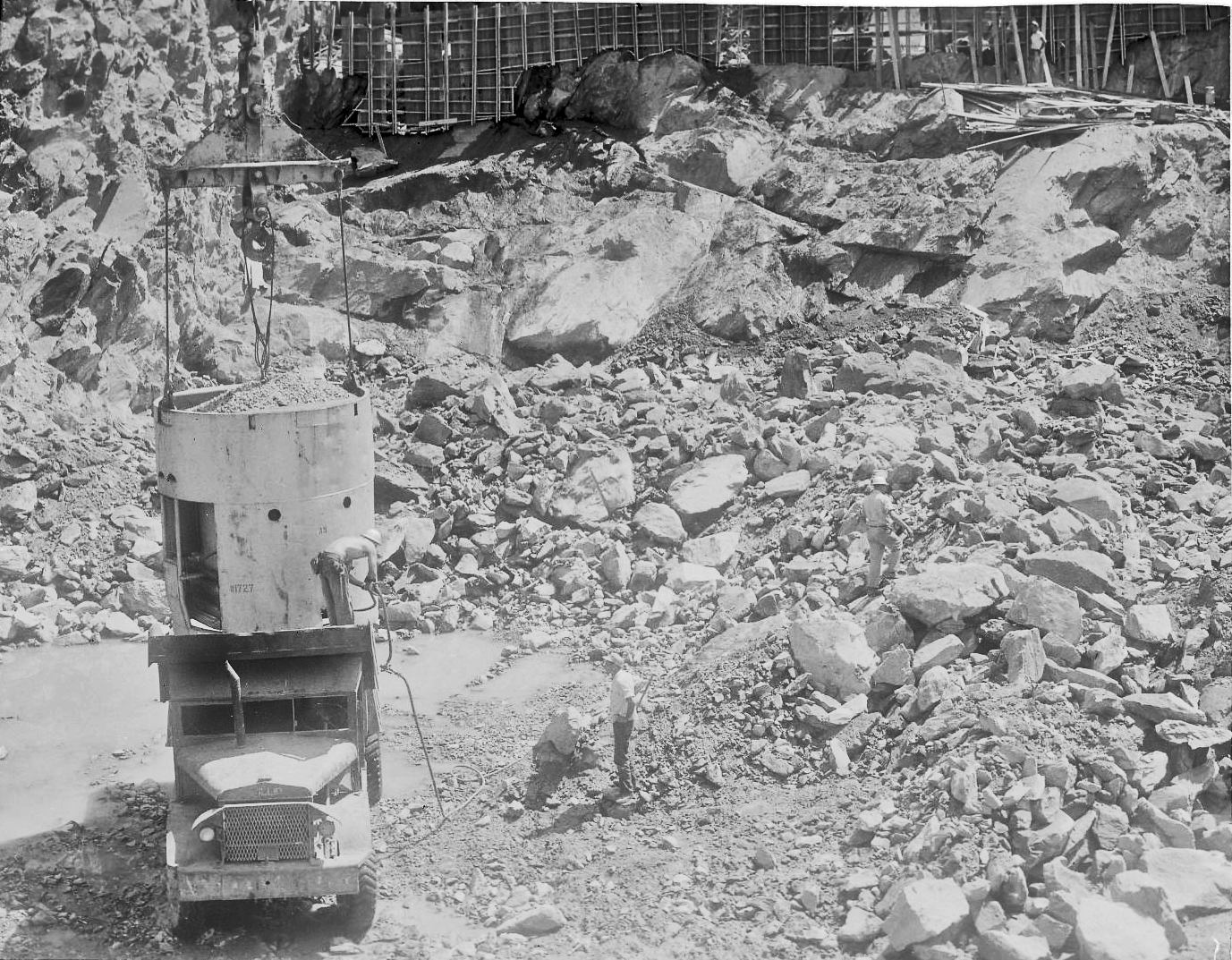
This looks like an accident waiting to happen. I don’t think that truck is capable of holding that bucket safely.

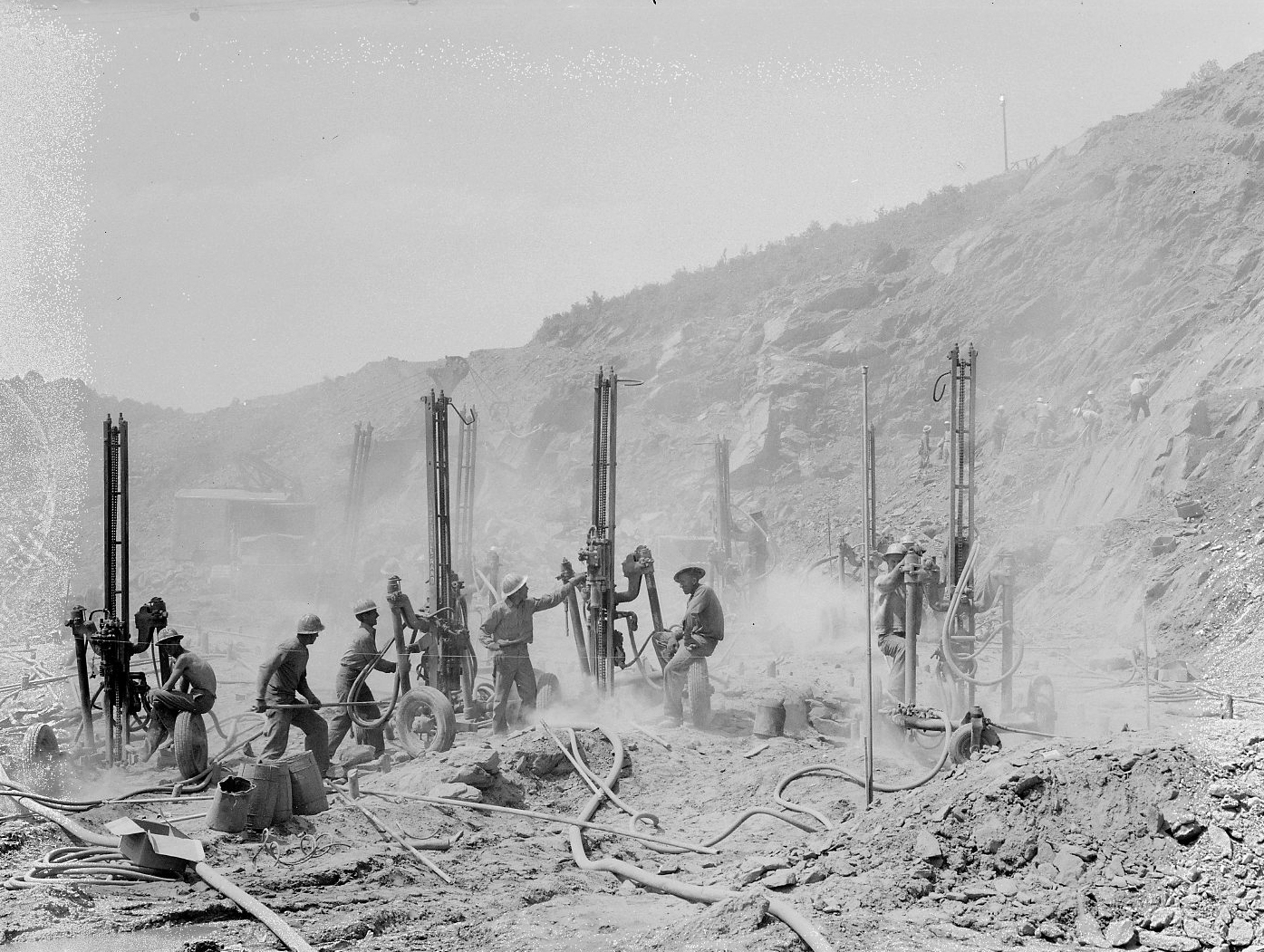
These guys are working. Trying to make up for lost days due to flooding.

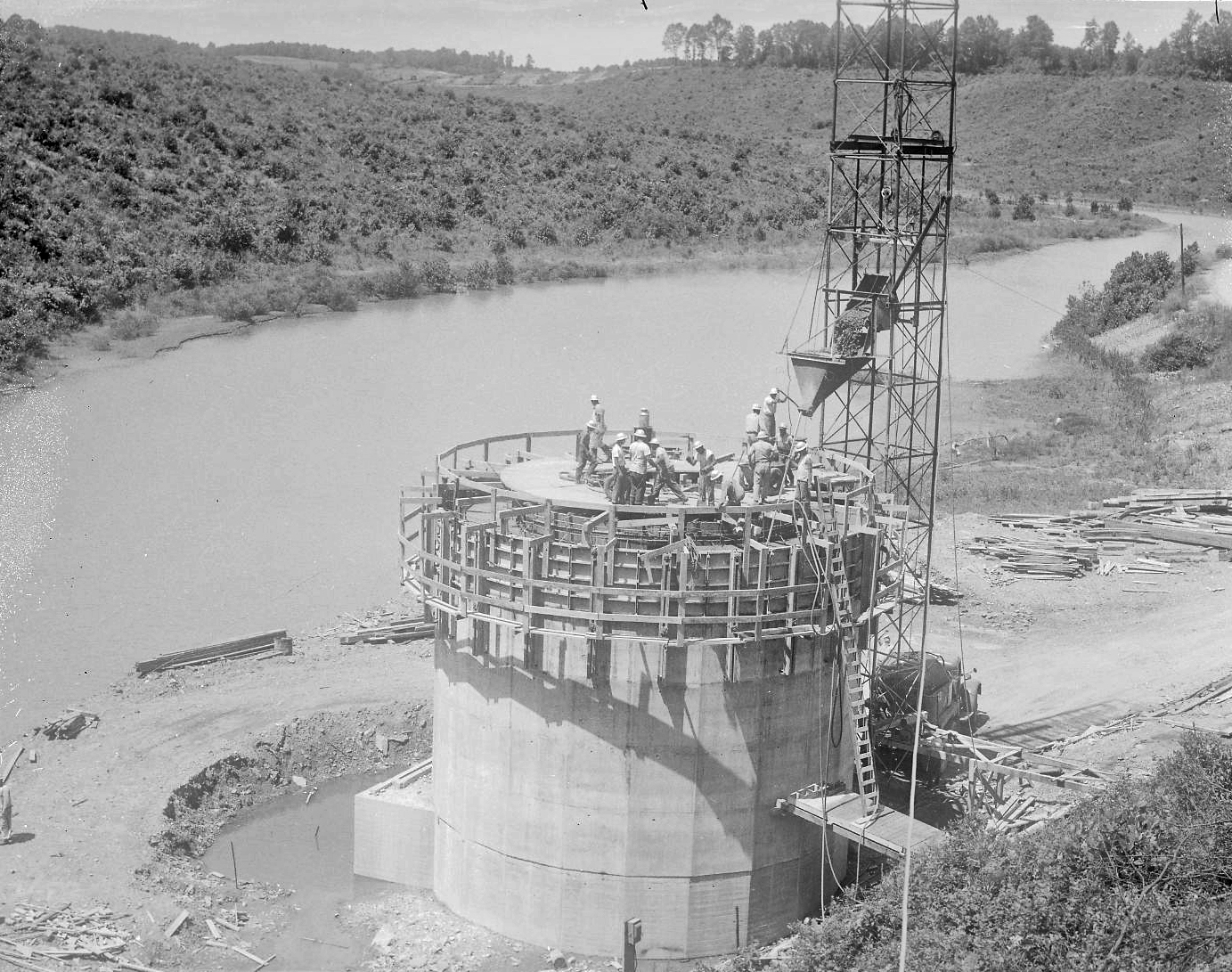
The intake structure rising from the river.

I have been using an Epson 4990 scanner for a few years now. It works pretty good, except the software that came with it is a little off. By that I mean, if I scan a photo negative, it automatically turns it into a positive in a file, but it is too dark and takes a lot of work in the Photoshop Elements software. So I scan it as a positive, which it converts to a negative. Then in PE I invert it and hit auto levels and it looks just right. Some of course will never look right, only because of what the photographer did when taking the photo.

I guess taking care of these loose ends will give me something to do for a while!

John Davis – Engineer and Architect

27 Tuesday Mar 2018

Posted by Ronald Parks in Archives, engineering, water history

≈ 1 Comment

Tags

Baltimore, bridges, Dams, engineering, HISTORY, Jones Falls, Latrobe, Public Works, Research, water history

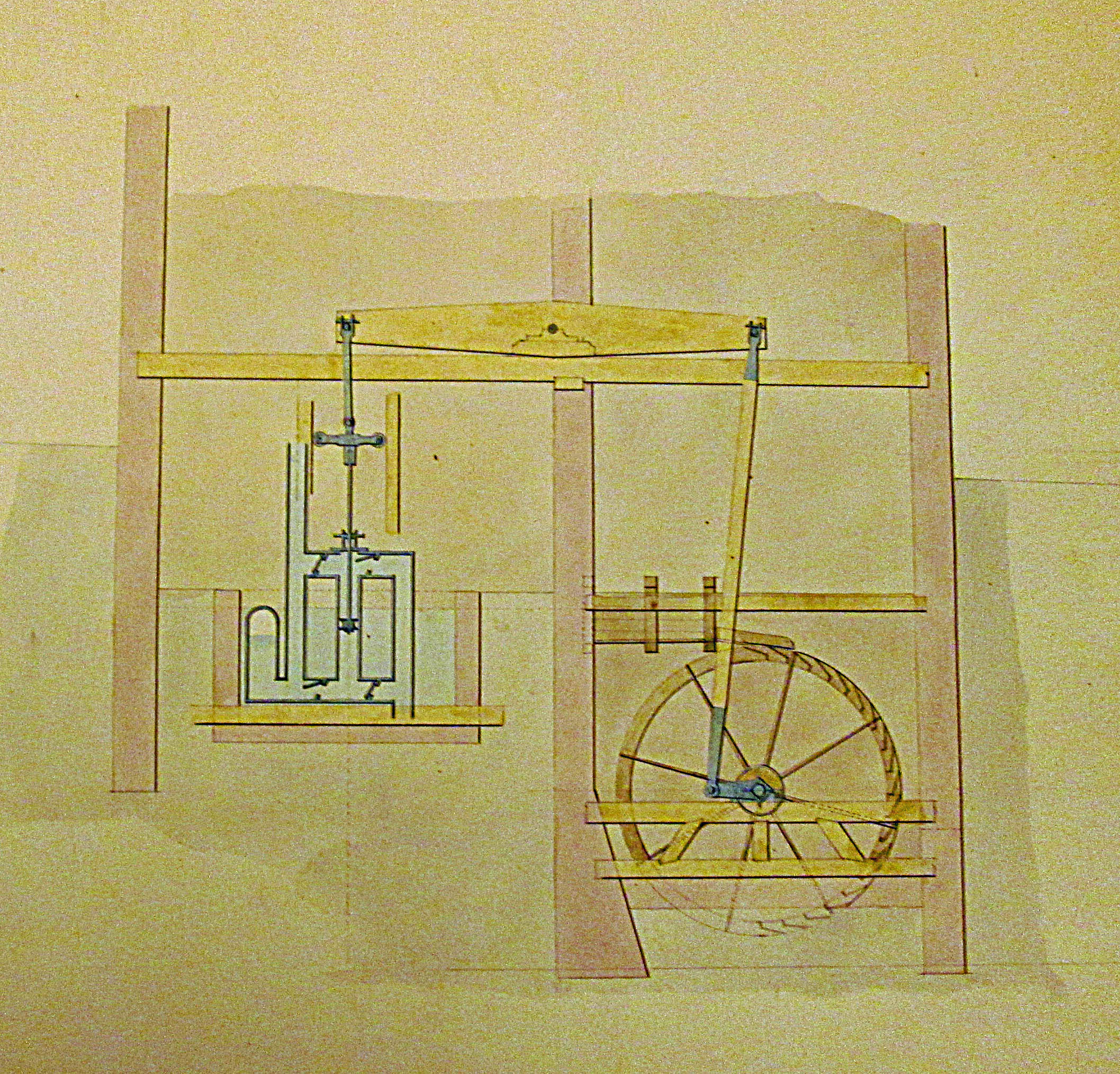
On April 30, 1804, the Baltimore Water Company, a private company, was formed. Their first task is to furnish water to a portion of Baltimore City. It now became necessary to secure a site for the erection of the works, and in 1806 a purchase was made of a lot now occupied by the office of the Northern Central railroad, on Calvert street. The works, which were erected under direction of Mr. John Davis, consisted of a wheel and pumps, which forced the water into a reservoir on the southwest corner of Cathedral and Franklin streets. The water was obtained through a common mill race from what was known as Keller’s Dam, which supplied Salisbury Mill, the site of which was near the site of the old Belvedere bridge. (Baltimore History by Clayton Hall).
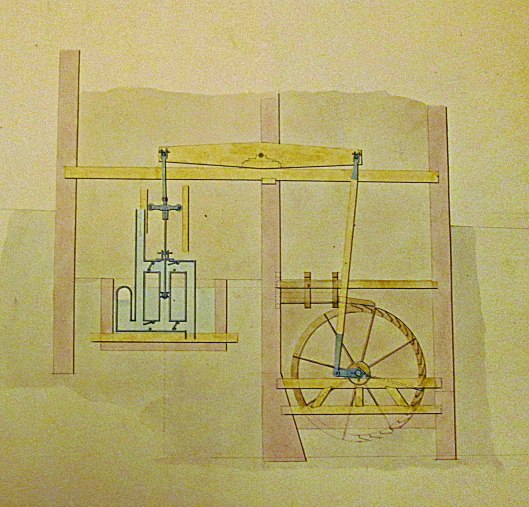
Photo of drawing from MdHS. The City does not reimburse me for digital copies, these start at about $50 each, so MdHS let me photograph them.

From John Davis’ Autobiography; Maryland Historical Society Magazine Volume xxx, 1935: “I at once entered into an Engagement, with Mr. Latrobe, and the City, Corporate authorities, to Superintend and aid therein, as Clerk of the works [in Philadelphia]. In the situation aboved named, I continued connected with Mr. Latrobe about three years, until sundry other engagements, required both the service and talents of Mr. Latrobe in other portions of the United States, more Especially at the Cross Cut Canal between the Chesapeake and Delaware Bays, and the water works in New Orleans. After this period, the entire direction and management and the Execution of the works, for watering the City, of Philadelphia, Devolved on me. In that capacity I continued until the Spring of 1805. In the autumn of 1804, I received an Invitation to proceed to the City of Baltimore, to give some advice and aid in an Examination that had been made in relation to the contemplated means as to the supplying that city with water. A company had been organized and a capital of 250,000 Dollars provided, A President and Managers, Chosen, water rights and water Power had been purchased, and various suggestions given as to the manner and plans to accomplish the object, and to appoint an Engineer, and Manager, to Execute the requisite works. I repaired to Baltimore, to impart such views, and advise such measures, as appeared to me proper, for the furtherance, of the object this company had in view. Under these circumstances and considerations I could not comply and entertain a New engagement. But these Baltimore Gentlemen made strong appeals and almost insisting that I should be Employed by them they likewise desired me to endeavor to propose or point out some way or means to relieve them of their difficulty and it was agreed to adjourn the meeting until the following evening and then to receive my views and see if I could suggest some manner or means to meet the Case. At the Meeting of the Board on the next evening, I submitted this proposition, That I would still attend to the business and continue to direct the Superintendence of the Philadelphia works, endeavor to select and appoint a competent person to take my situation and place and Impart to such person, every necessary Instruction, and information that would enable and render him capable to perform and attend to the duties that would be required in the water works at Phila until the managers of that concern were fully satisfied that my Successor was Qualified and efficient to the performance of the required duty and as soon as such assurance was by the watering Committee of Phila agreed to Then I was willing to accept of the proposition of the Gentlemen in Baltimore. These conditions was accordingly agreed to and strongly urging me to make all my arrangements as soon as the nature of the business would permit.” [Davis states that he has twenty year old Frederick Graff replace him in Phila. under B.H. Latrobe] “I received the cordial thanks and a kindly parting* dismissal from the managers of the water company, and Mr. Graff commenced his services on May 1st 1805 and he continued in the same situation of Superintendent of the Phila water works until his Death in 1848, a period of 43 years.” [A statue was erected to Graff at Fairmount Water works]. Davis goes on to talk about how two years later he went back to Phila to write a report with Graff for the recommendation of a new water works at Fair Mount.

*Interesting to note here, from the book Benjamin Henry Latrobe by Talbot Hamlin: September 24, 1805 Nicholas Roosevelt (friend and partner of Latrobe) had turned the water off for three hours, at about the time that a serious fire was burning in Philadelphia. Latrobe wrote Roosevelt in panic, “I hear the spread of the fire was owing to the withholding of the water. I hope this representation is not true.” The city was enraged; a mob led by the sheriff charged the water works, threw out Roosevelt and the men working under him, turned the whole works over to municipal operation replacing Davis with Graff. [Perception of events]
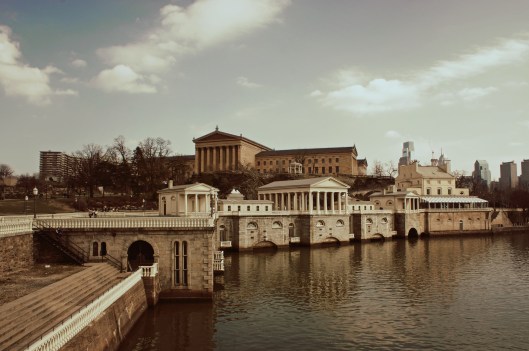
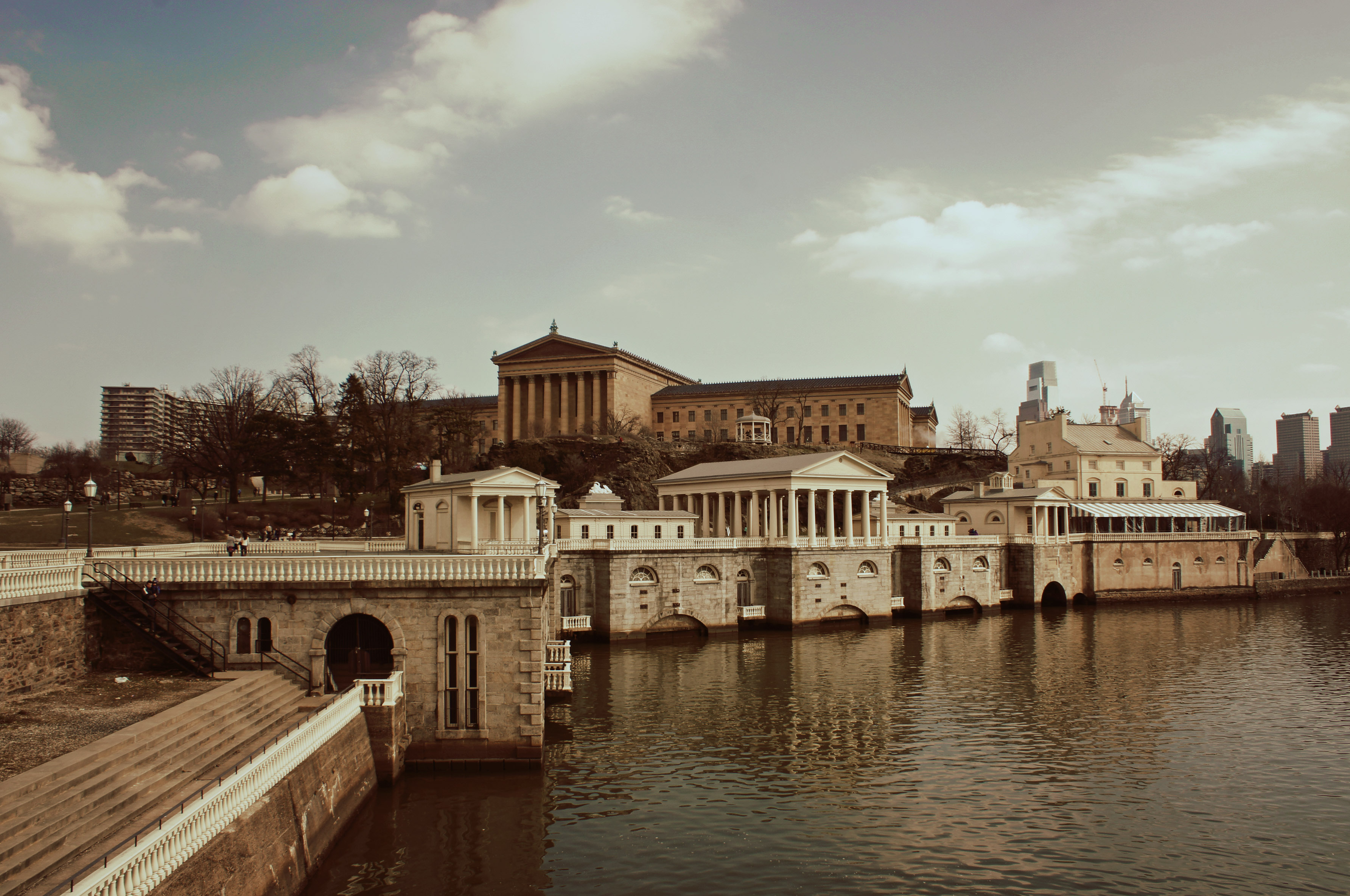
A photo I took a couple years ago of the Philadelphia water works.

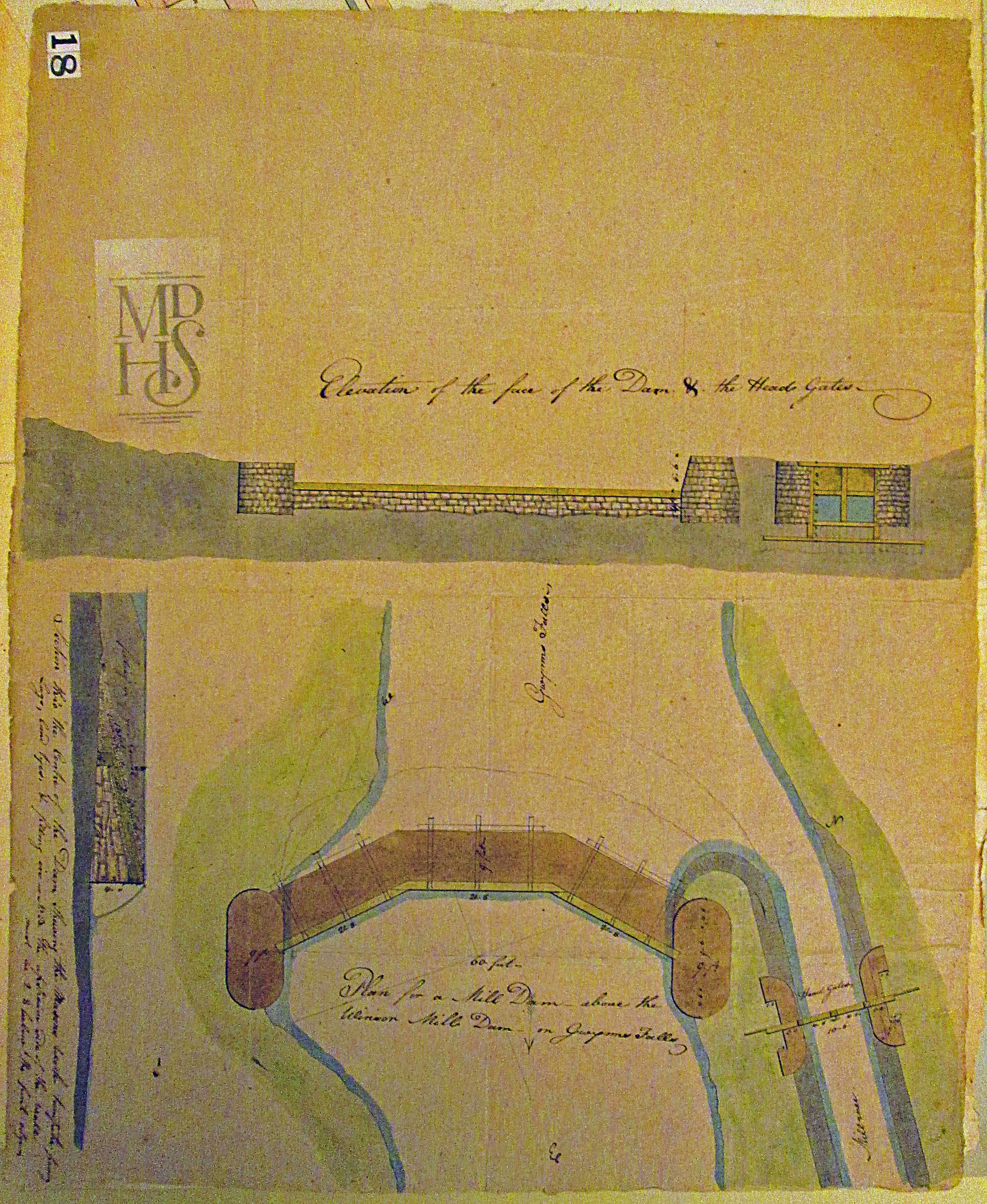
“I entered into a new arrangement with the Baltimore water company, Their works being then in successful operation and not requiring all my time and attention, I was appointed President, of the Company, at a reduced compensation and devoting only such portion of my time as their services demanded. In this capacity, I resided and continued during the whole period that I lived in Baltimore and until I removed to the Country in Washington County, Md. I will now proceed to give a little diversified statement of some of the objects, engagements and employments in which I may say I was almost incessantly occupied; Say at the Susquehanna Canal, from Tide water unto peach Bottom; a distance of about 10 miles, pulling down and rebuilding the Locks, Both widening and Deepening the Canal and other improvements there occupying a period of about 2 years; Surveyed and Leveled and attended the Improvements of Gwynns Falls by a mill Race of about 3 miles, in length terminated, by the building in succession, 4 large Merchant Mills, each carrying 4 Pair of Millstones; aided, and assisted in the erecting, Large Cotton manufactory; and a large Merchant Mill on Jones Falls, 6 miles north of Baltimore, Superintended the erection, and other Improvements, a little South of Havre de Grasse, Leveled the water & aided in building a Large Mill on Elkridge about 15 Miles west of Balt., Leveled and surveyed several streams and Located many Cotton Manufactories and other improvements that was either designed or Executed by my Direction.” 
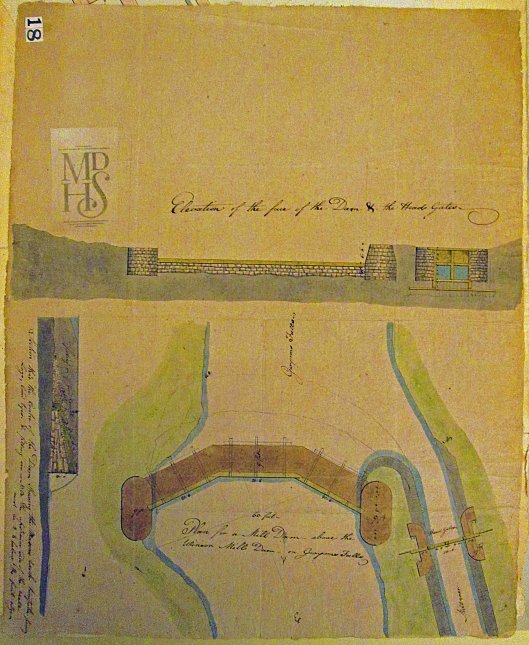
Gwynn’s Falls improvements.

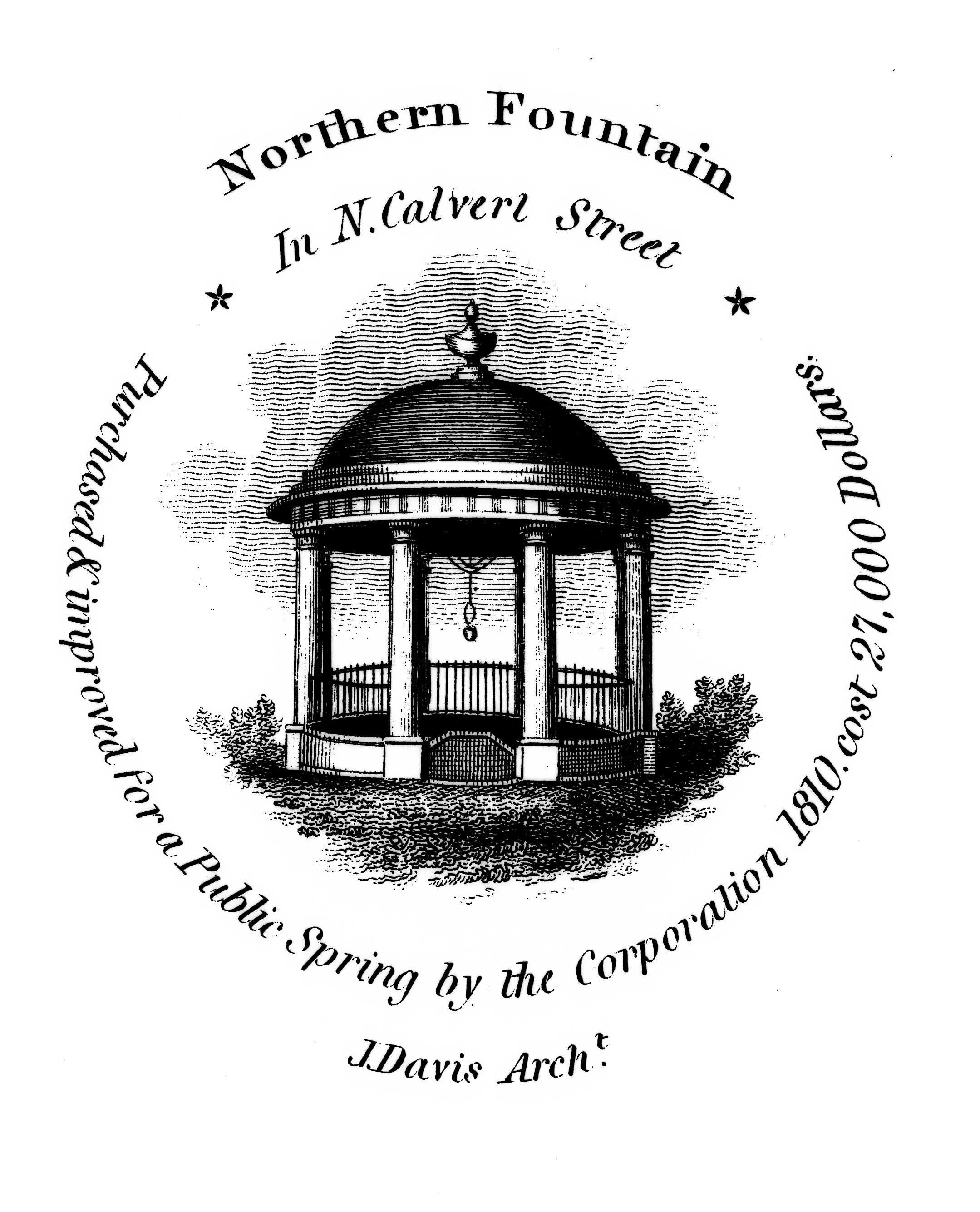
“There is one Improvement kept in fine order and is still a favorite spot and frequented by many persons, called the City Spring, situate on North Calvert Street city of Baltimore about 2 squares south [North] of the Battle Monument near Barnums Hotel.” [Also known as the Northern Fountain]
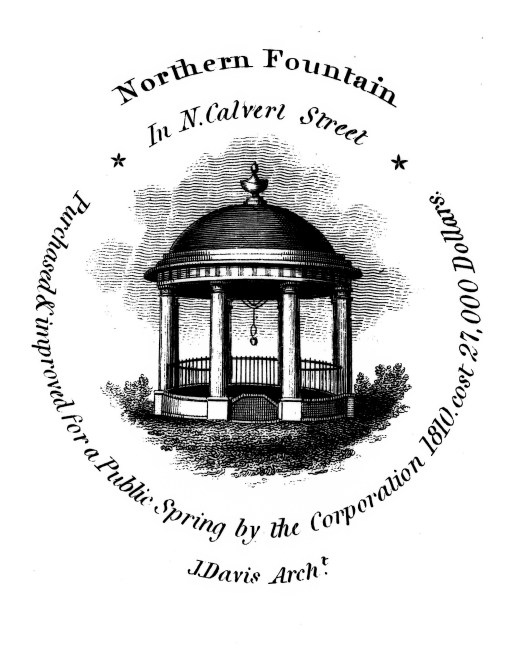
Print from DPW museum archives.

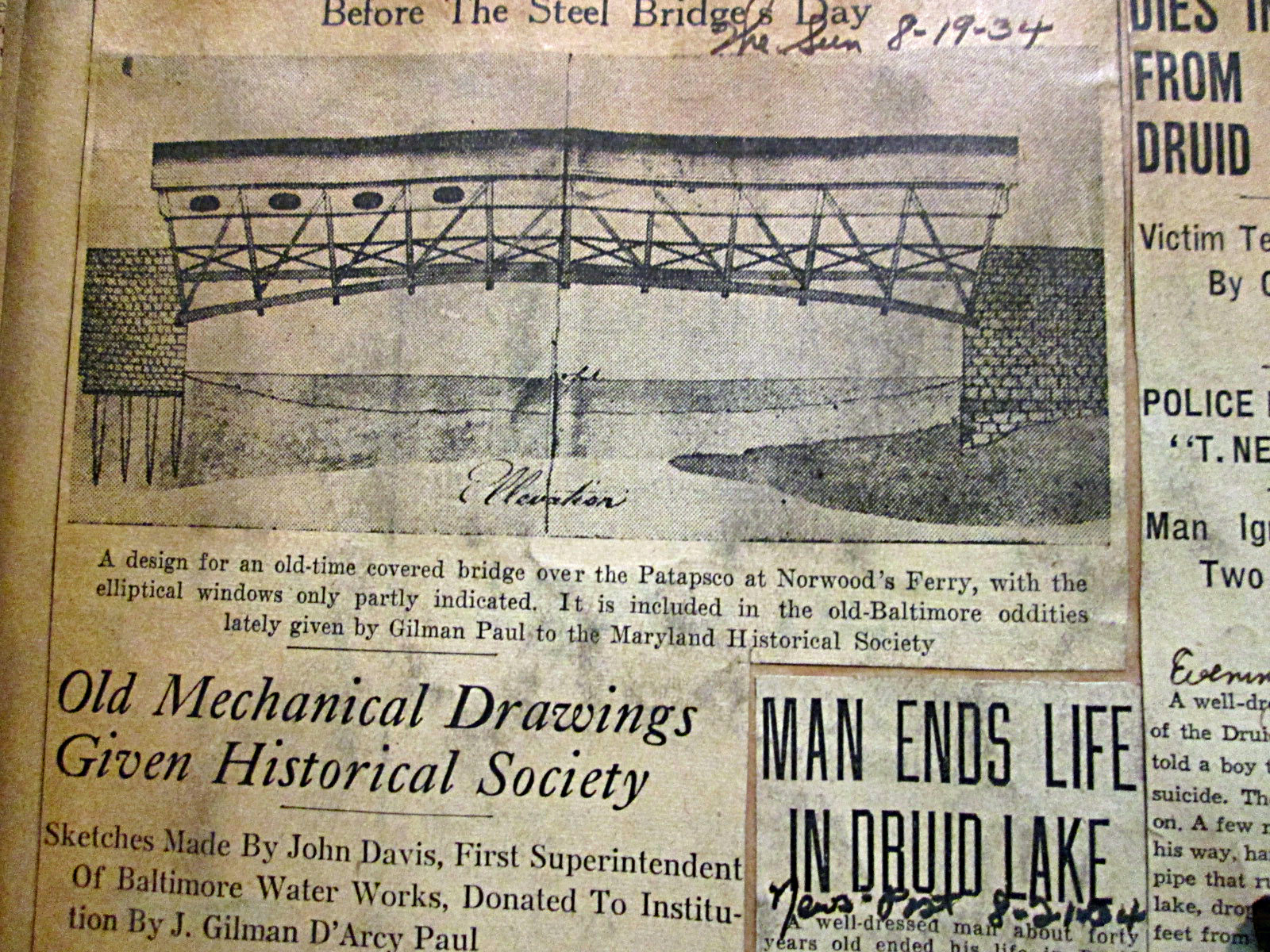
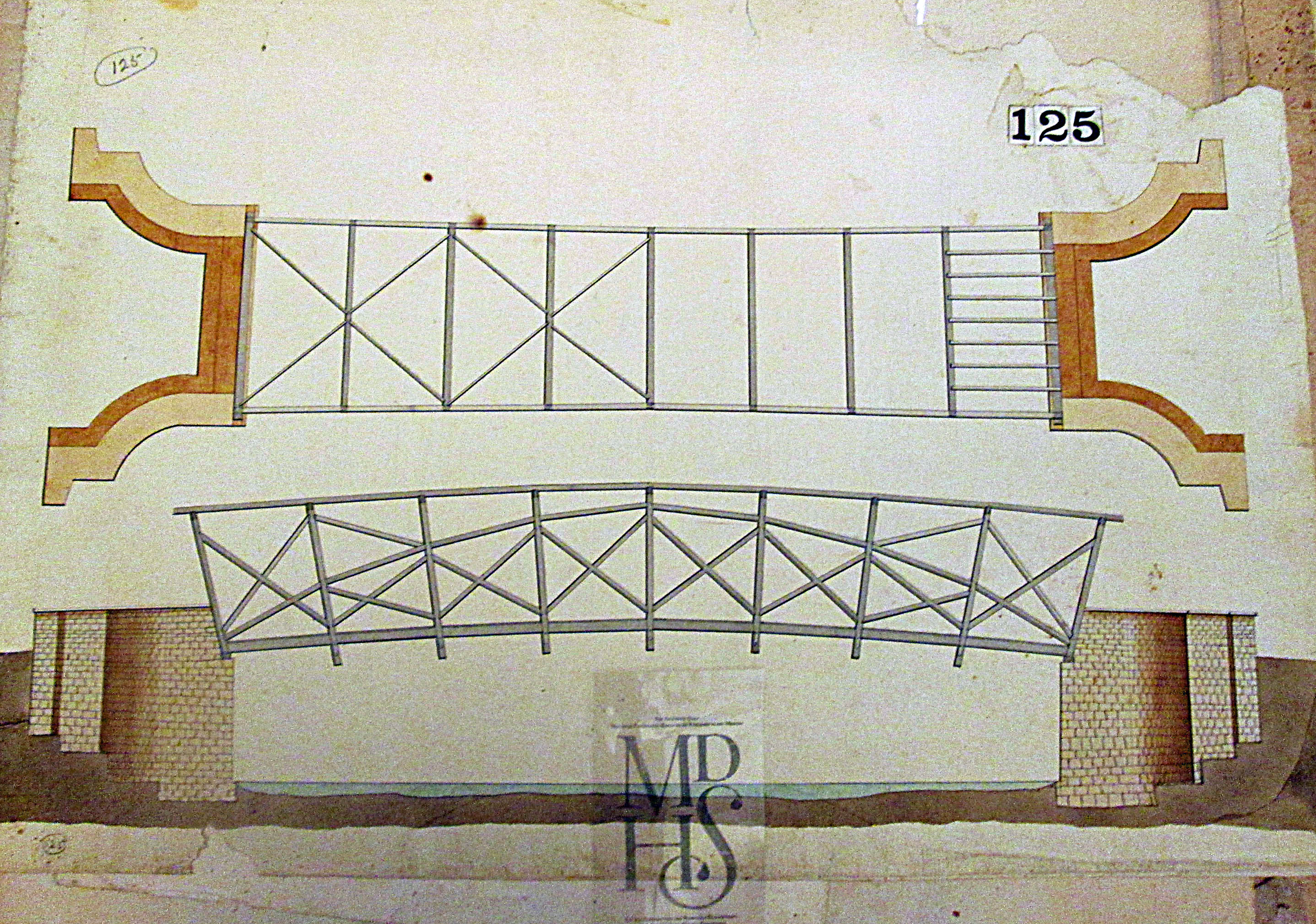
[Davis states that his crowning achievement was the sinking of a well at Fort McHenry in 1814]. “I must say that the success of this undertaking gave me some gratification, especially as it was stated by some Engineer’s impossible to be done But Major Bentelow still insisted on it that John Davis should pursue his own views, and the Exulting Major said to the Secretary of War. Did not I tell you, Genl. Armstrong that Mr. Davis would succeed and we would have good water at the Fort, uttered in his broken French language.” In 1813 the Board of City Commissioners, in conjunction with Mr. John Davis, examined the spring at the head of the Basin (known as Clopper’s Spring) and decided that it could be reclaimed and made to afford a copious supply of pure and wholesome water. August 19, 1934 Sun Paper Article in Scrapbook: Donation of drawings from first superintendent of Baltimore Water Works to Maryland Historical Society. Sketches were made by John Davis (1770-1864). 160 drawings depicting first water works. I did not see the drawing below from the article, but a similar one.
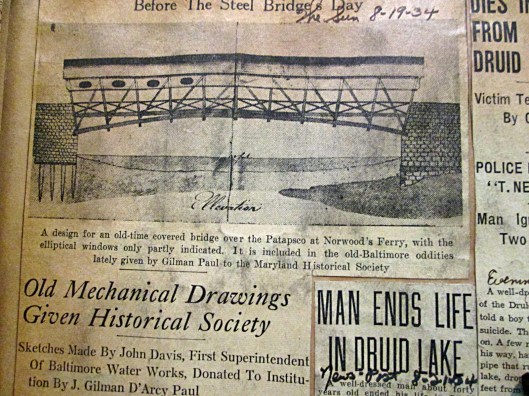
Sunpaper article.
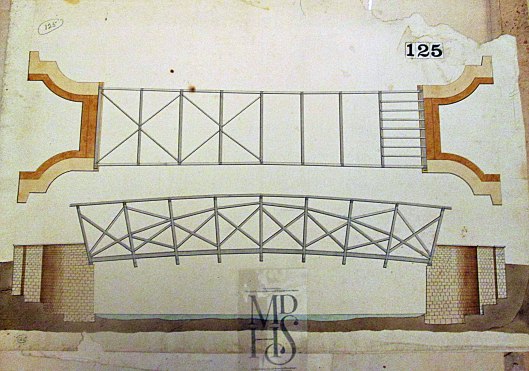
Drawing from MdHS

Swann Lake – Not the Ballet

23 Friday Feb 2018

Posted by Ronald Parks in Baltimore, engineering, HISTORY, water history

≈ Leave a comment

Tags

Baltimore, Dams, engineering, HISTORY, Jones Falls, Lake Roland, maps, Monuments, POLITICS, Public Works, Research, water history

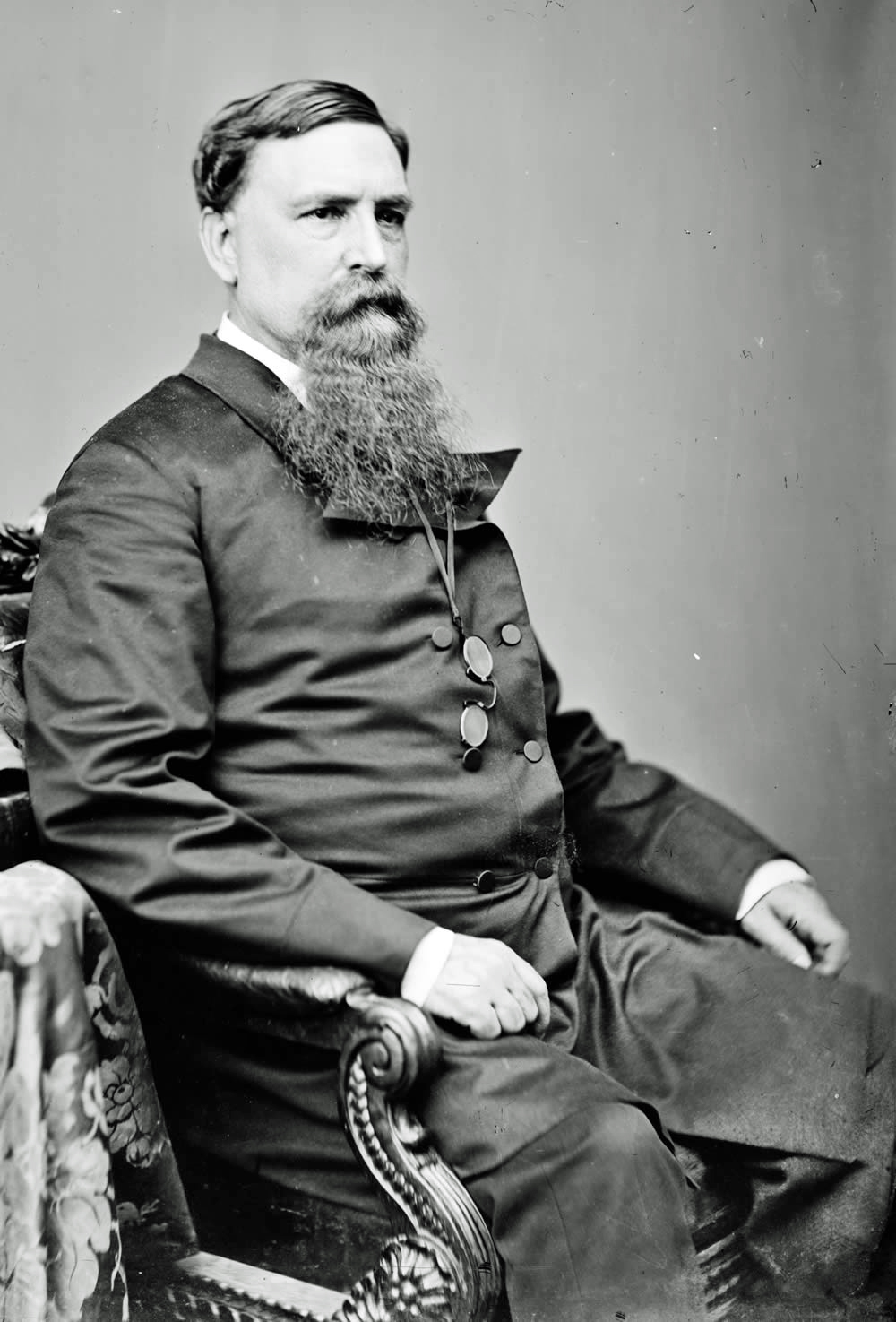
When I first started researching the water history of Baltimore, and I came across a map of Swann Lake, I just assumed that it was called Swann Lake because the Mayor at that time was Thomas Swann, who later went on to be the Governor of Maryland. 

Here is the man himself. In the journal I am presently transcribing, I came across this entry:

October 4, 1869: The Committee on Swann Lake submitted the following report: Having examined the minutes of the Board and the records of the office, with the view of ascertaining in what way and by what authority the Lake, so long called Lake Roland received the name of Swann Lake, would respectfully call the attention to the Board the following – That Mr. Charles Manning, Chief Engineer was asked to name the principal stream that supplies the Lake, by which with great propriety the Lake could be known. Under his direction the name of Lake Roland was placed over the door of the stop house and a map of Lake Roland was presented to the Water Board with the general and final report of the Chief Engineer on the completion of the Works. In this manner the lake became known to all our citizens, by a familiar and more appropriate local name. The Board of Water Commissioners, by resolution, posed at a regular meeting on December 26, 1861, approved and adopted what had been done in the premises…to be called Lake Roland. At some subsequent period the name on the door (Roland) was erased and Swann Lake inserted and a patch was made and placed on the map stating the same. In the opinion of the Committee, these changes and defacement were entirely unauthorized and would have been improper even if ordered by the Water Board. The Board has heretofore declared its opinion as to the impropriety of designating any of the public works by the name of an individual citizen, because of his connection with the City Government and your committee sees no reason why this Lake should be made an exception of. These views have long been entertained but have thought it best to defer presenting them until the present time, when by no possibility can it be supposed that you are in any way influenced by personal or political feeling. Ask that the Lake be referenced from this point forward as Lake Roland. Unanimously resolved.

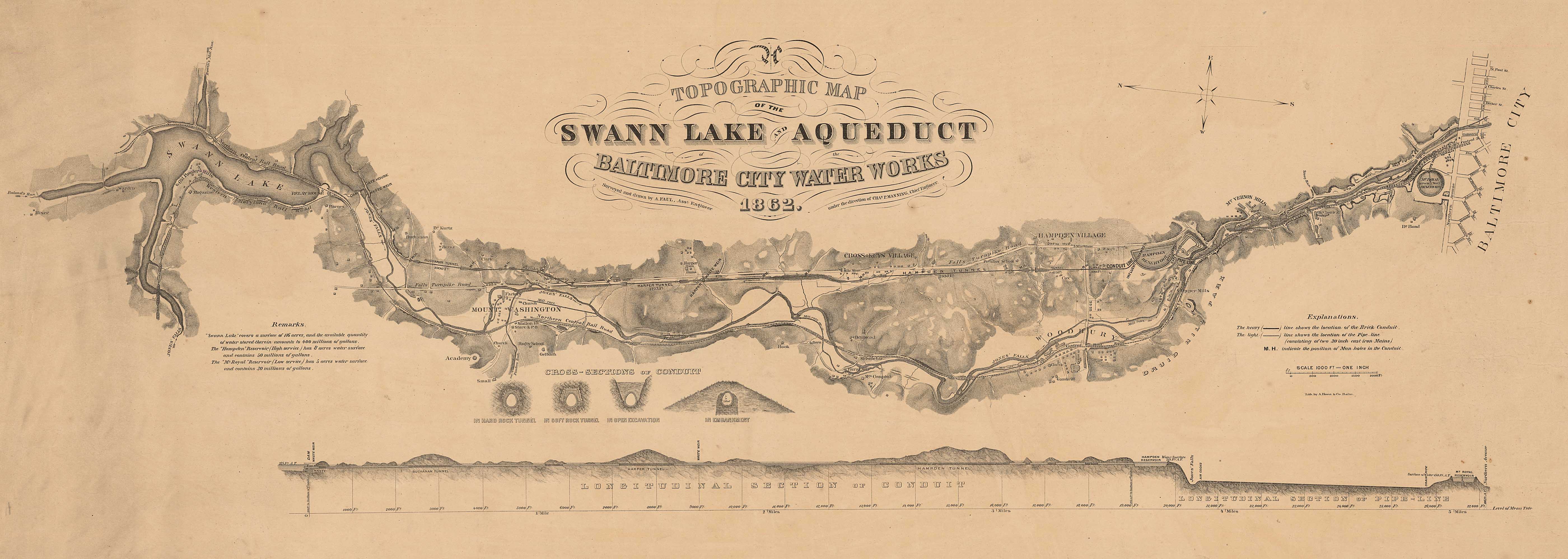
So, one has to wonder – did a political adversary go and change the name from Roland to Swann over the door? And why would the Water Engineers continuously refer to the lake as Swann Lake? Every entry that I have summarized from the 1862-1869 journal notes “The work at Swann Lake…” or as such. Here is what the work at Swann Lake looked like. Even A. Hoen and Co. called it Swann.

Wikipedia has this to say about Thomas Swann – not too good a commentary!

Many believed once slavery was abolished in Maryland, African Americans would begin a mass emigration to a new state. As white soldiers returned from southern battlefields they came home to find that not only were their slaves gone but soil exhaustion was causing tobacco crops in southern Maryland to fail. With a growing number of disaffected white men, Thomas Swann embarked on a campaign of “Redemption” and “restoring to Maryland a white man’s government”. His strategy was built on the platform of entrenching white power and displacing independent African Americans. During this same time an oyster crisis in New England caused the oyster industry in Maryland’s Chesapeake Bay to surge. Swann’s problem was that the Bay oyster trade was heavily African American. His solution; use government policy to push African Americans in the bay and replace them with, “White Labor, at reasonable rates wherever needed.” Even more egregious he enacted a law that encouraged white fisherman to harass black fisherman when he signed into law the states first ever “Oyster Code.” “And be it acted, that all owners and masters of canoes, boats, or vessels licensed under this article, being White Men, are hereby constituted officers of this state for the purpose of arresting and taking before any judge or Justice of the Peace, any persons who may be engaged in violating any provisions of this article. Furthermore, all such owners and masters are hereby vested with the power to summon pose comitatus to aid in such arrest.” Even more egregious, any property seized during an “Oyster Code” violation was auctioned off, with one quarter of the proceeds going to the white man who initiated the arrest.

Wow and as Confederate Monuments have been removed in Baltimore, I guess no one thought to remove the entrance of Druid Lake at Swan Drive that has his name emblazoned across the top of the arch!

Lake Chapman

22 Thursday Feb 2018

Posted by Ronald Parks in engineering, water history

≈ 2 Comments

Tags

Baltimore, engineering, POLITICS, Public Works, Research, water history

From the 1867 Journal of the Water Board minutes comes the following: December 30, 1867: The Committee on Lake Chapman having recommended a change of name for said lake, it was on motion resolved that the said lake be called “Druid Lake”. And that the Engineer be directed to erase the name Lake Chapman from any and all buildings, structures, charts or drawings, on or in which name now appears and to substitute therefore the same as above, “Druid Lake”.
I wonder who ex. Mayor Chapman pissed off? I could not find anything in the Maryland State Archives blog that would warrant such drastic actions. As a side note – transcribing script gives me a headache. I’m only at page 279 of 462!

History Hike Part 2

23 Tuesday Jan 2018

Posted by Ronald Parks in Baltimore, Dams, water history

≈ 4 Comments

Tags

Baltimore, Dams, engineering, Gunpowder Falls, Hiking, HISTORY, mills, nature, POLITICS, Public Works, Research, water history

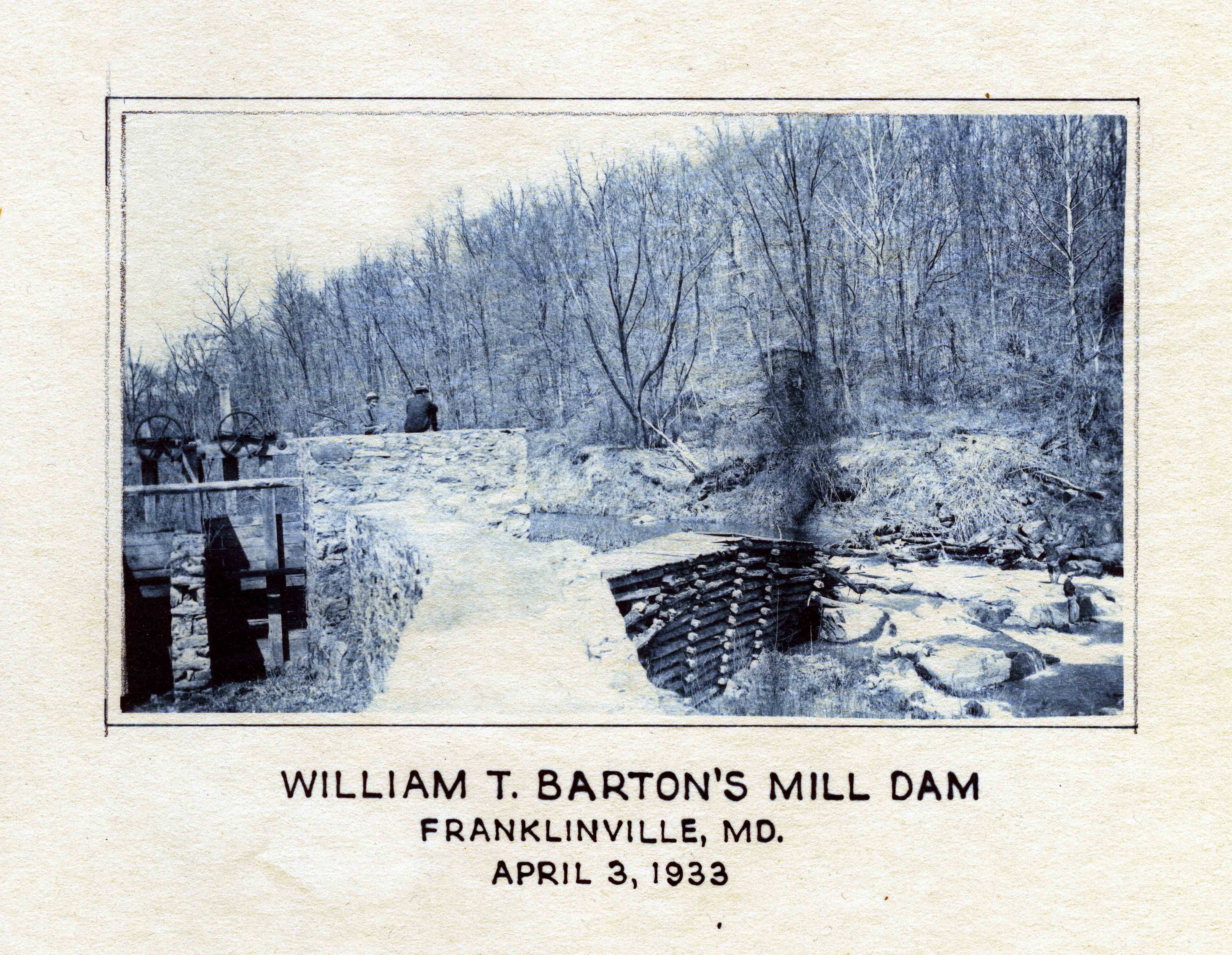
Now the good stuff! In yesterday’s post I shared about our hike along the Little Gunpowder Falls, from Jerusalem Mill to the old iron bridge at Franklinville. On the way we stopped and explored an abandoned mill race and structure that appeared to be for valving or damming up the water flow. Back at my office on Monday I found a report from 1933 concerning the mill and property.

Here is a photograph of the mill that use to be there:

The 1933 report gives this description of the mill – Wm. Barton Mill in Franklinville, Little Gunpowder Falls. Several mill buildings used for the manufacturing of cotton duck. Mill race and dam have been broken thru since about 1926. Mill was built in 1883. All manufacturing equipment has been removed except for turbine. Barton purchased property from Mt. Vernon-Woodberry Mills on August 5, 1930. Information is sketchy on ownership. 1899 sold to Mt. Vernon-Woodberry Mills, yet they sold it twice. Once to Oak Tire and Rubber in 1925 and to Barton, but notes ownership to Marvin Merryman in 1929. No info on size of mill pond since dam was broken through. Supplementary water reservoir of 20,000 gallons in center of square in tenement section to furnish water for automatic sprinkler system in mills. Dam, made of timber, was about 800’ from mill. There was a water wheel at one time, with 140hp capacity.
Buildings at mill included: the main mill, waste house, store house, boiler house, and wheel house. There were also 3, two family two story houses on property. And more, according to tax records at Baltimore county. Records mention a mill adjacent to this one, to the north, known as Jericho mill. no traces of mill could be found.
Along with the report is this plat which shows the layout of the buildings:


And this plat:


As stated before, we climbed down into the mill race where we saw holes in the structure. I told Kathy I believed them to be supports to hold valves or gates.

In the report was this photo. The center part of this structure on the left is missing, along with the dam itself on the right.

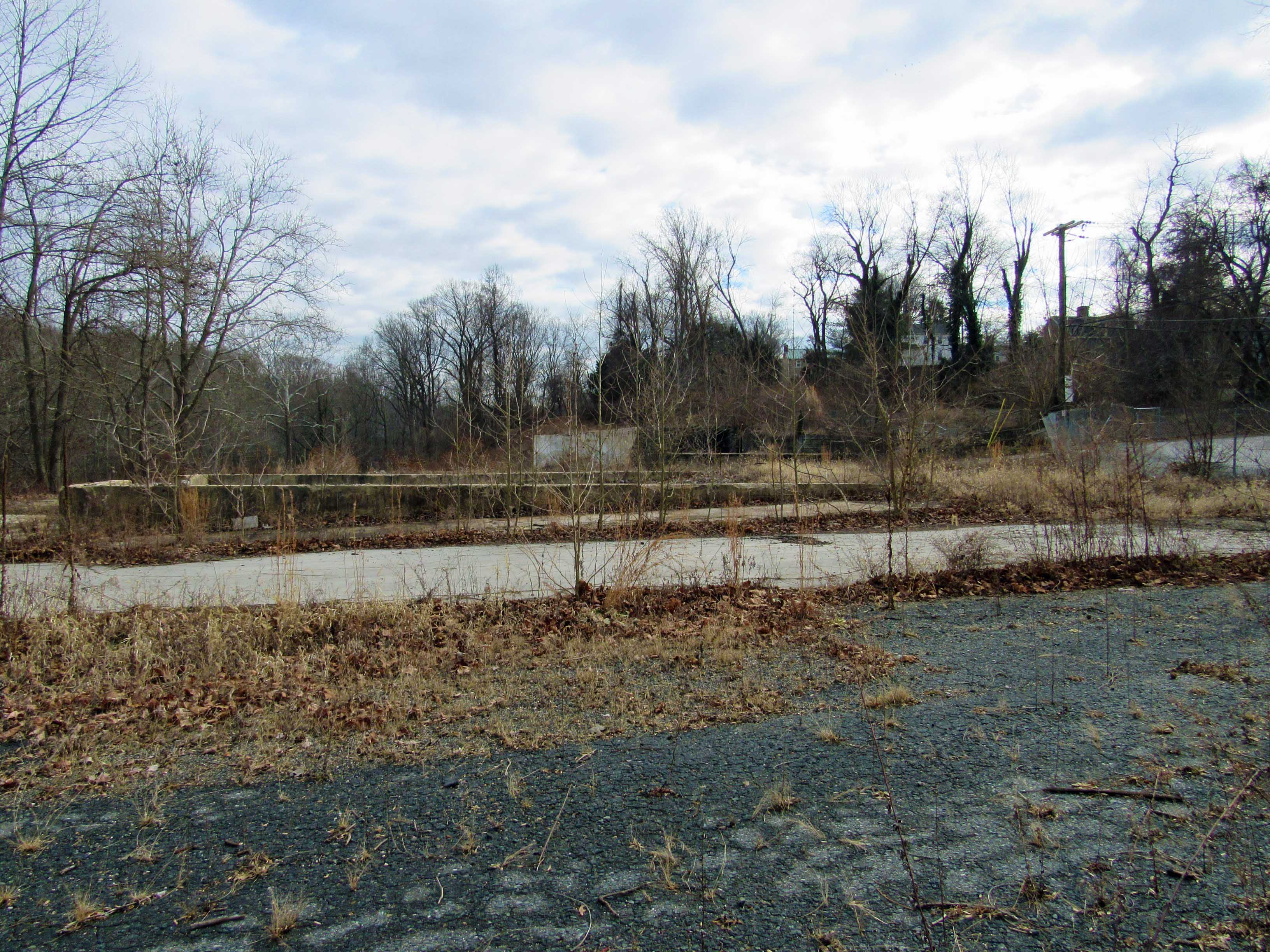
Below is a photograph of the area today, where the mill use to be. A sign on the fence says it is managed by Carnegie Express Construction Managers, Builders and Developers:

What does this have to do with Baltimore’s Water Supply History?

Typhoid cases, which had decreased by the mid-1920s, would re-emerge by the early 1930s along with a long period of drought. In 1932, the City Government hires consultants to review the status of its water supply. These consultants would form a board of engineers known as The Advisory Engineers on Water Supply. The engineers were Messrs. John H. Gregory, Gustav J. Requardt and Abel Wolman9. On December 19, 1934, the Advisory Engineers released their report:
1) Immediate construction of a new Gunpowder Falls Montebello Tunnel.
2) Immediately following the completion of the new Gunpowder Falls – Montebello Tunnel, the existing Loch Raven – Montebello Tunnel should be strengthened.
3) Conduct surveys, land purchases, sub-surface explorations and preparation of plans and specifications for the development of an additional water supply should be undertaken at once. (Areas of development looked at by the Board were the Patapsco River; the Little Gunpowder Falls, Winters Run and Deer Creek, and the Susquehanna River).

They were going to dam up the Little Gunpowder Falls and all the mills and property along the Falls would need to be bought (or taken). It was decided to go with Item #1 above.


Let’s Get The Lead Out

03 Wednesday Jan 2018

Posted by Ronald Parks in Baltimore, filtration, Health, water history

≈ 4 Comments

Tags

Baltimore, engineering, FILTRATION, Health, HISTORY, Lead, Montebello, Public Works, water history

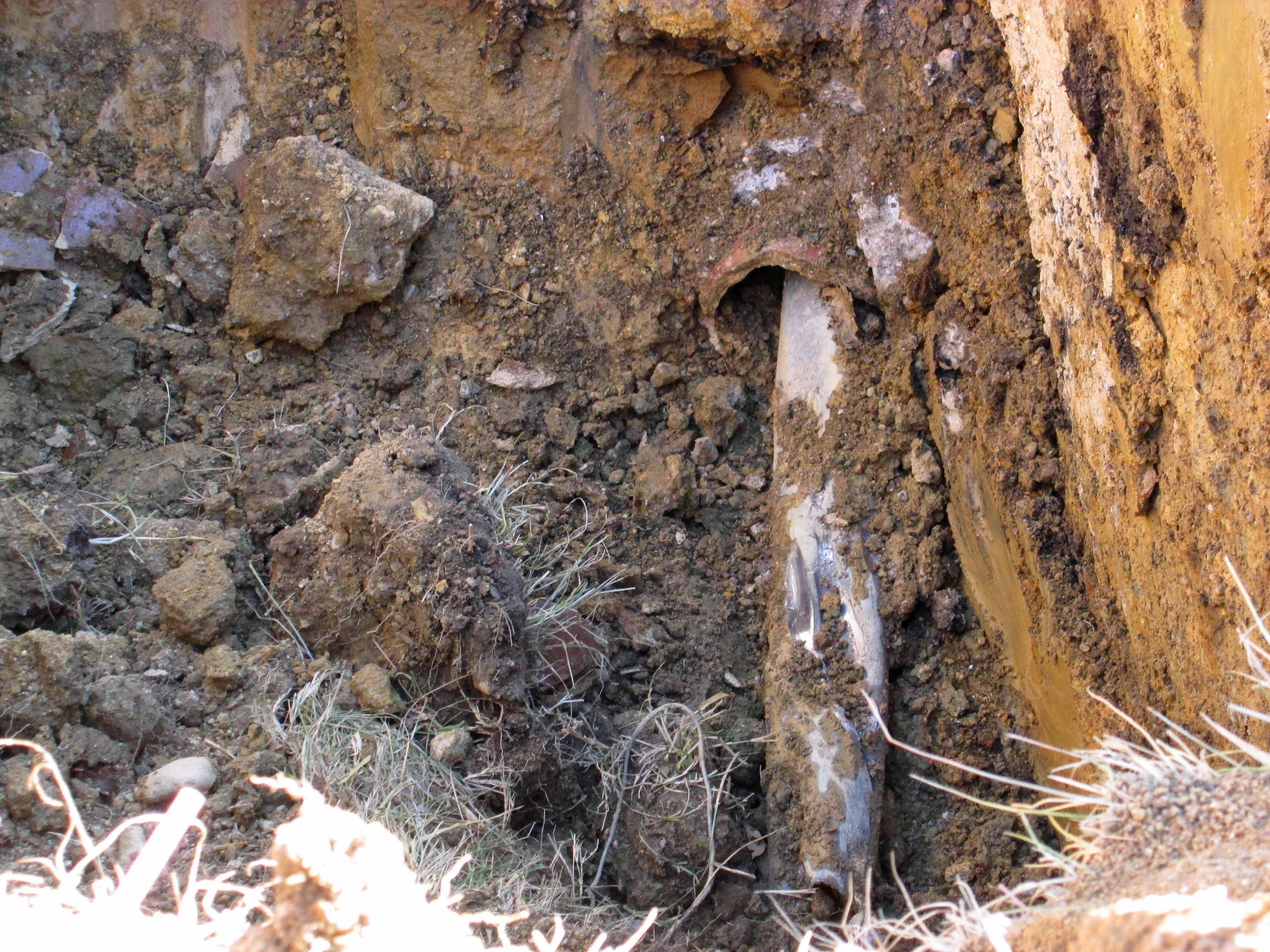
I was recently called over to the contractor’s worksite because they hit another pipe underground. Another one not on their drawings but included in other drawings (Why the engineers don’t look at other record drawings is beyond me). This is a special pipe that I was looking forward to them hitting. I knew it was just a matter of time.

Here it is – a 4″ lead pipe inside an 8″ Terra Cotta pipe. Why is it special? Because I always wanted to see how the alum, manufactured at Plant II was piped across the street to Plant I.

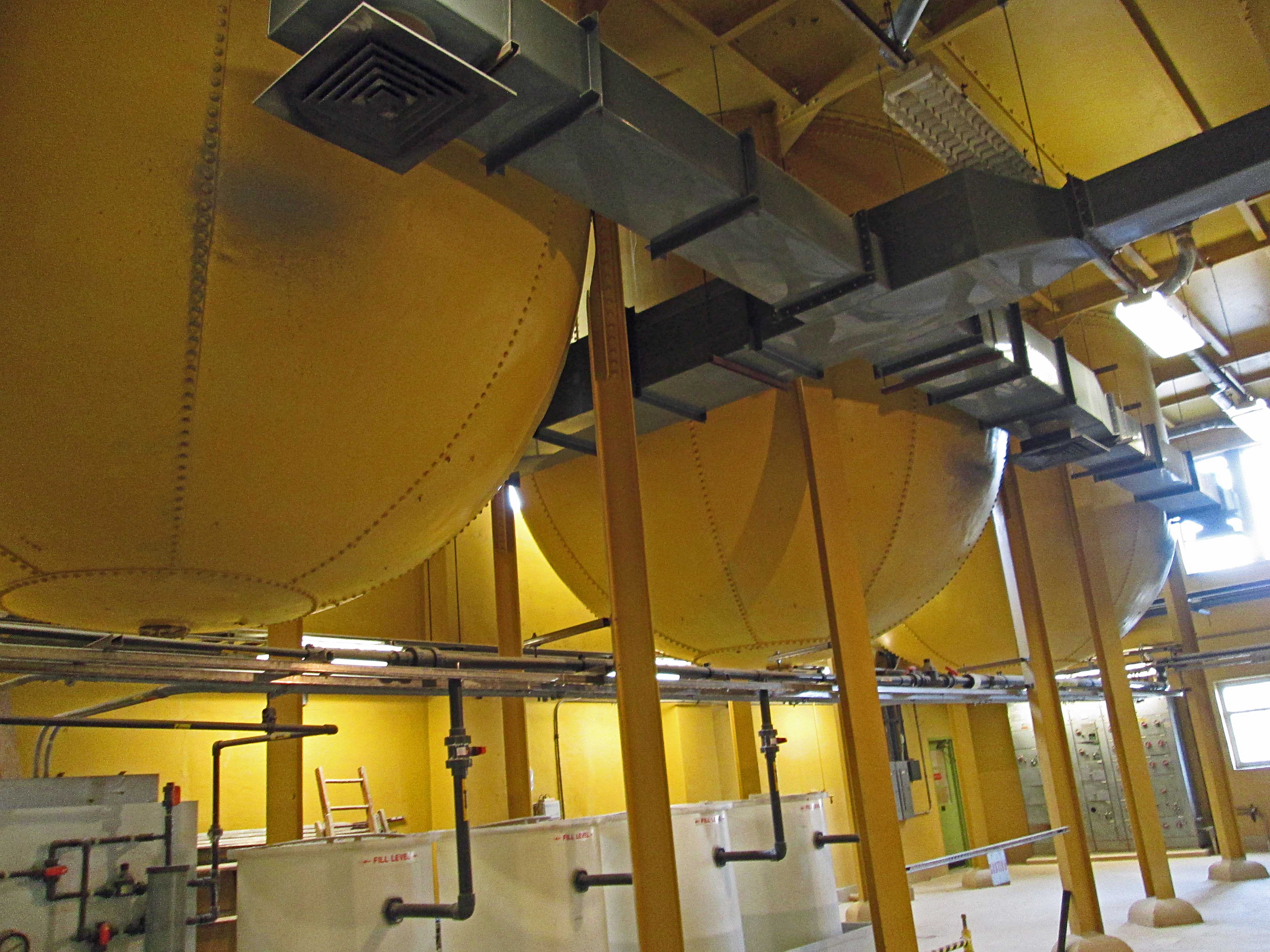
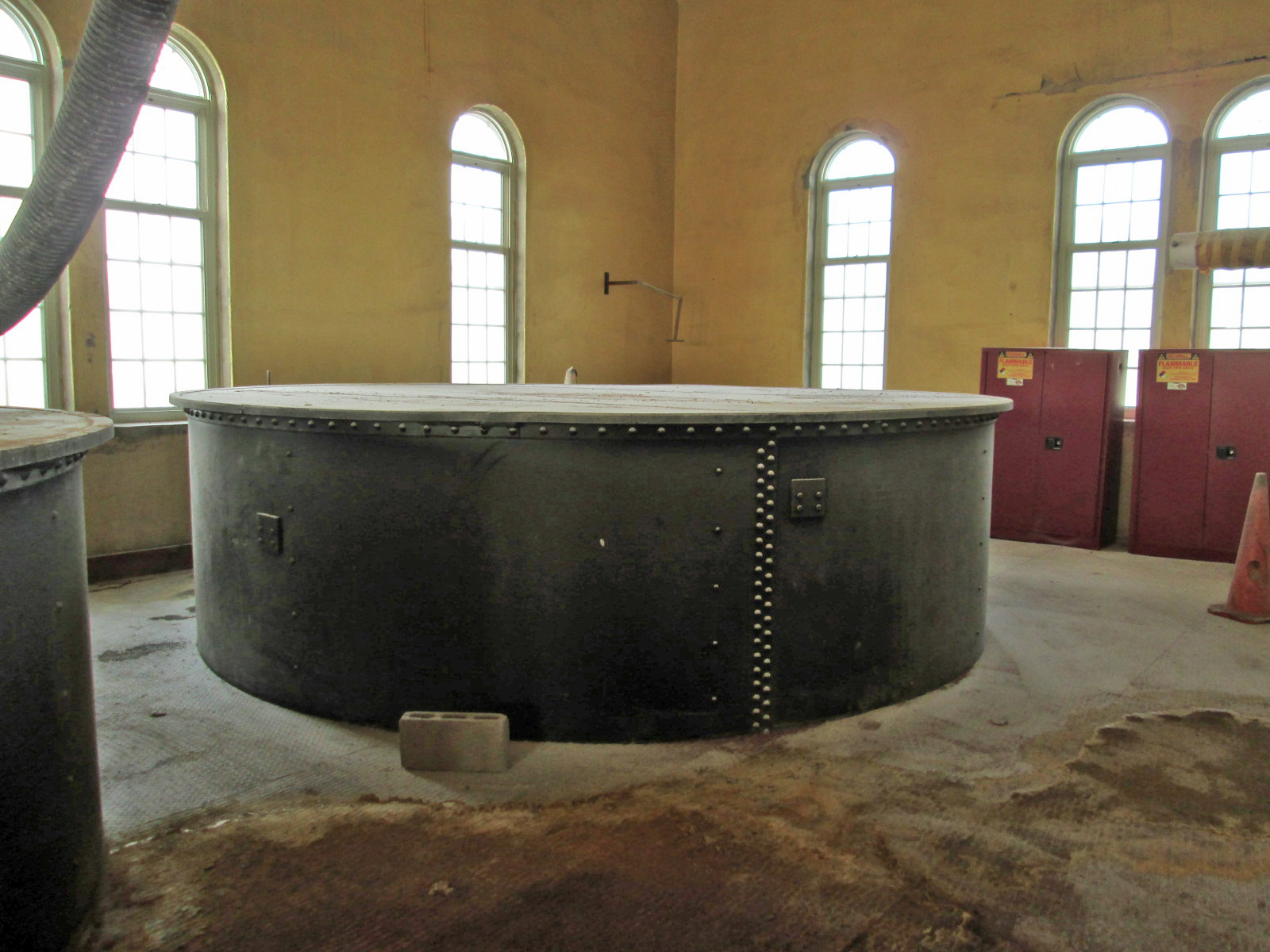
When I first started working at Montebello, these bins were just hanging from the ceiling.

When I asked about them, I was told that alum use to be made here.  When you go upstairs, this is what it looks like.

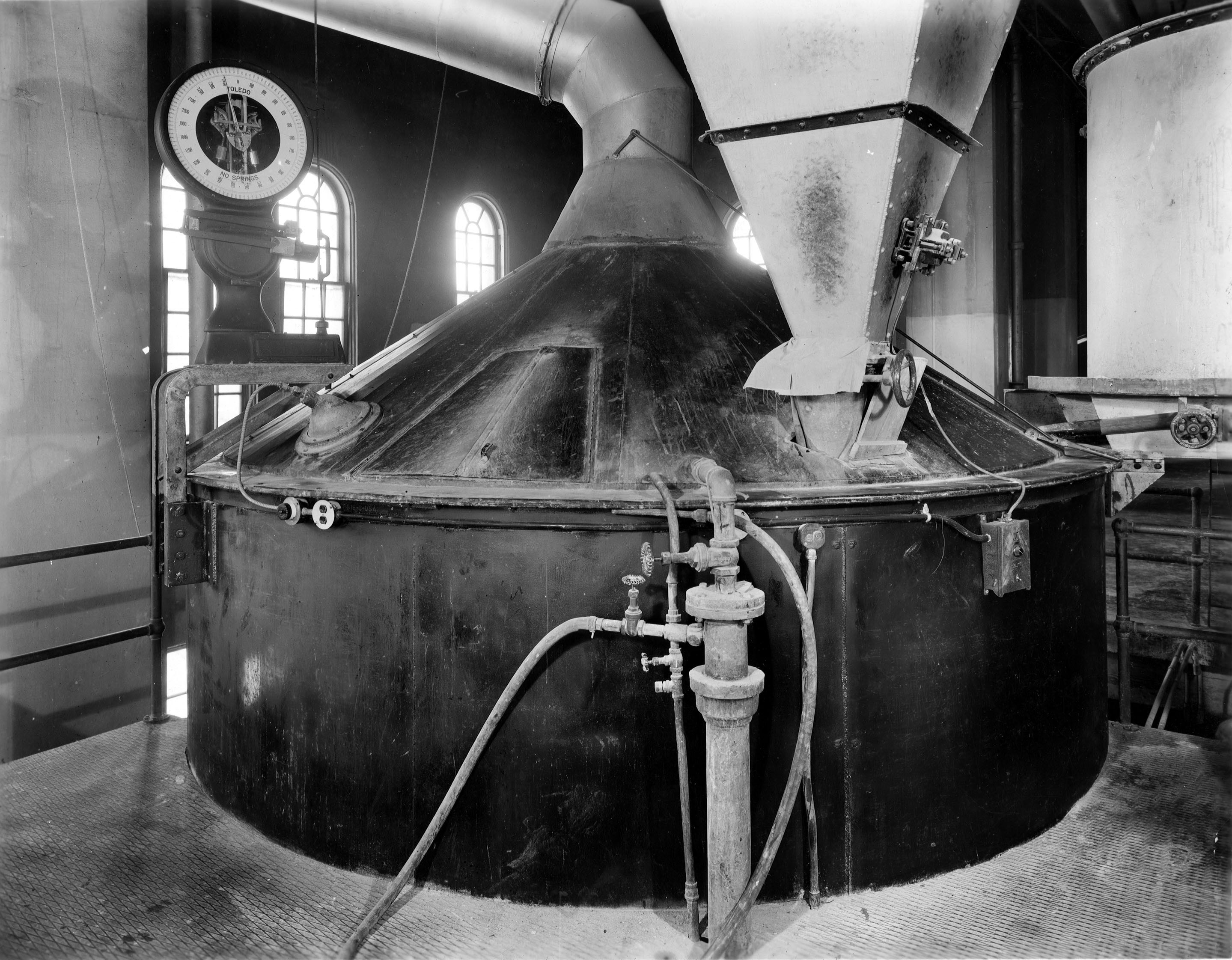
And years ago, this was the alum plant.

The water engineers boiled up their own alum in lead lined vats and it was then pumped across the street through the lead pipes. Below is one of the vats right after the lead was replaced. Over the years there were many contracts to recoat the insides of the vats. When the vats were no longer used, city workers climbed down into them to remove the lead sheeting. 

Below is a photograph from an old water works magazine showing lead and terra cotta pipe.

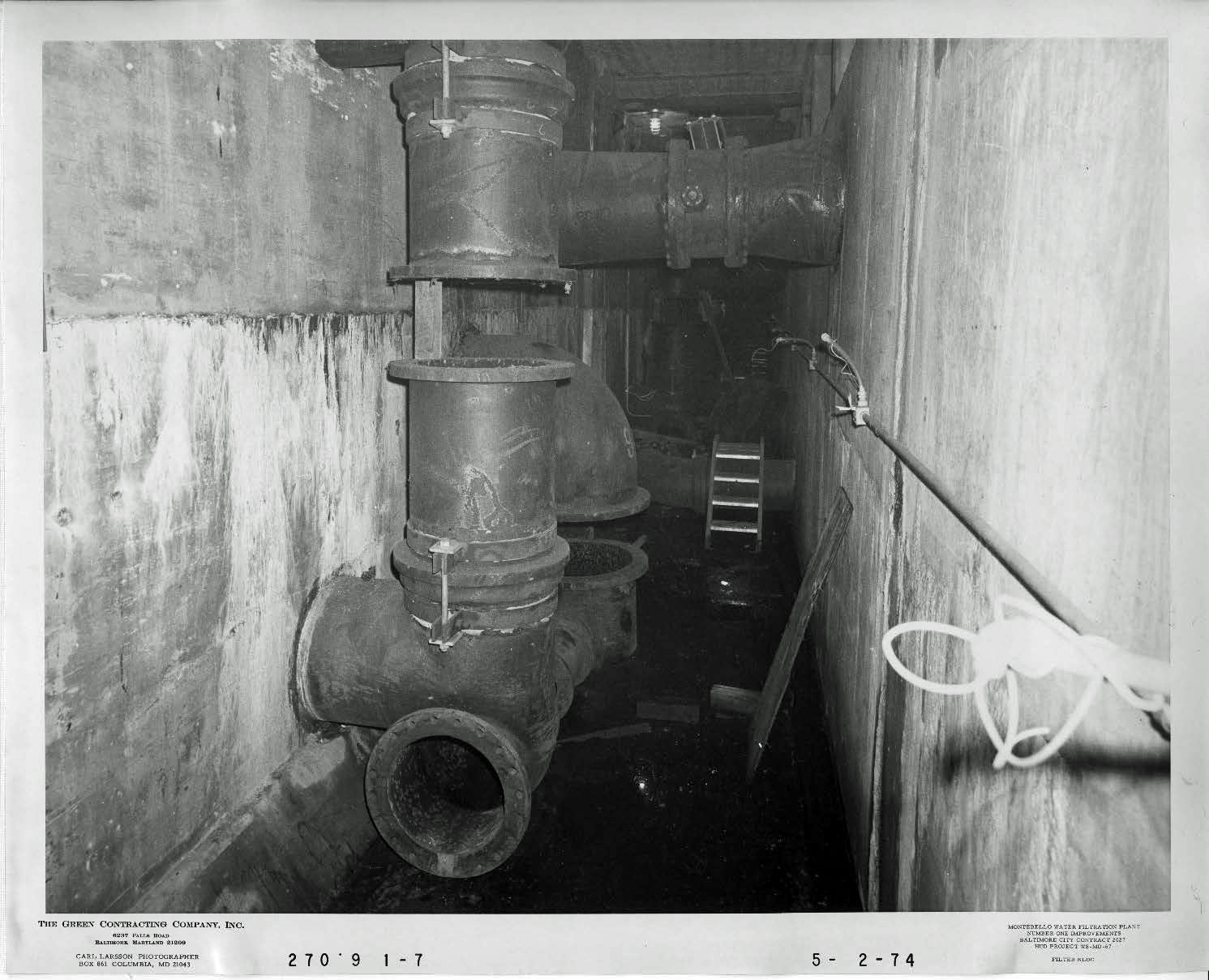
Lead pipes have been in use since the early Roman days. It was also used as a seal on pipes as shown below. In 1974 a lot of the old gate valves were replaced with butterfly valves. They did not replace the pipe. You can see where brackets hold the pipe together where lead is in the joints. These joints being made 1912-1915.

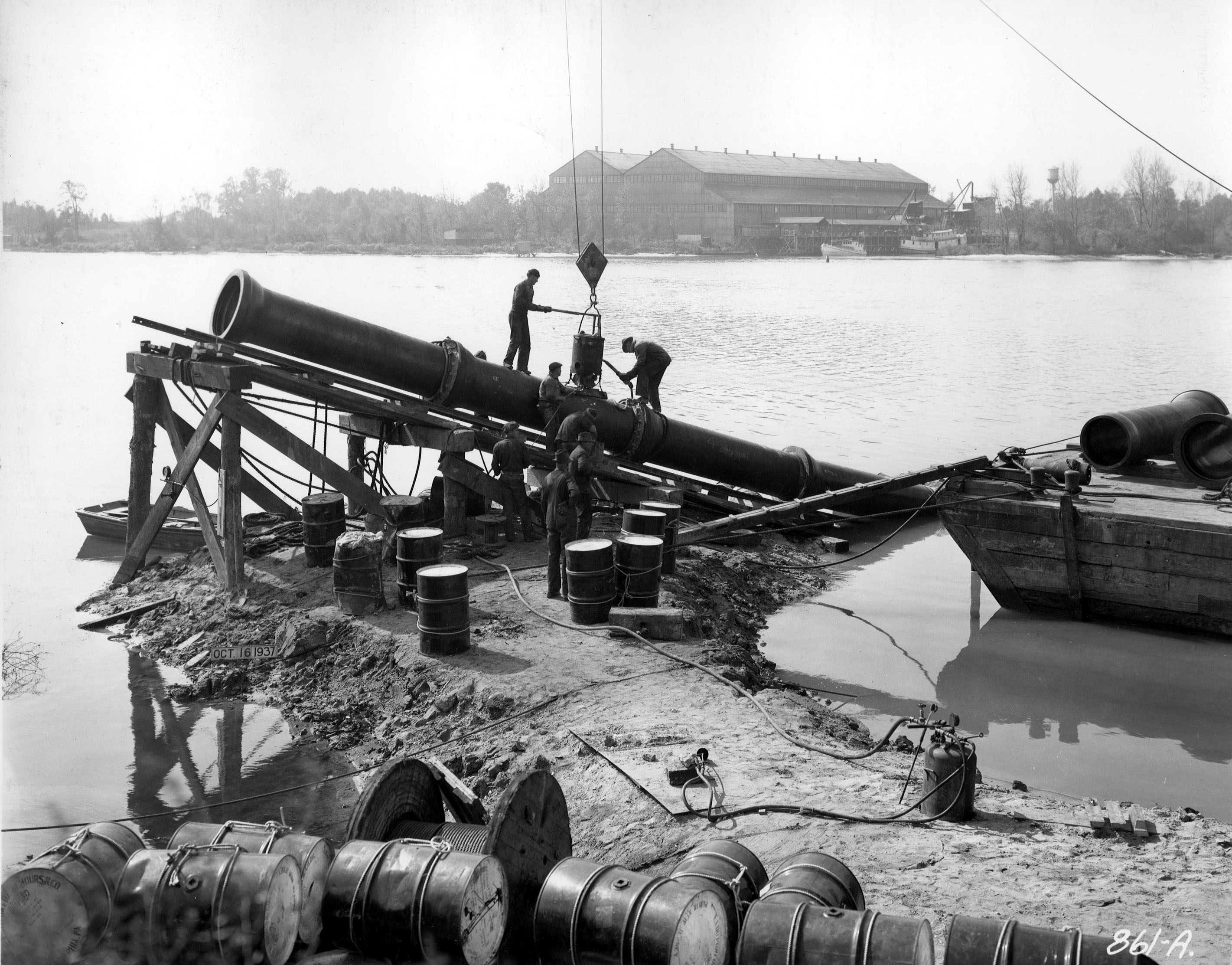
Another photo of a lead jointed pipe. I believe this is the water main under Curtis Creek. Looking close you can see the workmen pouring the lead into the joint. 

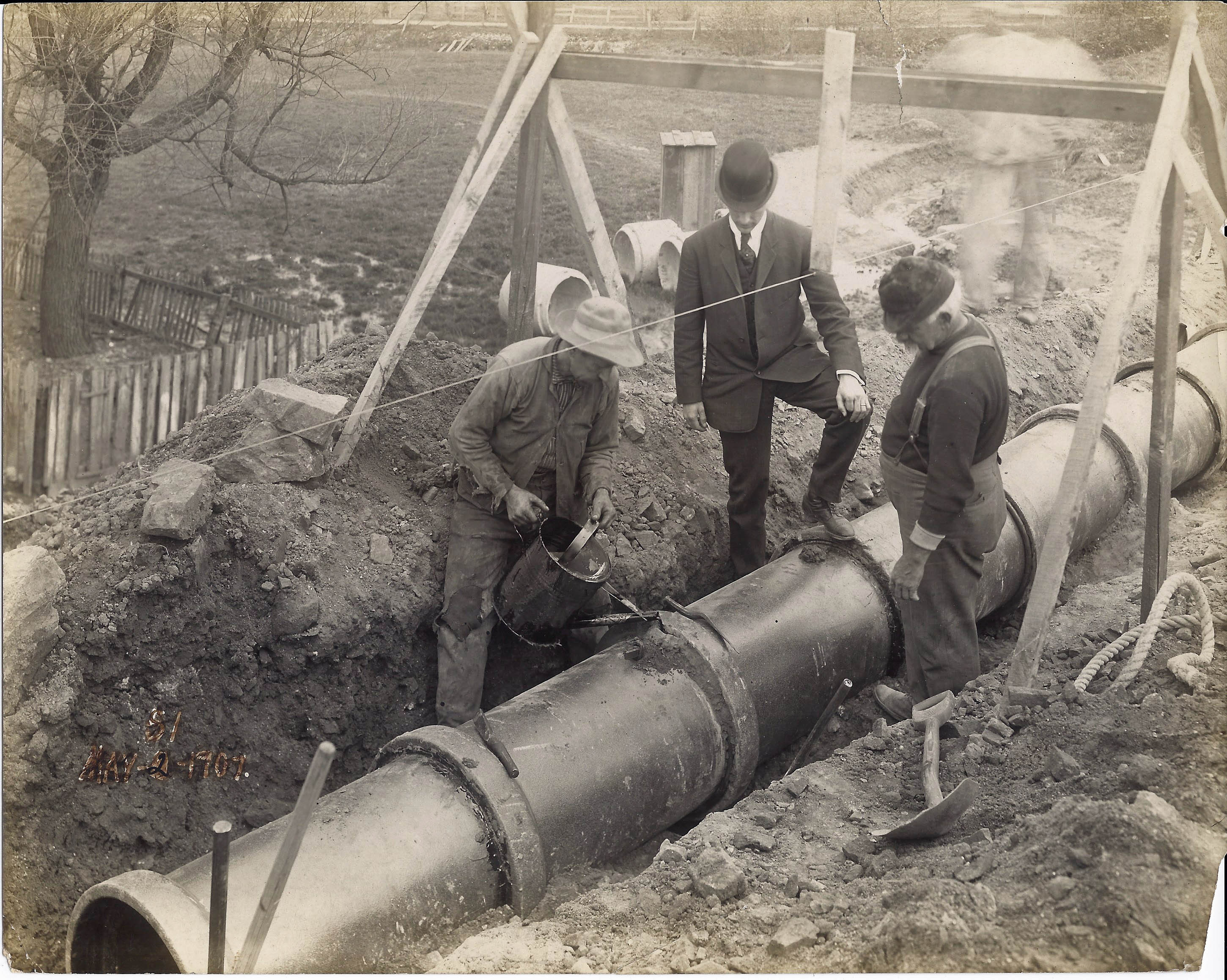
The City being the City and always trying to save money started using a lead substitute called Leadite. They also used a sealant over the lead called Hyrolene-B as seen in this 1907 photo.

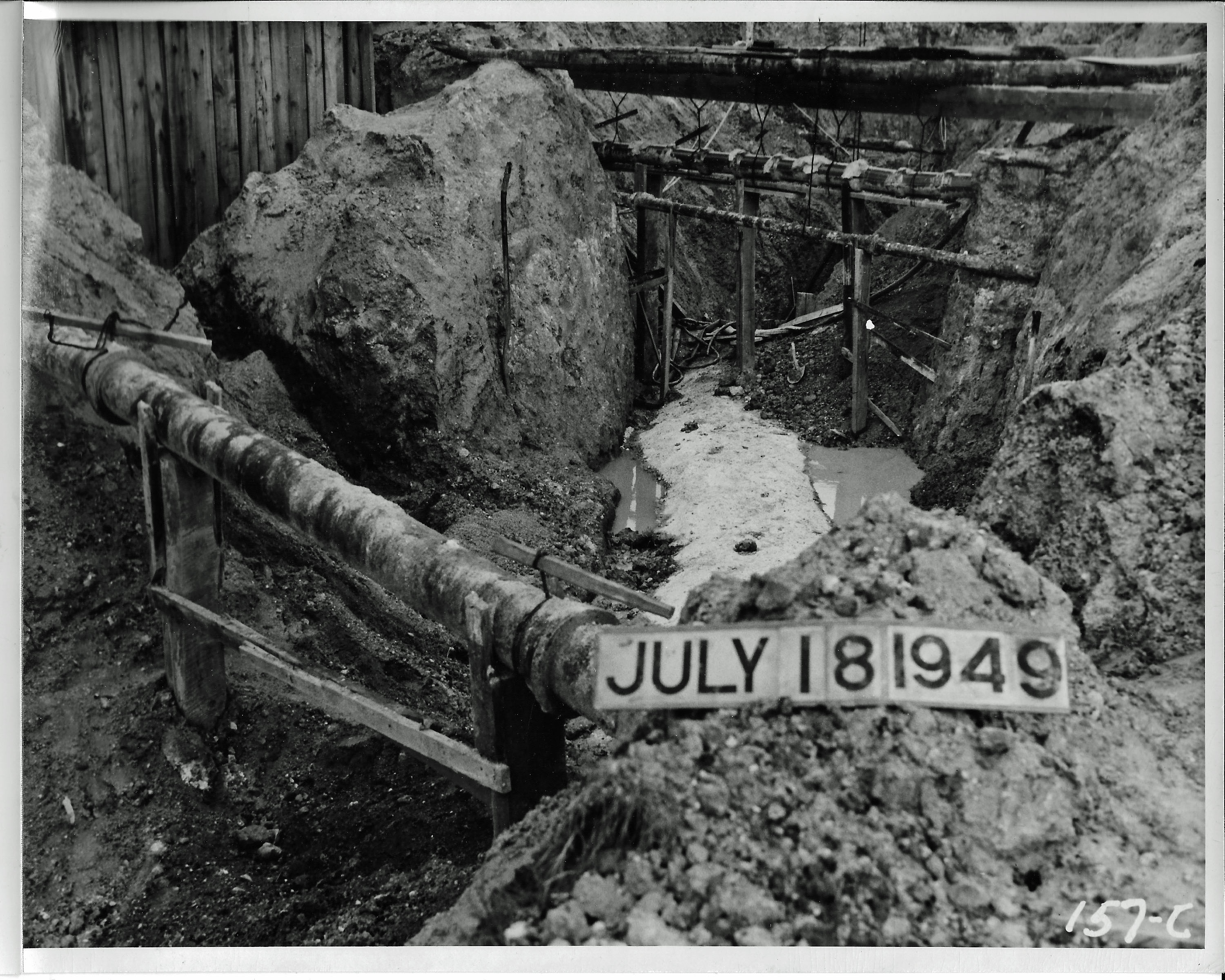
You have to feel kind of sorry for the contractors (and the city) for all the antiquated piping underground. Here is a site on Montebello property showing the obstacles of past contractors. Unfortunately, these abandoned lines were and are never removed. This photo shows a 5” conduit, 8” raw water, 10” water supply, 4” alum, 4” lead alum and 6” sanitary all in one pit. Under the very top conduit is the 13,000 volt, cement encased, electrical duct bank.

For your further historical pleasures – here is a history of lead in Baltimore:

1923 – Leadite Use: Bureau adopts leadite as a jointing compound and as a substitute for lead on water main installations. Leadite eliminates the use of caulking and can withstand the enormous pressure that the water mains are subjected.
Contract No. 84: Lead Lining Tanks: The Specification was dated July 21, 1926. Contract was awarded to the Joseph G. Graydon & Sons of Baltimore on July 21, 1926.
1930 – The Hampden Reservoir was drained. The outlet gates were closed permanently where possible by welding and then sealed with lead.
1931 – The liquid alum being made at Montebello is more acidic and corrosive than the lump alum. The cast iron pipes and valves can not stand up to this type of corrosion. They were replaced by pure chemical lead for the pipes and hard lead for the valves. Maintenance also had problems with the lead lining in the alum boiling tanks cracking.
A 1934 article appeared in several technical journals, which had given a general survey of the mineral contents, as determined by means of a spectrograph of the water used by 50 cities throughout the country. Baltimore was 1 of the 50 cities used in the survey, and the article indicated that the drinking water as delivered to its citizens contained lead as high as 0.3 parts per million, which was an amount generally accepted as detrimental to the health of people continuously drinking such water. The Water Department being stunned by this article, since this value was higher than any that had ever been noted, decided to ascertain the exact truth of the matter. The Montebello laboratory carried on a series of careful determinations extending through the year 1935. The City Health Department laboratory, not knowing the tests being conducted by the Montebello laboratory, conducted their own investigation for the lead count in the water. The City Health Department tests confirmed the test values conducted at Montebello. The results indicated that the lead content in the raw water never exceeded 0.2 parts per million and after treatment and filtration at Montebello, the content of lead did not exceed 0.02 parts per million. The normal lead count of the water was 0.01 parts per million. The tests proved conclusively that there was no danger whatsoever from lead poisoning due to the drinking of filtered Gunpowder River water.
1936 –  December 7, 1936 letter from Engineer Small to the Chief of Police concerning the theft of pig lead.
1939 – Minute cracks started to appear in the lead lining of the tanks used in the manufacturing of alum. Tanks lasted ten years and produced 20,000 tons of alum.
1941 – The alum steel tanks were relined with lead. Tank #9 was relined with 20# tellurium lead and placed back into service on June 16. Tanks #5 and #7 are planned to be relined using St. Joe lead. Tank #7 is expected to be placed back into service by January 30, 1942; and Tank #5 is expected in service by March 15, 1942.
1942 – Because of the decision by the War Production Board regarding critical materials, the use of copper tubing for new installations was prohibited starting in August. Copper tubing installation was replaced by Type K lead alloy tubing. The replacement of the lead lining of the alum steel tanks was completed on February 7, 1942.
1949 – Pig lead test (checking for radioactivity). Leadite joints on water pipes are failing due to a high content of Sulphur and carbon in the surrounding soil.
1951 – A contract was awarded on December 26 to lead line the three steel alum storage tanks at Montebello Plant No. 2.
1952 – The lead pipe alum line between Montebello Plant No. 1 and Plant No. 2 had several leaks and was replaced.
1953 – Replaced Sulphuric acid pumps for Alum manufacturing. Also renewed was the lead line transporting the acid from the basement storage tanks to the manufacturing room.
1957 – 4 page Sunday Sun article on Weights and Measures. George Leithauser. Mentions chicken sellers using lead weights in birds.

In the late 1920’s a plasticized sulfur cement compound was developed as an alternate to lead for sealing the pipe joints in the field. This compound is referred to as “leadite”. Leadite was commercially produced up until the early 1970’s, and was used extensively from 1941 to 1945 when lead was scarce as a result of raw material needs associated with World War II. Ultimately, leadite was found to be an inferior product to lead for two reasons. First, leadite has a different coefficient of thermal expansion than cast iron and results in additional internal stresses that can ultimately lead to longitudinal splits in the pipe bell. Secondly, the sulfur in the leadite can facilitate pitting corrosion resulting in circumferential breaks on the spigot end of the pipe near the leadite joint. The failure rate in the industry for leadite joint pipe is significantly higher than for lead joint pipe even though the pipe may not be as old.

Montebello and the Panama-Pacific Exposition 1915

22 Friday Dec 2017

Posted by Ronald Parks in Baltimore, Dams, HISTORY, water history

≈ 2 Comments

Tags

Baltimore, Dams, engineering, FILTRATION, glass plate negatives, Gunpowder Falls, HISTORY, Lake Montebello, Loch Raven, maps, Montebello, Public Works, Research, water history

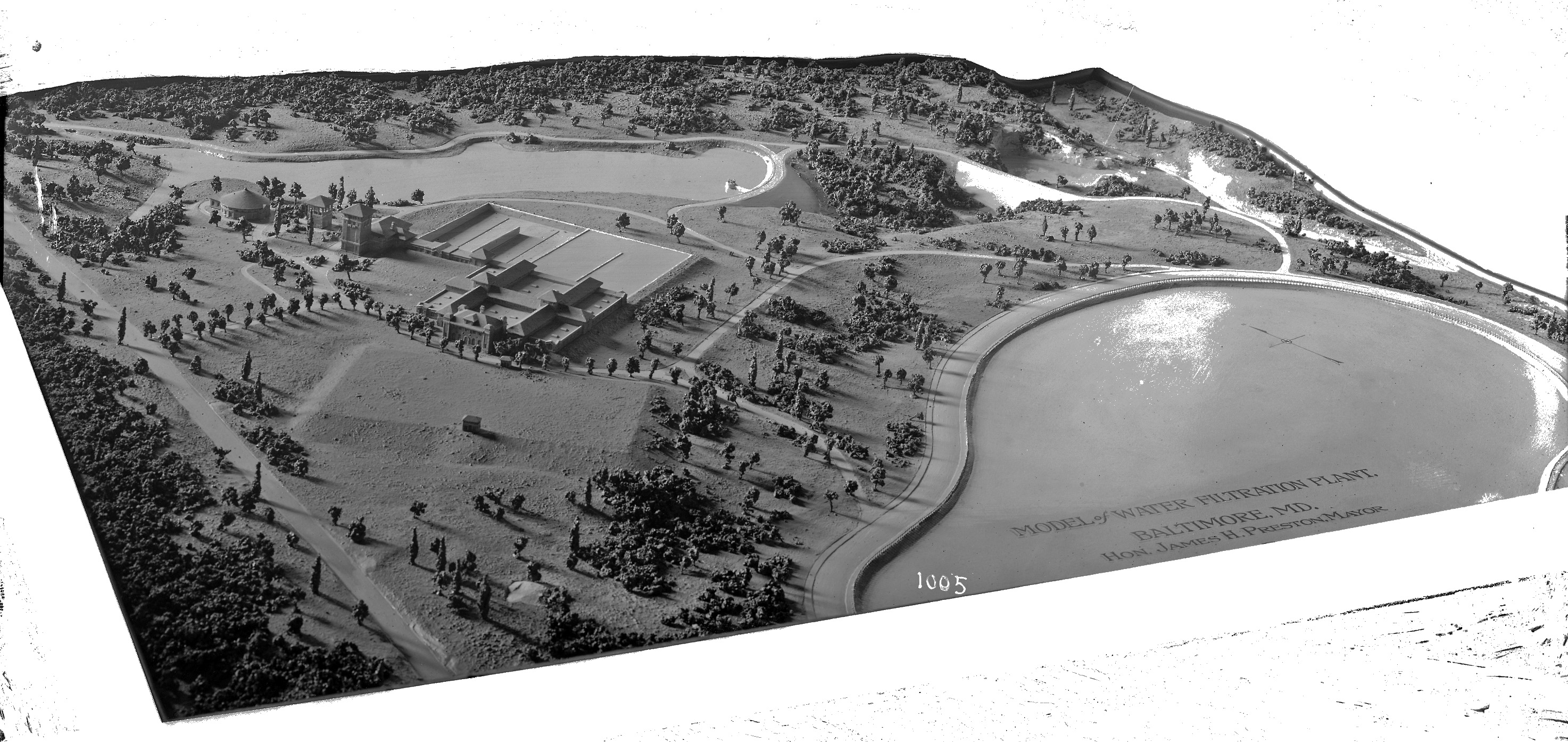
Finishing up documenting a Water Board Minutes of Meetings Journal, I came across a couple of interesting tidbits concerning the connection between Baltimore and San Francisco. In 2015 we both celebrated a 100 year anniversary. Them celebrating the 1915 World’s Fair and us the building and opening of the Montebello Filtration Plant. The connection being this – February 11, 1915 It was resolved by the Water Board to send the Filtration and Dam models to the Panama-Pacific Exposition. According to the model itself, it was completed in December, 1914.

Here is a lantern slide copy of the model. If you visited Montebello during our 100th anniversary and took a tour, you would have saw the actual model.

The lighting in the hallway is terrible with all the reflections. It was too dark with the lights out and too reflective with a flash.

Here is the nameplate data on the model.

Along with this one. I did a search for information on this company but could not find much. And something else I could not find is – where is the model of Loch Raven?

Howell’s did a pretty good job replicating the filtration plant.

The plant as it looked in the 1920s.

I don’t know about anybody else, but I’d like to put little people in here…and maybe Godzilla!!

Showing what the waste lake looked like.

And the detail of the outfall structure.

The waste lake dam and outfall structure being built. Notice the date – October 1914. This means that the model was built conceptually, like an artist’s rendition of something before it is there.

Of course, one research item always leads to more.

In 1884 models of the substructures were built and placed in each gatehouse, Loch Raven and Lake Montebello, to give visitors a better understanding as to how each works. (What happened to them?)
February 6, 1893 the Water Board resolved to send a display to the Columbian Exposition. This was 21 years before the Howell Microcosms were built. so what did they send?
November 18, 1935 letter from M.P. McNulty, he has just completed creating a model of the Loch Raven dams and inquires as to the dates the real dams were built. Small replies that the lower dam was built between 1875 and 1881 by Fenton and Jones, Contractor. The upper dam was constructed by King-Ganey starting in 1912 and finished in 1914 and then raised between 1920 to 1922 by Whiting-Turner. Attached to the letter was a newspaper clipping which shows a picture of the model. (This clipping is at the City Archives)
December 31, 1952 letter from William Eichbaum Scale Models informing Hopkins that they will build a new, Montebello Plant model in the existing case for $1,000.00. This was not done.
And for what appears to be a wonderful book – San Francisco’s Jewel City: The Panama-Pacific International Exposition of 1915 by Laura Ackley


The Permanent Gunpowder Water Supply

05 Tuesday Dec 2017

Posted by Ronald Parks in Archives, Baltimore, water history

≈ Leave a comment

Tags

Baltimore, bridges, Dams, engineering, glass plate negatives, Gunpowder Falls, Loch Raven, Public Works, water history

Started planning back in 1854. Elevation of 160’ would supply seven-eighths of population (according to contour lines). Supplying others outside that elevation would be a matter of mechanical detail (pumping stations). The need to keep Lake Roland and the Gunpowder as two distinct and separate supplies, as Lake Roland becomes muddied during rainy season (this was why Druid Lake was constructed). It was first suggested to tap the river as far up as the Warren Factory but concurred by a host of engineers that the proper volume of water could not be obtained by damming at any point above Raven’s Rock and most agreed to a point further downstream about where Mr. Martin has located it. The dam will be erected on the Gunpowder river, at a point admirably adapted for the purpose, a short distance above Mine Bank Run, and the lake thus formed, will extend up the river as far as Meredith’s Ford Bridge at the Dulaney Valley Turnpike, where the pump house connected with the ‘Temporary Supply’ is now located…will flow by natural gravity through a twelve foot pipe to a lake at Montebello, between Hillen and Harford roads, located in a natural basin formed by one of the tributaries of Herring Run (Tiffany Run). The lake will have a water area of about eighty acres and a storage capacity of 700,000,000 gallons. The twelve foot pipe (conduit) will continue to a point on the Harford road opposite Homestead, whence pipes will be laid to connect with the city pipe system at North Boundary Ave. and Washington St. Lake Clifton.

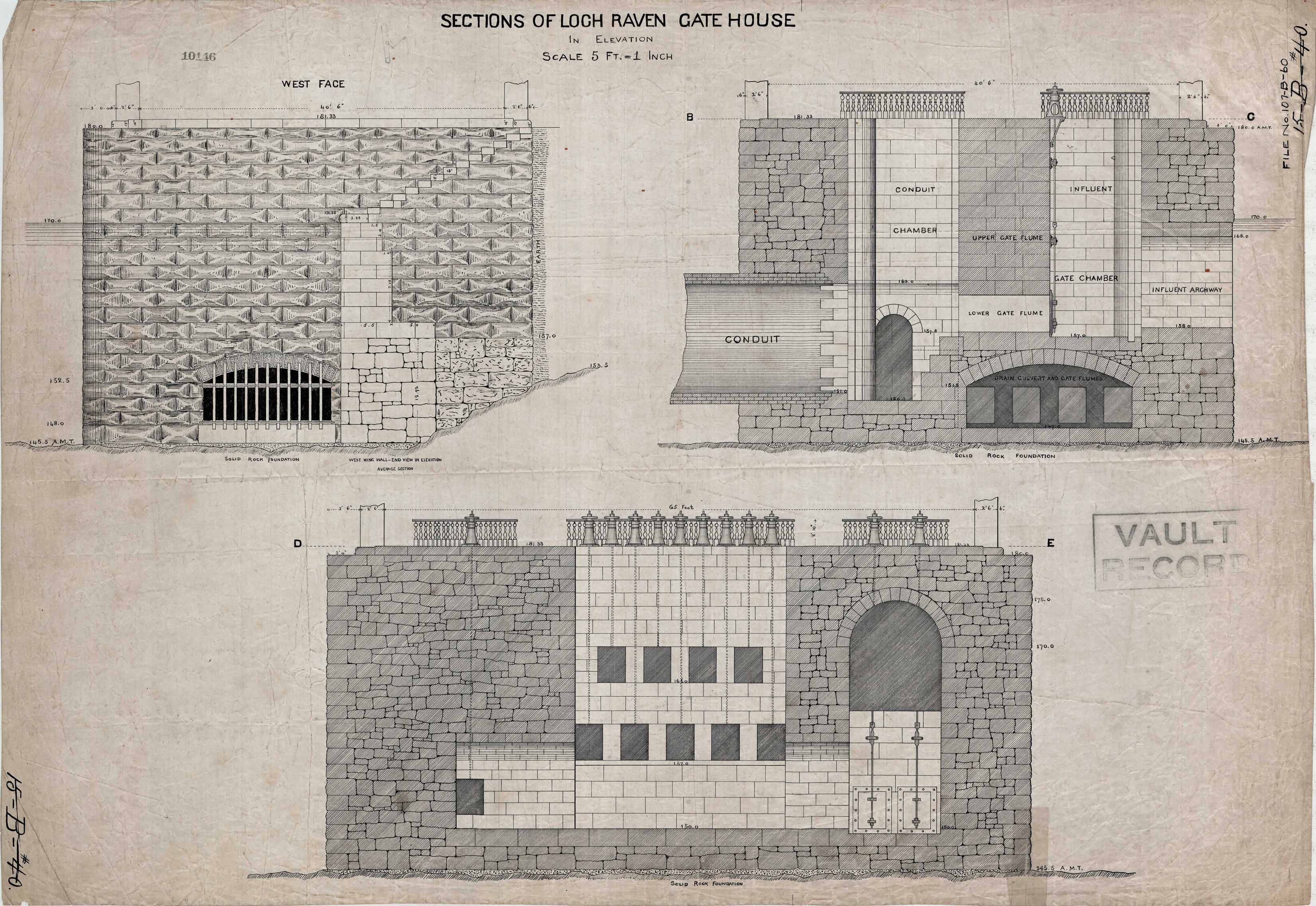
A drawing of the Loch Raven Gate House a couple years after completion, for the engineer’s files.

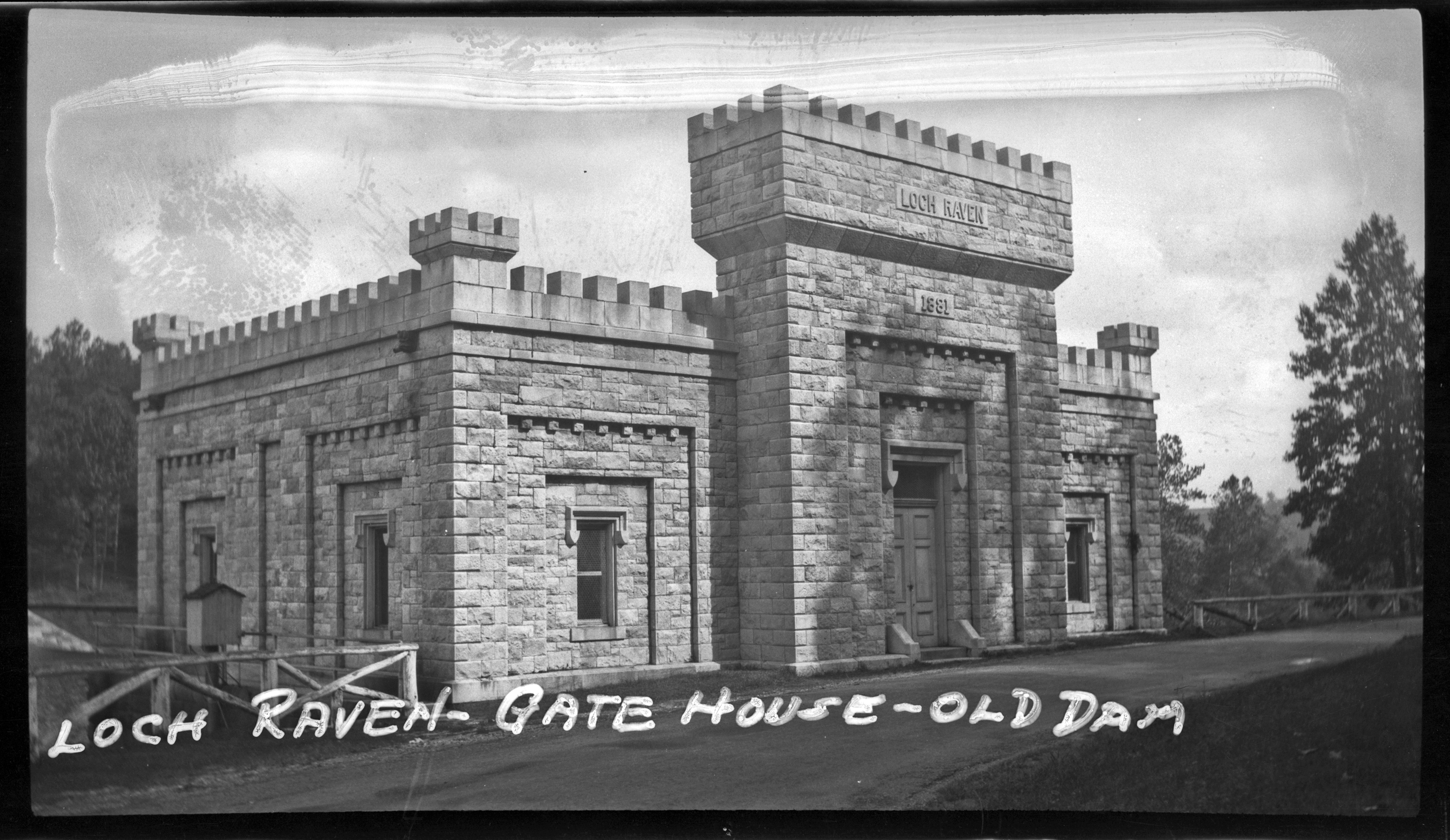
The Gate House and how it looked in the 1920s.

An interior, cut away view.

The influent drain chamber to the yet to be built Gate House.

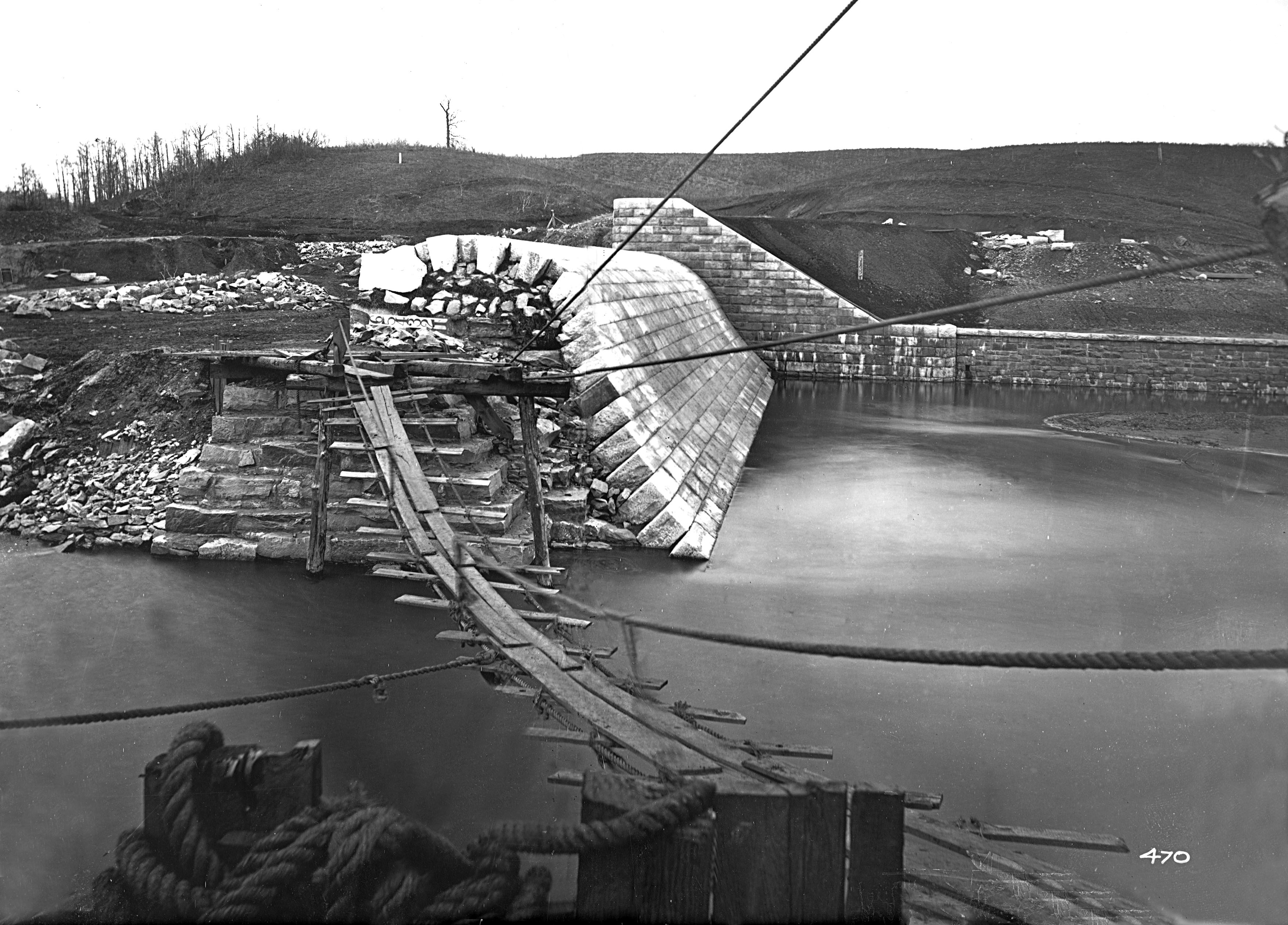
Looking over the construction of the dam, towards the east wall.

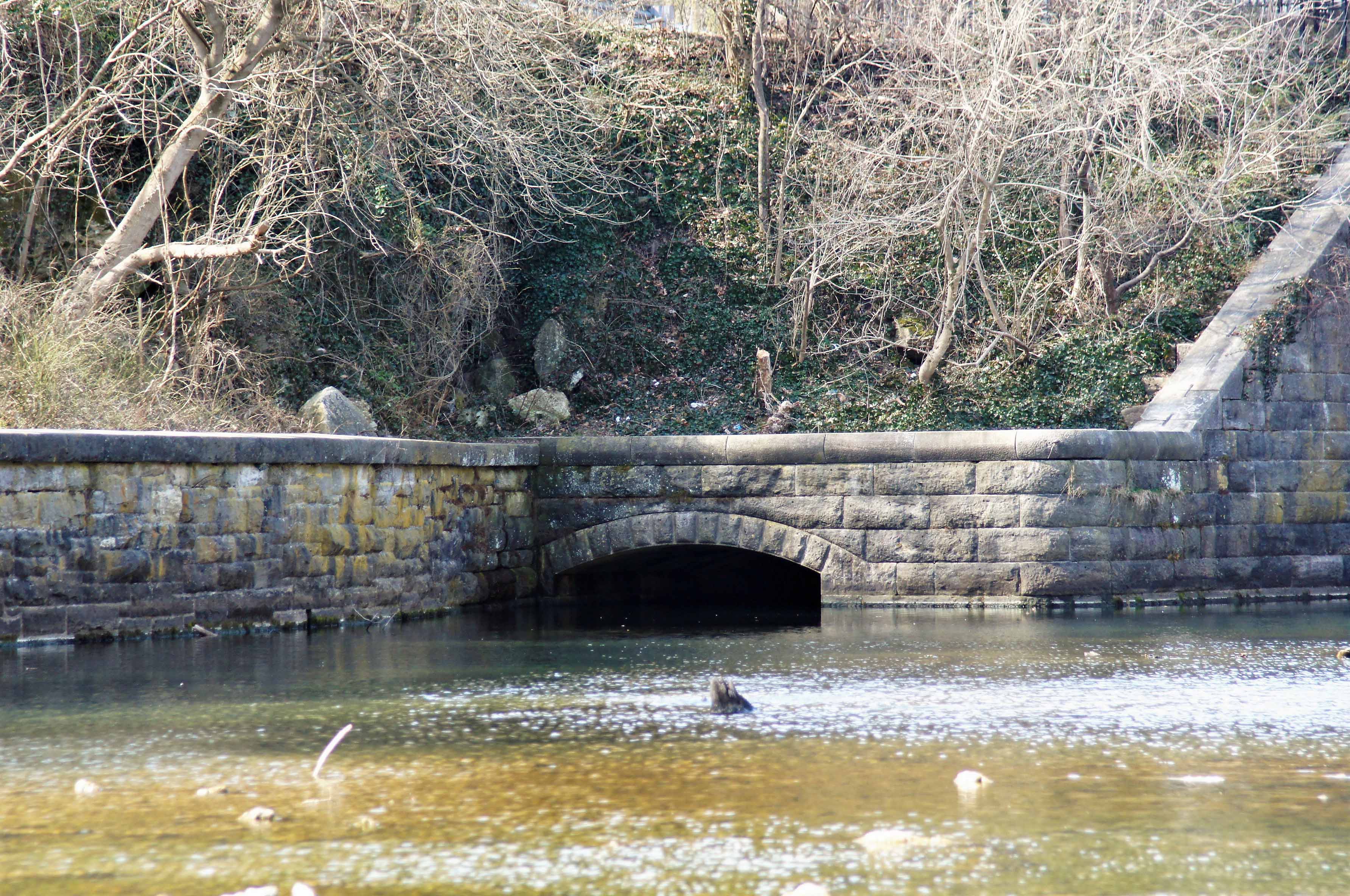
A recent view of the discharge conduit, below the dam. As shown in third photo above.

Another drawing of the Gate House structure. Where it says Vault Record would be facing the road.

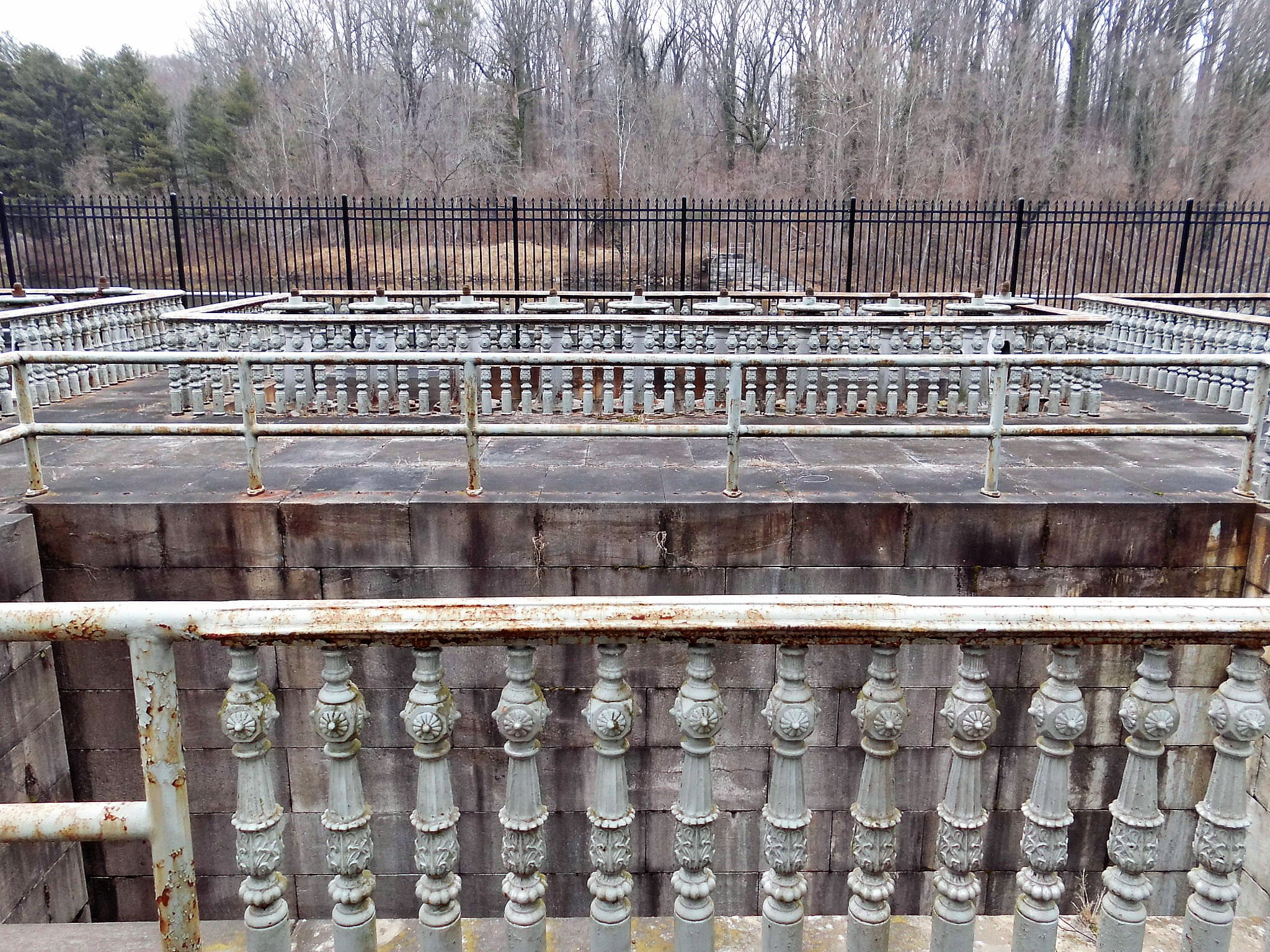
Recent photo from the road, after Gate House was removed, showning vaults and valves.

This photo has me baffled. It is showing two 12′ conduits, whereas all the drawings only show one. On the left you can see where the laborers are building the brick lined conduit. On the right, nothing going on. Wondering if it was built in error or was it for a bypass as the dam was being built?

Drawing of the east wall.

1880s photo of building dam, looking east.

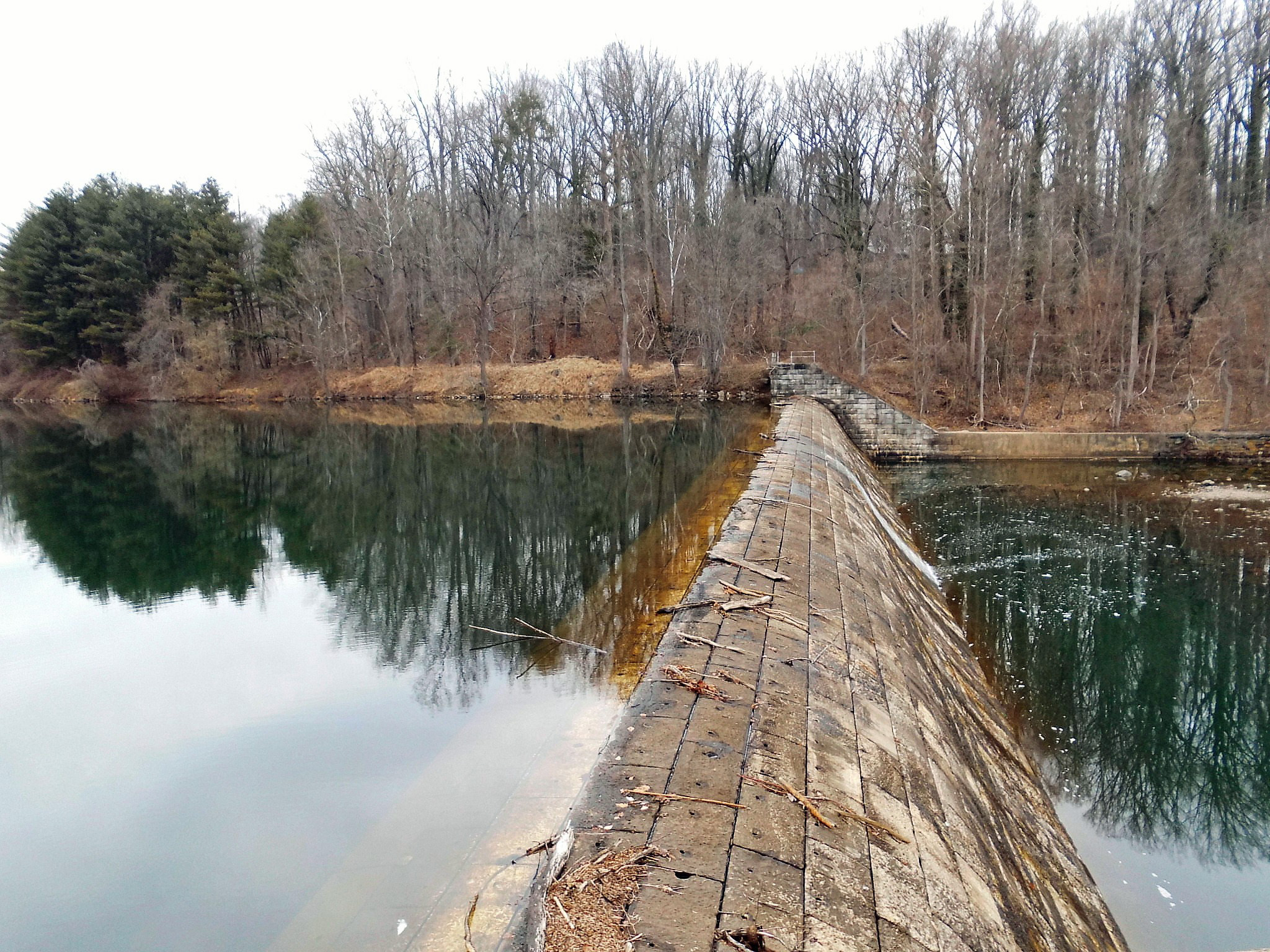
Recent photo looking east. Looking close you can see where the stone work stops and cement starts. In the 1970s they put a parallel pipeline in and cut right thru the wall.

This is an early, beginning of construction photo. Stone excavation looking west. Interesting on zooming in – under the roadway guardrail is a tunnel opening that looks like…

…the top left of these drawings. 

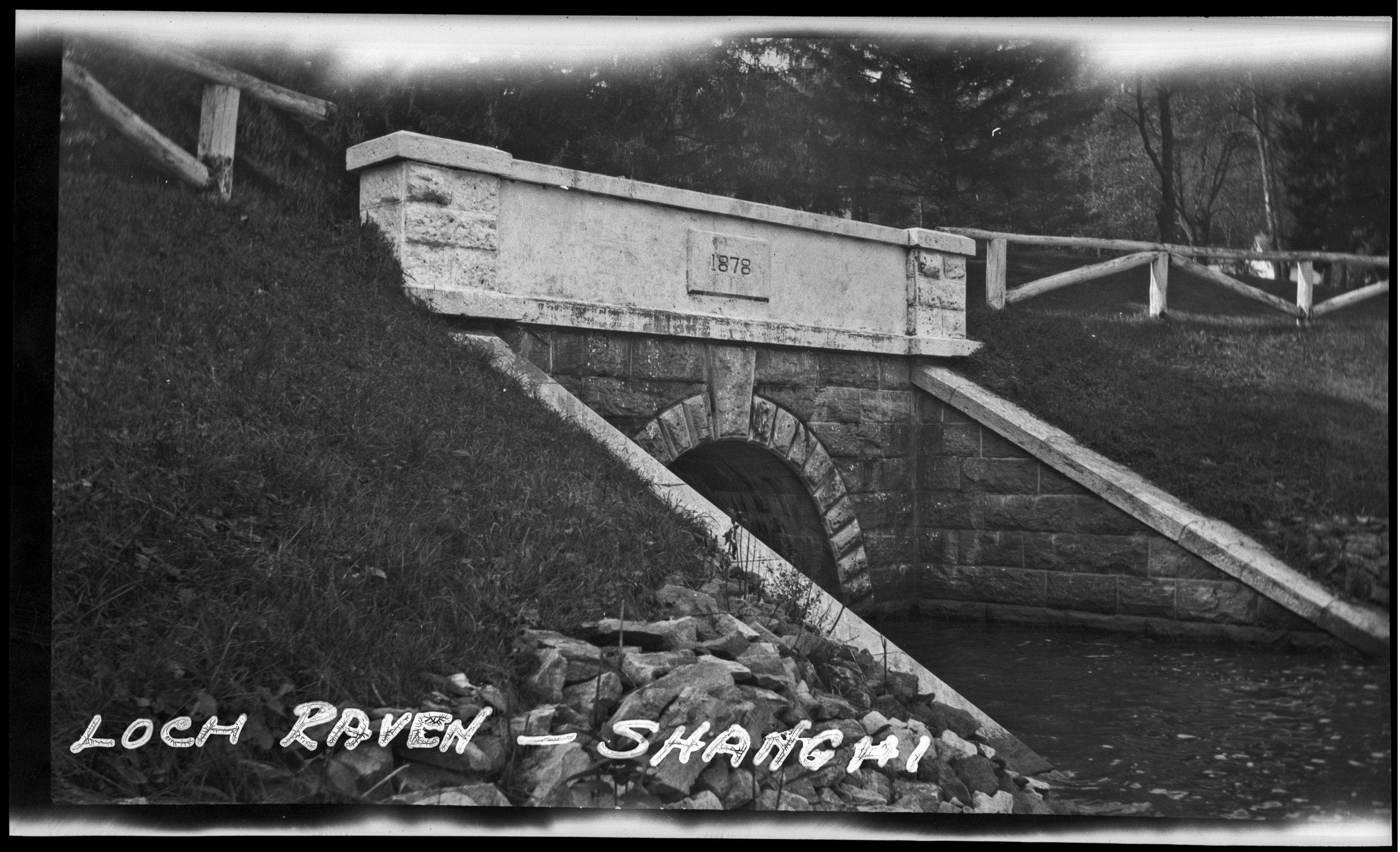
The drawing for Shanghai Run.

A 1920s photograph.

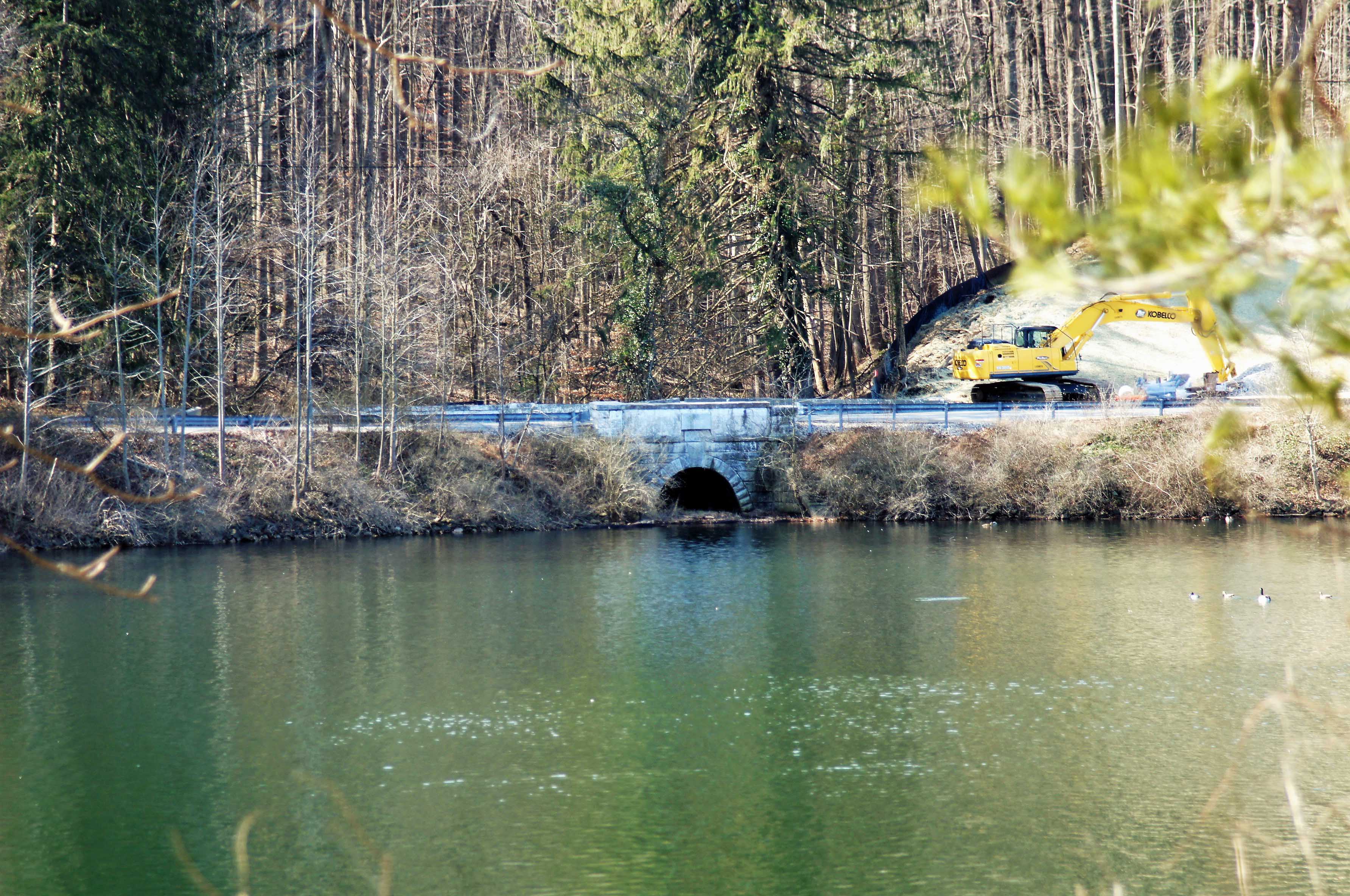
A recent photo of the opening to Shanghai Run. Looking over the wall towards the woods, there is no opening??

City workers lounging and the job is almost completed.


← Older posts
Newer posts →

Blogroll

  • Flouride Action Network
  • lulu
  • My Book
  • WordPress.com
  • WordPress.org

Recent Posts

  • Bermuda 2023
  • ICELAND April 2023
  • George Chalmers of Fochabers
  • In Search of The Skipjack Ada Mae
  • Trap Pond Kayak

Blog at WordPress.com.

  • Subscribe Subscribed
    • Water and Me
    • Join 231 other subscribers
    • Already have a WordPress.com account? Log in now.
    • Water and Me
    • Subscribe Subscribed
    • Sign up
    • Log in
    • Report this content
    • View site in Reader
    • Manage subscriptions
    • Collapse this bar
 

Loading Comments...