• About
  • History Writings

Water and Me

Water and Me

Tag Archives: engineering

Tunnel Inspection

06 Wednesday Apr 2016

Posted by Ronald Parks in Baltimore, water history

≈ 1 Comment

Tags

Baltimore, engineering, FILTRATION, Gunpowder Falls, HISTORY, Jones Falls, Lake Montebello, Montebello, Public Works, tunnel, water, water history

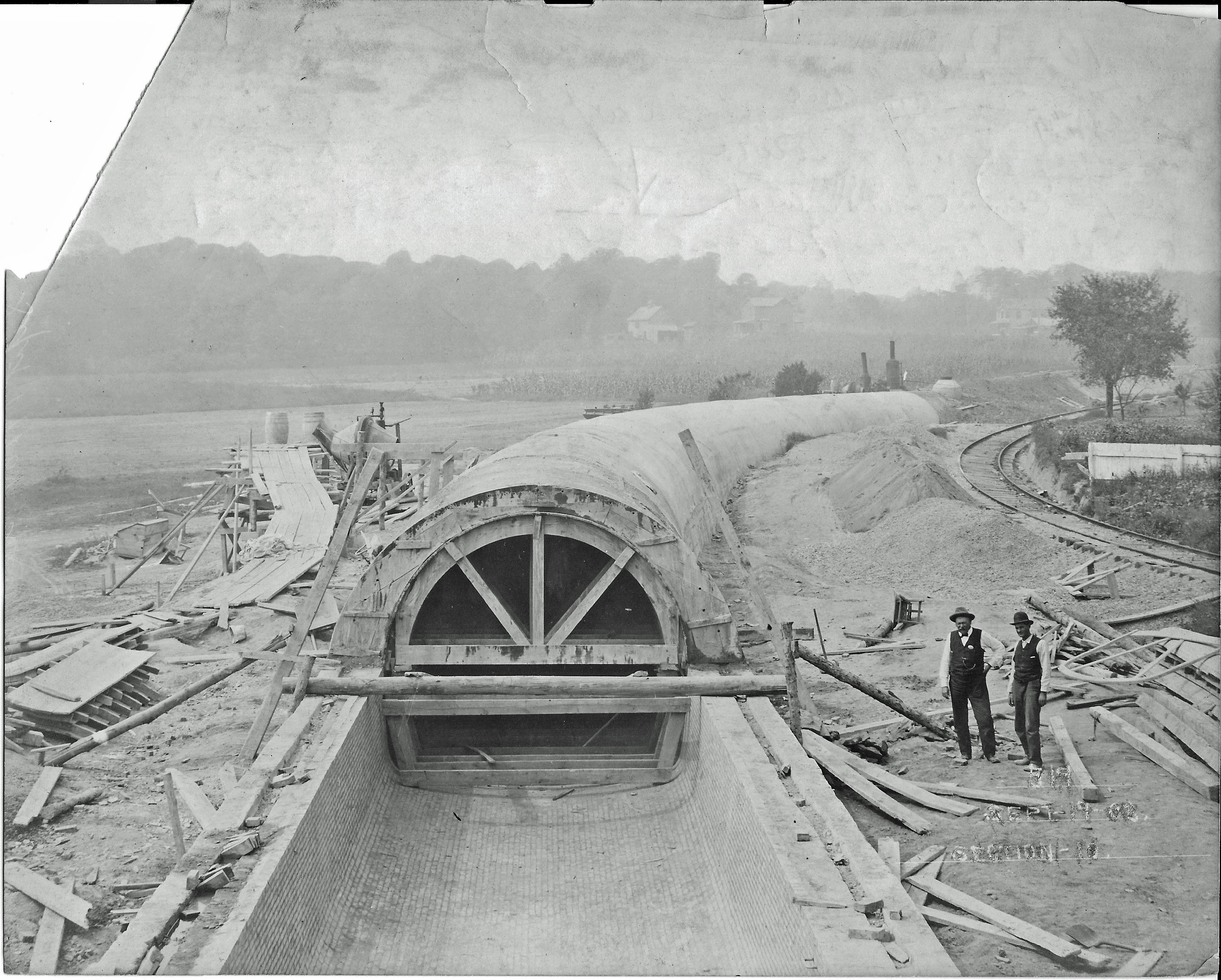
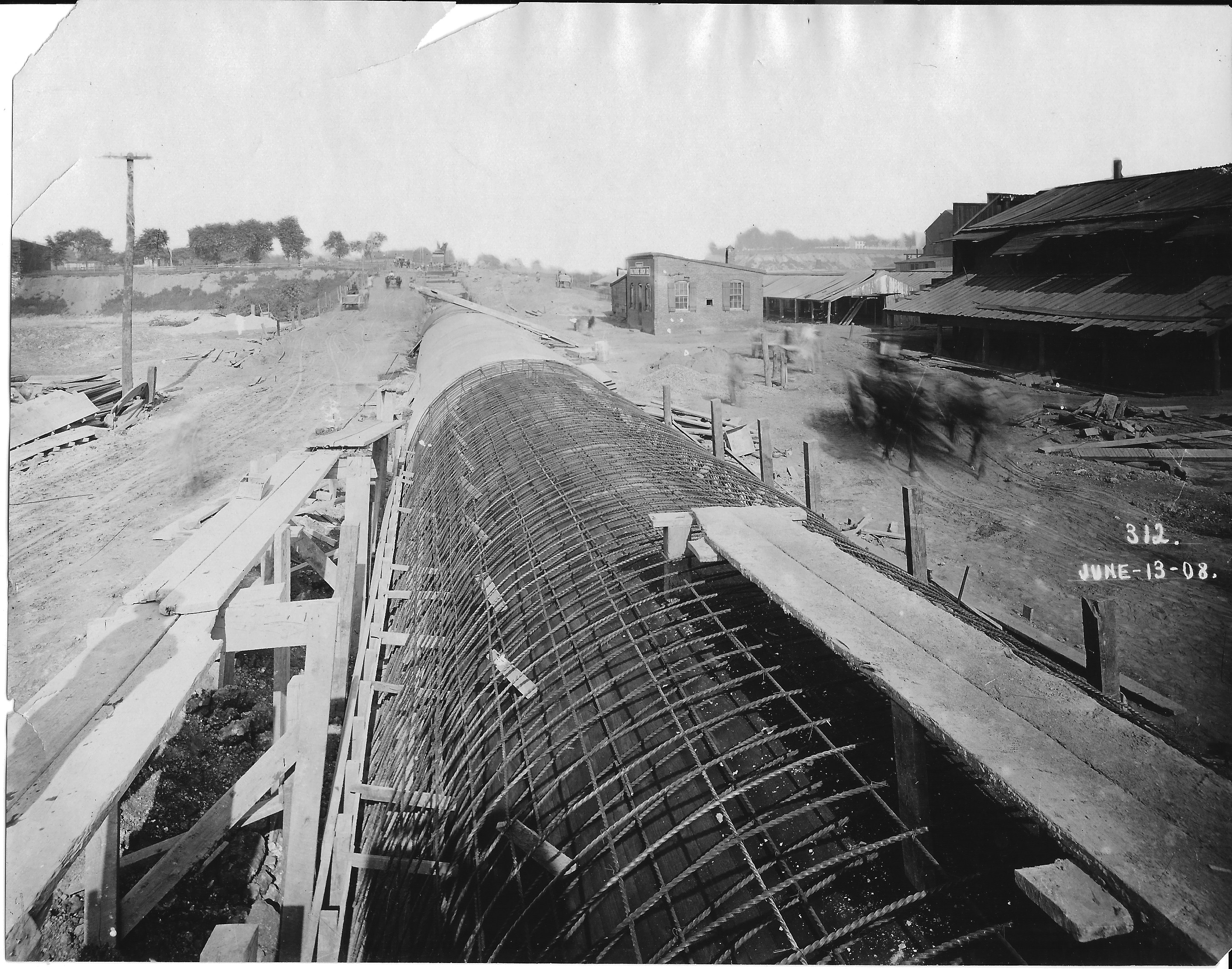
Between the years 1875 and 1881 a tunnel, 12′ in diameter 7 miles long was constructed between a dam on the Gunpowder River and a man-made lake at Montebello. This was all part of the new, permanent water supply for Baltimore. It would eventually replace the supply from the Jones Falls. As needed, this tunnel was inspected and found to be in very good condition over the years. The majority of the tunnel is through solid rock with only a few sections having a brick lining. As the City grew, a new dam was built upstream in 1914, with a connection to the 1881 conduit.

In 1933 the City was contemplating a new source of water. The decision was made to build  a parallel tunnel from Loch Raven (on the Gunpowder Falls). An inspection by the consultants was made of the old tunnel first. The below photographs show what they found – rock falls and leakage.

The old tunnel was taken out of service and the new tunnel was used. In the 50s and 60s it was decided to re-use the old tunnel, which carried raw water, to start sending processed water to Baltimore County. An inspection of the tunnel, which at this point being only 5-1/2 miles long (Bulkheads built on each end of the tunnel that were no longer needed) was done in 1968. These consultants, pictured below, found more of the same. Rock falls and leaks. Three of these men I eventually worked with in 1981.

Another inspection was done in 1984. Unfortunately I can not find any photographs. I do have the reports from this inspection and it is not good. More rock falls and leakage. I was asked last year to be a part of a new inspection group to enter this tunnel. I immediately said yes! BUT, over the course of a couple months preparing for this and all the safety people you can imagine being involved, it was decided to send in a remote operated vehicle. Not sure when they will do this, I just know the sub isn’t big enough for me to fit into!

Two quotes came to mind when i was asked “Why do you want to go in there? It is dangerous!”

Valeria to Conan the Barbarian – “Do you want to live forever?” And Lenny and Ziggy singing “Death by Misadventure!”
Brock Mill Pond NC

04 Monday Apr 2016

Posted by Ronald Parks in HISTORY, Photography, Travel

≈ Leave a comment

Tags

engineering, Hiking, kayaking, mills, North Carolina, photography, water history

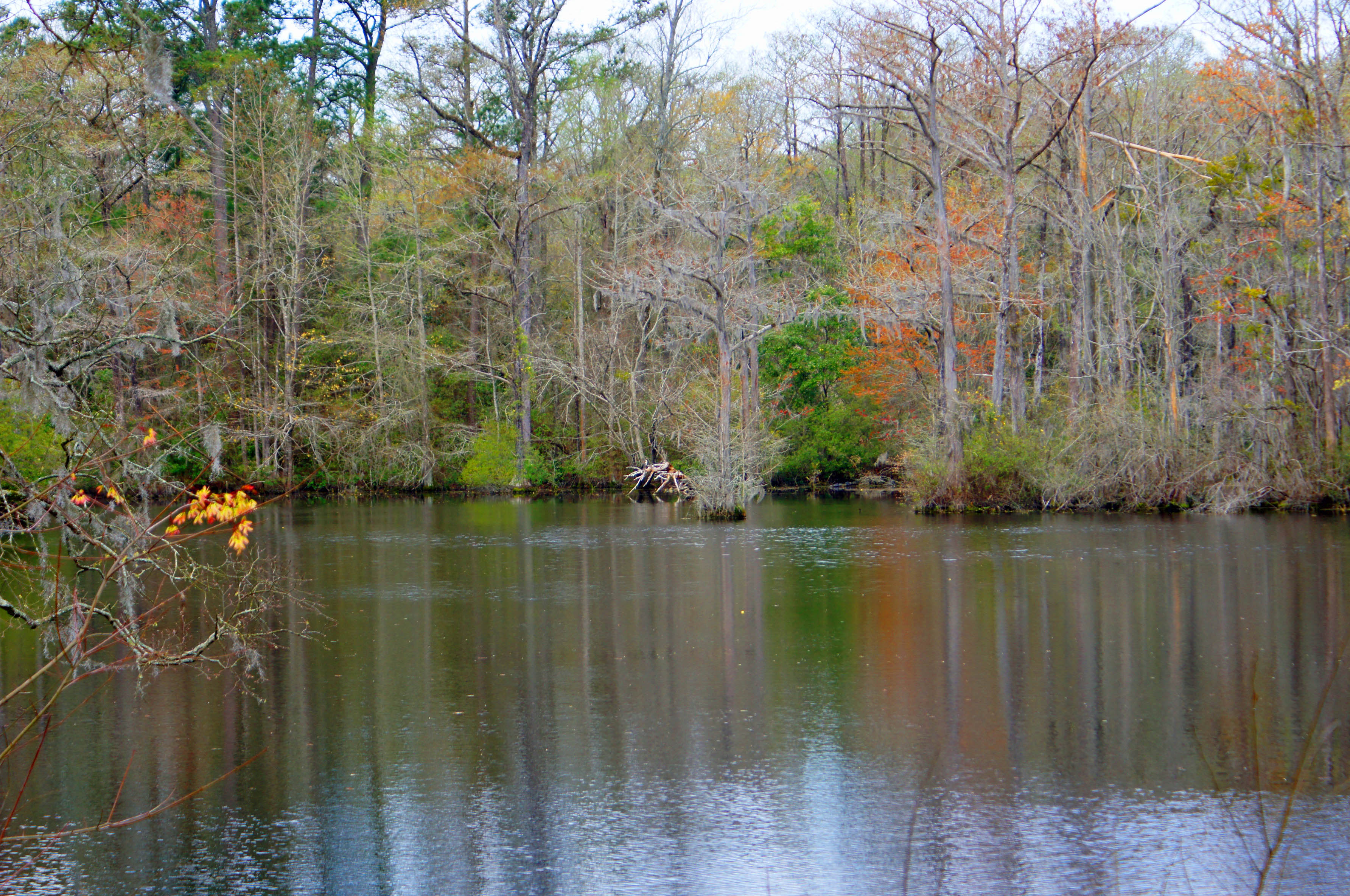
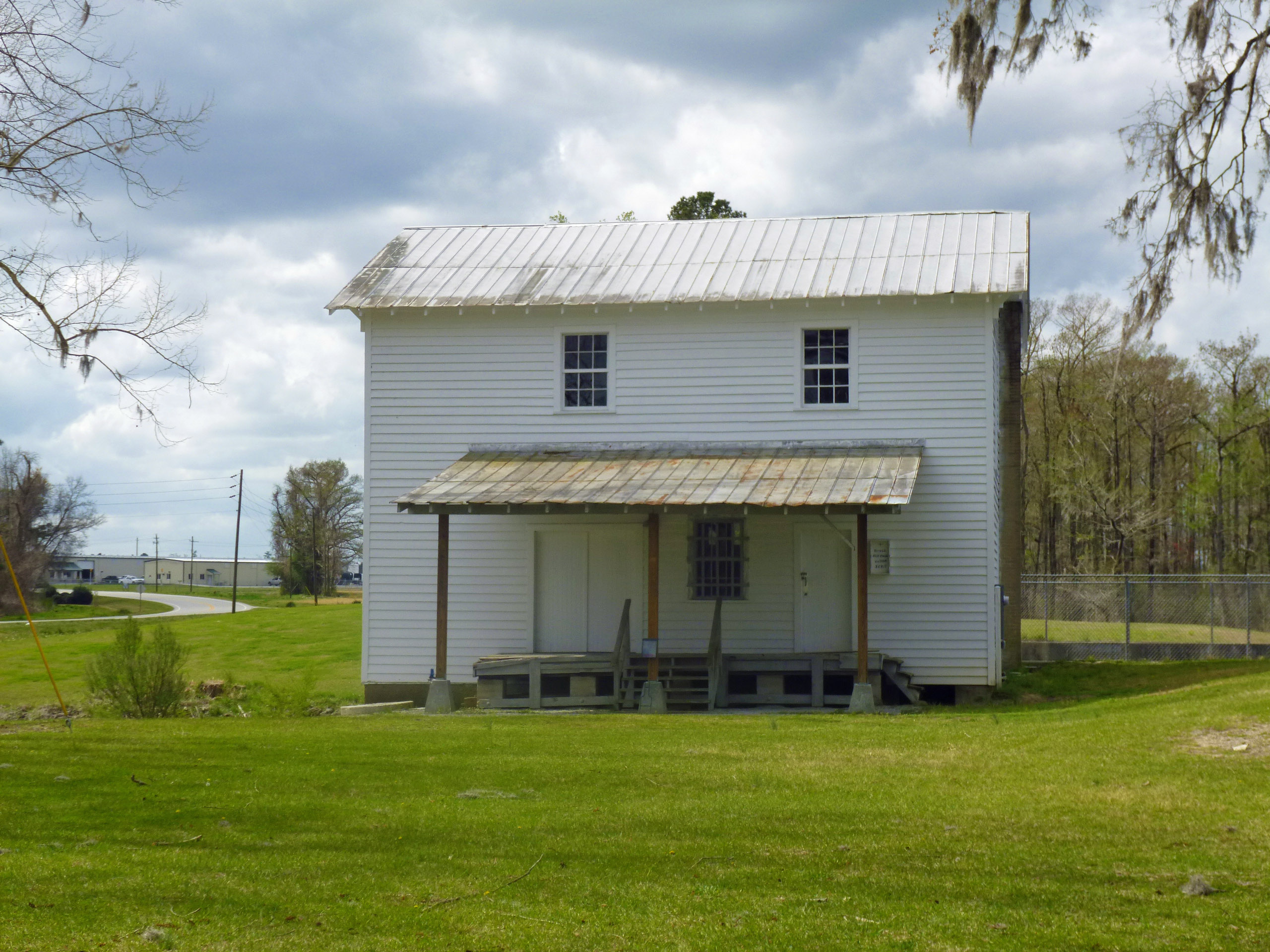
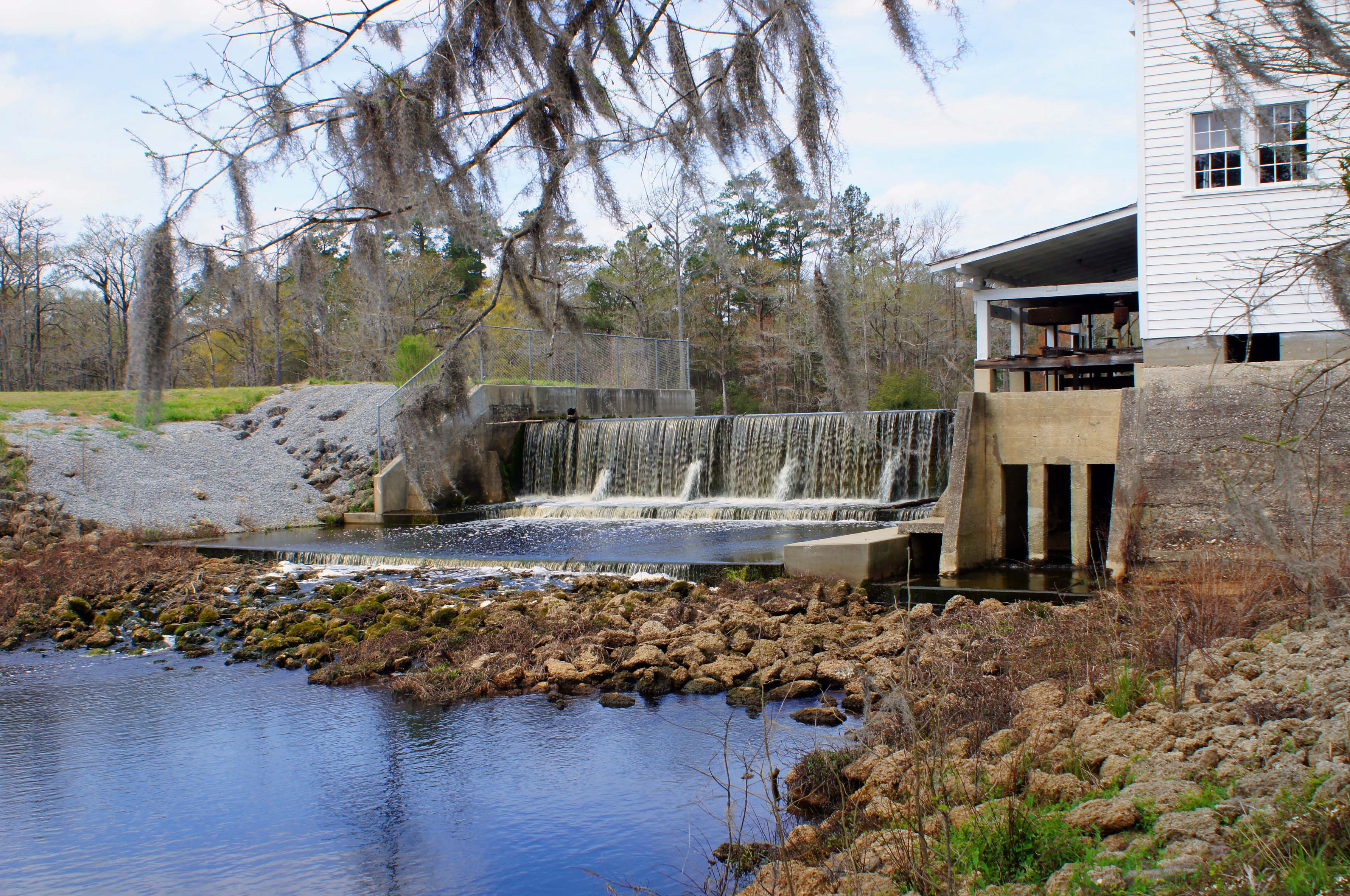
Took a road trip to Indian Beach, North Carolina the other day. On the way we stopped at an old mill, c1700s. Nice.

P1060471

Too bad it was closed for the day – would like to see the inside workings.

The dam

The pond – Kayak adventure waiting to happen!

The Morgue

31 Thursday Mar 2016

Posted by Ronald Parks in Baltimore, Sewage History

≈ Leave a comment

Tags

Baltimore, Cemetery, engineering, Health, HISTORY, Morgue, Museum, Public Works, Sewage History, vaccination, water history

From the 1888 Health Commissioner: I may be permitted complacently to add, that there has not occurred more than five cases of small-pox in the City of Baltimore during the past five years (all imported), and not more than two deaths. This is due to vaccination, carefully and persistently practiced by the excellent corps of Vaccine Physicians, added to the watchfulness and diligence of our able Quarantine Physician. Too much cannot be said to the people on this subject, and all should be convinced of the absolutely protective power of perfectly successful vaccination against small-pox. Those who arrogantly set themselves up as anti-vaccinationists should be regarded in every community as public enemies, and treated accordingly. Notwithstanding the good results of our past years’ experience, there are many defects in the sanitary condition of our City, that it is our bounden duty to correct at the earliest possible period of time. Prominent among these is the improvement of our storm-water sewers, most of which are defective in every particular. Constructed in bad form of improper materials, with insufficient and irregular grades, and for the most part un-trapped. Hundreds of damp or wet cellars contribute to the causes of sickness and deaths, which could be prevented by a system of drains, if the system of sewers were such as to render it possible or practicable. I trust the City Council will not delay in this important work. The disposal of the offal of our large cities is a problem of great importance as well as most perplexing difficulty. Cremation has been urged and adopted in several places, but as yet has not proved entirely satisfactory, either from a sanitary or economic point of view. The subject is still undergoing experimental investigation at Buffalo, New York and Chicago, and we shall await the result before recommending any plan for the improvement of our present system of disposal of garbage, street dirt and night soil. I would be failing in my duty if I did not again appeal to your Honorable Body in behalf of those who have so often and so sorely felt the need of a Morgue. In the name of the afflicted friends of the unknown dead, in the name of our efficient and zealous police force, and in the name of every reflecting citizen of Baltimore, I urge that this long felt want shall no longer be neglected and laid aside as a matter for future consideration. A city of five hundred thousand people cannot afford to be without a Morgue any more than she can to be without electric lights.

img010

Undated photo showing the morgue, which was connected to the Eastern Avenue Sewage Pumping Station

Pumps at Eastern Ave Pumping Station 1906-1960

30 Wednesday Mar 2016

Posted by Ronald Parks in Baltimore, Sewage History

≈ Leave a comment

Tags

Baltimore, engineering, glass plate negatives, HISTORY, Jones Falls, Public Works, sewage, Sewage History

Pumping Station: The land for a pumping station, located at East Falls and Eastern Ave was acquired by arbitration. The contract for the construction of pumps and machinery was awarded to the lowest responsible bidder, on December 10, 1906, to the Bethlehem Steel Co. of Bethlehem, Pa. for $450,000.

Six Years Operation of the Baltimore Sewage Pumping Station by Keefer. 1915-1923 (From Public Works July 1924) At the present time there are only a few sewage pumping stations in this country equipped with vertical triple-expansion pumping engines. One of these is the Eastern Avenue Pumping Station. The design of this station started in 1906; construction work was begun in 1907, and it was put in operation on January 31, 1912. Since then the station has operated continuously and has given excellent service.

br010r

This photograph was taken soon after the original pumps were installed, showing Calvin Hendrick, engineer. The three sewage pumping engines now under contract will weigh 4,000,000 pounds or more. They will develop about 400 H. P. each when running at full normal load, and about 1,000 pounds of coal an hour will be burned under the boilers, on an average, when the plant now under contract is running at the designed capacity. Of the three engines included in this contract it is intended that one shall be always held in reserve, other engines being added as may be necessary to make this possible.

img021

From an undated photo, showing one of the newly installed centrifugal pumps. At the Eastern Ave. PS, since its installation, essentially all the incoming sewage was handled by the new 40mgd centrifugal sewage pump, the old reciprocating steam-driven pumps being used for standby purposes. Photograph found at the DPW Museum, in a box of fire and water damaged albums.

img031

1960 the new pumps.

Kerbs

23 Wednesday Mar 2016

Posted by Ronald Parks in HISTORY, Sewage History

≈ Leave a comment

Tags

Baltimore, bricks, engineering, HISTORY, Public Works, sewage, Sewage History, water

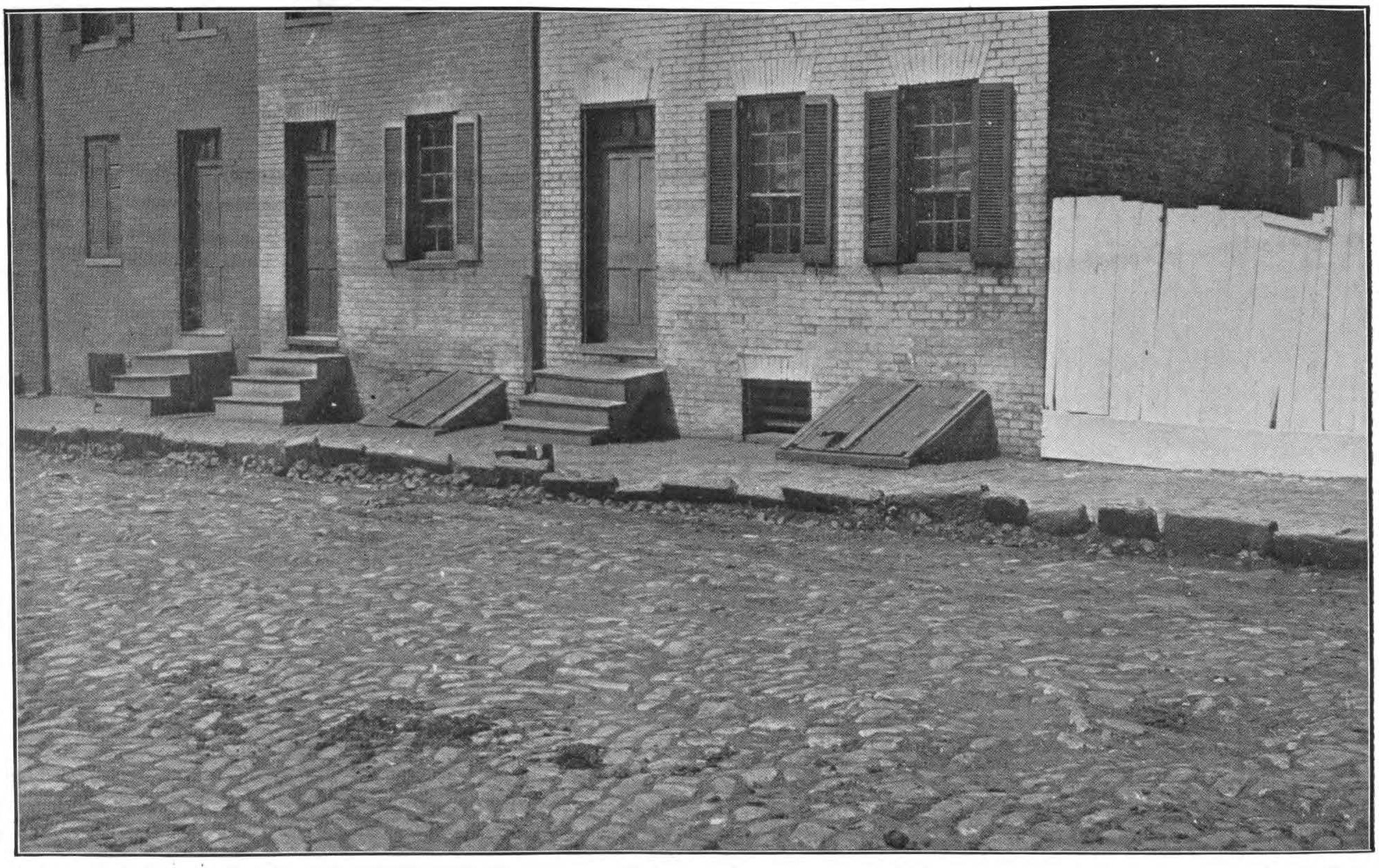
From the 1899 Commissioner’s Report on stormwater, sewers and streets – Referring to the present condition of the paved streets of Baltimore, I cannot say that they are in good or bad condition, as this is a relative term, and depends a great deal upon what residents are accustomed to, what advanced civilization requires and the willingness of the tax-payers to keep pace with the same. We have succeeded in the last year in repairing most of the places which were specifically complained of, and have done much to make the best of bad pavements. The kerb-stones are far from being in repair, but the citizens become so accustomed to seeing them lay over in the gutter, or partially so, that they have long since ceased to make an outcry concerning the same, especially as it involves an outlay on the part of the property-holder to repair his footway; but we have succeeded in resetting more kerb this year than any previous year, over ten miles.

1900 curb

The trapping of inlets to sewers

21 Monday Mar 2016

Posted by Ronald Parks in Baltimore, Sewage History

≈ Leave a comment

Tags

Baltimore, engineering, Health, HISTORY, Jones Falls, POLITICS, Public Works, sewage, Sewage History

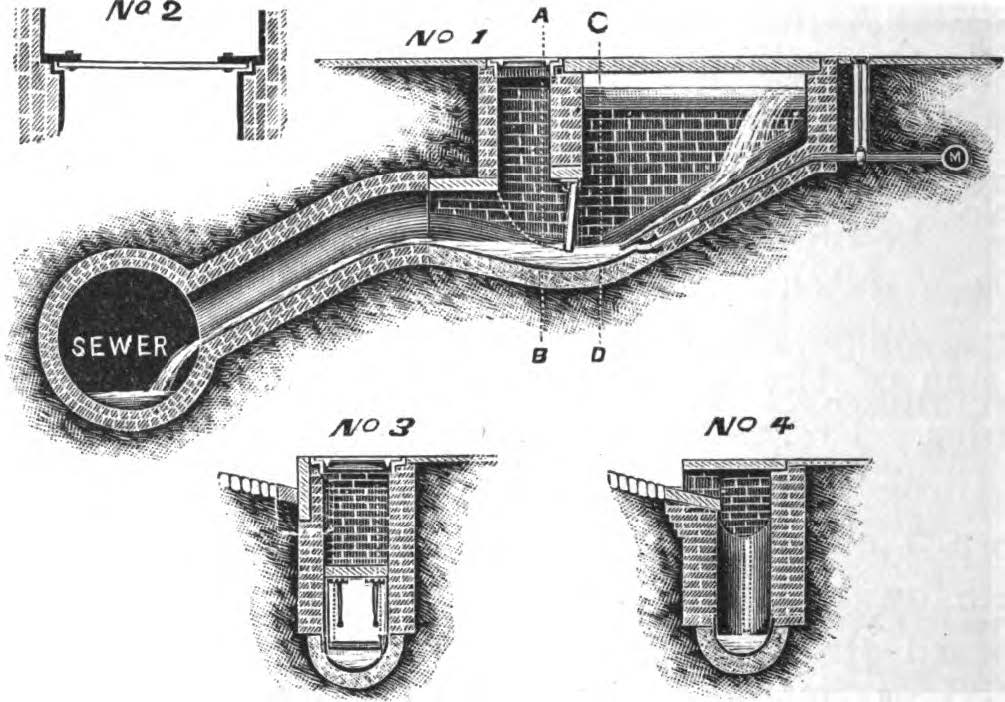
From the 1887 Annual Report of the City Commissioners – This, perhaps, has, as much as any other subject connected with the sewerage of cities, occupied the attention of inventors. Many plans have been devised, from time to time, and for which patents have been granted, for the construction of a perfectly sealed trap. Now, the bad features of all inlets I have yet seen, or know of, are done away with by the simple and comparatively inexpensive contrivance patented by one of the attaches of this office, Mr. Charles P. Kahler. By resolutions of your honorable body, two of these traps have been placed in the inlets to Howard street sewer, at the intersection of Conway and Howard Streets, and at the corner of Camden and Howard streets, which are working clearly up to the degree of efficiency claimed for them by the inventor. I have no hesitation in recommending this invention for adoption. Mr. Kahler can explain the principle involved in his trap more fully to those who may call on him than could be done in this report. A cut representing the improved inlet is annexed.

THE KAHLER PATENT INLET.

CityCommissioner 1872-1887

No. 1–Longitudinal section of Inlet.

No. 2–Section of valve or door with gum packing.

No. 3–Section through A. B.

No. 4–Section through C D.

M—Water mains.

Discharge Into River

18 Friday Mar 2016

Posted by Ronald Parks in Baltimore, Sewage History

≈ Leave a comment

Tags

Baltimore, boats, engineering, glass plate negatives, Health, HISTORY, photography, Public Works, sewage, Sewage History

The sewage of Baltimore City is pumped to the sewage plant at Back River in Baltimore County, where it is ‘cleaned’ and then discharged into the river. Interesting fact about the below photos from a 1955 report is this – “A number of leaks were repaired in the wood stave discharge pipes by a diver. The pier at the river, which had been damaged by hurricanes was rebuilt.”

As the photographs from the early 1900s show, the discharge pipes are above the water? So were they lowered into the water after assembly? That seems unlikely as there are hundreds of adjusting bolts holding the pipes into the air? Maybe I will find the answer one day in the many reports still to be read…

img013-3172 img014-3190 img016-3753 img162

Low Level Interceptor

17 Thursday Mar 2016

Posted by Ronald Parks in Baltimore, Sewage History

≈ Leave a comment

Tags

Baltimore, engineering, glass plate negatives, Health, HISTORY, Jones Falls, Public Works, sewage, Sewage History

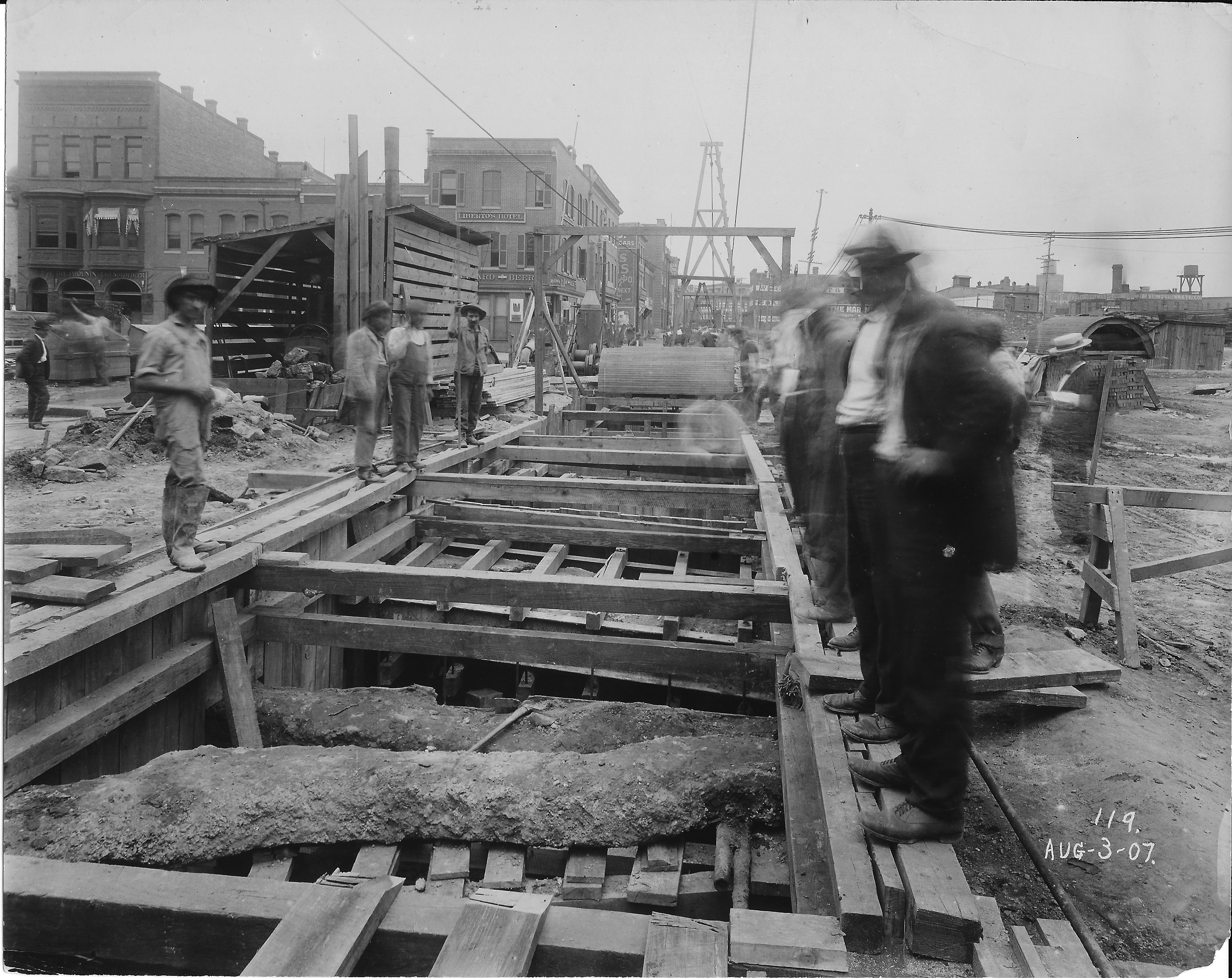
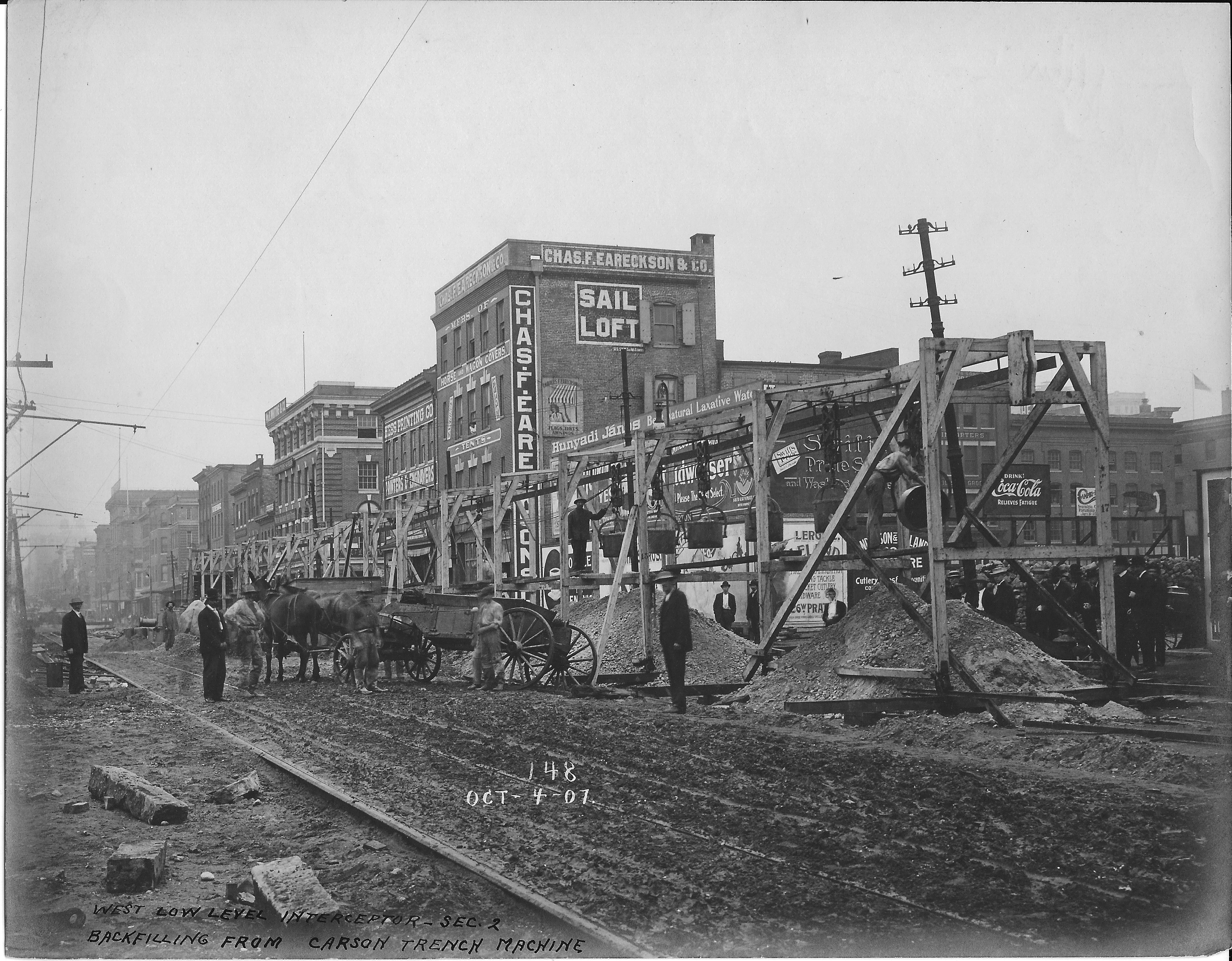
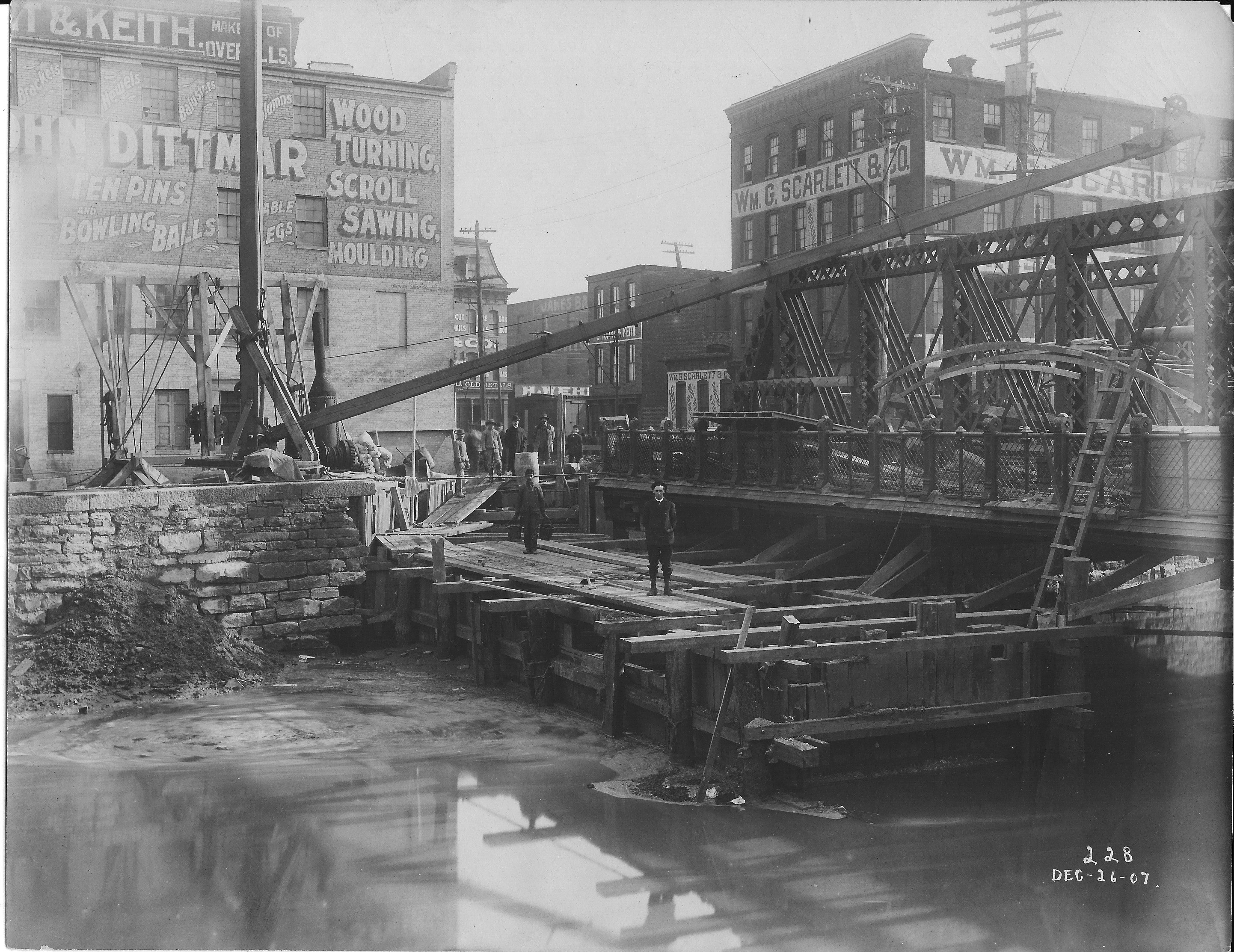
Report of the Low Level Division, Kenneth Allen, Engineer: Section One begins at the Sewerage Pumping Station at President St and Eastern Ave. and extends through President street to Pratt street, and thence westerly to Center Market Space, crossing under Jones Falls on the north side of the Pratt street bridge. General notes on construction. The excavation in general was through a dark material containing particles of sand which appears to be a compacted deposit of mud, with clay, sand, fullers’ earth, gravel and quicksand in places. Gravel was usually found at or near sub-grade, and where this or other firm material was absent the material was excavated and refilled with gravel. Near Pratt street and West Falls avenue, where the depth to sub-grade was some 23 feet, a fine running sand was encountered above sub-grade, which made progress slow and difficult. Previous to excavation, the corner of the four-story brick dwelling on the corner of West Falls avenue was hung by 5 sets of needle beams and twenty 8-ton jacks. Section Two: This section extends from Pratt street and Center Market Space to Pratt and Light streets. The diameter of the sewer is 74 inches throughout the section.

005-119Section #1 Center Market Place showing supports to conduits in foreground and supports to large conduits leading to United (?) & Electric company Power House.

009-148

Section #2 Backfilling from Carson Trench Machine.

016-228

Section #1 Cofferdam for going under the Jones Falls at Pratt Street.

More Pics of Outfall

16 Wednesday Mar 2016

Posted by Ronald Parks in Baltimore, Sewage History

≈ 3 Comments

Tags

Baltimore, bricks, engineering, HISTORY, photography, Public Works, sewage, Sewage History, writing

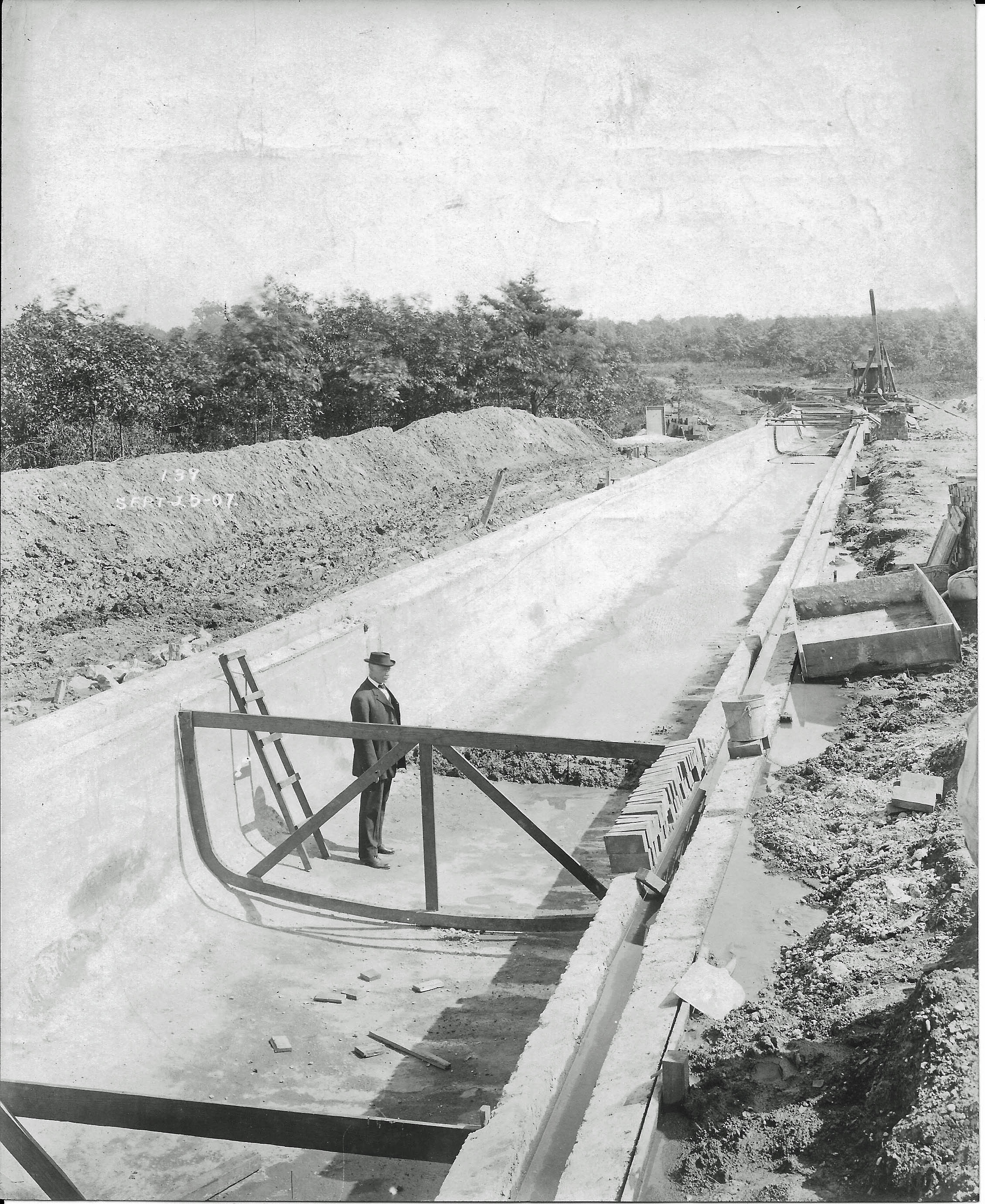
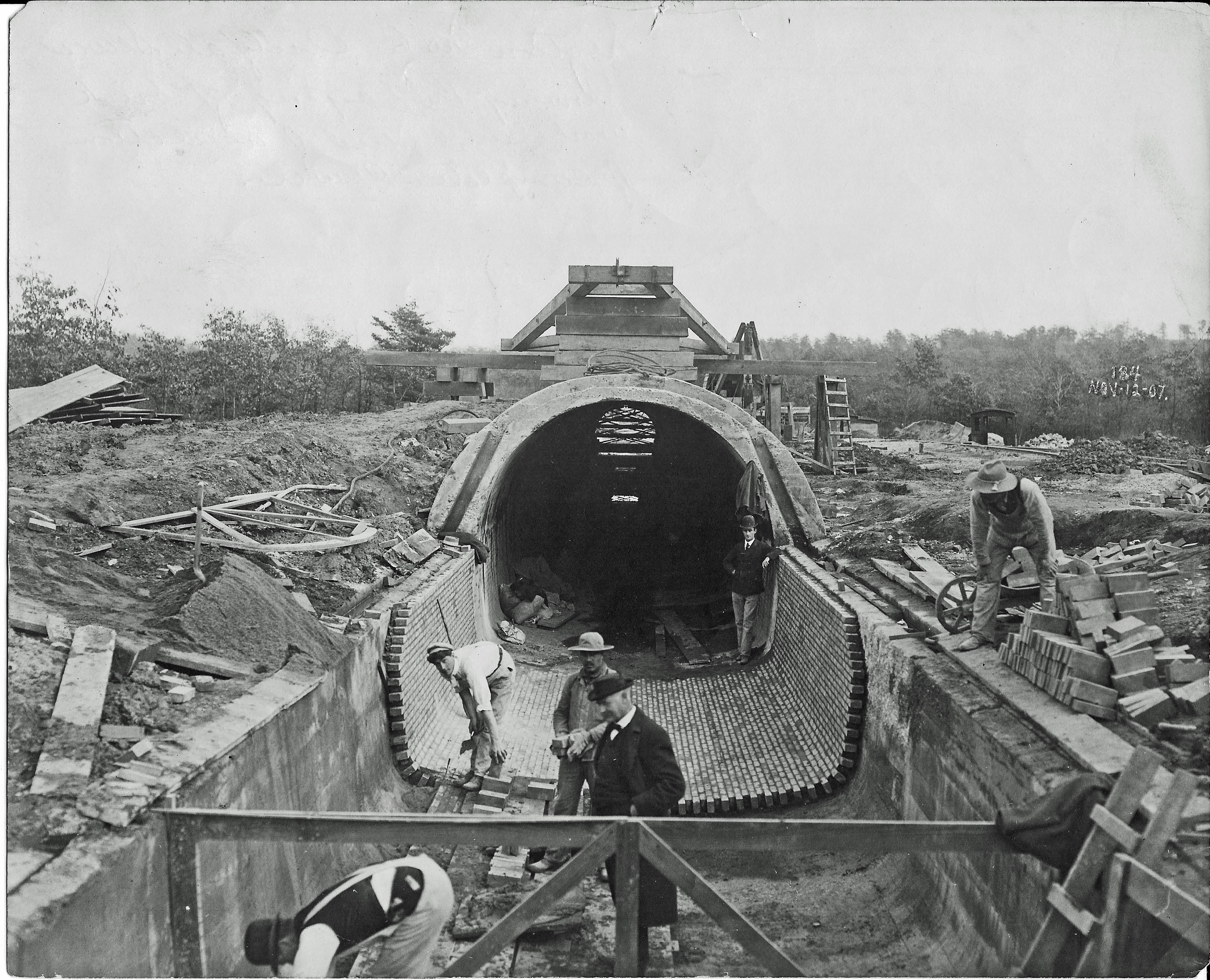
While on a break from Facebook, I have been working on my new sewer history book, completing so far, 159 pages with 101,232 words. Now I need a break from writing! So I will just post some photographs with mini-captions!

006-139

Section #6 Showing David Peoples, contractor, in concrete invert, ready for brick work. 1907

010-134Section #6 Laying brick and completed section near Back River Road. 1907

012-183

Section #9 Showing inside of completed sewer at manhole Daylight exposure for this shot. 1907

035-303

Section #9 Showing bridge at Eastern Ave. over sewer trench. Danger sign in driveway where a teamster drove into bridge and threw a mule into the trench (Go slow danger) 1908

038-519

Section #10 South of Eastern Ave, section of sewer on 7 degree curve. 1908

Outfall Sewer

14 Monday Mar 2016

Posted by Ronald Parks in Baltimore, Sewage History

≈ Leave a comment

Tags

Baltimore, bricks, engineering, HISTORY, Public Works, sewage, Sewage History

The Walbrook Testing Plant gathered information on sewage disposal. The Eastern Ave Pumping Station would pump Baltimore’s sewage to a newly built Sewage Treatment Plant at Back River. (For the most part, the sewage of Baltimore would flow by gravity to Back River except in the area downtown, near City Hall. This area is below a sufficient elevation to allow the sewage to flow on its own, or the shit is just deeper in City Hall)

An Outfall Sewer was built from the Eastern Ave Pumping Station to Back River, connected by force mains and interceptors. The contract for the Outfall Sewer was divided into 10 sections.

Below is section #3, showing what I consider a few points of interest: The Baltimore Brick Company to the right, which means this is looking west on Monument street. Making the house in the far off right on Edison Highway – Loney’s Lane. After the new Edison Highway bridge was built, I grew up in that area, west of the road. I was told as a kid to not play under the bridge because of there being quicksand on the other side. This area is now occupied by a covered-over landfill. Armco steel was in the vicinity for years, taking over a cemetery on the west side of Edison. I do remember the Brick Company. They had sample walls built along Edison, showing the types of bricks they manufactured. Bocek Park was there also.

037-312A

← Older posts
Newer posts →

Blogroll

  • Flouride Action Network
  • lulu
  • My Book
  • WordPress.com
  • WordPress.org

Recent Posts

  • Bermuda 2023
  • ICELAND April 2023
  • George Chalmers of Fochabers
  • In Search of The Skipjack Ada Mae
  • Trap Pond Kayak

Blog at WordPress.com.

  • Subscribe Subscribed
    • Water and Me
    • Join 231 other subscribers
    • Already have a WordPress.com account? Log in now.
    • Water and Me
    • Subscribe Subscribed
    • Sign up
    • Log in
    • Report this content
    • View site in Reader
    • Manage subscriptions
    • Collapse this bar
 

Loading Comments...