Scanning scrap books from the museum. Weights and Measures.
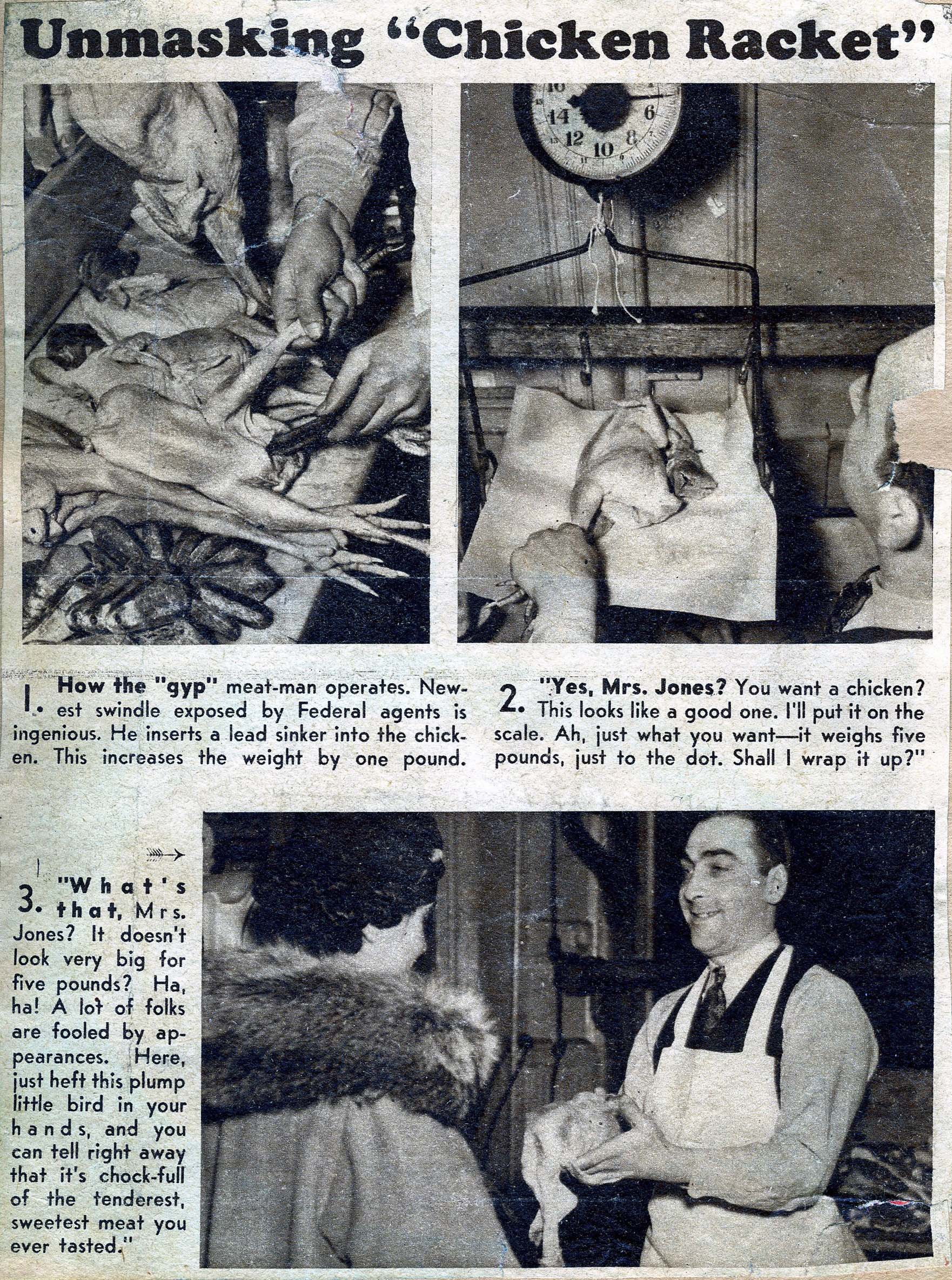
Mrs. Jones and the butcher.
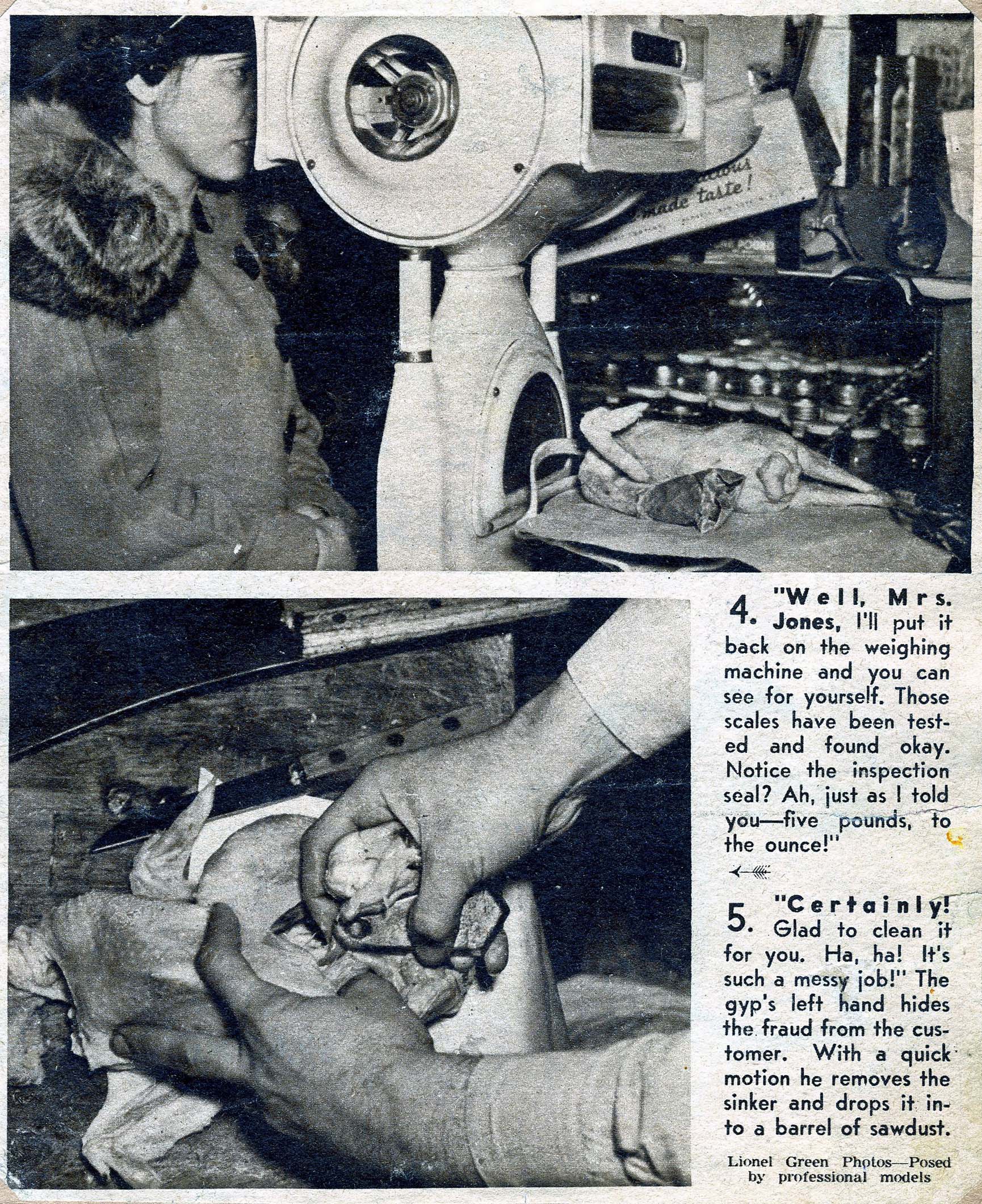
What about lead poisoning?
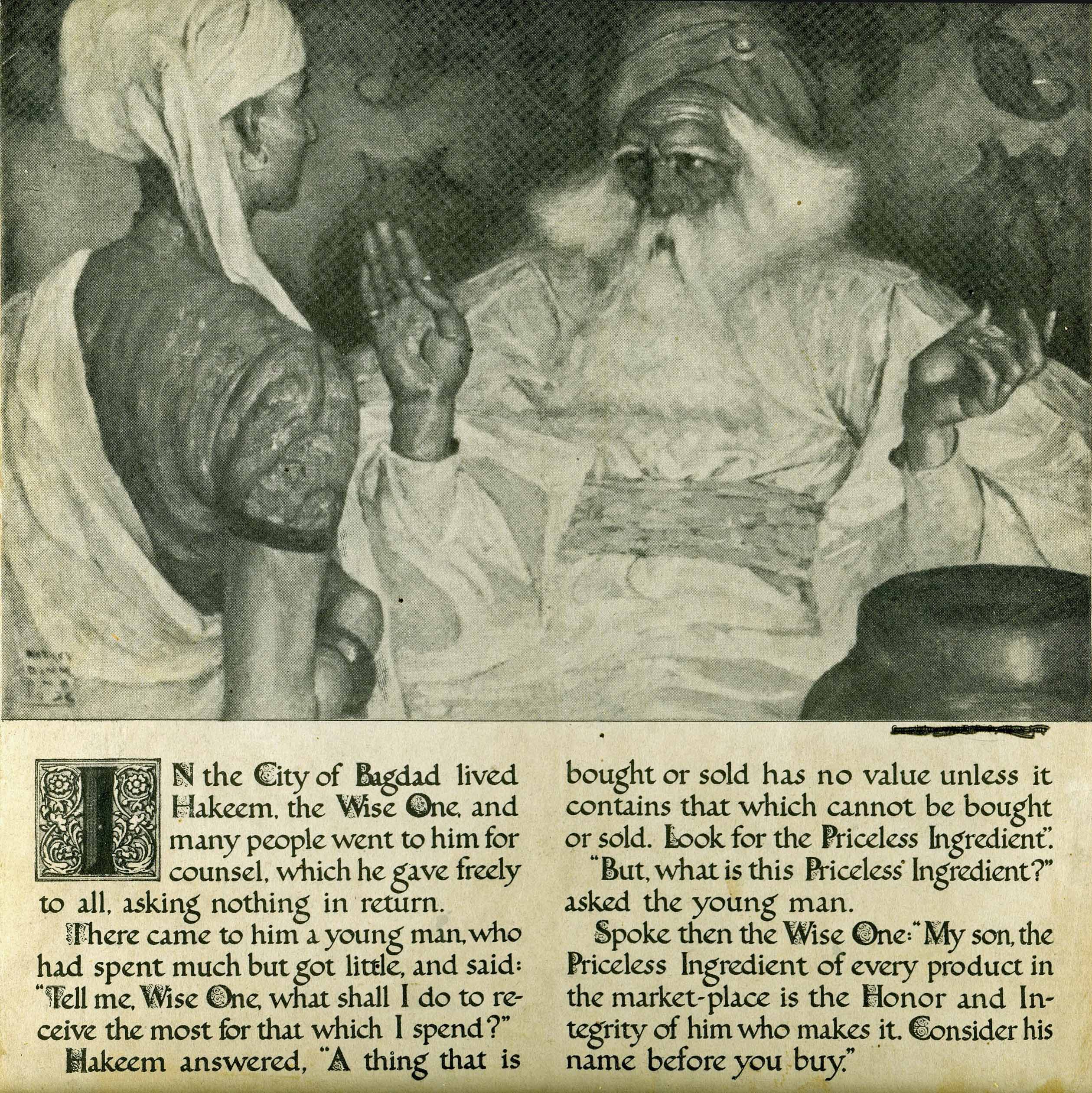
The Wise One!

09 Monday Jan 2017
06 Friday Jan 2017
Posted in Baltimore, HISTORY, Sewage History
The snows are upon us and as I drive to work and notice the gutters and storm drains, I think of what it was like years past…
1881 A great defect is observable in the streets of our city, namely: the surface drainage. House sweepings, kitchen slops, etc., find their way into the open gutters; pools of water collect at various depressed points, giving rise to miasms and odors that are anything but conducive to health during the hot weather, and in winter time invade the adjoining pavements by extension of layers, forming broad sheets of ice, dangerous to life and limb. All of this nuisance can be obviated, and the streets kept dry and free from offensive and pestilential odors, and sidewalks free from ice, by a proper system of sewerage. The present sewers of our city are not self-cleansing, and in consequence thereof there is imposed upon this department an immense amount of work, for which there should be given a sufficient sum to thoroughly clean and disinfect them.
1885 It occurs to me to say, that I think the emptying, during the winter season, of snow and ice out from the streets into the lower Falls, is a vicious practice, and should be henceforth prohibited. It creates bars of the filthiest street mud and refuse, which fill up the Falls and disfigure the walls until late in the Spring.
1908 Investigations show that large deposits (trash) are being formed in numbers of the existing drains, caused by street sweepings.
1911 A considerable portion of the dirt which finds its way into the sewers goes in through the un-trapped inlets, and it is a matter of common knowledge that the street cleaners, in order to lighten somewhat their labors, are accustomed to pushing the street sweepings into the inlets, thus allowing large quantities of dirt to be washed into the sewers. It must be borne in mind, however, that it is much more expensive to remove deposits of dirt from the sewers by hand than it is to remove them from the surfaces of the streets by carts.
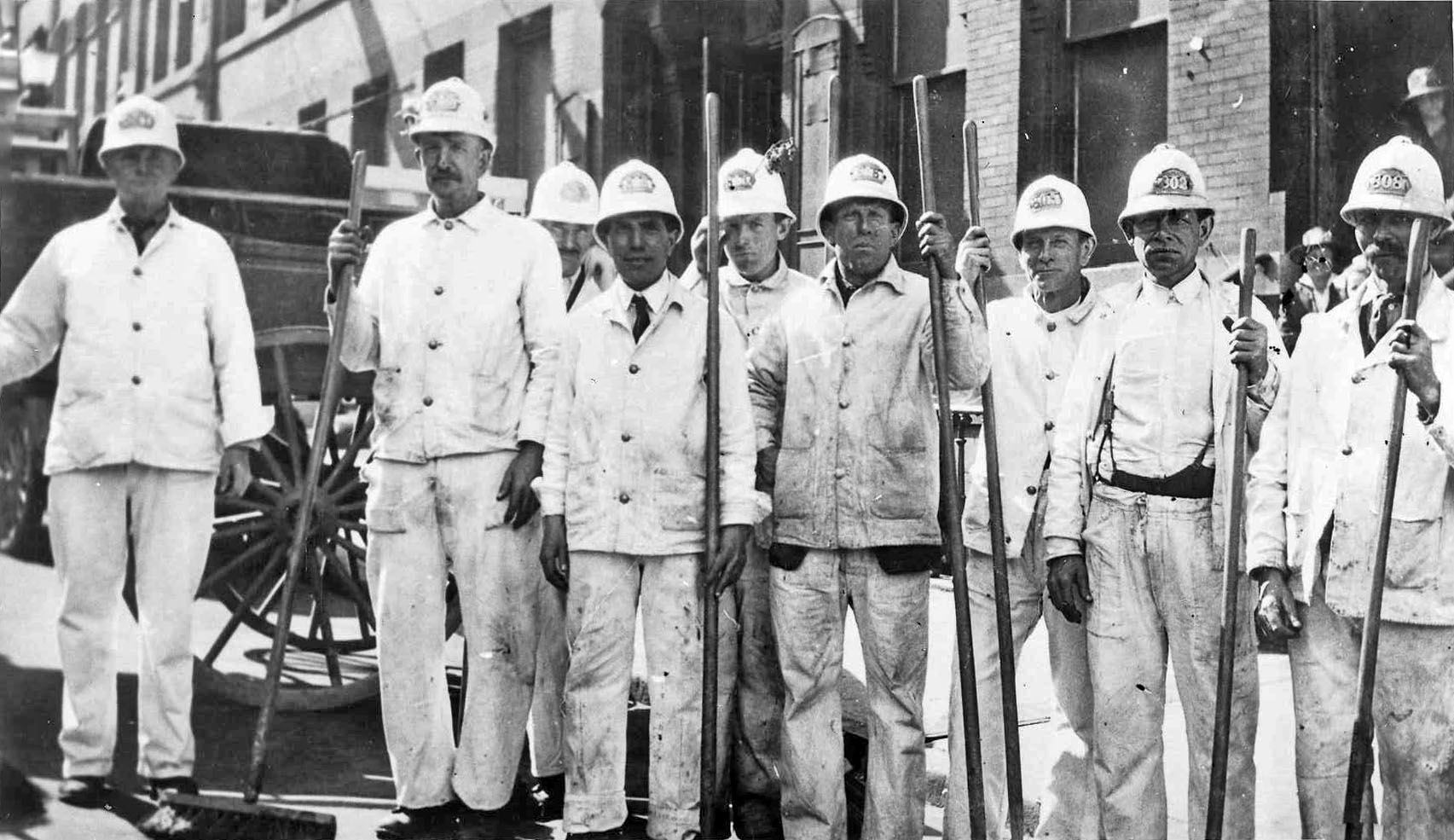
Baltimore’s White Wing street sweepers.

Newer version, Hokey Cart street sweeper (Does he really look to be the type to just push his sweepings into the storm drains?)

That’s a lot of salt which will eventually head into the Chesapeake Bay.
02 Monday Jan 2017
Posted in Hiking, HISTORY, Photography
Tags
Baltimore, Cromwell Park, engineering, Gunpowder Falls, Hiking, HISTORY, lime kiln, Loch Raven, nature, photography, Public Works, water history
The state parks around Maryland promote the First Hike of the year. The way Kathy and I look at it – any day is a good day to hike! And the weather couldn’t have been better! Last day of the year and the first day of the year hikes.
On Saturday we did a small hike at a park we never hiked before. Kathy came up with the idea to hike somewhere we never have for the last hike of the year and somewhere we have hiked for the first hike of the new year. Louis Krause Memorial Park was the last of 2016

When trees hunt no hunting signs

Small park wit a couple roundabout paths

After a complete circuit, leaving the woods we came upon these steps.

The top of a lime kiln

A kissing bench. (If you have been paying attention to my post, most hikes have benches)

An old kiln. This one is a lot smaller than the ones at Cromwell Valley Park.

Some history on the kiln
The next day, New Year’s, we took a hike at our favorite place to hike – Cromwell Valley Park. Lots of first day hikers there – it was crowded.

First stop – the big sycamore tree.

Kathy told me to lie down on the picnic table and take one straight up – ok, I’m easy!

Another type of view of the tree, using a filter.

A smaller kiln at CVP. A lot of people don’t even know this one is here. Can’t find any history on it.

Marble Spring. I’ve always called it bubbling brook. Usually there is some movement in here from the lime stone underneath meeting up with the spring. Watercress floating on top.

Almost done rebuilding the lime kilns. Just 6 years ago these were covered in vines and trees, crumbling apart. Amazing job these guys are doing.

New observation deck up on top.

The old log cabin

Simulated limestone in the top of the kiln. Across Mine Bank Run is the old Long Island Farm. Almost bought up by the City for Watershed property.

Steve Jobs first garage where he came up with the idea of a computer – I think? Maybe not!
30 Friday Dec 2016
More scanning of Museum stuff – came across this photo on pressed cardboard. Looking north on Guilford Street (Ave.)

Looking close you can see the elevated trolley tracks just past City Hall.

I use to be good at figuring out what the writing on the back of old photos said, but this I am unsure of? “View from ? Bank after ?” No idea of what it says in the circle? Bottom word looks like ‘subway’??
23 Friday Dec 2016
Posted in Baltimore, nature, Photography
Tags
art, Baltimore, Crafts, fishing, Gunpowder Falls, Hiking, Holidays, Montebello, Peace, photography, Public Works, water
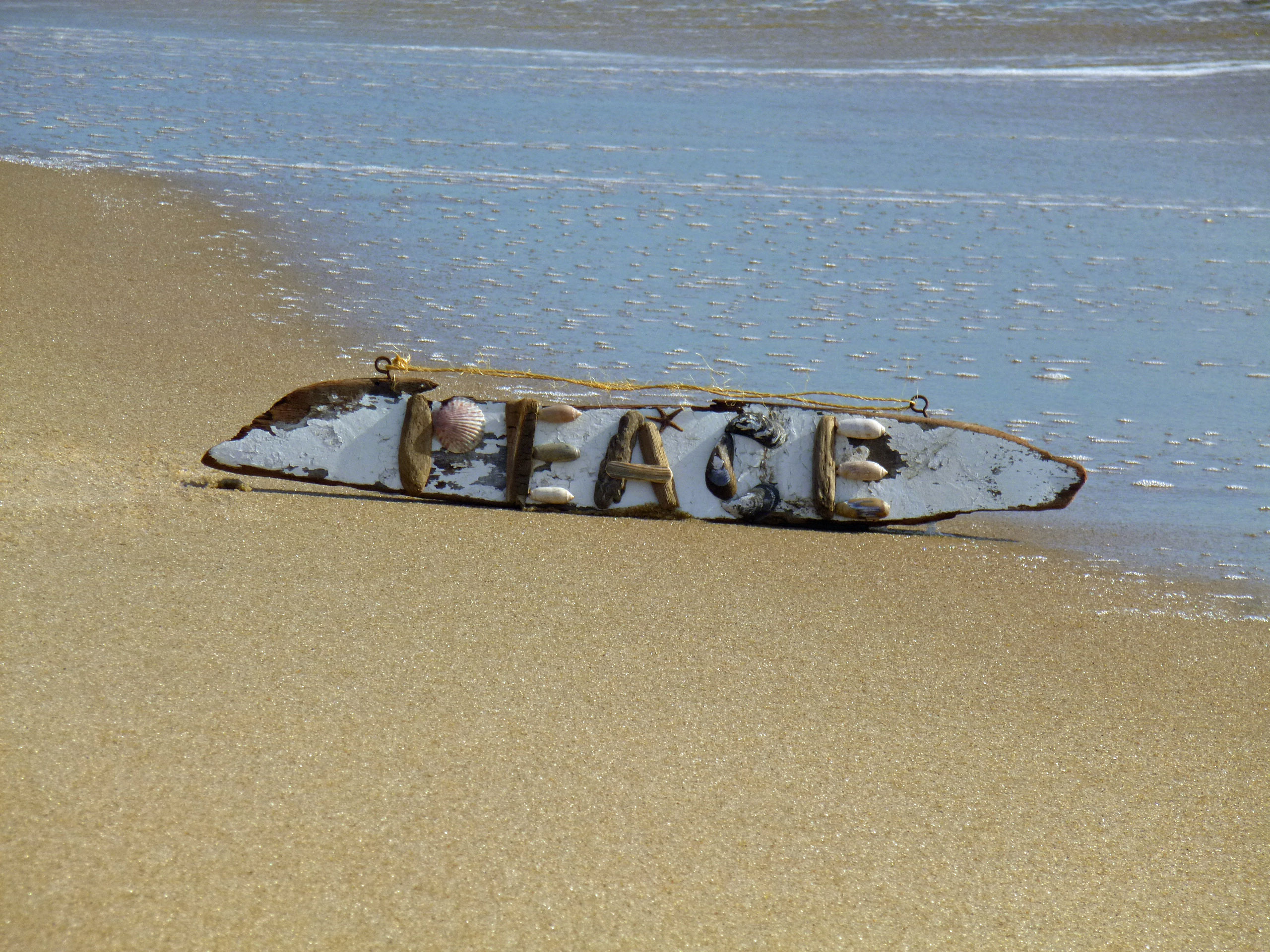
From Kathy, Molly the mutt and myself….
21 Wednesday Dec 2016
Posted in Baltimore, water history
Tags
Baltimore, engineering, glass plate negatives, Gunpowder Falls, HISTORY, Lake Clifton, Lake Montebello, Montebello, Monuments, POLITICS, Public Works, Statues, water history
When the permanent water supply from the Gunpowder Falls was built, it included a dam at Loch Raven, a 12′ tunnel approximately 7 miles long, an impounding reservoir at Montebello, another conduit from there to Lake Clifton and then it was distributed to the public as unfiltered, yet wholesome drinking water.

Photo from the 1920s showing the original 1881 gate house at Loch Raven

How the gate house area looked in 2011.

When they eventually removed the gate house, they kept some of the original stone and built this somewhat mini-monument to the Permanent Supply, across the street.

The supply is finished and the valves are opened. This is downtown Baltimore at the Battle Monument. Caption reads: Fountain and Cataract – Monument Square – The Introduction of the Gunpowder Water Supply – Oct. 10th 1881
19 Monday Dec 2016
Posted in Baltimore, water history
Tags
Baltimore, Dams, engineering, HISTORY, Public Works, water history

From the City Council Records: It says –
Resolved by the first and second branches of the City Council of Baltimore, that the Mayor be, and he is hereby authorized and requested, to give public notice, that proposals will be received at his office, until the first day of June next, for introducing a copious and permanent supply of wholesome water, into the City of Baltimore, or into any part thereof, by any individual or Company; and that whenever such proposals have been received, as in the opinion of the Mayor are worthy of consideration, he convene the City Council to deliberate thereupon.
Baltimore Feb. 23, 1804 In 1st Branch read and agreed upon.
The concurrence of the Second Branch is requested
Feb 23, 1804 In the 2nd Branch read and agreed to.
Noted from Early Water History, Annual Reports:
1804 Baltimore Water Company: On April 30, Samuel Smith, W. Cooke, E. Ellicott, Robert G. Harper, Thomas McElderry, Alex Mckim, and John E. Howard agreed to form The Baltimore Water Company. The Baltimore Water Company, a private company, furnishes water to a portion of Baltimore City. Company purchased parcels of land above and below the Belvedere Bridge, which crossed the Jones’ Falls, and built a dam and bought a lot at the southeast corner of Center Street and Calvert Street for the purpose of constructing a reservoir at that site. Water to this reservoir was supplied from the water at the dam by means of an open channel. The open channel ran between Calvert Street and the street known today as Guilford Avenue.
1805 Baltimore Water Company: The Baltimore Water Company receives an act of Incorporation.
15 Thursday Dec 2016
Posted in Baltimore, engineering, Reservoir, water history
Tags
Ashburton, Baltimore, engineering, FILTRATION, glass plate negatives, HISTORY, Public Works, Snow, water history, weather
First thing that popped up on my news feed said – Double Polar Vortex to Slam U.S. Did they talk like that in 1908? Or did they just say, “Folks we had us some snow last night, so bundle up!”
Building the High Service Reservoir, also known as Lake Ashburton.

The little train that couldn’t.

Steam engines used to pull cables on derricks, to lift construction materials.
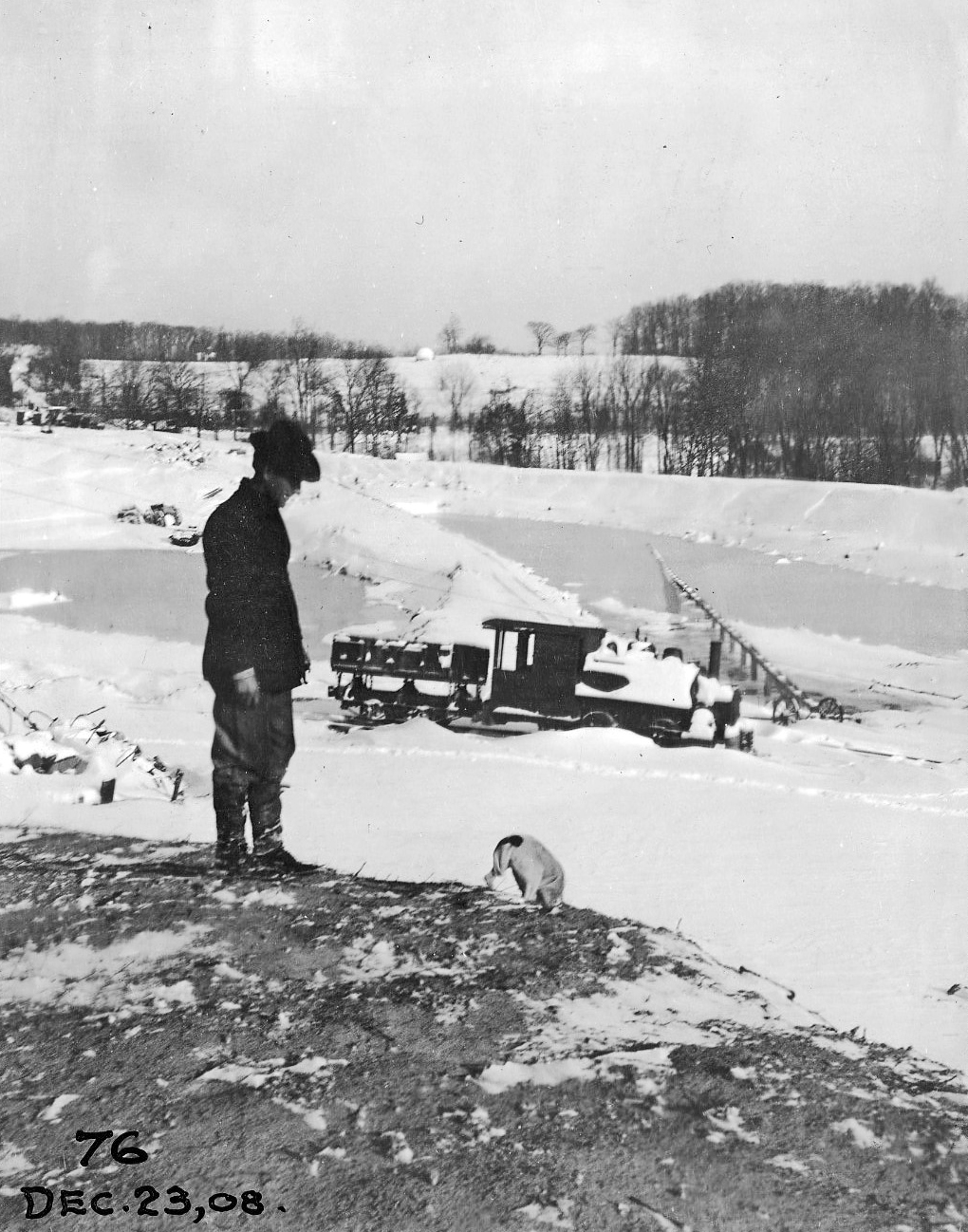
A boy and his dog. Look close, center on horizon. Does that look like a giant snow ball someone is about to roll down the hill?
10 Saturday Dec 2016
Tags
abandoned house, Baltimore, bricks, Eagles, engineering, FILTRATION, fishing, glass plate negatives, Gunpowder Falls, Hiking, HISTORY, Montebello, nature, photography, Public Works, water history
The day before taking off work for my daughter’s operation, I was contacted by CHAP – Commission for Historical and Architectural Preservation. They wanted to know if I knew anything about a fireplace mantle from Glenn Ellen Castle that was stored in a maintenance building downstream from the second dam? No. They were getting ready to tear down the buildings and were told by the contractors about the mantle.
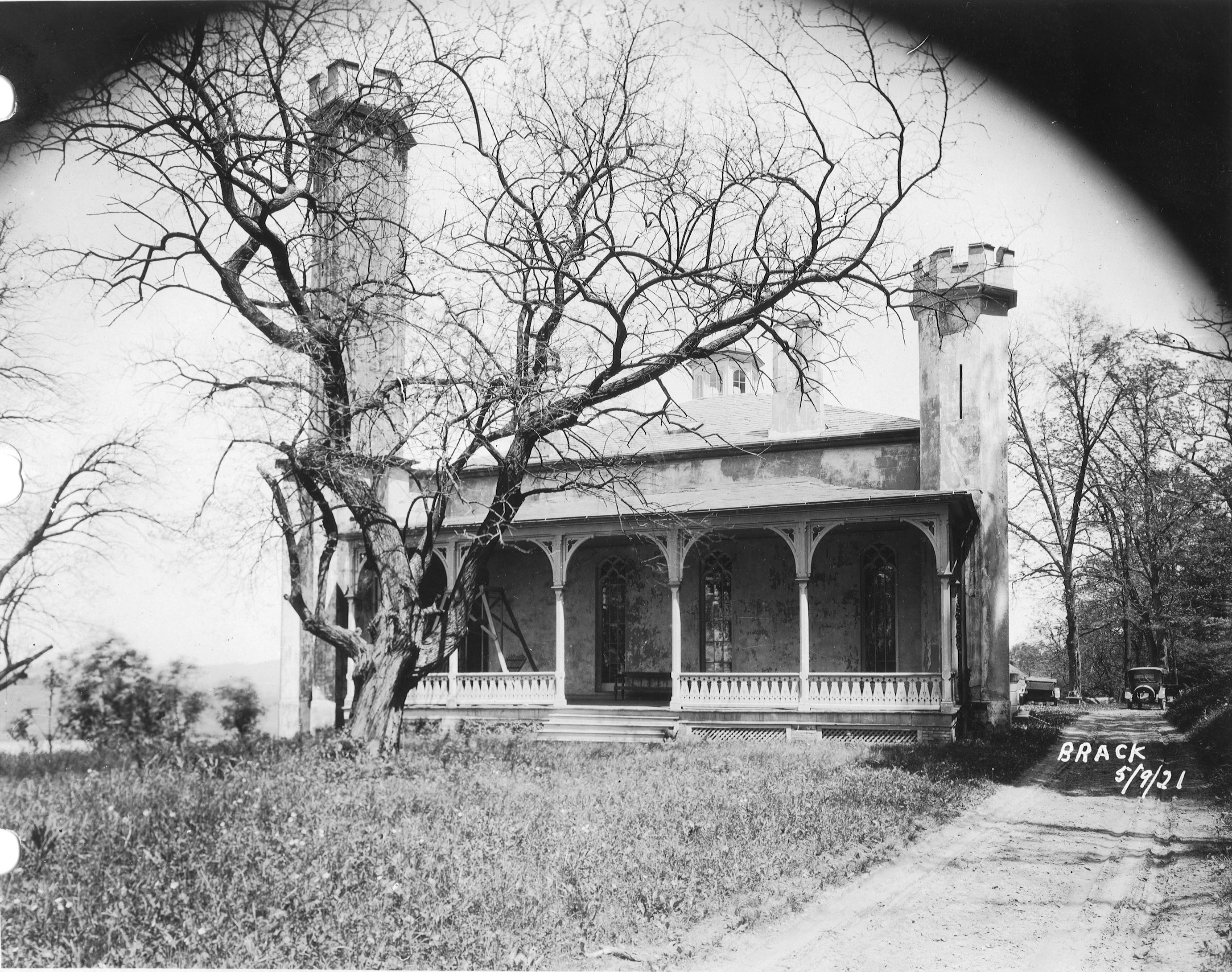
This was Glenn Ellen prior to raising the dam from elevation 188′ to 240′. The reservoir did not reach this height but it was still on watershed property and taken by the City. I think only the foundation exists now.

Earlier this week a friend of mine, Thom, contacted me and told me about some signs he saw on the property as he was hiking behind the construction site. At first glance I thought they were bronze plaques so I met him and Wayne to go exploring.

The hiking trail is on the hill behind the silt fence. This is where the signs were. Turned out to be steel and not bronze, but still worth keeping a couple for history’s sake!

Saw some interesting items so took a closer look. I thought it was odd that the contractor cut the beams instead of just knocking this building down. Come to find out a company called Bricks And Boards came up a removed the wood to re-purpose. The boxes contain core bore samples. Not sure why the City didn’t want to keep these? They do me no good without the engineer’s records saying where the samples came from.

After rooting around in the barn we decided to head into the house. This is being knocked down also. A few years ago I was told there were lantern slides stored in here along with some old drawings. Back then, I wasn’t allowed in to look.
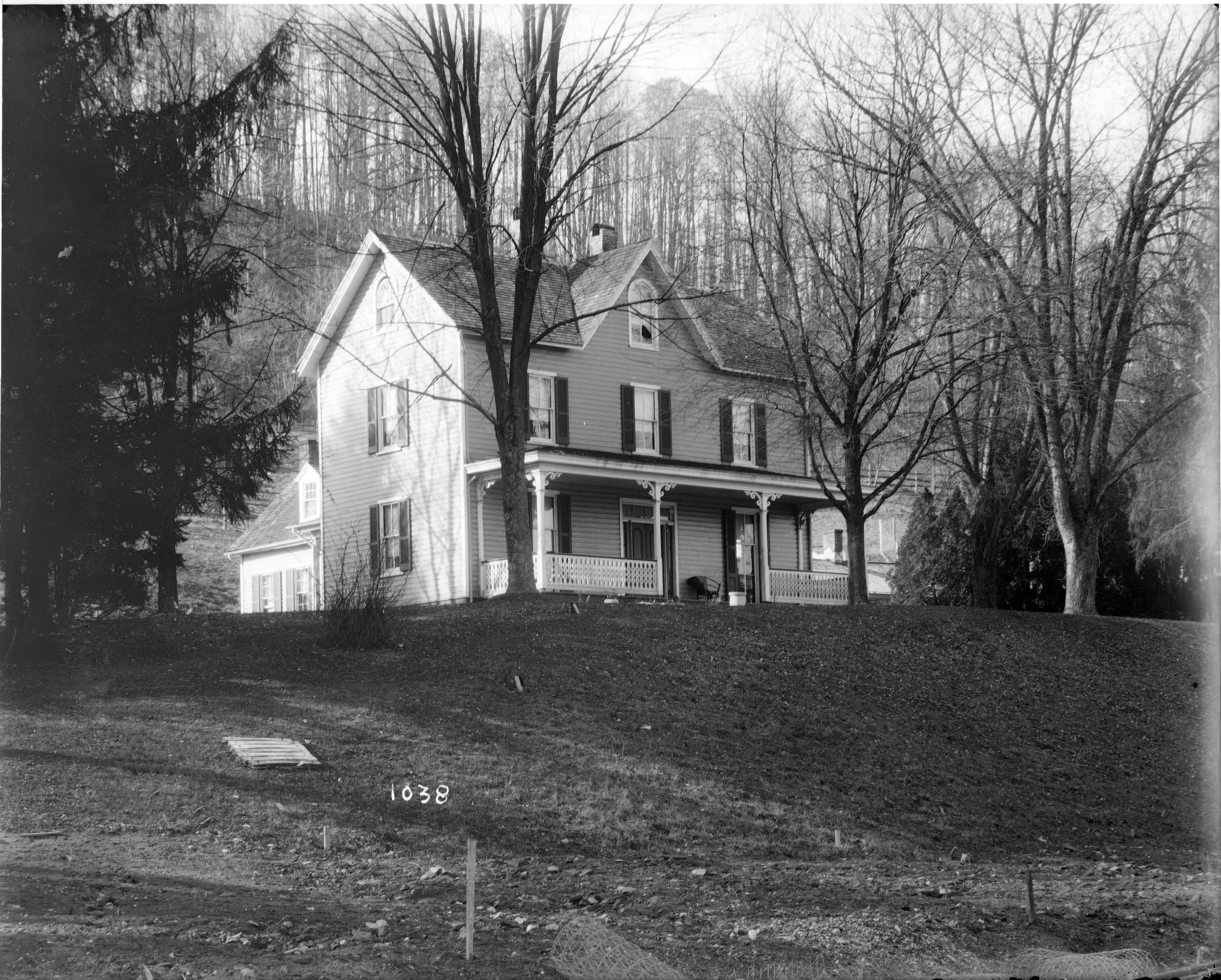
The house as it looked about the 1920-30s. I tried to find who was the original owner but had no luck. From a map of 1882 it has it listed as City Property. Adjacent to the Wisner, Shanklin properties. Further investigation is needed.

Wayne asked the date the house was built. Not sure but it shows up in a 1881 photo. Far right side just up from the Gunpowder River. This photo shows the dam near completion, ready to lay the last stone.

Back into the house. Entrance hall.

There are 3 fireplaces. One plastered over and two, like this one, with the mantles missing.
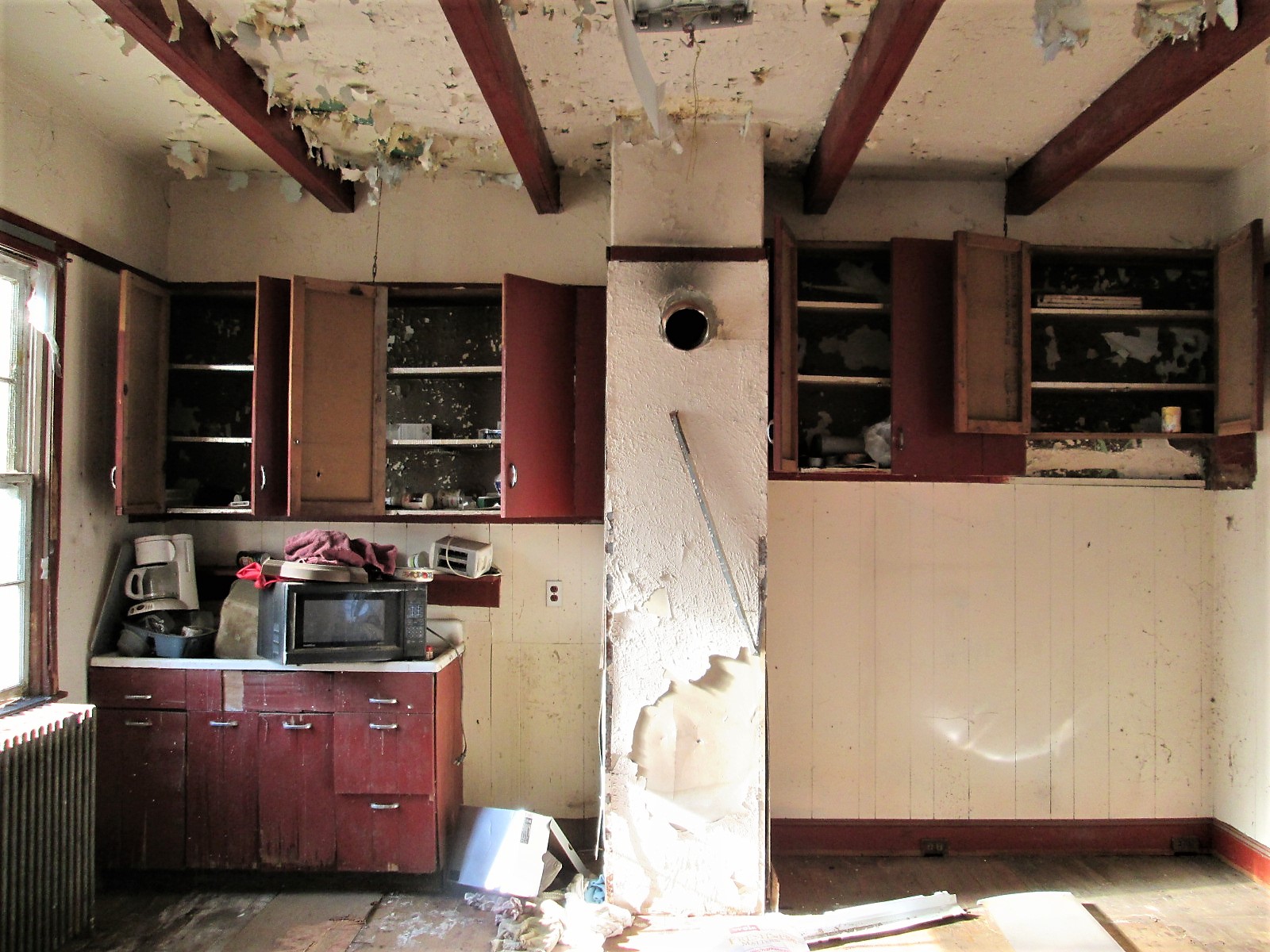
Kitchen.
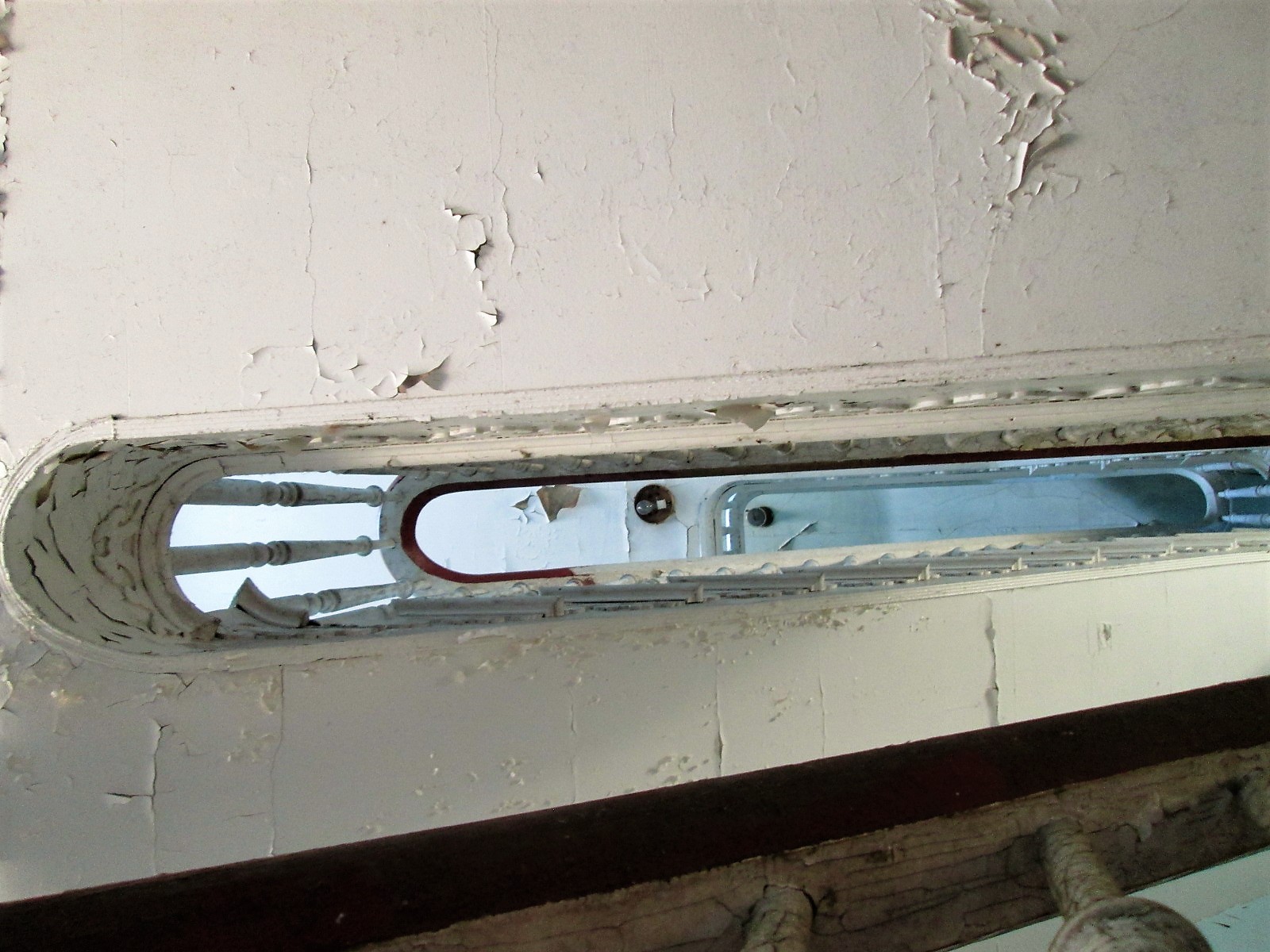
Looking up the stairwell. Three floors.
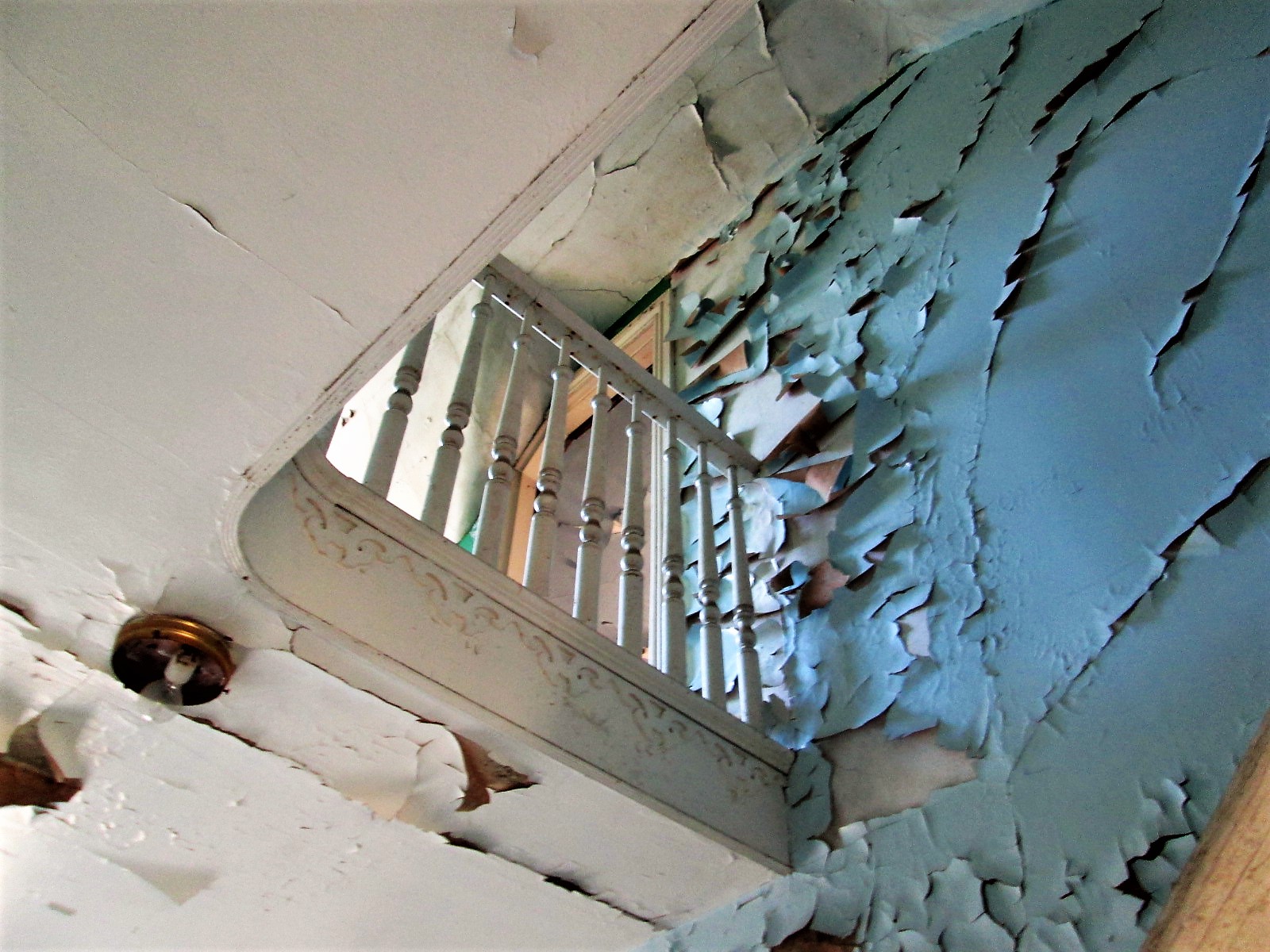
Second floor to third floor
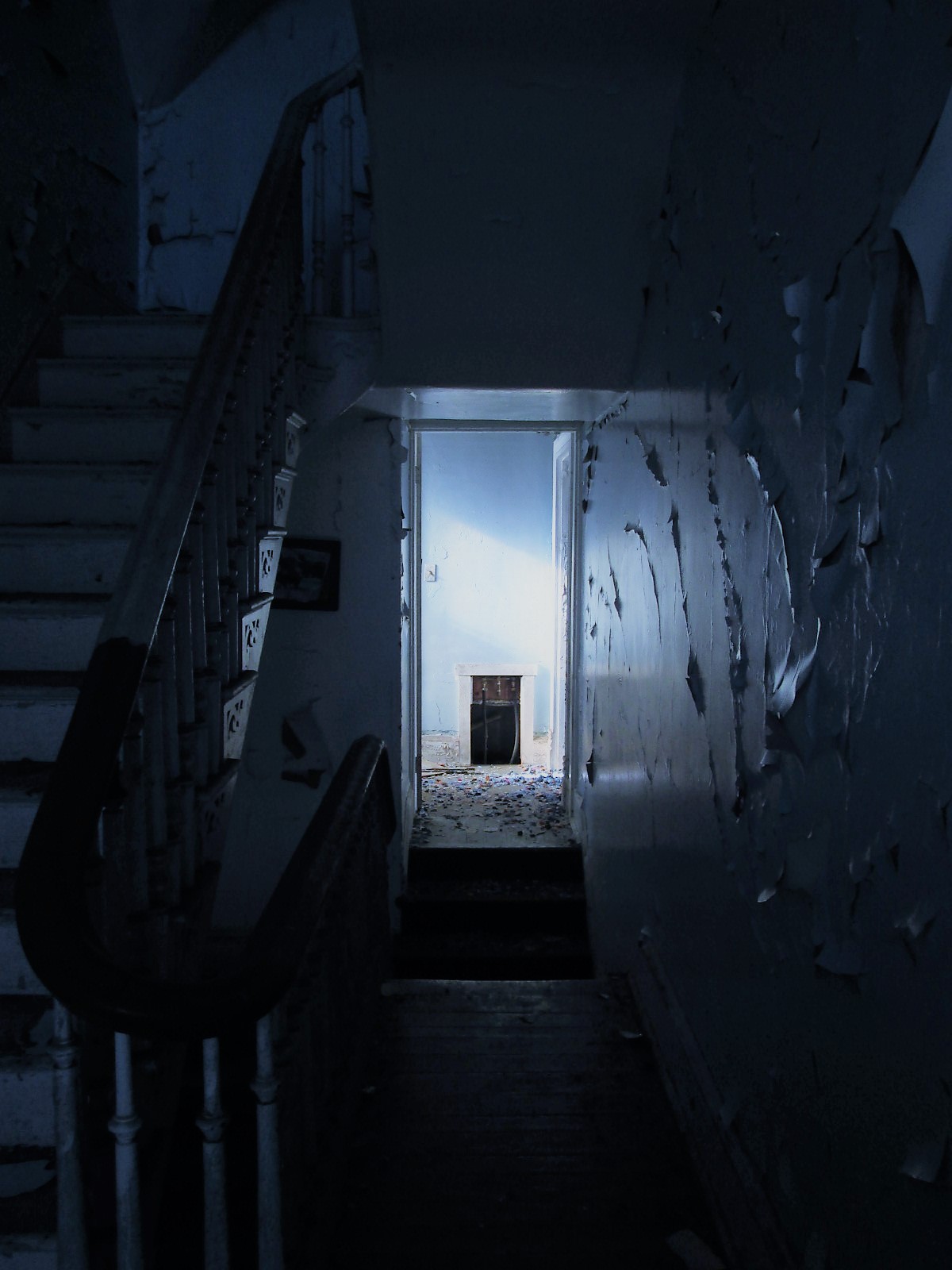
This was a nice design – up the stairs to a landing that will take you in both directions. This is a huge house.
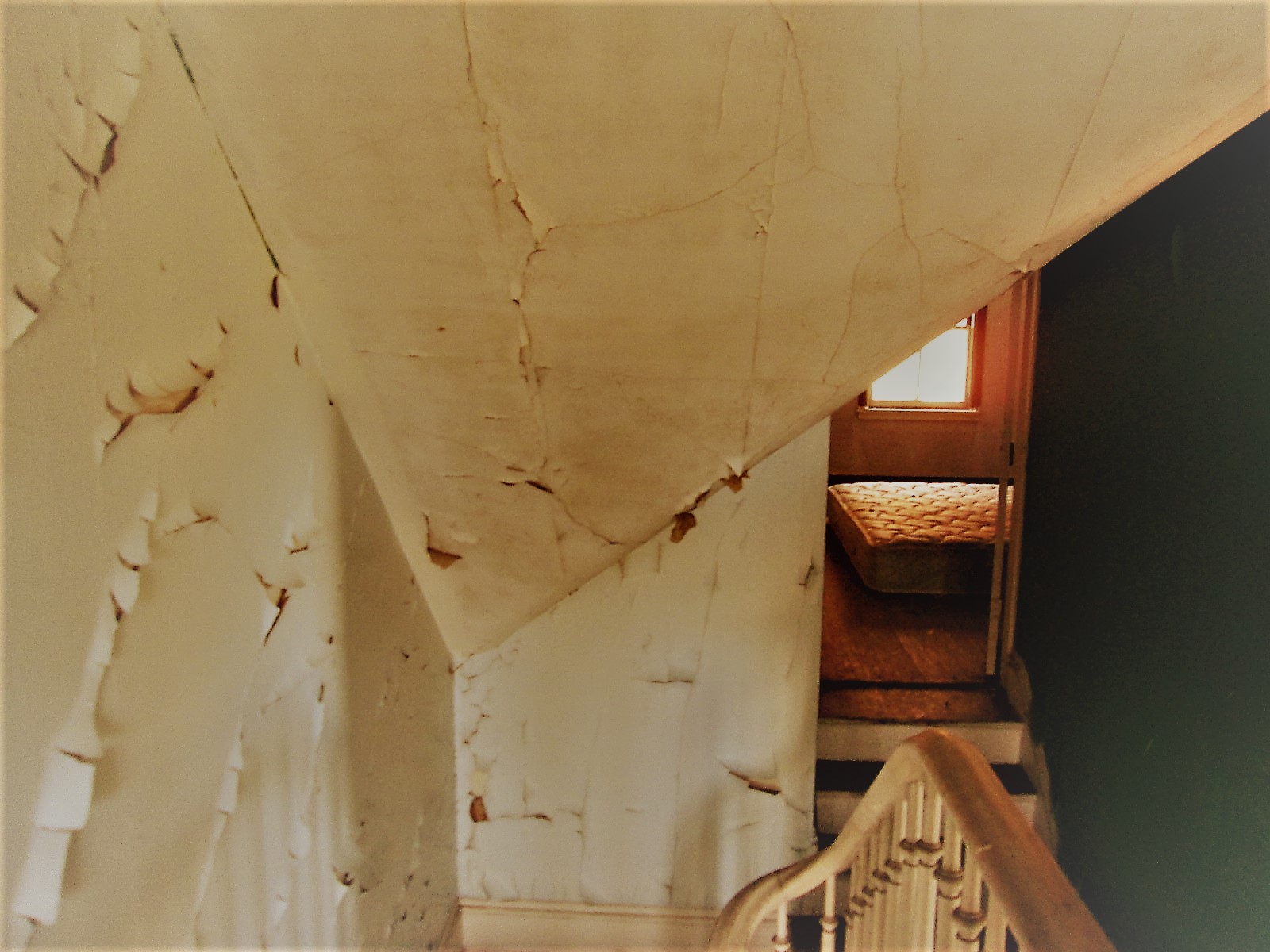
Lots of rooms – curves and angles.
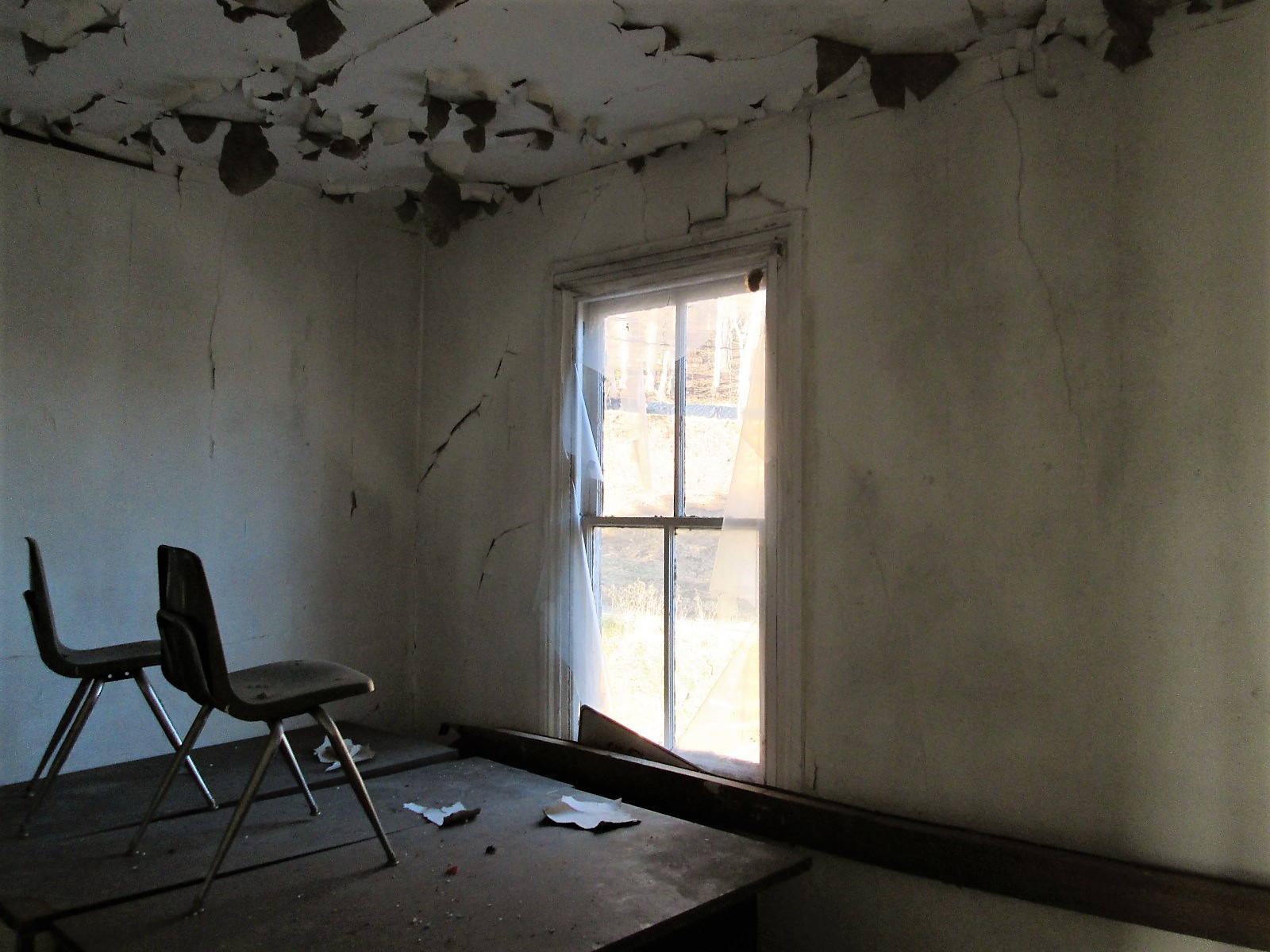
Chairs on a desk – watching…

One of the many views. Someone nailed a metal sign to the window? I would have loved to live here with this view. Two eagles were playing most of the morning over the lower reservoir. Nice!
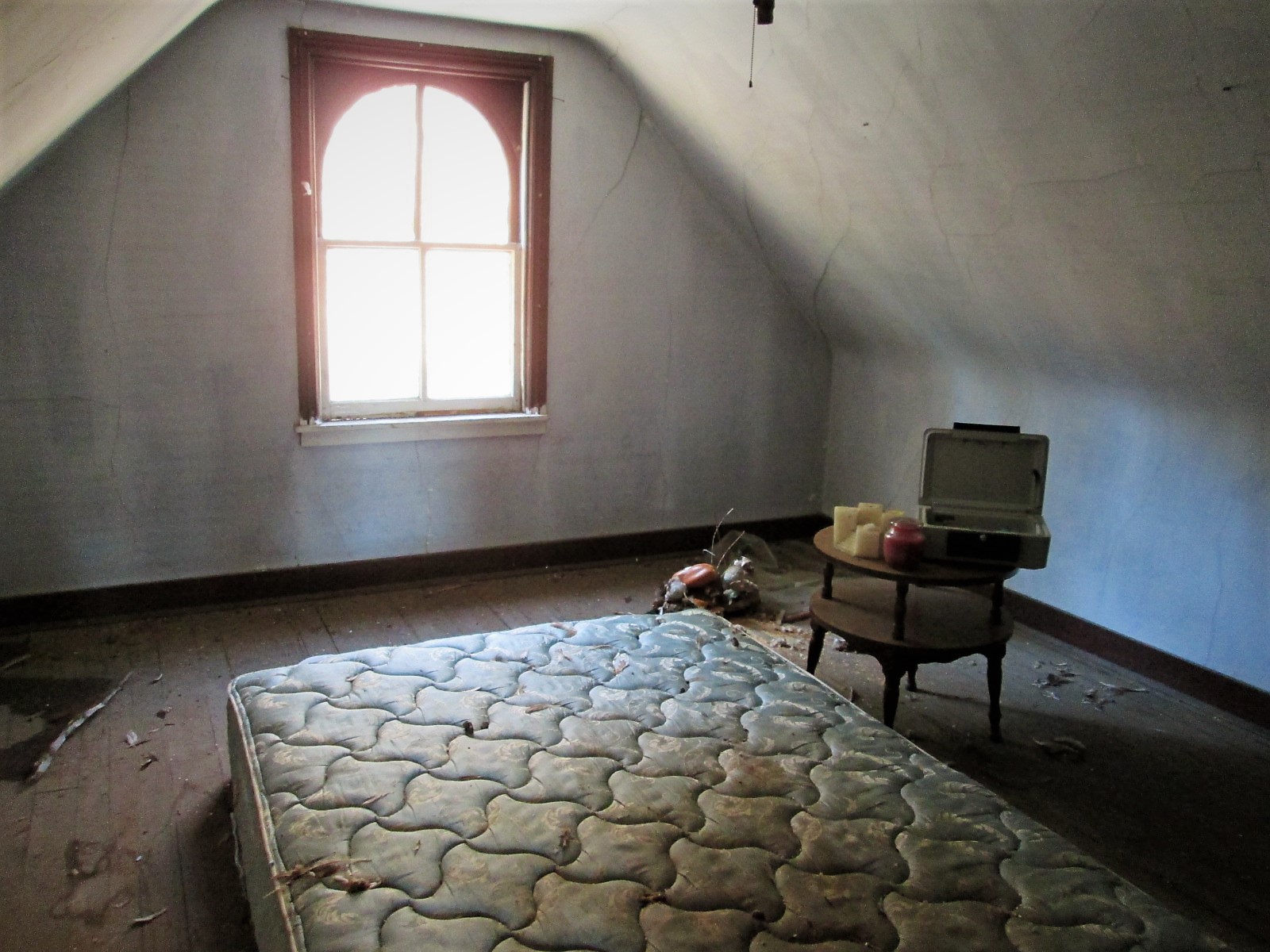
Another room. Candles, a bed, money box and stuffed ducks that look like the turkey buzzards tore open – must of thought they were real!
Prologue: I asked the contractor to hold two of the signs for me until I can come back up. He said ok…but, between my visit and when I sent off the email, Brick and Boards came up and took them. Talked to Max from there and he said they are in his warehouse and I can come pick them up!
Their site: https://baltimorebrickbybrick.com/2016/08/04/brick-board-is-here/
08 Thursday Dec 2016
Posted in Baltimore, engineering, water history
Tags
Baltimore, conduit, engineering, FILTRATION, Lake Montebello, Montebello, pipe, Public Works, water history
Back in 1956 – 1957 a new 84″ pipeline was laid to connect the Montebello Filters with South East Baltimore, doing away with a pumping station. It was inspected this week using what is called a Pipe Diver. A mini-sub looking thing with a bunch of probes. No camera unfortunately.

Here is the pipe prior to connection to the filtered water reservoir in 1957. The reservoir (20 million gallons) is behind that house on the left, underground.

Connection to the clear-well chamber. Years later another connection would be made on the opposite side of the reservoir. The two conduits are connected about 100 yards from the above point.

Back in June, while making my rounds thru the property, I saw a contractor digging a hole. Asked what he was doing and he said he needed to rebuild this manhole and put a new valve on the pipe. That they were getting ready to inspect the 84″ pipe. I asked if he knew that this pipe was full of water. He said he knew and it would be alright. Here is another case in the City when agencies do not communicate. We had no idea they were doing a pipe inspection.

A month later, a contractor comes on site to look at a possible entry point for their pipe diver. I showed them and in November they came back.

They could not relieve the pressure in the pipe enough to insert their tool. So they had to postpone and rethink their strategy.
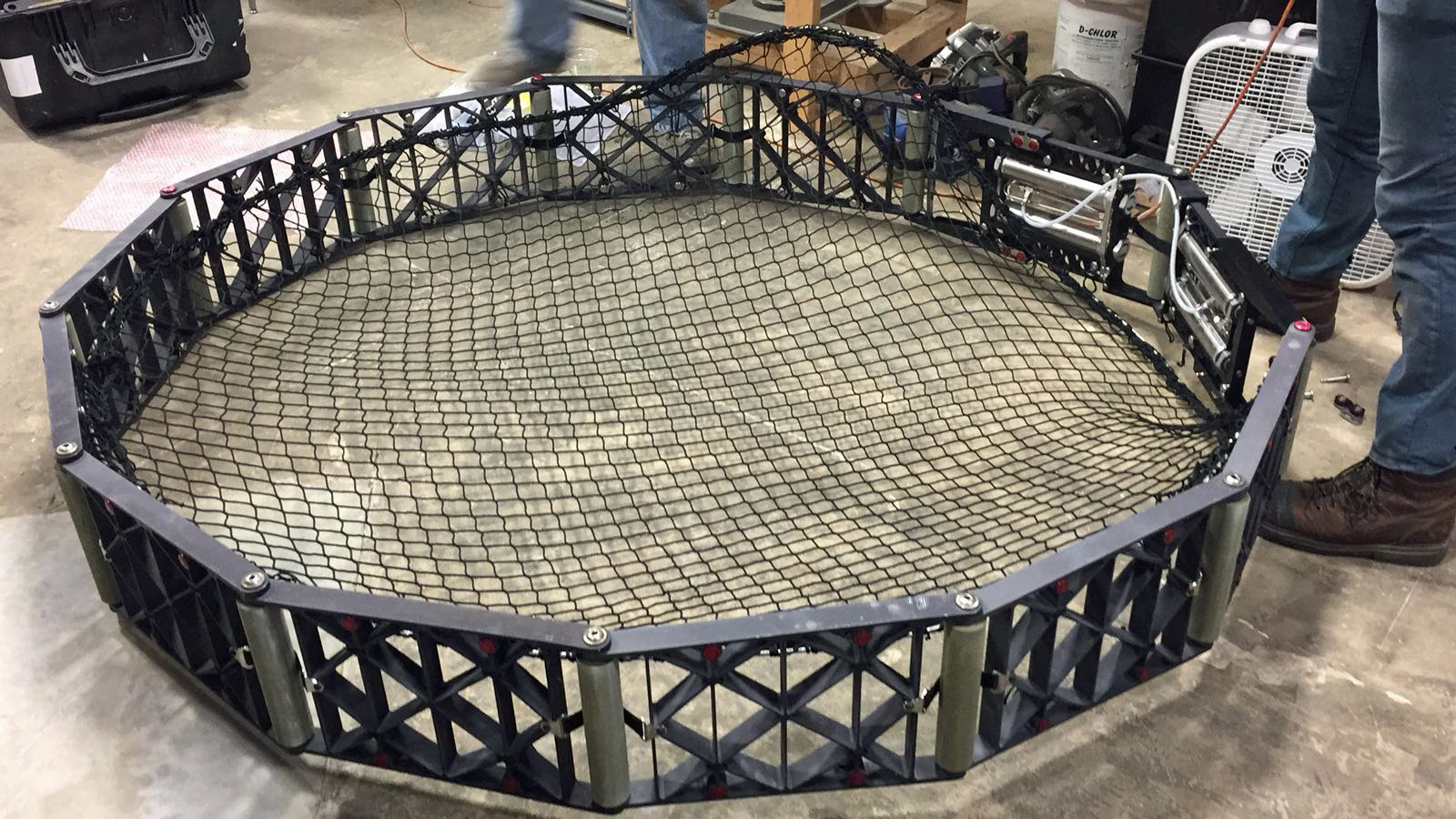
This week they came back. It took a lot longer to relieve the pressure than what they thought. This is the net that was inserted downstream, about 3 miles. It was there to catch the pipe diver.
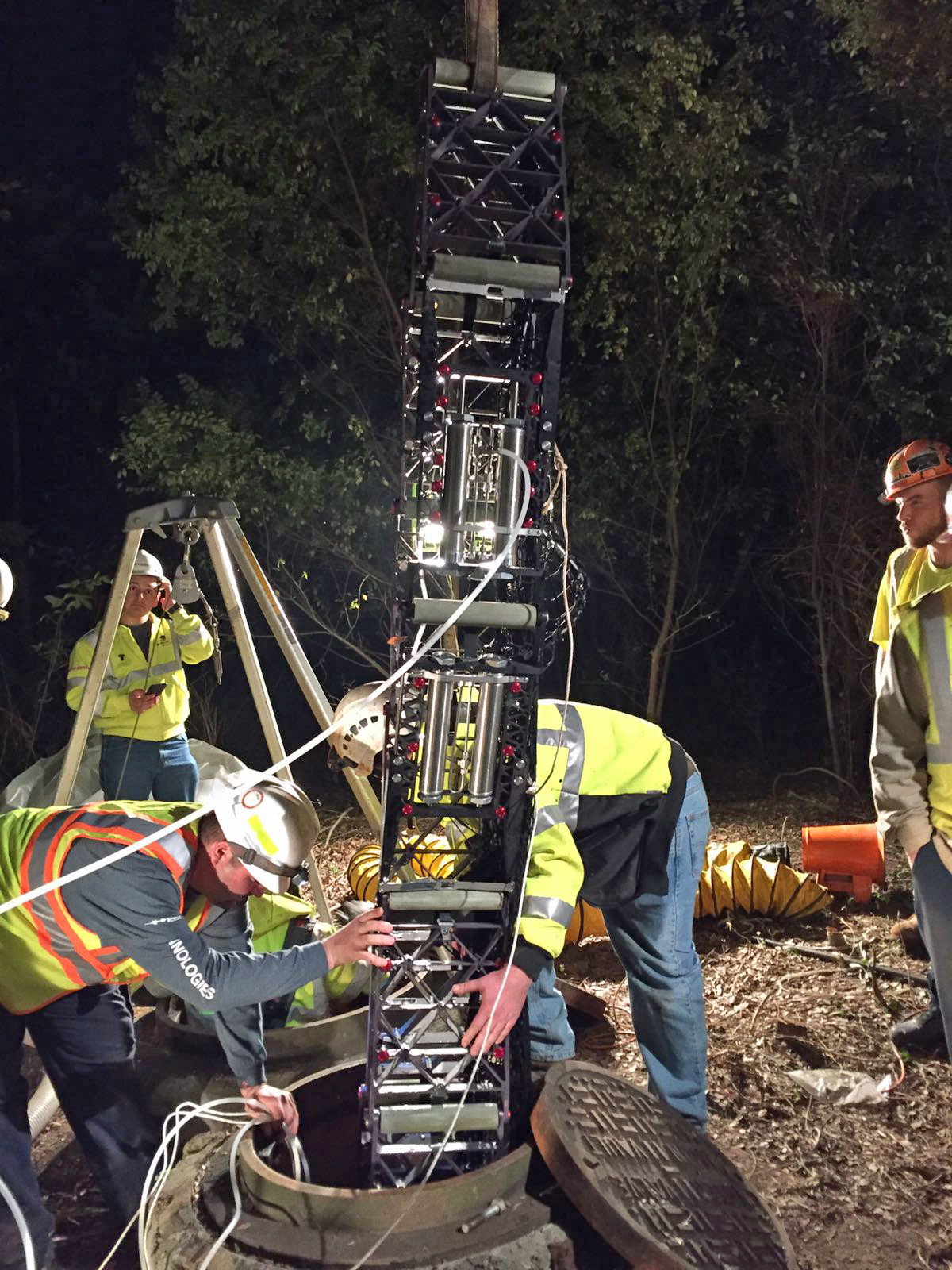
Installing the net.

This is the equipment that was used to track their diver. It only took about 3-1/2 hours for the machine to flow by water pressure to the net.

Removing the pipe diver tool. hopefully the information obtained is all good info – that the pipe doesn’t need repairs or in worse case, replacing.

One disturbing photo sent to me is this one, showing where ground cover has washed away, exposing the water pipe. I’ve lived around this stream for many years and I know the force of nature, during storms. Just a matter of time…
 Water and Me